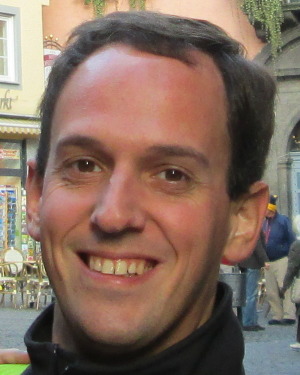
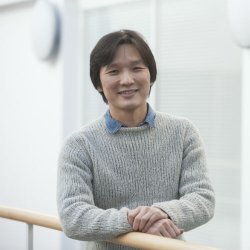
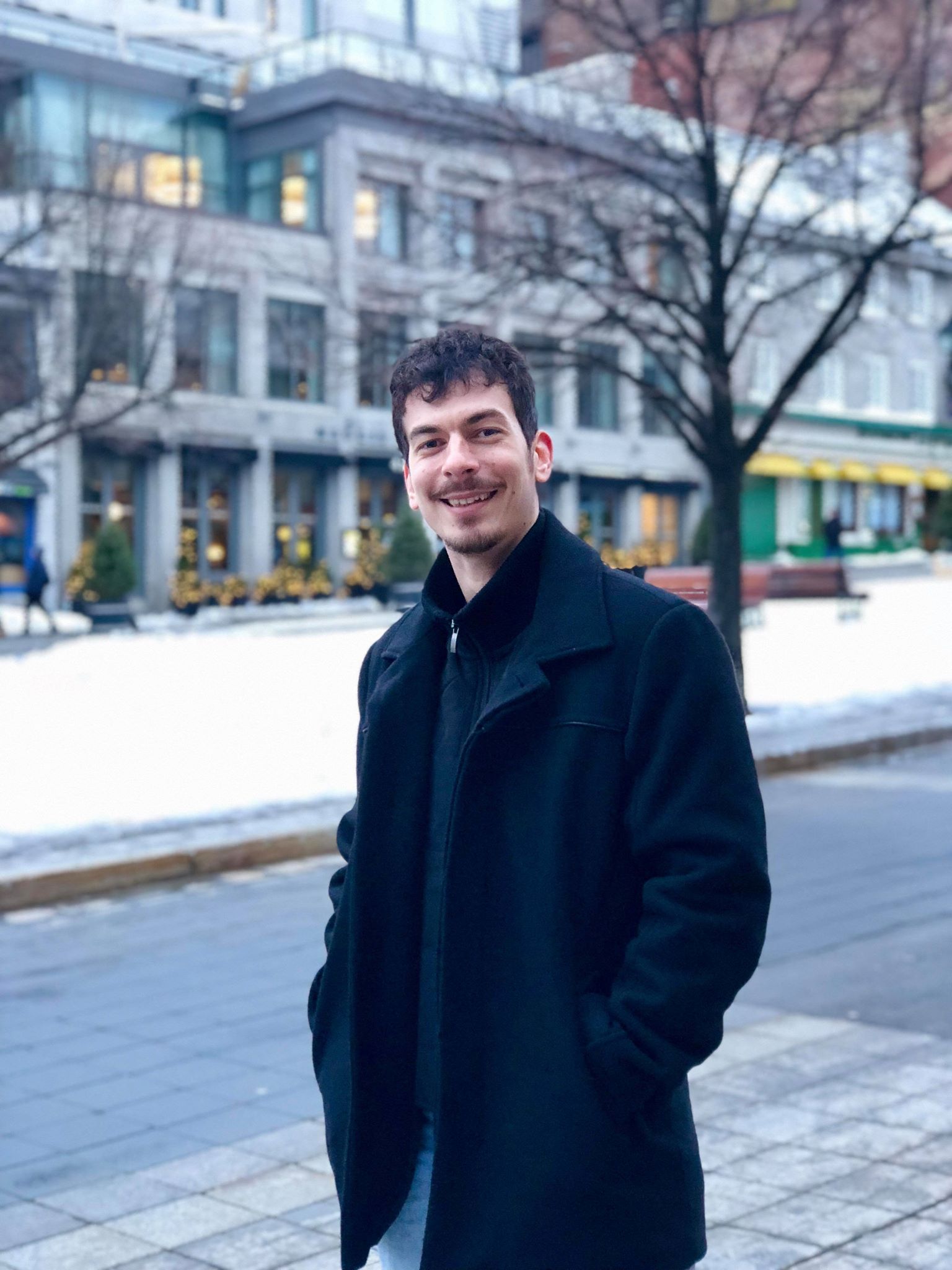
Herb Winful is a Professor of Optics at the University of Michigan's College of Engineering, Department of Electrical and Computer Engineering. He specializes in nonlinear optics, laser physics, quantum tunneling , and photonics , with a focus on phenomena like superluminal group velocities, frequency comb generation, and light storage via stimulated Brillouin scattering. Research areas span quantum tunneling times , nonlinear photonic materials , and coherent beam combining in fiber laser arrays. His work includes frequency comb spectroscopy using quantum-well diode lasers, ultrafast erbium fiber lasers , and negative group delay engineering in birefringent waveguides. The article list reveals expertise in supercontinuum generation , evanescent wave dynamics , photonic crystals , and nonlinear pulse manipulation . Key subfields include stimulated Brillouin/Raman scattering , parabolic similaritons , and time-domain modeling of optical systems. Award-winning scientific contributions include resolving the Hartman effect paradox and optimizing fiber laser arrays for high-power applications. His research bridges theoretical insights with practical innovations in optical engineering and quantum optics .
Wout Joseph is a Professor in the domain of Experimental Characterization of wireless communication systems at Ghent University (Belgium), where he has been working since October 2009. He is also an IMEC Principal Investigator since 2017. His research is conducted within the wireless, acoustics, environment & expert systems (WAVES) research unit at the Department of Information Technology (INTEC). Dr. Joseph was born in Ostend, Belgium on October 21, 1977. He received his M.Sc. degree in electrical engineering from Ghent University in July 2000. From September 2000 to March 2005 he was a research assistant at the Department of Information Technology (INTEC), where his scientific work focused on electromagnetic exposure assessment around base stations for mobile communications related to health effects. This work led to his Ph.D. degree in March 2005. Professor Joseph's research expertise spans multiple domains within wireless communications and bioelectromagnetics. His primary research interests include electromagnetic field exposure assessment, in-body electromagnetic field modeling, electromagnetic medical applications, propagation for wireless communication systems, IoT, antennas and calibration. He also specializes in wireless performance analysis, industry 4.0 applications, wireless localization, and Quality of Experience metrics. His work is particularly notable for its focus on dosimetric studies in the radiofrequency range, where his research is ranked first in number of peer-reviewed studies. His research has practical applications in wireless network planning, occupational safety, and public health policy related to electromagnetic fields. His extensive publication record (over 886 publications with an h-index of 45 in ISI Web of Science and 66 in Google Scholar) demonstrates a clear trajectory from fundamental electromagnetic field measurements to applied research in industrial wireless networks and bioelectromagnetic applications. Recent work shows a strong emphasis on 5G exposure assessment across multiple European countries, millimeter-wave channel modeling, and the application of machine learning techniques to exposure assessment and wireless localization. EBEA council board member (2015-2018) EBEA board member at large (2019) Bioelectromagnetics Society board member (2022) Bioelectromagnetics Society board member (2024) 24 research awards Professor Joseph leads significant research efforts in electromagnetic field exposure assessment, with particular emphasis on developing measurement methodologies and computational models for real-world exposure scenarios. His work bridges theoretical electromagnetic modeling with practical applications in wireless communications and bioelectromagnetics. His research group within the WAVES unit is highly active in both theoretical and experimental aspects of wireless communications and bioelectromagnetics, with current projects focusing on 5G exposure assessment across Europe, millimeter-wave channel modeling for data centers and industrial environments, and the development of novel exposure assessment methodologies using advanced signal processing and machine learning techniques.
Naratip Santitissadeekorn is a Senior Lecturer in Data Assimilation at the School of Mathematics and Physics, University of Surrey, where he is affiliated with the Mathematics at the Interface Group. His work bridges mathematics, data science, and real-world applications in urban planning, crime analysis, and geophysical fluid dynamics. Dr. Santitissadeekorn received his PhD from Clarkson University in 2008, with a dissertation titled "Transport Analysis and Motion Estimation of Dynamical Systems of Time-Series data." His doctoral research was supervised by Professor Erik Bollt. Following his PhD, he completed two significant postdoctoral positions: from 2008-2011 at the University of New South Wales, Sydney, Australia, working with Professor Gary Froyland on numerical techniques for finite-time Lagrangian coherent set identification, with applications to delimiting the polar vortex and Agulhas rings; and from 2011-2014 at the University of North Carolina-Chapel Hill, working with Professor Chris Jones on data assimilation projects. Dr. Santitissadeekorn's research focuses on inverse problems and data assimilation in geophysical fluid dynamics, the applications of Lagrangian Coherent Structures (LCS), and computational ergodic theory. His work combines theoretical mathematics with practical applications, particularly in urban growth modeling and crime analysis. He has developed innovative methods for identifying coherent structures in fluid flows, estimating transition probabilities from spatiotemporal data, and creating data-driven frameworks for urban expansion scenarios. His research demonstrates how mathematical techniques can be applied to solve real-world problems in environmental science, urban planning, and public safety. An analysis of Dr. Santitissadeekorn's recent publications (2020-2023) reveals a strong focus on urban expansion modeling and network analysis. His work on urban growth has evolved from basic cellular automata models to sophisticated frameworks that manage uncertainty through parameter clustering and growth mode identification. His research on Hawkes processes has advanced ensemble-based filtering techniques for analyzing count data in large networks. These publications demonstrate a consistent pattern of applying mathematical rigor to complex spatiotemporal phenomena, with increasing emphasis on data-driven approaches and practical applications. Dr. Santitissadeekorn has made significant contributions to data assimilation methods, particularly through the development of the extended Poisson-Kalman filter (ExPKF) for urban crime modeling. His teaching includes courses in Algebra and Bayesian Statistics, reflecting his expertise in both theoretical and applied mathematics. While specific awards are not mentioned in the available information, his extensive publication record in high-impact journals demonstrates recognition within his field. Dr. Santitissadeekorn's research has practical implications for urban planning and law enforcement. His work on urban expansion models helps planners understand different growth trajectories, while his crime modeling research contributes to improved police patrolling strategies. His interdisciplinary approach, combining mathematics, computer science, and domain-specific knowledge, positions him at the forefront of applying data science to societal challenges.
Alexandros Kontogiannis is a research fellow at the University of Cambridge, Department of Engineering, specializing in fluid dynamics and applied mathematics. His work combines Bayesian inference, machine learning, and physics-informed algorithms to solve inverse problems in magnetic resonance velocimetry (MRV) and fluid-structure interaction. EPSRC National Fellow in Fluid Dynamics Member of Energy, Fluids and Turbomachinery Division Research Focus: Development of digital twin frameworks that integrate MRV data with Navier-Stokes equations to reconstruct flowfields, infer rheological parameters in non-Newtonian fluids, and estimate hidden quantities like pressure and wall shear stress. Key innovations include: Physics-informed compressed sensing for sparse MRV data Simultaneous boundary shape and flowfield estimation Bayesian turbulence model parameter learning Scientific Awards: ASME Fluids Engineering Division Graduate Student Scholar (2021) Technical Chamber of Greece (TEE) Award (2018) Limmat Foundation Academic Excellence (2017) Mentzelopoulos Scholarship for international studies (2017) Greek State Scholarships Foundation Award (2012) Key Contributions: Algorithms for 3D flow reconstruction with adaptive discretization, viscous signed distance field regularization, and multi-objective aerodynamic shape optimization. His methodologies enable 27x reductions in MRI scanning time while maintaining diagnostic accuracy.
Lina von Sydow is a Professor in Computational Science at Uppsala University's Department of Information Technology. She serves as Section Dean for the Mathematical-Computer Science Section since July 2023. Her academic journey includes becoming an Associate Professor in 2000, Senior Lecturer since 1997, and leading the Department of Information Technology from 2018 to 2023. PhD in Domain Decomposition Methods (1995, Uppsala University) Postdoctoral Fellow at Oxford University (1996-1997) Her research spans computational science with dual focuses on Computational Finance and Ice Sheet Modeling . In finance, she develops numerical methods for option pricing using PDEs, radial basis functions, and stochastic volatility models. In climate science, she contributes to ice sheet dynamics through full Stokes models and adaptive time-stepping approaches, particularly in simulating grounding line migration. Recent publications (2025) address gender disparities in IT education, including comparative analysis of admission trends and intervention studies to boost female enrollment. Earlier works (2020-2015) focus on high-order finite difference methods for financial derivatives, BENCHOP benchmarking projects, and preconditioning techniques for PDEs. Scientific awards include Excellent Teacher (2013) She actively collaborates on educational reforms, co-authoring studies like Gender-aware course reform in Scientific Computing (2013). Her leadership roles include Head of Department (2018-2023) and Section Dean (2023-present), influencing academic governance and interdisciplinary research. Labs and teams: Works with Uppsala University's Computational Science group, Elmer/ICE project collaborators (e.g., Per Lötstedt, Gong Cheng), and international partners in numerical finance and climate modeling.
Hong Wang is a Professor in the Department of Mathematics at the University of South Carolina, part of the McCausland College of Arts and Sciences. He specializes in numerical analysis and differential equations, with a focus on numerical methods for fractional and variable-order equations. His work addresses complex boundary conditions, optimal control, and scientific computing challenges in advection-diffusion systems. Education Ph.D. in Mathematics, University of Wyoming (1992) Research Interests His research emphasizes numerical approximation techniques for differential/integral equations, particularly fractional diffusion-wave equations, variable-order models, and stochastic systems. Key areas include finite element methods, spectral methods, and fast algorithms for solving high-dimensional and time-dependent problems. He explores applications in optimal control, viscoelasticity, and multi-scale modeling. Recent Work Trends Recent publications highlight advancements in fractional calculus applications, including variable-exponent diffusion, distributed-order equations, and stochastic fractional differential equations. His work often combines theoretical analysis with computational efficiency, addressing challenges like nonsmooth parameters and singular density functions. Grants and Advising No specific grants or advisees are listed, but his research collaborations span computational mathematics, applied physics, and engineering systems. Labs/Teams No dedicated lab or team is explicitly mentioned, though his research aligns with computational and applied mathematics groups at the University of South Carolina.
Andang Sunarto is an Associate Professor affiliated with the State Islamic Institute (IAIN) Bengkulu, Indonesia and the Lepage Research Institute, Slovakia . His work bridges Numerical Analysis , Computational Mathematics , and Algorithm Design with applications in Robotics , Image Processing , and Sharia-Compliant Systems . Research Focus: Fractional Calculus, Nonlinear PDEs, GPU-Accelerated Algorithms Collaborations: International institutions including Union of Czech Mathematicians and Physicists and University of Prešov His recent publications (2021–2025) emphasize Iterative Methods for solving Time-Fractional Diffusion Equations and Porous Medium Models . He also explores Digital Islamic Education and Halal Tourism Development . Despite no listed awards, his work spans diverse domains like Mobile Banking Evaluation , Environmental Pollution Analysis , and Ethnobotanical Applications . Andang actively designs EdTech tools (e.g., Wordwall-based modules) and contributes to computational methods in Climate Modeling and Nonlinear Diffusion .
Prof. Inga Fischer is a Professor and Head of the Department of Experimental Physics and Functional Materials at BTU Cottbus-Senftenberg since August 2018. Previously, she held roles including private lecturer (2017), habilitation in semiconductor and nanoelectronics (2016), and senior research roles at the University of Stuttgart (2010–2018). Her research focuses on semiconductor materials, optoelectronic devices (e.g., Ge-based photodiodes, tunnel junctions), plasmonics, and nanoelectronics. She has led projects at Siemens (2008–2010) in mathematical engineering and industrial research management. Fischer earned her PhD from the University of Karlsruhe and Cologne, with postdoctoral work at Cologne’s Institute for Theoretical Physics. She oversees a team including Dr. Markus Ratzke, M.Sc. researchers, and collaborators like Dr. Fritz Berkmann. Her work integrates theoretical and experimental approaches, emphasizing functional materials and device engineering. Research Interests Germanium-based optoelectronics and plasmonics Advanced semiconductor materials (SiGeSn, nanohole arrays) Tunneling field-effect transistors and low-power devices Spin injection and magnetism in semiconductors Integrated optical sensors and transceivers Lab & Team Her team at BTU Cottbus-Senftenberg focuses on experimental physics and functional materials, with expertise in molecular beam epitaxy, device fabrication, and characterization. The group collaborates on projects involving nanoelectronics, optoelectronics, and silicon photonics.
Sriramkrishnan Muralikrishnan is a Research Staff member at the Department of Mathematics and Education within the Jülich Supercomputing Center (JSC) at Forschungszentrum Jülich, Germany. His work focuses on developing advanced computational methods for high-performance scientific computing, particularly in plasma physics and related multi-physics applications. Dr. Muralikrishnan's research spans several key computational domains: Numerical Analysis and High-Order Methods High Performance Scientific Computing for Exascale Architectures Plasma Physics Simulations Fast Solvers and Preconditioners Parallel-in-Time Integration Techniques Performance Portable Programming His recent publications demonstrate a strong focus on particle-based computational methods, particularly Particle-in-Cell and Particle-in-Fourier techniques. His work consistently addresses challenges in energy conservation, scalability across architectures, and noise reduction in plasma simulations. A significant portion of his research involves developing performance-portable frameworks that can efficiently leverage modern supercomputing hardware from different vendors without code rewrites. Dr. Muralikrishnan is actively involved in open-source scientific software development: Lead developer of IPPL (a performance portable library for grids and particles) Developer of OPAL (an open-source particle accelerator library) His research has direct applications in plasma physics, fusion energy research, and advanced accelerator design, with a strong emphasis on making computational methods accessible through open-source development and advocating for diversity in scientific computing.
Sonia Fliss is a Full Professor at ENSTA Paris , affiliated with the Department of Applied Mathematics and the POEMS laboratory (UMR CNRS-INRIA-ENSTA) . She teaches applied mathematics courses on partial differential equations (PDEs) , finite element methods , and periodic homogenization to undergraduate and graduate students. Doctor in Applied Mathematics (2009) Authorized to supervise research (2019) Research Interests : Sonia Fliss specializes in the modeling and numerical analysis of wave propagation in periodic, quasi-periodic, and random media . Her work includes transparent boundary conditions , guided waves , and asymptotic methods for acoustic, electromagnetic, and elastic wave phenomena . Recent Publications highlight her contributions to the Half-Space Matching Method , edge states in honeycomb structures , and scattering problems in unbounded domains . Her numerical techniques address multi-scale waveguides and time-harmonic propagation . Laboratory : As a member of the POEMS team, she collaborates on interdisciplinary projects involving mathematical analysis , computational physics , and engineering applications in domains like defence, energy, and transport .
Georgios Zouraris is a Professor at the University of Crete, where he has maintained an active research profile since earning his Ph.D. from the same institution in 1995. His work is centered in the School of Science and Engineering, focusing on advanced computational mathematics with applications in physics and engineering. Education: Ph.D. in Mathematics, University of Crete, 1995 Professor Zouraris specializes in the development and rigorous analysis of numerical methods for partial differential equations. His research spans finite element and finite difference techniques for nonlinear Schrödinger equations, logarithmic heat equations, and stochastic PDEs with space-time white noise. Key contributions include error estimation frameworks for relaxation schemes, convergence analysis of Crank-Nicolson methods, and efficiency improvements for multilevel Monte Carlo simulations. His theoretical work consistently addresses singular nonlinearities and complex domain geometries, bridging mathematical rigor with computational practicality. Analysis of his 2020-2025 publications reveals a sustained focus on high-accuracy numerical schemes for challenging PDEs, particularly those involving logarithmic singularities and stochastic forcing. Recent work demonstrates increasing sophistication in handling noncylindrical domains and coupling strategies, with applications ranging from quantum systems to material science. The publications show consistent emphasis on provable convergence rates and computational efficiency. Information regarding student advising, research grants, and laboratory facilities is not documented in the available sources. His active publication record through 2025 indicates ongoing research leadership in computational mathematics.
Kami Mohammadi is an Assistant Professor in the Civil & Environmental Engineering department at the University of Utah , with an adjunct appointment in Geology & Geophysics . Holding a PhD from Georgia Institute of Technology and postdoctoral experience at Caltech, Mohammadi specializes in seismic wave propagation, basin effects, and computational geotechnical modeling. Education PhD (2015), Civil and Environmental Engineering - Geotechnical Engineering, Georgia Institute of Technology MS (2012), Geotechnical Engineering with minor in Applied Mathematics, Georgia Institute of Technology MS (2006), Civil Engineering, University of Tehran BS (2003), Civil Engineering, Chamran University of Ahvaz Their research focuses on: 3D seismic wave propagation in heterogeneous media Basin effects on earthquake amplification Hybrid physics-informed machine learning models Finite element/discrete element modeling of geotechnical systems Ground motion prediction and hazard analysis Hydraulic fracturing in fractured rock Recent work integrates full-waveform inversion with neural networks for subsurface imaging. Mohammadi teaches graduate courses in geotechnical engineering, soil dynamics, and earthquake engineering, with a focus on computational methods and laboratory practices. Current grants include: EXTERNAL GRANT OR CONTRACT (2024-2030): Integration of computational and experimental analyses for earthquake amplification EXTERNAL GRANT OR CONTRACT (2024-2029): 3D site effect modeling at LANL EXTERNAL GRANT OR CONTRACT (2021-2024): Various seismic projects Professional activities include community outreach through engineering education presentations.
Mohammad Zunoubi is an Associate Professor in the Department of Engineering Programs at SUNY New Paltz, part of the School of Science & Engineering. He holds an undergraduate degree from the University of Mississippi and a postgraduate degree from the University of Illinois at Urbana-Champaign. His research focuses on High-Performance Computing solutions for electromagnetic problems, Nonlinear Optics, and Microwave/Antenna Design. He has conducted extensive work in Computational Electromagnetics, utilizing methods like FDTD and FEM. His teaching interests span Electromagnetics, Numerical Methods, and EMC/EMI. He has been recognized with multiple awards, including the SUNY Provost’s Research Award (2005) and several United States Air Force Summer Faculty Fellowships (2009–2017). His research often involves collaboration with the Air Force, focusing on advanced electromagnetic modeling and high-power microwave effects. Dr. Zunoubi’s publications highlight contributions to antenna design, electromagnetic compatibility, and high-performance computing techniques. His work bridges theoretical electromagnetics with practical applications in aerospace, medical physics, and material science.
Farhad Rachidi is a Full Professor at the Swiss Federal Institute of Technology (EPFL), where he serves as the Head of the Electromagnetic Compatibility (EMC) Laboratory within the School of Engineering's Department of Electrical Engineering. His research group has been active in EMC research since the early 1980s and maintains collaborations with numerous international institutions including Universities of Bologna and Rome (Italy), Uppsala University and KTH (Sweden), University of Toronto (Canada), University of Florida (USA), and others. Professor Rachidi's research spans electromagnetic compatibility, lightning electromagnetics, lightning and EMP interaction with transmission lines, electromagnetic time reversal, fault location, numerical computation of electromagnetic fields, and power line communications. His work integrates theoretical modeling with experimental validation, particularly in the context of lightning phenomena and electromagnetic interference. The research group develops innovative techniques such as electromagnetic time reversal for applications ranging from lightning detection to partial discharge localization in power systems. Analysis of his recent publications (2023-2025) reveals a strong focus on electromagnetic time reversal techniques, lightning physics and modeling, machine learning applications in electromagnetic phenomena, and advanced computational methods for electromagnetic field analysis. His work bridges fundamental electromagnetic theory with practical applications in power systems, atmospheric electricity, and security technologies. 2025 IEEE EMC Technical Achievement Award 2005 CIGRE Technical Committee Award 2006 Blondel Medal from SEE 2016 Berger Award from ICLP Best Paper Awards of IEEE Transactions on EMC (2016, 2018) Motohisa Kanda Award for most cited papers (2012-2018) 2024 Distinguished Honorary Professor at Tsinghua University 2014 Honorary Professor at Xi'an Jiaotong University Professor Rachidi has supervised numerous students through semester projects, diploma projects (equivalent to MS), and PhD programs at EPFL. His research is primarily sponsored by Swiss National Science Foundation, European Community programs, European Space Agency, Swiss Electrical Utilities, and private companies. He has served in leadership roles including President of the International Conference on Lightning Protection (2008-2014), Editor-in-Chief of IEEE Transactions on Electromagnetic Compatibility (2013-2015), and President of the Swiss National Committee of the International Union of Radio Science (2012-2020). The EMC Laboratory at EPFL, which he heads, maintains the Säntis lightning research facility and has been instrumental in advancing our understanding of lightning phenomena through direct measurements at instrumented towers. The group has developed innovative techniques including electromagnetic time reversal for fault location in power networks and lightning detection systems.
Professor Hoang Xuan Phu is a renowned mathematician affiliated with the Institute of Mathematics , Vietnam Academy of Science and Technology , where he has served since 1984 (Researcher), 1992 (Associate Professor), and 1996 (Professor). He is an elected member of multiple prestigious academies: the Heidelberg Academy of Sciences and Humanities (2004), Bavarian Academy of Sciences and Humanities (2010), TWAS - The World Academy of Sciences (2013), and acatech - National Academy of Science and Engineering, Germany (2019). His email contact is hxphu@math.ac.vn and phu@iwr.uni-heidelberg.de . Education : University of Leipzig (Diploma 1979, PhD 1983, Habilitation 1987) Research Areas : Optimization, Optimal Control, Functional Analysis, Numerical Analysis, Rough Analysis Applications : Inventory Problems, Hydroelectric Power Plant Control, Robotics, Open Channel Hydraulics Editorial Roles : Editor-in-Chief of Vietnam Journal of Mathematics (2011-2022), Honorary Editor-in-Chief (2023-present), Associate Editor for multiple journals His recent publications focus on convex hull algorithms, optimal path planning, and function perturbation analysis, reflecting his expertise in mathematical optimization and computational methods. He has organized numerous international conferences on High Performance Scientific Computing in Hanoi (2000-2024) and Optimization & Scientific Computing (2003-2024).