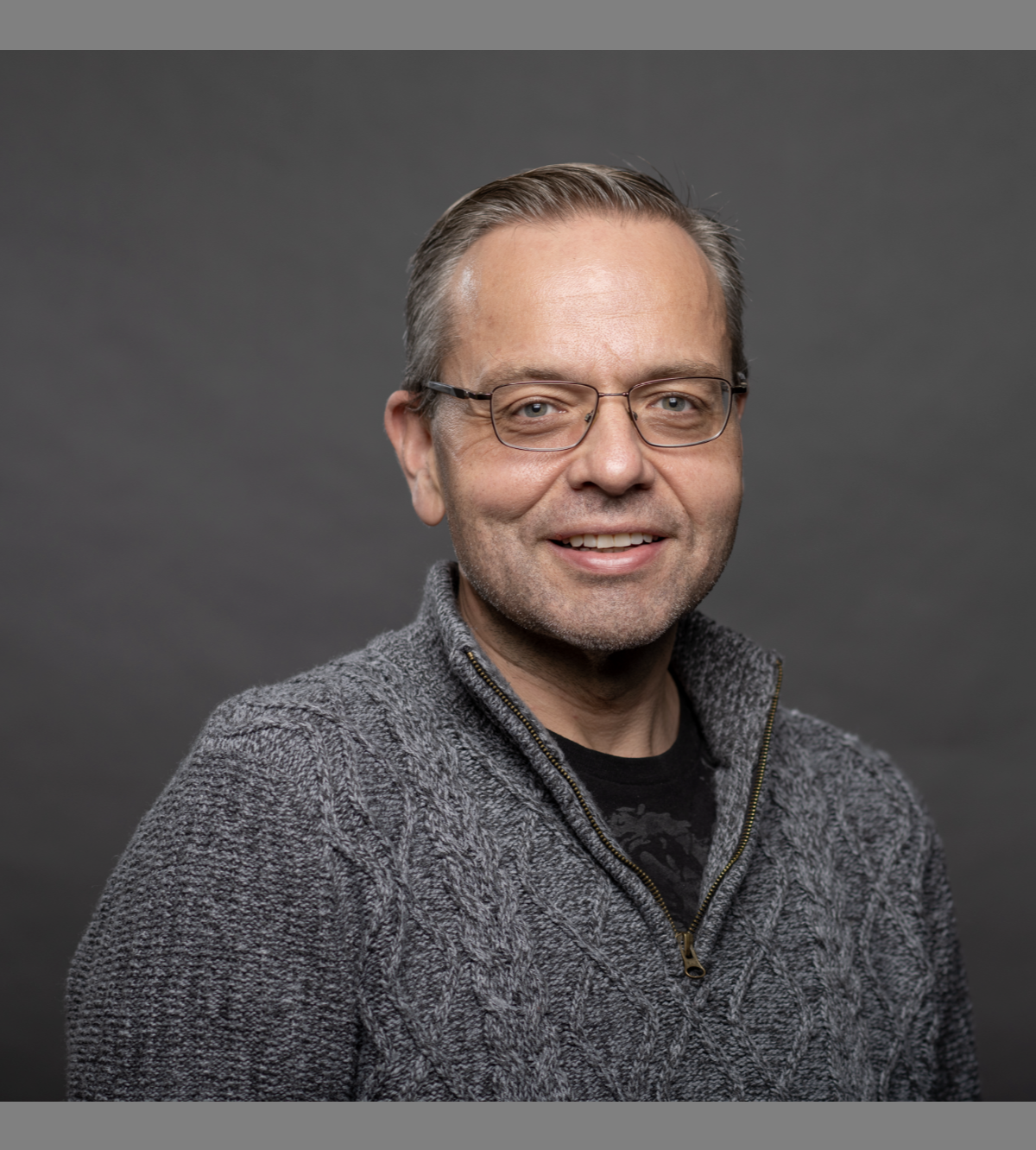
Farhad Rachidi-Haeri is a Titular Professor and Head of the Electromagnetic Compatibility (EMC) Group at EPFL. His expertise spans EMC research, lightning electromagnetics, time reversal techniques, and fault location in power systems. He has led the EMC Group since the 1980s, with funding from the Swiss National Science Foundation, European Union, and private sector collaborations. His work involves international partnerships with institutions like the University of Toronto and KTH. Education: PhD in Electrical Engineering from EPFL (1991), M.S. from EPFL (1986). Roles: President of Swiss National Committee of URSI (2012–2020), Editor-in-Chief of IEEE Transactions on EMC (2013–2015), and member of the Academy of Sciences of Bologna Institute (2019). Research Focus: Lightning interaction with infrastructure, electromagnetic field modeling, time reversal applications for fault detection, and high-frequency transient analysis. His work bridges theoretical physics and engineering, addressing challenges in power systems, lightning protection, and aerospace. Awards: IEEE EMC Technical Achievement Award (2005), Berger Award (2016), and Distinguished Honorary Professor at Tsinghua University (2024). Over 400 peer-reviewed papers and 500 conference contributions reflect his prolific research output. Labs/Teams: Leads the EMC Laboratory at EPFL, focusing on experimental and numerical studies of electromagnetic phenomena. Collaborates with global networks on projects like Laser Lightning Control and structural lightning protection for wind turbines.
Dr. Jean-Christophe Nave is an Associate Professor in the Department of Mathematics and Statistics at McGill University, specializing in applied mathematics, numerical analysis, and computational methods. His research focuses on numerical methods for partial differential equations, fluid mechanics, interface problems, and computer graphics. He holds a PhD from UCSB (2004) and has held academic positions at MIT and McGill since 2005. Currently, he serves on committees such as the Steering Committee of the Institut des Sciences Mathematiques and the CRM Applied Mathematics Lab. His educational background includes a PhD under Professors Xu-Dong Liu and Sanjoy Banerjee. Key research areas include level set methods, fluid-structure interaction, and invariant numerical methods. Notable works include the Correction Function Method for interface problems and the Characteristic Mapping Method for advection problems. Nave’s publications span topics like Poisson equations with discontinuous coefficients, fluid dynamics simulations, and high-order numerical schemes. He has advised numerous graduate and undergraduate students, contributing to their research in applied mathematics and computational science. His work bridges theoretical rigor and practical applications in engineering and physics. He teaches advanced courses such as Numerical Analysis I/II and Computational Methods in Applied Mathematics. His research group collaborates on projects involving fluid dynamics, elasticity, and geometric algorithms, with a focus on developing robust numerical tools for complex systems.
Prof. Dan Jiao is the Synopsys Professor of Electrical and Computer Engineering at Purdue University's Elmore Family School. She leads the Rapid-Heterogeneous Integration (Rapid-HI) Design Institute and serves as Editor-in-Chief of the IEEE Journal on Multiscale and Multiphysics Computational Techniques. Her research focuses on computational electromagnetics, multiphysics modeling, and AI-driven design automation for advanced integrated circuits and quantum systems. She has held academic positions since 2005, progressing from Assistant to Full Professor, and has extensive industry experience at Intel Corporation (2001–2005). Education: PhD in Electrical Engineering, University of Illinois at Urbana-Champaign (2001) Senior Staff Engineer at Intel Corporation (2001–2005) Research Interests: Fast numerical methods for large-scale electromagnetic analysis AI/ML integration in design automation (EDA/MDA) Quantum circuits and spin qubit systems Heterogeneous integration and advanced packaging Multiphysics co-simulation for nano-scale devices Signal/power integrity in high-speed systems Key Projects: Leads the NSTC AIDRFIC program (first NSTC R&D Jump Start project), the DARPA NGMM Rapid-HI Design Institute, and the GENIE-RFIC generative design tool initiative. Also directs the Consortium for Electromagnetic Science and Technology. Awards & Honors: 2022 ACES Computational Electromagnetics Award IEEE Fellow (2016) Intel Outstanding Researcher Award (2019) MTT-S Distinguished Microwave Lecturer (2020–2023) 2013 Schelkunoff Prize Paper Award Advising & Grants: Advised over 30 PhD/master's students and led projects funded by NSF, DARPA, Intel, SRC, and industry partnerships. Key grants include NSF CAREER (2008), ONR Young Investigator (2006), and multiple industry-sponsored initiatives. Labs & Teams: Rapid-HI Design Institute (DARPA NGMM) Quantum device co-design group Multiphysics modeling team
Justin Wan is a Professor in the Department of Computer Science at the University of Waterloo. His research focuses on scientific computing, medical image processing, computational finance, and machine learning. He holds a Ph.D. from UCLA (1998), an M.A. from UCLA (1995), and a B.Sc. from the Chinese University of Hong Kong (1992). Wan’s work bridges numerical methods, optimization, and deep learning, with applications in financial modeling, medical imaging, and fluid dynamics. His research interests include advanced techniques in scientific computing (e.g., multigrid methods), computer graphics simulation, and medical image enhancement (e.g., CT scan artifact reduction). He has pioneered applications of machine learning to computational finance, including option pricing and hedging using deep neural networks and GANs. His recent work explores denoising diffusion models and multi-agent systems for optimal execution in finance. Publications span topics like volatility surface computation, optimal mass transport for image registration, and parallel solvers for fluid dynamics. His methods address challenges in high-dimensional problems, robust numerical valuation, and scalable algorithms for large datasets. Wan collaborates across disciplines, integrating mathematical rigor with practical engineering solutions.
Kumar Vaibhav Srivastava is a Professor in the Department of Electrical Engineering at the Indian Institute of Technology Kanpur (IIT Kanpur). His research focuses on electromagnetic theory, meta-materials, and antenna design, with significant contributions to the field of computational electromagnetics and microwave engineering. Dr. Srivastava received his B.Tech from Kamla Nehru Institute of Technology, Sultanpur U.P. in 2002, followed by an M.Tech from IIT Kanpur in 2004. He completed his PhD at IIT Kanpur in 2008 with a thesis titled "Studies on Inhomogeneous Dielectric Resonators for Improved Mode Separation in MIC Environment using Efficient FDTD Algorithm and its Application to Band-pass Filter" under the supervision of Prof. Animesh Biswas. His research interests span a wide range of topics in electromagnetics, with particular expertise in Meta-Materials , Microwave Antennas , Microwave Absorbers , Microwave Cloaking , and the Finite-Difference Time-Domain (FD-TD) Technique . Dr. Srivastava's work has significant applications in wireless communications, radar systems, and electromagnetic compatibility. His innovative approaches to meta-material absorbers and antenna design have garnered attention in both academic and industrial circles. Dr. Srivastava's recent publications demonstrate a strong focus on advancing meta-material absorber technology and antenna design. His work shows consistent innovation in bandwidth enhancement techniques, polarization independence, and compact antenna designs for ultra-wideband applications. His research bridges theoretical electromagnetic principles with practical engineering solutions. Cadence Gold Medal-2005 for Best M.Tech. Thesis Best Teaching Assistantship Award (2005-06) Appreciation Letter from GE Global Research Centre Young Research Fellowship (Class of 1979) Best Paper Award at ATMS Conference (2013) IEI Young Engineer Award 2014 Dr. Srivastava has supervised numerous research projects and students in the field of electromagnetics and antenna design. His work with industry partners, including GE Global Research Centre, demonstrates his ability to translate theoretical research into practical applications. He maintains active collaborations with researchers both within IIT Kanpur and internationally. Based in the Advanced Centre for Electronic Systems (ACES) at IIT Kanpur, Dr. Srivastava works within a vibrant research ecosystem that supports cutting-edge work in electronic systems and electromagnetic applications. His laboratory focuses on computational electromagnetic simulations and experimental validation of novel meta-material structures and antenna designs.
Dr. Jean-Christophe Nave is an Associate Professor in the Department of Mathematics and Statistics at McGill University. He holds a PhD from the University of California, Santa Barbara (2004), under advisors Xu-Dong Liu and Sanjoy Banerjee. Prior to McGill, he served as a Lecturer and Instructor at MIT's Mathematics Department (2005-2010). His research focuses on numerical analysis, partial differential equations, fluid mechanics, and computational methods for interface problems. He has led research groups involving postdocs, PhD, and undergraduate students, collaborating on projects like the Correction Function Method for PDEs and the Characteristic Mapping Method for advection problems. Education: Ph.D. in Applied Mathematics from UCSB (2004). Affiliations include the Institut des Sciences Mathematiques Steering Committee, Centre de Recherches Mathematiques Applied Math Lab, and CNRS-UMI. Active in teaching courses like Numerical Analysis I/II and Non-Linear Dynamics at McGill, with sabbatical periods noted in recent years. Research interests span numerical methods for PDEs, fluid-structure interaction, and multi-phase flows. His work integrates computational geometry and invariant numerical techniques, addressing challenges in complex fluid dynamics and interface-driven phenomena. Over 40 peer-reviewed publications and continuous contributions to the field of computational applied mathematics. Scientific advising includes over 20 graduate and undergraduate students, with notable alumni now in academia and industry. Collaborations include projects on volcano dynamics, fiber drawing instabilities, and concentrated solar power systems. His methods have advanced numerical simulations for engineering and physical systems involving discontinuous coefficients and sharp interfaces.
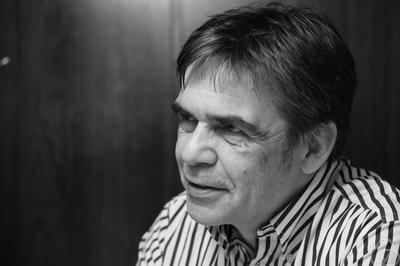
Bernardo Cockburn is a Distinguished McKnight University Professor in the School of Mathematics at the University of Minnesota. He has been a faculty member since 1987, progressing from Assistant Professor to Associate Professor in 1992, and achieving full Professor status in 1997. He also held positions as an Affiliate Professor at the University of Delaware (2019-2020) and Chair Professor of Mathematics at King Fahd University of Petroleum and Minerals in Saudi Arabia (2012-2014). Education: Ph.D. from University of Chicago (1986), Doctorat de 3eme Cycle from University of Paris VI/INRIA (1983), Masters and Licenciatura from Universidad Nacional de Ingenieria in Lima, Peru Research Focus: Numerical methods for partial differential equations, particularly discontinuous Galerkin methods Cockburn's research primarily centers on the devising and analysis of efficient methods for numerically solving linear and nonlinear partial differential equations . His most significant contribution has been in the development and analysis of discontinuous Galerkin methods , particularly the hybridizable discontinuous Galerkin (HDG) methods which he pioneered. His work spans error estimation for hyperbolic problems, continuous dependence for Hamilton-Jacobi equations, and numerous applications across fluid dynamics, structural mechanics, and electromagnetics. He has developed theoretical frameworks for superconvergence properties and created practical algorithms for a wide range of engineering applications. Analysis of his recent publications reveals a strong focus on hybridizable discontinuous Galerkin methods , with significant contributions to superconvergence theory, error estimation, and applications to diverse physical problems including Stokes flow, linear elasticity, Timoshenko beams, and convection-diffusion problems. His work demonstrates a clear trajectory from theoretical foundations to practical implementation, with increasing emphasis on curved domains, adaptive methods, and coupling techniques between different numerical approaches. Doctor Honoris Causa from Universidad Nacional de Ingenieria, Lima, Peru (2013) Invited Speaker at the International Congress of Mathematicians, Numerical Analysis Section (2010) Distinguished McKnight University Professor, University of Minnesota (2007) Cockburn has supervised an impressive 23 PhD students throughout his career, many of whom have gone on to become professors at major universities worldwide including the University of Puerto Rico, Purdue University, and University of Concepcion in Chile. His advisees have produced significant research in discontinuous Galerkin methods, particularly in applications to structural mechanics, fluid dynamics, and Hamilton-Jacobi equations. His research has been supported by numerous grants from the National Science Foundation and other funding agencies, enabling extensive collaboration with researchers across the United States and internationally. Cockburn leads a vibrant research group focused on computational mathematics, with particular emphasis on developing and analyzing discontinuous Galerkin methods. His work has fostered significant collaboration between mathematicians and engineers, with applications spanning aerospace, civil engineering, and materials science. The research group maintains strong connections with institutions worldwide, including regular collaborations with researchers in Peru, Chile, and Europe, reflecting Cockburn's international background and influence.
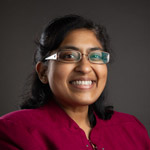
Dr. Jayshri Sabarinathan is an Associate Professor in the Department of Electrical and Computer Engineering at Western University's Faculty of Engineering, and a Faculty Member with the Institute for Earth and Space Exploration. She joined Western University in Fall 2003, received the NSERC University Faculty Award in 2004, and was promoted to Associate Professor in 2010. She previously served as Associate Director of Training (2019-2022) with the Institute for Earth and Space Exploration. Education: Ph.D. in Electrical Engineering, University of Michigan, Ann Arbor (2003) M.S.E. in Electrical Engineering, University of Michigan, Ann Arbor (1999) B.S.E. in Electrical Engineering and Engineering Physics, University of Michigan, Ann Arbor (1997) Her research focuses on developing novel nano-photonic sensors and miniature remote sensing instrumentation, with expertise spanning photonic crystals, plasmonic sensors, and CubeSat technology. Her work integrates nanofabrication techniques with practical applications in precision agriculture, geology, and space exploration. She has extensive experience with nanofabrication facilities including the University of Michigan Solid State Electronics Laboratory and Western's nanofabrication facility. Analysis of her 15 most recent publications reveals strong emphasis on plasmonic sensing technologies, photonic crystal applications, and nanoscale optical phenomena. Her research consistently bridges fundamental photonics with practical sensor development, particularly for environmental monitoring and space applications. The publications demonstrate progression from basic photonic crystal research to applied space instrumentation. Scientific Awards: NSERC University Faculty Award (2004) US Patent 8839683 for Photonic Crystal Pressure Sensors (2014) OSA (Optica) Senior Member Co-founder of LightSail Ltd space startup Dr. Sabarinathan actively mentors graduate students through her Nanophotonic Sensors Engineering (NPSE) and Remote Sensing Instrumentation (RSI) research groups. She has secured significant funding including Canadian Space Agency projects, notably as PI for the Western University-Nunavut Arctic College CubeSat Project Ukpik-1. Her research has resulted in three patents for micro photonic-sensors and multi-spectral camera innovations. Her labs focus on two primary research thrusts: the NPSE group developing hybrid photonics micro/nano-sensors including IR/THz plasmonic sensors and bio-photonic sensors, and the RSI group creating multispectral camera imagers for UAV/mobile robots with XRD instrumentation miniaturization for Mars rovers.
Endre Süli is a Professor of Numerical Analysis at the University of Oxford, affiliated with Worcester College and Linacre College. He has held various academic roles since 1985, including Fellowships and Tutorships in Mathematics. University Education: B.Sc. in Mathematics, University of Belgrade (1974-1978) M.Sc. in Mathematics, University of Belgrade (1978-1980) Ph.D. in Mathematics, University of Belgrade (1985) M.A., University of Oxford (1985) British Council Visiting Student, Reading University and University of Oxford (1983/84) Süli's research focuses on numerical methods for partial differential equations (PDEs), with expertise in finite element methods, adaptive algorithms, error control, and computational modeling of fractures and non-Newtonian fluids. His work bridges mathematical theory and practical applications in fluid dynamics and material science. His recent publications emphasize finite element approximations, nonlinear PDEs, and stochastic models for polymer dynamics. Themes include multiscale methods, tensor-sparsity for high-dimensional problems, and compressible flow simulations. Scientific Awards: Fellow of the Royal Society (2021) London Mathematical Society Naylor Prize and Lectureship (2021) Pro Urbe Prize, City of Subotica (2021) SIAM Fellow (2016) Member, Academia Europaea (2020) Foreign Member, Serbian National Academy of Sciences and Arts (2009) IMA Service Award (2011) Fellow, European Academy of Sciences (EurASc) (2010) Fellow, Institute of Mathematics and its Applications (2007) London Mathematical Society/New Zealand Mathematical Society Forder Lecturer (2015) Professor Hospitus, Charles University, Prague (2012) Distinguished Visiting Chair Professor, Shanghai Jiao Tong University (2013) Invited Speaker, International Congress of Mathematicians, Madrid (2006) Süli has supervised numerous research projects and held visiting appointments globally. His contributions to numerical analysis span foundational work on error estimation, nonlinear stability, and advanced computational frameworks for complex physical systems.
Vincenzo Sciacca is a Full Professor in the Department of Mathematics and Computer Science at the University of Palermo, Italy. His academic position is listed under classification code MATH-04/A, which typically refers to Mathematical Analysis in the Italian academic system. He maintains regular office hours on Thursdays from 3:00 PM to 6:00 PM at the Department of Mathematics and Computer Science, Via Archirafi 34, Office No. 216 (2nd floor). Professor Sciacca's research spans several areas of mathematical physics and fluid dynamics. His primary interests include: Fluid dynamics and vortex theory Partial differential equations, particularly Navier-Stokes and Euler equations Singularity formation in boundary layer theory Numerical analysis of complex fluid systems Mathematical modeling in geophysical fluid dynamics Complex singularity analysis for nonlinear systems Analysis of his recent publications reveals a strong focus on the mathematical aspects of fluid dynamics, with particular attention to singularity formation, vortex dynamics, and the behavior of solutions to fundamental equations in fluid mechanics. His work combines rigorous mathematical analysis with computational approaches to understand complex phenomena in fluid systems. Over the years, his research has evolved from fundamental studies of singularity formation to more applied problems in geophysical fluid dynamics and mathematical biology as evidenced by his 2024 paper on Multiple Sclerosis. Professor Sciacca maintains an active research profile with publications spanning from 1994 to the present, demonstrating sustained scholarly contribution to his fields of expertise. His work shows interdisciplinary reach, connecting pure mathematical analysis with applications in physics, geophysics, and biomedical modeling. He can be contacted at vincenzo.sciacca@unipa.it and maintains a personal web page at http://math.unipa.it/~sciacca/ where additional information about his teaching and research is available.
Dr. Fengyan Li is a Professor in the Department of Mathematical Sciences at Rensselaer Polytechnic Institute (RPI). She holds a PhD in Applied Mathematics from Brown University (2004) and previously held a postdoc at the University of South Carolina. Her research focuses on numerical analysis and scientific computing, particularly discontinuous Galerkin methods for applications in wave propagation, fluid dynamics, plasma physics, and nonlinear optics. She has received prestigious awards including the NSF-CAREER Award (2009) and Alfred P. Sloan Fellowship (2008). Dr. Li serves on editorial boards of journals like SIAM Journal of Numerical Analysis and IMA Journal of Numerical Analysis. Education: PhD in Applied Mathematics (Brown University, 2004); MS & BS in Computational Mathematics (Peking University, 2000 & 1997). Research interests emphasize multi-scale simulations, reduced-order modeling, and high-order methods. Her work addresses challenges in kinetic transport, nonlinear optics, and plasma dynamics. She has delivered plenary talks at major conferences, including ICOSAHOM (2018) and NAHOMCon (2022). Professional service includes leadership roles in the Association for Women in Mathematics (AWM), co-organizing symposiums, and mentoring. She is a 2025 AWM Fellow and advises RPI's AWM Student Chapter.
Guillaume Chiavassa is a Professor in Applied Mathematics at Ecole Centrale de Marseille, affiliated with the Laboratoire M2P2 (Mechanics, Modeling and Physical Processes Laboratory). He leads research in the Thermodynamics, Waves, Digital, Interfaces and Combustion team, focusing on advanced computational methods for complex physical phenomena. His research spans wave propagation in porous media, numerical modeling of plasma flows in Tokamak configurations, multilevel schemes for conservation laws, penalization methods for compressible flows, and wavelets in numerical analysis. Chiavassa's work demonstrates exceptional mathematical rigor applied to challenging physical systems, particularly in nonlinear wave dynamics and computational fluid mechanics. His methodologies bridge theoretical mathematics with practical engineering applications. Analysis of his recent publications reveals a strong focus on wave propagation phenomena across diverse media, with significant contributions to numerical methods for nonlinear systems. His work consistently addresses the mathematical challenges of modeling complex physical behaviors including material softening, fractional attenuation in porous media, and plasma dynamics in fusion devices. The interdisciplinary nature of his research connects applied mathematics with mechanical engineering, geophysics, and nuclear fusion technology. Chiavassa leads the PROSPERO Software project and participates in the ANR Espoir research initiative and the Consortium SEISCOPE. His teaching activities include courses on hyperbolic equations, finite elements, and heat transfer, with practical computational components developed for student instruction. He maintains an active research program through Laboratory M2P2, where his team develops advanced numerical methods for simulating complex physical phenomena with applications ranging from environmental engineering to nuclear fusion research.
Ronald D. Haynes is a Full Professor and Chair of Scientific Computing Graduate Programs in the Department of Mathematics and Statistics at Memorial University of Newfoundland. He leads research in numerical methods for PDEs and industrial-scale optimization problems. His work develops advanced domain decomposition techniques, adaptive mesh methods, and parallel computing approaches for solving complex physical systems. Applications include modeling pitting corrosion of materials, predicting rock strength for drilling optimization, and simulating multiphase fluid flows in porous media. Recent publications demonstrate innovations in mesh adaptation, parallel algorithms, and machine learning applications for industrial problems. Collaborative projects have addressed reservoir simulation, drill bit analysis, and corrosion prediction through integrated computational approaches. Professor Haynes has received the President's Award for Outstanding Research (2018) and Dean of Science Distinguished Teaching Award (2017). He serves as Co-editor-in-chief of the CAIMS Mathematics in Science and Industry Journal and was President-Elect of the Canadian Applied and Industrial Mathematics Society (2023-2025). He maintains active doctoral supervision with current research groups focusing on domain decomposition methods, closest point algorithms, and optimization techniques. Industry partnerships include projects with ExxonMobil and Global Maritime addressing drilling optimization and mooring design challenges.
Pedro Jorge Martins Coelho is a Professor in the Mechanical Engineering Department at Instituto Superior Técnico, University of Lisbon, Portugal. His academic career spans several decades with a focus on advanced thermal sciences and computational methods. His research has significantly contributed to the understanding of radiative heat transfer phenomena in complex systems. Dr. Coelho's educational background includes a Ph.D. in Mechanical Engineering, which has provided the foundation for his extensive research in thermal sciences. His work demonstrates a strong theoretical foundation combined with practical applications across various engineering domains. His primary research interests encompass radiative heat transfer, turbulence-radiation interaction, combustion modeling, and numerical methods for thermal systems. Recent work has expanded into biomedical applications of thermal radiation, particularly in laser-tissue interactions for cancer detection and treatment. His publications reveal a consistent focus on developing and refining computational methods for solving complex heat transfer problems, with particular emphasis on the radiative transfer equation in various media and geometries. Analysis of his recent publications shows a clear evolution toward more complex and interdisciplinary applications, including biomedical thermal applications, advanced turbulence modeling, and thermal management of electrical systems. His work consistently bridges fundamental theoretical developments with practical engineering applications, particularly in combustion systems, energy recovery, and thermal management. Dr. Coelho has served on editorial boards for prestigious journals including Heat Transfer Research, Computational Thermal Sciences, and International Journal of Energy for a Clean Environment, demonstrating his standing in the thermal sciences community. His research collaborations span numerous institutions and researchers worldwide, as evidenced by his extensive publication record with various co-authors across different countries. He has also been involved in conference organization, serving as Associate Editor for major international heat transfer conferences.
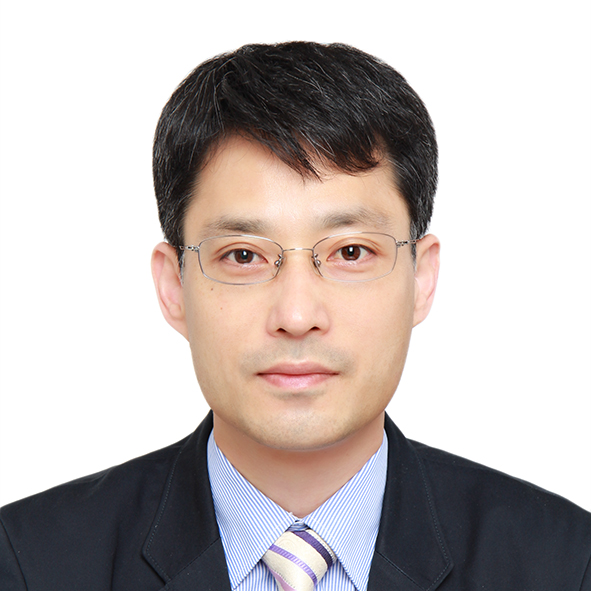
June-Yub Lee is a Professor of Mathematics and Vice President at Ewha Womans University, leading the Office of University Planning and Coordination. He is also a member of the Institute of Mathematical Sciences. His academic background includes a Physics major and Mathematics minor from KAIST, followed by a Ph.D. in Mathematics from New York University's Courant Institute. Prof. Lee specializes in numerical analysis, inverse problems, computational fluid dynamics, and phase-field modeling. His research focuses on developing robust numerical methods for partial differential equations, with applications in materials science and fluid dynamics. Notable contributions include work on operator splitting methods, energy-stable schemes for phase-field models, and inverse problem solutions in electrical impedance tomography. He has organized major international conferences like ICM2014 and ICIP series, and serves on editorial boards of journals such as the Journal of the Korean Society for Industrial and Applied Mathematics (KSIAM). His work bridges theoretical mathematics with computational science, emphasizing interdisciplinary applications. Prof. Lee has actively contributed to academic administration, including serving as Director of the Division of Natural Sciences at the National Research Foundation (NRF). His research lab focuses on scientific computation, with recent projects exploring long-time simulations of phase-field crystal models and high-order numerical methods for multiphase systems.