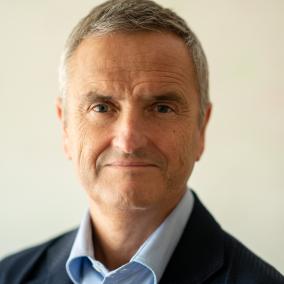
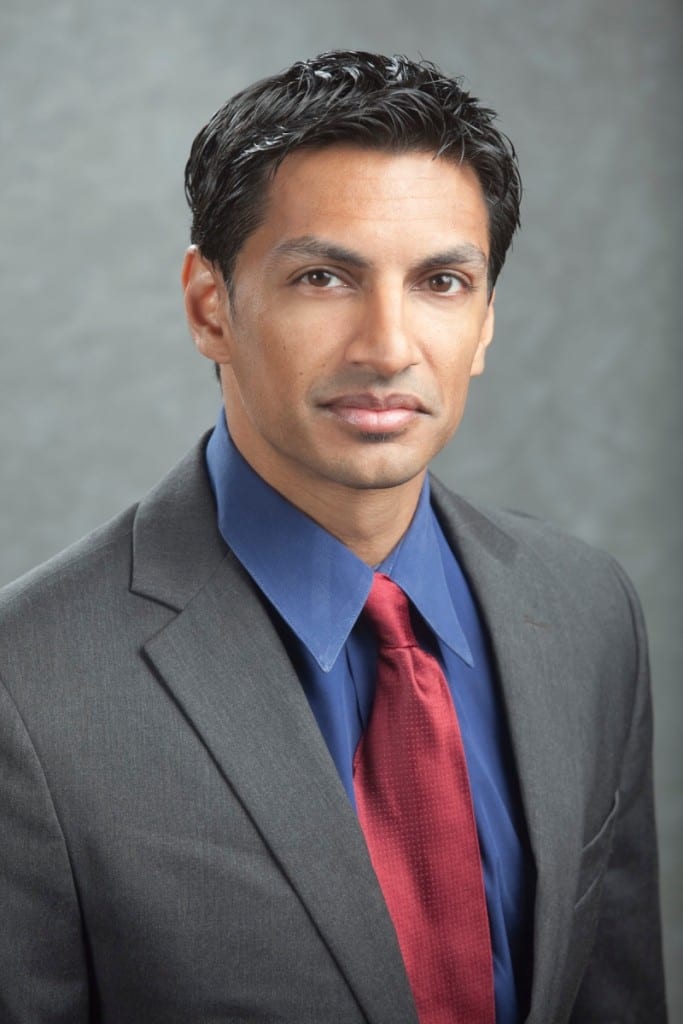
David Harvey is a Distinguished Professor of Anthropology and Geography at the City University of New York (CUNY) Graduate Center and Director of Research at the Center for Place, Culture and Politics. He has been teaching and writing about Karl Marx’s Capital for over 50 years, earning recognition as a leading Marxist scholar and urban theorist. Research Interests Cultural anthropology Political economy Urbanization and capitalist development Environmental justice Geographical theory Advanced capitalist countries Publications & Trends Harvey’s work spans Marxist theory, neoliberalism, and urban studies, with recent focus on Grundrisse and capitalist contradictions. His scholarship connects historical materialism to contemporary crises, emphasizing spatial fixes, environmental limits, and anti-capitalist resistance. Awards & Honors Outstanding Contributor Award (Association of American Geographers) Centenary Medal (Royal Scottish Geographical Society, 2002) Isaac and Tamara Deutscher Book Prize (2010) for The Enigma of Capital Honorary degrees from University of Bristol, Goldsmith College, Kent, Buenos Aires, Roskilde, Uppsala, and Ohio State University
Wei Xiong is the Hugh Leander and Mary Trumbull Adams Professor in Finance and Professor of Economics at Princeton University, affiliated with the Department of Economics and Bendheim Center for Finance. His research centers on behavioral finance and capital market imperfections with a focus on China's financial system and commodity markets. His educational background includes: Ph.D. in Finance from Duke University (2001) B.S. in Physics from University of Science and Technology of China (1993) Research Interests: Professor Xiong's work fundamentally explores behavioral finance and capital market imperfections , pioneering studies on speculative bubbles , heterogeneous beliefs in asset pricing , and financing frictions . His recent scholarship critically examines the financialization of commodity markets , belief distortions during financial crises , and the unique institutional dynamics of China's hybrid economy , where state and market forces interact. Publication Trends: Xiong's 48 publications in top-tier journals reveal an evolving trajectory from classical behavioral finance (2001-2013) toward contemporary China-focused systemic analysis (2017-2025). Recent works integrate cryptocurrency economics, real estate risk management, and policy design in emerging markets, demonstrating methodological rigor through structural modeling and empirical analysis of large-scale financial datasets. Scientific Awards: 2012 Smith Breeden Award (first prize) for the best non-corporate finance paper published in Journal of Finance 2013 NASDAQ OMX Award for the best asset pricing paper presented in Western Finance Association Meetings Professional Activities: As NBER research associate and former Management Science finance editor (2009-2011), Xiong bridges academia and policy. He co-founded VoxChina.org to foster China-world economic dialogue and co-edited The Handbook of China’s Financial System (Princeton University Press). His keynote addresses at major conferences—including the 2024 Chinese Economists Society meeting on “Information Discovery in a Hybrid Economy”—demonstrate sustained policy influence. Labs and Initiatives: Xiong leads Princeton's Bendheim Center for Finance research initiatives and directs VoxChina.org, which produces influential policy analyses on China's economy. His recent work includes the NBER-commissioned study on commodity market risks and ongoing projects examining big tech lending models and data privacy impacts on digital finance.
Ricardo Caballero is the Ford International Professor of Economics at the Massachusetts Institute of Technology's School of Humanities, Arts, and Social Sciences, where he previously served as Chairman of the Economics Department from 2008 to 2011. A leading scholar in macroeconomics and financial economics, his research focuses on safe assets, monetary policy, financial crises, and international economics. His research interests center on the macroeconomic implications of financial frictions, with particular emphasis on safe asset shortages, risk premium dynamics, and monetary policy transmission mechanisms. Caballero's work has pioneered the risk-centric approach to macroeconomics, explaining phenomena such as the Wall Street/Main Street disconnect, global imbalances, and the collapse of interest rates through the lens of safe asset scarcity and risk intolerance. His research bridges theoretical modeling with empirical analysis of financial crises and policy interventions. Caballero's recent publications demonstrate a consistent focus on financial conditions indexing, monetary policy frameworks, and the interaction between financial markets and the real economy. His work increasingly examines how central banks can target financial conditions directly and how risk premia evolve during crises, with applications to pandemic-era economic policy and zero lower bound environments. 2002 Frisch Medal of the Econometric Society Smith Breeden Prize by the American Finance Association Journal of Finance 2014 Brattle Group Prize 2022 Banque de France-TSE Senior Prize in Monetary Economics and Finance Elected Fellow of the Econometric Society (1998) Elected Fellow of the American Academy of Arts and Sciences (2010) As an NBER Research Associate and frequent policy advisor, Caballero has influenced central bank thinking globally through his work on financial stability, monetary policy frameworks, and global imbalances. His research has informed policy discussions at the Federal Reserve, IMF, and multiple central banks regarding crisis management, safe asset creation, and the appropriate monetary response to financial shocks. Caballero maintains active collaborations with major financial institutions and central banks worldwide, translating theoretical insights into practical policy frameworks.
Jordi Galí is a Professor at the Department of Economics and Business at Universitat Pompeu Fabra (UPF), a Senior Researcher at the Center for Research in International Economics (CREI), and a Research Professor at the Barcelona School of Economics (BSE). He holds a PhD from MIT and has played a central role in shaping modern macroeconomic theory, particularly the New Keynesian framework used by central banks worldwide. Education: PhD in Economics, Massachusetts Institute of Technology (MIT), 1989 Master in International Management, ESADE, 1985 Bachelor in Economics, Universitat Pompeu Fabra, 1994 His research focuses on macroeconomic theory, monetary economics, and macroeconometrics. He is best known for his work on the New Keynesian Phillips Curve, optimal monetary policy rules, and the role of technology and expectations in business cycles. His influential book, Monetary Policy, Inflation and the Business Cycle , is a standard reference in graduate programs globally. The most recent articles highlight a continued focus on critical issues in modern macroeconomics: the implications of a low natural rate of interest (r*), the effectiveness of monetary policy at the zero lower bound, the role of wage and price flexibility, and the interaction between fiscal and monetary policy. His work increasingly integrates heterogeneity, financial frictions, and experimental methods, reflecting the evolving frontiers of the field. Scientific Awards: BBVA Foundation Frontiers of Knowledge Award (2025) Yrjo Jahnsson Award (2005) Premi Rei Jaume I d'Economia (2004) Premio Nacional de Investigación “Pascual Madoz” (2022) Three ERC Advanced Grants Foreign Honorary Member, American Economic Association (2020) Galí has advised numerous central banks, including the ECB, Federal Reserve, and Banque de France. He has held leadership roles as President of the European Economic Association (2012), co-editor of the Journal of the European Economic Association , and co-director of the CEPR International Macroeconomics Programme. He is a Research Fellow at CEPR, a Research Associate at NBER, and a Fellow of the Econometric Society. He has also been actively involved in public policy debates in Spain and Europe, particularly on issues of productivity, labor market reform, and fiscal policy. His research program continues to explore the design of stabilization policies in open and currency union economies.
Dr Yizhi Wang, FHEA, is a Lecturer (Assistant Professor) in Finance at Cardiff Business School, Cardiff University, UK. He serves as Co-Director of the Cardiff Fintech Research Group and is the Editor-in-Chief of Elsevier’s Finance Research Letters . He is also Associate Editor for International Review of Financial Analysis and Research in International Business and Finance , and Guest Editor for International Review of Economics & Finance and Journal of Chinese Economic and Business Studies . Research Interests: Financialization and Econometrics Climate finance and carbon markets Cryptocurrency and FinTech indices Energy economics and risk management Green finance and ESG investing Behavioral and institutional finance Dr Wang has published extensively in world-leading journals such as Risk Analysis , European Journal of Operational Research , Journal of Economic Behavior & Organization , Energy Economics , and Journal of International Money and Finance . His work spans theoretical modeling, empirical econometrics, and policy-oriented studies. Scientific Awards: Shanghai Institute of International Finance and Economics Best Paper Award Teaching & Supervision: As a Fellow of the UK Higher Education Academy (FHEA), Dr Wang is module leader for undergraduate BS2514: Financial Markets and Institutions and postgraduate BST158: Big Data Analytics for Finance , earning consistently high teaching evaluations (4.8–4.9/5). He is available to supervise doctoral students in Financialization and has mentored graduates now employed at the University of Oxford, Morgan Stanley, and JPMorgan Chase. Labs & Research Groups: Co-Director, Cardiff Fintech Research Group Member, Cardiff Sustainable Finance Research Group Member, Environmental, Ecological, Extinction Accounting, Governance and Economics Research Group Member, Cardiff Business School Research Committee Dr Wang also curates multiple quarterly-updated indices (UCRY, ICEA, CBDCAI, NFTsAI, ACCC, FinTech Index) publicly available at https://sites.google.com/view/cryptocurrency-indices/home .
Prasad Krishnamurthy is a Professor of Law at Berkeley Law School, University of California, Berkeley. His work bridges legal institutions, financial regulation, and empirical economic analysis. Education: B.A./M.A. from University of Chicago (1999), J.D. from Yale Law School (2004), M.A./Ph.D. in economics from UC Berkeley (2011). Research focuses on empirical analysis of legal rules, financial regulation, antitrust policy, economic development, and distributive justice. His recent publications examine debt documentation reforms, student loan forgiveness, and merger deregulation impacts. His 2024 articles highlight empirical evaluations of state court reforms (California, Texas, Connecticut) and debates on public banking. Earlier work spans banking deregulation, affirmative action, and Indian public policy.
Didier Sornette is Professor on the Chair of Entrepreneurial Risks at ETH Zurich since 2006, with concurrent affiliations as Professor at the Swiss Finance Institute, Special Professor at Tokyo Tech's Institute of Innovative Research, and Chair Professor (part-time) at Southern University of Science and Technology (SUSTech) in China. He founded the Financial Crisis Observatory (FCO) in 2008 to rigorously test financial market predictability during bubbles and co-developed the collaborative platform xYotta since 2012. Research Focus: Predictability and control of crises in complex systems, including financial crashes, earthquakes, social network dynamics, and medical applications (immune systems, epilepsy). Key Concept: Coined 'Dragon-kings' to describe extreme events with identifiable precursors, emphasizing their predictability. Scientific Awards AAAS Fellow (2013) Member of the Swiss Academy of Engineering Sciences (2019) E. N. Lorenz Lecture (2010), Ehrenfest Colloquium (2011) He has mentored 36 PhD students, supervised 120 master theses, and guided 38 post-docs (as of December 2019).
Arman Eshraghi is a Professor of Finance and Investment at Cardiff Business School , with 15 years of academic and industry experience. He founded the Cardiff Fintech Research Group , leads the Digital Transformation Innovation Institute 's fintech theme, and co-directs the Behavioral Finance Working Group . He serves as Editor-in-Chief of International Review of Economics and Finance and Senior Editor in multiple journals. Key academic appointments: Cardiff University (2018–present), University of Edinburgh (2013–18) International fellowships: Development Bank of Japan, University of Canterbury (New Zealand), UCL Industry engagement: Federal Reserve Bank (NY), Alan Turing Institute, CFA Society UK, CityUK Research Focus: Behavioral finance, corporate finance, financial technology, and interdisciplinary accounting. His work examines retail investor psychology, fund manager behavior, CEO decision-making, and fintech impacts on financial markets. He has published in Review of Financial Studies , Harvard Business Review , and Financial Times . Scientific Contributions: EFMD Global, Emerald Literati, and European Financial Group awards Keynote speaker at global conferences (New York, London, Mumbai, Frankfurt) Media citations in Financial Times , BBC , Forbes , and Bloomberg Teaching & Leadership: Delivers award-winning MSc/MBA/PhD courses in UK, Europe, and Asia. Holds a Postgraduate Certificate in Academic Practice and Fellow of AdvanceHE. Designed executive programs for firms including Aetna CVS Health and Scottish Widows. Research Leadership: Co-organizes international conferences like the Cardiff Financial Technology Conference and European Financial Management Association Meeting . Supervises PhD students on topics spanning fintech, behavioral finance, and CEO lifestyle impacts.
Mark P. Kritzman is a Senior Lecturer in Finance at the MIT Sloan School of Management. He concurrently serves as President & CEO of Windham Capital Management LLC and Senior Partner at State Street Associates. His roles include board memberships at the Institute for Quantitative Research in Finance, Investment Fund for Foundations, and editorial boards of journals like the Journal of Investment Management and Financial Analysts Journal. Education: MBA from New York University and Chartered Financial Analyst (CFA) designation. His research focuses on investing strategies , risk management , and predictive analytics , with recent work addressing federal spending's impact on inflation, bubble detection, and NBA draft prospect evaluation. He has authored six books, including Puzzles of Finance and The Portable Financial Analyst . Key publications from 2023–2025 explore themes like transparent predictive modeling, volatility forecasting, and algorithmic alternatives to neural networks. His work bridges academia and industry, emphasizing practical applications of quantitative methods. Awards : 2025 James R. Vertin Award, 2013 Peter L. Bernstein Award, multiple article honors. Grants/Advising : No explicit student advisees listed; professional contributions focus on institutional advisory roles. He leads Windham Capital Management and actively contributes to editorial boards, shaping discourse in finance and quantitative research.
Dong Lou is a Professor of Finance at the Hong Kong University of Science and Technology (HKUST), where he serves as Associate Dean of Business and Management (Strategic Planning and Research) and Acting Head and Chair Professor of the Department of Finance. He is also a CEPR Research Fellow at the London School of Economics (LSE). His research focuses on asset pricing, investment management, and behavioral finance, with a particular emphasis on market inefficiencies, trading dynamics, and macrofinancial linkages. PhD in Finance, Yale University, 2009 His scholarly work explores liquidity provision, arbitrage activity, investor behavior, and the impact of information dissemination on financial markets. Recent studies include the effects of dollar asset holdings on global yields, retail margin trading dynamics, and the relationship between communication rates and security prices. His publications appear in top journals like Management Science , Journal of Financial Economics , and Review of Financial Studies . His research has been recognized with numerous awards, including the Crowell Memorial Award, NASDAQ OMX Award, and multiple INQUIRE and CRSP Forum grants. He mentors PhD students in finance and co-directs the HKUST-DXM AI for Finance Joint Laboratory, advancing AI applications in financial research and practice.
Prof. Tibor Neugebauer is a Full Professor of Finance at the University of Luxembourg’s Faculty of Law, Economics and Finance (FDEF), Department of Finance. He holds a Doctorate in Economics from the University of Valencia (2000) and professional qualifications from Hannover, with prior academic positions at institutions including York, Kiel, Hannover, and research stays at Lisbon, Bari, Valencia, and Rome. His research focuses on Experimental Finance and Economics, particularly behavioral finance, asset markets, auctions, and decision-making under uncertainty. He designs laboratory experiments to analyze markets, strategic interactions, and algorithm-human dynamics, with recent emphasis on algorithmic trading and market regulations. Education: Doctor of Economics, University of Valencia (2000) Master of Science in Economics, University of Alicante (1997) Bachelor’s in Economics, University of Bonn (1994) Professional Qualification in Economics, University of Hannover (2006) Research Interests: Prof. Neugebauer’s work examines institutional and informational structures’ impact on market outcomes, including fairness in co-determination, communication effects in asset markets, and algorithmic arbitrage. His experiments explore human behavior in complex environments, such as speculative asset trading and regulatory interventions. He has pioneered studies on algorithmic trading’s role in experimental markets, combining theoretical models with empirical behavioral insights. Key Contributions: His research addresses topics like margin trading regulations, Modigliani-Miller theorem validity in experimental settings, and the ‘greater fool’ phenomenon. Recent studies emphasize algorithmic-human interaction dynamics, market efficiency under varying mechanisms, and the implications of wash trading. Awards & Grants: No specific awards listed, but his extensive publication record reflects sustained recognition in experimental finance. Grants and collaborations likely relate to his research on market design and behavioral finance. Labs/Teams: Active in the FDEF’s finance research group, contributing to Luxembourg’s international reputation in experimental economics and finance. Collaborates with global institutions on algorithmic trading and market dynamics.
Carl Wennerlind is a Professor of History at Barnard College, specializing in early modern European history with a focus on intellectual history and political economy. His research explores the historical development of monetary theory, credit systems, and the interplay between economic ideology and natural resource management. Specializes in 17th-18th century capitalist systems Examines money as a cultural and philosophical artifact Investigates Sweden's economic modernization efforts Currently researching Linnaean natural science link to capitalism His publications span journals like Journal of Political Economy , American Historical Review and edited volumes. Recent work examines material capitalism history (2024) and scarcity-climate crisis connections (2023). Key themes include financial revolution dynamics, economic semiotics, and natural knowledge's role in empire-building. Scientific awards include: Warren Samuels Prize (2012) History of Economics Society Best Article Prize (2006) European Society for the History of Economic Thought award (2006) Research funding includes NEH, ACLS, and Swedish foundations. Courses cover topics ranging from foundational European history surveys to specialized seminars on capitalism, money history, and political economy debates. Current projects include a monograph on Swedish political economy and a comprehensive history of capitalism discourse.
Juan Yao is a Senior Lecturer at the Finance Discipline, Business School, The University of Sydney. Her research focuses on empirical asset pricing , funds management , foreign exchange markets , and business forecasting . She has contributed to national research projects such as "Strategies and Approaches to Teaching and Learning Cross Cultures" (2007-2009) and is affiliated with the Sydney Environment Institute, China Study Centre, and Australia-China Business Network. Research Interests: Juan’s work explores financial market efficiency, investor behavior, and cross-cultural economic dynamics. Her publications address hedge fund performance, mutual fund strategies, and behavioral anomalies in both Australian and Chinese markets. Publications: Recent articles analyze price bubbles, sentiment analysis, and institutional trading impacts, spanning journals like Journal of Banking & Finance and Pacific-Basin Finance Journal . Grants: She served as Chief Investigator for a national teaching and learning grant (2007-2009) and a 2014 CIPR grant on asset-price bubbles in Australia.
Christine A. Parlour is the Sylvan C. Coleman Chair of Finance and Accounting at the Haas School of Business, UC Berkeley. She co-directs the Berkeley Center for Responsible Decentralized Intelligence. Her research focuses on Fintech, digital payments, and market microstructure, particularly in cryptocurrency and decentralized finance (DeFi). She has served on the Nasdaq Economic Advisory Board and the New Special Study of Securities Markets steering committee. Education: PhD and MA in Economics from Queen’s University (Kingston), BSocSci from University of Ottawa. Her work explores payment system externalities, blockchain protocols, and banking innovation. Recent research includes analysis of Bitcoin transaction fees, decentralized exchange liquidity, and systemic risks in DeFi markets. Publications span top finance journals, addressing topics like Uniswap’s AMM model, miner collusion in Bitcoin, and the impact of Fintech on traditional banking. She frequently engages with policymakers on digital currency regulation and CBDC design.
Susan Wachter is a Professor of Financial Management and Professor of Real Estate at the University of Pennsylvania's Stuart Weitzman School of Design and Wharton School. She has held academic positions since 1972, including roles as Chair of the Real Estate Department and Co-director of the Penn Institute for Urban Research. Her research focuses on urban economics, housing finance, climate risk, and public policy. She serves on editorial boards for journals like Journal of Housing Economics and has advised organizations such as the National Research Council and the American Real Estate and Urban Economics Association. Wachter earned her academic credentials at Bryn Mawr College and held a visiting professorship at Singapore Management University. Her awards include the Lindback Award for Distinguished Teaching (1975) and the American Real Estate and Urban Economics Lifetime Achievement Award (2005). Her work explores topics like mortgage market stability, climate impacts on housing, and equitable housing finance systems. Research Highlights: Climate risk in mortgage markets, pandemic-era housing dynamics, foreign buyer tax impacts, and systemic financial stability. Policy Contributions: Advised on housing finance reforms, GSE viability, and fair housing policy modernization. Grants & Labs: Directed the Wharton Geographical Information Systems Lab since 1995, focusing on urban spatial analytics. Her publications span over four decades, addressing topics such as mortgage stress, urban competitiveness, and the legacy of the 2008 housing bubble. Wachter's interdisciplinary approach bridges real estate finance, public policy, and urban planning to inform sustainable housing solutions.