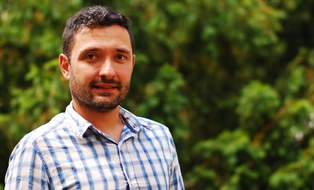
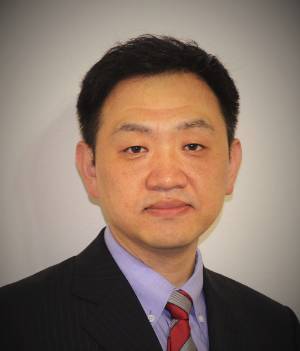
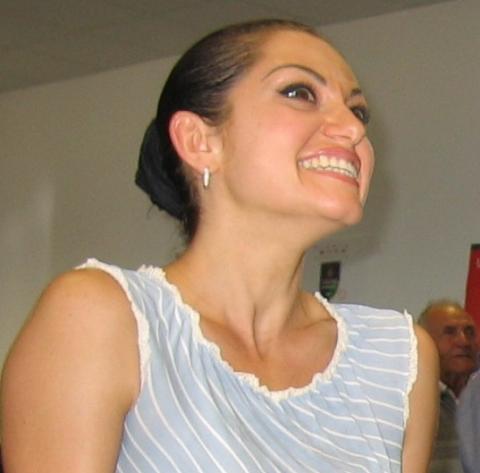
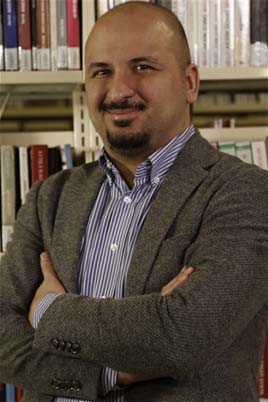
Enrique Onieva Caracuel is a full Professor at the University of Deusto's School of Engineering , Department of Computing, Electronics and Communication Technologies . He leads the PhD program in Engineering for the Information Society and Sustainable Development, and serves as Researcher in Intelligent Transportation Systems at DeustoTech-Mobility. His work spans 30+ research projects including EU-funded H2020 initiatives TIMON and LOGISTAR . Research Interests : Artificial Intelligence applications in transportation Machine Learning & Deep Learning Fuzzy Logic & Evolutionary Optimization Smart City solutions RFID & IoT systems Scientific Impact : 100+ publications (50+ top-tier journals), H-index 23 (Scopus), with recognition at international conferences. Advising : Supervised 6 theses including work on vehicle routing optimization, PTML models for nanotechnology, and industrial anomaly detection. Current Projects : Developing smart mobility systems, real-time passenger profiling, and ethical AI frameworks, funded by European Commission, Basque Government, and Diputación Foral de Gipuzkoa.
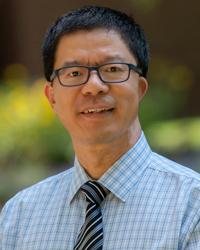
Aminu Bello Usman serves as an Associate Professor of Computer Science and leads the Cybersecurity Research Group at York St John University's York Business School. His academic career spans international institutions including the University of Sunderland where he was Head of the School of Computer Science, and prior positions at Auckland University of Technology, NorthTech, and Bayero University, Kano. As a Senior Fellow of the Higher Education Academy (D3), he mentors academics across the UK through Advance HE. Dr. Usman's research centers on critical cybersecurity challenges with particular focus on data privacy, IoT security, biometric authentication systems, applied artificial intelligence, and trust-based security mechanisms. His work emphasizes privacy-preserving models for healthcare applications, developing frameworks that integrate security from the ground up (Privacy by Design), and exploring trust dynamics in human-AI interactions, especially within culturally diverse contexts. His research bridges theoretical innovation with practical applications to address real-world security vulnerabilities. His recent publications reveal a consistent trajectory toward securing healthcare IoT systems through biometric authentication, with significant emphasis on privacy preservation. His work spans multiple domains including quantum-inspired encryption for medical data, voice biometrics for IoT authentication, and chaos-based cryptographic approaches. The research demonstrates interdisciplinary convergence between cybersecurity, healthcare technology, and artificial intelligence, with growing attention to cultural dimensions of trust in security systems. Senior Fellow of the Higher Education Academy (D3) As an editorial leader, Dr. Usman serves as Editor of the Journal of Disability Research and Lead Editor of the Journal of Networking and Telecommunications, while also contributing as Associate Editor for the International Journal of Computers and Applications. He actively participates as an external examiner and academic review panel member for multiple institutions, helping maintain academic standards across the sector. His professional activities extend to keynote speaking at conferences on cybersecurity topics and mentoring emerging researchers in the field. Leading the Cybersecurity Research Group at York St John University, Dr. Usman directs research efforts focused on privacy, biometric security, IoT security, and trust-based systems. His team explores practical applications of theoretical security frameworks, particularly in healthcare contexts, while investigating how cultural factors influence trust in AI-driven security systems. The group maintains strong industry connections to ensure research addresses current cybersecurity challenges faced by organizations.
Ostap Okhrin serves as a Professor of Econometrics and Statistics at Dresden University of Technology, holding the Chair of Econometrics and Statistics with a special emphasis on Transportation Systems. His academic career is marked by a strong focus on methodological advancements in econometrics and statistics, applied to complex real-world problems in transportation and finance. Professor Okhrin's research interests span econometrics, statistical theory, copula modeling, time series analysis, and financial risk management. He has significantly expanded into machine learning and reinforcement learning applications for autonomous systems, with deep expertise in traffic flow modeling, autonomous driving, maritime navigation, and financial volatility estimation. His work bridges theoretical statistics with practical engineering challenges, particularly in transportation systems and risk forecasting, addressing high-dimensional data and dynamic environments through innovative methodological frameworks. Analysis of Okhrin's recent publications (2024-2025) reveals a pronounced interdisciplinary trajectory integrating reinforcement learning with transportation engineering. Key themes include drone-based trajectory data collection for traffic monitoring, algorithms for autonomous ships on inland waterways, and Sim2Real transfer frameworks for autonomous driving. Concurrently, he advances financial econometrics through high-frequency risk forecasting models incorporating realized moments. This dual focus demonstrates his ability to transfer statistical innovations across domains while maintaining rigorous theoretical foundations in copula theory and time series analysis.
Douglas Richardson serves as Director of Imaging at the Harvard Center for Biological Imaging (HCBI) since 2013 and Lecturer in Molecular and Cellular Biology within Harvard's Faculty of Arts and Sciences since 2016. He leads a state-of-the-art microscopy core facility serving Harvard and Greater Boston researchers through confocal, light sheet, super-resolution, and slide scanning systems. His educational background includes: PhD in Cancer Cell Biology from Queen's University (Canada), Department of Pathology and Molecular Medicine Alexander von Humboldt Postdoctoral Fellowship at Max Planck Institute for Biophysical Chemistry under Nobel Laureate Stefan Hell Richardson's research expertise spans super-resolution microscopy , light sheet imaging , tissue clearing techniques , and image processing methodologies . He actively develops and evaluates advanced microscopy approaches for biological applications in cancer, neuroscience, and ophthalmology. His work emphasizes practical implementation of cutting-edge imaging technologies for diverse research questions. Analysis of his recent publications reveals dominant trends in 3D tissue imaging applied to neurodegenerative diseases (Alzheimer's), cancer biology (melanoma, breast cancer), and vascular ophthalmology. His contributions to tissue clearing standardization and light sheet microscopy optimization enable high-resolution whole-organ analysis, while his technical tutorials address critical microscopy artifacts. His scientific recognition includes: Alexander von Humboldt Postdoctoral Fellowship Richardson teaches MCB 68 (Cell Biology through the Microscope) and MCB 352 (Microscopy), directs the HCBI Lunch and Learn Lecture Series, and organizes tissue clearing workshops. The HCBI facility he leads provides critical infrastructure for Harvard researchers, with recent expansions including high-content screening (2024) and Zeiss Lightfield 4D integration (2025). Under Richardson's leadership, the Harvard Center for Biological Imaging serves as a national resource for advanced microscopy training and consultation, maintaining active YouTube educational content and developing protocols for challenging biological specimens through its tissue clearing initiatives.
Dr. Andrzej Gwizdalski is a distinguished Honorary Fellow at the School of Physics, Maths and Computing and an educator at the UWA Business School . His interdisciplinary research bridges Science, Technology, Economics, Finance, Anthropology, and Humanities, focusing on the Digital Transformation driven by Web3 , Blockchain , Artificial Intelligence , and Quantum Computing . He also explores the ethical implications of human-machine coexistence and contributes to Climate Tech and Scientific Cosmology . Expertise : Sustainable and human-centric Deep Tech, Web3, Climate Tech Leadership : Founder of Blockchain Technologies Knowledge Network (BTKN), Co-Founder of Western Australia Web3 Association Research Trends : Recent publications highlight Quantum Computing , Web3 infrastructure, Federated Learning in healthcare, and Green Finance innovations. His work emphasizes the intersection of technology and sustainability, aligning with UN Sustainable Development Goals. Scientific Awards : Australian Universities National Award, Citation for Outstanding Contributions to Student Learning (2022) Citation for Outstanding Contribution to Student Learning (2021) UniBank Award for Excellence in Teaching (2020) UWA Citation for Outstanding Contributions to Student Learning (2020) Student Choice Award, UWA Student Guild (2016) Educational Impact : Pioneered Australia’s first Master-level Blockchain course at UWA Business School, earning recognition as a Senior Fellow of the Higher Education Academy. His teaching innovations focus on integrating practical Web3 applications into business education. Labs & Initiatives : Founded the Blockchain Technologies Knowledge Network and co-created CryptoMob , WA’s first Indigenous NFT art platform. Actively contributes to global networks like the Global Fintech Institute and Global Finance and Technology Network.
Mary A Rogers is an Associate Professor in the Department of Horticultural Science at the University of Minnesota and a member of the Minnesota Invasive Terrestrial Plants and Pests Center. Her research program focuses on sustainable horticultural systems with emphasis on organic production methods and integrated pest management strategies across multiple cropping systems. Her research interests include: Organic horticulture and crop production Integrated pest management for fruit and vegetable crops Urban agriculture systems development Biological control of insect pests Controlled environment agriculture Sustainable food systems Dr. Rogers' recent publication record demonstrates a strong focus on spotted-wing drosophila management across multiple fruit crops, organic pest control methods, and innovative production systems like deep winter greenhouses. Her work integrates entomological research with practical agricultural applications, particularly for northern climates where seasonal constraints require specialized approaches. She has received significant research funding from USDA National Institute of Food and Agriculture, Minnesota Department of Agriculture, and industry partners for projects addressing critical challenges in sustainable agriculture. Dr. Rogers actively mentors graduate students and accepts PhD candidates into her research program. She leads multiple collaborative projects that integrate academic research with practical farm applications and extension education, demonstrating her commitment to translating research findings into actionable practices for growers.
Samrat Gupta is an Associate Professor in the Information Systems area at the Indian Institute of Management Ahmedabad (IIMA), with additional roles as a Senior Researcher at the University of Agder (Norway) and visiting researcher at Bratislava University of Economics and Business (Slovakia). His academic foundation includes a doctoral fellowship from the Indian Institute of Management Lucknow and a bachelor's degree in Information Technology from Punjab Engineering College Chandigarh. His research centers on four interconnected themes: 1) Network theoretic modelling and analytics, 2) Information disorder driven by social media, 3) User engagement dynamics on digital platforms, and 4) User-centered digitalization frameworks. These interests bridge computer science, behavioral economics, and social media analytics, with applications in misinformation detection, governance systems, and consumer behavior. Gupta's publications demonstrate consistent focus on network analytics and digital society challenges, with recent work emphasizing AI transparency, social media polarization, and data quality. His research consistently integrates computational methods with social science frameworks, particularly through graph theory applications and user-centered design paradigms. Awards & Grants: SPARC Research Grant from Ministry of Education, Government of India (2019) Best Paper Award at ALLDATA International Conference (2019) EU Horizon-funded FAME Project: Federated decentralized data marketplace Ministry of Education-funded project on polarization dynamics and echo chambers He maintains active editorial roles including Associate Editor positions for ICIS, ECIS and PACIS conferences, and contributes to doctoral education through courses on network modeling and database systems. His funded projects include European Commission initiatives on data marketplaces and Indian government collaborations on socio-cultural polarization.
Dr. Yoon Lee is an Associate Professor in the Department of Marketing & Management at Columbus State University's College of Business. With expertise spanning Machine Learning, Supply Chain Management, and Cryptocurrency, Dr. Lee's research focuses on solving complex problems through innovative computational approaches. Recent publications highlight a diverse research portfolio: 2025: Predicting Altcoin Prices in Cryptocurrency Bear Market 2024: Drone-based warehouse inventory management 2023: Machine learning solutions for ICU admission prediction during pandemics 2019: Game theory applications in supply chain adaptability Dr. Lee specializes in addressing class imbalance problems in data science through ensemble learning techniques, with applications ranging from financial markets to healthcare operations.
Diletta Cacciagrano is an Associate Professor at Università di Camerino, specializing in interdisciplinary research that bridges Artificial Intelligence with Blockchain Technology and Internet of Things . Her work focuses on enhancing security, privacy, and efficiency in emerging technologies, particularly in healthcare systems , financial services , and edge computing environments . Research Interests : Explainability in AI systems Quantum-enhanced federated learning Blockchain applications for transparency Energy-efficient network protocols Adversarial attack detection Neuroscience-informed monitoring systems Publication Trends : Recent work highlights privacy-preserving edge AI through federated learning frameworks, quantum computing integration , and blockchain-enabled security across healthcare and financial domains. Her research emphasizes robustness against adversarial threats and optimization of resource-constrained IoT environments.
Luca Cagliero is an Associate Professor (L.240) at the Department of Control and Computer Science (DAUIN) at Politecnico di Torino . He serves as Coordinator of the Interdepartmental Center SmartData@PoliTO - Big Data and Data Science Laboratory and Scientific Advisor for the Partnership Agreement with TIERRA. His research spans Data Science , Machine Learning , and Natural Language Processing , with a focus on Financial Data Mining , Generalized Pattern Mining , and Legal AI . Scientific Branch: IINF-05/A - Information Processing Systems (Area 0009 - Industrial and Information Engineering) ERC Sectors: PE6_7 (Artificial Intelligence), PE6_9 (Human Computer Interaction), PE6_11 (Machine Learning), PE6_10 (Web and Information Systems) His scientific awards include the GiovedìScienza Award (2013), Working Capital PNI (2011), and Optime. Recognition of Merit in the Study (2008). He is a Fellow of ACM (2010-) and Effective Member of IEEE (2010-). As an Associate Editor for journals like Expert Systems with Applications and Machine Learning with Applications , he contributes to academic publishing. His conference roles include Program Committee memberships at ACM SIGMOD 2023, IEEE ICDM 2021, and ACM CIKM 2018. Luca supervises PhD students in areas such as AI-driven Cybersecurity , Conversational AI , and Neural Explainers , including Aurora Gensale, Giuseppe Gallipoli, and Irene Benedetto. His commercial research contracts involve projects like AI for Trend Analysis (Intesa Sanpaolo), Predictive Maintenance , and Legal Document Processing . Key research trends include Retrieval Augmented Generation for visually-rich documents, Bias Mitigation in speech models, and Shapley Value Estimation for model explainability. His work bridges Natural Language Processing with Cybersecurity in automotive systems.
Atınç YILMAZ serves as Associate Professor and Department Head of Computer Engineering at Istanbul Beykent University's Faculty of Engineering and Architecture. Previously, he held academic positions at Beykent University as Doctor Lecturer (2015) and at Haliç University as Lecturer (2009) and Research Assistant (2006). He maintains active teaching responsibilities across doctoral, graduate, and undergraduate programs. His research spans artificial intelligence applications with emphasis on fuzzy logic systems and neural networks. Teaching portfolio includes advanced courses in Artificial Intelligence, Machine Learning, Fuzzy Logic, Pattern Recognition, and Cybersecurity since 2009. His work bridges theoretical computer science with practical applications in healthcare, finance, and transportation systems. Recent publications demonstrate strong focus on hybrid AI systems, with multiple papers applying fuzzy logic and neural networks to medical diagnostics (lung cancer risk, sepsis prediction, diabetes diagnosis), financial forecasting, and smart transportation systems. His research methodology frequently combines traditional AI techniques with modern deep learning approaches. Scientific Recognition: 3rd Best Paper Award at 4th International Conference on Management Information Systems (2017) Professional memberships include Chamber of Computer Engineers (BMO) since 2012 and former membership in Chamber of Electrical Engineers (EMO) from 2007-2012. His administrative role as Department Head indicates significant institutional leadership within the Computer Engineering program. Teaching responsibilities span 15+ years with consistent focus on core computer engineering subjects, demonstrating deep commitment to curriculum development and student mentorship across all academic levels.
Ivelina Stefanova Balabanova is an Associate Professor at the Technical University of Gabrovo, Faculty of Electrical Engineering and Electronics, Department of Communication Equipment and Technologies. She holds a Doctor of Technical Sciences degree and leads research in AI-driven telecommunications and biometric systems. Research Focus: Her work integrates artificial intelligence, machine learning, and optimization techniques across domains including: Biometric security systems (voice/facial/fingerprint recognition) Network traffic analysis and prediction models Signal processing and noise identification in communication systems Telecommunication infrastructure optimization Publication Trends: Recent works (2022-2024) demonstrate strong emphasis on neural network applications for biometric authentication, network traffic forecasting, and signal processing optimization, with frequent use of FFNN, CFNN, and DWT methodologies in telecommunications contexts. Awards: Crystal Prize for Best Paper (2017) Crystal Prize for Best Paper (2015) Advising: Currently supervising three PhD students in telecommunications AI research: Teodora Valentinova Zhorova Kristina Maximova Sidorova Toni Ivanov Naydenov Projects: Leads teams of 12-19 researchers on institutional projects like 'Synthesis of intelligent object recognition systems' (2022) and participates in cross-disciplinary ICT initiatives including the national 'Digitalization of the economy in a Big Data environment' project.
Mikael Brix serves as a post-doctoral researcher and project manager at the Research Unit of Health Sciences and Technology within the Faculty of Medicine, University of Oulu, Finland, while concurrently working as a physicist at Oulu University Hospital's Department of Diagnostics. He leads the Medical Imaging in Diagnostics, Algorithms and Software (MIDAS) research group as vice-leader. His research centers on medical imaging physics, with primary focus on X-ray detectors, computed tomography physics, and reconstruction algorithm development. He actively bridges fundamental physical phenomena research with clinical translation through industrial partnerships and diagnostic expert collaboration, increasingly leveraging artificial intelligence to enhance imaging techniques for practical healthcare applications. Analysis of his 2024-2025 publications reveals consistent innovation in CT technology, particularly photon counting detectors, metal artifact reduction, and low-dose reconstruction algorithms. His work spans cardiology, orthopedics, and forensic science applications, with notable emphasis on cost-effectiveness analysis and real-world healthcare system integration, especially within Finnish medical infrastructure. Scientific Awards: Young Investigator Award of the Radiological Society of Finland (2023) No information regarding student advising or grant funding is provided in available sources. Dr. Brix directs the MIDAS research group at University of Oulu, which develops cutting-edge medical imaging solutions, specialized algorithms, and diagnostic software tools with strong industry-academia collaboration for clinical deployment.
Dr. Gintautas Dzemyda is a leading research professor in data mining, machine learning, and multidimensional data visualization. With over 30 years of academic contributions, he has authored/co-authored 49+ publications and participated in 20+ conferences, including WorldCIST and Baltic DB&IS. His work spans medical imaging, financial security, and maritime decision support systems. Research Focus: Multidimensional Scaling (MDS), Neural Networks, Medical Image Analysis Key Collaborations: Olga Kurasova, Viktor Medvedev, Martynas Sabaliauskas Research Interests include: Advanced Data Visualization Techniques Machine Learning for Medical Diagnostics Fraud Detection in Financial Systems Decision Support Systems for Maritime Navigation Optimization of Neural Network Architectures Dimensionality Reduction Methods Scientific Awards (none explicitly mentioned).
Dr. Y. Ken Wang serves as Associate Professor, Chair of the Division of Management and Education, and Director of Asian Collaborations at the University of Pittsburgh, Bradford Campus. He leads the Computer Information Systems & Technology program within the Division of Management and Education, focusing on bridging theoretical research with practical business applications through interdisciplinary approaches. His academic credentials include: Ph.D. in Business Administration from Washington State University (2008) M.B.A. in Information Systems and Finance from Washington State University (2006) B.E. in Telecommunication Engineering and Intellectual Properties Laws from Shanghai University, China (1996) Dr. Wang's research investigates behavioral and organizational dimensions of information systems, with core interests in data analysis methodologies, human-computer interaction, and technology continuance. His work examines how digital tools reshape learning environments, organizational processes, and healthcare delivery, particularly through social media integration and knowledge management systems. Recent studies explore cognitive impacts of mobile technology in classrooms and innovative applications of digital twins in infrastructure management. Analysis of his publication trajectory (2020-2023) reveals expanding interdisciplinary collaboration, with significant contributions to civil engineering (digital twin frameworks for tunnel maintenance), oncology (biomarker analysis for immunotherapy), and artificial intelligence (multimodal emotion recognition systems). This evolution demonstrates his strategic pivot toward high-impact applications of information systems in critical societal domains while maintaining foundational work in technology adoption and user behavior. As an active scholar, Dr. Wang contributes to the academic community through memberships in the Association of Information Systems (AIS), Academy of Management (AOM), Decision Sciences Institute (DSI), and INFORMS. His service as reviewer for JOCEC, CHB, and JOEUC underscores his standing in the field, while his teaching portfolio spanning systems analysis, data analytics, and emerging technologies reflects commitment to developing industry-ready competencies in students.

/prod01/yorksjacuk/media/content-assets/staff-profile-images/Aminu-Bello.jpg)