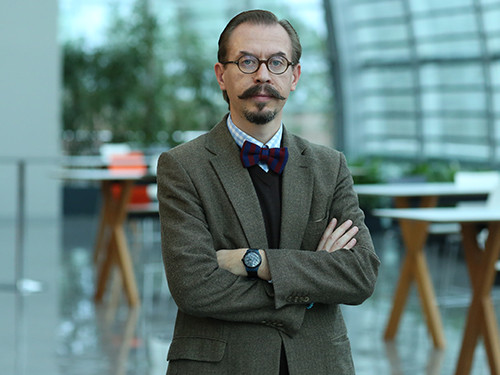
Dr. Alper Çelikel is an Associate Professor at the Department of Computer Engineering, Faculty of Engineering and Natural Sciences, İstanbul Okan University. He specializes in machine learning, artificial intelligence, and data science with specific focus areas including natural language processing, computer vision, and optimization of neural network architectures. Education: PhD in Computer Science from Boğaziçi University (2014) Research Focus: Deep learning, cross-lingual systems, and multi-modal learning Leadership: Director of Research and Development Policy at İstanbul Okan University His recent research explores hybrid CNN-Transformer architectures, federated learning in healthcare, and explainable AI frameworks. He has received prestigious awards including the TÜBİTAK Career Award (2018) and Turkish Academy of Sciences Young Scientist Award (2015). Dr. Çelikel has supervised multiple graduate researchers and actively contributes to curriculum development and academic quality assurance initiatives. TÜBİTAK Career Award (2018) Turkish Academy of Sciences Young Scientist Award (2015) As an academic leader, he chairs the Research and Application Centers Directorate and contributes to university-wide policy development including information security, education, and research protocols.
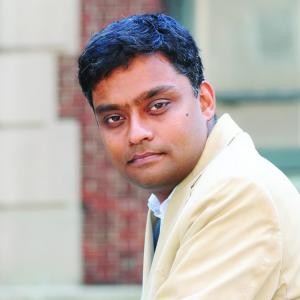
Garud Iyengar serves as the Tang Family Professor and Director of the Data Science Institute at Columbia University's Fu Foundation School of Engineering and Applied Science, within the Department of Industrial Engineering and Operations Research. His office is located at 305 Mudd Building, and he can be reached at 212 854-4594 or garud@ieor.columbia.edu. Dr. Iyengar received his B Tech in electrical engineering from the Indian Institute of Technology in 1993 and completed his PhD in electrical engineering from Stanford University in 1998. He maintains an active research profile as a member of Columbia's Data Science Institute. Professor Iyengar's research focuses on understanding uncertain systems and exploiting available information through data-driven control and optimization algorithms. His work spans diverse fields including machine learning, systemic risk, asset management, operations management, sports analytics, and biology. Current projects include thermodynamics of sensing and memory in cells, automatic defensive assignment and event detection in NBA games, deep neural-network frameworks for interpretable robust decision making, attribution schemes for multi-channel advertising, systemic risk associated with extreme weather, and NLP-based stock performance prediction models. Analysis of his recent publications reveals a strong interdisciplinary focus bridging theoretical optimization with practical applications. His work demonstrates consistent contributions across machine learning theory (particularly bandit algorithms and reinforcement learning), financial engineering, operations research, and computational biology. The publications show increasing integration of game-theoretic approaches with traditional optimization methods, particularly in supply chain security, resource allocation, and competitive systems. Professor Iyengar's research group actively supervises students working on cutting-edge problems at the intersection of data science and domain-specific applications. While specific grant information isn't provided in the source material, his extensive publication record across multiple domains suggests significant research funding support. As Director of the Data Science Institute, Iyengar leads interdisciplinary research initiatives connecting faculty and students across Columbia University. His research group appears to maintain strong connections with both academic and industry partners, particularly in finance, healthcare, and technology sectors, based on the applied nature of his research projects.
Joakim Andén-Pantera is an Associate Professor in the Division of Probability, Mathematical Physics and Statistics at the Department of Mathematics, KTH Royal Institute of Technology. His research spans signal processing, statistical data analysis, and machine learning with applications in cryo-electron microscopy, biomedical signal analysis, and audio classification. His educational background includes advanced training in mathematics and signal processing leading to his current academic position. Though specific degree details aren't provided in the text, his research profile indicates deep expertise in mathematical methods for signal representation. Professor Andén-Pantera's work focuses on developing mathematical frameworks that extract discriminative information from signals while remaining invariant to irrelevant variations like translation, frequency-shifting, and noise. His research bridges theoretical mathematics with practical applications across multiple domains: Developing wavelet scattering transforms for robust signal representation Applying these techniques to cryo-EM for molecular structure analysis Creating methods for audio and music classification through time-frequency analysis Designing algorithms for biomedical signal processing, particularly ECG analysis Contributing to computational methods for cosmological parameter estimation His publication record shows consistent contributions in both theoretical signal processing and practical implementations. The research trajectory demonstrates increasing sophistication in applying scattering transforms and deep learning to diverse signal processing challenges across biology, medicine, and acoustics. Notable scientific recognition includes: Best Paper Award (2nd Place) at IEEE International Workshop on Machine Learning for Signal Processing (2015) Best Paper Award (1st Place) at International Conference on Digital Audio Effects (2012) Best Paper Award at IPDPS for cuFINUFFT implementation Professor Andén-Pantera advises graduate students on degree projects in financial mathematics, mathematical statistics, and engineering mathematics. His research group develops computational tools including ASPIRE for cryo-EM and Kymatio for wavelet scattering transforms. He teaches courses in Applied Statistics, Probability Theory, and Statistical Learning at KTH. He leads the development of several influential open-source software projects that have become standard tools in their respective fields, with Kymatio particularly gaining widespread adoption across multiple research communities.
Marlon Azinovic-Yang is an Assistant Professor in the Economics Department at the University of North Carolina at Chapel Hill. He joined UNC in 2025 after postdoctoral positions at the University of Zurich and the University of Pennsylvania. He holds a Ph.D. in Finance from the University of Zurich and the Swiss Finance Institute (2021), where he was advised by Felix Kübler and co-advised by Simon Scheidegger. Research Areas Macroeconomics Financial Economics Computational Methods Deep Learning-Based Solutions Heterogeneous Agent Models Inequality Publication Trends Marlon’s work focuses on developing deep learning-based computational methods to solve macroeconomic models with heterogeneous agents, inequality, and complex constraints. His research bridges theoretical economics with modern machine learning, emphasizing equilibrium models and asset pricing. Earlier work in physics explores quantum annealing applications for computational problems in satisfiability filters. Awards 3rd Place Best Poster Award at PASC Conference 2019 Advisors Ph.D. Advisor: Felix Kübler Co-Advisor: Simon Scheidegger
Dr. Angelos Chatzimparmpas is an Assistant Professor in the Department of Information and Computing Sciences at Utrecht University's Faculty of Science, specializing in the Visualization and Graphics subgroup. His research focuses on developing visual analytics systems to enhance understanding and trust in machine learning models, particularly in the domain of Explainable AI (XAI). He maintains active collaborations with institutions including Northwestern University where he completed his postdoctoral research. Dr. Chatzimparmpas earned his educational credentials through an impressive international trajectory: BSc and MSc in Informatics and Telecommunications Engineering from the University of Western Macedonia, Greece (2017), PhD in Computer and Information Science from Linnaeus University, Sweden (completed February 2023), followed by a postdoctoral position in Computer Science at Northwestern University, USA (completed March 2024). His research interests span Information Visualization, Human-Computer Interaction, and Machine Learning with a specialized focus on Explainable AI. He investigates visual exploration of machine learning models' inner workings, model uncertainty quantification, evaluation of visualization systems using deep learning architectures, and detection of AI-generated images (deepfakes). His work bridges theoretical machine learning concepts with practical visualization techniques to make complex AI systems more transparent and trustworthy for human users. Analysis of his recent publications reveals a clear trajectory focusing on visual analytics for machine learning interpretability. His work systematically addresses challenges in understanding ensemble learning methods, dimensionality reduction techniques, and deep learning models through innovative visualization approaches. A significant portion of his research targets the growing problem of AI-generated content, developing methods to distinguish authentic from synthetic media. His publications appear in top-tier venues including IEEE Transactions on Visualization and Computer Graphics, Computer Graphics Forum, and CHI Conference proceedings. Dr. Chatzimparmpas teaches several advanced courses including Data Science Colloquium, Game Programming, Optimization and Vectorization, and Visual Analytics for Big Data. His teaching directly reflects his research expertise, providing students with cutting-edge knowledge in visualization and machine learning integration. He is actively involved with the Utrecht Platform for Applied Data Science and contributes to research in Applied Data Science, Game Research, and Human-centered Artificial Intelligence. His work demonstrates strong interdisciplinary connections between computer science, cognitive science, and domain-specific applications requiring trustworthy AI systems.
Ulrich Bodenhofer serves as a full-time Professor for Artificial Intelligence at Upper Austria University of Applied Sciences (Hagenberg campus) since September 2020, while maintaining a part-time role as Chief Artificial Intelligence Officer at QUOMATIC.AI since June 2018. His institutional affiliations include Research Center Hagenberg AIST and multiple Centers of Excellence: Automotive/Mobility, Medical Technology/TIMed, Smart Production, Computed Tomography, and Digital Transformation within the Strength area of ICT - Information & Communication Technology. His academic credentials include a Habilitation (2003), Dr. techn. (1998), and Dipl.-Ing. (1996), all in Technical Mathematics from Johannes Kepler University Linz. His research focuses on applying fuzzy logic systems to practical problems across healthcare, industry, and finance. Key areas include: Machine Learning & Artificial Intelligence in Sales Analytics Healthcare and Bioinformatics applications Nondestructive Testing methodologies Financial Condition Monitoring systems His publication record shows consistent output since 1996 with 74 publications, demonstrating evolving expertise from foundational fuzzy logic research to current AI applications in medical imaging and industrial processes. Recent work emphasizes human-centered AI approaches, explainable systems, and practical implementations addressing real-world challenges in critical infrastructure and healthcare diagnostics. Bodenhofer actively leads and participates in significant research projects including HCAI (2022-2027), FLARE (2025-2027), and iReduce (2025-2026), securing funding from diverse sources including FWF - doc.funds.connect and KIRAS cooperative research programs. His collaborative approach spans multiple disciplines and institutions, reflecting the interdisciplinary nature of modern AI research. His professional activities include 54 scientific engagements through 2025, featuring numerous invited lectures on AI applications across finance, healthcare, and industrial contexts. He has supervised 9 academic works according to institutional records, mentoring the next generation of AI practitioners through hands-on research projects focused on practical implementation challenges.
Professor Oleksandr Chernyak serves as Head of the Economic Cybernetics Department at Taras Shevchenko National University of Kyiv, where he has advanced from Scientific Researcher to Professor since 1983. His 39-year career establishes him as a leading authority in statistical methodologies with international recognition. His academic foundation includes: Applied Mathematics degree (1975-1980), Taras Shevchenko National University of Kyiv Candidate of Science (1985) and Doctor of Economics (2005) from same institution Specializations at University of Amsterdam (Statistics, 1994), KU Leuven (Actuarial Mathematics, 1994), LMU Munich (Econometrics, 1996), University of Helsinki (Survey Sampling, 1998), and Stockholm University (Statistics, 2009) Research centers on pioneering Survey Sampling techniques with expansion into Economic Security assessment across five critical sectors. Current initiatives develop Environmental Risk Assessment frameworks identifying pollution threats and emergency scenarios, plus Energy Sector Analysis for smart technology integration in Ukrainian communities. His methodological expertise spans Risk Analysis, Actuarial Mathematics, and Bayesian Networks applications. Publication trends reveal deep engagement with Ukraine's economic challenges: Balance of Payments crises (2013), Labor Migration regulation (2012), and Renewable Energy investment (2015). Recent works demonstrate interdisciplinary innovation through Bayesian credit risk modeling (2010) and stability price index development (2010), consistently applying advanced statistical techniques to national economic issues. Major project leadership includes: National Bank of Ukraine collaboration: "Forecasting of Balance of Payments of Ukraine" Ministry of Economics partnership: "Methods of forecasting profits and losses of enterprises of Ukraine" Three EU Tempus projects including IMPRESS for student services improvement As Ukraine coordinator for ENBIS (European Network for Business and Industrial Statistics) and IASS member, he directs research teams developing policy frameworks for energy-efficient communities and environmental risk management. Current advising focuses on training specialists in economic cybernetics through classical university programs while advancing security assessment methodologies for national implementation.
Diana Elisabeta Aldea Mendes is an Associate Professor at the Department of Quantitative Methods for Management and Economics within ISCTE Business School at ISCTE - University Institute of Lisbon, Portugal. She is also an Affiliate Member of BRU-Iscte (Business Research Unit). Her academic career spans various leadership roles including Director of the Master's in Data Science program and other academic management positions. Her educational background includes: PhD in Mathematics from Higher Technical Institute - UTL (2005) Pedagogical Aptitude and Scientific Capacity Tests from ISCTE-University Institute of Lisbon (1999) Bachelor's degree in Mathematics from Universitatea Babes Bolyai Facultatea de Matematica si Informatica, Romania (1988-1993) Diana E. Aldea Mendes is a mathematician and applied scientist with extensive expertise in nonlinear dynamics (both stochastic and deterministic), time series analysis, data science, machine learning, deep learning, computational economics and finance, healthcare analytics, and control and synchronization of complex systems. Her research bridges mathematical theory with practical applications in economics, finance, and healthcare. She has developed sophisticated models for analyzing financial markets, economic policy impacts, and healthcare-related time series data. Her work often combines traditional econometric approaches with cutting-edge machine learning techniques to address complex real-world problems. Her recent publications demonstrate a strong focus on the intersection of data science and finance, particularly examining how higher data frequency can improve stock market predictions, applying deep reinforcement learning to portfolio management, and investigating the impact of economic policy uncertainty on financial markets. She has also expanded her research into healthcare applications, developing ambient assisted living technologies and memory training interfaces for elderly care. Her scientific achievements have been recognized through several awards: Research Excellence Award (2018) Melhor professor IBS (1º lugar) (2014) Melhor professor IBS (1º lugar) (2013) Professor Aldea Mendes has been actively involved in numerous research projects and has served on various academic committees. She has coordinated executive training programs including the Professional Diploma in Big Data for Business Engineering and has been involved with the AI Business Hub as a consultant since 2020. Her professional activities also include participation in the Iscte-Health mission group and coordination of the Data Science Mission Group. Her research is conducted within the Business Research Unit (BRU-Iscte) where she collaborates with interdisciplinary teams to address complex business and economic challenges using quantitative methods. She has also been involved in international collaborations, including coordination of the Portuguese component of the COST Action IS1104 project focused on economic systems modeling.
Bayode Ogunleye serves as a Senior Lecturer in Data Science and Analytics at the University of Brighton's School of Architecture, Technology and Engineering within the Department of Computing and Mathematical Sciences. He teaches data science modules and contributes to the Computing and Mathematical Sciences Research Excellence Group, with prior experience as a lecturer at Sheffield Hallam University. His educational foundation includes a PhD in Data Science, MSc in Big Data Analytics, and Postgraduate Certificate in Academic Practice from Sheffield Hallam University, complemented by Fellowships from the Royal Statistical Society and Higher Education Academy. Ogunleye's research centers on natural language processing and statistical learning applications, specializing in algorithms for information retrieval, sentiment analysis, topic modelling, text summarisation, and cyberbullying detection. His work bridges theoretical advancements with practical implementations across finance, education, and social media safety domains. Analysis of his publication trends reveals heavy utilization of large language models and ensemble methods for sentiment analysis across diverse contexts including stock markets, electric vehicles, and mental health detection. Recent work increasingly focuses on generative AI applications in educational assessment and cyber safety, demonstrating cross-disciplinary impact. His scientific distinctions include: Fellow of the Royal Statistical Society (RSS) Fellow of the Higher Education Academy (FHEA) As an active academic contributor, Ogunleye serves as peer reviewer for journals including Artificial Intelligence Review and Swarm and Evolutionary Computation, while providing external examination services for universities including Huddersfield, Plymouth, and Suffolk across mathematics and AI programs. He maintains strong engagement with the Computing and Mathematical Sciences Research Excellence Group, fostering collaborative projects that integrate data science methodologies with real-world industry challenges in banking, retail, and educational technology sectors.
Liviu P. Dinu is a Professor at the Faculty of Mathematics and Computer Science, University of Bucharest, with a career spanning three decades. He holds a PhD (2003) and Dr. habil (2014) in Computer Science and has served as Director of the Human Language Technologies Research Center. His work bridges computational linguistics, natural language processing, and bioinformatics. PhD: 2003, University of Bucharest (supervisor: Solomon Marcus) Dr. habil: 2014, University of Bucharest Bachelor’s: 1994, University of Bucharest His research explores computational methods for historical linguistics, including cognate identification, semantic change analysis, and proto-word reconstruction. He also investigates applications of NLP in mental health (depression/gambling detection), financial text analysis, and DNA sequence similarity. Recent work focuses on multimodal transformers, few-shot learning, and AI-generated text detection. Article trends reveal interdisciplinary work in historical linguistics , mental health informatics , and bioinformatics . He employs rank distance , ensemble methods , and deep learning frameworks across applications from semantic divergence to emotion detection in Romanian tweets. Scientific awards include the Grigore C. Moisil Prize (2007, Romanian Academy) and In Hoc Signo Vinces Prize (2005, National Research Council) . He has supervised 7 completed PhDs and mentors ongoing students at the Interdisciplinary Doctoral School (ISDS) and Computer Science Doctoral School. Current projects involve multi-agent systems for authorship attribution , algorithms for graph structure identification , and linguistic tools for historical analysis . His lab collaborates internationally on DNA sequence analysis and cross-lingual semantic laws research.
Rune Nygård serves as Assistant Professor in the Department of Business, History and Social Sciences at the School of Business, University of South-Eastern Norway (USN), based at Campus Vestfold. He teaches core accounting courses including Introduction to Accounting (REG1000), Financial Accounting and Analysis (FIN1000), and specialized modules on Sustainability Reporting (MRR4400) and Corporate Governance. Education: Masters degree in International Accounting (2004) from Edith Cowan University, Perth, Western Australia Research Interests: Nygård investigates critical intersections between accounting practices and sustainability transitions, with particular focus on stakeholder engagement in Norwegian salmon farming. His work examines value relevance of accounting data amid digital transformation in finance, analyzing how blockchain and AI reshape auditing while exploring business model innovations driven by ESG imperatives. This research bridges theoretical accounting frameworks with real-world aquaculture economics. Publication Trends: His 2018-2024 publications reveal consistent thematic clustering around aquaculture economics (70% of output), digital finance transformation (20%), and sustainability reporting methodologies (10%). Key analytical approaches include cointegration modeling for salmon price volatility, market-value assessments of environmental CSR initiatives, and operationalization frameworks for double materiality concepts. This body of work demonstrates methodological versatility across econometric analysis, case studies, and conceptual modeling. Scientific Awards: No scientific awards, fellowships, or medals were documented in source materials Advising and Grants: Nygård's current responsibilities show no formal PhD/Master's student supervision listed in provided materials. His industry background informs practical teaching but no active research grants are referenced, suggesting funding may derive from institutional base allocation or industry partnerships. Labs and Teams: While affiliated with USN's School of Business research ecosystem, no dedicated laboratories or named research teams are specified in source documentation. His collaborative publications indicate networked work with aquaculture economists across Norwegian institutions.
Franck Gabriel is an Associate Professor at University Claude Bernard Lyon 1 , affiliated with the Institut de Science Financière et d'Assurances (ISFA) . His research bridges Machine Learning , Economics/Blockchain , Mathematical Physics , and Random Matrices , with notable work on neural tangent kernels, DeFi protocols, and asymptotic matrix theory. Research Focus : Machine Learning: Theoretical analysis of neural networks, kernel methods, and generalization bounds. Blockchain Economics: Decentralized finance, staking mechanisms, and smart contract design. Mathematical Physics: Holonomy fields, Yang-Mills theory, and random matrix asymptotics. Recent Publications highlight trends in denoising diffusion models, free probability in matrix theory, and DeFi credit systems. His work often integrates cross-disciplinary approaches, merging deep learning with financial technology and quantum field theory. Scientific Awards : 2025 AI 2000 Most Influential Scholar Award in Theory 2024 AI 2000 Most Influential Scholar Award in Theory 2023 AI 2000 Most Influential Scholar Award in Theory As an organizer of the ISFA Seminar , he fosters interdisciplinary discussions in insurance, economics, and machine learning. His collaborations span institutions like Ecole Polytechnique Fédérale de Lausanne, Courant Institute, and EPFL.
Dr. Husnain Rafiq is a Lecturer in Cyber Security at Edge Hill University, where he conducts research on machine learning applications in cybersecurity. He earned his PhD in Cyber Security from Northumbria University in December 2022, focusing on ML-based mobile malware defense. With over seven years of teaching experience, he currently supervises graduate research projects in mobile security, adversarial ML, and malware detection. Research Focus His research spans: Machine Learning for Security: Developing adversarial-aware malware detectors and evasion-resistant models Mobile Systems Protection: Specializing in Android malware detection using image processing and deep learning Cyber Defense Innovations: Creating GAN-based botnet detectors and DGA detection systems Trustworthy AI: Exploring explainable AI for fraud detection and content moderation Publication Trends Recent works demonstrate strong focus on adversarial machine learning (77% of publications) with applications in malware detection (57%), network security (35%), and trust-aware AI systems (21%). Emerging themes include explainable fraud detection, sustainable risk frameworks, and low-data regime solutions.
Sung-Hyuk Park is an Assistant Professor at KAIST College of Business, focusing on predictive analytics, recommender systems, and AI applications. His work spans marketing technology, healthcare informatics, and computer vision, with recent publications in journals like IEEE Transactions and Biomedical Signal Processing . Current research integrates deep learning, social network analysis, and optimization models across domains.
Prof. Dr. Bernd Kaltenhäuser has been Professor of Technical Fundamentals at the Baden-Württemberg Cooperative State University (DHBW) Villingen-Schwenningen since 2014. Affiliated with the Faculty of Economics, he teaches a spectrum of courses spanning project management, quality and process management, financial mathematics, technical mechanics, electrical engineering basics, and physical principles. Education 1994-2003: Studies in Physics at Heidelberg, Ulm and Stuttgart Universities 2003-2007: Doctorate in Natural Sciences (Dr. rer. nat.), University of Stuttgart 2009-2014: M.Sc. in Economics, Fernuniversität Hagen Research Focus Prof. Kaltenhäuser’s research integrates system dynamics, blockchain technology in transportation, predictive modelling for autonomous vehicles, and empirical methods from applied social research and marketing. His interdisciplinary approach leverages physics, economics, and data science to address mobility challenges. He is particularly active in developing algorithms for fleet routing, ride-hailing optimisation, and evaluating market readiness for autonomous driving in Germany. Scientific Awards Artur Fischer Inventor Prize 2009 Heinrich Düker Prize 2004, Robert Bosch Foundation for Education and the Promotion of Disabled People Patents & Impact He holds two patents in flat-structure bioreactor design, demonstrating his earlier engagement with biofuel production technologies. His 2020 and 2018 market studies on autonomous driving provide key data for German transport policy stakeholders.