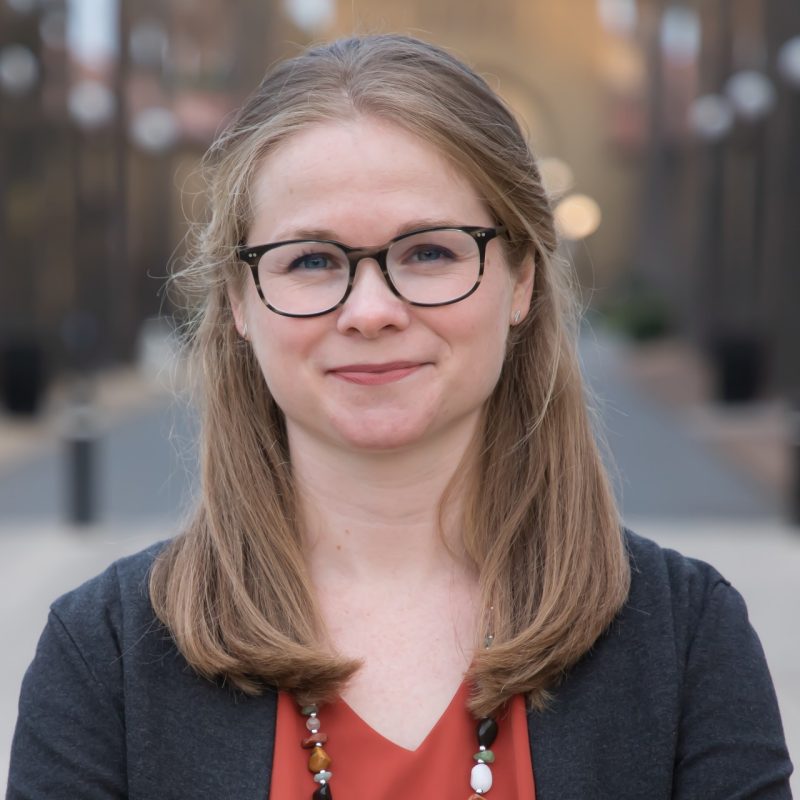
Elinor Benami is an **Assistant Professor** in the Agricultural and Applied Economics Department at Virginia Tech. She holds affiliations with the VT Remote Sensing & Global Change Center, the Center for Advanced Innovation in Agriculture, and Stanford’s RegLab. Her research focuses on environmental and development economics, leveraging satellite imagery and machine learning to enhance disaster financing and environmental compliance. She earned a B.A. from UNC Chapel Hill, a Ph.D. from Stanford University, and a postdoc at UC Davis. **Research Interests**: Climate risk management, agricultural resilience, remote sensing applications, and policy design for sustainable agriculture. Current projects include NASA-funded work on Moroccan irrigation and drought financing, and evaluating U.S. environmental compliance using AI. **Awards/Grants**: Led a $650K NASA Harvest grant, part of a $80M climate-smart agriculture initiative, and received the VT Early Career Scholarly Impact Award Nominee. Active in policy, including advising the EPA on environmental compliance algorithms. **Teaching**: Courses include 'Remote Sensing in Social Sciences', 'Climate Risk Management', and 'Environmental and Sustainable Development Economics'. Mentors students at all levels, emphasizing computational skills and social impact. **Affiliations**: NASA Harvest, VT Remote Sensing IGEP, and the Alliance for Climate-Smart Agriculture. Collaborates with global institutions on drought financing and satellite data applications.
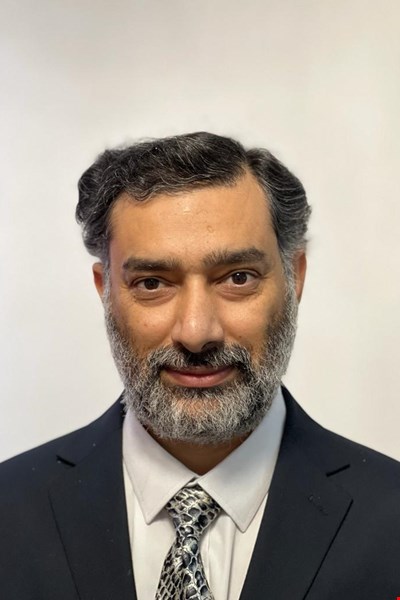
Academic Profile: Damir Filipovic is a Full Professor and the Swissquote Chair in Quantitative Finance at the College of Management of Technology (CDM) of École Polytechnique Fédérale de Lausanne (EPFL), Switzerland. He previously held academic positions at the University of Vienna, University of Munich, and Princeton University, and served as Head of the Vienna Institute of Finance. Research Focus: Quantitative finance, risk management, stochastic processes, term structure modeling, volatility risk, and machine learning applications in financial markets. Industry Collaboration: Co-developed the Swiss Solvency Test for insurance capital requirements while consulting for the Swiss Federal Office of Private Insurance. Publications: Contributed extensively to journals like Journal of Financial Economics, Mathematical Finance, and Annals of Applied Probability, with a textbook on Term-Structure Models. Academic Service: Editorial board member of multiple journals and organizer of advanced workshops on systemic risk and financial technology. Recent Research: His work emphasizes machine learning for portfolio risk management, kernel-based yield curve estimation, and robust stochastic modeling. Keynote speaker at international conferences on finance and insurance mathematics, with over 15 recent publications in 2023-2025 addressing high-dimensional financial problems, neural control systems, and causal inference in market data. Education: Ph.D. in Mathematics from ETH Zurich (2000). Graduate of ETH Zurich and University of Vienna. Teaching & Mentorship: Supervises current and former EPFL Ph.D. students in quantitative finance, including Nicolas Camenzind, Joshua Hayes, Andrea Ruglioni, and ten others. Former students like Damien Ackerer and Lotfi Boudabsa now lead research in risk management. Labs & Programs: Directs EPFL's Finance and Technology Programme, leads the Computational Finance Group (CSF) at EPFL, and contributes to Swiss Finance Institute initiatives. Scientific Leadership: Served on EPFL Committee of Academic Evaluation and Doctoral Program Finance committee.
Dr. Matloob Khushi serves as a Senior Lecturer in Computer Science at Brunel University London's College of Engineering, Design and Physical Sciences. With over 25 years of combined academic and industry experience, his work bridges theoretical AI advancements with practical applications in finance, healthcare, and public health domains. His research has established significant collaborations with international banks, healthcare institutions, and technology startups. Dr. Khushi earned his PhD in AI and Data Science from the University of Sydney, developing novel algorithms for genomic data analysis. His postdoctoral research at the Children's Medical Research Institute (2014-2017) pioneered AI-based diagnostic tools for medical condition detection. More recently, he developed bioinformatics tools for environmental assessment under a UKRI NEC grant. Research Focus FinTech Innovation : Creator of the SS Ratio (incorporating volatility and drawdown sensitivities), advanced portfolio optimization models, and synthetic data generation techniques for fraud detection and credit risk assessment Bioinformatics Leadership : Developer of AI tools for genomic analysis and early cancer detection, featured in SBS News and The Daily Telegraph Public Health NLP : Architect of systems for vaccine misinformation detection, mental health monitoring, and health surveillance on social media His publication portfolio shows consistent growth from foundational bioinformatics work to current multimodal AI applications, with increasing interdisciplinary collaboration across finance and healthcare sectors. Awards and Recognition Ranked among Stanford/Elsevier's top 2% of global AI scientists Recipient of Best Paper Awards from IEEE Transactions on Computational Social Systems and PeerJ Media recognition for cancer detection research by major news outlets Mentorship and Teaching Dr. Khushi has supervised six PhD candidates to completion and over 100 postgraduate dissertations. He teaches CS3002 Artificial Intelligence and mentors students in Final Year Projects. His supervision focuses on Deep Learning/NLP for FinTech prediction and Public Health Surveillance applications, emphasizing practical implementation of theoretical concepts.
Jim Torresen is a Professor at the Norwegian University of Science and Technology (NTNU), specializing in Computer Science, Artificial Intelligence, and Robotics. He earned his M.Sc. and Dr.ing. (Ph.D.) in computer architecture and design from NTNU in 1991 and 1996 respectively, followed by industry experience in hardware design before transitioning to academia in 1999. Research Interests: His work spans Machine Learning, Evolvable Hardware, and Ethical AI, with notable contributions to music technology, facial expression recognition, and healthcare monitoring systems. He actively explores interdisciplinary applications of AI in creative domains and clinical environments. Publications & Editorial Roles: Torresen has published extensively in journals like Frontiers in Artificial Intelligence and Genetic Programming and Evolvable Machines . He serves as a Topic Editor for Frontiers in Explainable AI and has editorial roles in robotics and biomedical AI domains.
Petter N. Kolm serves as a Clinical Professor of Mathematics and Program Director at New York University, with his office located in Warren Weaver Hall (520). He can be contacted at petter.kolm@nyu.edu or 212-998-4855, and holds an editorial board position at the Journal of Portfolio Management. His academic qualifications include: Doctorate in Mathematics from Yale University M.Phil. in Applied Mathematics from the Royal Institute of Technology in Stockholm M.S. in Mathematics from ETH Zurich Dr. Kolm's research centers on quantitative finance, with primary focus areas including quantitative trading strategies, delegated portfolio management, financial econometrics, risk management, and optimal portfolio strategies. His work integrates advanced mathematical modeling with practical investment applications, bridging theoretical frameworks and real-world market dynamics through rigorous empirical analysis. Analysis of his 15 most recent publications reveals consistent emphasis on portfolio optimization techniques—particularly Bayesian methods and the Black-Litterman model—alongside significant contributions to algorithmic trading systems, factor-based equity portfolio construction, and machine learning applications for financial sentiment analysis. His scholarly output demonstrates evolution from foundational portfolio theory toward contemporary computational finance challenges. As Program Director, Dr. Kolm oversees academic programming and likely mentors graduate students in quantitative finance, though specific advisee details are not documented. His prior industry role at Goldman Sachs Asset Management provided direct experience in developing hedge fund strategies, informing his applied research approach. Dr. Kolm's professional trajectory includes significant industry engagement through his tenure in Goldman Sachs' Quantitative Strategies Group, where he developed quantitative investment systems. His current academic leadership position leverages this practical experience to shape quantitative finance education and research at NYU.
John Psarras is a Professor at the National Technical University of Athens (NTUA) in the School of Electrical and Computer Engineering, specifically within the Division of Industrial Electric Devices and Decision Systems. He serves as the Director of the Decision Support Systems Laboratory (DSSlab) and the University Research Institute of Communication and Computer Systems. He holds a Diploma in Mechanical Engineering (1982) and a Ph.D. in Electrical and Computer Engineering (1989), both from NTUA. His research specializes in decision support systems with applications in energy management, environmental analysis, and information systems. Key areas include: Multi-criteria analysis for energy policy and renewable integration AI-driven optimization of smart grids and building efficiency Sustainable finance mechanisms for green projects Blockchain applications in education and data security His recent publications (2023–2025) demonstrate a strong focus on AI-enhanced decision tools for energy transitions, smart infrastructure, healthcare diagnostics, and cross-border renewable cooperation, reflecting interdisciplinary innovation. He has supervised 22 PhD theses and coordinates EU-funded projects in energy policy, clean technology, and capacity building. No scientific awards are listed in available sources. He leads the Decision Support Systems Laboratory (DSSlab), advancing research in energy analytics, and directs the University Research Institute of Communication and Computer Systems, facilitating large-scale interdisciplinary collaborations.
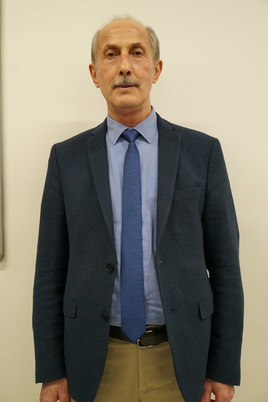
Nezir KÖSE is a Professor and currently serves as the Dean of the Faculty of Economics and Administrative Sciences at Beykent University. He has previously held academic positions at Istanbul Gelişim University and Gazi University, where he advanced from Research Assistant to full Professor. His academic career spans over three decades, with continuous contributions in teaching, research, and administrative leadership. Beykent University – Faculty of Economics and Administrative Sciences (2020–Present) Istanbul Gelişim University – Faculty of Economics, Administrative and Social Sciences (2017–2020) Gazi University – Faculty of Economics and Administrative Sciences (1990–2017) Education: Doctorate, Institute of Social Sciences, Gazi University (1992–1998) Degree, Faculty of Economics and Administrative Sciences, Gazi University (1990–1992) Licence, Faculty of Science, Gazi University (1985–1989) His primary research interests include Econometrics , Macroeconomics , Financial Economics , Time Series Analysis , and Energy and Environmental Economics . He has made significant contributions to the analysis of inflation, exchange rate volatility, foreign direct investment, oil price impacts, and financial stability, with a regional focus on Turkey and emerging markets. His recent publications (2023–2025) reflect a dynamic research agenda involving cryptocurrency markets , climate change economics , machine learning applications , and nonlinear macroeconomic modeling . His work frequently employs advanced econometric techniques such as panel data analysis, VAR/SVAR models, GARCH models, and time-varying parameter estimation. Scientific Awards: No awards mentioned in the provided text. Nezir KÖSE has supervised numerous graduate students, including PhD candidates who have completed theses on topics such as foreign direct investment, financial stability, oil price effects, and inflation uncertainty. He has also contributed to academic grants and collaborative research projects, particularly in energy and financial economics. He teaches core courses including Econometrics I & II , Time Series Analysis , and Nonparametric Statistics , demonstrating a strong commitment to pedagogy. He has authored several textbooks in econometrics and statistics, enhancing educational resources in Turkish academia. There is no indication of lab or team leadership, but his collaborative publications suggest active participation in research groups.
Liu Lili is a Lecturer (Educator Track) in the Department of Computer Science at the School of Computing, National University of Singapore. She holds a Ph.D. from Nanyang Technological University and a Master's in Computer Science from Shanghai University. Prior to NUS, she served as a Senior Research Scientist at Singapore Polytechnic and a Scientist at A*STAR's Institute of High-Performance Computing. Her research focuses on Machine Learning, Computer Vision, and Multi-modal Learning, with applications in FinTech, Social Media Analysis, and Algorithms & Theory. Notable projects include AI-driven coating inspection systems for marine assets and behavioral competency assessment tools for navigational safety. She has contributed to robotics for construction quality assessment and interactive virtual environments for rehabilitation. Liu's publications span AI applications in finance, robotics, and material science, reflecting her expertise in bridging theoretical computer science with practical industrial solutions. Her work emphasizes automation, anomaly detection, and multi-modal data integration.
Dr. Chee Kiat Seow is an Associate Professor at the University of Glasgow's School of Computing Science. He holds a PhD from Nanyang Technological University (NTU) and an MSc from the National University of Singapore (NUS). His research focuses on cyber-physical security, wireless communication localization, and IoT systems leveraging AI/ML. He has led projects valued in the millions, winning awards like the IEEE Best Student Paper and National Instruments Engineering Impact Awards. Education: PhD (NTU), MSc (NUS) Research: Specializes in UWB positioning, spoofing detection, and IoT integration with 5G/GNSS. Teaching: Courses include Big Data, Software Engineering, and Data Analytics. His recent work addresses NLOS mitigation in indoor localization and cyber-physical security threats. Over 63 publications span journals like IEEE Transactions and conferences such as IPIN and WF-IoT. Supervised 6+ PhD/MSc students on topics like autonomous robotics and AI-driven localization. Grants: Includes $853K for 5G-X Smart Building projects and $797K for GNSS signal authentication. Awards: IEEE PIERS Best Student Paper (2019), NI Engineering Impact Awards (2015-2016). He advises on IoT and cybersecurity for organizations like ARTC and National Instruments. Active in IEEE Signal Processing and Computer Society.
Professor Moncef Gabbouj is a distinguished academic and researcher currently serving as Professor of Signal Processing at the Department of Computing Sciences, Faculty of Information Technology and Communication Sciences, Tampere University, Finland. Previously, he held the same position at Tampere University of Technology before the merger in 2019. He has also held visiting professorships at prestigious institutions including Hong Kong University of Technology and Science, University of Southern California, and Purdue University. Ph.D. and MSc. in Electrical Engineering from Purdue University, USA (1989 and 1986) B.Sc. in Electrical Engineering from Oklahoma State University, USA (1985) Prof. Gabbouj's research spans multiple domains within signal and image processing, with a strong focus on machine learning applications. His primary research interests include artificial intelligence, machine learning, Big Data analytics, multimedia content-based analysis, indexing and retrieval, nonlinear signal and image processing, voice conversion, and video processing and coding. His work bridges theoretical advancements with practical applications across various industries, particularly in multimedia communications and biomedical applications. His extensive publication record demonstrates a clear evolution from traditional signal processing techniques toward more sophisticated machine learning and deep learning approaches. Recent work shows increasing focus on convolutional neural networks for various applications including ECG classification, video processing, financial time-series analysis, and image recognition tasks, reflecting the broader trend in the field toward deep learning methodologies while maintaining strong foundations in signal processing theory. IEEE Fellow (2011) Member, Finnish Academy of Science and Letters (2014) Knight, First Class, of the Order of the White Rose of Finland (2006) Nokia Foundation Recognition Award (2005) Nokia Foundation Visiting Professor Award (2012) Finnish Cultural Foundation for Art and Science Award (2017) TUT Foundation Grand Award (2015) Prof. Gabbouj has supervised 64 doctoral and 72 Master's theses, demonstrating his significant contribution to academic mentoring. His research has been supported by substantial funding, including research grants totaling 8.5 million Euro (2001-2015). He has served as Academy of Finland Professor during 2011-2015 and has been involved in numerous EU research projects including Horizon, ESPRIT, HCM, IST, COST, Tempus and Erasmus programs. As Editor, Guest Editor or member of the Editorial Board of 6 international scientific journals, he has significantly influenced the academic discourse in his field. He leads the Signal Analysis and Machine Intelligence (SAMI) research group at Tampere University and serves as the Finland Site Director of the NSF IUCRC funded Center for Visual and Decision Informatics. His research unit focuses on applying advanced machine learning techniques to solve complex problems in signal processing, computer vision, and multimedia analytics, with applications ranging from healthcare to multimedia communications and financial analysis.
Pascal BOUVRY is a full Professor of parallel computing and optimization techniques at the University of Luxembourg's Department of Computer Science , within the Faculty of Science, Technology and Medicine (FSTM) . He currently serves as the Dean of the FSTM and leads the Parallel Computing and Optimisation group . Additionally, he oversees the University's High Performance Computing (HPC) infrastructure. His research focuses on parallel computing, optimization algorithms, distributed systems, and their applications in bioinformatics and distributed environments. Prof. BOUVRY holds a Ph.D. in Computer Science from the University of Grenoble (France) and has extensive industry experience, including roles as CEO/CTO of tech firms and leadership in telecom and financial services sectors. He has pioneered initiatives like the Master in High-Performance Computing and Technopreneurship programs at the University of Luxembourg. His research interests span GPU programming paradigms , federated learning , distributed optimization , and trustworthy AI . Recent work includes advancements in HPC education frameworks, federated learning frameworks (e.g., FedPref), and quantum circuit optimization. He contributes to editorial boards of journals like IEEE Transactions on Sustainable Computing and IEEE Cloud Computing Magazine. Prof. BOUVRY has held international leadership roles, including as Honorary Chair of conferences and active participation in technical committees. His educational efforts emphasize bridging academic research with industrial applications, particularly in HPC and AI.
Dr. Thilina Halloluwa is a Teaching Focused Lecturer in the Department of Human-Centred Computing at The University of Queensland (UQ). He holds a PhD in Human-Computer Interaction from Queensland University of Technology (2019) and a Computer Science undergraduate degree from the Sri Lanka Institute of Information Technology. With over 15 years of academic and industry experience, his research emphasizes real-world impact in education technology, financial inclusion, smart agriculture, and HCI. Educational Background: PhD in Human-Computer Interaction, Queensland University of Technology (2019) Bachelor of Computer Science, Sri Lanka Institute of Information Technology Research Interests: Education for All: Leveraging technology to enhance collaborative learning and social experiences in education. Human Money Interaction: Designing ethical AI solutions for financial services, particularly for underserved communities. Smart Agro: Developing AI-driven tools for crop disease detection, yield optimization, and precision agriculture. Software Project Estimation: Improving effort estimation accuracy through explainable AI (Metrix project). Key Contributions: Developed UrbanAgro (tomato disease detection) and BellCrop (bell pepper disease datasets). Pioneered Dhana Labha , a financial management tool for rural Sri Lankan communities. Advanced online exam proctoring systems for low-resource settings. Previous Roles: Lecturer at University of Sydney (2023) Senior Lecturer at University of Colombo (2013–2023) Lab/Team Affiliations: Smart Agro Project: AI-driven agricultural solutions Metrix Initiative: Software project estimation frameworks
Salem Lahlou is an Assistant Professor in the Machine Learning Department at the Mohamed bin Zayed University of Artificial Intelligence (MBZUAI), having joined in September 2024. He previously served as a Senior Researcher at the Technology Innovation Institute (TII) in 2024. His academic background includes a PhD from Mila and Université de Montréal (UdeM) under Yoshua Bengio (2023), with prior studies in applied mathematics at École Polytechnique and statistical learning at École Normale Supérieure Paris-Saclay. His research focuses on developing more capable and reliable AI systems through three interconnected pillars: Novel Method Development : Core contributions to Generative Flow Networks (GFlowNets), uncertainty estimation techniques (DEUP), and curriculum learning frameworks Large Language Model Advancement : Enhancing reasoning capabilities and alignment through preference optimization and trace-based learning Community Tooling : Creation of torchgfn library for GFlowNets and benchmarks including BabyAI, FinChain, and LLM-BabyBench Core research areas span Machine Learning, GFlowNets, Uncertainty Estimation, LLM Reasoning, Reinforcement Learning, and AI for Science. Recent publications (2023-2025) demonstrate strong emphasis on GFlowNet theory/improvements (8+ papers), LLM reasoning evaluation (FinChain, LLM-BabyBench), uncertainty quantification, and societal AI impacts. Key application domains include mathematical reasoning, financial systems, privacy preservation, and cognitive science. He currently advises graduate students including Junyi (privacy risks in SNNs) and Abhijith (LLM reasoning). His group collaborates with MBZUAI faculty (Nils Lukas, Alham Fikri, Mingming Gong, Martin Takac) and industry partners on projects involving Conversational AI, Personalization, and Affective AI.
Richard B. Sowers is a Professor at the University of Illinois at Urbana-Champaign, holding joint appointments in the Department of Industrial and Enterprise Systems Engineering, Mathematics, and Statistics (courtesy). He has held faculty positions since 1996, starting as an Assistant Professor in Mathematics and advancing to Professor across multiple departments. His research spans stochastic processes, financial engineering, and data analytics. He also serves as a Research Principal at the Office of Financial Research since 2012. Education: B.S. in Electrical Engineering (Drexel University, 1986), M.S. and Ph.D. in Applied Mathematics (University of Maryland, 1988 and 1991). Research Interests: Financial networks, stochastic systems, and applications in decision-making and control. His work bridges theoretical probability with practical domains like finance and healthcare. Recent articles focus on machine learning applications in gait analysis for neurological disorders and stochastic modeling in financial systems. Professional Contributions: Taught courses in stochastic calculus, deep learning, and financial mathematics. His research often involves interdisciplinary collaboration, including projects on credit risk, algorithmic trading, and wearable technology for health monitoring. Labs/Teams: Active in the Institute for Predictive and Computational Science, focusing on data-driven solutions for complex systems.
Dr. Chutima Boonthum-Denecke is a Professor in the Department of Computer Science at Hampton University's School of Science. She joined Hampton University in 2006 as an Assistant Professor and now serves as Director of the Information Assurance and Cyber Security Center (IAC@HU). She leads the NSF CyberCorps Scholarship for Service program and has contributed to NSF initiatives like ARTSI and STARS Alliances. Her educational background includes a Ph.D. in Computer Science from Old Dominion University (2007), an MS in Applied Computer Science from Illinois State University (2000), and a BS in Computer Science from Srinakharinwirot University (1997). Dr. Boonthum-Denecke's research integrates artificial intelligence, natural language processing, and cybersecurity. Key interests include: Developing intelligent tutoring systems and educational games Secure coding practices for software engineering NLP applications in information retrieval and assessment tools Cyber-physical security for IoT and robotics Her recent publications (2016-2021) focus on machine learning applications in cybersecurity, including sentiment analysis for threat detection, blockchain-enhanced IoT security, and vulnerability assessments of emerging technologies. Collaborative work with students frequently addresses privacy ethics in AI assistants, RFID implants, and cloud systems. She mentors students through the IAC@HU lab, resulting in award-winning conference presentations on cybersecurity topics. As Principal Investigator of NSF CyberCorps, she oversees scholarship programs that bridge academic research with national security needs.