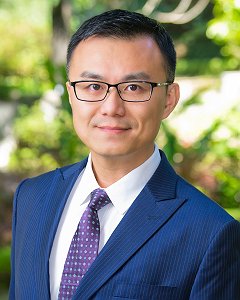
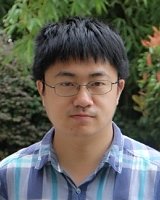
Jaan Masso is an Associate Professor at the University of Tartu, Estonia, where he has been affiliated with the Faculty of Economics and Business Administration since at least 2001. He currently serves as Chair of the department, Head of the Chair of Economic Modelling, and Programme Manager of the Master's programme in Quantitative Economics. His research focuses on applied econometrics, economic development, foreign direct investment, and labor economics, with particular emphasis on Estonia and the Baltic region as catching-up economies. He has published 146 scholarly works with over 23,000 reads and 1,745 citations, demonstrating significant scholarly impact in his field. Masso's research interests span multiple interconnected areas including foreign direct investment effects , productivity analysis , gender wage gap studies , innovation economics , and labor market dynamics . His work often employs rigorous econometric methods to analyze firm-level and regional economic data, particularly from Estonia and other Baltic states. His recent publications (2023-2025) show consistent scholarly productivity across multiple journals, with particular focus on foreign ownership effects, gender pay gaps in academia, FinTech sector development, and innovative methods for measuring firm innovativeness through web data analysis. His scientific contributions demonstrate expertise in analyzing economic transitions in small open economies, with methodological strengths in econometric analysis of firm-level data and innovative approaches to measuring economic phenomena.
Prof. Dr. Peter Gomber is Chair of e-Finance at the Faculty of Economics and Business, Goethe University of Frankfurt, Germany. He serves as Co-Chairman and member of the Board of the 'efl – the Data Science Institute', an industry-academic partnership between Frankfurt and Darmstadt Universities and leading industry partners. Additionally, he is a member of the Exchange Council of the Frankfurt Stock Exchange, Supervisory Board of Clearstream Banking AG, and Research Fellow at the Leibniz Institute for Financial Research SAFE in Frankfurt. Prof. Gomber received his Ph.D. at the Institute of Information Systems at the University of Giessen in 1999 after graduating in Business Administration. Before joining Goethe University in 2004, he worked for five years as Director, Head of Market Development Cash Markets and Xetra Research at Deutsche Börse AG, where he developed new market models and products for cash market trading on Xetra. His research focuses on market microstructure theory, digital finance and fintech, regulatory impact on financial markets, and electronic trading systems. With over 150 publications in leading international journals, his work has significantly influenced the field, particularly his highly cited papers on the Fintech Revolution. His recent research examines market fragmentation, circuit breakers, research unbundling under MiFID II, and the application of AI in financial markets. Prof. Gomber's extensive publication record shows a clear evolution from traditional market microstructure and electronic trading systems toward digital finance, fintech innovations, and regulatory impact analysis. His work bridges technical aspects of financial markets with regulatory considerations, demonstrating how technological innovations interact with market structure and regulation. His scientific recognition includes: IBM Shared University Research Grant (2007) Reuters Innovation Award (2000) Best Paper Award of the Journal of the Association for Information Systems (2020) Best Information Systems Publications Award (2020) Top 1 and Top 3 most cited articles in Fintech research (2025 bibliometric analysis) Prof. Gomber has successfully supervised numerous PhD students, including Tino Cestonaro who won the Best PhD Paper Award 2025. He has acquired significant research funds from both public institutions and the private sector. Notably, a market model invention by Prof. Gomber was granted a patent by the United States Patent and Trademark Office, with two additional market model inventions filed for patent in Europe and the US. He leads an active research team at the Chair of e-Finance, including researchers like Benjamin Clapham, Micha Bender, and Tino Cestonaro. The team collaborates closely with the efl – the Data Science Institute and the Leibniz Institute for Financial Research SAFE, bridging academic research with practical applications in financial markets.
Steffi Haag is a Professor of Digital Innovation and Entrepreneurship at the Institute of Computer Science , Heinrich Heine University Düsseldorf (HHU) . She bridges the Faculty of Mathematics and Natural Sciences and Faculty of Business Administration and Economics , collaborating with the Center for Entrepreneurship Düsseldorf (CEDUS) to inspire tech startups. Her research focuses on sustainable information systems, digital experiences, and business models. Steffi Haag’s research integrates Shadow IT , Usable Cybersecurity , and Digital Idea Management . Her work emphasizes theoretical , quantitative , qualitative , and mixed-methods research , including experimental and survey methodologies. Steffi Haag’s publications (2018–2024) span Information Systems , Cybersecurity , Digital Twins , and Sustainable Design . Common themes include Shadow IT dynamics , user behavior in security , and innovation management . Hermann Gutmann Award for special scientific achievements (2023) Schöller Fellow (2020) HMD Best Paper Award (2018) Research Award in Data Protection and Data Security (2017) Dissertation Prize (2017) Steffi Haag has secured grants such as the TU Darmstadt Postdoctoral Fellowship for Female Researchers (2016–2018) and Deloitte Foundation Fellowship (2009–2011). She actively moderates conferences and serves as Associate Editor of Business & Information Systems Engineering .
Prof. Dr. Peter Gomber is a Professor of e-Finance at the Faculty of Economics and Business Administration , Goethe University Frankfurt, since 2004. He co-chairs the Data Science Institute (efl) and holds adjunct professorships at the University of Bamberg (2004), Mannheim (2009), and Luxembourg (2018). His roles include board memberships at the Frankfurt Stock Exchange, Clearstream Banking AG, and advisory positions for European regulatory bodies. Education : Diplom-Kaufmann in Economics, University of Gießen (1999), PhD in Business Informatics. Research Interests focus on market microstructure , FinTech , electronic trading , and regulatory impacts on financial markets. His work explores algorithmic trading , liquidity dynamics , and AI-driven compliance . Publication Trends (15 most recent) emphasize digital finance , market fragmentation , regulatory analysis , and AI applications in trading and compliance. Key subfields include blockchain , high-frequency trading , and news-driven liquidity shocks . Scientific Awards : Reuters Innovation Award (2000) Hochschulpreis des Deutschen Aktieninstituts (1999) IBM SUR Grant (2007) Best Paper Awards (multiple conferences) Best Information Systems Publications Award (2020) Advising & Grants : Teaches in executive programs (Goethe Business School, Amsterdam Institute of Finance). Secured grants from public/private institutions, including a U.S. patent for market model innovation. Labs & Teams : Leads the e-Finance professorship and contributes to the Data Science Institute (efl) , fostering industry-academia collaborations with Deutsche Börse, Capveriant, and others.
Stephanie Christmann-Budian is a researcher at the Max Planck Institute for the History of Science, working within the 'China in the Global System of Science' Research Group. She holds a PhD in Sinology and Cultural Studies from Free University Berlin, with research focusing on modern and contemporary Chinese science, technology and innovation policies. Her expertise spans globalization impacts, innovation system analysis, and comparative policy studies. Christmann-Budian investigates China's evolving position in global science through multi-method approaches combining sociology of science, innovation research, and political science. Current projects examine reforms in China's national science system within broader political and global contexts. Her work analyzes strategic developments in areas including artificial intelligence and green technologies. Publications demonstrate consistent focus on China's scientific transformation, particularly examining shifts from Western knowledge transfer to autonomous innovation systems. Recent articles explore private sector roles in R&D funding and transitions toward cashless societies. With over 12 years' practical experience in science policy analysis, Christmann-Budian has held positions at DFG, Fraunhofer ISI, Chinese Academy of Science, and other research organizations. She regularly contributes to science-policy dialogues through workshops and lectures on Sino-German scientific cooperation.
Prof. Dr. Christoph Schalast is a distinguished Professor of Mergers & Acquisitions, Business Law and European Law at the Frankfurt School of Finance & Management, where he has been teaching since September 2002. He serves as the Academic Director of the Master of Mergers & Acquisitions program, which he initiated in 2005, and is Chairman of the annual M&A/Private Equity Conference. As Co-Director of the Frankfurt Institute for Private Equity and M&A (FIPEMA), he has established himself as a leading academic in corporate transactions and financial regulation. His expertise spans multiple legal domains including banking law, competition law, and infrastructure regulation, with particular focus on non-performing loans markets. Born in 1960, Schalast studied law and political science in Giessen, Frankfurt am Main, and Lausanne. He completed his legal clerkship with stations at Rasor and Schiedermair (now Linklaters), the European Parliament, and the Frankfurt municipal property office. He participated in specialized programs on comparative law in Strasbourg/Coimbra and European integration at the Europa-Institut in Saarbrücken. After being admitted to the bar, he specialized in M&A law, initially at Albert Flad & Schloßhan (now Mayer Brown), before founding Schalast LAW | TAX in 1995, which has grown to become one of Germany's top 40 mid-sized law firms with offices in Frankfurt, Hamburg, Berlin, Düsseldorf and Stuttgart. Schalast's research interests focus on the intersection of corporate transactions, financial regulation, and European law. His work examines how legal frameworks shape M&A markets, particularly in times of financial crisis, with special attention to non-performing loan markets, private equity transactions, and regulatory challenges in infrastructure sectors. He has authored numerous publications analyzing the impact of EU directives on German corporate and banking law, with particular expertise in how geopolitical events like Brexit affect cross-border transactions. His research consistently bridges theoretical legal analysis with practical transactional considerations, making it highly relevant to practitioners. Schalast has received multiple accolades including being named Frankfurt School Professor of Excellence in 2009 and 2010, and his supervised theses have won prestigious awards such as the Leonardo M&A Award (2008, 2014), M&A Science Award (2010), and multiple DKS Awards. His law firm, Schalast LAW | TAX, received the JUVE Award as Law Firm of the Year for SMEs in 2007 and The Lawyer's European Award 'Law Firm of the Year Germany' in 2018. As an advisor, Schalast has worked with governments across Eastern and Southeastern Europe and the Caucasus region on economic law reform and rule of law implementation, serving on legislative commissions primarily in Southeast Europe. He also acts as an expert advisor on German legislative projects, particularly in banking and capital markets law. His influence extends to industry standards as he chairs the supervisory board of Deutsche Kreditmarkt-Standards e.V. and serves on the jury for the German Journalists' Prize and the Corporate Finance Awards of Börsenzeitung. Since 2016, he has been editor of the leading German-language M&A journal, M&A Review.
Anja Tuschke holds the W3 Professorship for Business Administration, especially Corporate Management / Strategic Management, at the Ludwig Maximilian University of Munich within the Faculty of Business Administration . Her work bridges strategic decision-making, organizational dynamics, and corporate governance, with a focus on leadership, boardroom practices, and institutional influences. Teaching: Courses include Strategic Management: Concepts and Cases , Organizational Theory , and Strategy and Leadership . Research: Explores strategic change, corporate misconduct, board networks, executive compensation, and institutional legitimacy. Publications highlight trends in governance, organizational behavior, and strategic adaptation, with recent focus on digital transformation, CEO accountability, and network-driven practices.
Rachel J. Nam is an Assistant Professor of Finance at USI Lugano and a faculty member of the Swiss Finance Institute. She holds a Ph.D. from Goethe University Frankfurt's Graduate School of Economics, Finance, and Management (GSEFM). Her research focuses on how technology transforms financial services, with primary interests in FinTech, decentralized finance, and consumer/household finance dynamics. Dr. Nam's work examines the evolution of financial intermediation through technological advancements and their implications for market participants. Her research bridges theoretical frameworks with empirical analyses of digital financial innovation. No specific grants, awards, or lab affiliations are detailed in the provided information. Her academic profile emphasizes contributions to understanding modern financial systems through a technological lens.
Dr. Wolfgang Spiess-Knafl is a Research Fellow at the European Center for Social Finance at Munich Business School (MBS). He holds a doctorate from the Technical University of Munich on 'Financing of Social Enterprises' and has extensive post-doctoral experience at Zeppelin University, focusing on Social Finance and Impact Investing. His research spans Social Innovation, Climate Finance, and the application of AI/Blockchain for social impact. **Education**: Management Engineering from Vienna University of Technology (with exchanges at PUC Rio de Janeiro and INSA Rouen) Doctorate in Entrepreneurial Finance from Technical University of Munich **Research Interests**: He specializes in impact investing mechanisms, social enterprise financing, and integrating emerging technologies like AI and blockchain into social finance. His work with the European Commission, FEBEA, and German foundations has shaped policy frameworks for ethical finance and climate resilience. **Key Contributions**: Authored seminal books on Impact Investing (Palgrave Macmillan) and AI/Blockchain for Social Impact (Routledge). Published extensively in academic journals and policy reports, including analyses for the European Parliament and the Association of German Foundations. Co-developed frameworks for assessing social enterprise integrity and climate finance integration. **Grants & Collaborations**: Led studies on social finance market development for the European Commission, FEBEA, and the European Liberal Forum. Active in interdisciplinary teams at MBS’s European Center for Social Finance, bridging academic research with practical policy solutions. **Labs/Teams**: Core member of the European Center for Social Finance at MBS, collaborating with global institutions to advance ethical finance mechanisms and technology-driven social impact solutions.
Dr. Bianca Putz is a Postdoctoral Researcher at SAFE (Financial Accountability & Stability Establishment), focusing on Household Finance, Behavioral Finance, and FinTech. Her research explores decision-making processes in financial contexts, integrating behavioral economics principles with technological advancements in financial services. Research Focus: Her work bridges theoretical frameworks in household finance with practical applications in behavioral economics and fintech innovation. Grants and Advising: No specific grants or advising activities are listed in the provided text. Labs/Teams: Affiliated with SAFE's Household Finance department, contributing to interdisciplinary projects within the institution.
Prof. Lennart Ante is an Assistant Professor of Entrepreneurial Finance at Constructor University, Germany. He holds a Doctorate in Financial Economics from Universität Hamburg and is actively involved in non-profit research through his role as Managing Director of the Blockchain Research Lab. His research focuses on blockchain technology, cryptocurrencies, and their socio-economic impacts, particularly in democratizing capital access, decentralized finance (DeFi), and financial inclusion. Education: Doctorate in Financial Economics (Universität Hamburg), Master's in Business Administration. Research Interests: Blockchain applications in finance, digital asset markets (NFTs, DeFi), regulatory frameworks, and fintech solutions for underserved populations. He explores how emerging technologies transform organizational structures and enable new business models like Decentralized Autonomous Organizations (DAOs). Key Contributions: Co-founded the Blockchain Research Lab and STOKR, a blockchain-based digital securities platform. His work bridges academia and industry, addressing challenges in crypto markets, fan token engagement, and metaverse real estate investment. Labs/Teams: Leads the Blockchain Research Lab, collaborating on projects like blockchain's role in sports governance and sustainable finance. Engages in interdisciplinary research at the intersection of finance, technology, and policy.
Erman Acar is an Assistant Professor for Explainable AI in Finance at the University of Amsterdam, affiliated with the Socially Intelligent Artificial Systems (SIAS) group at the Informatics Institute (IvI) and the Cognition, Language and Computation (CLC) lab at the Institute of Logic, Language and Computation (ILLC). His research focuses on Neuro-Symbolic AI architectures that integrate machine learning with symbolic approaches (logical or causal) to enhance reasoning and explainability in single/multiagent scenarios, applied to financial services. Education : PhD in Computer Science (University of Mannheim, 2017), MSc in Computational Logic (TU-Wien/TU-Dresden, 2012). Previous Roles : Postdoctoral researcher at VU Amsterdam (2018-2021), Leiden University (2021-2022). Research Trends : His recent work emphasizes causal discovery via meta-reinforcement learning, aligning with his Neuro-Symbolic AI and XAI themes. A PhD position (2022) highlights his focus on deploying these approaches for fairness and transparency in fintech. Teaching : Co-teaches the course Interpretability & Explainability in AI (University of Amsterdam, 2023) and leads the AI4Fintech initiative. Labs & Teams : Collaborates with the SIAS group (IvI), CLC lab (ILLC), and the upcoming AI4Fintech hub in Amsterdam.
Christoph Schalast is a Professor of Mergers & Acquisitions, Business Law, and European Law at Frankfurt School of Finance & Management since 2002. He founded the Master of Mergers & Acquisitions program in 2005 and established the research area of non-performing loans (NPLs) at Frankfurt School. He chairs the annual M&A/Private Equity Conference and the Frankfurt Institute for Private Equity and M&A (FIPEMA), and has been recognized as a top M&A lawyer by WirtschaftsWoche (2024). Specializes in M&A, Banking Law, Capital Markets Law, and Telecommunications/Technology Advises governments in Eastern Europe and Germany on business law reform Authored/co-edited Grundlagen des M&A Geschäfts (3rd ed., Springer) and Grundlagen des NPL-Geschäftes (4th ed., 2024) His research focuses on legal frameworks for M&A transactions, ESG integration in corporate law, EU financial regulation, and NPL market trends. His work bridges academic analysis with practical implementation, particularly in post-financial crisis reforms and cross-border transactions. Recent publications analyze FinTech regulation, EU capital market union, and geopolitical impacts on M&A. He has also contributed to debates on environmental protection vs. competition in EU energy markets and telecommunications governance. Scientific awards include: Leonardo M&A Award (2008, 2014) M&A Science Award (2010) DKS Award (multiple times) JUVE Award for Law Firm of the Year for SMEs (2007) European Award 'Law Firm of the Year Germany' (2018) He supervises thesis research and teaches courses on Distressed M&A, Bankruptcy Law, and Corporate Transactions, with a focus on modular post-merger integration frameworks.
Jacky Wai Keung is an Associate Professor in the Department of Computer Science at City University of Hong Kong with extensive industry connections across the Asia Pacific region. He leads the Artificial Intelligence and Software Engineering Research Group (AiSE) and serves as Chairman of IEEE Computer Society Hong Kong Chapter and Vice-President of Hong Kong STEM Education Alliance. Prof. Keung received his B.Sc.(Hons) in Computer Science from the University of Sydney and Ph.D. in Software Engineering from the University of New South Wales, Australia, before working as a Research Scientist at NICTA (now DATA61, CSIRO) in Sydney. His research spans software engineering, data science, AI, FinTech, machine learning, blockchain systems, and large language models for code generation and analysis. His recent work focuses on applying large language models to software engineering challenges, with publications examining code translation, anomaly detection, and autonomous driving system testing. The research shows a strong trend toward practical applications of AI in software development processes, particularly in FinTech and autonomous systems domains. Among his numerous accolades, Prof. Keung has been named in Stanford's top 2% most highly cited scientists for both 2022 and 2023, received the President's Teaching Excellence Award in 2020, and earned multiple IEEE best paper awards. His editorial service includes roles as Area Editor for Journal of Systems and Software since 2017 and Associate Editor for Information and Software Technology since 2020. Prof. Keung has successfully secured over HK$20 million in research funding through GRF, ITF, and TDG grants, including major projects like 'Smart Intelligent Process Automation for the Mortgage Lending Industry' (HK$2.62 million) and 'Software Data Analytics and Blockchain Technological Advancements' (HK$6 million). His industry collaborations have significantly enhanced student opportunities, with CS student starting salaries increasing by over 15% year-on-year for the past three years. He currently leads multiple research initiatives including RealisticCodeBench for evaluating LLMs in code generation and FedLAD for federated log anomaly detection, with several active projects focused on AI-enhanced InsurTech systems and deep probabilistic reasoning using deep learning.
Dr. Jifeng Xuan is a Professor and Deputy Dean at the School of Computer Science, Wuhan University, China. He founded the CSTAR (Centre of Software Testing, Analysis and Reliability) and holds editorial roles at Empirical Software Engineering and PLOS One . Previously, he was a postdoctoral researcher at INRIA Lille-Nord Europe (France) and earned his PhD from Dalian University of Technology. Research Interests: His work focuses on software testing, debugging, automated program repair, software data analysis, and search-based software engineering. He integrates AI/ML techniques for tasks like log analysis, fuzz testing, and vulnerability detection, with applications in robotics, microservices, and Android development. Publication Trends: Recent articles (2022–2025) emphasize AI-driven software engineering, including LLM-based repair, reinforcement learning for testing, and deep learning surveys. Security (vulnerability logs) and empirical studies on industrial challenges (e.g., C program repair) are recurring themes. Awards & Honors: ACM SIGSOFT Distinguished Paper Award (2025) IEEE TCSE Distinguished Paper Award (2025) CCF NASAC Youth Software Innovation Award (2024) Outstanding Doctoral Dissertation Award, China Computer Federation (2014) Luojia Young Scholar (2015) Student Advising & Labs: Actively recruits PhD and master students for CSTAR Lab. Research areas include automated debugging, testing tools (e.g., Mergebot, FastLog), and AI-generated code assessment. No specific grants listed.