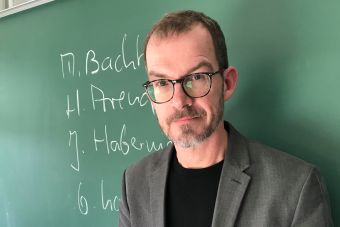
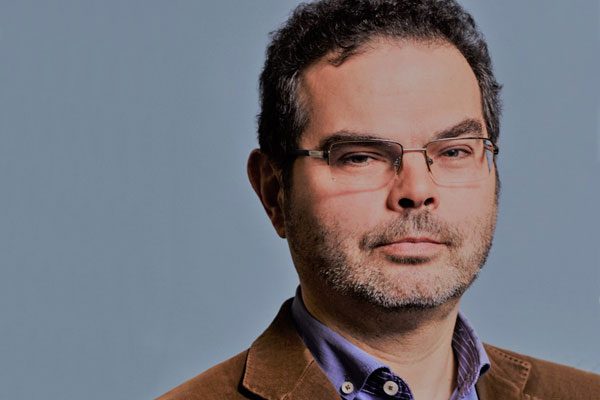
Stig Hartmann is an Associate Professor at the Department of Accounting, Copenhagen Business School , specializing in Management Accounting and Strategic Management . His work bridges theoretical frameworks with practical applications in financial and strategic control systems. Primary Research Areas : Management Accounting, Strategic Management, Balanced Scorecards, Professional Service Firms Teaching : Corporate Strategy (undergraduate), Business Understanding & Economy (diploma education), and executive supervision for MBA and CEMS programs Research Focus : Hartmann’s publications analyze strategic control mechanisms, value creation in professional services, and auditing practices for small businesses. His work often integrates knowledge management theories with empirical observations from Danish firms. Academic Contributions : Key projects include studies on financial distress assessment ("Going Concern"), strategic cost management, and the role of balanced scorecards in organizational performance. External Engagements : Provides lectures at Copenhagen University (2018–ongoing) and supervises executive education programs at CBS Executive.
Prof. Dr. Harald Ritz serves as Professor of Practical Computer Science, especially Business Informatics, at the Technical University of Central Hesse (THM) within the Department of Mathematics, Natural Sciences and Computer Science since 2003. He holds leadership roles as Chair of Examination Committees for B.Sc. and M.Sc. Business Information Systems and Spokesperson for the MNI department in the Business Informatics Working Group (AKWI). His educational background includes a Diplom in Business Informatics (Dipl.-Wirtsch.-Inform.) and doctorate (Dr. rer. pol.) from the Technical University of Darmstadt, following professional experience at SAP SI AG and a professorship at Heilbronn University of Applied Sciences. Ritz's research centers on AI-driven digital transformation for data-driven enterprises, with focus on the “Data to Decision” value chain encompassing Framing, Allocation, Analytics, and Preparation phases. His work integrates business intelligence, data warehousing, machine learning, and SAP ecosystems to address challenges in SME digitalization, operational IT management, and educational technology. Current projects emphasize AI applications in higher education, including intelligent tutoring systems and automated feedback mechanisms. Analysis of his 15 most recent publications reveals a consistent trajectory toward applied AI solutions in business contexts, particularly in intelligent chatbots for educational support, financial trading algorithms, and cloud-based data infrastructure. The research demonstrates increasing integration of no-code platforms, real-time analytics, and domain-specific AI applications across logistics, banking, and procurement sectors. No scientific awards were documented in the source materials. Professor Ritz actively supervises academic development through bachelor’s and master’s theses, doctoral research, and collaborative projects. Current initiatives include the “Winfy” AI chatbot (v4.0, 2025), AI-based feedback systems for educational content (Freiraum 2025 grant), the frits intelligent tutoring project with Prof. Kammer, and doctoral research on AI adoption in SMEs. His work bridges theoretical research with practical implementation in SAP environments and cloud platforms. He operates within THM’s MNI department infrastructure, collaborating through the Business Informatics Working Group (AKWI) and contributing to the Digital Classroom communication platform for online education.
Yuki Tanaka is a Professor at the Department of Contemporary Business, Faculty of Economics, Hosei University . Her research focuses on financial accounting and ESG disclosures , examining how corporate sustainability reporting impacts decision-making and organizational value. PhD in Commerce from Hitotsubashi University (2012) Specializes in empirical research using econometrics, text mining, and field studies Active in Japan Bankers Association and Trust Companies Association of Japan Research Themes include corporate ESG disclosures, climate change risk management, and AI applications in sustainability evaluation. She leads projects like "AI-based ESG Information Analysis" (JSPS Grant-in-Aid (B), 2022-2025) and "Climate Change Disclosure Content Analysis" (JSPS Grant-in-Aid (C), 2020-2023). Professional Memberships : Japan Accounting Association Social Accounting Society of Japan Japan Investor Relations Association
Scott Nelson is an Associate Professor of Finance at the University of Chicago Booth School of Business. His research bridges consumer credit markets, regulatory frameworks, and behavioral economics, with a focus on how information asymmetries and algorithmic decision-making shape market outcomes. He has contributed to understanding the impacts of the 2009 CARD Act, eviction protections in housing markets, and fairness in credit scoring systems. PhD in Economics, Massachusetts Institute of Technology BA (summa cum laude) in Economics and Mathematics, Yale College Nelson's work employs diverse data sources, including credit reports, court filings, and tax records, combined with structural models to analyze consumer and firm behavior. Key themes include regulatory efficiency, validity disparities in predictive models, and the welfare implications of policy interventions. His articles reveal trends in algorithmic regulation (2025), eviction dynamics (2025), credit scoring disparities (2024), and public finance impacts on Chinese real estate (2023). These publications highlight interdisciplinary methodologies integrating economics, law, and data science. Scientific awards include the AQR Top Finance Graduate Award (2018) and National Science Foundation Graduate Research Fellowship. He has held postdoctoral roles at the Consumer Financial Protection Bureau/Princeton University and visiting research positions at the Federal Reserve Bank of Boston.
Andreas Langenohl is a full Professor at the Institute of Sociology , Justus Liebig University Giessen , holding the Chair in General Comparative Studies. He has held fellowships at institutions like the Kulturwissenschaftliches Kolleg (Konstanz) and the Collaborative Research Center in Freiburg, and is an Extra-Ordinary Professor at North-West University (South Africa). PhD in Social Sciences (1999, magna cum laude ), Justus Liebig University Giessen M.A. in Sociology and Slavic Philology (1996, with highest honors ) His research spans economic sociology , financial market temporality , security studies , and cultural foundations of integration . He explores intersections of finance and politics, infrastructural security, and socio-temporal dynamics in economic theory. Recent work focuses on geoeconomic hegemony during the Ukraine conflict, pandemic security governance, and decentralized finance algorithms. Scientific Awards : Karl-Polanyi-Award (2010) for economic sociology Wolfgang-Mittermaier-Award (2007) for academic teaching Knowledge Unlatched Open Access selection (2020) Grants : He has secured multiple DFG and foundation grants for projects on financial infrastructures, securitization, and EU-Russia relations, including collaborations with institutions like Cornell University and the Einaudi Center for European Studies. Labs & Teams : Langenohl leads projects within the Collaborative Research Centre/Transregio 138 Dynamics of Security (Giessen & Marburg) and contributed to the Center of Excellence Cultural Foundations of Integration (Konstanz).
Jeroen Dalderop is an Assistant Professor of Economics at the University of Notre Dame. His research focuses on advanced econometric methods for financial time series analysis and asset pricing. Ph.D., University of Cambridge (2018) M.Phil., University of Cambridge (2013) M.Sc. & B.Sc., Tilburg University (2012) His work develops nonparametric and semiparametric techniques to model financial asset price dynamics and their connections to macroeconomic factors. Recent publications examine: Risk modeling through density ratio frameworks Market-implied pricing kernels Latent variable structures in asset pricing Current research includes projects on central clearing mechanisms in OTC derivative markets. Jeroen maintains active collaborations with financial econometrics scholars and contributes to methodological advancements in derivative pricing and risk assessment.
Thomas S. Gruca serves as the George Daly Professor in Marketing and Director of the Iowa Electronic Markets at the University of Iowa's Tippie College of Business. His interdisciplinary work bridges marketing, finance, and healthcare through innovative prediction market applications. Education PhD in Decision and Information Sciences, University of Illinois Urbana-Champaign MBA in Management Information Systems, University of Illinois Urbana-Champaign BS in Mathematics and Computer Science, University of Illinois-Chicago His research centers on prediction markets for political and healthcare forecasting, with recent work analyzing geopolitical biases , anti-incumbency effects , and rural healthcare access disparities . This intersects with his expertise in marketing/finance interface phenomena like brand equity measurement and consumer behavior modeling in casino gaming. Analysis of his 15 most recent publications reveals three dominant research streams: (1) Election forecasting through Iowa Electronic Markets (35% of output), (2) Rural healthcare access modeling (27%), and (3) Marketing analytics including brand equity and consumer behavior (38%). His work consistently appears in top journals like Journal of Marketing , International Journal of Forecasting , and PS: Political Science & Politics . Scientific Awards 9-time recipient of MBA Marketing Professor of the Year (2006-2019) President & Provost Award for Teaching Excellence (2018) Iowa MBA Instructor of the Year - Core (2014) Gruca has secured significant external funding including an NSF grant ($300,000) for Active Learning in Undergraduate Education Using Iowa Electronic Markets (2000-2003) and a US Department of Education grant for Enhancing Economic Literacy (1997-2000). His leadership roles include Faculty Director of the MBA Marketing Career Academy (2008-2019) and PhD Program Director for Marketing (2008-2014). He directs the Iowa Electronic Markets (IEM), a real-money prediction market used globally for election and economic forecasting research, which serves as both a research platform and teaching tool for over 10,000 students annually.
Barbara Bigliardi is an Associate Professor at the Department of Engineering and Architecture, University of Parma, with national scientific qualification for full professor in Economic-Management Engineering (SSD ING-IND/35). She serves as President of the Management Engineering Program at University of Parma and Director of Bachelor's/Master's programs at University of San Marino, co-leading double-degree initiatives between the two institutions. Over 100 publications (57 SCOPUS-indexed) with H-index=20 Editorial roles: Cambridge Scholars Publishing (2019), MDPI Sustainability, Sci, European Journal of Innovation Management Key research areas: Open Innovation, Technology Transfer, Food Industry Innovation, Industry 4.0, Supply Chain Sustainability Recent Publications (2024-2025) demonstrate leadership in: Industry 4.0 integration with circular economy AI applications in public administration and healthcare Digitalization of food supply chains Green startup resource orchestration Simulation-based optimization in remanufacturing Sustainable additive manufacturing Scientific Recognition : 2005 Emerald Highly Commended Award 2013 Most Cited Paper in Trends in Food Science & Technology 2019 Highly Cited Paper in Review of Policy Research Research Leadership includes: National Observatory on Start-ups (President since 2021) National Observatory on Reputation (Vice President since 2019) INAIL-funded mobile risk assessment systems (2018-2020) INAF space technology transfer projects (2018-present) Academic Contributions : Supervised over 300 theses Deputy Coordinator of Industrial Engineering Doctoral Program Director of Management Engineering Programs (Parma & San Marino) Founder of academic spin-offs: Sistemi per il marketing di contenuto S.r.l. (2016-present), Univenture SrL (2006-2010)
José Tavares is Professor of Economics at NOVA University Lisbon and Research Fellow at the Centre for Economic Policy Research (CEPR) in London. He earned his doctorate from Harvard University specializing in Political Economy and Macroeconomics, with prior teaching appointments at Harvard University, UCLA, and Universidade Católica Portuguesa. His educational background includes: Ph.D. in Economics, Harvard University Tavares' research centers on Political Economy and Macroeconomics, with seminal contributions to understanding democracy's impact on economic growth, quantifying gender discrimination's macroeconomic costs, and analyzing globalization's societal consequences. His methodological rigor combines empirical field experiments, cross-national datasets, and theoretical modeling to address critical policy questions at the intersection of institutions and economic outcomes. Recent publications demonstrate interdisciplinary breadth—from climate-violence linkages in Russia to gender quota efficacy in political representation—while maintaining focus on institutional drivers of economic performance. His work consistently bridges academic theory and real-world policy challenges through experimental and quasi-experimental designs. Though no formal scientific awards are documented in the source text, his research has garnered significant media attention from Time Magazine , The New York Times , Handelsblatt , La Repubblica , Expresso , and Público , reflecting policy relevance. He actively contributes to high-impact policy initiatives including co-authoring After The Crisis: Reform, Recovery, and Growth in Europe (Oxford University Press, 2016), leading the 'Orçamento, Economia e Democracia' institutional architecture project with Francesco Franco, and directing assessments of cultural heritage's socioeconomic value and European fund allocation frameworks. Tavares operates within NOVA University Lisbon's Economics for Policy research ecosystem and the international CEPR network, where he shapes agenda-setting work on fiscal credibility, democratic resilience, and inclusive growth through collaborative scholarly and policy-oriented teams.
Prof. Dr. Alexander Meyer-Gohde is a Professor of Financial Markets and Macroeconomics at Goethe University Frankfurt’s Faculty of Economics and Business, and a key figure at the Institute for Monetary and Financial Stability (IMFS). His research spans macroeconomic theory, macro-finance, numerical methods, and econometrics, focusing on DSGE models, nonlinear dynamics, and the impact of risk and uncertainty on monetary policy. Education : PhD in Economics (Technische Universität Berlin), MA in Economics and Management (Humboldt-Universität zu Berlin), BA in Language, Literature & Culture (Colorado State University). Research Interests : Macroeconomics, macro-finance, numerical methods, recursive preferences, stochastic volatility, and model uncertainty. Grants : DFG Individual Research Grant (2021-2024) and MatlabMakro DigiTeLL Grant (2022-2023). Publications : Focus on DSGE model solution methods, numerical stability, term premia, and nonlinear dynamics in macroeconomics. Students : Supervises job market candidates Johanna Saecker and Mary Tzaawa-Krenzler. Leadership : Chair of Financial Markets and Macroeconomics at Goethe University (2018–present) and coimplementation of the IMFS “Project Monetary and Financial Stability”.
Jinhu Li is a Senior Research Fellow at the Australian National University, holding positions in both the Department of Health Economics, Wellbeing and Society and the National Centre for Health Workforce Studies. She has previously held academic positions as a Senior Lecturer at Deakin University and a Senior Research Fellow at the University of Melbourne. Dr. Li completed her PhD in Economics from McMaster University in Canada, following an MA in Economics from the University of Victoria and a BA in Economics from Huazhong University of Science and Technology in China. She is also a Fellow of the UK Higher Education Academy (HEA). Her research focuses on health economics, economics of education, and development economics, with particular emphasis on social determinants of health, human capital formation, and health workforce economics. Dr. Li employs advanced methodologies including causal inference techniques and Discrete Choice Experiments to investigate critical issues in health, education, and development. Her recent publications span topics including the impacts of education on health outcomes, physician behavior and incentives, early-life health shocks, and child malnutrition. Her work appears in leading journals such as Journal of Health Economics, Journal of Development Economics, Health Economics, and Social Science and Medicine. Dr. Li has received significant recognition for her research, including an Australian Research Council (ARC) Discovery Early Career Researcher Award (DECRA) from 2017-2023. She has secured over $4.2 million in research funding, with $3.8 million from Category 1 national competitive grants. She currently leads multiple major research projects, including an ARC DECRA project, an ARC Discovery Project, and an MRFF Primary Health Care Research grant. Her current research examines the impacts of counter-COVID public policies like school closures on child development and optimal workforce mix for team-based care in managing chronic diseases.
Peter W. Glynn is the Thomas Ford Professor in the Department of Management Science and Engineering (MS&E) at Stanford University's School of Engineering, and also holds a courtesy appointment in the Department of Electrical Engineering. Additionally, he serves as a Senior Fellow of the Hong Kong Institute for Advanced Study at City University of Hong Kong. His distinguished career spans over four decades, with significant contributions to the fields of simulation, computational probability, and stochastic modeling. Professor Glynn received his Ph.D. in Operations Research from Stanford University in 1982 and his B.S. with Honors in Mathematics from Carleton University in 1978. His academic journey began at the University of Wisconsin at Madison (1982-1987) before returning to Stanford, where he has held various leadership positions including Deputy Chair of MS&E (1999-2005), Director of Stanford's Institute for Computational and Mathematical Engineering (2006-2010), and Chair of MS&E (2011-2015). His research interests focus on simulation , computational probability , queueing theory , statistical inference for stochastic processes , and stochastic modeling . Professor Glynn's work has developed algorithms widely used across the field of Monte Carlo simulation, with applications in financial risk management, service systems engineering, logistics, and retail operations. His recent publications demonstrate continued innovation in areas such as numerical methods for stochastic systems, rare-event simulation, and analysis of queueing systems under various traffic conditions, showing a strong trajectory of advancing both theoretical foundations and practical applications. Professor Glynn's scholarly contributions have been recognized with numerous prestigious awards, including: Fellow of INFORMS (2007) Fellow of the Institute of Mathematical Statistics (1998) John von Neumann Theory Prize from INFORMS (2010) Member of the US National Academy of Engineering (2012) Lifetime Professional Achievement Award, INFORMS Simulation Society (2021) Philip McCord Morse Lecturer, INFORMS (2020) Throughout his career, Professor Glynn has mentored numerous doctoral students whose research has made significant contributions to operations research and related fields. His editorial service has been extensive, including founding Editor-in-Chief of Stochastic Systems and service on the editorial boards of leading journals in operations research, probability, and statistics. His professional service extends to numerous advisory boards and committees at national and international levels, reflecting his standing as a leader in his field.
Chris F. Kemerer is the David M. Roderick Professor of Information Systems and Professor of Business Administration at the University of Pittsburgh's Katz School. He previously served as an associate professor at MIT Sloan School of Management and as a principal at American Management Systems Inc. PhD in Systems Sciences (Information Systems), Carnegie Mellon University BS (magna cum laude) in Economics and Decision Sciences, Wharton School, University of Pennsylvania His research spans management and measurement issues in information systems and software engineering, including technical debt, software metrics, network effects, and technology adoption. He has made significant contributions to software design metrics and empirical analysis of IT markets. His publications over the last 15 years emphasize technical debt management, software reliability, standards competition, and economic dynamics in microcomputer software. These works bridge software engineering economics with real-world applications in enterprise systems and global markets. ISI/Thomson Reuters Highly Cited Researcher in Computer Science INFORMS Information Systems Society Distinguished Fellow He has secured grants from the National Science Foundation and IBM for software evolution research. His consulting includes expert testimony in landmark cases like Microsoft antitrust litigation and Oracle v. Google. He has taught courses in economics of information systems, software design, and technology diffusion at the PhD, Executive DBA, MBA, and EMBA levels.
Christa Cuchiero is a Professor at the Department of Statistics and Operations Research , University of Vienna , and an elected member of the Austrian Young Academy (Junge Akademie) since 2020. Her research bridges rigorous mathematics and cutting-edge applications in finance, machine learning, and stochastic analysis. Education: Christa earned her M.Sc. in 2006 from TU Wien with a thesis on affine interest-rate models, her Ph.D. in 2011 from ETH Zürich on affine and polynomial processes, and completed her Habilitation at the University of Vienna in 2018 on high-dimensional finance beyond classical paradigms. Research Interests: Her work centers on affine and polynomial processes , stochastic portfolio theory , signature methods , and infinite-dimensional stochastic analysis . Recent projects explore signature-based neural SDEs for option calibration, measure-valued diffusions for energy markets, and universal approximation properties of signature transforms. Awards & Recognition: Among her accolades are the FWF START Award 2019 , the Bruti-Liberati Visiting Fellowship 2018 , the ETH Medal 2012 for an outstanding Ph.D. dissertation, and the Prix de l’Institut Europlace de Finance 2017 for the best paper in finance. Contact: christa.cuchiero@univie.ac.at , Kolingasse 14-16, 05.47, 1090 Wien, Austria.
Associate Professor Alfred Huah-Syn Wong is a finance and economics academic at Charles Sturt University's School of Business. With a PhD in Finance from RMIT University and Masters in Financial Management from the University of Queensland, he teaches undergraduate courses in Financial Management, Financial Planning, and Treasury Risk Management, plus postgraduate courses in Corporate Treasury Management and Financial Planning. His research spans Asset Pricing, Risk Management, ESG Finance, Renewable Energy Economics, and Regional Healthcare Economics . Wong actively contributes to UN Sustainable Development Goals through sustainable finance research and regional development projects. Recent work focuses on renewable energy microgrids for regional Australia and healthcare access disparities during the pandemic. His publication trends reveal growing emphasis on sustainable finance (2023-2025), with key themes in corporate governance, ESG integration, and regional economic resilience. Recent articles address MENA environmental governance, Australian healthcare access, and Industry 4.0 workforce adaptation. CSU PhD Writing Up Award 2010 ($5,000) CSU Competitive Grant Award 2010 ($10,191) RMIT University Research Prize 2010 ($1,000) CSU Seed Grant 2007 ($3,000) MRFF Rapid Applied Translation Grant 2024 Vice Chancellor’s Research Awards 2024 Wong supervises research aligned with regional development, evidenced by his role in the Ageing Well Research Group and Aspro Ageing Well projects. His grants portfolio includes the $3,000 CSU Seed Grant (2007), multiple 2023-2024 sustainability grants, and industry partnerships with Mid North Coast Health District. Current work focuses on renewable energy microgrids and Parkinson's disease nursing advocacy. He leads the Business Workforce Wellness Research Unit and collaborates with the Regional Entrepreneurship Research Group. Recent activities include the 2024 Regulating for Decent Work Conference and 2023 launch of Australian Microgrids research, demonstrating strong industry engagement in regional economic development.