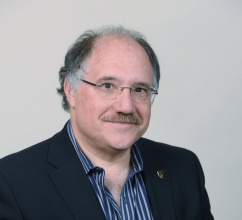
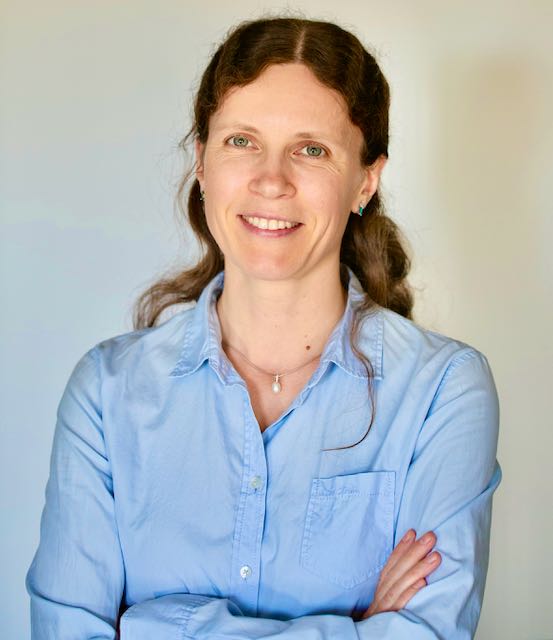
Louis G. Doray is a Full Professor of Actuarial and Financial Mathematics at the Department of Mathematics and Statistics, University of Montreal. His research focuses on statistical modeling in insurance, particularly in claim frequency, claim severity, survival analysis at advanced ages using logistic mortality models, and incurred but unreported accidents. Research Areas: Statistical modeling for insurance claims Survival analysis and logistic mortality models Actuarial applications of characteristic functions and fractional moments Risk management in financial mathematics Supervision: He has supervised graduate students including R. Momeya, I. Groparu-Cojaocaru, and Z. Ben Salah.
Harish Krishnan is a Professor in the Operations and Logistics Division at the UBC Sauder School of Business. He holds degrees from Delhi, Alabama, Michigan (MA and PhD). His research focuses on incentive distortions in supply chains, contracts for supply chain coordination, and broader supply chain management strategies. He teaches courses such as Process Fundamentals and Supply Chain Management in the 2024-2025 academic year. Education: BEng from Delhi MS from University of Alabama MA from University of Michigan PhD from University of Michigan Research Interests: Incentive distortions in supply chains Contracts and supply chain coordination Supply chain management with a focus on sustainability and operational risk Recent Work Trends: Blockchain applications in sustainable global value chains Climate policy analysis, particularly international carbon mitigation frameworks Strategic collaboration between competitors in operational contexts Affiliations: Member of the Entrepreneurship and Innovation Group Part of the Operations and Logistics Division leadership
Christoph Frei is a Professor and Chair of the Department of Mathematical and Statistical Sciences at the University of Alberta. He holds a PhD in mathematical finance from ETH Zurich and previously worked as a researcher at École Polytechnique in Paris. His research focuses on quantitative finance, risk management, and mathematical economics, with applications to algorithmic trading, credit risk, and digital currencies. Education: PhD in Mathematical Finance, ETH Zurich Postdoctoral Researcher, École Polytechnique (Paris) Bachelor/Master in Mathematics, ETH Zurich His work bridges academia and industry through collaborations with institutions like ATB Financial, Canadian Western Bank, and the Federal Reserve System. Key research interests include over-the-counter markets, financial regulation, and machine learning applications in risk prediction. Frei has received notable recognition, including the Best Paper in Asset Pricing Award (2019). Current industry partnerships include AI-driven customer risk prediction projects with ATB Financial and credit risk analysis with Canadian Western Bank. He actively contributes to professional organizations like PRMIA Edmonton and advises on financial technology innovation. Research grants come from NSERC, SSHRC, and Mitacs. His consulting roles have spanned risk modeling at UBS and Credit Suisse, emphasizing practical applications of theoretical frameworks.
Anming Zhang serves as a Professor in the Operations and Logistics Division of UBC's Faculty of Commerce and Business Administration, holding the prestigious Vancouver International Airport Authority Professorship in Air Transportation. His academic foundation includes a B.Sc. from Shanghai Jiao-Tong University and M.Sc./Ph.D. degrees from the University of British Columbia. Education : B.Sc. (Shanghai Jiao-Tong University), M.Sc. & Ph.D. (University of British Columbia) His research focuses on Transport Economics and Policy , Air Cargo Logistics , and Industrial Organization , with particular expertise in air-rail competition dynamics, pandemic impacts on aviation, and infrastructure economics. Zhang employs advanced methodologies including spatial econometrics and complex network analysis to examine transportation systems. Analysis of his 2024-2025 publications reveals three dominant trends: (1) Resilience of global air networks against pandemics and geopolitical conflicts, (2) Economic implications of urban air mobility integration, and (3) Non-aeronautical revenue optimization in airport management. His work increasingly bridges transportation economics with environmental sustainability concerns. Zhang actively supervises graduate students in Transportation & Logistics MSc and PhD programs within Business Administration, teaching undergraduate courses including Logistics and Operations Management and Air Transportation. He maintains strong institutional ties through the Center for Transportation Studies and collaborates extensively with international researchers on aviation policy challenges.
Thierry Warin is a Full Professor of Data Science for International Business at HEC Montréal, directing the Department of International Business. He holds the Professorship in Data Science for International Business and is a Principal Investigator at CIRANO, leading the World Economy theme. His roles include affiliations with Harvard Business School’s Microeconomics of Competitiveness program and the International Trade and Finance Association presidency (2020-2022). Education: PhD from ESSEC Business School (France, 2000). Professional development includes the Harvard Business Analytics Program (2018-2020) and GIS training at Harvard. Research Interests: Data science applications in global economic transformations, including network theory, natural language processing, and computational methods. Focus areas: algorithmic collusion, platform economies, and metadata-driven analyses. He develops open-source tools like the statcanR package and advocates for reproducible research. Articles Trends: Recent work explores AI regulation, algorithmic competition, climate transition plans, and central bank speech analysis. Methodologies span structural topic modeling, social media analytics, and entropy-based frameworks. Awards: Honored with the Highly Commended Paper Award (2017-2018) and Emerald Literati Award (2018) for reverse innovation research. Recognized for contributions to computational social science and regulatory frameworks. Advising & Grants: Supervised 16 master’s projects since 2019, focusing on data science applications in global business challenges. Active in interdisciplinary initiatives like the St. Lawrence–Great Lakes corridor data hub. Labs & Philanthropy: Founded quantum simulations and leads Ed’Haîti , an NGO addressing education in Haiti. Collaborates on Science des données au féminin en Afrique , empowering 200 African women with data science skills.
Andrew Rau-Chaplin is a Professor and Dean of the Faculty of Computer Science at Dalhousie University, where he leads the Risk Analytics Lab and contributes significantly to research in high performance computing, parallel algorithms, and risk analytics. He is affiliated with the Institute for Big Data Analytics and has a strong academic and administrative presence. Education: Postdoc - DIMCS (Princeton, Rutgers, Bell Labs) PhD - Carleton University (1993) MCS - Carleton University (1990) BCS - York University (1986) His research focuses on applying parallel and high performance computing to data-intensive domains such as data warehousing, OLAP, catastrophe modeling, and risk analytics. He emphasizes both algorithmic design and practical system implementation, with a strong grounding in experimental evaluation. His work spans theoretical studies and real-world applications in finance, bioinformatics, and geospatial systems. The 15 most recent publications reflect a consistent focus on parallel data processing, OLAP optimization, indexing techniques (e.g., Hilbert curves), and risk modeling. Key themes include scalable data cube computation, view selection, adaptive coding, and spatial analytics, demonstrating expertise in both algorithmic innovation and systems-level performance. He has served on numerous scientific committees and grant panels, including NSERC and Compute Canada, and has been a journal editor for JPDC and DMTCS. Dr. Rau-Chaplin has supervised a wide range of graduate students in areas including risk analytics, GPU computing, text analytics, and parallel algorithms. His lab has received funding for postdoctoral, graduate, and undergraduate research positions. He teaches courses such as Parallel Computing, Software Engineering, Data Structures, and Risk Analytics, and has developed software tools like LaHave, Clustal XP, and Digital Coliseum. His lab, the Risk Analytics Lab, focuses on integrating analytics, risk management, and HPC for challenges in catastrophe modeling and financial risk. The lab leverages technologies such as stochastic simulation, optimization, and spatial OLAP.
Cody Hyndman is a Full Professor and Acting Department Chair at the Department of Mathematics and Statistics, Concordia University, with a focus on Mathematical Finance, Machine Learning, and Stochastic Analysis. He has held significant administrative roles including Department Chair (2017–2023) and Acting Graduate Programs Director (2025–2025). Education: PhD, University of Waterloo (2005) MSc, University of Alberta BCom, University of Alberta His research spans Mathematical Finance , Stochastic Differential Equations , and Machine Learning , with notable contributions to arbitrage-free modeling, neural networks, and computational methods. Recent publications emphasize geometric deep learning and regularization techniques in finance. Scientific Awards: 2023: Concordia Academic Leadership Award Hyndman supervises graduate students in Mathematics and Statistics and co-founded the NSERC CREATE Program on Machine Learning in Quantitative Finance and Business Analytics (FIN-ML) , fostering industrial internships and interdisciplinary training.
Natalia Nolde is a Professor in the Department of Statistics at the University of British Columbia, Faculty of Science. Her research focuses on multivariate extreme value theory , probabilistic modeling , and applications in quantitative risk management across finance, insurance, hydrology, and geosciences. Her work explores non-classical approaches to multivariate extremes, particularly through limit set geometry and asymptotic dependence structures , offering novel insights into tail dependence and risk assessment. Recent publications highlight her expertise in copula-based risk modeling , financial stress testing , and geohazard prediction . Current students include: Daniel Hadley Jonathan O.K. Agyeman
Ankush Agarwal is an Associate Professor in the Department of Statistical and Actuarial Sciences at the University of Western Ontario. His research focuses on mathematical finance, financial statistics, and Monte Carlo methods, with applications to risk management and derivatives pricing. He supervises PhD students in quantitative finance and has taught courses on Monte Carlo methods and advanced financial modeling at Western University. Education: PhD in Mathematics from Tata Institute of Fundamental Research (2015) Research interests span regime-switching models, longevity risk hedging, stochastic differential equations, and rare event simulation. His work combines theoretical probability with computational techniques for financial applications. Recent publications include studies on McKean-Vlasov SDEs, implied Sharpe ratio estimation, and optimal portfolio strategies under stochastic volatility. These works demonstrate his expertise in stochastic processes and financial engineering. Supervision: Current PhD advisees include Ying Liao, Buchun Wang, and Shuya Zhang at the University of Glasgow. Former advisees include Yongjie Wang and Yihan Zou.
Aurélie Labbe is a Full Professor in the Department of Decision Sciences at HEC Montréal, holding the prestigious FRQ-IVADO Chair in Data Science. Appointed as Co-Scientific Director – Academic Partnerships at IVADO in October 2023, she plays a key leadership role in establishing connections between IVADO and partner universities. Her academic journey includes a PhD in Statistics from the University of Waterloo, a Master's degree in Statistics from the University of Montreal, and dual Bachelor's degrees in Applied Mathematics and Social Sciences from Paris-Dauphine University and Pure Mathematics from Versailles-St Quentin University. Her research spans multiple interdisciplinary domains with a focus on developing advanced statistical and machine learning methodologies for big data analysis. Labbe's work bridges theoretical statistics with practical applications across diverse fields including genomics, neuroscience, transportation systems, and health informatics. She has made significant contributions to kernel methods, matrix factorization techniques, random forest applications, and spatiotemporal data analysis, with publications appearing in top journals across multiple disciplines. Analyzing her recent publications reveals a clear trend toward methodological innovation applied to complex real-world problems. Her work demonstrates expertise in handling high-dimensional data from diverse sources including neuroimaging, transportation networks, and genomic studies. The interdisciplinary nature of her research connects statistical theory with applications in healthcare, transportation safety, and biological sciences, reflecting her ability to develop methods that address domain-specific challenges while advancing statistical methodology. Holder of the FRQ-IVADO Chair in Data Science Member of the Center for Mathematical Research Training Professor Labbe actively mentors the next generation of data scientists, supervising numerous doctoral and master's students. Her supervision portfolio includes 1 doctoral thesis (2023), 4 master's theses (2022-2024), and 32 supervised projects spanning 2019-2025. Her students' work covers diverse applications including transportation safety, healthcare analytics, financial modeling, and environmental analysis. Through her leadership of the FRQ-IVADO Chair in Data Science, she coordinates research activities that integrate mathematical, statistical, and computer science expertise with domain knowledge from various data-generating fields. As Co-Scientific Director at IVADO, Professor Labbe leads efforts to establish connections with faculties and departments across five partner universities, integrating them into IVADO's research and knowledge transfer activities. Her leadership role positions her at the forefront of advancing data science research and applications in Quebec's academic ecosystem.
Nicolás de Roux is an Associate Professor in the Department of Economics at Universidad de los Andes in Bogotá, Colombia. He holds a PhD in Economics from Columbia University and an MA from Universidad de los Andes. His academic work focuses on applied microeconomics with a specialization in development economics, particularly examining firm behavior, financial inclusion, agricultural economics, and labor markets in developing countries. He actively contributes to the academic community as a co-organizer of the biweekly Virtual Development Seminar (VDEV/CEPR/BREAD). De Roux's research interests center on understanding economic development challenges in the Global South, with particular emphasis on how weather shocks affect agricultural productivity, labor market power in developing economies, and the impacts of trade disruptions on firm performance. His interdisciplinary approach combines rigorous econometric methods with theoretical insights to address pressing development issues. His work demonstrates how microeconomic analysis can inform policy decisions that improve economic outcomes for vulnerable populations in developing countries. His publications span multiple high-impact journals including the Journal of Labor Economics, The Review of Financial Studies, and Journal of Public Economics. De Roux's research demonstrates consistent focus on labor markets, agricultural productivity, and financial inclusion, with recent work examining how weather risk affects small farms, the extent of employer power in developing country labor markets, and how firms adapt to trade partner collapse. His research methodology typically combines detailed administrative data with innovative econometric approaches to establish causal relationships. Featured Economist Interview, International Economic Association (IEA), July 2025 De Roux has mentored numerous students through his teaching at Universidad de los Andes, where he teaches courses including Introduction to Mediation, Econometrics 1, and Haciendo Economía 1. His research collaborations extend across multiple institutions, working with economists from around the world including Giacomo De Giorgi, Garance Genicot, Gianmarco León-Ciliotta, and Eric Verhoogen. His work on academic tracking revealed the counterintuitive finding that students perform better when they're at the top of a lower-ability group rather than at the bottom of a higher-ability group, challenging conventional wisdom about educational tracking. His research team includes collaborators working on projects examining internet access and banking competition in rural credit markets, as well as quality upgrading in the Colombian coffee sector. De Roux maintains an active presence in policy discussions through media outlets like VoxDev, World Bank blogs, and Colombian publications including Foco Económico and La República.
Dr. Joshua M. Pearce is a Professor at Western University, holding appointments in the Department of Electrical & Computer Engineering and the Ivey Business School. He is the John M. Thompson Chair in Information Technology and Innovation at the Thompson Centre for Engineering Leadership & Innovation and a Fellow of the Canadian Academy of Engineering. His research focuses on open-source appropriate technology for sustainability and poverty reduction, spanning solar photovoltaics, 3D printing, distributed recycling, and policy analysis. Ph.D. in Materials Engineering from Pennsylvania State University Former Richard Witte Professor at Michigan Tech Editor-in-Chief of HardwareX Author of multiple open-source sustainability books His work integrates engineering, economics, and policy to solve global sustainability challenges. Recent projects include agrivoltaic systems, open-source medical devices, and climate-resilient food production frameworks. He leads the Free Appropriate Sustainability Technology (FAST) research group, which has produced over 200 open-access publications cited in top-tier journals like Renewable and Sustainable Energy Reviews (IF=16.3) and HardwareX (IF=2). Dr. Pearce's scientific contributions include: Fulbright-Aalto University Distinguished Chair Top 0.06% most cited scientist (Elsevier metrics) Leading open-source hardware certification frameworks Developing low-cost scientific instruments His research team includes cross-disciplinary collaborators from Mechanical Engineering, Environmental Science, and Policy Studies. The FAST group emphasizes practical open-source solutions for energy, water, and food security in both developed and low-resource contexts.
Trevor C. W. Farrow is the Dean and a Professor at Osgoode Hall Law School, York University. He holds degrees from Princeton, Oxford, Dalhousie, Harvard, and Alberta, and is a member of the Ontario Bar. His research focuses on access to justice , legal process , dispute resolution , legal ethics , and globalization . Ph.D., University of Alberta (2011) LL.M., Harvard Law School (2000) LL.B., Dalhousie University (1993) BA/MA, University of Oxford (1992) A.B., Princeton University (1990) Professor Farrow’s work examines systemic justice challenges, including the financial and social costs of legal processes. He leads the Winkler Institute for Dispute Resolution and chairs Canada’s Action Committee on Access to Justice. His research has attracted major grants, including a $1 million SSHRC Costs of Justice project. His recent publications analyze criminal legal aid, privatization of justice, refugee asylum systems, and evidence-based ADR methodologies. These works span interdisciplinary themes like legal economics , social equity , and judicial efficiency . Teaching Excellence Award (York University, 2013) Certificate of Distinction in Teaching (Harvard, 2000, 2001) First Prize, Wadham College Law Society Essay Competition (1991) He supervises graduate research in access to justice, legal ethics, and dispute resolution, mentoring students like Deanne Sowter (PhD) and advising national/international policy initiatives. His teaching includes Legal Ethics , Legal Process , and Advocacy .
Frances Woolley is a full-time Professor in the Department of Economics at Carleton University , with a cross-appointment to the School of Public Policy and Administration . Her research focuses on public finance , labour economics , and feminist economics , with expertise in family economics , gender inequality , and tax policy . Her work bridges theoretical economic models with real-world policy analysis, particularly in intra-household resource distribution and taxation fairness. Recent publications highlight her engagement with emerging issues such as cryptoasset taxation , long-term care financing , and cross-border carbon pricing . Her research consistently emphasizes gender dimensions in economic outcomes and policy impacts. Woolley has received notable awards including the Purvis Prize and Vanderkamp Award , and delivered the Canadian Economics Association Presidential Address in 2018. She actively contributes to public discourse through popular writing and media engagements, addressing topics like labor market dynamics, tax equity, and social policy.
David Saunders is an Associate Professor in the Department of Statistics and Actuarial Science at the University of Waterloo, affiliated with the David R. Cheriton School of Computer Science. His research focuses on quantitative risk management, mathematical finance, and stochastic optimization with applications to credit risk, portfolio optimization, and derivatives pricing. Professor Saunders has held academic positions at the University of Pittsburgh and Cyprus International Institute of Management, and has consulted for institutions like RiskMetrics, TD Bank, and Central Bank of Cyprus. Education: PhD studies at the University of Toronto with industry collaboration at Algorithmics Inc., followed by roles at Cyprus International Institute of Management and University of Cyprus's HERMES Center. His work bridges theoretical stochastic analysis and practical financial risk management challenges. Research interests prominently feature credit risk management, optimal stopping problems, and analytical techniques in finance. Recent work addresses inverse default boundary problems, wrong-way risk in derivatives, and efficient algorithms for portfolio optimization under complex return distributions. Collaborations with financial institutions drive applied research in capital allocation, operational risk modeling, and regulatory compliance. Advising and grants include directing the Professional Science Master's in Mathematical Finance at Pitt, supervising student-industry projects on credit risk and CDO pricing, and securing funding for computational finance initiatives. Active in RiskLab Cyprus and HERMES European Center, his research extends to equity risk management and market risk frameworks.