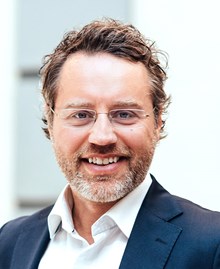
Hwanki Brian Kim is an Assistant Professor of Finance at Baylor University's Hankamer School of Business, teaching International Business Finance. His research spans corporate finance, corporate governance, institutional investors, and executive compensation, with publications in top-tier journals. PhD, Finance (2018), University of Illinois at Urbana-Champaign MS, Industrial & Operations Engineering (2011), University of Michigan MSE, Financial Engineering (2008), University of Michigan BS, Electrical Engineering & Computer Science (2003), Seoul National University Kim’s research investigates how corporate investment horizons align with institutional investor horizons, agency conflicts in passive ownership, cash retention inefficiencies, and risk management during crises. His work bridges corporate decision-making with institutional investor impacts. Recent publications highlight trends in corporate governance, cash management, and institutional investor activism. Notable topics include internal capital markets in business groups, uncertainty-driven investment policies, and the dual role of index funds in corporate monitoring.
Tyler Custis serves as an Associate Professor at the University of South Dakota's Beacom School of Business, specializing in Business Law and the Legal Environment. His academic appointments reflect deep engagement with contemporary legal challenges in sports, finance, and corporate governance. His educational background includes: JD from University of South Dakota (2013) MBA from University of South Dakota (2012) BS from Texas A&M University (2007) Custis' research focuses on high-impact legal intersections, particularly NCAA regulations, corporate fraud mechanisms, and healthcare compliance failures. His work bridges theoretical legal frameworks with real-world economic consequences, examining how regulatory gaps enable systemic misconduct in sports leagues and financial institutions. Key themes include Title IX implications for athlete compensation, internal control failures in banking scandals, and antitrust considerations in collegiate athletics. His publication portfolio reveals strong emphasis on sports law evolution (2016-2025), corporate ethics case studies (2018-2022), and financial regulation analysis (2019-2024). The research demonstrates methodological diversity spanning empirical analysis of NCAA labor models, forensic accounting of banking fraud, and policy evaluation of legislative responses to corporate misconduct. Award recognition includes: Beacom School of Business Faculty Excellence Teaching Award (2023) Excellence in Teaching Award Nominee (2023) Best Paper Award at ICTO International Conference (2019) Custis actively disseminates research through scholarly presentations at venues including ASHE Annual Conferences, Academy of Legal Studies meetings, and Beacom Scholar Series. His work engages directly with policymakers on NCAA reform and corporate compliance frameworks, demonstrating applied impact beyond academic circles.
Martin Carlsson-Wall is a Full Professor at Stockholm School of Economics (SSE) in the Department of Accounting within the House of Governance and Public Policy. He serves as Center Director for both the Center for Municipality Governance and the Center for Security and Resilience. In 2024, he was named "The Linder Chair in Sports and Business," the first Chair at SSE on Sports and Business topics. Since 2017, he has been Program Director for the MSc in Accounting, Valuation and Financial Management, and in 2015, he founded the Center for Sports and Business, which now includes 40 faculty members and has strategic partnerships with major Swedish sports organizations across football, hockey, golf, and skiing. Martin Carlsson-Wall's research focuses on accounting in sports organizations and accounting in inter-organisational relationships across both private and public sectors. His work extensively examines management control systems , particularly in contexts of innovation , growth companies , and risk management . His research often takes a qualitative approach, investigating how accounting practices function in extreme situations (such as the Swedish migrant crisis), high-intensity organizations (like football clubs), and during organizational change processes. Analysis of Professor Carlsson-Wall's recent publications reveals a strong thematic focus on the intersection of accounting practices with sports management and public sector administration. His work demonstrates how management control systems adapt to different organizational contexts, from football clubs to technology firms and public administration during crises. A recurring theme is how accounting practices mediate tensions between different stakeholder interests and how they evolve in response to organizational challenges. His research methodology typically employs in-depth case studies that examine accounting as a social practice rather than merely a technical function. Professor Carlsson-Wall has received significant recognition through his appointment as "The Linder Chair in Sports and Business" in 2024, establishing the first dedicated research position at SSE focusing on the business aspects of sports. As an educator, Professor Carlsson-Wall serves as Program Director for the MSc in Accounting, Valuation and Financial Management and teaches several key courses including BE901 Hybrid Organizations: Value Creation and Strategy at the bachelor's level, and course 3313 Investments and Value Creation in Global Sports (which he directs) and course 3302 Management Control at the master's level. He also supervises master's theses in Accounting and Financial Management. In Executive Education, he teaches on management control, costing, performance management, transfer pricing, investment management, and financial analysis through both open programs and customized corporate offerings. Professor Carlsson-Wall founded and directs the Center for Sports and Business, which has grown to include 40 faculty members and established partnerships with major Swedish sports organizations. He also leads the Center for Municipality Governance and the Center for Security and Resilience, demonstrating his commitment to applying accounting and management control research to practical governance challenges in both public and private sectors.
Xavier Casanovas Combalia is a Professor at the IQS School of Engineering (Ramon Llull University) and holds the Chair of Ethics and Christian Thought . With dual doctorates in Philosophy (University of Barcelona) and Mathematics (Polytechnic University of Catalonia), he previously served as director of the Center d'Estudis Cristianisme i Justícia (2014-2021). His research focuses on political theology , philosophical anthropology , and technoethics , with an emphasis on sustainability, economics, and ethics. Research Trends: His recent publications examine the crisis of progress narratives , post-secular spirituality , and ethical implications of AI . Projects like MobilePressure address digital well-being in families, while the SEE (Sustainability, Economics, and Ethics) initiative explores broader socio-ethical frameworks.
Mohammad Reza Farzanegan is Professor of Economics of the Middle East and Chair of the Research Group at the Center for Near and Middle Eastern Studies (CNMS) of the Philipps-University of Marburg in Germany. He serves as program director for the International Master's program in Economics of the Middle East, shaping academic pathways for students specializing in Middle Eastern economic studies. Professor Farzanegan's research spans the political economy of oil, demographic transitions, political economy of sanctions and conflict, and empirical institutional economics. His work examines how resource rents, political institutions, and external sanctions shape economic outcomes in the Middle East, with special attention to Iran's unique historical and institutional context. His methodological approach combines rigorous quantitative analysis with deep contextual understanding of Middle Eastern political economies, frequently employing advanced econometric techniques including Vector Autoregression models, synthetic control methods, and panel data analysis. Analysis of Professor Farzanegan's recent publications reveals a consistent focus on the political economy of the Middle East, particularly Iran. His research spans multiple dimensions including energy economics, conflict studies, development economics, and institutional analysis. A notable trend is his application of innovative methodologies to study the impact of sanctions, resource rents, and political institutions on economic outcomes in the region, often using novel data sources such as newspaper coverage to construct indices of corruption and internal conflict. Alexander von Humboldt Georg Forster Research Fellowship (2010-2012) Professor Farzanegan has secured research funding from prestigious organizations including DAAD, which currently supports his project on the Political Economy of Natural Resources at CNMS in collaboration with Iranian institutions. Through his leadership at CNMS, he fosters interdisciplinary research on the Middle East and maintains active collaborations with academic and research institutions across the region, particularly in Iran. His scholarly contributions have established him as a leading expert on Iran's political economy and the broader economic dynamics of the Middle East. As an educator, he directs the International Master's program in Economics of the Middle East, shaping the next generation of scholars and policymakers with specialized knowledge of the region's economic challenges and opportunities. His work bridges academic research and policy relevance, contributing to understanding of critical issues affecting the Middle East's economic development.
James Smith is a Professor in Decision Science at the Tuck School of Business, Dartmouth College. He holds a PhD (1990), MS (1986), and BS (1984) from Stanford University. Education: PhD, MS, BS - Stanford University His research focuses on Decision Analysis , Operations Research , and Stochastic Optimization , with applications in energy systems, medical decision-making, and technology adoption. Recent work includes dynamic programming approaches to energy systems under uncertainty and information relaxation techniques in stochastic dynamic programs. Key publication trends: 15 most recent articles span 2025–2004, emphasizing stochastic dynamic programming , resource allocation , and risk evaluation across energy, finance, and public health domains. Scientific awards: Jack Byrne Distinguished Professor in Decision Science He has collaborated extensively in Operations Research and Management Science journals, with notable coauthors like David Brown, Canan Ulu, and Robert Winkler. His work addresses theoretical and applied problems in portfolio management, commodity pricing, and sequential decision modeling.
Stavros Stavroglou is an Assistant Professor in Credit Risk and Fin Tech at the University of Edinburgh Business School, specializing in Management Science and Business Economics. He leads research in complex systems, causality networks, and AI-driven financial modeling with significant industry applications. His educational background includes a PhD and MRes in Applied Mathematics and Decision Making from the University of Liverpool (funded by EPSRC-ESRC scholarships), and MSc and BSc in Mathematics from Aristotle University of Thessaloniki (under full IKY Scholarships). He was a visiting scholar at California Institute of Technology and won the Best PhD Thesis award in 2020 from the University of Liverpool. Stavros specializes in designing and developing applications with AI Foundation models, quantitative and qualitative modeling, and real-time forecasting. His research focuses on uncovering hidden causal relationships in complex systems, particularly in financial markets. He has developed innovative methodologies including Pattern Causality for time series analysis, PillarScape Assembler for deep-future forecasting, and P-mo for LLM enhancement in financial contexts. His work bridges academic innovation with practical market applications, consistently delivering profitable insights through data-driven approaches. His four major publications in PNAS and Risk Analysis demonstrate his expertise in causal analysis of complex financial systems. These works have established him as a leading researcher in pattern causality and financial network analysis, with his methods being implemented in Python and R packages used by researchers worldwide. Best PhD Thesis 2020, University of Liverpool Trading Competition Winner 2018 As Research Director, Stavros supervises PhD students in AI, East Asian Economies, Statistics, and Econometrics, as well as MSc students in Quantitative Finance, Risk Management, and Credit Scoring. He has raised £600,000 for R&D in data-driven technologies for portfolio management. He is the Co-Organizer of the annual Quantitative Finance and Risk Analysis (QFRA) international symposium, which has been held in various Greek islands since 2018. Stavros maintains an extensive professional network with academics at Stanford, Oxford, Peking, Fudan, Boston, Monash, Caltech, and UCI Irvine, as well as senior professionals at firms like ETPA and JPMorgan Chase & Co. His research fingerprint spans Engineering (Policy Maker, Embedded Information, Decision Maker), Economics (Financial Market, Credit Derivative), and Computer Science domains.
Joseph Zirpolo is an Adjunct Professor of Finance at Fordham University’s Gabelli School of Business, where he has received the Dean’s Award for Teaching Excellence five times. He serves as the global head of training at Houlihan Lokey, leading intern and full-time training programs and continuing development courses. With over 25 years of experience, he has worked in investment banking, private equity, and consulting, alongside roles at top universities globally. Education: B.A. in Economics and Business Administration from Ursinus College M.B.A. from Fordham University His expertise spans financial modeling, valuation, and training in corporate finance. He previously managed credit risk forecasting at J.P. Morgan and advised Wall Street firms on leveraged buyout models. His teaching and training programs emphasize practical skills for finance professionals. Zirpolo’s career highlights include leadership in Houlihan Lokey’s Human Capital Management Department and a decade as a full-time instructor at J.P. Morgan. His contributions to education and professional development are central to his work.
Robert Ready is an Associate Professor of Finance and the Doug McKay Research Scholar at the Lundquist College of Business , University of Oregon . He is affiliated with the Department of Finance , Cameron Center for Finance and Securities Analysis , and programs including the Oregon MBA , Master of Science in Finance , and Undergraduate Programs . Research Interests include Asset pricing Commodity markets International finance Macroeconomics Scientific Awards and Recognitions : Most Outstanding Master of Science in Finance Instructor Award (2024–2025) Goulet Outstanding Research Award (2018) Best Paper at 2014 Utah Winter Finance Conference 2015 AQR Insight Prize winner 2016 Best Paper Prize from Jacobs Levy Center Publications focus on commodity markets, currency risk, and energy economics, with recent work analyzing negative oil prices, oil supply uncertainty, and global trade dynamics. His articles appear in journals like the Review of Financial Studies , Journal of Finance , and Journal of Monetary Economics .
Ann Gaeremynck is a full professor at the Faculty of Economics and Business (FEB) at KU Leuven, with primary affiliation at the Kulak Kortrijk Campus. She belongs to the Accounting Research Group and holds academic leadership roles including membership in the Council of the Faculty of Economics and Business and Campus Council FEB. Her research focuses on corporate governance, auditing, sustainability, and board dynamics, with active involvement in multiple funded projects such as 'Reimagining relational benefits in services' (2025–2029) and 'Unravelling European Governmental Venture Capital Funds' (2021–2025). Her teaching responsibilities include courses on financial reporting, external accounting, and financial analysis for law students. Notable recent publications explore topics like audit committee effectiveness, director compensation impacts on CSR, and cross-country studies on financial reporting aggressiveness. She has supervised several doctoral students, including L. Smeets and M. Dingenen. Her projects address contemporary challenges such as sustainability in post-war Ukraine, governance accountability pressures, and audit market competition. She actively participates in academic conferences (e.g., EAA Talent Workshop, ICGS Conference) and maintains a strong publication record in journals like the JOURNAL OF INTERNATIONAL ACCOUNTING AUDITING AND TAXATION and Contemporary Accounting Research.
Martin Widdicks is a Teaching Associate Professor of Finance and Director of the MSF Program at the Gies College of Business, University of Illinois at Urbana-Champaign. He holds the Josef and Margot Lakonishok Faculty Fellow distinction and has been recognized as an outstanding teacher repeatedly since 2011. His academic background includes a PhD in Mathematical Finance (University of Manchester, 2002) and a BSc in Mathematics (Manchester, 1999). Research interests focus on mathematical finance, particularly derivative pricing methodologies, singular perturbation theory applications, and executive compensation models. He has developed frameworks for multi-asset option valuation and analyzed incentive structures in equity-based compensation. Recent work includes extracting market crash and bankruptcy signals from options data. Teaching responsibilities span core quantitative finance courses (FIN 502, FIN 503), derivatives (FIN 512), and advanced electives like Complex Derivatives (FIN 514) and Term Structure Models (FIN 516/517). His awards include the Shebik Faculty Fellowship (2021–2022) and Towey Faculty Fellowship (2019–2021). Notable publications include Journal of Futures Markets , Journal of Corporate Finance , and Mathematical Finance . His work bridges theoretical finance with practical applications in risk management and corporate decision-making.
Dr. Bernard Njindan Iyke is a Lecturer in Finance at La Trobe University, specializing in climate and energy finance, corporate risk management, and international economics/finance. He holds an ORCID identifier (0000-0002-9217-1856) and has extensive experience as a consultant for central banks and international organizations. His recent research includes leading the Australian Government-funded 'Quantum Enhanced Optimisation for Energy Efficient Data Centres' project. He actively supervises postgraduate research students focusing on Sustainable Development Goals 13 (Climate Action) and 7 (Affordable and Clean Energy). Dr. Iyke's research interests span climate finance, energy security, geopolitical risk analysis, and macroeconomic policy interactions. His work frequently explores emerging markets, particularly in Asia and Africa, with notable contributions on financial stability, currency dynamics, and pandemic economic impacts. He has presented at institutions like the University of Oxford and the Asian Development Bank Institute. His recent publications analyze topics such as financial cycle synchronization in emerging economies, energy investment under climate risks, and the interplay between monetary policy and asset prices in ASEAN countries. While no explicit awards are listed, his high citation counts (e.g., over 90 citations for his 2024 energy security paper) reflect significant academic impact. He teaches courses on commercial lending and bank strategy, integrating real-world financial technology and regulatory challenges. Dr. Iyke has secured government grants totaling millions AUD, notably the 2024 Quantum Optimisation project. He advises on policy matters related to energy transition and financial resilience, maintaining active collaboration with central banks and multilateral institutions. His research agenda emphasizes bridging theoretical economics with practical policy solutions for sustainable development.
Dr. Felix Mezzanotte is an Assistant Professor of Law at Trinity College Dublin and Director of the MSc in Law and Finance Programme, a collaboration between Trinity Law School and Trinity Business School. He holds a PhD and advanced degrees from the University of East Anglia, SOAS (University of London), and the University of Warwick. His research focuses on the legal dimensions of sustainable finance, corporate sustainability reporting, investor protection, and compliance frameworks within financial markets. Academic Role: Assistant Professor of Law Affiliations: Trinity Law School, Trinity Business School (MSc Programme Director) Professional Experience: Former teaching at Hong Kong Polytechnic University, policy advisor for the World Bank, and visiting scholar at Columbia Law School and others. Dr. Mezzanotte's research interests span sustainable finance regulatory design, ESG compliance, blockchain applications in reporting, and cross-border enforcement challenges. His recent work emphasizes the legal accountability mechanisms linking corporate sustainability disclosures to investor rights under EU directives. Publications reflect a focus on EU sustainable finance policy, with analysis of regulatory complexity, blockchain innovations, and investor protection gaps. Recent articles address double materiality frameworks, impact reporting standards, and the role of robo-advisors in ESG integration. Key Award: Faculty of Business Award for Outstanding Teaching (Hong Kong Polytechnic University) Research Collaborations: European-China Law Studies Association, Columbia Center for Sustainable Investment He supervises doctoral candidates exploring topics like greenwashing prevention, non-financial disclosure obligations, and regulatory enforcement in sustainable finance contexts.
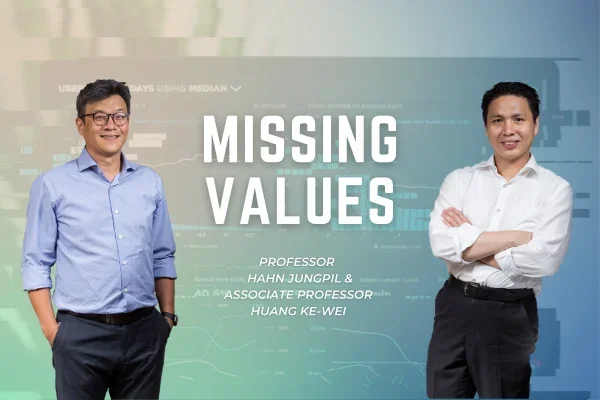
Ke-Wei Huang is an Associate Professor at the Department of Information Systems and Analytics, National University of Singapore (NUS), and Executive Director of the Asian Institute of Digital Finance (AIDF). He joined NUS in 2007, holding prior roles including Assistant Dean of Graduate Studies and founding director of NUS's FinTech MSc/PhD programs. Huang holds a PhD from NYU Stern and degrees from National Taiwan University. His research focuses on machine learning for social science, FinTech, data mining in finance, and IT labor economics. Notable works include studies on hierarchical forecasting, AI's impact on jobs, and pricing strategies for digital goods. Education: PhD in Information Systems, NYU Stern (2007) MSc in Information Systems, NYU Stern (2002) MBA in Finance, National Taiwan University (1997) BSc in Electrical Engineering, National Taiwan University (1995) Research Interests: Machine Learning applications in FinTech, data science for financial forecasting, labor economics of IT professionals, and pricing models for digital goods. His work bridges econometrics and computational methods, addressing challenges like missing data, measurement bias, and hierarchical variable decomposition. Awards & Grants: $1.6M Singapore NRF Grant (2020) for AI-driven financial text analysis Multiple teaching excellence awards (2013–2016) Best paper nominations at ICIS, WITS, and CSWIM Advising & Labs: Advised 8 PhD graduates, including faculty at Chinese University of Hong Kong and South China University of Technology. Active in FinTech education, leading courses like Machine Learning for Finance and Risk Analytics. Research teams focus on AI's societal impact, financial innovation, and data-driven decision-making.
Professor Atula Abeysekera is a Professor of Practice in Risk Management at the Department of Civil and Environmental Engineering, Faculty of Engineering, Imperial College London. He holds Honorary Fellow status of the Royal Academy of Engineering and advises government bodies on risk strategies. His career spans 40+ years in global engineering (Mott MacDonald) and financial institutions (Morgan Stanley, Schroders). Education: Graduate of Imperial College London’s Civil Engineering Department. Affiliations include visiting professorship at Universidad de Navarra (Spain), advisory roles at the Institution of Civil Engineers, and membership in the Worshipful Company of International Bankers. He chairs the UK Government’s Industry Steering Group for building safety post-Grenfell and advises on risk culture improvements. Research focuses on extreme risk management, systems resilience, and infrastructure safety. Notable contributions include work on 'Black Swan' risks (unpredictable high-impact events) and innovative funding models for flood defenses. His 2015 book What’s the small idea? explores risk culture in government. Scientific Recognition: Freedom of the City of London (2017), Fellowship by HRH Princess Royal Advisory Roles: Non-Executive Director (Institution of Civil Engineers), Board Member (City & Guilds College Association) Labs/Teams: Active in Imperial’s Centre for Systems Engineering and Innovation. Leads interdisciplinary projects combining engineering, finance, and policy to address systemic risks.