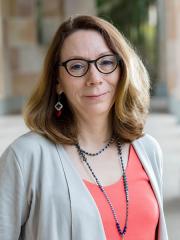
Richard B. Evans is a Senior Associate Dean for Research Services and Support at the University of Virginia's Darden School of Business, where he also holds the Donald McLean Wilkinson Research Chair. His research focuses on investment decisions, fund manager incentives, exchange-traded funds, corporate political activity, and quantitative investment strategies. University of Virginia, Darden School of Business Visiting faculty at Nova Universidade de Lisboa Senior Research Fellow at Università di Torino Education: B.S., M.S. in Chemistry, University of Utah M.A., Ph.D. in Finance, Wharton School, University of Pennsylvania His research has been published in top journals like Journal of Finance and Review of Financial Studies , with recent work analyzing ETF dynamics, short-selling risks, and team performance in asset management. Articles span topics from speculative market behaviors to institutional investor strategies. Scientific Awards: Santander Research Fellowship, Cambridge University Senior Research Fellowship, Università di Torino Evans has presented to the U.S. Securities and Exchange Commission, Federal Reserve, and American Finance Association. He serves on the Financial Analysts Journal editorial board and directs the Money Management Institute's Executive IQ Program.
Thorsten Schmidt is Professor of Mathematical Stochastics at the University of Freiburg, succeeding Prof. Ernst Eberlein in the summer semester of 2015. He also serves as Senior Financial Engineer at MathFinance. Previously, he held professorships at Chemnitz University of Technology (2008-2015), Technical University Munich (2008), and University of Leipzig (2004 onwards). From 2017-2019, he was a Research Fellow at the Freiburg Institute for Advanced Studies (FRIAS) in a joint research group with the University of Strasbourg and USIAS on the topic of Linking Finance and Insurance. His research focuses primarily on financial and actuarial mathematics, stochastic processes, and statistics, with recent work on machine learning methods and their applications in financial mathematics and AI regulation. In Freiburg, his goal with his young team is to tackle complex challenges with improved mathematical models and apply these methodologies to various fields. Key Research Areas: Financial mathematics and credit risks Pricing and hedging of derivative financial products Statistics of stochastic processes Energy markets and nonlinear filter theory Machine learning applications in finance and insurance His recent publications show a strong trend toward integrating machine learning with traditional mathematical finance, particularly in risk management, insurance-finance arbitrage, and robust financial modeling. His work increasingly addresses ethical considerations in AI applications within finance, reflecting his broader interest in responsible AI development. Notable Awards: IDA Award Finance (2015) FRIAS-USIAS Research Fellow (2017/2018) IDA Award Machine Learning and AI (2020) MAPFRE Research Grant (2020) Luis Bachelier Fellow (2021) As Editor-in-Chief of Statistics and Risk Modeling and Associate Editor for Mathematical Finance and International Journal of Theoretical and Applied Finance, Schmidt plays a significant role in academic publishing. He leads the CRC 'Small Data' research center with Harald Binder, focusing on medical problems where disease progression must be estimated with few data points per patient. His LeanAI project, funded by the Vector Foundation, explores the connection between machine learning and theorem-proving software LEAN, aiming to develop AI that can translate between mathematics and formal proof systems. His laboratory work centers around the application of stochastic methods combined with machine learning to solve problems in finance and insurance where data is limited ('Small Data' initiative), with significant funding from DFG (€12 million for CRC Small Data) and the Carl Zeiss Foundation.
Lukasz Szpruch serves as Professor at the University of Edinburgh's School of Mathematics and Programme Director for Finance and Economics at The Alan Turing Institute. He leads the FAIR research programme on responsible AI adoption in financial services and co-investigates the UK Centre for Greening Finance & Investment (CGFI), directing partnerships with the National Office for Statistics, Accenture, Bill & Melinda Gates Foundation, and HSBC. He maintains affiliations with the Oxford-Man Institute for Quantitative Finance. His research focuses on probability theory , stochastic analysis , and theoretical machine learning , with current investigations into deep learning foundations, mean-field models, reinforcement learning, game theory, multiagent systems, and computational optimal transport. These theoretical frameworks are rigorously applied to financial economics problems including market dynamics, risk modeling, and regulatory compliance, emphasizing mathematical precision in AI system design. Recent publications reveal a strategic shift toward responsible AI deployment in finance , addressing large language model governance, synthetic data privacy, and non-asymptotic sampling theory. His work consistently bridges abstract mathematics with financial sector applications, particularly through the FAIR programme's industry collaborations that translate theoretical advances into practical frameworks for trustworthy AI adoption. As Principal Investigator of FAIR and CGFI co-Investigator, Szpruch manages significant research funding streams focused on AI ethics in financial services and sustainable finance. His academic leadership drives cross-sector initiatives where theoretical research directly informs regulatory policy development and industry best practices, though specific student mentoring details remain unspecified in source materials. Szpruch operates at the nexus of three critical research ecosystems: the FAIR programme's industry partnerships, CGFI's sustainability-focused finance research, and the Oxford-Man Institute's quantitative finance initiatives. These interconnected teams combine mathematical rigor with real-world financial applications, developing frameworks for AI assurance, green finance metrics, and synthetic data validation that address systemic challenges in modern financial systems.
Mohammed J. Zaki is a Professor and Department Head at the Department of Computer Science , Rensselaer Polytechnic Institute . He co-directs the NSF IUCRC Center for Research Towards Advancing Financial Technologies (CRAFT) and has authored the textbook Data Mining and Machine Learning (2nd Ed, Cambridge University Press, 2020). Research Focus : Novel data mining techniques for graph-structured and textual data with applications in bioinformatics, personal health, and financial analytics. Leadership : Co-chair of BIOKDD workshops, Associate Editor for multiple journals, and Program Co-chair for SIGKDD, SDM, ICDM, and other top conferences. Scientific Awards include: EDBT'24 Test of Time Award NSF CAREER Award DOE Early Career Award HP Innovation Research Award Google Faculty Research Award Fellowships: IEEE, ACM, AAAS, SIAM Recent Publications highlight advancements in: Knowledge Graph Completion with Directed Attention Multi-Sense Embeddings for Language Models Financial Trend Prediction via Graph Neural Networks Health-Guided Recipe Recommendation Systems Triplet Interaction in Molecular Graph Learning Temporal Personal Health Data Analysis
Professor Matthew Elliott is a leading academic in the Faculty of Economics at the University of Cambridge , where he serves as Professor of Economics , Faculty Executive Director of Research , and Director of the Keynes Fund . His work bridges Networked Markets , Game Theory , and Microeconomic Policy , with applications to Supply Chains , Systemic Risk , and Labor Markets .
John Rand is a Professor in Development Economics at the Department of Economics, University of Copenhagen, where he has been employed since 2021. He previously served as Professor (mso) at the Faculty of Social Sciences (2015-2020) and Faculty of Science (2011-2014), Associate Professor (2008-2011), and Assistant Research Professor (2005-2008) at the same institution. He is currently Vice-chair of The Consultative Research Committee for Development Research (FFU) and co-director of the Development Economics Research Group (DERG). Professor Rand's research focuses primarily on development economics, with specific expertise in applied econometrics, impact measurement, industrial economics, and interdisciplinary methods. His work spans topics including climate-smart agriculture, economic policy in developing countries, trade and productivity, and governance issues. He leads multiple externally funded research projects including 'Energy transition and climate-smart agriculture in Vietnam', 'Economic Research and Policy Making in Kenya', and 'Sedentarization and climate change resilience in Nigeria'. His extensive publication record shows a strong focus on empirical research in developing countries, particularly in Africa and Southeast Asia. His recent work demonstrates consistent attention to practical policy implications, with a growing emphasis on climate change adaptation, resource allocation efficiency, and the intersection of economic development with environmental sustainability. His research often employs rigorous quantitative methods to address real-world development challenges. Professor Rand is actively involved in several research networks including the Copenhagen Center for Disaster Research (COPE) as part of the steering group and the UCPH Migration Research Platform. He serves as Head of Studies for Global Development and teaches Development Economics (BA) and Theories, Facts and Current Issues (MSc Global Development). He has presented his research at numerous international conferences including UNU WIDER conferences, Nordic Conference in Development Economics, and various country-specific development forums. His work has been referenced in policy sources and picked up by news outlets, indicating its relevance to current development debates.
Amy C. Edmondson is the Novartis Professor of Leadership and Management at Harvard Business School, holding a chaired position dedicated to human interactions in successful enterprises. She has been consistently ranked among Thinkers50's top management thinkers since 2011, achieving #1 status in 2021 and 2023. Her research focuses on psychological safety, teaming, and organizational learning, with significant contributions to understanding how organizations learn from failure. Key publications include The Fearless Organization (2019) and Right Kind of Wrong (2023), the latter winning the Financial Times and Schroders Best Business Book of the Year award. Her work spans organizational behavior, healthcare management, and innovation science, with articles in top journals like Administrative Science Quarterly and Harvard Business Review . Recent research trends show increasing focus on psychological safety dynamics in constrained environments, cross-boundary teaming, and the science of intelligent failure. Her 15 most recent articles (2021-2025) demonstrate expanding applications from healthcare to general management contexts, with growing emphasis on temporal dimensions of team learning and data-driven decision pitfalls. Major awards include: Thinkers50 #1 Management Thinker (2021, 2023) Thinkers50 Breakthrough Idea Award (2019) Financial Times Best Business Book Award (2023) Accenture Award for California Management Review (2003) Edmondson advises on organizational transformation through numerous Harvard Business School cases, including culture change initiatives at Microsoft, LEGO, and Cleveland Clinic. Her research has secured funding for studies on teaming in pharmaceutical development, smart city projects, and healthcare innovation. Current work examines psychological safety erosion in new hires and cross-boundary team dynamics in complex innovation projects.
Giorgio Fagiolo is a Full Professor of Economics at Sant'Anna School of Advanced Studies. His work spans agent-based computational economics, economic networks, and macroeconomic policy analysis. University: Sant'Anna School of Advanced Studies (Scuola Superiore Sant'Anna) Department: Economics Email: giorgio.fagiolo@sssup.it Research interests focus on agent-based modeling , macroeconomic instability , and climate-economy interactions . He develops computational models to study industrial dynamics, financial integration, and policy design in complex systems. Key themes: Endogenous growth cycles, R&D network stability, and green transition policies. Methodological emphasis: Empirical validation of agent-based models and nonlinear economic dynamics. Scientific awards include collaboration with leading institutions like ETH Zurich, Columbia University, and OFCE Sciences Po. His publications appear in journals such as Journal of Economic Dynamics and Control and Ecological Economics .
Maria Rita D’Orsogna is a Professor of Mathematics at California State University, Northridge (CSUN) and holds an Adjunct Associate Professor appointment in the Department of Computational Medicine at UCLA. She earned her PhD in Theoretical Physics from UCLA in 2003 and has since bridged mathematical modeling with interdisciplinary research in biology, social dynamics, and criminology. Her work utilizes statistical mechanics and applied mathematics to study collective behavior, viral dynamics, and societal challenges. Her research spans Biological swarming and self-organization Crime pattern modeling and policy analysis Drug addiction relapse dynamics Environmental activism against offshore oil drilling Recent publications focus on Medical decision-making optimization Age-specific overdose mortality forecasting Radicalization and social network dynamics Criminal career empirical studies Hematopoiesis modeling . She has secured funding from the NSF and Army Research Office. Teaching experience includes differential equations, multivariable calculus, and mathematical biology at CSUN and UCLA. She has mentored students through RIPS, IPAM, and PUMP programs. As Associate Director of UCLA’s Institute for Pure and Applied Mathematics (2018–2021), she promoted interdisciplinary research. Her environmental advocacy in Italy led to national policy changes banning coastal oil drilling, earning her recognition as the "Erin Brockovich of Italy".
Professor Alicia Rambaldi is Director of Research at the School of Economics, Faculty of Business, Economics and Law at the University of Queensland. She is also an Affiliate of the Centre for Efficiency and Productivity Analysis. Her academic career spans decades of research in econometric methodologies with applications to real-world economic problems. Professor Rambaldi's research interests focus on applied econometrics, time series econometrics, state-space models, and spatial time series models. She has made significant contributions to economic measurement, particularly in developing methodologies for computation of price indices for land and property, estimation with linked administrative data, and smoothing methodologies combining spatial and temporal information. Her work bridges theoretical econometrics with practical applications in housing markets, climate adaptation, and international economic comparisons. Her recent publications demonstrate a consistent focus on housing economics, with numerous papers on hedonic pricing models, property valuation, and the impact of environmental factors on real estate markets. She has also maintained a strong research program in international comparisons, purchasing power parity, and productivity analysis, often collaborating with leading researchers in these fields. Professor Rambaldi is actively involved in research supervision, currently advising on topics including language barriers faced by immigrants, distributive politics, and copula models. Her completed supervision includes significant work on purchasing power parities, development indexes, trade studies, and spatial analysis of tourism employment. Her current research projects include spatial time series models with applications to housing and land prices, transport demand modeling, and international comparisons. She has secured substantial funding from diverse sources including the Australian Research Council, Natural Hazards Research Australia, and government departments, demonstrating the applied relevance of her work. Professor Rambaldi leads an active research group within the Centre for Efficiency and Productivity Analysis, focusing on developing and applying advanced econometric techniques to address pressing economic measurement challenges. Her work often involves interdisciplinary collaboration with researchers in environmental science, urban planning, and transportation studies.
Marie Kratz is a Full Professor at ESSEC Business School (Cergy, France), affiliated with the CREAR - Center of Research in Econo-finance and Actuarial Sciences on Risk . Her work bridges theoretical and applied domains in extreme value theory , heavy-tailed distributions , and risk management , with applications in finance, cybersecurity, and neuroscience. Research Focus : Extreme value theory, risk concentration, cyber risk modeling, Gaussian random fields, and pro-cyclicality in financial risk measures. Collaborations : Active collaborations with Michel Dacorogna, Marcel Bräutigam, and Sibsankar Singha on cyber risk and financial applications. Methodologies : Development of the Normex method for aggregated heavy-tailed risks, hybrid Gaussian-Pareto models, and near-explosive random coefficient autoregressive models. Awards and Recognition : No specific awards mentioned in the text.
Assoc. Prof. Savaş DURMUŞ is affiliated with Kafkas University , where he has held the position of Associate Professor in the Department of International Trade and Logistics since 2021. He previously served as a Department Head (2019–present) and Deputy Institute Director (2012–2015). His academic journey includes a PhD in Economics (2007–2011) and MSc in Business Administration (2001–2004) from Turkish institutions. Education : PhD, Economics, Celâl Bayar University (2007–2011) MSc, Business Administration, Selçuk University (2001–2004) BA, Business Administration, Atatürk University (1988–1993) Research Interests focus on Development Economics , Macro Economics , and Business Cycles , with a strong emphasis on empirical analysis of economic policy, international trade, and financial systems. His work spans topics like tourism economics, energy sector performance, and regional development. Scientific Contributions include 15+ peer-reviewed articles (2020–2024) on themes such as financial development, Dutch disease, and Industry 4.0. He has co-authored studies on tourism’s impact on growth and cross-country analyses of economic complexity. Editorial Work includes roles as editor for international books like Banka ve Finansal Sistem (2016) and Analysis of Economics Applications (2023). He has collaborated extensively with academics such as Dilek Şahin (27 joint publications) and Hasan Ayaydın (17 joint publications).
Prof. Dr. Janine Maniora serves as Professor of Business Administration, especially Financial Accounting, at Heinrich Heine University Düsseldorf's Faculty of Business and Economics since 2021, following prior appointments at Technical University of Munich (2018-2021) and TU Dortmund (2016-2018). Her interdisciplinary research bridges financial reporting, corporate social responsibility, sustainability, auditing, and digital transformation through theory-driven empirical methodologies. Her educational foundation includes a doctorate from Ruhr University Bochum with international research stays at Harvard Business School, UC San Diego, Boston University, and Tongji University Shanghai. This global perspective informs her investigation of how corporate information provision impacts market dynamics and regulatory frameworks. Maniora's scholarly work demonstrates consistent evolution from early analyses of EU non-financial reporting directives (2013-2015) toward contemporary examinations of social media's capital market effects (2024) and pandemic-related market interventions (2023). Her publications reveal a strategic focus on regulatory impacts, digital disclosure channels, and sustainability integration across diverse market contexts. Key recognitions include: Fellowship for digital higher education innovation (Stifterverband/NRW Ministry, 2017) DAI University Prize (German Stock Exchange Institute, 2012) In pedagogy, she integrates practical industry collaborations into bachelor's and master's curricula for IFRS, auditing, and corporate governance courses, emphasizing real-world business insights. Her research team actively disseminates findings through international conferences and dual-channel publication in academic journals and practice-oriented outlets to bridge theory and business applications. Maniora leads interdisciplinary projects examining digital transformation's impact on financial reporting ecosystems, maintaining HHU's Oeconomicum as a collaborative hub for addressing societal challenges through accounting research.
Novi Quadrianto is a Professor of Machine Learning at the School of Engineering and Informatics, University of Sussex, where he joined as a Lecturer in February 2014. He is currently a Principal Investigator on three active EU grants: BayesianGDPR (ERC), TANGO (EU Horizon RIA), and Act.AI (ERC Proof of Concept). He also holds an Adjunct Professor position in Data Science at Monash University, Indonesia, and serves as Strategic Lab co-Leader of the BCAM Severo Ochoa Strategic Lab on Trustworthy Machine Learning in Bilbao, Spain. His educational background includes a PhD in Machine Learning from the Australian National University (2012) and a BEng in Electrical and Electronics Engineering from Nanyang Technological University, Singapore. During his PhD, he conducted research at multiple international institutions including HIIT-Finland, Yahoo! Research-US, University of Alberta-Canada, Fraunhofer IAIS-Germany, and IST Austria. From 2012-2014, he was a Newton International Fellow of the Royal Society at the University of Cambridge. Professor Quadrianto directs the Predictive Analytics Lab (PAL) since 2017, which focuses on "Responsible AI" research developing AI models that embed fairness, accountability, transparency, and trustworthiness. His research spans algorithmic fairness, federated learning, and computer vision, with applications in sustainable development, healthcare, and finance. His work has been funded by prestigious organizations including the European Research Council, EPSRC, and HM Treasury. His publications reveal a strong focus on addressing challenges in AI fairness, robustness, and privacy, particularly in dynamic environments and heterogeneous data settings. Recent work explores performative prediction, diversity-driven learning, and efficient vision transformer inference, demonstrating his leadership in cutting-edge machine learning research. European Research Council ERC Proof of Concept Grant (2023) Guarantor Researcher for BCAM Severo Ochoa Excellence Accreditation (2023) European Lab for Learning and Intelligent Systems (ELLIS) Scholar/Fellow (2020) European Research Council ERC Starting Grant (2019) Newton International Fellowship (2012) Microsoft Research Asia Fellowship (2009) Professor Quadrianto currently supervises six PhD students and five postdoctoral researchers. He has served as Action Editor for Transactions on Machine Learning Research since 2022 and as Associate Editor for IEEE Transactions on Pattern Analysis and Machine Intelligence since 2016. He has also been an Area Chair for major conferences including NeurIPS, ICML, and AAAI. His PAL laboratory hosts a team of 15 members focused on inter-disciplinary AI research with domain experts across various sectors. The PAL Lab operates three innovation strands: AI for Sustainable Development (supporting UN SDGs), AI for Healthcare (transforming health outcomes), and AI for Finance (personalized loan decision-making). The lab also leads initiatives in Diversity & Inclusion in AI and offers Pro-Bono Office Hours to organizations seeking guidance on machine learning aspects.
Shuting (Sophia) Hu is an Associate Professor in the Department of Finance, Insurance, and Real Estate at Baylor University's Hankamer School of Business. She holds a PhD in Business Administration (Finance) from Texas A&M University (2018) and a Bachelor of Economics (Finance) from Nanjing University (2011). Her research and teaching focus on empirical finance, regulatory impacts, and corporate decision-making. Dr. Hu's research explores: Corporate responses to legislation (e.g., banking thresholds under Dodd-Frank) Executive compensation design and board learning dynamics Innovation ecosystems , including fintech disruption and knowledge spillovers via board networks Blockchain applications in contractual enforcement Her publications analyze trends in financial regulation, innovation diffusion, and governance, with recent work emphasizing technological disruption in finance. She teaches FIN 4365: Investment Analysis and maintains active research collaborations with scholars at leading institutions.