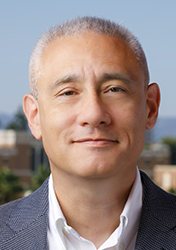
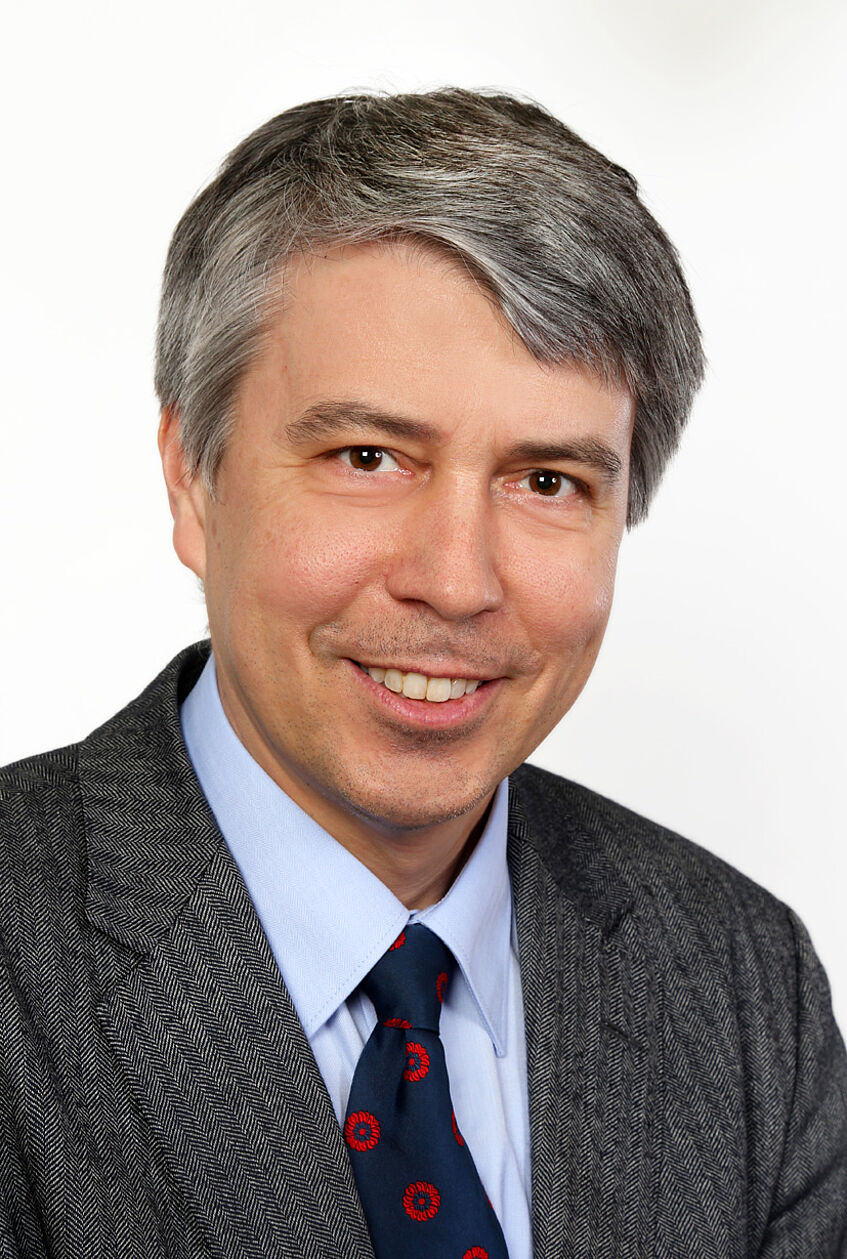
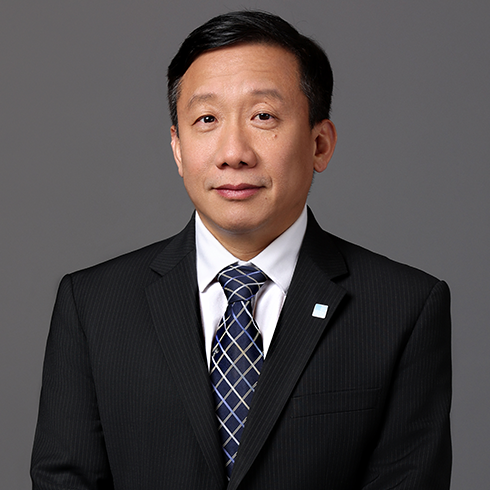
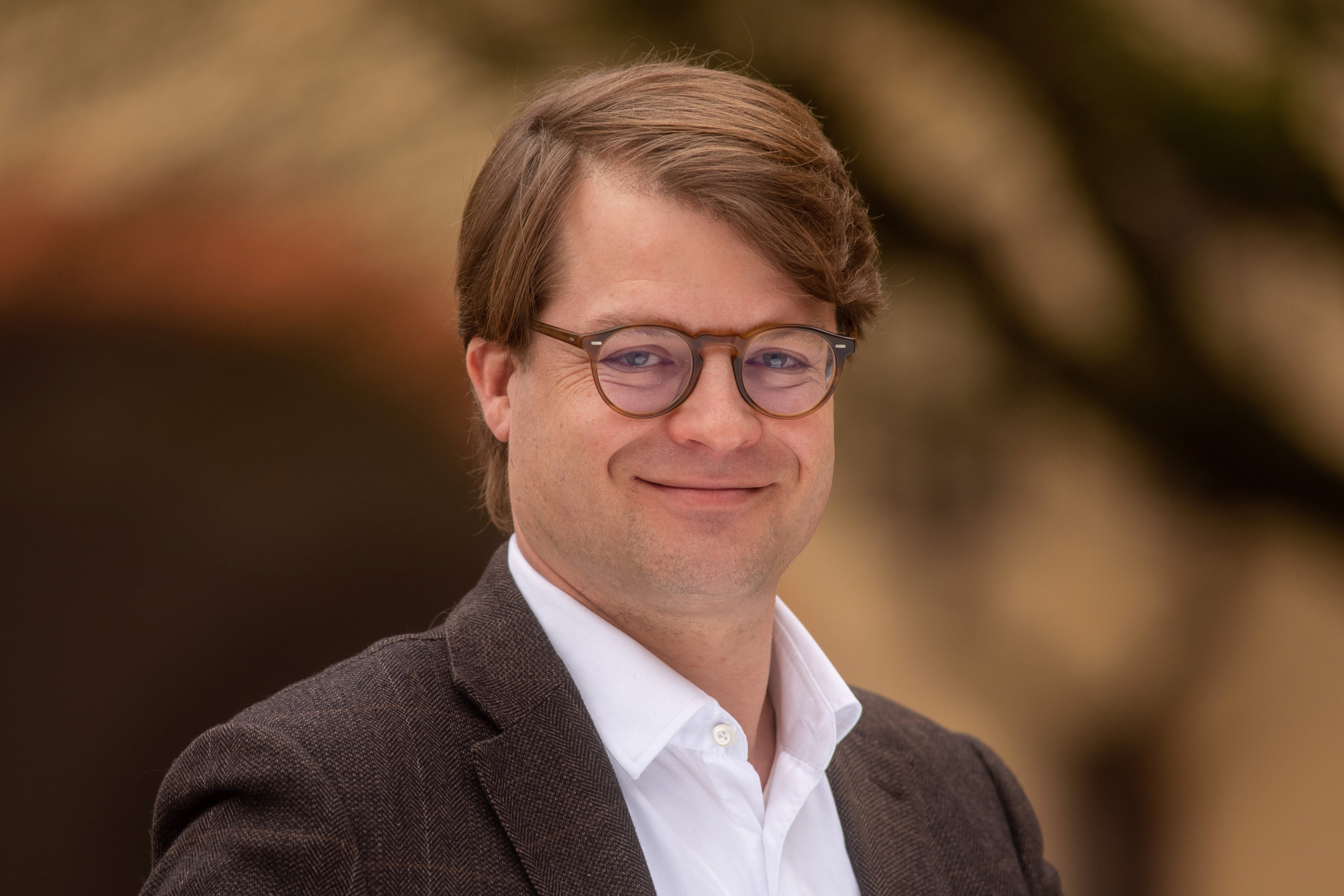
Sho Ogata is a Professor at the School of Law, Waseda University , with a focus on civil law, commercial law, and corporate governance. His academic journey includes a PhD in Law granted by Waseda University. Research Interests: Commercial Law, Company Law, Financial Instruments Regulation, Insurance Law Key Themes: Corporate control structures, governance of school corporations, shareholder rights, and regulatory compliance in financial and insurance sectors Ogata has authored numerous influential papers on corporate governance, particularly analyzing Swedish law and its implications for controlling shareholders, board accountability, and minority protections. His work also addresses the governance of foundations and school corporations under Japanese law, often drawing comparisons with UK and US frameworks. Recent grant-funded research projects include: JSPS Grant-in-Aid (2021-2024): Governance of foundations under company law JSPS Grant-in-Aid (2017-2020): Governance of school corporations under company law His teaching spans Commercial Law, Corporate Law, and specialized seminars at Waseda University’s Graduate School of Law and School of Law.
Julia Darby is a Professor in the Department of Economics at the University of Strathclyde. She joined Strathclyde in 2003 after previous roles at the Universities of Glasgow, Stirling, and the National Institute of Economic and Social Research in London. Her expertise spans applied macroeconomics with a focus on labor markets, fiscal policy, wage determination, and econometric modeling. Education: BSc in Economics (University College, 1986), MSc (University of York) Research Themes: Labour market dynamics, fiscal policy analysis, market volatility, and policy evaluation Key Collaborations: Scottish Institute for Research in Economics (SIRE), Glasgow Chambers of Commerce SDG Contributions: Education and labor market policy improvements Her research network includes collaborations with academics across 6 similar profiles, focusing on fiscal relations, market volatility, and tax competition. Julia supervises PhD students in macroeconomics and econometrics, and her teaching covers economic policy, macroeconomics, and econometrics at undergraduate and masters levels. She has participated in 35 professional activities including conferences, examinations, and committee memberships, with notable work on Brexit uncertainty indices and UK social care workforce analysis.
Laura Pellegrini is an Assistant Professor in Financial Intermediaries at the Department of Management, University of Bergamo. She teaches Investments, Sustainable Finance and Financial Markets and Instruments at the University of Bergamo, and also teaches Corporate Restructuring at Catholic University in Milan. She is a Research Fellow of the Center on Economic, Social and Cooperation Dynamics (CESC) at the University of Bergamo and for the Center for Applied Economics Studies (CSEA) at Catholic University in Milan. Her academic credentials include a BA in Economics of Institutions and Financial Markets from Milan Catholic University and a PhD in Economic Policy from Piacenza Catholic University. In 2017, she obtained National Qualification as Associate Professor of Banking and Finance. Dr. Pellegrini's research spans critical intersections of finance, governance, and sustainability. Her work investigates how ownership structures interact with systemic risk in financial sectors, how ESG metrics influence corporate valuation and market performance, and how political connections affect corporate governance across different institutional contexts. She examines these relationships through both theoretical frameworks and empirical analyses of European and global financial systems, with particular attention to Italian business environments. BA Economics of Institutions and Financial Markets, Milan Catholic University PhD in Economic Policy, Piacenza Catholic University National Qualification as Associate Professor of Banking and Finance (2017) Her publication record shows a strategic evolution from traditional corporate finance topics toward sustainability-focused research, while maintaining rigorous methodological approaches. Recent works demonstrate increasing attention to how environmental, social, and governance factors impact financial decision-making and market outcomes across different industry sectors. Dr. Pellegrini serves on the Editorial Board of the Universal Journal of Accounting and Finance and referees for numerous international journals including Journal of International Financial Management & Accounting, Journal of Infrastructure, Policy and Development, and Eurasian Business Review. She actively participates in international research collaborations and contributes to academic discourse through her editorial and peer review activities.
Dr. Hubert Cichocki serves as an Assistant Professor in the Department of Project Management at Warsaw School of Economics (SGH), Warsaw. His academic work focuses on public administration systems with particular emphasis on Polish local government units (Jednostki Samorządu Terytorialnego - JST) and their engagement with European Union funding mechanisms. His primary research spans hybrid organizational structures, agile transformation methodologies, and socio-demographic analysis of local government leadership. He investigates motivation systems in public sector human resource management and innovative financial instruments like leasing for municipal financing. Current work examines how regional leader characteristics influence EU project participation across Polish voivodeships, bridging theoretical frameworks with practical public sector challenges. Dr. Cichocki's publication record shows concentrated activity in 2022 (three articles) following foundational 2016 works. His research consistently addresses Polish local government contexts, with recent outputs analyzing leadership demographics in EU project engagement and agile transformation applications. Earlier works established frameworks for motivation systems and alternative financing in municipal administration, demonstrating sustained focus on public sector innovation within Central European governance structures.
Dr. Marcin Czaplicki is an Assistant Professor at the Department of Traditional Banking within the Warsaw School of Economics. His research primarily investigates banking stability, macroprudential policy effectiveness, and financial crisis mechanisms, with a geographic focus on the European Union, United States, and Central-Eastern Europe. Research Focus His work explores: Macroprudential policy design during crises (e.g., COVID-19 pandemic adaptations) Monetary policy transmission through banking channels Housing finance accessibility and regulatory impacts Non-financial determinants of banking instability Comparative analysis of regulatory frameworks across economies Publication Trends Recent articles (2021-2024) demonstrate strong emphasis on crisis-response mechanisms, EU banking regulation, and housing market dynamics. Over 80% of publications analyze real-time policy effectiveness during economic shocks, utilizing empirical data from North American and European banking systems.
John Matsusaka serves as Professor of Business, Law and Political Science at the University of Southern California's Gould School of Law. He holds a joint appointment across multiple disciplines and serves as Executive Director of the Initiative and Referendum Institute at USC, where he studies ballot measures nationwide. His educational background includes a degree from the University of Washington and MA/PhD from the University of Chicago. Professional appointments include National Fellow at Stanford's Hoover Institution, John M. Olin Professor at Chicago's Stigler Center, and visiting positions at UCLA and Caltech. Matsusaka's research focuses on direct democracy mechanisms , particularly initiatives and referendums, with significant contributions to understanding their impact on public policy, budgeting, and electoral systems. His work bridges political science, economics, and law, examining how citizen-driven legislation affects governance. Additional expertise spans corporate finance topics including mergers and acquisitions, corporate diversification, and capital budgeting procedures. Analysis of his publications reveals consistent focus on empirical analysis of democratic institutions , with methodological strengths in quantitative political economy. His work demonstrates how direct democracy instruments reshape policy landscapes, particularly in state-level fiscal governance and electoral administration. Award highlights include: Merton Miller Prize for most significant Journal of Business paper (2001) Thompson Scientific Selected Emerging Research Front paper (2006) As Executive Director of the Initiative and Referendum Institute, Matsusaka leads comprehensive tracking of ballot measures across the United States. His public commentary in outlets like the Sacramento Bee and Los Angeles Times focuses on state budget crises and fiscal accountability. His influential book For the Many or the Few: The Initiative, Public Policy, and American Democracy (2004) remains a foundational text in the field. The Initiative and Referendum Institute serves as his primary research hub, coordinating national studies of direct democracy processes while maintaining connections with policymakers and election administrators nationwide.
Rainer van Husen is an Associate Professor at the University of Vienna's Faculty of Law, where he serves at the Institute for Corporate and Commercial Law. His office is located in the Juridicum building at Schottenbastei 10-16, Room R423, in Vienna. He teaches multiple courses including Group and Reorganization Law, Exercise in Corporate Law, and various seminars on Corporate and Commercial Law for both diploma and doctoral students. His current teaching schedule includes courses for Spring Semester 2025 and Winter Semester 2024. Professor van Husen's educational background includes: 1991: Graduated from the University of Vienna with a degree in law 1994: Graduated in Business Administration from WU Vienna 1994: Doctorate in Law from the University of Vienna 1997: Doctorate in Economics from WU Vienna 2007: Habilitation 2008: Appointed Associate Professor His primary research interests focus on corporate and commercial law, with particular expertise in company law, cooperative law, banking law, and trade law. Professor van Husen has made significant contributions to understanding the legal frameworks governing cooperatives, corporate reorganization, and the intersection of banking regulation with corporate structures. His scholarly work demonstrates a consistent trajectory from early studies on cooperative legal forms to more recent analyses of cooperative principles and banking regulation. His publications reveal deep engagement with Austrian commercial law while incorporating comparative perspectives on corporate governance frameworks across different legal systems. The recurring themes in his work include liability structures, capital formation mechanisms, and the adaptation of traditional legal concepts to modern business practices. Professor van Husen has received recognition for his scholarly work through the Kastner Prize of the Austrian Banks and Bankers, awarded in both 1998 and 1999 for his monographs on profit participation rights and cooperative assets. These awards highlight the practical relevance of his research to the banking and financial sectors in Austria. As an educator, Professor van Husen supervises students through various seminar formats where participants develop research papers on corporate law topics. His teaching approach emphasizes practical application through case studies and problem-oriented learning, preparing students for both academic and professional legal practice in commercial law. He maintains regular consultation hours by appointment, particularly after classes, to support his students' academic development. His course requirements typically include substantial written work (minimum 50,000 characters) that addresses current and relevant issues in corporate law, followed by oral presentations and substantive discussions.
Professor Ewa Walinska is a distinguished academic serving as Dean of the Faculty of Management at the University of Lodz and Head of the Department of Accounting. With a career spanning over three decades at the University, she has held numerous leadership positions including Vice-Dean for Science and Development (2016-2020) and previously served as Dean from 2008-2016. Her academic journey began with master's studies in economic cybernetics and computer science at the University of Lodz's Faculty of Economics and Sociology, followed by a PhD in Economics in 1994 and habilitation in economic sciences in management in 2004, culminating in her appointment as Full Professor in 2011. Professor Walinska's research focuses on financial accounting, particularly the valuation of balance sheet categories, financial result measurement, financial statement preparation principles, tax accounting, and financial statement analysis. Her work in management accounting examines practical applications in Polish enterprises, the relationship between management and financial accounting systems, and financial planning. She has made significant contributions to university financial management and the adaptation of international accounting standards to Polish legislation. Her scholarly work demonstrates consistent engagement with international accounting standards, particularly IFRS implementation in Poland, tax allocation methods, and the evolution of accounting practices in transition economies. Professor Walinska has presented her research at numerous international conferences including multiple European Accounting Association congresses in Venice, Athens, Prague, and Lisbon. Golden Cross of Merit of the University of Lodz (2016) Medal of the National Chamber of Statutory Auditors for merits (2016) 1st Degree Award of the Rector for best academic textbook (2010) Medal of the National Education Commission (2009) Golden Badge of the University of Lodz (2008) Professor Walinska has been instrumental in developing accounting standards and practices in Poland, serving as co-author of the National Accounting Standard for 'Fixed Assets' and contributing to legal regulations on depreciation. She has led numerous research projects examining Polish accounting standards against international frameworks, EU directives adaptation, and the impact of deferred taxes on listed companies' reporting. Her practical work extends to implementing accounting policies and chart of accounts for major Polish corporations including PKP CARGO, Telekomunikacja Polska, and several energy sector companies.
Li Haitao serves as Dean, Dean's Distinguished Chair Professor of Finance, and Director of the Family Business Research Center at Cheung Kong Graduate School of Business (CKGSB). Holding a PhD from Yale University, he previously held faculty positions at the University of Michigan's Stephen M. Ross School of Business and Cornell University's Johnson Graduate School of Management. His academic leadership extends to editorial roles at Management Science and the International Review of Finance . Education: PhD in Finance, Yale University Professor Li's research spans quantitative finance with emphasis on asset pricing anomalies, derivative securities valuation, and fixed income modeling. His work integrates advanced mathematical techniques including Lévy processes and Bayesian analysis to address complex market phenomena. Key contributions examine volatility smiles in interest rate caps, survival bias in equity returns, and nonparametric estimation of state-price densities. His expertise bridges theoretical finance with practical applications in hedge fund performance evaluation and corporate risk management. His publication record reveals consistent contributions to top finance journals including the Journal of Finance , Review of Financial Studies , and Journal of Financial Economics , with research evolving from foundational term structure modeling toward contemporary challenges in liquidity risk and machine learning applications in finance. Scientific Awards: Sanford R. Robertson Professorship, University of Michigan (2007-2008) NTT Research Fellowship, University of Michigan (2006-2007) Q-Group Research Grant (2004) Best Student Paper Award, Eastern Finance Association (1997) Trefftz Award, Western Finance Association (1996) Sterling Prize Fellowship, Yale University (1991-1993) Professor Li actively contributes to academic governance through editorial board service while directing CKGSB's Family Business Research Center. His current research agenda focuses on AI applications in financial markets and China's evolving role in global finance, evidenced by recent speaking engagements at the 2025 Summer Davos and Boao Forum for Asia. He serves on the editorial boards of Management Science (Finance Department) and the International Review of Finance . As Director of the Family Business Research Center, he leads initiatives examining succession planning in Chinese family enterprises and cross-border investment patterns, with recent projects analyzing Macau's casino industry leadership transitions and China-Africa economic relationships.
Professor Urs Lendermann is a distinguished legal scholar specializing in European Banking and Commercial Law at the Deutsche Bundesbank University of Applied Sciences since 2014. He also serves as Head of the Module "Financial, Regulatory and Legal Environment" for the Diploma of Advanced Studies in Banking at the University of Zurich. Previously, he worked as a Senior Specialist at the Swiss Financial Market Supervisory Authority (FINMA) from 2010-2013, focusing on solvency and capital requirements for banks. Doctorate in Law (PhD) from the University of Zurich (2012) Second State Examination in Law (Bar Exam) at the Higher Regional Court in Coblenz (2006) First State Examination in Law at the Higher Regional Court in Cologne (2004) Law Studies at the Universities of Münster, Lausanne and Cologne Trained as a Bank Clerk, First rank in 1999, Honors from the Chambers of Industry and Commerce in North Rhine-Westphalia Professor Lendermann's research focuses on critical challenges in financial regulation, particularly the "too-big-to-fail" problem in the financial sector, regulating systemically important banks, bank insolvency legislation, recovery and resolution planning, hybrid capital instruments, and the legitimacy of "soft law" used by international standard setters. His work bridges theoretical legal analysis with practical regulatory implementation challenges. His extensive publication record reveals a consistent focus on banking regulation evolution, with recent emphasis shifting toward emerging challenges including sustainable finance (evidenced by his 2023 work on "greenium" in German green securities), digital finance regulation, and the theoretical underpinnings of bank resolution mechanisms. His 2025 article "Automated bail-in: eliminating regulatory restraints" represents the cutting edge of his current research on improving bank resolution frameworks. As a scientific advisor to the International Association of Deposit Insurers (IADI) and the European Parliament, Professor Lendermann actively contributes to shaping international financial regulatory frameworks. He regularly lectures at prestigious institutions including the University of Zurich, Frankfurt School of Finance, and various central bank training programs worldwide, demonstrating his influence across academic, regulatory, and practitioner communities. His professional activities extend to significant editorial contributions, including co-editing the Commentary on the German Investment Firms Act (WpIG) and contributing to major commentaries on the German Banking Act (KWG) and Capital Requirements Regulation (CRR). These works represent authoritative references in German financial regulatory practice.
Ahmed I. Samatar serves as James Wallace Professor of International Studies and Chair at Macalester College, Minnesota, where he also founded the Institute for Global Citizenship. His academic career spans institutions including Cornell, Harvard, London School of Economics, and University of Pennsylvania. His research focuses on global political economy , African political development , and Somali state formation . Key interests include leadership dynamics in fragile states, Islam's relationship with globalization, and political theory applications to post-colonial contexts. His work bridges scholarly analysis with practical engagement in Somalia's reconstruction efforts. Samatar's publications reveal consistent focus on Somali state collapse and reconstruction pathways , with recent work examining diaspora contributions through Dahabshiil networks. His articles show increasing attention to youth political engagement and cultural resilience as foundations for statebuilding. As an educator, he teaches courses including Intro to International Studies: Globalization , Power and Development in Africa , and Global Leadership , connecting classroom learning with real-world policy challenges. Samatar actively engages Somali diaspora communities across North America, Western Europe, Australia, and New Zealand through workshops and public lectures, maintaining dual commitment to academic scholarship and practical nation-building.
Manuel Orta Perez serves as a Professor in the Department of Accounting and Financial Economics within the Faculty of Economic and Business Sciences at the University of Seville. With over three decades of academic leadership, he directs the SEJ-180 research group and teaches core auditing courses including International Auditing Standards and AI applications in financial systems. His research expertise spans: Auditing Theory : Pioneering work on key audit matters, internal/external audit interactions, and risk-based methodologies Corporate Governance : Empirical studies on audit committees and ethical frameworks in Spanish/EU contexts Technology Integration : Current focus on AI, big data analytics, and digital transformation in auditing practices Ethical Decision-Making : Investigations into auditor objectivity and psychological factors influencing professional skepticism Analysis of his 15 most recent publications reveals a strategic evolution: 60% address technology integration (2019-2023), 30% examine governance mechanisms (2007-2012), and 10% establish foundational ethical frameworks (2002-2006). His work consistently employs empirical methods using Spanish corporate data, with 40% involving cross-national comparisons. Professor Orta Perez has mentored five doctoral researchers to completion and secured over €1.2 million in research funding through: Principal investigator roles in 8 competitive projects including the IBM Enterprise Digitalization Chair 12 industry contracts with financial institutions like Corporación Bancaria Argentaria 6 Andalusian government contracts for public sector accounting reforms He leads the 15-member 'Grupo de Investigación en Contabilidad y Auditoria', which collaborates with the European Accounting Association's Auditing Network and IBM Spain to develop practical auditing frameworks. Current initiatives focus on AI-driven risk assessment tools and ethical guidelines for algorithmic decision-making in financial auditing.
Susan Henderson is an Associate Professor in the Department of Accountancy at the Craig School of Business, California State University, Fresno. She has taught at Fresno State since 2009, advancing from lecturer to her current role, and will assume the Department Chair position in Fall 2023 while serving as Program Coordinator for the Professional Accounting Certificate Program. Her academic credentials include: D.B.A. from the University of Florida (2018) Master of Accountancy from California State University, Fresno (2007) B.S. in Business Administration (Accountancy) from California State University, Fresno (2006) Dr. Henderson's research centers on Governmental and Nonprofit Accounting , examining public sector financial practices; Accounting for Sustainable Practices in Agriculture , analyzing sustainability's financial impact; Ethics in Accounting , addressing professional conduct dilemmas; and Accounting Pedagogy , innovating curriculum development. Her work bridges theoretical frameworks with Central Valley agricultural and nonprofit sector applications. Her publication portfolio reveals a trajectory from cryptocurrency integration in accounting education (2019) to sustainability investment analysis (2020) and contemporary governmental accounting studies (2022), consistently connecting academic research to real-world Central Valley industry challenges. As Program Coordinator, she actively mentors students through CPA exam preparation and provides specialized consulting services to Central Valley businesses in governmental, nonprofit, and agricultural accounting sectors.
Raymond Weicker serves as an Assistant Professor in the Finance, Legal Studies department at the Manning School of Business, University of Massachusetts Lowell, with affiliations spanning business and legal disciplines. His academic credentials include: Doctor of Philosophy (Ph.D.) Student in Finance, University of Massachusetts Lowell Juris Doctor (J.D.) from Brooklyn Law School Master of Business Administration (M.B.A.) from University of Massachusetts Lowell Master of Science (M.S.) in Finance from University of Massachusetts Lowell Bachelor of Arts (B.A.) in Environmental Studies from Franklin and Marshall College Research focuses on Real Estate Law and Finance, Bankruptcy Law, and Debt Instruments, driven by extensive practical application in legal and financial systems. His work bridges theoretical frameworks with real-world lending, compliance, and transactional structures in commercial and retail banking contexts. With 30 years of professional experience including federal prosecution, Ray provides specialized support to banks and private lenders on loan recovery, regulatory compliance, and transaction structuring. Licensed to practice law in NH, NJ, NY, and MA, he also holds Massachusetts real estate broker and title insurance agent certifications. Additional leadership roles include officer/director positions at a biopharmaceutical startup developing metastatic cancer therapies and Director at Northeast Legal Aid.
Randy Fortenbery is the Director of the IMPACT Center and holds the Thomas B. Mick Endowed Chair at Washington State University's School of Economic Sciences, within the College of Agricultural, Human, and Natural Resource Sciences. He specializes in agricultural price dynamics, futures market analysis, and risk management strategies. His research focuses on how new information impacts market prices, volatility spillovers, and hedging mechanisms in commodity markets. Fortenbery earned his Ph.D. in Agricultural Economics from the University of Illinois (1988), and his M.S. and B.S. in Applied and Natural Resource Economics from Montana State University (1984 and 1982, respectively). He has held distinguished roles, including the Renk Chair in Agribusiness at the University of Wisconsin-Madison and has received awards for teaching and research. His recent work explores topics such as biodiesel refinery location decisions, volatility in dairy and soybean markets, and the effects of climate phenomena like El Niño on commodity prices. He has contributed to policy discussions on crop insurance, ethanol production impacts, and international trade dynamics in grain markets. Awards: Small Grains Endowed Chair (2011–present), Renk Chair in Agribusiness (2002), John S. Donald Teaching Award (1996). Labs/Teams: Leads the IMPACT Center, focusing on applied economic research and policy analysis. Grants: Extensive funding for studies on biofuel economics, climate impacts, and commodity market dynamics (details in full description).