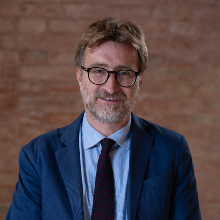
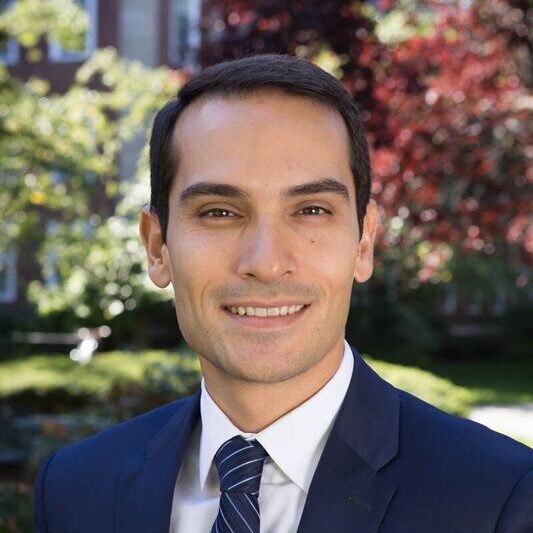
Marco Mancini is an Associate Professor at the Department of Economics , Ca' Foscari University of Venice . He holds a PhD in Public Law and has been actively engaged in teaching and research since 2007, focusing on Constitutional Law , Public Law , and Administrative Law . His academic activities span multiple programs, including Master’s degrees in Economics and Social Sciences. Education: High School Diploma (1994), Virgilio Classical High School, Empoli Law Degree (2002), University of Siena, cum laude PhD in Public Law (2006), University of Siena His research centers on territorial autonomy , electoral rights , and public finance governance . Recent publications analyze regional legal frameworks, judicial protection mechanisms, and financial autonomy principles. He has contributed to projects on citizen participation in local services and banking foundations . Marco serves on editorial boards and associations like the Pisa Group and DIPEC (European and Comparative Public Law group). He has coordinated academic collaborations with institutions in Siena, Brazil, and Pisa, and participated in debates on constitutional reforms and biodiversity regulation.
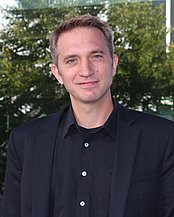
Pascal Taddei is a Lecturer at the University of Zurich 's Faculty of Law for the LL.M. International Tax Law program and the Swiss Institute for Tax Education (SIST) for MAS FH in Taxation/LL.M. Taxation . He is also a Partner at ADB Altorfer Duss & Beilstein AG , specializing in national and international tax law, including restructuring, M&A, corporate service relationships, financing, fund structures, and company relocation. Dr. iur., University of Zurich (2012) Admitted to the Basel-Stadt bar (2004) Certified Tax Expert (2008) Lic. iur., University of Basel (2001) His research and advisory focus on corporate tax law , international taxation , and restructuring . Recent publications analyze Swiss Federal Court rulings on profit taxation, OECD Pillar 2 implementation, and tax implications for real estate and financial instruments. Articles emphasize practical applications of tax principles in corporate transactions and compliance. Scientific recognition includes: «by far the best tax advisor» Lexology 2023 «technically savvy and pragmatic» Chambers Europe 2025 «brightest minds in the field» Chambers Europe 2023 «top name in the market» WWL Thought Leaders Switzerland 2023 «deep knowledge of corporate taxation» WWL Thought Leaders Switzerland 2022 «well known for technical excellence» WWL Thought Leaders Switzerland 2020 Contact: pascal.taddei@adb.ch | +41 44 267 63 88
Brendan Kinnane Beare is a Professor of Econometrics at the University of Sydney , affiliated with the School of Economics under the Faculty of Arts and Social Sciences. His research focuses on econometric theory, time series analysis, copula modeling, and stochastic processes. Education: PhD in Economics (2007) from Yale University Research areas: Time series, copulas, Markov modulation, unit root testing, financial econometrics Recent work includes stochastic arbitrage with options, Pareto exponents in economic models, and tests for copula symmetry Beare's publication trends span econometric theory, applied statistics, and financial modeling, with a focus on mathematical rigor and empirical relevance. He teaches undergraduate and postgraduate econometrics courses and participates in international seminars on unit roots and cointegration.
Prof. Dr. rer. pol. Hermann Locarek-Junge is a full professor at the Department of Economics , University of Technology Dresden , Germany. His academic work focuses on business administration , with specializations in finance and financial services , risk management , and neural networks in finance . He has led research on electronic banking , market risk estimation , and financial technology . Department: Economics University: University of Technology Dresden Research Themes: Finance, financial technology, risk management, electronic banking His publications span financial mathematics , portfolio risk analysis , and digital transformation in banking . Key topics include value-at-risk modeling, neural networks for market risk, and direct banking trends. He has collaborated with researchers like Ralf Prinzler , Mario Straßberger , and Manfred Schwaiger on credit risk, customer retention, and nonlinear loss functions in portfolios. Recent work (1997-2002) explores crisis communication , volatility hedging , and dynamic limit setting in financial markets. He has edited volumes on information society challenges for data analysis and co-authored interactive learning programs in business administration. His research bridges quantitative finance and information systems in banking.
Univ.-Prof. Dr. Joscha Wullweber is Heisenberg Professor for Politics, Transformation and Sustainability at the University of Witten/Herdecke (Faculty of Business and Society, Department of Philosophy, Politics and Economics) and Director of the International Center for Sustainable and Just Transformation (tra:ce). His work lies at the intersection of International Political Economy, critical finance studies, and political ecology, focusing on the governance of global finance, shadow banking, central-bank politics, and the political economy of sustainability transitions. Research & Teaching Political economy of sustainable transformation Global governance of finance and shadow banking Central-bank policy and green monetary policy Carbon finance, climate finance, and ecological crisis Innovation and technology governance Urban sustainability transformations His research is currently organised around three major third-party funded projects: Climate change and global finance at the crossroads (BMFTR), the transdisciplinary RuhrortPlus urban transformation project, and the Heisenberg project Neutrality lost: The politics of central banking in the age of shadow banks . Scientific Output Since 2019, Wullweber has published two major monographs— Zentralbankkapitalismus (2021, Suhrkamp) and Central Bank Capitalism Politics: Monetary Policy in Times of Crisis (2024, Stanford University Press)—and numerous journal articles on green monetary policy, shadow money, and the discursive legitimation of central-bank activism. His 2024 Stanford book synthesises a decade of research on how central banks have become pivotal market-making actors in post-crisis capitalism. Advisory & Outreach Member of the German Federal Government’s Scientific Advisory Council on Global Environmental Change (WBGU) since November 2024 Regular media commentator (3sat scobel , Wohlstand für Alle podcast) Principal investigator on multi-million-euro federally funded projects linking climate and finance policy Research Team At tra:ce he leads an interdisciplinary team of post-docs and doctoral researchers including Dr Jan Fichtner, Dr Sonja Knobbe, Paula Haufe, Nicolás Águila, Janina Urban, Simon Schairer and Riccardo Baioni, together with student assistants.
Dr. Chang Y Choo is a Professor of Electrical Engineering at San José State University, where he also serves as Director of the AI/ML FPGA/DSP Systems Laboratory. His academic career spans over three decades, with previous positions at Worcester Polytechnic Institute and industry experience at Altera Corp. (now Intel). Dr. Choo maintains an active research program focusing on hardware acceleration for AI and signal processing applications, with particular emphasis on FPGA-based implementations for real-world systems. Dr. Choo's educational background includes: Ph.D. in Computer and Systems Engineering, Rensselaer Polytechnic Institute (1986) M.S. in Operations Research and Statistics, Rensselaer Polytechnic Institute (1982) B.S./M.S. in Engineering, Seoul National University, Korea Dr. Choo's research interests center on the intersection of hardware design and artificial intelligence. His work focuses on implementing computer vision, deep learning, and digital signal processing algorithms on specialized hardware platforms including FPGAs, GPUs, and custom ASICs. Current projects include developing real-time illumination/view-independent object recognition systems for autonomous vehicles, wideband acoustic echo cancellation for wearable technology, and FPGA-based accelerators for medical imaging applications. His research bridges theoretical algorithm development with practical hardware implementation constraints. Analysis of Dr. Choo's recent publications reveals a clear trajectory toward increasingly sophisticated hardware-accelerated AI systems. His work has evolved from foundational research in digital signal processing and image compression to cutting-edge applications of deep learning on specialized hardware. Recent publications demonstrate expertise in implementing CNN architectures on FPGAs, developing metabolic syndrome prediction models, and creating food object detection systems using transformer models. This progression reflects the broader field's shift toward hardware-aware AI development. Dr. Choo's significant scientific contributions include multiple patents that have advanced the state of the art in several domains: U.S. Patent No. 9,025,763 (2015): 'Apparatus and Method for cancelling wideband acoustic echo' U.S. Patent Nos. 7,058,675 (2006) and 7,124,161 (2006): 'Apparatus and method for implementing efficient arithmetic circuits in programmable logic devices' U.S. Patent Nos. 5,943,096 (1999) and 6,621,864 (2003): 'Motion vector based frame insertion process' U.S. Patent Nos. 5,832,131 (1998) and 5,991,455 (1999): 'Hashing-based vector quantization' U.S. Patent No. 5,587,710 (1997): 'Syntax based arithmetic coder and decoder' Throughout his career, Dr. Choo has been actively involved in both academic and industry collaborations. He has served as a technical consultant for numerous Silicon Valley companies including National Semiconductor (now Texas Instruments), Philips Semiconductor, Skybox Imaging (acquired by Google), Novariant (now AgJunction), and Ricoh Innovations. His industry experience informs his teaching approach, which emphasizes practical implementation considerations alongside theoretical foundations. Dr. Choo has also served as an expert witness in intellectual property court cases involving audio and video compression algorithms and FPGA hardware. Dr. Choo directs the FPGA/DSP AI/DL Laboratory at San José State University, which focuses on developing hardware-accelerated solutions for real-time AI applications. The lab maintains strong connections with Silicon Valley technology companies and provides students with hands-on experience in cutting-edge hardware design methodologies. Current research directions include autonomous vehicle navigation systems, medical imaging applications, and edge AI deployment strategies.
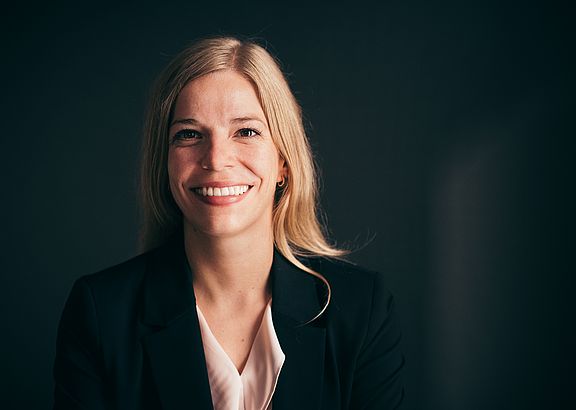
Prof. Dr. Julia Kreppmeier serves as a Junior Professor at Ostbayerische Technische Hochschule (OTH) in the Weiden Business School. Her academic position focuses on International Business with specialization in Finance, where she conducts research at the intersection of traditional finance and emerging digital technologies. Her research interests center on Digital Finance, with particular expertise in FinTech, Blockchain technology, and Tokenization. She also investigates Sustainable Finance practices and their implementation in modern financial systems. Her work bridges theoretical finance concepts with practical applications in the rapidly evolving digital financial landscape. Dr. Kreppmeier's recent publications demonstrate a strong focus on empirical analysis of digital financial instruments and market behaviors. Her research examines real estate security token offerings, data privacy issues within FinTech applications, signaling mechanisms in security token markets, and comprehensive analyses of the German FinTech industry. These publications appear in high-impact finance journals including Journal of Banking & Finance, Electronic Markets, and Journal of Business Economics. As a dedicated academic, she maintains regular office hours by appointment and is actively engaged in advancing knowledge in the field of digital finance through rigorous empirical research and scholarly contributions.
George Serafeim is the Charles M. Williams Professor of Business Administration at Harvard Business School , co-leader of the Climate and Sustainability Impact AI Lab , and former co-chair of the Impact-Weighted Accounts Project (2019–2022). He serves on Harvard University's Salata Institute faculty steering committee and advises the International Foundation for Valuing Impacts (IFVI) . PhD in Business Administration, Harvard Business School (Wyss Award for excellence) MSc in Accounting and Finance, London School of Economics (Emeritus Professors’ Prize) His research bridges sustainability , digital transformation , and financial strategy , focusing on: Climate change transition risk/opportunity frameworks Purpose-driven organizational design ESG data analytics and valuation Corporate governance in sustainability scandals Recent articles analyze EU taxonomy alignment , ESG rating discrepancies , and AI-driven climate technology diffusion , with keywords spanning Finance , Accounting , and Climate Economics . He has received multiple awards, including the Greenhill Award and Graham and Dodd Scroll Award , and serves on boards including Liberty Mutual and Summa Equity .
Nika Šimurina, PhD, is a Full Professor at the Department of Finance, Faculty of Economics and Business, University of Zagreb. She has been affiliated with the faculty since 1999, teaching Public Finance, Tax System of Croatia, and International Aspects of Taxation in undergraduate and graduate programs. She also coordinates the Introduction to Regulation course in the graduate professional program. B.Sc. in Law (1998), Faculty of Law, University of Zagreb M.Sc. in Economics (2003), Faculty of Economics and Business, University of Zagreb Ph.D. in Economics (2008), Faculty of Economics and Business, University of Zagreb Her research focuses on public finance systems, tax systems, tax policy, and international taxation. She has explored topics such as environmental taxes, personal over-indebtedness, income inequality, and the economic impact of renewable energy investments in Croatia. Her work often bridges fiscal policy with broader socio-economic issues. Her publications analyze trends in tax policy, inequality, healthcare efficiency, and sustainability. Recent articles address environmental taxation in the EU, tax drivers of household debt, and cluster analyses of EU economic freedom and corruption. Outstanding Conference Participant Award B&ESI (2018) She has served as a mentor for seminar papers, final theses, and graduate theses, though specific student names are not listed. She has evaluated grants for the University of Rijeka and reviewed submissions for prestigious journals like Economic Review and Zagreb International Review of Economics and Business.
Guirong Yan is an Assistant Professor at Missouri University of Science and Technology, affiliated with the Department of Civil, Architectural and Environmental Engineering. Her research focuses on structural engineering , wind engineering , and disaster resilience , with particular emphasis on tornado impact analysis, typhoon wind field modeling, and community recovery frameworks. Research interests include: Tornado-structure interaction using CFD simulations Surface roughness and terrain effects on extreme wind dynamics Community resilience modeling for post-disaster recovery Solitary wave energetics in coastal engineering 3D concrete printing for resilient infrastructure Windborne debris and wind tunnel validation Key article trends show computational fluid dynamics applications to tornado and typhoon hazards , wind-structure interaction , and community recovery mechanisms . Her work bridges engineering simulation , disaster risk assessment , and policy-relevant resilience strategies .
Alexandra Sergeevna Kasatkina serves as Associate Professor at the Faculty of Law of the National Research University Higher School of Economics (HSE), where she also holds significant administrative positions including Deputy Dean for Academic Affairs, Co-director of the Jurisprudence educational program, Academic Director of the Jurisprudence: private law program, and Head of the Advanced Training Program on Introduction to the Chinese Legal System. With over 15 years of experience at HSE since 2008, she has established herself as a prominent scholar in international private law with a specialized focus on transport law and international commercial transactions. Her research interests center on international private transport law, structuring international commercial transactions, and various aspects of international private law including conflict of laws, international civil procedure, and unified norms. Her scholarly work demonstrates a clear trajectory toward increasingly sophisticated analysis of international legal frameworks, particularly in aviation law, corporate ethics, and the impact of sanctions on cross-border disputes. Recent publications reveal a growing emphasis on practical applications of international private law in contemporary business contexts, including mergers and acquisitions under sanctions, corporate ethics implementation, and international commercial arbitration. Medal 'Recognition - 15 years of successful work' from HSE (January 2025) Best teacher award (2021-2024) Winner of the competition for best Russian-language scientific works (2022) Best academic supervisor in multiple categories (2023-2024) High professional potential group membership (HSE reserve staff) As Deputy Dean for Academic Affairs, Professor Kasatkina oversees curriculum development, faculty recruitment, and academic program management across the Faculty of Law. She has been instrumental in developing innovative educational approaches, including problem-oriented learning methods to enhance research competencies. Her leadership extends to coordinating international collaborations, as evidenced by her participation in the Shanghai Cooperation Organization Legal Forum in Shanghai, China. Professor Kasatkina also directs research projects focused on the contemporary structure of private international law and transactional work for international commercial deals.
Shvedov Aleksey Sergeevich is a Professor at the Faculty of Economic Sciences of the National Research University Higher School of Economics (HSE), affiliated with the Department of Applied Economics. He has been working at HSE since 1993 with 44 years of scientific and teaching experience. His office is located at Pokrovsky Boulevard, 11, office S524 in Moscow. Professor (1997) Doctor of Physical and Mathematical Sciences (1992) Specialist in Mathematics from Lomonosov Moscow State University, Faculty of Mechanics and Mathematics (1978) Additional education at London School of Economics (1998) and Sorbonne (2000) Professor Shvedov's research focuses on the intersection of fuzzy logic, probability theory, and economic applications. His work primarily explores fuzzy-random optimization, econometric analysis, mathematical economics, and random matrix theory. He has developed innovative approaches to modeling economic phenomena using fuzzy-probability analysis, particularly in financial time series, game theory applications, and regression models with fuzzy data. His research bridges theoretical mathematics with practical economic applications, especially in financial markets and decision-making under uncertainty. His recent publications (2020-2024) demonstrate a consistent focus on advancing fuzzy set theory applications in economics, with particular emphasis on game theory (Cournot and Bertrand oligopoly models with fuzzy parameters), statistical decision theory with fuzzy losses, and financial modeling using fuzzy systems. The work shows increasing sophistication in handling fuzzy-random variables and developing computational methods for economic applications. Scientific awards and recognition: Medal "Recognition - 25 years of successful work" (2023) Honorary Worker of Higher Professional Education of the Russian Federation (2016) Certificate of Honor from Ministry of Education and Science (2012) Multiple academic work allowances and publication bonuses Prize from Moscow Mathematical Society (1987) Inclusion in Who's Who in the World (2016) Professor Shvedov has supervised multiple doctoral dissertations, including works on portfolio theory and covariance matrix estimation. He has led research grants, notably an RFBR project on computational financial mathematics (2000-2002). His teaching portfolio includes advanced courses in probability theory, statistical analysis of financial time series, and specialized courses on fuzzy-probability analysis and financial market models. He has been actively presenting research at major international conferences, particularly the annual conferences named after S.A. Ayvazyan.
Nathalie RUBIO is a Teacher-researcher affiliated with Aix Marseille Université (AMU) through the Droits International, Comparé et Européen (DICE) laboratory. She is actively involved in European Union law research, particularly focusing on cohesion policy , fundamental rights , and soft law instruments . Her work spans collaborations with institutions like Université de Pau et des Pays de l'Adour (UPPA) , Université de Toulon (UTLN) , and CNRS . Key projects: CEJM - Europe to the South , EUBUPRO , GIS Euro-Lab , I-Biolex , SoLaR Research Interests : Nathalie's research explores the intersection of European law and territorial governance , emphasizing cohesion policy , cross-border dynamics , and citizen initiatives . Her work addresses legal frameworks for fundamental rights within EU structural funds and judicial independence in EU jurisdictions. Scientific Contributions : She has published extensively in journals like European Union Review and Journal of European Law , contributing to debates on EU financial interest protection , territorial cohesion , and soft law mechanisms . Her articles often synthesize case law developments and policy chronicles for practical legal applications.
Dr. Alexandra Phelan is an Associate Professor in the Department of Environmental Health and Engineering at Johns Hopkins Bloomberg School of Public Health. She serves as a Senior Scholar at the Johns Hopkins Center for Health Security and Faculty Director (Policy) at the Johns Hopkins Institute for Planetary Health. An international lawyer with expertise in global health law and international environmental law, Dr. Phelan focuses on epidemic and pandemic preparedness and response, advising international organizations, institutions, and governments including the World Health Organization and US National Academies. Dr. Phelan's educational background includes: Doctor of Juridical Science (SJD) in international law and infectious disease from Georgetown University Law Center (2019) Master of Laws (LLM) from Australian National University specializing in international law (2013) Dual Bachelor of Biomedical Science/Bachelor of Laws from Monash University (2010, 2007) Dr. Phelan's research spans international law, emerging infectious diseases, human rights, equity, planetary health, climate change, and global health security. Her work examines the legal and policy dimensions of pandemic preparedness with attention to equity and justice considerations. She has published extensively on international health regulations, pandemic treaties, and the intersection of climate change with health security. Dr. Phelan's recent publications demonstrate a strong focus on pandemic governance frameworks, global health law, and the intersection of climate change with health security. Her scholarship emphasizes equity, justice, and international cooperation in addressing global health challenges, particularly in the context of emerging infectious diseases. She has been instrumental in developing legal frameworks for pandemic preparedness and response, including significant contributions to the WHO Pandemic Agreement negotiation process. Dr. Phelan has received several prestigious awards: Australian Financial Review 100 Women of Influence (2019) Associate Fellow of the Royal Commonwealth Society (2015) General Sir John Monash Scholar (2013) As an advisor, Dr. Phelan works with numerous international organizations and governments to strengthen global health security frameworks. Her research has been supported by various grants focusing on pandemic preparedness, global health law, and the intersection of climate change with health security. She frequently provides expert commentary on global health policy developments and has been featured in major media outlets including NPR. Dr. Phelan is actively involved with the Johns Hopkins Center for Health Security and the Johns Hopkins Institute for Planetary Health, where she leads policy initiatives examining the legal and governance dimensions of global health challenges. Her work bridges law, public health, and environmental science to develop more equitable and effective approaches to global health security in the context of climate change and emerging infectious diseases.
Jinsook Lee is an Assistant Professor of Practice in Finance at the University of Nebraska-Lincoln , affiliated with the Nebraska College of Business . Her office is located at HLH 425B, Lincoln, NE 68588-0490, and she can be reached at 402-472-2330 or jlee120@unl.edu . Education : Ph.D. in Finance (University of Iowa), M.S. in Statistics (University of Illinois at Urbana-Champaign), B.S. in Mathematics (Yonsei University, South Korea). Her research and teaching focus on corporate finance and financial institutions , with emphasis on cash management, debt structure, and managerial risk-taking incentives. She bridges theoretical frameworks with practical applications in financial decision-making. Recent work trends include examining how industry risk affects corporate cash reserves and analyzing the relationship between executive compensation practices (under FAS 123R) and debt diversity strategies. Her publications span topics in capital structure decisions and debt financing mechanisms. Scientific Awards : Chartered Financial Analyst (CFA) designation. No information is provided about advising roles or grants received.