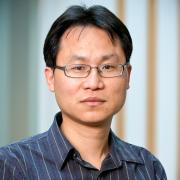
Wei Xu is an Associate Professor at Georgia Institute of Technology's College of Computing and School of Interactive Computing, with affiliations to the Machine Learning Center. Their research bridges machine learning, natural language processing, and social media with focus areas in large language models, cultural bias mitigation, multilingual capabilities, and human-AI collaboration in text evaluation. NSF CAREER and Google Academic Research Award recipient Director of NLP X Lab PhD from New York University, BSMS from Tsinghua University Research interests span: Multilingual Multicultural LLMs addressing representational gaps and cultural adaptation in language models (NAACL 2025, ACL 2024); Robustness and Reasoning through dynamic AGI evaluations (ACL 2024, EMNLP 2024); Interdisciplinary NLP applications in security, healthcare, and law (EMNLP 2024, ACL 2024). Recent publications focus on multilingual alignment (NAACL 2025), privacy risk estimation (arXiv 2025), cultural bias analysis (ACL 2024), and medical text simplification (EMNLP 2024). Key themes include bias mitigation, multimodal processing, and practical LLM evaluation. Scientific Awards : NSF CAREER, Google/Sony/Criteo research awards, ACL'24 Best Social Impact Award, COLING'18 Best Paper Advising 15 PhD/MS/BSMS students including Yao Dou (human-centered LLM evaluation), Tarek Naous (multilingual LLMs), and alumni like Chao Jiang (Apple AI/ML) and Yang Chen (NVIDIA research scientist). Teaches graduate courses on NLP and LLMs.
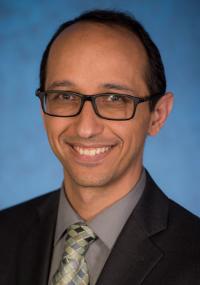
Christos Faloutsos is the Fredkin Professor of Computer Science at Carnegie Mellon University, with a courtesy appointment in Electrical and Computer Engineering. He holds a B.Sc. from the National Technical University of Athens and M.Sc./Ph.D. from the University of Toronto. His research focuses on data mining, graph analysis, fractals, and database systems. Notable contributions include foundational work on R-trees, graph mining laws (e.g., Kronecker graphs), and applications in medical imaging, network security, and fraud detection. Key projects include PEGASUS (petascale graph mining), fraud detection in online auctions (NetProbe), and tools for human trafficking analysis (TrafficVis). He has led NSF-funded projects on tensor mining, network anomaly detection, and bioinformatics. Over 300 refereed publications highlight his contributions across databases, data mining, and networks. Awards include the KDD Best Paper (2005, 2016), SIGMOD Test-of-Time Award, and recognition as a top nurturer in IT. His lab collaborations span the Parallel Data Lab (PDL), Machine Learning Department, and Computational Biology.
Johnnie Bejarano serves as a Senior Lecturer in the Department of Accounting and Finance within the Anderson College of Business and Computing at Regis University. His teaching portfolio includes forensic and fraud audit, non-profit and governmental accounting, accounting ethics, and financial communication. Dr. Bejarano's research focuses on mitigating fraud, behavioral ethics, and regulatory ethics, exemplified by his doctoral dissertation "Mitigating Corporate Financial Fraud: A Qualitative Study". He holds multiple professional certifications including CPA (Colorado), Certified Fraud Examiner (CFE), Chartered Global Management Accountant (CGMA), and Certified Government Financial Manager (CGFM). His career spans decades of leadership roles: Chair of the Association of Certified Fraud Examiners (ACFE) Chair of the ACFE Board of Review Vice-Chair of the Colorado State Board of Accountancy He retired as a Lieutenant Colonel from the U.S. Air Force, Air National Guard, where he served as Deputy Commander for Support in a combat zone. Current professional engagements include: Editorial advisory committee for Fraud Magazine (ACFE) Board of Directors for the Colorado Chapter of ACFE Accounting Careers Committee member, Colorado Society of CPAs Dr. Bejarano is an avid photographer and enjoys spending time with his two granddaughters.
Ron Steinfeld is an Associate Professor in the Department of Software Systems & Cybersecurity at Monash University, Australia. He holds editorial roles in Designs Codes and Cryptography (since 2017) and has served on technical committees for top-tier conferences like ASIACRYPT, CRYPTO, and EUROCRYPT. His research focuses on quantum-safe cryptography, lattice-based cryptography, and blockchain security, with over 80 refereed publications and AUD$4M+ in research funding. Education: BSc Mathematics and Physics (Monash University, 1998) BE (Hons., First Class) Electrical and Computer Systems (Monash University, 2000) PhD Computer Science (Monash University, 2003) Research Interests: Design and analysis of cryptographic algorithms, quantum-safe protocols, lattice-based security foundations, and blockchain applications. His work underpins NIST standard algorithms like Kyber and Dilithium through structured lattice problem research. Recent Articles Trends: Focus on privacy-preserving blockchain protocols, post-quantum signature schemes, encrypted data search, and cryptographic applications in adversarial AI. Recent work includes fair Bitcoin watchtower schemes and genomic database privacy solutions. Awards: ASIACRYPT 2015 Best Paper Award Advising & Grants: Supervises PhD projects on quantum-safe cryptography and blockchain security. Leads initiatives like the AUD$4M ARC-funded Quantum Information Technology project. Collaborates with industry partners including CSIRO/Data61. Labs/Teams: Key contributor to Monash’s cybersecurity and cryptography research groups, involving interdisciplinary projects on materials discovery ( Æinstein initiative) and post-quantum blockchain security.
Marcus Smith is an Associate Professor in Law at the Charles Sturt University , where he teaches LAW222 Technology Law and directs the Bachelor of Laws program. He holds advanced degrees from the Australian National University (PhD, LLM) and the University of Cambridge (MPhil). His research spans technology law and regulation , focusing on genomic data governance biometric identification AI ethics blockchain policy cybersecurity surveillance law He leads the Contemporary Threats to Australian Security research group and serves as Chief Investigator on an NHMRC-funded project (MRF2015531) addressing genomic dataset governance. His recent work analyzes algorithmic bias in facial recognition AI in healthcare blockchain's regulatory challenges post-pandemic cybercrime surveillance ethics data security frameworks He actively supervises PhD and honours students in technology law and contributes to law reform through submissions to international bodies like the UN Human Rights Council .
Dr. Euijin (Alley) Choo is an Assistant Professor in the Department of Computer Science at the University of Alberta, specializing in data-driven cybersecurity and big data analytics. Her research focuses on AI-based cybersecurity solutions, anomaly detection in network traffic, and adversarial attacks on federated learning systems. She holds a Ph.D. from North Carolina State University and has held roles at Qatar Computing Research Institute, Korea University, and the University of Missouri-Rolla. Education: Ph.D., Computer Science, North Carolina State University (2015) M.S., Computer Science & Engineering, Korea University (2008) B.S. Dual Degree in Computer Science & Mathematics, Korea University (2006) Research Interests: Security and big data analysis intersections Federated learning security and privacy Anomaly detection in network logs and enterprise systems Malware/phishing detection using graph inference AI-driven threat intelligence aggregation Recent Grants: Mitacs Accelerate Program Grant: Fraud Detection in Financial Graphs ($60,000, 2025) National CyberSecurity Consortium Grant: IntruderInsight ($2M, 2025-2027) NSERC Discovery Grant: Threat Detection Framework ($180,000, 2025-2031) Awards: Best Paper Award at DBSEC 2015 NSERC Early Career Researcher Award (2025) Provost Fellowship (NC State, 2009-2010) Labs/Teams: Leads the Data-driven Network and Cyber Security (DANS) Lab, focusing on federated learning defenses, compromised entity detection, and malicious domain analysis.
Professor Rainer Böhme is a prominent academic in the field of IT security and privacy at the University of Münster's School of Business and Economics, Department of Information Systems. He also holds a professorship for Security and Privacy at the University of Innsbruck's Institute of Computer Science. His research spans multiple dimensions of digital security, with particular expertise in steganography, digital forensics, privacy-enhancing technologies, and the economic aspects of cybersecurity. Dr. Böhme earned his Doctoral Degree from TU Dresden's Faculty of Computer Science in 2008, following studies in Communications, Economics and Computer Science at Technische Universität Dresden and Université Paris XII. His academic journey includes positions as Assistant Professor at the University of Münster (2010-2015), Postdoctoral Fellow at the International Computer Science Institute in Berkeley (2009-2010), and Scientific Staff at TU Dresden's Chair of Privacy and Data Security. His research interests focus on steganography and steganalysis, digital forensics, privacy-enhancing technologies, security and usability, economic and behavioral aspects of information privacy, virtual currencies, and the economics of information security. His work bridges technical security mechanisms with economic and behavioral considerations, creating a unique interdisciplinary approach to cybersecurity challenges. Analysis of his recent publications reveals a strong trend toward the economics of security, particularly regarding blockchain technologies, cryptocurrency, and privacy valuation. His work increasingly examines the intersection of technical security mechanisms with market dynamics, regulatory frameworks, and user behavior. The research spans theoretical game-theoretic models, empirical studies of user behavior, and practical applications in digital forensics and privacy protection. Program Co-Chair, Financial Cryptography and Data Security (2015) Program Co-Chair, New Security Paradigms Workshop (NSPW) (2015) General Chair, 8th International Conference on IT Security Incident Management & IT Forensics (2014) Organizer and Program Co-Chair, 1st Workshop on Bitcoin Research (2014) Associate Editor, Electronic Commerce Research (since 2013) Associate Editor, EURASIP Journal on Information Security (since 2013) Professor Böhme has supervised multiple Master's theses in Information Systems, including work on static code analysis for smart contracts, remote maintenance protocol security, and application protection requirements in retail banking. His research is supported by significant grants from the German Federal Ministry of Research, Technology and Space, the DFG, and the EU FP7 program, with projects focusing on digital forensics, privacy-enhancing technologies, and cryptocurrency crime prevention. He leads the IT Security Research Group at the University of Münster, which investigates theoretical and applied aspects of information security with particular emphasis on the economic dimensions of security decisions.
Andrew Miller is an Associate Professor in the Electrical and Computer Engineering department at the University of Illinois, specializing in Programming Languages, Formal Methods, Software Engineering, Security and Privacy, and Systems and Networking. His research focuses on blockchain technologies, cryptography, and secure systems. Professor Miller's research spans multiple critical areas in modern computer security. His work primarily focuses on blockchain technologies , where he has made significant contributions to understanding and improving the security, privacy, and performance of systems like Bitcoin and Ethereum. He has conducted empirical analyses of privacy in the Lightning Network and developed protocols for confidential smart contracts. His work in cryptography includes research on multiparty computation, zero-knowledge proofs, and formal methods for cryptographic protocol design. Miller also investigates security vulnerabilities in proof-of-stake systems and resource exhaustion attacks, contributing to the robustness of decentralized systems. His applied security research extends to privacy-preserving health applications, as evidenced by his work on the Safer Illinois platform for COVID-19 contact tracing. Miller's publication record demonstrates consistent contributions to top security and systems venues including IEEE Security & Privacy, ACM CCS, Financial Cryptography, and USENIX Security. His research shows a clear trajectory from foundational work in blockchain security to more applied systems addressing real-world privacy and security challenges. Recent work focuses on making multiparty computation services publicly auditable and developing decentralized identity solutions that maintain compatibility with existing systems. Distinguished Reviewer Award, IEEE Security & Privacy 2018 Professor Miller has advised students including Vivek Nair, who joined the prestigious Hertz Fellows program in 2022. He has taught various courses including Introduction to Algorithms & Models of Computation, Advanced Computer Security, Cryptography, Applied Cryptography, and Ideal Functionality in Cryptography. His research has received support through grants including the SaTC: CORE: Medium project on "Automated Support for Writing High-Assurance Smart Contracts" in 2018. Miller is actively involved in research groups focusing on blockchain security, cryptographic protocols, and privacy-preserving systems. His lab appears to collaborate extensively with researchers across multiple institutions, as evidenced by the diverse author lists on his publications. Current work seems to be focused on making decentralized systems more secure, privacy-preserving, and accessible for real-world applications.
Zaklina Spalevic is a distinguished Professor at Singidunum University, specializing in the intersection of law, technology, and business. With a strong academic background in criminal law and extensive research in cyber law, artificial intelligence applications in legal systems, and tourism law, she has established herself as a leading scholar in digital legal frameworks. Her work spans multiple disciplines, connecting traditional legal principles with emerging technological challenges. Dr. Spalevic earned her doctoral degree in Criminal Law from the University of the Academy of Economics in Novi Sad (2008-2012), following basic studies in General Law at the University of Pristina (1996-2001). Her educational foundation in Science and Mathematics from First Pristina High School (1992-1996) provided the analytical basis for her interdisciplinary approach to legal scholarship. Her research interests focus on the evolving landscape of cyber law, particularly the legal implications of artificial intelligence in judicial systems, electronic governance, and tourism industry regulation. Dr. Spalevic has pioneered work on digital evidence processing, algorithmic justice, and the integration of green law principles into sustainable business practices. Her publications reveal a consistent pattern of addressing emerging legal challenges in the digital age, with increasing emphasis on AI applications across various legal domains. Analysis of her recent publications shows a clear trend toward interdisciplinary research that bridges law, technology, and business. Her work increasingly focuses on practical applications of legal frameworks for emerging technologies, particularly in tourism, agriculture, and judicial systems. The integration of technical solutions with legal regulation represents a distinctive feature of her scholarly contributions. Dr. Spalevic has authored numerous publications including three books: 'Fundamentals of Law with Special Reference to Business and Tourism Law' (2021, 2024 editions) and 'Legal Aspects of Cyberspace' (2018). Her extensive publication record includes over 100 journal articles and conference papers spanning cyber security, electronic governance, intellectual property in digital environments, and legal frameworks for emerging technologies. She actively contributes to academic discourse through conference presentations and collaborative research projects, particularly focusing on the legal implications of artificial intelligence across various sectors. Her work demonstrates a commitment to developing practical legal frameworks that address real-world technological challenges while maintaining foundational legal principles.
Matthias Parey is a Professor in the Department of Economics at the University of Surrey. He holds additional roles as a Research Fellow at the Institute for Fiscal Studies (IFS) and the Institute for the Study of Labor (IZA), a Researcher at the ESRC Research Centre on Micro-Social Change (MiSoC), and a Research Associate at ZEW. His research spans Labour economics Economics of education Micro-econometrics Inequality Economics of innovation . His recent publications analyze high-skilled migration selection, trade shocks, cannabis market size estimation, and gasoline demand elasticity. He has contributed to journals like Review of Economics and Statistics , Economica , and Journal of the European Economic Association . Scientific awards include fellowships at IFS and IZA. His work on trade shocks examines gender-specific labor supply responses to Chinese import competition, while his cannabis market research introduces a forensic economics approach using legal inputs. Earlier studies focus on maternal education impacts on child development and the long-term labor market effects of Erasmus student exchanges.
Dalibor Radovanović is a researcher at Singidunum University , affiliated with the Faculty of Business Informatics . His work spans cybersecurity, blockchain technologies, and their applications in business and IoT systems. Education: Doctoral Dissertation (2016, Singidunum University) Master's & Basic Studies (Faculty of Business Informatics) Secondary Education: ETŠ Nikola Tesla Research Interests include: Security frameworks for IoT and blockchain integration Smart card and wireless network vulnerabilities E-governance and corporate IT audit methodologies Machine learning applications in cybersecurity Environmental performance optimization in agribusiness Publication Trends reveal a focus on blockchain (2022), cybersecurity (2009-2022), and IT governance (2010-2017). His work bridges theoretical analysis with practical implementations in Serbia's digital economy. Collaborations with scholars like Marko Šarac and Saša Adamović highlight interdisciplinary approaches to securing financial systems, educational institutions, and industrial IoT applications.
Steve Worthington is an Adjunct Professor at Swinburne University of Technology's School of Business, Law and Entrepreneurship in Melbourne, Australia. Previously, he held a Professorship in Marketing at Monash University until 2013. His research focuses on financial services distribution via electronic channels, payment systems regulation, and cross-cultural financial practices. He has contributed extensively to academic journals such as the International Journal of Bank Marketing and practitioner outlets like The Financial Times and ANZ's BlueNotes . His work includes analyses of payment card markets in China and Japan, regulatory interventions in Australia's payment system, and expert testimony on financial services marketing disputes. Worthington's research interests span payment systems innovation, consumer behavior in financial contexts, and the intersection of technology with financial services. Notable contributions include studies on cashless society debates, payment fraud dynamics, and the cultural dimensions influencing financial product adoption. He frequently engages with industry conferences and media, offering insights into emerging trends like digital payment adoption and regulatory challenges in the financial sector. His publications highlight interdisciplinary approaches, blending economic policy analysis with marketing strategy. Key themes include the societal implications of cash decline, fairness perceptions in financial services, and the ethical dimensions of payment technologies. Despite no explicit awards listed, his prolific media engagement and advisory roles reflect recognition of his expertise in payment systems and financial markets.
Dr. Xiaodong Lin is a Professor at the University of Guelph's School of Computer Science and an IEEE Fellow (2017) for contributions to secure vehicular communications. He leads the Blockchain Technology and Cybersecurity (BTC) lab, focusing on privacy-enhancing technologies, digital forensics, wireless network security, blockchain applications, and DeFi security. PhD, Beijing University of Posts and Telecommunications, China PhD, University of Waterloo, Canada His research bridges theoretical and applied domains in cybersecurity, particularly vehicular networks, smart grids, and decentralized systems. Recent work examines blockchain security, privacy-preserving protocols for IoT, and secure data aggregation in wireless networks. Key publication trends include secure fog computing for vehicular crowdsensing, privacy-preserving authentication in 5G, and cryptographic solutions for smart grids. Awards highlight multiple Best Paper recognitions at IEEE conferences. IEEE Fellow (2017) Best Paper Awards (IEEE INFOCOM 2018, GLOBECOM 2017, SECURECOMM 2016) Dr. Lin supervises graduate students in blockchain security, AI security, and digital forensics. His lab provides financial support to qualified students.
Kambiz Ghazinour is a Professor and Chair of the Department of Cybersecurity at SUNY Canton, where he directs the Advanced Information Security and Privacy (AISP) Lab. He holds a PhD in Computer Science from the University of Calgary (2012) and a Postdoctoral Fellowship from the University of Ottawa and Children's Hospital of Eastern Ontario (2014). Previously, he served as an Assistant Professor at Kent State University (2015-2019) and earned a Master's in High Performance Scientific Computing from the University of New Brunswick (2007). Research Focus: Data Security and Privacy, Privacy Enhancing Technologies, Usable Security, Healthcare Systems, and Social Media. Key Projects: DigitalPASS—patented simulation-based privacy education tool for social media safety. His recent publications span Cybersecurity , Deep Learning , and Health Informatics , including works on cryptocurrency price prediction, Alzheimer's detection via eye tracking, and privacy-preserving surveillance. He has received multiple teaching awards such as the Best Teaching Award at the University of Calgary (2008). Faculty Recognition Award, Kent State University (2015, 2016) University Teaching Certificate (2009) Dr. Ghazinour's teaching portfolio includes graduate courses in Data Mining, Digital Forensics, Cryptography, and undergraduate instruction in cybersecurity fundamentals and programming.
Dr. Arnab Bhattacharya is a Professor in the Department of Computer Science and Engineering at the Indian Institute of Technology (IIT) Kanpur since December 2020. He previously served as Associate Professor (2014–2020) and Assistant Professor (2007–2014) at IIT Kanpur. Education: PhD in Computer Science (2007), University of California, Santa Barbara MS in Computer Science (2007), University of California, Santa Barbara Bachelor of Computer Science and Engineering (2001), Jadavpur University Research Focus spans Databases , Data Mining , Information Retrieval , and Artificial Intelligence . His work emphasizes graph analytics , skyline queries , probabilistic data , and knowledge graph management . Article Trends reveal expertise in graph neural networks , trajectory-aware systems , statistical significance in databases , and legal/medical data mining . His methodologies often integrate chi-square statistics , approximate indexing , and provenance tracking . Scientific Awards: IBM Faculty Research Award Yahoo! Faculty Research and Engagement Program Award Best Paper at COMAD 2011 Best Student Paper at COMAD 2010 Top-Five Student Paper at ICDM 2005 ICDM Student Travel Award sponsored by IBM Contact: Office RM 409, Department of Computer Science and Engineering, IIT Kanpur Email: arnabb@iitk.ac.in | Phone: +91-512-259-7650