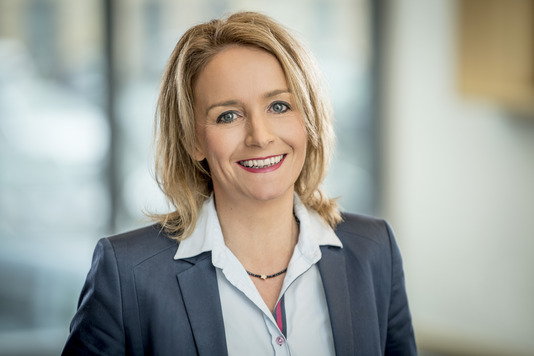
Kolbjørn Kallesten Brønnick is a Professor and Dean at the Faculty of Social Sciences, University of Stavanger. His research spans neuroscience, healthcare technology, and digitalization impacts in academia. He has contributed to studies on EEG-based disease classification, digital stressors in academic environments, and telemedicine efficacy. His work emphasizes cross-disciplinary approaches, integrating clinical neuroscience with public health challenges. Key research interests include neurodegenerative disorders, olfactory dysfunction assessment, and healthcare practitioner resilience. His recent publications explore EEG biomarkers for Parkinson’s disease, validation of digital consultation tools, and pandemic-related communication strategies. Brønnick collaborates internationally on projects addressing neuropsychiatric symptoms in dementia and multisite EEG data harmonization. His work is published in high-impact journals like Clinical Neurophysiology and Frontiers in Psychology. Notable contributions include developing the Digital Stressors Scale and the PARPHAIT olfactory assessment tool. Brønnick’s academic leadership role underscores his commitment to advancing social science and health research methodologies.
Dr Maria Kendrick is Senior Lecturer in Law at City Law School, City, University of London, where she also serves as Assistant Dean for Employability and Student Outcomes. She is a Research Fellow at the Centre of European Law, King's College London, and a Member of the Institute for the Study of European Law (ISEL). She has held visiting lecturer positions at the London School of Economics (2017–2020) and King’s College London (2015–2018). PhD in Law, King's College London (2018) LL.M, King's College London LL.B, King's College London Bar Vocational Course, Gray's Inn Dr Kendrick’s research centers on EU and international tax law, with a focus on differentiated integration, the Subsidy Control Act 2022, and the repayment of NextGenerationEU debt. She explores how taxation functions within EU own resources and the implications for fiscal sovereignty post-Brexit. Her work intersects with broader themes of EU constitutional development, transatlantic tax coordination, and digital economy taxation. She is particularly known for analyzing the limits of tax harmonization within the EU and the role of differentiated integration as a viable path forward. Her recent and forthcoming publications analyze the legal feasibility of EU tax proposals to repay NextGenerationEU debt, the impact of the Subsidy Control Act on public spending, and transatlantic agendas on corporate taxation. These works reflect a consistent trend in EU fiscal governance, post-Brexit legal frameworks, and the tension between harmonization and national sovereignty in tax matters. Dr Kendrick has received notable recognition, including a lifetime Fellowship from King’s College London and research funding from the University of Rome ‘La Sapienza’ for the PRIN 2017 project on European federalism. She is a Member of the Editorial Board of the Global Trade and Customs Journal and a Reviewer for EUBlog . She has advised and contributed expert evidence cited by the House of Lords Sub-Committee on the Protocol on Ireland/Northern Ireland. She has organized and spoken at high-profile events, including a roundtable in the House of Lords on Subsidy Control and Levelling Up. Her research is supported by grants and collaborative networks such as EUFUTURES and UACES, focusing on interdisciplinary approaches to EU integration. Dr Kendrick leads the LLM International Tax Law module and is actively involved in research networks including DiCE (Differentiation: Clustering Excellence), an EU-funded project on differentiated integration. She has presented her work at international conferences in the UK, EU, and beyond, reinforcing her role as a leading scholar in EU tax and integration law.
Jan Kemper serves as an Honorary Professor of Business Administration and Entrepreneurship at RWTH Aachen University, appointed in July 2022 after a decade of continuous academic engagement. His primary academic affiliation is with the Innovation and Entrepreneurship Group (WIN), where he integrates scholarly research with extensive industry experience. Concurrently, Kemper maintains an active business career spanning investment banking at Goldman Sachs, Credit Suisse, and Morgan Stanley across Germany, the UK, and Saudi Arabia, followed by executive roles at Groupon, Zalando, ProsiebenSat.1, Omio, and N26. He is a serial entrepreneur with ventures including the triathlon brand Ryzon, the event venue "Der Kemper Hof", and Green-Tech firm Greenair, while also serving as a business angel and non-executive director for companies like Flink and Hedosophia. His academic credentials include: Business Administration studies at WHU Vallendar, ICADE (Madrid), and Bordeaux Business School Doctoral degree (Dr. rer. pol.) from RWTH Aachen University Kemper's research critically examines entrepreneurship through multiple interconnected lenses. His core focus areas encompass general entrepreneurship dynamics, corporate entrepreneurship strategies, and innovation processes. He further investigates entrepreneurial finance mechanisms, venture capital ecosystems, marketing approaches specific to new ventures, and operational challenges in startup environments. This research program is uniquely informed by his dual expertise in academic theory and real-world business execution, creating practical frameworks for entrepreneurial success. Analysis of his 12 publications (2010-2022) reveals a dominant focus on consumer behavior within digital marketplaces, particularly e-commerce contexts. Recurring themes address sustainable consumption practices (e.g., eco-label effectiveness), retail strategy (private label dynamics and fast fashion), payment system innovations, customer review impacts on loyalty, and product return logistics. His methodological approach consistently employs empirical field experiments and cross-cultural comparisons, reflecting both academic rigor and practical relevance derived from his global business exposure across multiple continents. While specific student supervision details are absent from source materials, Kemper's decade-long teaching role suggests mentorship of entrepreneurship students through RWTH Aachen's programs. His extensive industry network—including corporate board memberships and startup investments—implies strong potential for industry-academia research partnerships and applied grant funding, though explicit grant details remain undocumented in available texts. The Innovation and Entrepreneurship Group (WIN) serves as Kemper's primary research hub at RWTH Aachen, functioning as the operational nexus where his academic investigations into venture creation and innovation processes directly intersect with his practical business experience across finance, digital platforms, and sustainable enterprises.
Prof. Dr. Julia Oswald is a Professor of Business Administration with a focus on Hospital Finance and Management at the Faculty of Economics and Social Sciences , Osnabrück University of Applied Sciences. Her work bridges academic theory with practical applications in healthcare governance, organizational culture, and financial systems. University: Osnabrück University of Applied Sciences Department: Faculty of Economics and Social Sciences Email: j.oswald@hs-osnabrueck.de Research Interests: She specializes in hospital financial systems, healthcare organizational culture, and strategic management frameworks. Her recent projects explore ecological sustainability in hospitals and the integration of nursing staff into leadership structures. Scientific Contributions: Her publications and lectures analyze the intersection of economics, policy, and operational efficiency in healthcare. Key themes include profit-center models, decentralized management, and nursing workforce dynamics. Committee Work: She serves as an external reviewer for academic appointments and accreditation processes, including roles at Hochschule Hannover, Hochschule Fulda, and the Virtual University of Bavaria. Her leadership extends to alumni networks and editorial boards like the Krankenhaus-Report .
Kris Miler is an Associate Professor in the Department of Government and Politics at the University of Maryland. She holds a PhD from the University of Michigan and a BA from the College of William & Mary. Her research focuses on political representation in Congress, particularly how the interests of marginalized groups like the poor are addressed in legislative processes. She is also a Faculty Affiliate at the Center for Effective Lawmaking (University of Virginia/Vanderbilt University). Her major works include *Poor Representation: Congress and the Politics of Poverty in the United States* (2018), which won the APSA Best Book Award, and *Constituency Representation in Congress: The View from Capitol Hill* (2010), recipient of the APSA Alan Rosenthal Award. Her research explores cognitive biases in congressional staff perceptions, the role of interest groups, and legislative responsiveness to constituent needs. Current projects include interdisciplinary studies on congressional cooperation through organizational psychology and computational linguistics analysis of legislative networks. Her work has been funded by the National Science Foundation, the Hewlett Foundation, and the Democracy Fund. She regularly engages in public discourse through congressional testimony, webinars, and media interviews about congressional modernization and legislative capacity. Educations: PhD, University of Michigan BA, College of William & Mary Key Research Themes: Congressional decision-making Surrogate representation mechanisms Legislative staff dynamics Constituency perception biases Her awards reflect recognition for bridging academic research and practical legislative challenges. Collaborative work with Dr. Frances Lee on congressional organizational climates has produced influential reports for institutional reform discussions.
Charles H. Noble is the Jerry & Kay Henry Professor of Business and Roy and Audrey Fancher Faculty Research Fellow at the University of Tennessee, Knoxville’s Haslam College of Business. He previously served as Associate Dean for Research and Faculty at Haslam and held roles at Boston College and the University of Mississippi. His research focuses on product and service design processes, innovation management, and marketing strategy. Education: Ph.D. in Marketing, Arizona State University (1996) M.B.A. in Marketing and International Business, Babson College (1989) B.S. in Finance, Boston College (1986) Research Interests: Professor Noble explores design and development processes across industries, emphasizing open innovation, new product development (NPD) speed, and strategic alliances. His work bridges theoretical frameworks with practical applications in sectors like retail, consumer goods, and commercial real estate. He advocates for interdisciplinary approaches to enhance innovation outcomes and sustainability. Publications Trends: His recent articles address post-pandemic innovation environments, business model design under media influence, and cross-functional team dynamics in product development. Editorials in journals like Journal of the Academy of Marketing Science highlight his leadership in shaping innovation research agendas. Awards/Honors: Henry Professor of Business (endowed chair) Fancher Faculty Research Fellow Recognition for research and teaching excellence Advising & Grants: While specific grants are not detailed, his editorial board roles and consulting engagements suggest significant academic and industry collaboration. He advises on NPD strategies and has mentored scholars in innovation management. Labs/Teams: Engaged in collaborative initiatives through Haslam’s research centers, focusing on digital transformation and open innovation frameworks.
Professor Anthony Burke is a Professor of Architecture in the Faculty of Design Architecture and Building at the University of Technology Sydney (UTS), where he currently serves as Course Director for the Master of Architecture program. Previously, he held significant leadership roles including Associate Dean of International and Engagement (2017-2019) and Head of the School of Architecture (2010-2016). Internationally recognized for his work in architectural design, curation and commentary, Burke specializes in contemporary design theory at the intersection of technology, urbanism and practice, with a particular focus on ethical considerations in smart city development. Burke holds an M.Sc. in Advanced Architectural Design from Columbia University (2000) and a B.Architecture (First Class Honors) from UNSW Australia (1995). Prior to his current position at UTS, he was an Assistant Professor in Architecture at the University of California, Berkeley between 2002 and 2007. He has also served as a Visiting Professor at the Beijing Institute of Technology (2018-2020) and Institut Teknologi Bandung (2018-2019). Professor Burke's research explores the complex relationship between architecture, technology, and urban environments, with particular emphasis on how design can address societal challenges while maintaining human-centered values. His work spans architectural theory, urban technologies, and innovative practice models, often bridging academic scholarship with practical applications through numerous funded research projects and industry collaborations. He has published extensively on topics including the ethics of smart cities, architectural restoration, and the evolving role of architects in contemporary society. His recent publications reveal a consistent exploration of architecture's role in contemporary society, with recurring themes including the intersection of technology and design, ethical considerations in urban development, and innovative approaches to architectural practice. This body of work demonstrates both theoretical depth and practical relevance, connecting academic discourse with real-world applications. 2024 ACTAA Award for Lifestyle Category - Grand Designs Australia Season 11 2024 Honorary Fellow Beyond traditional academic work, Burke actively supervises PhD students and has secured significant research funding from organizations including Cumberland Council, IKEA, and the NSW Office of the Government Architect. His projects frequently involve interdisciplinary collaboration, bringing together architects, urban planners, technologists, and policymakers to address complex urban challenges. He has also founded initiatives like Open Agenda, an annual speculative design research competition for emerging Australian architects. Professor Burke extends his impact through media engagements, serving as host and presenter for popular television programs including Grand Designs Australia (Seasons 4-11), Restoration Australia (Seasons 4-7), and Culture X Design. These platforms allow him to communicate architectural concepts to broad audiences, with Grand Designs Australia reaching approximately 1 million viewers per episode in Australia and more internationally. His public outreach includes regular contributions to The Conversation, ABC News, and other media outlets, making architecture and design accessible to the general public while showcasing innovative Australian architecture.
Morten Holm is an Associate Professor at the Department of Accounting, Copenhagen Business School. He conducts interdisciplinary research combining management accounting with behavioral and psychological factors affecting financial decision-making. His work focuses on the impact of individual characteristics of managers and auditors on accounting practices, digital transformation in finance functions, and customer profitability management. Primary Research Areas: Management accounting in modern enterprises, psychological underpinnings of economic decisions, individuals' influence on finance decisions, empirical behavioral accounting Current Research Focus: CEO life history strategies, stress effects on audit judgments, management reporting in Danish SMEs Holm's recent publications (2020-2025) demonstrate his focus on customer accounting sophistication, audit services during crises, and financial reporting quality in SMEs. His work frequently appears in top journals like Management Accounting Research and Journal of the Academy of Marketing Science . Teaching includes graduate-level courses in: Strategic Cost Management & Corporate Value Creation Management Accounting (at various levels) Financial Management and Strategic Development
Prof. Dr. Kumru Didem Atalay is a distinguished academic at Başkent University, specializing in Industrial Engineering . With a PhD in Statistics from Ankara University (2007), she has made significant contributions to Operations Research , Fuzzy Logic , and Decision Support Systems . Her work bridges statistical analysis with real-world applications in healthcare logistics, pandemic response, and manufacturing optimization. Education: PhD (2007), MS (2000), BS (1998) in Statistics from Ankara University Current Role: Professor in Industrial Engineering at Başkent University Her research focuses on stochastic processes , fuzzy modeling , and healthcare operations , particularly in pandemic-era service quality and microchannel manufacturing. She has developed innovative methods for project scheduling , risk analysis , and multi-criteria decision-making . Recent publications examine Covid-19's impact on education quality and fuzzy linear programming for project scheduling . She applies intuitionistic fuzzy models to optimize manufacturing systems and hesitant fuzzy regression for pandemic death count estimation. Scientific recognition includes a Runner-up Prize at the 15th ICMSEM (2021) and a Bronze Medal at ISIF21 (1970). She supervises advanced research on topics like multi-trip home healthcare routing and fuzzy quality function deployment .
Rodrigo Olivares-Caminal is a Professor of Banking and Finance Law at the Centre for Commercial Law Studies (CCLS) , Queen Mary University of London. He previously held roles as Senior Lecturer and Academic Director at SOAS University of London and the University of Warwick's School of Law. His expertise spans international finance , insolvency law , sovereign debt restructuring , and cross-border litigation , with professional engagements in Africa, Asia, the Middle East, and Europe. Rodrigo has taught corporate finance law , bank resolution , and sovereign debt courses. His research focuses on sovereign debt sustainability , financial crisis management , and regulatory frameworks for banking and insolvency. Recent publications analyze post-pandemic debt challenges , UK financial regulation post-Brexit , and valuation complexities in bank resolution . His work has informed policy through advisory roles for the World Bank/IFC , UNCTAD , and sovereign states. He contributes to media outlets like the Financial Times and Bloomberg , and has participated in international conferences on Greek debt , Venezuela’s financial crisis , and Latin American restructuring . Rodrigo also serves as editor-in-chief for the Business Law Review and on advisory boards for multiple law journals.
Dr. Abusaleh Jabir is a University Reader at the School of Engineering, Computing and Mathematics, Oxford Brookes University. He holds a DPhil in Computing from the University of Oxford and leads the Advanced Reliable Computer Systems (ARCoS) group. His research focuses on reliable hardware design, memristive nanotechnology, edge computing, and secure authentication systems. He has over 80 peer-reviewed publications and multiple patents, including innovations in error-tolerant circuits and memristive architectures. **Education**: DPhil in Computing (University of Oxford). **Research Interests**: Reliable hardware design, electronic design automation, sensing at the edge, physical uncloneable authentication, and emerging memristor technologies. His work addresses challenges in IoT, edge computing, and cybersecurity through innovative electronic systems. **Funding & Projects**: Current projects include the Leverhulme Trust-funded MONITOR gas sensor array initiative. His research has been supported by the UK Ministry of Defence, EPSRC, and Finance South East. **Awards & Patents**: Multiple patents granted, including EU 17706875.6 (memristive logic) and GB 1914221.5 (reconfigurable memristive logic). Recognized with best paper awards. **Advising & Impact**: Supervised PhD students now leading semiconductor and automotive industries (e.g., Infineon Technologies, Continental Teves AG). Collaborates with academic and industrial partners globally. **Labs & Teams**: Leads the ARCoS group within the Artificial Intelligence, Data Analysis and Systems (AIDAS) Institute, fostering interdisciplinary innovation in secure and reliable electronics.
Dirk Nuyens is a Senior Lecturer in the Department of Computer Science at the Faculty of Engineering Sciences, KU Leuven, Belgium. He is affiliated with the Numerical Analysis and Applied Mathematics (NUMA) research unit and is a member of the iSi Health Institute for Physics-based Modeling for In Silico Health. He also serves on the Faculty Council of Engineering Sciences and the Programme Committees for Engineering Sciences and Computer Science. Education: While specific degrees are not listed, his expertise and research output indicate advanced training in numerical analysis, computational mathematics, and applied mathematics. Research Interests: His primary research focuses on numerical analysis, computational mathematics, and quasi-Monte Carlo (QMC) methods. Specific areas include high-dimensional integration and approximation, lattice rules, low-discrepancy sequences, uncertainty propagation, and financial engineering. He develops algorithms for efficient sampling, integration, and approximation in high-dimensional spaces, with applications in uncertainty quantification, Bayesian inversion, and PDEs with random coefficients. Research Trends: His recent publications emphasize the construction and analysis of embedded lattice-based algorithms for multivariate function approximation and integration. There is a strong focus on achieving higher-order convergence rates, particularly in Korobov and Sobolev spaces, and on developing randomized lattice rules for improved error bounds. His work bridges theoretical developments in numerical analysis with practical implementations in scientific computing and engineering. Scientific Contributions: He has authored or co-authored numerous influential papers in top-tier journals such as Mathematics of Computation , Journal of Complexity , SIAM Journal on Numerical Analysis , and Journal of Computational Physics . His work on lattice rules, QMC methods, and high-dimensional integration has been widely cited and used in fields ranging from computational finance to theoretical physics. Projects and Funding: He leads or co-leads several ongoing and completed research projects funded by national and international agencies. These include projects on turbulence reconstruction from partial observations, uncertainty quantification for climate control in buildings, computational methods for infinite-dimensional Bayesian inversion, circularity improvements in scrap analysis, and ML-based sensitivity analysis. Software Development: He maintains and contributes to open-source software repositories for QMC point generation, including the Magic Point Shop and QMC4PDE projects. These provide efficient implementations of lattice and digital sequence generators in MATLAB, C++, and Python. Institutional Service: Beyond research, he contributes to academic governance through his roles in faculty and departmental councils, influencing curriculum development and strategic planning in engineering and computer science education at KU Leuven.
Sunoo Park is an Assistant Professor in Computer Science at NYU Courant Institute of Mathematical Sciences, with a secondary affiliation at NYU School of Law. He directs the DeTaIL Lab , focusing on security, privacy, and transparency in digital technologies. His educational background includes a J.D. from Harvard Law School, a Ph.D. in Computer Science from MIT, and a B.A. from the University of Cambridge. He is a licensed attorney in New York. His research bridges computer science and technology law , with core interests in cryptography, election security, AI ethics, blockchain, and digital policy. Recent work emphasizes legal risks in security research, verifiable voting systems, and adversarial robustness in AI. Park's publications (2017–2025) reveal strong trends in cryptographic applications for societal challenges , including election auditing, deniable encryption, and blockchain vulnerabilities. He consistently addresses tensions between technological capabilities and legal/policy frameworks. Teaching includes graduate courses on Digital Technology Law and AI Ethics , alongside clinical work in NYU's Technology Law & Policy Clinic. Service roles include program committees for IEEE Security & Privacy and NeurIPS (Ethics Committee).
Paul Webb is Professor of Politics at the University of Sussex, where he is affiliated with the School of Law, Politics and Sociology. He is an elected Fellow of the Academy of Social Sciences and has held visiting positions at the European University Institute (Florence), the Australian National University (Canberra), and Nihon University (Tokyo). As a leading scholar in political science, his work focuses on party politics, electoral systems, and democratic representation. Webb's educational background includes a BA in Politics from the University of Nottingham (1977-1980), an MSc in West European Politics from the London School of Economics and Political Science (1980-1982), and a PhD from the European University Institute in Florence, Italy (1983-1986). His research interests center on representative democracy, with particular emphasis on British and comparative party politics and electoral processes. Webb has made significant contributions to understanding political party organizations, party membership dynamics, and the relationship between parties and electoral systems. His work often examines how political parties function as linkage institutions between citizens and government, with special attention to grassroots participation, leadership selection, and party organization across different democratic contexts. Webb's most recent publications demonstrate a continued focus on party systems, leadership selection, and the evolving relationship between party members and elected representatives. His work increasingly addresses the challenges facing political parties in contemporary democracies, including the impact of digital technology on political participation, the changing nature of party membership, and the tensions between grassroots democracy and leader-centered party organization. His research spans both theoretical developments in party studies and empirical investigations of party behavior across multiple democratic systems. Fellow of the Academy of Social Sciences Webb has supervised 20 PhD students to completion and currently supervises 2 additional doctoral candidates. His major research projects include the ESRC Party Members Project (funded at £700,000), the Political Party Database Project (co-funded at £450,000 by UK, US, and German funding agencies), and the Gender and the Conservative Party project (funded at £476,000 by the ESRC). He has also received support from the Leverhulme Trust, British Academy, and other funding bodies for his research on representative democracy and political participation. Webb co-directs the Political Party Database Project, a major international research initiative that has created a comprehensive database covering more than 270 parties in 50 countries worldwide. This project, conducted with colleagues from the University of Houston and Heinrich Heine University of Duesseldorf, examines party membership, finances, rules, and decision-making procedures across democratic systems.
Michael M. Goldman is Professor of Sport Management and Associate Dean of Graduate Programs and Strategic Initiatives at the University of San Francisco’s College of Arts & Sciences. He is a full-time faculty member who also serves as adjunct faculty at the Gordon Institute of Business Science (GIBS) in Johannesburg and sits on the board of the Case Research Foundation. Education & Prior Roles DBA, Gordon Institute of Business Science (GIBS), 2014 MBA, Gordon Institute of Business Science (GIBS), 2005 Former Senior Lecturer in Marketing, University of Pretoria (GIBS) Advisor to the 2018 Rugby World Cup Sevens Host Committee Advisor, Rumble Ventures Sports Innovation Fund Research & Applied Expertise Goldman’s scholarship lies at the intersection of sport marketing, sponsorship analytics, and consumer psychology. He studies how fans form identities with teams, how brands leverage sport partnerships, and how organizations can translate these insights into revenue growth. His work spans professional sport franchises (San Francisco Giants, LA Clippers), global sponsors (MTN Group), and governing bodies such as CONCACAF and Cricket South Africa. Across more than fifteen recent publications, Goldman’s research trajectory reveals a consistent focus on three themes: fan engagement and disengagement , sponsorship ROI and brand building , and innovative case-based pedagogy . He employs mixed methods—qualitative case studies, quantitative market analyses, and experimental designs—to tackle questions ranging from esports broadcasting during COVID-19 to the financial impact of team rebranding. Honours & Awards Visiting Professorship, Universidad Peruana de Ciencias Aplicadas (2020) North American Case Research Association – Silver Best Case Award (2019) Sarlo Prize for Excellence in Teaching, USF (2017) NACRA – Bronze Best Case Award (2017) Paul R. Lawrence Fellowship, Case Research Foundation (2015) Consulting, Grants & Labs Goldman maintains an active portfolio of industry partnerships that function as living laboratories for his research and teaching. Recent collaborations include designing sales-skills workshops with the Los Angeles Clippers, advising MTN on FIFA World Cup activation, and assessing brand equity for the San Francisco Giants’ season-ticket retention campaigns. While specific grant amounts are not disclosed, his ongoing work with teams and federations provides continuous funding for case development and experiential-learning initiatives.