Prof. Sali Li holds the Distinguished Moore Research Fellowship at University of South Carolina's Darla Moore School of Business. His award-winning research reframes global strategy through digital platform internationalization, winning the Lazardis Award for best entrepreneurship paper. Li developed the 'Global Strategy Canvas' framework, explaining how firms bypass traditional entry barriers in digital markets. He currently researches platform governance and ecosystem strategies, with case studies on TikTok and Dropbox featured in Ivey Publishing. As Senior Editor for Journal of World Business, he shapes discourse on digital globalization. Li teaches global strategy to executives and PhD candidates, coordinating international business doctoral studies. His industry collaborations include fintech firms expanding across ASEAN markets.
Noman Shaheer is a Senior Lecturer at the University of Sydney, with a PhD in International Business from the Darla Moore School of Business, University of South Carolina (2019). His work bridges digital internationalization, digital innovations, and online entrepreneurship, with a focus on how digital platforms reshape global business dynamics. His research examines topics such as legitimacy spillovers in multinational platforms, identity signaling in digital entrepreneurship, and institutional influences on cross-border acquisitions. He has published in top-tier journals including Journal of International Business Studies , Journal of Business Venturing , and Harvard Business Review , with recent articles addressing network effects in digital markets and the evolution of non-traditional entry modes. Fields of Interest: Digital Internationalization Digital Innovations Online Entrepreneurship Global Strategy Fintech International Entrepreneurship Scientific Awards : Lazardis Award for Journal of Business Venturing’s Best Paper Temple/AIB Best Paper Award Best Reviewer Awards at AOM and AIB Charles Coker Fellowship Alan M. Rugman Most Promising Scholar Award Dean’s Citation for Teaching Excellence (University of Sydney) Teaching : He teaches courses on Digital Globalization, Global Business, Strategy in Emerging Markets, and International Entrepreneurship.
Priyank Chandra is an Assistant Professor at the University of Toronto's Faculty of Information and Director of the STREET Lab (SocioTechnical Resistance and Ethical Technologies Lab). His interdisciplinary research focuses on sociotechnical practices of marginalized communities, leveraging HCI, CSCW, STS, and development studies to design inclusive technologies. He holds a PhD in Information from the University of Michigan, along with MS in Economics and BE in Electronics Engineering. Chandra has received awards at ACM CHI and CSCW for his work on labor movements, digital resistance, and accessibility. Education: PhD in Information, University of Michigan (2019) MS in Economics BE in Electronics Engineering Research Interests: Chandra explores how marginalized communities reconfigure technologies to foster self-organization and resistance. His work bridges HCI/CSCW with theories from development studies and institutional analysis, emphasizing ethical, socially just systems. Recent projects include studying farmer movements in India, gig economy platforms, and weather risk communication for visually impaired Ontarians. Grants & Awards: SSHRC Grant: Repertoires of Contention in Digital Labour Platforms (2023-2024) NSERC Grant: Designing Inclusive Platforms for the Gig Economy (2022-2027) Connaught New Researcher Award (2023) ACM CHI/CSCW Awards for contributions to labor studies and accessibility Advising & Labs: Supervises students in ICTs, design, and marginality. Directs the STREET Lab at KMDI, focusing on ethical tech for vulnerable communities. Teaches courses on inclusive design and marginalized communities' ICT practices.
Liu Lili is a Lecturer (Educator Track) in the Department of Computer Science at the School of Computing, National University of Singapore. She holds a Ph.D. from Nanyang Technological University and a Master's in Computer Science from Shanghai University. Prior to NUS, she served as a Senior Research Scientist at Singapore Polytechnic and a Scientist at A*STAR's Institute of High-Performance Computing. Her research focuses on Machine Learning, Computer Vision, and Multi-modal Learning, with applications in FinTech, Social Media Analysis, and Algorithms & Theory. Notable projects include AI-driven coating inspection systems for marine assets and behavioral competency assessment tools for navigational safety. She has contributed to robotics for construction quality assessment and interactive virtual environments for rehabilitation. Liu's publications span AI applications in finance, robotics, and material science, reflecting her expertise in bridging theoretical computer science with practical industrial solutions. Her work emphasizes automation, anomaly detection, and multi-modal data integration.
Abdallah Houcheimi is a researcher at Åbo Akademi University's School of Business and Economics within the Faculty of Humanities and Social Sciences. His work focuses on critical e-commerce mechanisms and emerging market digitalization challenges. His research expertise centers on online retailing ecosystems , with particular emphasis on: Secure payment system design and consumer trust dynamics Product information architecture for conversion optimization E-commerce adaptation in developing economies like Lebanon His work directly contributes to UN Sustainable Development Goals related to industry innovation and infrastructure. Analysis of his recent publications reveals an evolving research trajectory from context-specific market studies (Lebanon 2022) toward fundamental e-tailing mechanics (global payment systems and product information 2024). This progression demonstrates increasing focus on universal digital commerce frameworks applicable across diverse regulatory and cultural environments. Houcheimi actively publishes in peer-reviewed venues including the Journal of Organizational Computing and Electronic Commerce and WorldCIST proceedings, with multiple open-access publications showing significant download metrics (70+ for payment systems paper). His collaborative work with J. Mezei indicates established research partnerships in information systems.
Dr. Kai Li serves as Professor of Finance at the University of British Columbia's Sauder School of Business, holding the Canada Research Chair in Corporate Governance and W. Maurice Young Endowed Chair in Finance. Elected Fellow of the Royal Society of Canada (2022), she is Managing Editor of the Journal of Financial and Quantitative Analysis and previously served on editorial boards of Review of Financial Studies, Management Science, and Journal of Finance. Her academic foundation includes a BSc from Jiaotong University, MA from Concordia University, and PhD from the University of Toronto. Dr. Li's research examines corporate governance through three interconnected lenses: gender dynamics in finance (board diversity, analyst performance), corporate culture quantification (using generative AI and machine learning), and green innovation (environmental governance). Her methodology pioneers computational approaches to analyze textual data from corporate disclosures, bridging finance, computer science, and social sciences. Analysis of her recent publications reveals a distinct trajectory toward interdisciplinary research, increasingly integrating artificial intelligence with traditional finance to study culture and sustainability. This shift demonstrates growing emphasis on empirical measurement of intangible governance factors through NLP and generative models. Her accolades include: Fellow of the Royal Society of Canada (2022) UBC Killam Research Award Sauder Research Excellence Award (junior/senior) Barclays Global Investors Canada Research Award John L. Weinberg/IRRCi Best Paper Award (2024) Best Paper Award at 2024 China International Conference in Finance While the provided materials confirm her editorial leadership and research impact, specific details regarding graduate student supervision and grant funding portfolios were not disclosed. Dr. Li maintains affiliations with the Asian Bureau of Finance and Economic Research (Senior Fellow), European Corporate Governance Institute (Research Member), and FinTech at Cornell Initiative (Research Fellow).
Dr. Thomas Zhang is a Lecturer in Entrepreneurship and Programme Director for the MSc Blockchain in Business and Society at Queen Mary University of London's School of Business and Management. He is a member of the Department of Business Analytics and Applied Economics and affiliated with the Centre for Globalisation Research (CGR) and Business Ecosystems Research Group (BERG). He holds degrees from Princeton University (AB), London School of Economics (MSc), and Hong Kong University of Science and Technology (MBA). His research focuses on emerging markets, innovation/entrepreneurship ecosystems, and household/corporate finance dynamics, particularly in developing economies. Teaching responsibilities include BUS025: Entrepreneurship and BUS300: Innovation and Entrepreneurship. He currently co-supervises doctoral student Anish Augustine on a thesis examining crime and unemployment in the UK. His publications explore blockchain applications in fintech and customer equity valuation methodologies.
Stephanie Christmann-Budian is a researcher at the Max Planck Institute for the History of Science, working within the 'China in the Global System of Science' Research Group. She holds a PhD in Sinology and Cultural Studies from Free University Berlin, with research focusing on modern and contemporary Chinese science, technology and innovation policies. Her expertise spans globalization impacts, innovation system analysis, and comparative policy studies. Christmann-Budian investigates China's evolving position in global science through multi-method approaches combining sociology of science, innovation research, and political science. Current projects examine reforms in China's national science system within broader political and global contexts. Her work analyzes strategic developments in areas including artificial intelligence and green technologies. Publications demonstrate consistent focus on China's scientific transformation, particularly examining shifts from Western knowledge transfer to autonomous innovation systems. Recent articles explore private sector roles in R&D funding and transitions toward cashless societies. With over 12 years' practical experience in science policy analysis, Christmann-Budian has held positions at DFG, Fraunhofer ISI, Chinese Academy of Science, and other research organizations. She regularly contributes to science-policy dialogues through workshops and lectures on Sino-German scientific cooperation.
Prasenjit Mandal is an Associate Professor in the Department of Information Systems, Supply Chain Management, and Decision Support at NEOMA Business School (France). He holds a PhD in Decision Sciences and Information Systems from the Indian Institute of Management (IIM) Bangalore. Previously, he served as an Assistant Professor of Operations Management at IIM Calcutta and worked as an Oracle ERP consultant at Tata Consultancy Services. His research focuses on supply chain finance, revenue optimization, multi-channel retail strategies, and strategic decision-making in supply chains. He has published in top journals like European Journal of Operational Research and IEEE Transactions on Engineering Management. He currently serves as a reviewer for multiple academic journals. Education: PhD in Decision Science and Information Systems, IIM Bangalore, India Oracle ERP Techno-Functional Certification Research Interests: Revenue Management in Retail & E-commerce Supply Chain Finance & Platform Financing Multi-channel Distribution Strategies Empirical Modeling of Supply Chain Trade-offs Strategic Decision-Making under Competition Key Contributions: His recent work explores platform financing models, strategic supplier financing choices, and omnichannel retail challenges. His research integrates optimization models with real-world operational scenarios to address supply chain complexities. Professional Experience: Current: Associate Professor, NEOMA Business School 2016-2019: Assistant Professor, IIM Calcutta 2012-2015: Oracle ERP Consultant, Tata Consultancy Services
Arpit Gupta is an Associate Professor of Finance at the Leonard N. Stern School of Business, New York University, where he has been a faculty member since 2016. His research lies at the intersection of real estate, household finance, and urban economics, with a strong empirical focus on using large datasets to analyze financial behavior and market dynamics. Ph.D. in Finance and Economics, Columbia Business School B.S. in Mathematics and Economics, University of Chicago His research interests include household finance, real estate markets, mortgage default, bankruptcies, urban economics, and the financial impacts of health shocks and pandemics. He explores how financial constraints affect minority borrowers, how remote work reshapes urban real estate, and how public infrastructure influences property values. His recent publications span top journals such as the Journal of Finance , American Economic Review , Journal of Financial Economics , and PNAS . Themes across his work include the economic consequences of the COVID-19 pandemic, the valuation of private equity, and the spillover effects of foreclosures. His research often combines innovative data sources with rigorous econometric methods. Notable scientific awards include the Brattle Prize First Place (2019) and the 2016 Top Finance Graduate Award from Copenhagen Business School. He has advised on policy-relevant topics such as office-to-residential conversions, housing equity, and bail reform, and has received media attention for his insights on urban development and real estate trends. Professor Gupta collaborates with a wide network of researchers and maintains active engagement through a Substack newsletter and public data repositories. He advises students and contributes to academic discourse through conference presentations and policy discussions. He is affiliated with research labs and teams focused on urban economics and financial innovation, often collaborating with scholars at Columbia, NYU, and other institutions. His ongoing projects continue to explore the evolving dynamics of housing, finance, and urban resilience in the post-pandemic era.
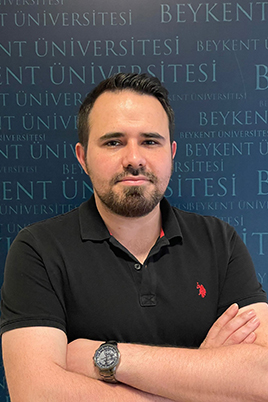
Melih Sefa YAVUZ is an Assistant Professor in the Department of Finance and Banking at Istanbul Beykent University, Faculty of Economics and Administrative Sciences. He has been actively contributing to academic and administrative duties, including serving as Deputy Director of the Institute and working in the Strategy Development and Planning Department. His teaching responsibilities include Investment Analysis and Portfolio Management, Digital Finance, and Financial Statement Analysis, all delivered in Turkish. His research interests span a wide range of topics in finance and economics, including digital finance, blockchain technology, ESG performance, firm performance, digital literacy, financial decision-making, and macroeconomic influences on equity markets. These interests are reflected in his extensive publication record in both national and international peer-reviewed journals. His recent scholarly work focuses on the impact of ESG performance on financial outcomes, behavioral aspects of financial decisions, digital transformation in finance, and the interplay between blockchain initiatives and stock prices. He frequently collaborates with scholars such as Gozde Bozkurt, Hasan Sadik Tatli, and Mehmetcan Suyadal, producing empirical studies grounded in Turkish and international financial markets. Dr. YAVUZ has published in journals such as the Journal of Entrepreneurship, Management and Innovation, EMAJ: Emerging Markets Journal, and Turkish Studies - Economics, Finance, Politics. His work appears in databases including ESCI, TR INDEX, EBSCO, and JournalPark. He has also contributed to scientific books on sustainable finance, digital transformation, and public procurement. Scientific Awards: No awards mentioned in the provided text. He advises and collaborates with various researchers and co-authors, though no formal PhD or Master’s students are listed. He does not appear to have led any externally funded grants explicitly mentioned in the text. He is involved in academic administration and curriculum development, particularly in digital finance and investment-related courses. There is no mention of specific labs or research centers, but his work suggests engagement with digital finance and financial market research teams.
Dr. Jiaman Xu is a Lecturer in Finance at Cardiff Business School, Cardiff University, a position she has held since 2024. Previously, she served as an Assistant Professor in Finance at University College Dublin (2022-2024) following completion of her PhD at the University of Edinburgh. Her academic credentials include: PhD in Finance, University of Edinburgh, 2022 MSc in Finance (Distinction), University of Edinburgh, 2018 BSc in Accounting, Huazhong Agricultural University, 2013 Dr. Xu's research centers on empirical corporate finance with specialized focus on private markets dynamics, including established private companies' interactions with public markets and VC/PE-backed firms. Her work explores cultural transmission in finance through inherited trust mechanisms, pension finance complexities, and behavioral aspects of risk-taking in banking institutions. She also investigates blockchain applications for transforming corporate governance structures. Her publication portfolio reveals consistent contributions across corporate governance, private equity, behavioral finance, and pension economics. Recent work examines institutional ownership effects in private firms, cultural determinants of informal finance, and international spillover effects from corporate scandals, demonstrating methodological rigor in empirical finance research. Dr. Xu actively supervises postgraduate students and teaches Corporate Financial Management at Cardiff University. Previously at UCD, she instructed Foundations of Finance (UG), Empirical Corporate Finance, Financial Analysis, and Corporate Finance (PG) courses across multiple academic years.
Saleem Bahaj is an Associate Professor of Economics and Finance at University College London (UCL), serving as Programme Director for MRes/PhD in Financial Economics. He joined UCL in 2021 after seven years at the Bank of England's research department and holds a PhD from the University of Cambridge. His research focuses on the intersection of macroeconomics and finance, emphasizing international finance, corporate behavior, and bank capital regulation. Notable work includes studies on cross-border financial policy coordination, central bank liquidity lines, and the implications of bank capital requirements. Bahaj's research also explores topics such as open banking's impact, inflation risk markets, and the effects of monetary policy through collateral channels. He is affiliated with UCL's Department of Economics and School of Management, with a professional presence at Drayton House in London. Research interests include global financial stability mechanisms, the macroeconomic effects of fiscal policies, and the transmission channels of monetary policy. His work often addresses systemic risks and policy coordination in international contexts. He has contributed to discussions on liquidity management, solvency hedging strategies, and the anatomy of currency pegs. Bahaj's publications span topics from corporate behavior during crises to the economic impacts of residential collateral dynamics. His advising and grants activities are not explicitly detailed in the provided materials. He maintains a lab or team focused on financial stability and macroeconomic policy analysis, though specific team names are not mentioned. Contact information and a personal website are available via his UCL profile.
Jonathan H. Grossman is a Professor in the Department of English at the University of California, Los Angeles (UCLA), where he has been since 2013. He earned his Ph.D. in English from the University of Pennsylvania (1996) and a B.A. in English and Religious Studies from Brown University (1989). Education: Ph.D., English, University of Pennsylvania (1996) M.A., English, University of Pennsylvania (1993) B.A., English & Religious Studies, Brown University (1989) Research Interests focus on the intersection of 19th-century British literature, standardization history, and narrative theory. His work examines how transportation networks, legal systems, and technological infrastructures reshaped Victorian perceptions of time, space, and community. Recent projects include analyzing metrology’s role in literary form and global transport’s narrative implications. Publications highlight his expertise in Dickens studies and Victorian systems. Notable works include Charles Dickens’s Networks: Public Transport and the Novel (Oxford, 2012) and The Art of Alibi (Johns Hopkins, 2002). His 2025 article on screw thread standardization in Technology and Culture extends his interdisciplinary analysis. Scientific Awards include the UCLA Senate Distinguished Teaching Award (2013–14) and recognition in The Best American Essays (2005) for his essay 'Alibis'. He has secured multiple UCLA Senate grants for digital humanities initiatives like Cruikshank’s Eye and Yellowback Cover Art . Professional Service spans editorial roles as Co-Editor of Nineteenth-Century Literature (2011–present) and leadership in the Dickens Project. He mentors graduate students, serves on departmental committees, and contributes to academic publishing workshops and conferences.
Botir Kobilov is an Assistant Professor of Accounting at the Jindal School of Management, University of Texas at Dallas. His research focuses on information processing, technology adoption, regulation, and enforcement in financial and public sectors, with an emphasis on accounting and economic development in developing countries. PhD, Harvard Business School (2024) MA, Economics, Duke University (2016) BSc, Banking and Finance, Management Development Institute of Singapore (Tashkent) (2011) His work intersects accounting with FinTech, regulatory frameworks, and behavioral finance, particularly in contexts relevant to developing nations. Prior to academia, he served as a lead economist at the Central Bank of Uzbekistan. Best paper in behavioral finance, UC San Diego’s Brandes Center (2023) Duke Economics Masters’ Scholar Award (2014)