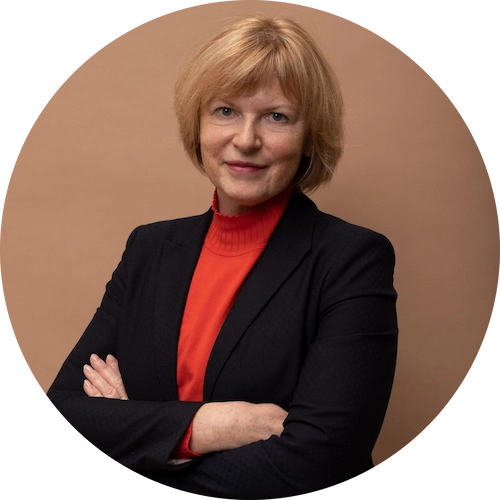
Dr. Justina Šidlauskienė is a Senior Researcher at the Management Department of ISM University of Management and Economics, with dual roles as a marketing practitioner and academic researcher. Her work focuses on conversational commerce, consumer decision-making influenced by anthropomorphic cues, and intelligent agent technologies. She holds a doctoral degree from ISM and completed training at BI Norwegian Business School. Key research areas include crisis purchasing behavior analysis, value co-creation in education services, and AI-driven conversational agents' impact on consumer perceptions. Her publications span journals like Journal of Consumer Affairs and Baltic Journal of Management , with conference presentations at major marketing events such as the AMA Summer Academic Conference. Research emphasizes systematic reviews of behavioral patterns during crises and technology adoption drivers. Notable contributions include studies on crisis resilience factors, conversational agent design principles, and the moderating role of ideological orientation in co-creation processes. Her interdisciplinary approach bridges marketing theory with practical applications in fintech, IT, and advertising technologies.
Prof. Valdonė Darškuvienė is a Professor of Finance at ISM University of Management and Economics. She holds dual roles as habilitated doctor (HP) and expert in EU research policy, serving on Horizon Europe advisory groups. Her career includes leadership roles such as Vice-President for Research at ISM, Chair of the Economics Department, and Vice-Dean at Vytautas Magnus University. She founded the Baltic Family Firm Institute (BFFI) and chairs its Board, while also leading initiatives in the Baltic Economic Association. Education includes a PhD in Economics from the Lithuanian Academy of Sciences and habilitation from Vytautas Magnus University. Her research focuses on financial economics, corporate governance, sustainable finance, and fintech applications. Key projects include developing ESG scoring methodologies for SMEs and analyzing firm resilience during crises like the pandemic. She collaborates with global institutions such as LSE, Copenhagen Business School, and Corvinus University. Recent work explores post-merger integration dynamics and behavioral finance implications of robo-advisors. Professional memberships include the European Commission’s MSCA advisory groups (2014-2021), CIRIEC International Scientific Committee, and leadership of AFECA (2012-2018). Her contributions to EU policy include shaping research funding strategies and gender equality initiatives in academia. She pioneered double-degree programs with universities like NHH (Norway) and Trento University (Italy), emphasizing digitalization and sustainability in finance education. Her research spans over 30 peer-reviewed publications and EU policy documents, including Eurofound PEPPER reports. Current projects address green transition strategies for firms and the role of boards in crisis resilience, reflecting her dual focus on theoretical innovation and practical policy impact.
Dr. Alfredo Hernandez Sanchez is a Research Fellow at the Institute for International Relations and Political Science (TSPMI) at Vilnius University and a Senior Fellow at the Institute for Studies on the Mediterranean and the Middle East (IBEI). He holds a PhD in Political Science from Central European University and a BA in International Relations from UNAM, with expertise in Computational Social Sciences, Natural Language Processing (NLP), and Quantitative Text Analysis. His work bridges FinTech, International Political Economy, and anti-corruption research, including policy contributions for UNESCO, Transparency International, and the IADB. PhD in Political Economy, Central European University (2020) BA in International Relations, UNAM His research focuses on FinTech regulation , Big Data applications in governance, and corruption risk measurement using large-scale datasets. Current projects include the Political Economy of FinTech grant and the Water Integrity Risk Index initiative with UNESCO. Publications span Springer, Bloomsbury, and Emerald, covering topics like pandemic-era procurement ethics and defense corruption networks. Recent work highlights FinTech policy , anti-corruption metrics , and quantitative methods in political economy, with a trend toward AI-driven analysis of governance structures. He is also a Data Visualization enthusiast, contributing to the D·Viz blog and academic discourse via Bluesky. Notable affiliations include: Marie-Curie ERA Postdoctoral Fellow (Vilnius University) Research Fellow (IBEI) Contributor to UNESCO and IADB projects
Ghita Chraibi is a Visiting Lecturer at Institut Supérieur de Management (ISM) and currently pursuing a PhD in International Political Economy and Comparative Politics at the University of Virginia (UVa) . Her research focuses on the political economy of FinTech, mobile money politics, and private sector development in emerging markets. Educations: PhD Candidate (2021–present): University of Virginia Master of Public Policy (MPP): University of Oxford Bachelor's (Dual Degree): University of Pennsylvania (Economics & International Studies via the Huntsman Program at Wharton School and College of Arts & Sciences) Teaching includes POL146: Political Economy of FinTech exploring intersections of technology, finance, and governance. Concurrently holds a part-time role in the Economics and Market Research team at the International Finance Corporation (IFC - World Bank Group) from 2021–2025. Fluent in English, French, Arabic, and proficient in Spanish.
Dr. Vytautas Kuokštis is an Associate Professor at Vilnius University's Institute of International Relations and Political Science, where he leads research at the Center of Political Economy. His academic credentials include a PhD from Vilnius University (2013), an MA in Comparative Politics, and a BSc in Economics and Business Administration from the Stockholm School of Economics in Riga. He has held prestigious research positions at Yale University (J.P. Kazickas Associate Research Scholar, 2020) and Harvard University (Fulbright Scholar, 2016-2017), with additional research stays at leading institutions including University College London and the European University Institute. His research specializes in comparative and international political economy, with concentrated expertise in FinTech regulation, defense spending analysis, economic adaptability, and labor market institutions. Recent publications demonstrate a strong focus on quantitative analysis of NATO defense expenditures, regulatory frameworks for financial technology, and institutional responses to economic crises. His work consistently examines how policy learning, institutional design, and economic coordination shape outcomes across European and transatlantic contexts. Dr. Kuokštis has received significant recognition for his scholarship, including the Lithuanian Academy of Sciences Young Scientists Prize (2018) and Vilnius University's Rector's Award for Young Scientists (2015). He has twice been honored with the Lithuanian Association of Political Scientists' Best Publication Award (2014, 2015) and received the university's Best Lecturer Award in 2014. His teaching portfolio includes courses on International Economics, Fundamentals of Economics, and graduate colloquia.
Tadas Limba is a Full Professor at Mykolas Romeris University (MRU) and a Visiting Lecturer at the International Management School (ISM). He leads the Joint Study Programs with South Korea and the Study Program Branding and Advertising Management. His expertise spans over 20 years in Disruptive Technologies, Data Protection, Cybersecurity, Cryptocurrency, E-Business, E-Government, and Startup Development. He actively contributes to research, with over 70 scientific publications and involvement in international consortia such as the National Joint Doctorate in Management (4 Lithuanian Universities) and the International Joint Doctorate Law, Science and Technologies (LAST-JD) led by Bologna University. Tadas Limba emphasizes ethical leadership, academic excellence, and international collaboration, having visited institutions like Dongseo University (South Korea), Communication University of China, and Arizona State University (USA). Awards: Fellow of New Westminster College of Canada Teaching Focus: Technology and Cybersecurity Management (Course Code: MNG286) Grants/Consortia: Member of LAST-JD and National Joint Doctorate in Management No specific labs or teams are explicitly mentioned in the provided information.
Dr. Gerda Žigienė is a Visiting Lecturer at ISM (Lithuania) and holds the rank of Professor of Finance/Fintech/Sustainability at the School of Economics and Business, Kaunas University of Technology (KTU). She is also affiliated with ESDES Business School (France) and Vaasa University (Finland). Her roles include Sustainability & Finance Consultant at COUNTLINE and board membership at the Lithuanian Responsible Business Association (LAVA). She advises organizations on sustainability strategy, EU regulations (e.g., ESRD, CSRS, SFDR, RTS), and stakeholder analysis. Dr. Žigienė’s education includes the Sustainable Business Management program at Cambridge University, the EFFAS International Certified ESG Analyst Certificate, and the SDGs Impact Measurement program at Duke University in collaboration with the United Nations. She teaches courses such as Technology for Economic, Environmental, and Social Impact (GRAB008) and focuses on research areas including Corporate Finance, Fintech, and Sustainable Development Goals (SDGs). Her expertise spans sustainable finance innovation, regulatory compliance, and the integration of ESG principles into business practices. She contributes to Lithuania’s National Sustainability and Responsibility Index and actively engages in shaping responsible business frameworks across Europe.
Silviu Ursu is an Associate Professor in Financial Markets at Alexandru Ioan Cuza University of Iasi and concurrently serves as a Visiting Professor at ISM University of Management and Economics since 2007. His academic roles include teaching and research in financial systems, shadow banking, and the evolution of financial intermediation. He holds a PhD in an unspecified field. Education: PhD His research interests focus on financial markets, banking systems, and their structural transformations, particularly exploring shadow banking mechanisms and modern financial intermediation dynamics. He also engages with emerging topics like FinTech ecosystems and risk management strategies in investment contexts. As an invited scholar, he has collaborated with distinguished institutions including Said Business School (University of Oxford), Manchester Metropolitan University, University of Groningen, Russian Academy of National Economy and Public Administration, University of Bifrost, University of Montenegro, and the Romanian Academy. These affiliations highlight his international scholarly network. No advisees or grants are explicitly listed in the provided materials. His professional email is silurs@faculty.ism.lt .
Prof. Tomas Krilavičius is the Dean of the Faculty of Informatics at Vytautas Magnus University (VMU) and Head of the Artificial Intelligence Laboratory at the Research Institute for Natural Sciences and Technology. He earned his PhD in 2006 from the University of Twente in the Netherlands with the thesis "Hybrid Techniques for Hybrid Systems". His research focuses on applications of artificial intelligence, data visualization, and language technologies in domains such as defense, logistics, financial technology (fintech), and insurance technology (insurtech). In addition to his academic roles, he serves as: Vice President of the INFOBALT Association Board member of UAB kevin EU Member of the Lithuanian Artificial Intelligence Association Member of the Kazimieras Simonavičius University Council Lithuanian representative in the NATO Science and Technology Organization (STO IST) He actively contributes to startup development, organizes international conferences, leads scientific projects, and played a key role in shaping the Lithuanian Artificial Intelligence Strategy.
Professor Marius Laurinaitis is a distinguished academic at Mykolo Romerio University (MRU) in Vilnius, Lithuania, holding positions as Professor and Senior Researcher. He serves as the head of the Law and Fintech bachelor's program at MRU and is affiliated with multiple academic units including the Faculty of Public Governance and Business, the Institute of Business and Economics, and the Law School. With a robust research portfolio spanning cybersecurity, hybrid threats, financial regulation, and data protection, Professor Laurinaitis has established himself as a leading expert in the intersection of law, technology, and security in the Lithuanian and international academic communities. Professor Laurinaitis's research primarily focuses on cybersecurity, hybrid threats, financial regulation, and data protection. His work bridges legal frameworks with technical security challenges, examining how legal systems can effectively address emerging cyber threats while protecting individual rights. He has conducted extensive research on hybrid threats as a new generation of security challenges, Belarus's cyber landscape, Russian cyber activities in the Ukraine conflict, and the implementation of cybersecurity measures in various sectors including healthcare and financial institutions. His research demonstrates a consistent pattern of addressing contemporary security challenges through interdisciplinary approaches that combine legal analysis with technical understanding of cybersecurity threats and solutions. Professor Laurinaitis has supervised numerous master's theses covering diverse topics within cybersecurity, data protection, and financial technologies. His supervision portfolio includes research on cyber literacy, responsible disclosure principles, personal data leakage prevention, cybersecurity culture in Lithuanian hospitals, social networks for business marketing, online identity verification, biometric technologies, and youth financial literacy. This breadth of supervision topics demonstrates his commitment to developing the next generation of experts in cybersecurity and related fields. Professor Laurinaitis leads or is affiliated with research initiatives focused on cybersecurity, particularly examining hybrid threats and their implications for national and international security. His work often involves international collaboration, as evidenced by co-authored publications with researchers from Australia and other countries. His research group appears to focus on practical applications of cybersecurity principles in real-world contexts, with particular attention to regulatory frameworks and organizational implementation challenges.