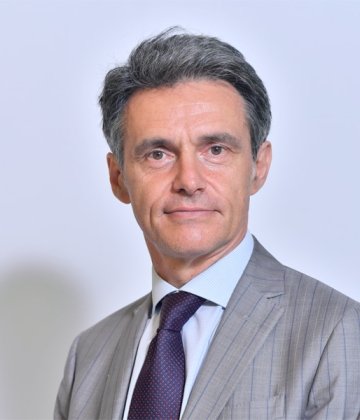
Andrea Beltratti is a Full Professor at Bocconi University, specializing in financial economics and asset pricing. He holds a Ph.D. in Economics from Yale University (1989) and a B.A. in Economics from the University of Turin (1982). His research focuses on stock and bond volatility, mortgage markets, environmental economics, and financial crises. Notably, his work on asset price dynamics was mentioned during the 2013 Nobel Prize Ceremony. He teaches courses on equity portfolio management, financial investments, and real estate valuation. Education: Ph.D., Yale University; B.A., University of Turin Key Research Areas: Financial markets, banking systems, sustainable development, and macroeconomic policy Beltratti’s publications span journals like the Journal of Banking and Finance, Journal of Financial Economics, and Oxford Economic Papers. His award-winning contributions include analyses of global credit crises and asymmetric contagion effects in European sovereign debt markets. He actively contributes to academic discussions through teaching and research on fintech, infrastructure finance, and alternative investments.
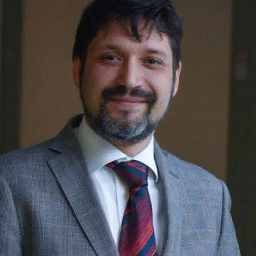
Guido Perboli is a Full Professor in the Department of Management and Production Engineering (DIGEP) at the Polytechnic University of Turin, where he also serves as Logistics Coordinator and Project Coordinator for activities supporting relationships with government bodies. He is a member of the Interdepartmental Center CARS@PoliTO (Center for Automotive Research and Sustainable Mobility) and serves as Director of the ICT for City Logistics and Enterprises (ICElab@Polito) research center, which he founded in 2016. His research interests span a broad range of topics including Operations Research, Logistics, Last-mile Delivery, Sustainable Logistics, Combinatorial Optimization, Stochastic Programming, Business Development, and Lean Business methodologies. His work particularly focuses on City Logistics, Green Logistics, and the application of emerging technologies like Blockchain and AI in supply chain management. He has developed GUEST, a Lean Business methodology for innovation processes from early idea definition to implementation. Professor Perboli's recent publications demonstrate a strong focus on urban logistics, last-mile delivery optimization, blockchain applications in supply chains, and the integration of AI techniques in transportation systems. His work shows an increasing trend toward interdisciplinary research that combines optimization methods with emerging technologies to address sustainable urban mobility challenges. Professional Recognition: CASE Best Paper award from IEEE Conference on Automation Science and Engineering (2011) Effective member of INFORMS (2019-present) Effective member of EURO (1995-present) Effective member of AIRO (1995-present) Associate Editor for Journal of Applied Research and Technology (2020-present) Associate Editor for Sustainability (2018-present) Professor Perboli actively advises PhD students and has supervised numerous research projects, including EU-funded initiatives like SINFONICA, HESTER, and 5G-LOGINNOV. He serves as Scientific Director for multiple commercial research projects focused on blockchain, IoT, and AI applications in logistics. Beyond academia, he is Chief Scientific Officer of Arisk S.p.A., a fintech company specializing in business crisis prediction using AI and machine learning. His research group, ICElab@Polito, focuses on two main areas supporting urban growth: logistics and enterprises. The center collaborates with numerous companies including Amazon, DHL, and FCA, addressing real-world challenges in urban logistics and supply chain management through innovative research approaches.
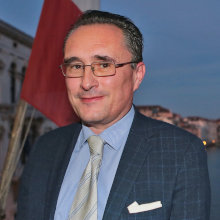
Stefano Caselli is a Full Professor of Banking and Finance at Bocconi University and holds the Algebris Chair in Long-Term Investment and Absolute Return. He serves as the Dean of the SDA Bocconi School of Management and previously served as Vice Rector for International Affairs at Bocconi University (2012–2022). He has been a member of the SDA Bocconi School of Management board since 2006. His academic career includes teaching roles in the MSc in Finance, MSc in International Management, and CEMS programs, focusing on courses such as Investment Banking, International Finance, and Private Equity & Venture Capital. His research explores the interplay between financial systems and industrial sectors, emphasizing banking regulation, corporate finance, private equity, and venture capital. Education: MSc in Business Administration from the University of Genoa and a Ph.D. in Financial Markets and Institutions from the University of Siena. Research Interests: Caselli’s work spans financial stability, banking structure, corporate finance, and the role of venture capital in innovation. He has published extensively in journals like Journal of Financial Intermediation and Journal of Financial Stability , and authored textbooks such as Corporate and Investment Banking: A Hands-On Approach and Private Equity and Venture Capital in Europe . Labs and Initiatives: Co-founded the “Equita Research Lab in Capital Markets” (2013) and the “Algorand Fintech Lab” (2021) at Bocconi’s Baffi-Carefin Research Center. These labs focus on financial market dynamics and fintech innovations.
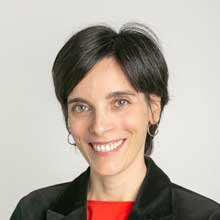
Caterina Cruciani is an Associate Professor at the Department of Management , Venice School of Management , Ca' Foscari University of Venice. She serves as a member of the University Scientific Instrumentation Service Center (CSA) Management Committee and is affiliated with the Research Institute for Social Innovation . Research Interests Trust dynamics in financial advisory Behavioral finance and investor decision-making Sustainability disclosure and ESG integration Digital transformation in financial services Regional economic development and SME financing Agent-based modeling of cooperative behavior Key Article Trends (2009-2024): Span 15 years of research on financial trust (12 publications), behavioral economics (10), sustainability (6), and digital finance (5). Methodologically combines experimental economics , structural equation modeling , and Supervised Topic Modeling for ESG discourse analysis.
Lara Modica is a Full Professor of Jurisprudence at the University of Palermo, specializing in contract law and consumer protection. Her academic career spans over two decades with numerous publications focusing on banking regulations, over-indebtedness, and contractual remedies. She maintains regular office hours on Wednesdays from 3:00 PM to 5:00 PM via Teams and can be contacted at lara.modica@unipa.it or +3909123892150. Professor Modica's research interests primarily center on Contract Law , Consumer Protection , Banking Regulations , and Over-indebtedness Solutions . Her work critically examines the intersection of civil law principles with financial regulations, particularly focusing on how contractual formalities impact consumer rights and financial stability. She has made significant contributions to understanding the legal frameworks governing bank guarantees, consumer default procedures, and peer-to-peer lending platforms. Her 2023 philosophical exploration 'The Contract, Kant and the Platypus' reveals an interdisciplinary approach connecting legal theory with broader philosophical frameworks. Her recent publications (2021-2025) demonstrate a consistent focus on contemporary challenges in financial regulation and consumer protection. There's a clear trajectory examining how traditional contract law principles apply to modern financial instruments and digital platforms. Her work on the MiCA regulation shows engagement with emerging technologies in finance, while her series of articles on specific regulatory articles indicates deep expertise in Italian financial legislation. The thematic continuity in her work, particularly around consumer protection in financial contexts, demonstrates sustained scholarly focus with evolving applications to new technological and regulatory landscapes. While specific information about research grants and advising is not provided in the available materials, her extensive publication record suggests active research supervision and significant scholarly contribution to the field of jurisprudence. Her career shows progression from foundational work on contract formalism to contemporary analyses of digital financial platforms and emerging regulations.
Maria Vittoria Zammitti is a Researcher (GIUR-02/A) at the Department of Law - Private Law Section of the University of Palermo. She holds office hours on Thursdays from 10:00 to 13:00 and can be contacted via her email mariavittoria.zammitti@unipa.it. Research Focus: Corporate law, payment services regulation, corporate social responsibility, commercial law, and legal liability in financial transactions. Her recent publications examine topics like dividend rights in limited liability companies, digital payment systems under EU Directive 2015/2366/EU, corporate crisis management, parent company liability for subsidiaries' misconduct, and the legal implications of payment wallets with strong customer authentication protocols. Key themes include corporate governance, regulatory compliance, and transnational legal challenges. Her work intersects with broader fields such as Financial Technology, Human Rights Law, and Sustainability Strategies. Notably, she has analyzed the Vedanta Resources PLC case regarding corporate social responsibility in multinational corporations and explored tensions between long-term sustainability and short-term corporate goals.
Simone Mazzonetto is an Adjunct Professor at Ca' Foscari University of Venice in the Department of Economics , where he teaches courses on Anti Money Laundering (AML) and Counter Financial Terrorism (CFT) and Corporate Finance and Bank Regulations since 2017. He also holds academic roles at the University of Padua (Department of Mathematics, Statistical Sciences, and Economics and Management) as an Adjunct Professor of Financial Markets and Risk Management , and at Università Cattolica – Milano as a Visiting Lecturer. At CHERRY BANK SPA , he serves as AML Compliance Senior Officer since April 2023. His research focuses on Anti Money Laundering (AML) , Tax Fraud Detection , Risk Management , Compliance , and Bank Regulations . His publications and conferences emphasize interdisciplinary applications of Financial Crime Prevention , Tax Compliance , and Regulatory Technology (RegTech) . The 15 most recent publications and conference presentations highlight expertise in Money Laundering , Risk-Based Approaches , and Compliance , with trends spanning Financial Regulation , Banking Law , and Public Sector Accountability . Topics include AML/CFT in Cryptocurrency , Enterprise Risk Management , and PNRR Implementation in Italy. He is a member of the "Comitato di Indirizzo" for the Master's program in Administration, Finance, and Control at Ca' Foscari and serves on multiple "Consiglio didattico" committees for degrees in Computational Finance, Statistics, and Economics at the University of Padua and University of Verona .
Alessandro Bitetto is an Assistant Professor in Statistics at the Department of Economics and Management, University of Pavia. He holds an MSc in Applied Mathematics and has professional experience as a data scientist in banking/insurance sectors, focusing on econometric models and machine learning applications. His research interests span FinTech applications, network theory, credit risk modeling, and deep learning techniques like Graph Neural Networks. He collaborates externally with the University of Milan’s Mathematics and Logic department and teaches courses in Big Data Analysis, Python programming, and Advanced Statistics at the University of Pavia. Education: MSc in Applied Mathematics Research Interests: Alessandro's work bridges financial analytics and machine learning, with a focus on credit risk modeling, cryptocurrency ESG integration, and medical imaging applications. His recent projects include developing data-driven financial indexes using network theory and applying explainable AI to public health risk assessment. Publications Trends: His articles emphasize machine learning applications in credit risk, ESG factors in blockchain finance, and time-series analysis for financial stability. Notable contributions include studies on ICO underpricing mitigation and deep learning in echocardiogram analysis. Awards/Grants: No specific awards listed, but his collaborations suggest active grant-funded projects in interdisciplinary domains. Labs/Teams: Involved in cross-institutional collaborations, including work on pandemic data analysis via GitHub repositories like 'Computer_Vision_Tutorial' for medical imaging research.
Giovanni Vaia is an Associate Professor at Ca' Foscari University of Venice, Department of Management. He holds roles as Scientific Director of the Digital Enterprise Lab (DEL) and DEL FabLab, focusing on digital transformation, IT governance, and innovation. His academic qualifications include a PhD in Organization and Technology (University of Molise/Naples) and a second PhD in Information Science (Turku School of Economics). Research interests span digital transformation, IT outsourcing, innovation management, business ethics, and public administration efficiency. He leads projects such as CEVID (Veneto Region) and IBM’s Impact Sourcing initiative. Notable works include monographs on corporate crisis and mafia firm combat strategies, as well as contributions to journals like European Journal of Information Systems and Journal of Information Technology. Teaching responsibilities include Business Administration, Digital Management, and Global Sourcing. He advises on digital agendas for the City of Venice and collaborates with institutions like the European Commission (DG Connect). Key labs include DEL (digital innovation) and DEL FabLab (manufacturing 4.0).
Giovanna Zanotti is a Lecturer at the University of Bergamo, currently serving as Director of the School of Higher Education and former Director of the Department of Economic, Management, and Quantitative Methods (2018–2024) and Department of Management (2020–2024). She collaborates with SDA Bocconi in teaching risk management and derivatives courses and holds leadership roles at ACEPI (Italian Association for Certificates and Investment Products). Her institutional affiliations include advisory roles at Anima Holding, Anima SGR, and past board memberships at major Italian banks. 2006: International Teachers Program, IMD Lausanne 2001: Ph.D. in Business Administration and Management, Bocconi University 1997: Bachelor's in Economics and Social Sciences, Bocconi University Her research focuses on risk management in firms and financial intermediaries, structured financial products , and emotional/psychological factors in financial decision-making. She has published extensively on commodity markets, behavioral finance, derivatives, and corporate finance, with a recent emphasis on structured products and market psychology. In 2024 alone, her work examines agricultural commodity stickiness , investment certificate pricing , and product innovation . Earlier studies (2023–2011) span disposition effects , social networking , housing market bubbles , and founder-family influence on hedging strategies. As Scientific Director of ACEPI, she shapes industry standards for investment products. Her teaching portfolio includes advanced courses on derivatives , structured finance , and corporate banking at the University of Bergamo and SDA Bocconi.
Annalisa Croce is a Full Professor at the Graduate School of Management, Politecnico di Milano, where she teaches courses including Business Data Analytics and Economia e Organizzazione Aziendale (Business Economics and Organization) at undergraduate and graduate levels since 2014. She serves as Director of the Executive MBA Part Time program and Teaching Area Coordinator for Finance. Her educational background includes: PhD in Management Economics and Industrial Engineering, Politecnico di Milano Master of Science in Management Engineering, Politecnico di Milano Professor Croce's research specializes in empirical analyses of entrepreneurial finance, with core expertise in venture capital, business angel investments, and corporate governance in high-tech firms. Her work spans corporate finance dynamics, innovation economics, efficiency estimation across sectors, and emerging fields like social impact finance and climate finance. She employs diverse empirical methodologies to examine financing mechanisms, ownership structures, and innovation determinants in entrepreneurial ventures. Analysis of her 15 most recent publications reveals intensifying focus on gender diversity in venture capital, internationalization of angel investments, cleantech policy frameworks, and digital transformation in entrepreneurial finance. The trajectory shows growing integration of machine learning approaches and heightened attention to sustainability themes, particularly climate finance and social impact investing since 2021. Her honors include: Gate2Growth 2006 Second Best Paper Award for 'Venture Capital and the Investments of New Technology Based Firms' European Community Short-Term Scientific Mission grant (COST-STSM-IS0604-06244) at Universidad Complutense de Madrid Professor Croce directs the Bureau of Entrepreneurial Finance and serves on the Scientific Committee of Politecnico di Milano's Observatory of Climate Finance. She holds extensive editorial responsibilities including Board of Review membership for Journal of Business Venturing, Editorial Review Board for Entrepreneurship Theory and Practice, and guest editorship for Technological Forecasting and Social Change special issue on digital entrepreneurial finance. Her peer review work spans top journals in economics, finance, and management.
Grazia Dicuonzo is a Full Professor at the Department of Economics, Management and Business Law, University of Bari Aldo Moro. Her work spans interdisciplinary areas, focusing on sustainability, fintech, corporate governance, and digital transformation in business contexts. Current affiliation: University of Bari Aldo Moro, Department of Economics, Management and Business Law. Contact: grazia.dicuonzo@uniba.it Her research explores: Integration of Environmental, Social, and Governance (ESG) practices in corporate frameworks Impact of gender diversity on SME performance Role of blockchain and artificial intelligence in transforming industries Challenges in digital transformation within family businesses Applications of Big Data in healthcare and risk management Evolution of sustainability reporting standards The 15 most recent articles reflect a trend toward addressing sustainability through technological innovation (blockchain, AI), governance reforms, and sector-specific studies (banking, healthcare, fashion). Key subfields include digital platform management , pandemic response governance , and non-financial disclosures .
Filippo Pavesi is an Associate Professor at Università Carlo Cattaneo – LIUC , specializing in Economics and Statistics. His research explores critical intersections between environmental policy, behavioral economics, and information dynamics. Key Research Themes: Environmental economics, human capital impacts on climate change, trust mechanisms in decision-making, and political narrative effects. Recent Focus: Analyzed online education's impact on performance, demonstrated trust mediation in environmental concern, and developed a Green Solow model for CO2 thresholds. Collaborative Work: Frequently collaborates with Thomas Bassetti and Massimo Scotti on interdisciplinary projects. Publications: Active contributor to journals like Scientific Reports and Metroeconomica , with 2025 publications on environmental trust and distance learning. Experimental Approach: Uses survey experiments (e.g., pandemic narratives) and game-theoretic models to study communication dynamics and policy preferences.
Timothy King is a Professor of Finance at the University of Vaasa’s School of Accounting and Finance. He holds external roles as External Examiner for undergraduate, masters, and MBA programs at the University of Glasgow’s Adam Smith Business School, and postgraduate programs at Heriot-Watt University’s Edinburgh Business School. His research focuses on corporate finance, political risk, SME strategies, and executive compensation. King has held key academic leadership roles including Director of the Centre for Quantitative Finance at the University of Kent (2020–2022) and Chair of the Academic Disciplinary Committee (2018–2022). He contributes to editorial roles at Business Research Quarterly and Journal of Financial Regulation and Compliance , and leads initiatives in the British Academy of Management’s Financial Management SIG. His recent research explores pandemic responses in SMEs, FDI dynamics under political risk, and fintech internationalization. Media engagements include expert commentary on SME banking evolution, ESG-linked executive compensation, and corporate social responsibility trends. Awards : Distinguished Reviewer Awards, Teaching Excellence Recognition, ACRI Fellowship Teaching : Advanced Topics in Finance – Regulation of Financial Systems, Research in Financial Analysis Grants : Foundation for Economic Education grant recipient He participates in academic events such as the Wolpertinger Annual Conference and contributes to the International Accounting and Finance Doctoral Symposium.
Salvatore Polizzi is a Researcher in the Department of Economics, Business and Statistics at the University of Palermo . His work focuses on banking, financial regulation, and corporate governance, with a particular emphasis on transparency, risk disclosure, and ESG integration in financial institutions. Research Areas : Credit risk disclosure, corruption detection, ESG factors, securitization, market discipline, and sustainable finance. Teaching : Economics and Management of Financial Intermediaries (8 CFU) in the Economics and Business Administration program. Office Hours : Tuesdays from 9:00 to 13:00 at the Department of Economics, Business and Statistics, or by appointment via email. Contact : salvatore.polizzi@unipa.it His recent publications analyze corruption disclosure in banking, ESG's impact on asset quality, and the intersection of distributed ledger technology with financial systems. His work also explores environmental disclosure gaps, risk management frameworks, and methodological approaches in banking research. Current projects address transparency mechanisms, regulatory compliance, and the alignment of sustainability claims with lending practices in European banks.