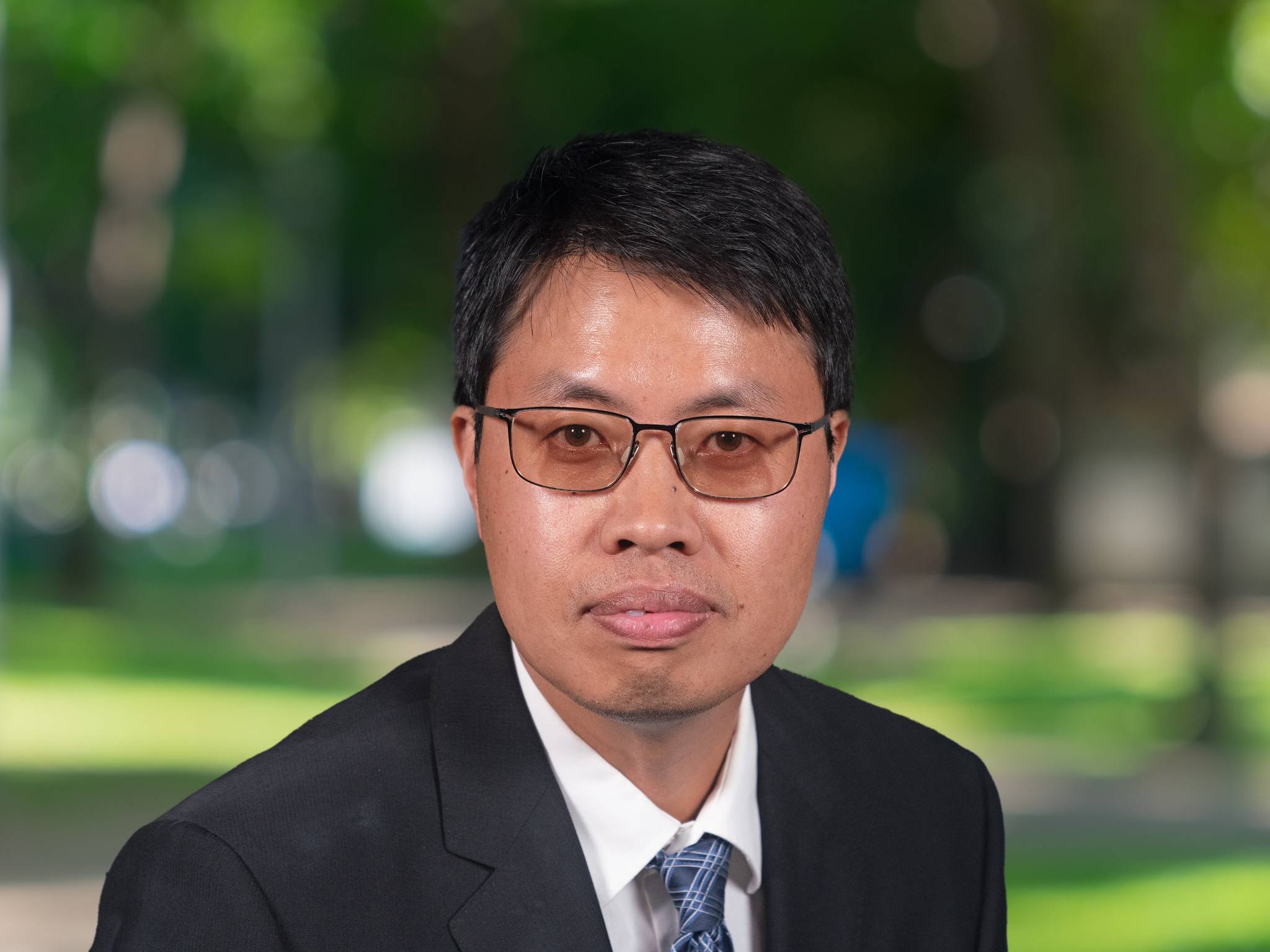
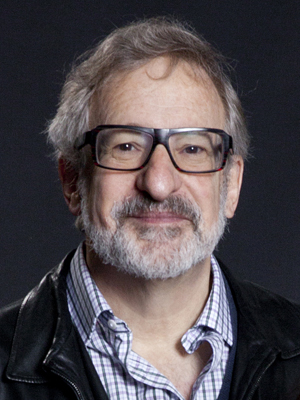
Rei Sanchez-Arias is a Teaching Professor and Director of the Master of Applied Data Science (MADS) program at UNC Chapel Hill's School of Data Science and Society. His expertise includes data mining, machine learning algorithm development, and data science pedagogy. He previously held positions at Florida Polytechnic University and St. Thomas University. Research interests span educational tools, health informatics, and optimization methods. Recent work involves AI for endoscopic surgery evaluation, meta-analysis of MLOps tools, and curriculum design for data science programs. Awards include the Excellence in Teaching Award from Florida Polytechnic. Student mentorship focuses on data wrangling and analytics projects.
Dr. Liangping Li is an Associate Professor in the Department of Geology and Geological Engineering at South Dakota School of Mines & Technology. He holds a Ph.D. from Technical University of Valencia and an M.S. from China University of Geoscience, with expertise in hydrogeology, groundwater modeling, and geothermal energy systems. Education: M.S., China University of Geoscience; Ph.D., Technical University of Valencia His research focuses on integrating machine learning with groundwater modeling, data assimilation, geostatistics, and optimization of geothermal energy systems. He has pioneered methods combining generative adversarial networks (GANs) and ensemble smoother techniques for inverse modeling in complex aquifers. Recent publications highlight his work on extremal optimization for well placement, progressive growing GANs for facies modeling, and stochastic inversion of fracture networks. His research trends emphasize computational innovation in subsurface flow simulation and sustainable groundwater management. Scientific Awards: NSF RII Track-4 Grant, NSF REU Site Grant, BLM Environmental Monitoring Grant, and appointments as Associate Editor for Advances in Water Resources and Mathematical Geosciences . Dr. Li teaches courses in groundwater engineering, statistical methods, and environmental field camp, while mentoring graduate and undergraduate researchers in subsurface energy and water resource projects.
Maha Ben Ali is an Associate Professor at the Department of Mathematical and Industrial Engineering at Polytechnique Montréal. She is also an Adjunct Professor at Université Laval and a member of the Interuniversity Research Centre on Enterprise Networks, Logistics and Transportation (CIRRELT) and the Laboratoire Poly-Industries 4.0 . Education: Bachelor’s in Industrial Engineering, École Nationale des Ingénieurs de Tunis M.Sc. in Industrial Systems Engineering, École Nationale des Ingénieurs de Tunis M.Sc./Ph.D. in Mechanical Engineering (Industrial concentration), Université Laval Research Interests focus on Industrial Engineering , with emphasis on Demand Management , Supply Chain Optimization , Simulation Modeling , Industry 4.0 , and Data Valorization . Her work combines Operations Research with Machine Learning to solve complex production and logistics challenges, particularly in softwood lumber and bioethanol supply chains . Publications (34 total) include studies on reinforcement learning for demand-driven systems, hybrid recommendation systems in B2B contexts, and symbiotic bioethanol network design . She has presented at conferences like the Winter Simulation Conference and IISE Annual Conference . Scientific Awards: Best paper – CIGI-QUALITA-MOSIM 2023 David Martell Student Paper Prize in Forestry – CORS 2018 NSERC Alexander Graham Bell Canada Graduate Scholarship FRQNT Doctoral scholarship Fast-tracking scholarship Teaching includes courses like Production and Inventory Planning , Simulation of Production Systems , and Logistic Networks . She has supervised 9 completed Master’s theses on topics ranging from multi-project scheduling to CO₂ emission reduction in freight transportation .
Chiara Sabatti is a Professor of Biomedical Data Science and Statistics at Stanford University, with affiliations to the Stanford Center for Computational, Evolutionary and Human Genomics (CEHG), Bio-X, and the Stanford Cancer Institute. She serves as Associate Director for Stanford Data Science and has led the development of the Data Science Major curriculum since 2012. Research Focus: Statistical models for high-throughput genomics data, causal inference in genetic studies, false discovery rate control, and knockoff methods for variable selection. Key Leadership: Associate Chair for Education and Training (2020-present), Vice Chair of Biomedical Data Science (2018-2019). Her work bridges statistical genetics with data science education, emphasizing robustness and interpretability in scientific findings. Recent publications highlight innovations in genome-wide association studies (GWAS), causal variant localization, and cost-effective sequencing techniques for underrepresented populations. Current projects include developing knockoff-based methods to address population structure and multi-resolution hypothesis testing. Scientific Awards: Institute of Mathematical Statistics (IMS) Fellow (2022) NSF CAREER Award (2003-2008) She mentors doctoral and graduate students in Biomedical Data Science, collaborates with the Data Studio on interdisciplinary projects, and actively recruits curious researchers to her lab. Her outreach efforts focus on expanding data science education and increasing research participation from underrepresented groups.
Dr. Dimitrios Anagnostou is an Associate Professor at Heriot Watt University's School of Engineering & Physical Sciences, affiliated with the Institute of Sensors, Signals & Systems (ISSS). He holds a Marie Skłodowska-Curie Fellowship and leads research in reconfigurable antennas, metamaterials, and biomedical sensing. He earned his PhD from the University of New Mexico (2005), followed by postdoctoral work at Georgia Tech and faculty roles at SDSMT before joining Heriot Watt in 2016. His research focuses on electromagnetic devices for aerospace, defense, and healthcare applications, including reconfigurable antennas, metamaterials, and AI-driven radar systems. He has published 169 papers and received 15+ awards, including the IEEE John D. Kraus Antenna Award and DARPA Young Faculty Award. Dr. Anagnostou serves as an Associate Editor for IEEE Transactions on Antennas and Propagation and actively contributes to conference committees. His lab specializes in antenna arrays, radar sensing, and functional materials like vanadium dioxide (VO₂). He supervises PhD students and supports interdisciplinary projects in sustainable RF electronics and medical imaging.
Christopher H. T. Lee is an Associate Professor at the School of Electrical & Electronic Engineering at Nanyang Technological University (NTU), with a courtesy appointment at the Lee Kong Chian School of Medicine. He was promoted to Associate Professor with Tenure in March 2024 after joining NTU as an Assistant Professor in October 2018. Dr. Lee holds the prestigious Singapore NRF Fellowship (Class 2020) and was previously awarded the Nanyang Assistant Professorship, recognizing him as a top 1% faculty member at NTU. Dr. Lee's research focuses on electric motors and drives, renewable energies, and electromechanical propulsion systems. His specific interests include: Energy Engineering and Power Technology Smart Cities applications Advanced Control Theory for motor systems Smart Grids integration Smart Energy Conversion Systems Advanced Magnetics for motor design Dr. Lee's extensive publication record shows a strong focus on motor control algorithms, innovative motor designs, and energy efficiency optimization. His recent work demonstrates expertise in predictive control systems, flux-modulated machines, and fault diagnosis techniques for electric motor systems. The research spans both theoretical advancements and practical applications in industrial settings. Dr. Lee has received numerous prestigious awards recognizing his contributions to the field: Nagamori Award (first recipient under 40) IEEE Myron Zucker Award (first recipient outside USA and Canada) NRF Fellowship (Singapore's most prestigious entry award for young researchers) MDPI Energies Young Investigator Award IET Fellow First Place Best Paper Award from IEEE TEC Top Cited Article from IET RPG As a dedicated educator and researcher, Dr. Lee has successfully supervised numerous students and secured significant research funding. He serves as Principal Investigator for grants totaling over SGD 13.5 million (approximately USD 10 million). His innovative ideas have been adopted by major corporations including Panasonic, Rolls-Royce, Magna International, Schaeffler Group, and Jingsu Xinri E-Vehicle Co. Ltd. Notably, he directs the NTU-Panasonic Joint Lab, which has received SGD 5 million investment to support over eight concurrent projects focusing on new motor concepts and 3D-printing technology. Dr. Lee leads the NTU Motor Lab, an interdisciplinary team researching the science and technology of electric motors and drives, renewable energies, and electromechanical systems. The lab explores new materials, motor topologies, and control strategies dedicated to intelligent and efficient generation and conversion of electrical energy.
Thomas Tran is a Full Professor at the School of Electrical Engineering and Computer Science (EECS) at the University of Ottawa. He holds a Ph.D. in Computer Science from the University of Waterloo (2004) and a B.Sc. (Double Major in Mathematics and Computer Science) from Brandon University (1999). His research focuses on Artificial Intelligence, Electronic Commerce, Multi-Agent Systems, Trust and Reputation Modeling, and Recommender Systems. He has published over 80 refereed papers and supervised 27 graduate students (4 PhDs and 23 Masters). Education: Ph.D. in Computer Science, University of Waterloo (2004) B.Sc. (Double Major in Mathematics and Computer Science), Brandon University (1999) Research Interests: AI Applications in E-Commerce and Mobile Business Trust Establishment Models in Multi-Agent Systems Recommender Systems and Deep Learning Clinical Data Analysis for Hidradenitis Suppurativa Awards: Governor General's Gold Medal (2004) NSERC Postgraduate Scholarships (PGS A/B) AAAI Doctoral Consortium Participant (2002) Advising and Grants: Supervised 27 graduate students Recipient of multiple research grants (details unspecified) Labs/Teams: Active in AI and E-Commerce research groups within EECS.
Keith Tierney is a Professor in the Department of Biological Sciences at the University of Alberta's Faculty of Science. He holds degrees including BSc, MSc, MBA, and PhD. His research focuses on chemical-vertebrate interactions, emphasizing sensory physiology, exercise physiology, and toxicology. Key areas include olfactory mechanisms in fish, climate-driven physiological adaptations, and contaminant impacts on animal behavior. His work integrates ecological and molecular approaches, often involving zebrafish and Arctic fish species. Education: BSc MSc MBA PhD Research Interests: Neuroendocrine regulation of behavior and toxic responses Climate change effects on fish migration and exercise capacity Contaminant impacts on sensory systems and ecosystem dynamics Zebrafish models for studying aging and neurodegenerative diseases Teaching: Zoology 241 (Animal Physiology) Biology 341 (Ecotoxicology) School of Public Health 522 (Principles of Toxicology) Funding & Collaborations: Supported by Fisheries and Oceans Canada, Environment Canada, petrochemical companies, and food manufacturers Research emphasizes translational science linking basic physiology to environmental policy Labs & Teams: Led a multidisciplinary lab investigating chemical-vertebrate interactions Collaborates internationally on projects addressing global climate and pollution challenges
Ryan Henry is an Assistant Professor in the Department of Computer Science at the University of Calgary. His research focuses on applied cryptography, emphasizing the development of secure systems that prioritize user privacy. His work spans designing privacy-enhancing technologies, implementing cryptographic protocols, and analyzing number-theoretic attacks on cryptographic assumptions. He also explores theoretical aspects of cryptographic efficiency and practical deployment challenges. While specific educational background details are not provided in the text, his research contributions highlight expertise in cryptography, secure systems, and privacy-preserving technologies. His work has addressed topics such as Private Information Retrieval (PIR), secure messaging, and blockchain privacy. Key research interests include: Secure Multiparty Computation Privacy-Preserving Data Access Efficient Cryptographic Protocols Zero-Knowledge Proofs IoT Security Cryptocurrency and CBDC Design His recent publications emphasize advancements in distributed systems security, privacy in recommendation systems, and cryptographic efficiency. Notable contributions include the Grotto and Duoram frameworks for secure computation, and proposals for Canadian CBDC frameworks. Despite extensive research output, no scientific awards or grants are explicitly mentioned in the provided text. Collaborations and lab affiliations are not detailed, though his work suggests involvement in interdisciplinary projects on privacy and security technologies.
Bernhard Jenny is an Associate Professor at Monash University's Faculty of Information Technology, specializing in immersive visualization and geospatial data. He holds a PhD in Cartography from ETH Zurich and has held previous roles at Oregon State University and RMIT University. His research focuses on virtual reality (VR), augmented reality (AR), and cartographic innovations for geospatial data representation. Education: Doctor of Sciences in Cartography, ETH Zurich (2010) Postgraduate Certificate in Computer Science, ETH Zurich (2005) Master of Science in Surveying, EPFL (2000) Research Interests: Combines cartography, computer graphics, and human-computer interaction to explore VR/AR applications for geospatial data. Current work includes immersive analytics, terrain visualization, adaptive map projections, and storytelling with geospatial data. Recent Articles: Focus on ambient occlusion for terrain shading, grammars for immersive visualization transitions, and AR/VR interfaces for spatial data. Awards: Henry Johns Award (2007, 2011, 2012) ETH Medal (2010) Best Paper Honorable Mentions (ACM CHI, DIS) Grants & Projects: Leads initiatives like the 'Immersive Analytics' extension and 'National Geographic Relief Shading' project. Collaborates on neural networks for cartographic relief shading and sustainable development goals (SDGs). Labs & Teams: Heads the Embodied Visualisation Lab at Monash, focusing on immersive analytics and geovisualization tools.
Ariadne Justi Bertolin is a Lecturer in the Department of Mechanical Engineering at the University of Bath, affiliated with the Centre for Sustainable Energy Systems (SES) and The Foundry: Centre for Digital, Manufacturing & Design. She is actively involved in research and is currently accepting doctoral students. Her research focuses on control theory, particularly in the areas of nonlinear systems, robust control, and stability analysis. Key topics include Lur'e systems, output feedback, Zames-Falb multipliers, and LMI-based design methods. She applies these theories to autonomous systems, energy systems, transportation, and industrial automation. The recent publications show a strong trend in developing LMI-based algorithms for stability and control synthesis of both continuous-time and discrete-time nonlinear systems. Her work emphasizes robustness, performance guarantees (e.g., ℒ2-gain), and practical implementation using finite impulse response and noncausal multipliers. She has been the Principal Investigator on a project titled 'Improving stability and control synthesis conditions for nonlinear systems,' indicating leadership in her research domain. While no formal awards are listed, her publications in IEEE and IFAC journals reflect high-quality contributions to control engineering. Dr. Bertolin advises doctoral students and is engaged in collaborative research, particularly with scholars like G. Valmorbida, R. C. L. F. Oliveira, and P. L. D. Peres. Her work is supported by ongoing research projects and contributes to the theoretical foundations of modern control systems. She is affiliated with key research centers at Bath, including the Centre for Sustainable Energy Systems and The Foundry, which focus on digital manufacturing, sustainable energy, and design innovation.
Jose Miguel Espi Huerta is an Associate Professor in the Department of Electronic Engineering at the School of Engineering, University of Valencia. He is an active researcher in power electronics and control systems, contributing significantly to grid-connected converters, renewable energy integration, and digital control techniques. His research interests include: Power Electronics and Inverter Control Predictive and Robust Control Strategies Renewable Energy Systems (Photovoltaic and Wind) Induction Heating Technologies Remote and Web-Based Educational Labs The analysis of his recent publications reveals a strong focus on improving the efficiency and reliability of grid-connected power converters using advanced control methods such as predictive current control and MPPT strategies. His work spans both industrial applications and academic education, particularly in developing remote laboratory platforms for control systems. Scientific awards and honors: No awards listed in the provided text. He has supervised academic theses and is affiliated with the LEII (Laboratory of Industrial Electronics and Instrumentation) research group. While no formal grants are listed, his extensive publication record indicates sustained research activity. He has contributed to the development of educational tools such as air levitation systems accessible via PLC and web interfaces, promoting innovative teaching methods in engineering education. The LEII research group focuses on industrial electronics, instrumentation, and power systems, providing a collaborative environment for applied research in energy conversion and control technologies.
Özlem Özgöbek is an Associate Professor at the Department of Computer Technology and Informatics, Norwegian University of Science and Technology (NTNU). Her research spans artificial intelligence, machine learning, and recommender systems with a focus on privacy, fake news detection, and educational technology. NTNU - Department of Computer Technology and Informatics Her work explores multimodal fake news detection, privacy implications in recommender systems, and technology-enhanced classroom interaction. Recent publications analyze digital education trends and classroom tools. Özgöbek collaborates with international researchers and contributes to news recommendation workshops. Her projects address ethical AI, environmental sustainability, and real-time information processing.
Philip E. Protter is a Professor of Statistics at the Faculty of Arts and Sciences , Columbia University. He is affiliated with the Financial and Business Analytics Center and serves as an Adjunct Professor in related programs. His research spans Mathematical Finance (capital asset pricing, derivatives pricing, liquidity, financial bubbles, insider trading, high-frequency trading, credit risk) and stochastic processes (stochastic integration, SDEs, backward-forward SDEs, Markov processes, filtering theory). He has contributed to both theoretical and applied domains, including numerical methods for stochastic equations. Protter has authored or co-authored two textbooks and two research books . He has held editorial leadership roles, including Editor-in-Chief of Stochastic Processes and their Applications and associate editorships for nine journals. Scientific Awards : Fulbright Distinguished Chair (2007) at the University of Paris (Dauphine) Fellow of the Institute of Mathematical Statistics (IMS) Two "Best Teacher" awards Invited lectures: R. Von Mises (2007), Bullitt (2008), Lundis de la Connaissance (2009) He has been a visiting scholar at numerous institutions globally and maintains active collaborations in financial mathematics and stochastic analysis.
Guido Zuccon is a Professorial Research Fellow at the School of Electrical Engineering and Computer Science , The University of Queensland (UQ), where he leads the Information Engineering Lab (ielab) . He serves as the AI Director for the Queensland Digital Health Centre (QDHeC) and is an Affiliate Professor at the UQ Centre for Health Services Research . He was previously a Lecturer and Senior Lecturer at Queensland University of Technology and a Postdoctoral Fellow at CSIRO. His research spans Information Retrieval , Health Search , Formal Models of Search , and Health Data Science , with a strong focus on consumer health search, cohort identification, clinical decision support, and systematic review automation. He has pioneered work on search interaction, semantic models, and the evaluation of retrieval systems in health contexts. His recent publications highlight a strong trend toward leveraging large language models (LLMs) for zero-shot retrieval, federated search, dense retrieval, and query formulation. His work integrates advanced neural methods with practical applications in healthcare, including systematic review automation and clinical AI. He frequently publishes at top venues such as SIGIR, ECIR, and WSDM, often in collaboration with key researchers like Bevan Koopman, Shengyao Zhuang, and Harry Scells. ARC DECRA Fellow (2018–2020) Best Paper Awards at AIRS 2017, CLEF 2016, ALTA 2015, ECIR 2012 Best Reviewer Award at ECIR 2014 Principal Investigator on ARC Discovery Projects and MRFF grants Guido Zuccon actively supervises a large cohort of PhD students, primarily in areas related to neural information retrieval, health search, and systematic review automation. He has led significant research projects funded by the ARC, Google, Microsoft, GRDC, and CSIRO. He is a key organizer of international evaluation labs such as the CLEF eHealth Consumer Health Search task and the TREC 2019 Decision Track. He leads the ielab , a vibrant research group focused on information retrieval and data science, and contributes to major open-source initiatives like Big Brother , a tool for logging user interactions in web studies.