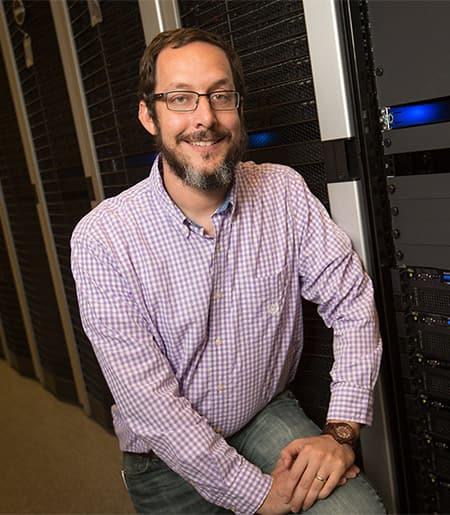
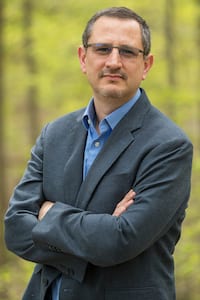
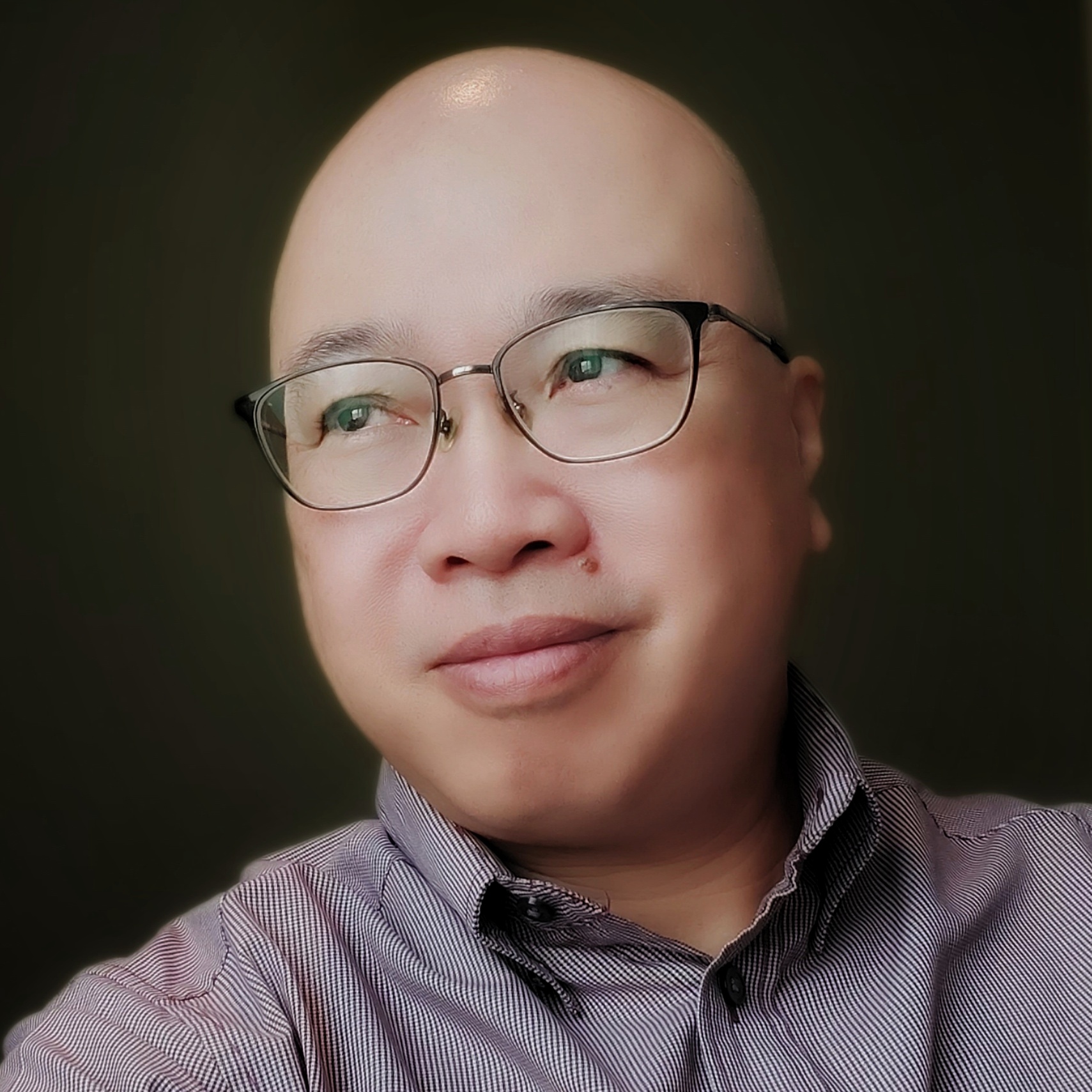
Nirupam Roy is an Assistant Professor at the Department of Computer Science, University of Maryland, College Park, and Director of the iCoSMoS research lab. His work bridges wireless networking, mobile computing, and acoustic sensing with applications in IoT, localization, healthcare, security, and wearables. Research Focus: Wireless Networking & Mobile Sensing Awards: Best paper award, MobiSys 2022 Best demo award, MobiSys 2021 CSL Ph.D. Thesis Award, UIUC 2019 Students: Nakul Garg, Yang Bai, Irtaza Shahid, Harshvardhan Takawale, Aritrik Ghosh, Ayushi Mishra, Sumbul Zehra, Justin Goodman Grants: NSF CAREER award (2023), Meta Research Award (2023)
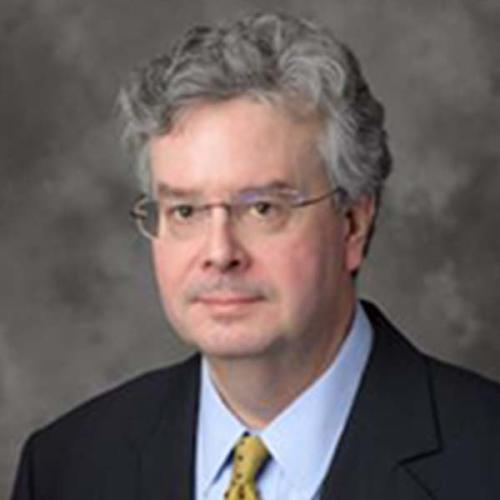
David Bindel is an Associate Professor in the Department of Mathematics at Cornell University, affiliated with the College of Arts and Sciences, College of Engineering, and Cornell Ann S. Bowers College of Computing and Information Science. He earned his Ph.D. in Mathematics from the University of California, Berkeley in 2006. His research focuses on applied numerical linear algebra, eigenvalue problems, and their applications in plasma physics, network analysis, and nonlinear systems. He develops methods for analyzing complex systems, including magnetic confinement in stellarators, stability of MHD systems, and community detection in networks. His work bridges theoretical foundations with practical computational tools, such as formal verification of linear algebra algorithms and scalable Gaussian process models. Bindel’s research explores the interplay between structure and computation, leveraging eigenvalue analysis to address challenges in computer vision, opinion dynamics, and engineering design. He has contributed to advancements in numerical methods for large-scale systems, including iterative solvers, spectral approximation techniques, and stochastic optimization. His interdisciplinary approach spans applied mathematics, computer science, and physics, with applications in fusion energy, machine learning, and network science. Recent work highlights include high-order expansions for magnetic confinement, adaptive filtering for dynamical systems, and Bayesian optimization strategies. His publications emphasize rigorous analysis alongside computational scalability, addressing both theoretical and practical aspects of modern scientific computing. Despite no explicitly listed awards, his contributions reflect significant impact in his fields.
Danai Koutra is an Associate Professor in Computer Science and Engineering at the University of Michigan, Ann Arbor, and an Amazon Scholar. Her research focuses on large-scale graph mining, graph neural networks, and interpretable machine learning methods for understanding complex networks. Key roles include leading the GEMS Lab and contributing to projects like DeltaCon (graph similarity) and VoG (graph summarization). She holds a PhD from Carnegie Mellon University and has authored over 80 publications in top venues like KDD, SDM, and NeurIPS. Educations: PhD in Computer Science, Carnegie Mellon University (2015) MS in Computer Science, Carnegie Mellon University (2015) Diploma in Electrical & Computer Engineering, National Technical University of Athens (2010) Research Interests: Her work spans graph mining, anomaly detection, knowledge graph completion, and applications in neuroscience, healthcare, and social networks. Recent projects include MAGNET (multi-agent graph networks) and GT2VEC (multimodal graph-text encoders). Grants & Awards: Recipient of the 2025 PECASE award, NSF CAREER Award (2019), and the 2016 ACM SIGKDD Dissertation Award. Active in organizing conferences like KDD and ECML/PKDD. Labs & Teams: Directs the GEMS Lab, collaborating on projects like FIDDLE (clinical data preprocessing) and SpecGreedy (dense subgraph detection). Engages in interdisciplinary efforts, including M-DICE (urban mobility analysis with Detroit).
Katherine T. Faber is the Simon Ramo Professor of Materials Science at the California Institute of Technology, part of the Division of Engineering and Applied Science. She leads the Faber Research Group, focusing on mechanical behavior of brittle materials, ceramics for extreme environments, porous solids, and cultural heritage science. Her work bridges engineering, art conservation, and space technology. Education: B.S., Alfred University, 1975; M.S., Penn State, 1978; Ph.D., UC Berkeley, 1982. Academic roles include Ramo Professor since 2014 and leadership in the American Ceramic Society. She collaborates with NASA, JPL, and institutions like the Art Institute of Chicago for cultural heritage projects. Research interests span energy materials (thermal barrier coatings, lunar regolith electrolysis), functional porous ceramics (battery separators, biomedical filters), and art conservation (nanoparticle analysis in historical artifacts). Recent projects include shape-memory ceramics and fracture mechanics studied via synchrotron X-rays. Publications highlight innovations in freeze-casting, environmental barrier coatings, and interdisciplinary studies. Awards include the W. David Kingery Award (2024) and American Academy of Arts and Sciences membership. Her group emphasizes sustainability, with a Platinum Green Lab certification. Advises numerous graduate and undergraduate students, including those in SURF and WAVE programs. Grants and collaborations span NASA, NSF, and industry partnerships. Labs focus on ceramic processing, advanced characterization, and additive manufacturing.
Associate Professor Ng Bing Feng leads research in Additive Manufacturing, Aerospace Engineering, and Thermofluids at Nanyang Technological University's School of Mechanical & Aerospace Engineering. As Cluster Director for Smart & Sustainable Building Technologies at NTU's Energy Research Institute, he oversees projects spanning energy-efficient cooling technologies, advanced filtration systems, and bio-inspired materials. His interdisciplinary work integrates advanced manufacturing with environmental engineering, focusing on sustainable solutions for air quality management and thermal regulation. Current research explores radiative cooling technologies, acoustic agglomeration for emissions control, and crashworthy structures via biomimetic design. Professor Ng's publications demonstrate consistent innovation in multi-scale manufacturing and fluid dynamics, with growing emphasis on sustainable urban technologies. Methodologies combine experimental fluid dynamics with computational modeling and AI-driven design. Leadership Roles: Cluster Director, Energy Research Institute @ NTU Principal Investigator for multiple industry collaborations in sustainable materials Research Output: 42+ publications in high-impact journals Multiple patents in filtration technologies and cooling systems
Dr. Zhenman Fang is an Associate Professor at the School of Engineering Science , Simon Fraser University (SFU) , where he founded and directs the HiAccel Lab . He also holds an associate membership in the School of Computing Science at SFU. His research focuses on customizable computing with software-defined hardware acceleration , addressing performance, energy-efficiency, and reliability in post-Moore’s law computing across domains like machine learning , big data analytics , quantum chemistry , and precision medicine . Education: Ph.D. in Computer Science from Fudan University (2014), with a visit to University of Minnesota during his studies. Postdoctoral Work: University of California, Los Angeles (UCLA) (2014-2017). Industry Experience: Staff Software Engineer at Xilinx (2017-2019). Dr. Fang’s research spans the entire computing stack , including application characterization , accelerator-rich architecture design , and programming/tool support . He has developed frameworks like HiSpMV , SyncNN , and SQL2FPGA , emphasizing FPGA acceleration for vision transformers , quantum chemistry , and spiking neural networks . His work has been recognized with 3 best paper awards (FPL 2024, TCAD 2019, MEMSYS 2017) and 3 best paper nominees (FCCM 2025, HPCA 2017, ISPASS 2018). Recent publications highlight trends in low-precision machine learning ( ShiftQuant , ESRU ), quantum chemistry acceleration ( SERI ), and vision transformer optimization ( Quasar-ViT ). His HiAccel Lab actively mentors PhD and MASc students , with notable graduates like Alec Lu (PhD 2024, now at Meta) and Philip Stachura (MASc, now with BC Graduate Scholarship). Scientific Awards: Inaugural SFU Research Excellence Award - Horizon Award (2025) FPL 2024 Stamatis Vassiliadis Best Paper NSERC Alliance Award (2020) CFI JELF Award (2019) Xilinx University Program Award (2019) IEEE Senior Member (2023) Grants: NSERC Discovery Grant (2019) CFI JELF Funding (2019) Huawei and Xilinx sponsorships Dr. Fang leads open-source initiatives like SyncNN , PASTA , and SQL2FPGA , and serves as General Chair for ASAP 2025 and Program Co-Chair for RAW 2025 . His lab collaborates globally with institutions such as UCLA , Northeastern University , and Xidian University .
Thomas Hacker is a Professor in the Department of Computer and Information Technology at Purdue Polytechnic Institute, Purdue University. His research focuses on cloud computing, high-performance computing, operating systems, computer networking, and cyber infrastructure . He holds a Ph.D. and M.S. in Computer Science & Engineering from the University of Michigan, along with dual B.S. degrees in Computer Science and Physics from Oakland University. Education: PhD (Computer Science & Engineering), University of Michigan (2004) MS (Computer Science & Engineering), University of Michigan (1993) BS (Computer Science, Mathematics Minor), Oakland University (1989) BS (Physics), Oakland University (1989) Dr. Hacker's research spans cloud and grid computing, operating systems, and distributed systems , with applications in earthquake engineering data systems and AI-driven infrastructure analysis. His recent work explores extended layer 2 networking for bare-metal provisioning ( 2023 IEEE Cloud Summit ) and machine-supported bridge inspection using artificial intelligence ( Transportation Research Record, 2023 ). Notable scientific contributions include 15+ publications on topics like cyberinfrastructure for earthquake engineering, container-based virtualization, and data-intensive systems. His work has been recognized with awards such as the NSF CAREER Award (2010) and multiple Purdue Seed for Success Awards . Key Scientific Awards: NSF CAREER Award (2010) Purdue Seed for Success Awards (2008-2013) ASEE Information Systems Division Best Paper Award (2012) College of Technology Outstanding Faculty in Discovery Award (2010) He has held leadership roles at Purdue, including Department Head (2018-2021) and Interim Department Head (2011-2016) . His career spans academic positions at Indiana University, University of Michigan, and industry roles at Storage Technology Corporation.
Peter K. Kitanidis is a Professor in the Department of Civil and Environmental Engineering and the Institute for Computational and Mathematical Engineering at Stanford University . His research focuses on groundwater flow , hydrologic forecasting , and stochastic inverse modeling , with applications to pollutant remediation and CO₂ storage monitoring . Education : Diploma, National Technical University of Athens (1974) M.S., MIT (1976) Ph.D., MIT (1978) Research Interests : Groundwater modeling and contaminant transport Hydraulic tomography and aquifer characterization Stochastic methods for uncertainty quantification Bioremediation and enhanced in-situ pollutant decay Dilution and mixing processes in heterogeneous media Real-time river flow forecasting Scientific Awards : L.G. Straub Award (1979) W.L. Huber Research Prize (1994) ISI Highly Cited Researcher (2001) AGU Hydrologic Sciences Award (2011) ASCE Pioneers in Groundwater Lecturer (2011) Advising and Grants : Advised 20+ PhD and MS students (1978–2018) Principal investigator on NSF, EPA, and DOE-funded projects Developed software for groundwater data analysis and CO₂ monitoring Contributed to bioremediation protocols and hydraulic tomography algorithms Labs and Teams : Kitanidis Laboratory for groundwater crisis solutions Collaborated with Oak Ridge National Laboratory and Stanford Hydrogeology Group Mentored postdocs (2000–2017) in reactive transport and inverse modeling
Takeshi Ikenaga is a Professor at Waseda University’s School of Fundamental Science and Engineering and Graduate School of Information, Production and Systems . He earned his Ph.D. in Information & Computer Science from Waseda University in 2001, following B.E. and M.E. degrees in Electrical Engineering (1988–1990). His career spans roles at NTT LSI Laboratories (1990–2002), Kitakyushu Foundation for Advancement of Industry, Science and Technology (FAIS) (1999–2002), and visiting researcher at the University of Massachusetts (1999–2000). Research Interests : Application-specific SoCs for video/image processing, including compression (H.264/AVC, H.265/HEVC), filters (super-resolution, noise reduction), recognition systems (feature detection, object tracking), and communication (UWB, LDPC). He also works on many-core processor design, ultra-low-delay vision systems, and sports analytics (volleyball, figure skating) with real-time 3D pose estimation and ball tracking. Awards : Recipient of the Furukawa Sansui Award (Waseda University, 1988) IEICE Research Encouragement Award (1992) Multiple Best Paper/Presentation Awards (2006–2022) at conferences including DAC/ISSCC, LSI IP Design, ISOCC, ISPACS, and CVIT APSIPA Distinguished Lecturer Certificate (2015) Waseda University Presidential Teaching Award (2020)
Baris Fidan is a Professor in Mechanical & Mechatronics Engineering at the University of Waterloo, with cross appointments in System Design Engineering and Electrical & Computer Engineering. He is a senior member of IEEE and AIAA. His research focuses on cooperative/adaptive control, autonomous systems, multi-agent networks, and vehicular control applications. He leads the Cooperative & Adaptive Mechatronic Systems (CAMS) Lab, which develops control strategies for autonomous vehicles, robotic systems, and intelligent transportation. Education: PhD in Electrical Engineering, University of Southern California (2003) Masters in Electrical & Electronic Engineering, Bilkent University (1998) Bachelor's in Electrical & Electronic Engineering & Mathematics, Middle East Technical University (1996) Research Interests: His work spans adaptive control theory, sensor networks, multi-agent coordination, autonomous vehicle networks, and biomedical systems control. He emphasizes practical applications in intelligent transportation, robotic navigation, and distributed system optimization. Grants & Projects: He has led major grants including NSERC Discovery Programs on cooperative mechatronic systems and 3D autonomous vehicle coordination. Industrial projects include autonomous driving strategies, vehicle control optimization, and high-precision gear manufacturing technologies. Labs/Teams: Directs the CAMS Lab, which collaborates on projects involving distributed motion planning, sensor localization, and autonomous vehicle networks. Current projects address challenges in urban autonomous driving, cooperative robotic systems, and resilient sensor networks.
Dr. Euijin (Alley) Choo is an Assistant Professor in the Department of Computer Science at the University of Alberta, specializing in data-driven cybersecurity and big data analytics. Her research focuses on AI-based cybersecurity solutions, anomaly detection in network traffic, and adversarial attacks on federated learning systems. She holds a Ph.D. from North Carolina State University and has held roles at Qatar Computing Research Institute, Korea University, and the University of Missouri-Rolla. Education: Ph.D., Computer Science, North Carolina State University (2015) M.S., Computer Science & Engineering, Korea University (2008) B.S. Dual Degree in Computer Science & Mathematics, Korea University (2006) Research Interests: Security and big data analysis intersections Federated learning security and privacy Anomaly detection in network logs and enterprise systems Malware/phishing detection using graph inference AI-driven threat intelligence aggregation Recent Grants: Mitacs Accelerate Program Grant: Fraud Detection in Financial Graphs ($60,000, 2025) National CyberSecurity Consortium Grant: IntruderInsight ($2M, 2025-2027) NSERC Discovery Grant: Threat Detection Framework ($180,000, 2025-2031) Awards: Best Paper Award at DBSEC 2015 NSERC Early Career Researcher Award (2025) Provost Fellowship (NC State, 2009-2010) Labs/Teams: Leads the Data-driven Network and Cyber Security (DANS) Lab, focusing on federated learning defenses, compromised entity detection, and malicious domain analysis.
José F. Martínez holds the Lee Teng-hui Professorship of Engineering at Cornell University's College of Engineering, where he leads research in computer architecture and systems. His roles include Vice Chair of ACM SIGARCH, IEEE Fellow, and past leadership roles in ISCA, MICRO, and IEEE Computer Society journals. He has received prestigious awards such as the NSF CAREER Award, IBM/Qualcomm Faculty Awards, and multiple teaching accolades including Tau Beta Pi Professor of the Year (2011). Education: Licenciado en Informática de Sistemas (1996), Universidad Politécnica de Valencia M.S. (1999) and Ph.D. (2002) in Computer Science, University of Illinois at Urbana-Champaign His research focuses on computer architecture , including microprocessors, multiprocessors, memory subsystems, embedded systems, and processing-in-memory (PIM) innovations. He co-leads the DARPA/SRC ACE Center for Evolvable Computing and NSF's CROPPS Center, and previously co-founded Cornell's Institute for Digital Agriculture (CIDA). His work bridges hardware-software co-design and sustainable computing. Key Contributions: Advancing energy-efficient multiprocessor architectures Developing PIM frameworks like PUMICE and Membrane Market-based resource allocation systems (e.g., XChange, ReBudget) His advising spans over 15 graduate students and has guided Merrill Presidential Scholars. Current research explores evolvable computing paradigms and AI hardware acceleration, reflecting his dual focus on foundational architecture and applied systems innovation.
Shiyu Su is an Assistant Professor in the Department of Electrical and Computer Engineering at the University of Waterloo. His research focuses on high-speed data converters, wireless transceivers, digital phase-locked loops (PLL), and AI-assisted analog/mixed-signal design automation. He holds a Ph.D. from the University of Southern California (2019) and teaches courses such as ECE 340 (Electronic Circuits 2) and ECE 432 (Radio Frequency Integrated Devices and Circuits). Education: B.S. from Beijing University of Post and Telecommunication (China) and Queen Mary, University of London (UK), 2011; M.S. and Ph.D. from USC, 2013 and 2019, all in electrical engineering. Research Interests: High-speed ADCs/DACs RF/mm-wave transceivers Time-approximation filters (TAF) Analog/mixed-signal design automation Memristor-based computing Biomedical interfaces Key Awards: IEEE SSCS Predoctoral Achievement Award (2017–2018) Best Student Paper Award at IEEE RFIC (2022) Ming Hsieh Institute Scholar (2019–2020) Lab Focus: The Shiyu Su Lab develops integrated circuits for communications, sensing, and computing, with a focus on AI-driven methodologies and digital-analog co-design. Collaborations include work with Prof. Wei Wu (USC) on memristor-based systems.
Edoardo Charbon is a Full Professor at École Polytechnique Fédérale de Lausanne (EPFL) in the School of Engineering, where he leads the Advanced Quantum Architecture Lab (AQUA). He also serves on the School Council STI and is Co-Director of STI-SSIQ Administration. Previously, he was a full professor and chair at Delft University of Technology from 2008 to 2016. Charbon received his Elektrotechnik Diploma from ETH Zurich, M.S. from UC San Diego, and Ph.D. from UC Berkeley, all in electrical engineering. His career spans industry experience at Cadence Design Systems and Canesta Inc. before joining EPFL in 2002. His research focuses on ultra high-speed and 3D optical sensors, with applications in LiDAR, FLIM (Fluorescence Lifetime Imaging Microscopy), PET (Positron Emission Tomography), FCS (Fluorescence Correlation Spectroscopy), and NIROT (Near-Infrared Optical Tomography). He has pioneered deep-submicron CMOS SPAD technology, which is now mass-produced and used in smartphones, telemeters, and medical diagnostics. His recent work bridges cryo-CMOS circuits for quantum computing with advanced optical sensing techniques. Analysis of his recent publications reveals a strong trend toward integrating quantum technologies with practical imaging applications. His work spans from fundamental device development (SPAD sensors, cryo-CMOS circuits) to applied systems (LiDAR engines, medical imaging devices), with increasing integration of machine learning techniques for real-time processing. 2023 IISS Pioneering Achievement Award Fellow of the IEEE Distinguished visiting scholar, W. M. Keck Institute for Space at Caltech Fellow, Kavli Institute of Nanoscience Delft Distinguished lecturer, IEEE Photonics Society Professor Charbon has authored or co-authored over 500 papers and two books, and holds 27 patents. His research has been supported by collaborations with organizations including Bosch, X-Fab, Texas Instruments, Maxim, Sony, Agilent, and the Carlyle Group. He has driven significant innovation in CMOS SPAD technology, which is now commercially deployed in various applications. He leads the Advanced Quantum Architecture Lab (AQUA) at EPFL, which focuses on the development of advanced sensor systems combining quantum technologies with conventional electronics. The lab has been instrumental in creating SPAD-based imaging systems that push the boundaries of time-resolved optical detection.
Lam James is a Chair Professor of Control Engineering at the University of Hong Kong (HKU), affiliated with the Faculty of Engineering. He holds a BSc (1st Hons.) in Mechanical Engineering from the University of Manchester, and MPhil/PhD degrees from the University of Cambridge. His academic journey includes roles as a Croucher Fellow, Lecturer at the University of Melbourne, and faculty member at City University of Hong Kong before joining HKU in 1993. Professor Lam serves as Editor-in-Chief for four international journals including IET Control Theory and Applications and Journal of The Franklin Institute . His research focuses on networked control systems, vibration control, control theory, and multi-agent systems. With 600+ peer-reviewed publications, he maintains an H-index of 102 (Web of Science) and 108 (Scopus), recognized as a Highly Cited Researcher in multiple fields. Education: BSc Manchester (Mechanical Engineering), MPhil/PhD Cambridge Editorial Roles: 20+ journals, including leadership roles since 2012 His awards include Foreign Membership of Academia Europaea (2024), National Academy of Artificial Intelligence membership (2025), and two State Natural Science Awards (2015, 2019). He is a Fellow of multiple institutions including IEEE, IMechE, and HKIE.