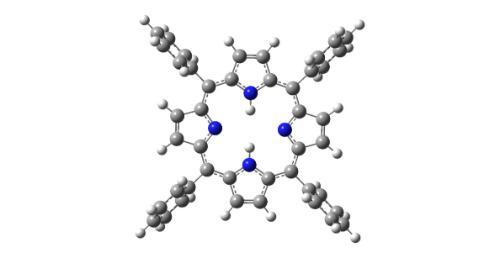
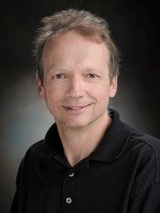
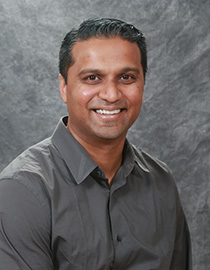
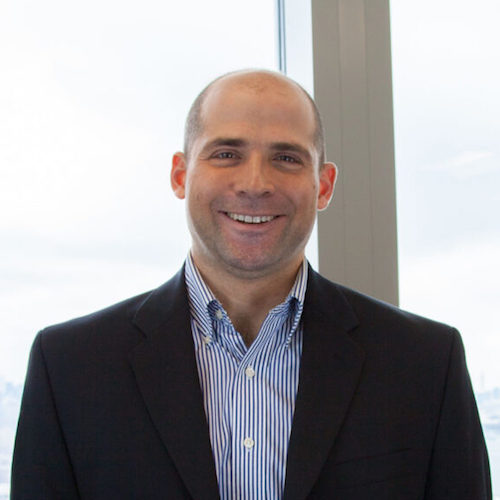
Professor Caroline Dessent is a Professor of Physical Chemistry and Head of the Department of Chemistry at the University of York. Her research focuses on laser-interfaced mass spectrometry to study photoactive molecules relevant to human health and environmental science. Key areas include photopharmaceuticals, sunscreen photodegradation, and porphyrin photophysics. She has pioneered novel instrumentation through her ERC-funded BIOIONS project. Education: BSc Chemistry (Jesus College, Oxford), PhD (Yale University). Career highlights include Royal Society University Research Fellowship (1999-2008) and ERC Starting Grant. Current roles include Chair of the RSC Spectroscopy and Dynamics Group (2019-2022) and member of the RSC Faraday Council (2021-2024). ED&I leadership: Led the Chemistry Department's Gold Athena Swan submission (2018), established curriculum decolonization initiatives, and investigated minority experiences in chemistry. Worked part-time 2009-2020 to balance career and family commitments. Research groups focus on: (1) Biological ions in gas-phase environments, (2) Photodynamic therapy drug models, (3) Environmental pollutant analysis. Collaborates internationally on projects like the 'Decolonizing Chemistry Curriculum' and emerging contaminant studies in Botswana.
Cong Gao is a Professor and Head of the Division of Data Science at Nanyang Technological University's College of Computing & Data Science. He also holds a courtesy appointment with the School of Physical & Mathematical Sciences. Previously, he served as an Assistant Professor at Aalborg University, Denmark, and worked as a researcher at Microsoft Research Asia. He co-directs the Singtel Cognitive and Artificial Intelligence Lab for Enterprises@NTU (SCALE@NTU). His educational background includes: Ph.D. in Computer Science from National University of Singapore (2004) Master of Engineering from Tianjin University, China (1999) Bachelor of Engineering from Tianjin University, China (1996) Professor Gao's research focuses on Data Science, with particular expertise in geospatial data management, spatio-temporal data mining, recommendation systems, and social media data analysis. His work has significantly impacted areas like spatial-textual indexing, point of interest recommendation, and mining social networks. He has published extensively in top venues including VLDB, SIGMOD, ICDE, KDD, and WSDM, with over 14,000 citations and an H-index of 61. His recent publications demonstrate strong trends in applying machine learning to database systems, with particular focus on spatial and trajectory data management. Key research directions include learned indexing techniques, trajectory data analysis, and integrating large language models with database systems for improved query optimization. Professor Gao has received notable scientific recognition including: Best paper runner-up award at WSDM'22 Best paper award runner-up at WSDM 2020 He has advised numerous students who have become significant contributors in their own right, including Xin Cao, Lisi Chen, Kaiyu Feng, and Kaiqi Zhao. His research has been supported by substantial grants from Ministry of Education, NRF, IAF, Singtel/NCS, Roll-Royce, Alibaba, and Microsoft, including a S$42.4 million funding over 5 years for the SCALE@NTU lab. Professor Gao leads the Data Management Research Group (DANTE) and co-directs the Singtel Cognitive and Artificial Intelligence Lab for Enterprises@NTU (SCALE@NTU), which develops market-leading AI and data science technologies.
Professor Mustapha Yagoub is a distinguished faculty member in the School of Electrical Engineering and Computer Science at the University of Ottawa, where he has been serving since 2001. With over 300 publications to his name, he specializes in RF/microwave engineering, neural networks applications, and RFID systems. His research bridges theoretical advances with practical industrial applications in wireless communications and microwave circuit design. Education: Dipl.-Ing. in Electronics, École Nationale Polytechnique, Algiers, Algeria (1979) Magister in Telecommunications, École Nationale Polytechnique, Algiers, Algeria (1987) Ph.D., Institut National Polytechnique, Toulouse, France (1994) Professor Yagoub's research spans several interconnected domains within electrical engineering, with particular emphasis on microwave circuit design and wireless communication systems. His work integrates neural network techniques with traditional microwave engineering approaches, creating innovative solutions for complex RF problems. He has made significant contributions to RFID technology, particularly for specialized applications like underground mining environments. His expertise in applied electromagnetics has led to numerous advances in antenna design and microwave component modeling. Analysis of Professor Yagoub's recent publications reveals a strong focus on practical microwave circuit design, with particular attention to low-noise amplifiers, RF parameter extraction techniques, and efficient circuit implementations for wireless communications. His work demonstrates consistent integration of electromagnetic theory with circuit design principles, often applying novel computational approaches to solve challenging problems in microwave engineering. Many publications address specific industry needs in wireless communications, RFID systems, and energy-efficient circuit design. Professional Affiliations: Senior Member, IEEE Microwave Theory and Techniques Society Professional Engineer, Ontario, Canada Member, Ordre des ingénieurs du Québec, Canada Professor Yagoub has supervised numerous graduate students through their research in microwave engineering and wireless communications. His extensive publication record suggests substantial research funding throughout his career, supporting work in microwave circuit design, neural network applications in RF systems, and RFID technology development. His collaborations with researchers across multiple institutions and countries have contributed to the international recognition of his work in microwave engineering. While specific laboratory details aren't provided in the available information, Professor Yagoub's research focus suggests he leads or has led laboratory facilities for microwave circuit design, RF measurement, and wireless communication systems testing. His work on neural network applications in microwave engineering indicates a computational research component alongside experimental work.
Ioana-Oriana Bercea is an Assistant Professor at the Division of Theoretical Computer Science (EECS), KTH Royal Institute of Technology, and a member of the Digital Futures Faculty. She holds a PhD in Computer Science from the University of Maryland, with prior postdoctoral research at the IT University of Copenhagen and Tel Aviv University. Her research focuses on Theoretical Computer Science, including Data Structures (e.g., Bloom filters), Randomized Algorithms (e.g., hashing), and Computational Geometry (e.g., TSP). Education : PhD in Computer Science, University of Maryland (advisor: Samir Khuller) Master's in Computer Science, University of Maryland (advisor: Aravind Srinivasan) Bachelor of Science in Mathematics (Honors) and Computer Science, University of Chicago Research Interests : She explores scalable data management (e.g., Bloom filters), algorithm design for clustering and hashing, and geometric optimization problems. Her work emphasizes theoretical foundations with practical applications. Key Achievements : VR Starting Grant (2024) for the project "DataTech" Best Artifact Award at ACM SIGMOD 2023 for the InfiniFilter paper Advising & Grants : Advises PhD student Jonas Østergaard Klausen (joint with Mikkel Thorup and Jacob Holm) Lead researcher on grants exploring data storage and algorithmic efficiency Labs & Teams : Active in KTH's Theoretical Computer Science group and collaborates with the Digital Futures initiative to advance cross-disciplinary digital technologies.
Rodrigo Moreno is an Associate Professor at the School of Engineering Sciences in Chemistry, Biotechnology and Health (CBH) at KTH Royal Institute of Technology, and a Co-Principal Investigator (Co-PI) in two major research projects: 'Characterization of the mechanical tissue properties of the brain in the developing brain with magnetic resonance elastography' and 'Advanced Magnetic Resonance Elastography for the Brain.' He is also affiliated with Digital Futures, a cross-disciplinary research center focused on developing digital technologies to address societal challenges. His primary research interests include biomedical imaging techniques, biomechanical properties of tissues, and the application of artificial intelligence (AI) in healthcare. Dr. Moreno’s work spans neurodegenerative diseases like Alzheimer’s and Parkinson’s, as well as advancements in medical imaging modalities such as MRI, CT, and ultrasound. His recent projects emphasize precision medicine using AI-powered longitudinal MRI analysis and the mechanical characterization of brain tissue in developmental and disease contexts. He leads collaborations in computational methods like tensor voting and deep learning for medical image processing, segmentation, and generative modeling of biological structures. His contributions include developing algorithms for tractography filtering, synthetic data generation, and robust segmentation of medical images. Dr. Moreno’s research has produced over 50 peer-reviewed articles since 2014, with a focus on advancing imaging technologies and their clinical applications. His work bridges computational engineering, biomedical research, and digital innovation, aiming to improve diagnostics and personalized treatment strategies for complex diseases.
Dr. Atta ul Quddus is a Lecturer in Wireless Communications at the University of Surrey's Institute for Communication Systems (ICS), part of the School of Computer Science and Electronic Engineering. He holds an MSc (2000) and PhD (2005) in Satellite and Mobile Cellular Communications from the University of Surrey. His research focuses on 5G/6G networks, including Machine Type Communication, Full Duplex systems, and Cloud Radio Access Networks. He leads UK/EU projects like BeFEMTO and iJOIN and developed a widely used PHY simulator for industry. Research interests: Machine-to-Machine (M2M) communication, Full Duplex systems, Cloud RAN, Device-to-Device (D2D) communications, and Cell-Sweeping techniques. Notable contributions include enhancing cell-edge throughput via Cell-Sweeping and developing novel modulation schemes like C-GQSM and GAM-FSM. Publications span 2025-2021, emphasizing advances in MIMO, NOMA, and RIS (Reconfigurable Intelligent Surfaces). Key achievements include the 2004 Vodafone-sponsored Research Excellence Prize for adaptive filtering work. Current projects explore integrated communication-sensing systems, haptic feedback, and low-complexity decoders for Polar/LDPC codes. Awards: CCSR Research Excellence Prize (2004) Grants: EU FP7 BeFEMTO, iJOIN; 5GIC research program Collaborations: Industry partnerships with network operators and chip manufacturers Labs/Teams: Active contributor to ICS's 5G Innovation Centre (5GIC), focusing on future wireless systems.
Professor Pei Xiao is a leading academic in wireless communications at the University of Surrey’s Institute for Communication Systems (5GIC), part of the School of Computer Science and Electronic Engineering. He holds a BEng from Huazhong University of Science & Technology, MSc from Tampere University of Technology, and PhD from Chalmers University of Technology. As technical manager of 5GIC, he oversees major 5G/6G research projects, coordinating activities across academia and industry. His research focuses on cutting-edge areas including 5G/6G network design, satellite communications, reconfigurable intelligent surfaces (RIS), integrated sensing and communication (ISAC), and machine learning-driven optimization. Key projects include EPSRC-funded initiatives on massive machine communications and industrial IoT systems. Professor Xiao’s recent publications emphasize innovations in beamforming, non-orthogonal multiple access (NOMA), and hybrid AI-hardware solutions for next-generation networks. He actively contributes to standards development through collaborations with Nokia Networks and global telecom partners. His work bridges theoretical advancements with practical implementations, addressing challenges in latency, energy efficiency, and network scalability.
Leon Bergen is an Associate Professor of Linguistics at the University of California, San Diego, with a courtesy appointment in Computer Science. His research focuses on computational linguistics, pragmatics, and machine learning, bridging cognitive science and AI. He explores topics such as language processing, contextual reasoning, and the application of LLMs to scientific challenges. His work spans algorithmic tasks in NLP, biomedical informatics, and climate science, with notable contributions to benchmarks like EvidenceBench and ClimaQA. He also investigates neural mechanisms underlying language comprehension, including brain region activity in sublexical processing. Bergen’s recent articles highlight trends in data-centric AI for climate modeling, bias detection in biomedical reports, and the cognitive foundations of pragmatic reasoning. His interdisciplinary approach addresses foundational questions in linguistics while advancing practical tools for scientific problem-solving. He is affiliated with the UC San Diego Linguistics Department and maintains an active research lab, though specific grants or advisees are not listed here. His contact information includes lbergen@ucsd.edu and a profile on the department website.
Manfred Trummer is a Professor in the Department of Mathematics at Simon Fraser University (SFU), part of the Faculty of Science. His research focuses on computational methods in medical imaging, particularly dynamic single photon emission computed tomography (SPECT), and numerical methods for differential equations, including spectral collocation and radial basis function techniques. He emphasizes solving ill-posed problems and improving stability, accuracy, and adaptivity in numerical solutions. Trummer holds a Ph.D. in Mathematics from ETH Zurich (1983). His work bridges applied mathematics and computational science, addressing challenges in medical imaging reconstruction and high-order numerical methods for differential equations. Notable contributions include advancements in spectral methods, iterative reconstruction techniques for SPECT, and preconditioning strategies for ill-conditioned systems. His research spans dynamic imaging applications, such as kidney imaging and 4D SPECT reconstruction, alongside foundational numerical analysis topics like matrix factorization, boundary layer resolution, and RBF stability. Recent publications highlight innovations in spectral collocation for mixed functional differential equations and conformal mapping using Szegő kernels. Trummer teaches graduate courses such as APMA 923 (Numerical Methods in Continuous Optimization). While no specific grants or labs are detailed in the text, his work reflects sustained engagement with interdisciplinary computational challenges in mathematics and medical imaging.
Suman Chakravorty is a Professor of Aerospace Engineering at Texas A&M University, part of the College of Engineering's Department of Aerospace Engineering. He leads the Estimation, Decision and Planning (EDP) Laboratory, focusing on nonlinear control, robotics, and space situational awareness. He holds a Ph.D. from the University of Michigan (2004) and a B.Tech from the Indian Institute of Technology Madras (1997). His research emphasizes stochastic controls, robotic planning, and data-driven modeling. Notable awards include the National Innovation Award (2017) and a Summer Faculty Fellowship from the Air Force (2010–2012). His work spans space object tracking, autonomous systems, and optimal control of complex systems like material microstructures. Key contributions include the SLAP framework for belief-space planning and advancements in particle Gaussian mixture filters. He advises students such as Utkarsh, Ran Wang, and Dilshad Raihan, and collaborates on projects like T-PFC control and randomized FISST techniques for multi-target tracking. His lab’s research integrates theory and practice, addressing challenges in non-Gaussian uncertainty, distributed estimation, and adaptive sampling. He promotes interdisciplinary approaches to robotics and aerospace systems, with applications in both academia and industry.
Andrew Papanicolaou is an Associate Professor in the Department of Mathematics at North Carolina State University (NC State), within the College of Sciences. His research focuses on computational finance, stochastic systems for control and optimization, and financial data analysis. He holds a PhD in Applied Mathematics from Brown University, an MS in Financial Mathematics from the University of Southern California, and a BS in Mathematical Sciences from the University of California, Santa Barbara. His expertise includes non-Markovian and high-dimensional optimization problems, machine learning applications, and nonlinear filtering. He has secured grants such as 'Deep Neural Networks for Solving Non-Markov Optimization Problems,' addressing complex computational challenges in finance. His work bridges theoretical stochastic analysis with practical financial applications, including algorithmic trading strategies and volatility modeling. Key research trends in his publications include the use of deep learning for portfolio optimization, stochastic control in market dynamics, and analysis of VIX and SPX derivatives. He explores topics like impermanent loss in decentralized finance and optimal execution of large stock orders. His grants and projects highlight innovation in applying advanced mathematical tools to real-world financial systems. While no scientific awards are listed, his contributions to computational finance and stochastic systems have been disseminated through peer-reviewed articles. He advises on grants related to neural network algorithms and maintains active research collaborations in financial mathematics.
Dr. Wentao Li is a Lecturer at the University of Leicester's School of Computing and Mathematical Sciences since 2024. Previously, he held postdoctoral roles at the Hong Kong University of Science and Technology (2023–2024) and the University of Technology Sydney (2020–2022). He earned his Ph.D. from UTS in 2021, focusing on graph data processing and mining. His research emphasizes data management, graph processing, and AI-driven databases. He has authored over 20 CORE A*-level papers, a monograph, and a patent yielding significant business revenue. He serves on program committees for ICDE and AAAI, reviewing for ACM TODS and IEEE TKDE. Li has received the 2021 Baidu Scholar Rising Star award and SIGMOD Travel Award (2019). He advises Ph.D. students in graph data, vector databases, and AI4DB. Teaching roles include modules on big data analytics and machine learning at Leicester and UTS.
Nicolaj Frederiksen is an Assistant Professor in the Department of Technology and Innovation at the University of Southern Denmark (SDU), affiliated with the Faculty of Engineering and SDU Civil and Architectural Engineering. His work bridges construction management, sustainability, and institutional theory, with a strong focus on organizational dynamics in the built environment. Research Interests: Dr. Frederiksen's research explores the intersection of sustainability and organizational change in the construction industry. Key areas include the circular economy, strategic and public-private partnerships, institutional logics, standardization, and socio-technical transitions. His recent work investigates how communities filter sustainability pressures, the role of interorganizational networks in circular building, and the governance of hybrid organizations. Publication Trends: His recent publications (2022–2025) demonstrate a consistent focus on sustainability transitions in construction, particularly through institutional and organizational lenses. There is a strong emphasis on qualitative and theoretical analysis, with recurring themes of circular economy implementation, regulatory impacts, and the socio-political dimensions of standardization and market creation in Denmark. Scientific Awards: No awards listed in the provided text. Advising and Grants: While no specific students or grants are mentioned, his involvement in commissioned reports and collaborative research projects suggests active engagement in funded research and academic supervision. He frequently collaborates with researchers such as S.C. Gottlieb, A.J. de Gier, and C. Koch. Labs and Research Teams: He is associated with the Circular Built Environment Network (CBEN), indicating participation in a collaborative research initiative focused on advancing circular practices in construction through interdisciplinary and interorganizational cooperation.
Dr. John Maclean is a Lecturer in Data Science and Statistics at the University of Adelaide, affiliated with the School of Computer and Mathematical Sciences within the Faculty of Sciences, Engineering and Technology. His research focuses on Data Assimilation (DA) and Numerical Multiscale Methods, with particular interests in coherent structure DA, projected DA, non-Gaussian measurement error modeling, and surrogate-based DA techniques. He also explores projective integration and patch dynamics for stiff systems and spatially heterogeneous problems. His work addresses challenges in combining uncertain model forecasts with data, accelerating simulations of complex systems, and designing efficient statistical surrogates. Notable contributions include methodologies for adaptive moving patches in multiscale simulations and theoretical insights into stochastic processes and uncertainty quantification. Dr. Maclean is actively involved in supervising postgraduate research students and is open to mentoring those interested in his research areas. His publications span topics from data assimilation algorithms to environmental and computational modeling, reflecting his interdisciplinary approach to applied mathematics and computational science.
Professor Reza Hoseinnezhad is a faculty member in the School of Engineering at RMIT University, Australia. His research focuses on advanced engineering systems, including robotics, artificial intelligence, and autonomous systems. His work spans domains such as multi-object tracking, sensor fusion, and control systems with applications in underwater vehicles, autonomous driving, and manufacturing. He actively supervises research projects in areas like electronic seatbelt systems, anomaly detection, and swarm tracking. Research interests include Electrical and Electronic Engineering, Artificial Intelligence, Mechanical Engineering, and Manufacturing Engineering. His contributions leverage statistical methods, machine learning, and optimization to solve complex engineering challenges. Recent projects emphasize robust filtering, adversarial attack defenses, and distributed information fusion in connected systems. Professor Hoseinnezhad’s publications address cutting-edge topics like geometrically-informed particle filters, reinforcement learning for quadrupedal robots, and defect detection via point pattern analysis. His work bridges theoretical advancements with practical industrial and safety applications.