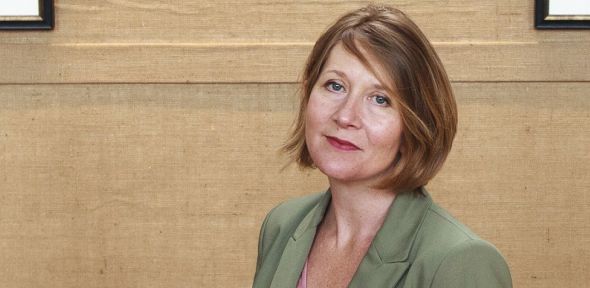
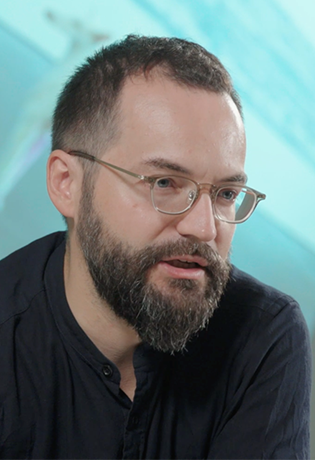
Professor Emma Widdis is a leading scholar at the Faculty of Modern and Medieval Languages and Linguistics at the University of Cambridge, specializing in the intersection of Soviet cinema, ideology, and cultural geography. Her work explores the reeducation of sensory perception through film, early Soviet urban spaces, and the construction of subjectivity via cinematic techniques. Teaches 20th-century Russian/Soviet literature, cinema, and film theory Focuses on sensory engagement, political avant-garde, and urban spatial representation Supervisor for MPhil and PhD students in Slavonic Studies Her recent book Socialist Senses (2017) examines how cinema shaped Soviet perceptions of reality. Her publications span topics like silence in sound film, set design materiality, and costume symbolism in early Soviet cinema. While no formal scientific awards are listed, her research has been supported through institutional grants and collaborations with centers like CRASSH and Cambridge Language Sciences.
University of California , Santa Barbara (UCSB)United States
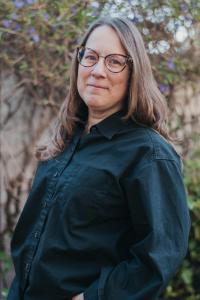
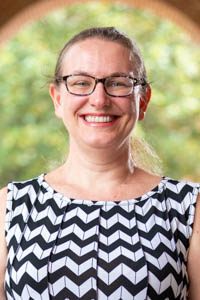
Mary Bucholtz is a Professor in the Department of Linguistics at the University of California, Santa Barbara (UCSB). She holds affiliations with multiple departments including Anthropology, Feminist Studies, Spanish and Portuguese, the Gevirtz Graduate School of Education, Comparative Literature, and Latin American and Iberian Studies. Her research integrates sociocultural linguistics with anthropological, gender, and social justice frameworks. Education: PhD in Linguistics, University of California, Berkeley (1997) Bucholtz's work examines how language shapes and is shaped by social identities, particularly among youth, through dimensions like race, gender, and cultural practices. She emphasizes community-centered research , linguistic activism , and interdisciplinary methodologies to address systemic inequalities. Recent publications explore affective agency in Latinx youth, educational equity, and antiracist linguistics. Her collaborative projects often involve partnerships with educational institutions and youth communities in California, focusing on translanguaging , Black language justice , and raciolinguistic ideologies . Grants from the National Science Foundation, Spencer Foundation, and Wenner-Gren Foundation support her research. She co-edited the open-access volumes Decolonizing Linguistics and Inclusion in Linguistics (Oxford University Press, 2024), alongside authoring White Kids: Language, Race, and Styles of Youth Identity (Cambridge, 2011) and Talking College: Making Space for Black Language Practices in Higher Education (Teachers College Press, 2022).
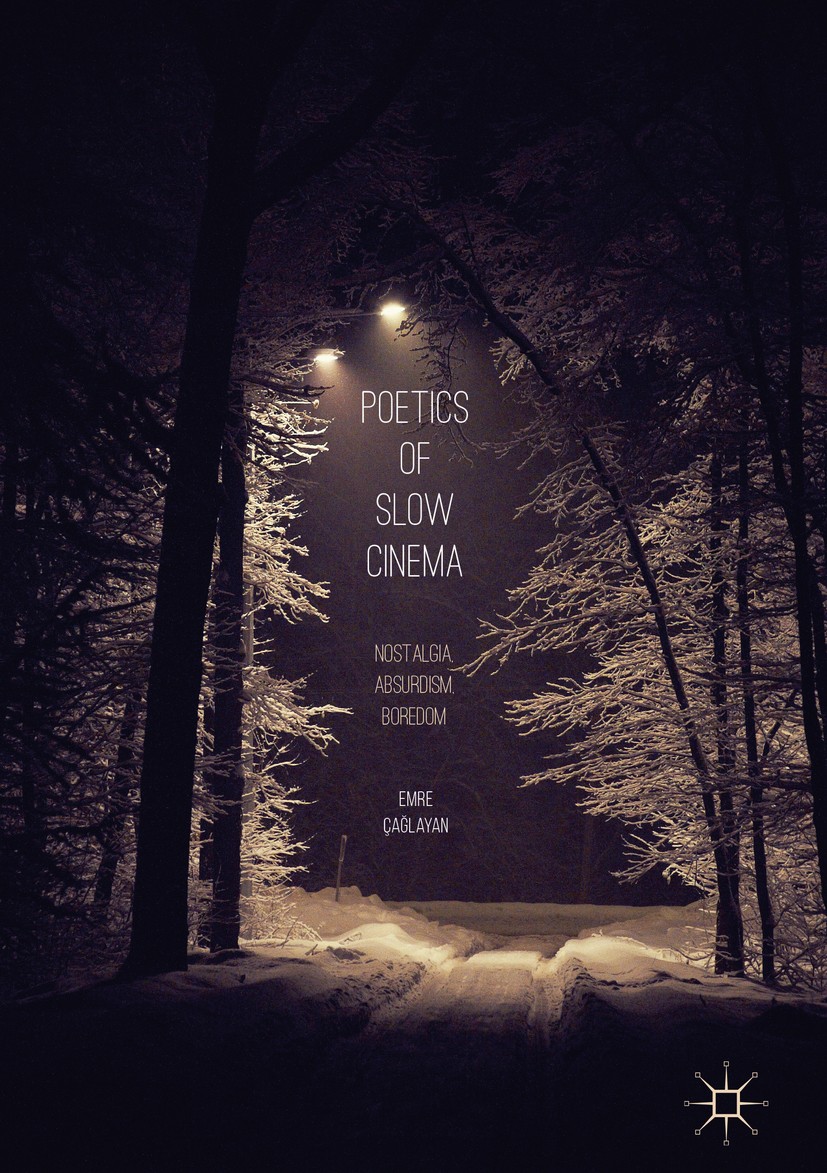
Emre Caglayan is an Assistant Professor and Program Coordinator for Film Studies at the American University of Paris (AUP). He holds a PhD in Film Studies from the University of Kent (2014) and an MA in Film and Television from Istanbul Bilgi University (2009). His research focuses on global art cinema, slow cinema aesthetics, and the intersection of cinematic form with embodied experiences like walking. Caglayan’s work explores how cinema shapes lived experiences through close analyses of film texts and their cultural contexts. Key research interests include the affective qualities of film sound, urban space representations, and ethical dimensions of political filmmaking. His monograph Poetics of Slow Cinema: Nostalgia, Absurdism, Boredom (Palgrave, 2018) is a seminal work in slow cinema studies. He currently investigates walking as an artistic practice linked to cinema, curating film seasons and designing participatory walking activities. Caglayan teaches courses on film theory, international cinema, and cinematic history at AUP. His work has been published in journals like Quarterly Review of Film and Video , Projections , and Jump Cut , with recent contributions on Turkish cinema and film/music intersections.
Dr. Heather Inwood serves as University Associate Professor in Modern Chinese Literature and Culture within the Faculty of Asian and Middle Eastern Studies at the University of Cambridge. She is also a Fellow and Director of Studies at Trinity Hall, maintaining dual institutional affiliations that support her teaching and research activities across undergraduate and postgraduate programs. Her educational background includes a BA in Chinese Studies from the University of Cambridge (Trinity Hall), followed by advanced studies at Tsinghua University and Peking University, culminating in a PhD in modern Chinese literature from SOAS, University of London in 2008. Prior academic appointments include Assistant Professor at The Ohio State University (2008-2013) and Lecturer in Chinese Cultural Studies at the University of Manchester before returning to Cambridge in 2016. Professor Inwood's research program investigates the dynamic interactions between digital media and literary production in contemporary China, with particular focus on poetry communities, genre fiction, and transmedia storytelling. Her work bridges traditional literary analysis with digital humanities approaches, examining how online platforms transform authorship, reception, and cultural value. She has pioneered scholarship on internet poetry scenes, demonstrating their vitality despite public perceptions of poetry's decline in modern China. Her publication trajectory reveals a clear evolution from early work on poetry communities ( Verse Going Viral: China's New Media Scenes , 2014) toward broader investigations of digital narrative forms, game studies, and Sinophone cyberspace. Recent publications increasingly engage with science fiction, transmedia storytelling, and the algorithmic structures shaping literary production, reflecting both the changing digital landscape and her expanding methodological toolkit. Professor Inwood actively supervises five PhD students working on diverse projects spanning Misty poetry, queer narratives, gender studies, and poetic animality, demonstrating her commitment to nurturing next-generation scholarship in Chinese literary studies. Her research has been supported by British Academy Small Grants and similar funding mechanisms that enable sustained fieldwork and publication. Her teaching responsibilities include undergraduate courses on East Asian media and popular culture, Modern Chinese texts, and Modern Chinese literature, connecting classroom instruction directly to her research expertise. She also maintains public engagement through Chinese-language columns for BBC China and other media outlets, bridging academic and public discourse on contemporary Chinese culture.
Dr. Damien Charrieras is an Associate Professor at the School of Creative Media , City University of Hong Kong, where he serves as Program Leader for the Master of Art in Creative Media and deputy program leader for the PhD in Creative Media. His work bridges cultural studies, new media theory, and the intersection of financial technologies with artistic practices through the ACIM Laboratory for Interventions in Speculative Finance . Doctoral research on digital artists' trajectories in Montreal FRQSC Postdoctoral Fellowship at McGill University Research spans game engine design , datafication of creativity , blockchain in art , and post-anthropocentric creative processes . With over HK$3.14M in grants as Principal Investigator, he explores situated digital creativity in urban contexts, critical worldbuilding pedagogy , and the mediation of technical systems in cultural production. His publications in Cities , Organized Sound , and Human Relations analyze the reconfiguration of artistic practices through software infrastructures and automation paradigms. Scientific awards include: FRQSC Postdoctoral Fellowship
Nicholas Wiltsher is an Associate Professor at the Department of Philosophy; Aesthetics at Uppsala University since 2019. His research focuses on aesthetics, philosophy of mind, and race/gender studies, exploring topics like imagination's role in art, gender norms in aesthetics, and electronic dance music's philosophical dimensions. He holds a PhD from the University of Miami and has held academic roles at institutions including Antwerp, Auburn, Porto Alegre, and Leeds. Education: PhD in Philosophy from the University of Miami. Previous affiliations include universities in Antwerp, Auburn, Porto Alegre, and Leeds. Research interests include: the interplay between art and imagination, aesthetic norms and gender, expression theory, philosophy of race and gender, and electronic dance music aesthetics. He critiques traditional disciplinary boundaries in aesthetics and advocates for interdisciplinary approaches. His recent publications (2023–2025) emphasize imagination's epistemic role, the aesthetic constitution of gender identities, and critiques of additive imagination theories. Earlier work (2016–2019) addressed electronic dance music's cultural ontology and Collingwood's expression theory. Awards: No scientific awards explicitly listed. Grants and advising: No grants or student advisees explicitly mentioned in sources. Labs/Teams: No specific research groups or labs mentioned, though his work engages interdisciplinary collaborations in aesthetics and cultural philosophy.
Kyle Bellucci Johanson serves as a Visiting Critic in Cornell University's College of Architecture, Art, and Planning, Department of Art. Holding an MFA from California Institute of the Arts and a BA in Art and Reconciliation Studies from Bethel University, he merges artistic practice with critical theory through performance architecture and collaborative media. Whitney Independent Study Program (2022–23) Founding fellow at land's edge free school (Los Angeles) Teaching experience at SAIC, UIC, CUNY, and Cooper Union His research investigates: Power structures through spatial interventions Critical theory applications in art practice Post-capitalist imaginaries Hauntology and historical materialism Transdisciplinary approaches to social critique Project trends reveal: Reinterpretation of Soviet design principles Investigation of worker identity in post-industrial contexts Temporal and spatial dislocation in artistic practice Monument critique through performative methods Quantum theory-inspired architectural concepts Reimagining of common spaces as political sites Scientific awards include: Creative Research Grant (2025) Whitney ISP participation (2022–23) Automata Studio Residency (2022) Artists Run Chicago Grant (2021) BOLT Residency (2020–21) Through projects like KLUB WRKR —a nomadic workers' club reimagined for the gig economy—and table (2018–2022), a Chicago-based experimental space for artistic practice, he interrogates institutional frameworks while fostering community through discursive meals and collaborative exhibitions.
Michaela D.E. Meyer is a Professor in the Department of Communication Studies at Christopher Newport University (CNU), specializing in critical media studies, LGBTQ+ issues, and television/film analysis. Her research bridges interpersonal communication, gender and sexuality studies, and emerging adulthood narratives. Ph.D. in Communication, Ohio University M.S. in Journalism, Ohio University Ph.B. in International Studies, Miami University Her research focuses on intersectional representation in media , LGBTQ+ narratives , and relational aggression in film . She employs narrative and autoethnographic methods to critique political ideologies in popular culture, such as neoliberalism in Fixer Upper and feminist critiques in Glee and Shondaland . Michaela’s recent articles explore themes like disability discourses in Korean television , feminist film auteur theory , and nostalgia in streaming reboots . These works highlight identity politics , gender representation , and media’s role in social discourse . Paul Boaze Prize, Ohio University (2025) Outstanding Panel Award in Sexuality and Gender Identity, Central States Communication Association (2025) Faculty Excellence Award in Undergraduate Research Mentorship, CNU (2025) James W. Chesebro Award for Scholarly Distinction, Sexual Orientation and Gender Identity Caucus of CSCA (2021) She has mentored undergraduate research and contributed to critical media pedagogy , with grants and service awards reflecting her commitment to diversity and inclusion in academia. Her full scholarship and honors are detailed in the scientific_awards section.
Haidy Geismar serves as Professor of Anthropology at University College London (UCL), where she is affiliated with the Department of Anthropology. She co-directs UCL's Digital Anthropology Program and is the founding director of the School for the Creative and Cultural Industries at UCL East. Geismar also serves as curator of the UCL Ethnography collections, facilitating exhibitions with community groups, students, and artists. Her institutional affiliations extend to the Tate and Victoria and Albert Museum in London, where she maintains long-term professional relationships. Geismar's research explores the intersections of intellectual and cultural property, indigenous rights, and colonial legacies with digital technologies and museum practices. Her work focuses on how digital platforms transform cultural representation, particularly in the South Pacific region including Vanuatu and New Zealand. She investigates how communities engage with digital collections, examining both the materiality of digital objects and their social implications. Her research demonstrates how indigenous knowledge systems interact with contemporary digital infrastructures to create new forms of cultural expression and preservation. Analysis of Geismar's recent publications reveals a clear trajectory toward examining the material dimensions of digital culture within museum and archival contexts. Her work increasingly addresses how digital technologies reshape cultural heritage practices while maintaining critical attention to postcolonial perspectives. There is a notable emphasis on sensory experiences in digital spaces, the politics of representation in digital collections, and the ways digital platforms enable or constrain indigenous knowledge systems. Geismar's professional recognition includes: Mellon Research Fellow at Tate (2019-2020) Fellow of the Royal Anthropological Institute Chairperson of Te Maru o Hinemihi (since January 2024) Photography Committee member of the Royal Anthropological Institute (2016-2024) While specific grant information isn't detailed in the available materials, Geismar's sustained research projects indicate successful funding acquisition. Her long-term collaborations with the Vanuatu Cultural Centre since 2000 and with Maori curators in New Zealand since 2004 suggest significant research support. Current projects like 'Finding Photography' and 'Collecting in Context' demonstrate ongoing research activity requiring funding. Geismar has created the Culture Lab at UCL East, an experimental curatorial space designed as a collections-rich environment for innovative display and research. This facility serves as a hub for her work with the School for the Creative and Cultural Industries, which brings together academic research with creative practice. The Culture Lab hosts exhibitions like 'Power!' and facilitates collaborations between university researchers, community groups, and students, creating a dynamic space for exploring the intersection of material culture and digital technologies.
Junfei Li is an Assistant Professor in the School of Mechanical Engineering at Purdue University. His research focuses on advanced acoustic technologies, including acoustic tweezers, acoustofluidics, metamaterials, and underwater communication systems. He specializes in multiphysics wave propagation, noise control, and energy harvesting. Li's work bridges fundamental science and engineering applications in biomedical devices, sustainable energy, and advanced materials. Research Interests: Acoustic tweezers for microscale manipulation Design of metamaterials for acoustic control Ultrasound and underwater communication systems Energy-efficient noise mitigation strategies His recent publications emphasize innovations in acoustic metasurfaces, nonreciprocal sound propagation, and biomedical acoustic applications. Li’s research has implications for improving medical imaging, energy sustainability, and next-generation acoustic devices. Awards & Recognition: None explicitly listed in the provided materials. Advising & Grants: No student advisees or grant information specified in the text.
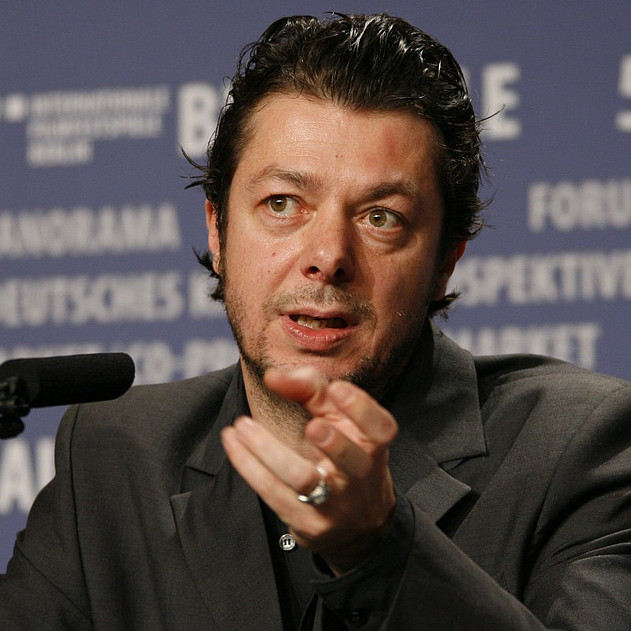
Prof. Thomas Arslan is a filmmaker and screenwriter serving as a Professor for Narrative Film at the Institute for Time-Based Media of the Berlin University of the Arts since 2007. His work bridges narrative cinema and documentary practices, often exploring themes of migration, urban life, and cultural identity. Research Interests include: Narrative Film German-Turkish Cultural Contexts Social Realism in Cinema Documentary Storytelling Independent Film Production Historical Memory in Visual Media Filmography Trends : Spanning 1993–2013, his works focus on marginalized communities, historical displacement, and personal/family dynamics within urban settings. Selected subfields include German-Turkish Cinema , Social Observation , and Migration Narratives . Affiliation : Institute for Time-Based Media at UdK Berlin.
Golan Levin is Professor of Electronic Art at Carnegie Mellon University's School of Art, with courtesy appointments in the School of Design, School of Architecture, School of Computer Science, and Entertainment Technology Center. From 2009 to 2022, he served as Director and Co-Director of CMU's Frank-Ratchye STUDIO for Creative Inquiry, a laboratory dedicated to supporting atypical, anti-disciplinary research at the intersection of arts, science, technology, and culture. Levin's research spans interactive art, digital fabrication, information visualization, and generative design. He explores the critical potential of visualization, generative computation for expressive form, and how abstraction connects to realities beyond language. His practice engages interactive gestural robotics, nonverbal interaction aesthetics, and tactical applications of personal digital fabrication through responsive artifacts and media provocations that highlight human-machine relationships. His publications reveal consistent innovation in real-time audiovisual systems, interactive fabrication interfaces, and pedagogic tools for artists. Key trends include slit-scan video techniques, tangible augmented-reality performance, and noise-based visualizations, demonstrating his commitment to expanding human action vocabulary through digital media while bridging artistic expression with computational systems. Levin's work has received significant recognition: Permanent collection inclusion at Museum of Modern Art (MoMA) Whitney Biennial exhibition "50 Designers Shaping the Future" by Fast Company (2012) Competitive grants from National Endowment for the Arts, National Endowment for the Humanities, Creative Capital, and Rockefeller MAP Fund As an educator, Levin teaches "studio courses in computer science" on interactive art, experimental capture, and generative design, emphasizing computation as a medium for critical inquiry. His research funding from major cultural institutions supports interdisciplinary exploration at the arts-technology nexus. The Frank-Ratchye STUDIO for Creative Inquiry, which he directed for 13 years, remains a vital hub for anti-disciplinary collaboration, continuing his legacy of fostering creative agency through technology-infused artistic practice.
Dr. Reba Wissner is an Associate Professor of Musicology at the Schwob School of Music, Columbus State University, where she also serves as Interim Associate Dean in the Honors College. She specializes in film, television, and video game music, with a strong commitment to pedagogy and accessibility in higher education. Education: PhD, Musicology, Brandeis University, 2012 MFA, Musicology, Brandeis University, 2008 BA, Music and Italian, Hunter College, CUNY, 2005 Graduate Certificate, Higher Education Administration, Northeastern University, 2019 Graduate Certificate, Instructional Design, University of Wisconsin - Stout, 2020 Levels 1, 2, and 3 UDL Credentials, UDL-IRN Quality Matters Certified Peer Reviewer and Master Reviewer Dr. Wissner’s research centers on music in screen media, particularly Cold War-era television, and the intersection of music with cultural narratives. She is a leading voice in public musicology and Universal Design for Learning (UDL), advocating for inclusive and accessible music education. Her work spans historical analysis, pedagogical innovation, and interdisciplinary media studies. Her recent publications reflect a consistent focus on sonic storytelling, with books on The Twilight Zone , The Outer Limits , David Lynch, and Twin Peaks . She explores themes of nuclear anxiety, identity, and adaptation across media. Her editorial projects include the Oxford Handbook of Public Musicology and a guide on UDL in music history classrooms. Scientific Awards and Recognitions: Scholarship of Teaching and Learning Award, Columbus State University, 2022 Governor’s Teaching Fellow, Louise McBee Institute of Higher Education, 2022 Quality Matters Certified Peer Reviewer and Master Reviewer UDL Levels 1–3 Credentials Dr. Wissner has secured editorial contracts with Routledge and Oxford University Press, reflecting her leadership in the field. She mentors emerging scholars through collaborative editing and public scholarship initiatives. Her work in online learning and accessibility has shaped curriculum development and peer review standards. She leads the Public Musicology Certificate program and contributes to interdisciplinary studies and honors education. She is actively involved in research teams focused on media music and pedagogical innovation, integrating digital tools and inclusive design into music history education.
Nicholas Mortimer is a Senior Lecturer in Design at Goldsmiths, University of London. He holds an MA in Design Interactions (Royal College of Art, 2013) and a BA in Fine Art Sculpture (University of Brighton, 2005). His work focuses on socially engaged design practices, reimagining historical performance traditions to address contemporary labor and societal issues. As co-founder of Post Workers Theatre (PWT), he explores workers’ theatre and creative resistance through collective writing, performance, and design. His research spans topics like gig economy critiques, housing privatization, and community activism, often blending performance, sound, and participatory methods. Education: MA Design Interactions, Royal College of Art, 2013 BA Fine Art Sculpture, University of Brighton, 2005 Research Interests: Performance as social critique Historical folk traditions and modern labor struggles Community-driven design practices Radical pedagogy and participatory methods Key Projects: Post Workers Theatre : Investigates politically engaged performance, addressing labor inequality through updated workers’ theatre forms. Autohoodening : Critiques Amazon labor practices via a reimagined midwinter ritual. Rave of the Ritualesque : Examines rave culture’s potential for collective resistance. Affiliations: Department of Design, Goldsmiths, University of London IASPIS (Swedish Arts Grants Committee) residency collaborations Labs/Teams: Post Workers Theatre collective Collaborations with institutions like Tate Liverpool, Luleå Arts and Crafts Biennale, and the Maidstone Museum
Dr. Philip Kirby is a Senior Lecturer in the History of Education at King’s College London’s School of Education, Communication & Society. He joined in 2020 after roles at the University of Oxford, the Sutton Trust, and the University of Exeter. His research focuses on the historical and social dimensions of specific learning difficulties like dyslexia and dyspraxia, alongside children’s culture and education policy. His notable work includes Dyslexia: A History (2022, co-authored with Prof. Margaret J. Snowling) and entries in encyclopedias like Palgrave Encyclopedia of Disability . He also explores geopolitical themes in media, including film scores and video games. Recent projects include Delphi studies on dyslexia assessment and policy reform. His research spans education policy, private tuition dynamics, and the intersection of popular culture with disability ethics. He actively contributes to interdisciplinary initiatives like the Centre for Public Policy Research, addressing social justice in education and policy.