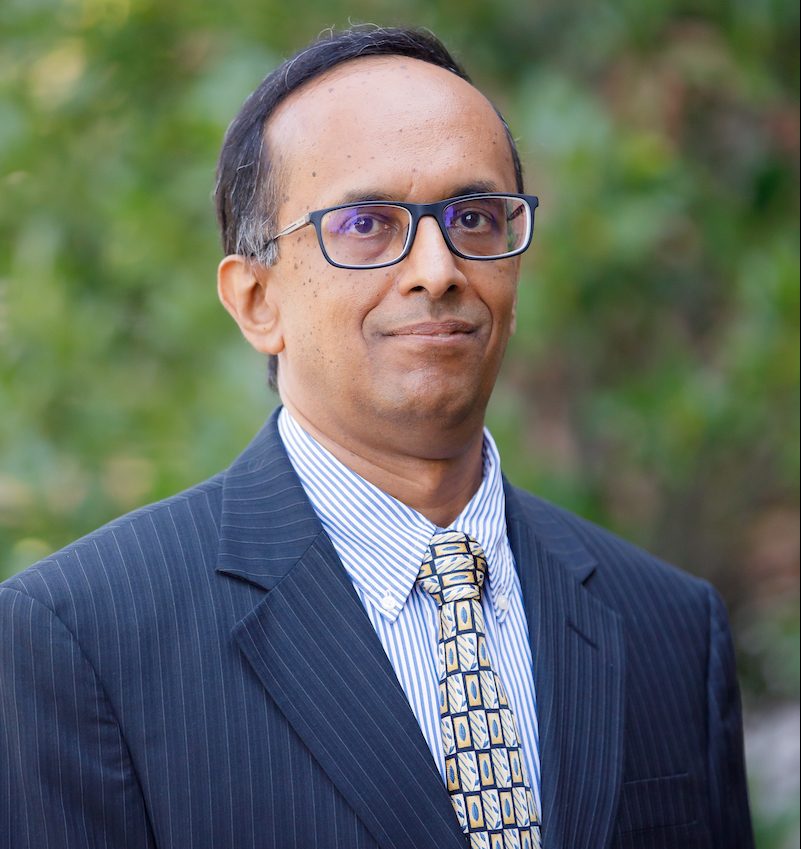
Dr. Greg Eisenhauer is a Senior Research Scientist at the Georgia Institute of Technology's School of Computer Science and affiliated with the Center for Experimental Research in Computer Systems (CERCS). His research focuses on high-performance computing (HPC), systems, and enterprise computing, with an emphasis on program monitoring, dynamic adaptation, performance evaluation, and I/O systems like ADIOS. Supported by NSF, DOE, DARPA, and industry grants, his work addresses challenges in HPC workflows, data management, and streaming analytics. He leads efforts in scalable data environments, metadata optimization, and exascale computing resilience.
Benjamin C. Reed is a faculty member in the Department of Computer Science at San José State University, part of the College of Engineering. He holds a Ph.D. in Computer Science, completed under the supervision of Prof. Darrell Long, focusing on secure network disks (SCARED/BRAVE project). His career spans both elite industrial research and academic contributions, with prior roles as a Research Staff Member at IBM Almaden Research Center, researcher at Yahoo! Research, and a technical leader at a startup acquired by Facebook, where he spent five years. His research is centered on secure and scalable storage systems, with emphasis on distributed file systems, network-attached storage, and cybersecurity in data storage. Key areas include quota enforcement, authentication mechanisms, caching algorithms, and secure data sharing in large-scale environments. His work bridges theoretical rigor with practical implementation in high-performance systems. The publications of Benjamin C. Reed, primarily from 1996 to 2007, demonstrate a consistent trajectory in secure and distributed storage technologies. They reflect deep engagement with system-level security, performance optimization, and architectural design of storage solutions. The works span conferences such as FAST, MSST, and IEEE Micro, indicating strong recognition in the systems and storage research community. While no formal awards are listed in the provided text, his affiliations with IBM, Yahoo!, and Facebook underscore a high-impact career in both research and industry. He has collaborated with notable researchers including Darrell D. E. Long, Ethan L. Miller, Randal Burns, and Richard Golding. There is no explicit mention of student advising or grant funding, though his academic role suggests potential involvement in mentoring and research supervision. Benjamin C. Reed has been associated with the SSRC (Storage Systems Research Center) at UC Santa Cruz, a well-known research group in storage systems. Though the site is now archived, his contributions remain part of a significant legacy in storage research. His current work at San José State University likely continues to influence the next generation of computer scientists in systems and security.
Alan J. Smith is a Professor in the Electrical Engineering and Computer Sciences department at the University of California, Berkeley, within the College of Engineering. With a distinguished career spanning several decades, he has made significant contributions to computer architecture, system performance analysis, and memory systems. Dr. Smith received his S. B. from MIT and a Ph.D. from Stanford University. His educational background provided the foundation for his extensive research in computer systems. Professor Smith's research focuses on computer architecture and engineering, particularly in system performance analysis, I/O systems, cache memories, and memory systems. His work has profoundly influenced how computer systems are designed and evaluated, with particular emphasis on optimizing storage systems, cache performance, and energy efficiency in computing platforms. His research has bridged theoretical analysis with practical implementation, resulting in numerous influential publications and real-world applications. His publication record shows a consistent focus on computer system performance, evolving from early work on cache memory and paging algorithms to more recent research on multimedia workloads, energy management, and storage systems. The breadth of his work spans fundamental computer architecture principles to applied system design, with particular emphasis on measurement-based analysis and optimization techniques. Harry Goode Award of the IEEE Computer Society (2006) IEEE Reynold B. Johnson Information Storage Systems Award (2008) A. A. Michelson Award of the Computer Measurement Group (2003) Fellow of the American Association for the Advancement of Science (2001) Fellow of the ACM (2000) Fellow of the IEEE (1988) Throughout his career, Professor Smith has actively contributed to the academic community through editorial roles, conference organization, and professional society leadership. He has served as Subject Area Editor for the Journal of Parallel and Distributed Computing since 1989, chaired ACM SIGARCH and SIGOPS, and participated in numerous technical committees. His research has been supported by various grants that enabled extensive experimental work and system development. Professor Smith has been instrumental in developing benchmarking methodologies and performance analysis techniques that have become standard practices in computer system evaluation. His work on cache memory systems, in particular his influential 1982 Computing Surveys paper "Cache Memories," has shaped the field for decades.
Dr. Yong Chen is a Professor and Interim Department Chair in the Computer Science Department at Texas Tech University (TTU), where he founded the Data-Intensive Scalable Computing Laboratory (DISCL). He also serves as Co-Director of the NSF Cloud and Autonomic Computing Center (CAC@TTU), focusing on data-intensive computing, high-performance computing (HPC), cloud systems, and parallel/distributed architectures. His research bridges hardware-software co-design for scientific and enterprise applications. Ph.D., Computer Science, Illinois Institute of Technology (2009) M.S., Computer Science, University of Science and Technology of China (2003) B.E., Computer Engineering, University of Science and Technology of China (2000) Dr. Chen's research spans data-intensive computing, HPC, cloud systems, and parallel architectures. He develops scalable solutions for scientific discovery and enterprise computing, emphasizing systems software, storage optimization, and hardware-software co-design. His work addresses challenges in metadata management, 3D-stacked memory, and efficient resource allocation in distributed environments. Recent publications include studies on 3D-stacked memory optimization (IEEE TC), metadata indexing (SC), and parallel file system reliability (ICS). His work is characterized by interdisciplinary collaboration and practical applications in HPC domains. NSF-TCPP Early Adopter Status Award Best Paper Award (IPDPS'21) Outstanding Teaching Assistant, IIT (2006) Dr. Chen advises students through graduate and undergraduate research assistantships at DISCL and CAC@TTU, offering financial support for qualified candidates. He has contributed to major conferences as Program Co-Chair (ICPP) and Committee Member (IPDPS, CCGrid, ISC, HPCAsia). Labs/Teams: Data-Intensive Scalable Computing Laboratory (DISCL), NSF Cloud and Autonomic Computing Center (CAC@TTU).
Lam-Duy Nguyen is a Ph.D. candidate and Researcher at the Technical University of Munich, working in the Chair of Decentralized Information Systems and Data Management under Prof. Dr. Viktor Leis. He joined TUM in June 2023 after completing his M.Sc. in Computer Science from Sungkyunkwan University, South Korea. His educational background includes: Ph.D. candidate at Technical University of Munich (2023-Present) M.Sc. in Computer Science from Sungkyunkwan University, South Korea (2020-2022) B.Sc. in Computer Science and Engineering from Vietnam National University (2013-2017) Nguyen's research focuses on core database technologies with emphasis on transaction processing, concurrency control, buffer management, and storage optimization. His work addresses fundamental challenges in database system design, particularly for modern storage technologies like NVMe SSDs, with publications in top-tier conferences including SIGMOD, ICDE, and VLDB. His notable achievements include: STEM Scholarship for International Graduate Students at SKKU (2020-2022) Second prize in Vietnam National Olympiad in Informatics (2012) Nguyen actively contributes to the academic community as an External Reviewer for VLDB'25 and Shadow Program Committee member for VLDB'26. He supervises student theses in core database systems, requiring strong foundations in data structures and database internals from his advisees. He is an integral member of the research team working on projects including CODAC, LeanStore, and Cumulus, collaborating with faculty and fellow researchers on cutting-edge database technologies.
Christopher M. Moretti is a Senior Lecturer in the Department of Computer Science at Princeton University's School of Engineering and Applied Science. He has taught foundational courses including COS126 (Introduction to Computer Science), COS217 (Systems Programming), COS326 (Functional Programming), and COS333 (Software Engineering) since joining Princeton in 2010. He serves as academic advisor for computer science majors (classes of 2017, 2021, 2024) and freshman engineering students (classes of 2016, 2017), and holds the role of department placement officer. His educational background includes: Ph.D. in Computer Science and Engineering, University of Notre Dame (2010) M.S. in Computer Science and Engineering, University of Notre Dame (2007) B.S. in Computer Science, College of William and Mary (2004) Dr. Moretti's research centers on Computer Science Education and Distributed Computing and Storage . In education, he develops advanced K-12 professional development content and innovative teaching methodologies. His distributed systems work focuses on scalable frameworks for campus grids, cloud computing, and storage solutions like the Chirp filesystem. He directs undergraduate independent work projects across distributed computing, sports analytics, and software engineering. His publication history reveals consistent contributions to practical distributed systems infrastructure, with recent emphasis on educational applications and bioinformatics scalability. Key themes include abstraction layers for heterogeneous computing environments and pedagogical approaches for complex CS concepts. He has received significant recognition for teaching excellence: SEAS Excellence in Teaching Award (2024) SEAS Excellence in Teaching Award (2023) Dr. Moretti actively mentors undergraduate researchers through independent work projects, though specific student names are not documented. His grant activities likely support distributed systems research and educational initiatives, though explicit funding details are absent from the source material. He maintains strong connections to the Cooperative Computing Lab from his Notre Dame doctoral work under Professor Doug Thain. Outside academia, he participates in Princeton sports culture (particularly hockey), enjoys tennis and trivia competitions, and travels with a focus on zoological institutions. A Notre Dame athletics enthusiast, he previously contributed to sports statistics and media relations during graduate studies.
Emmanuel Cecchet is a Senior Research Fellow at the University of Massachusetts Amherst's Department of Computer Science. He is affiliated with multiple research groups including the Laboratory for Advanced System Software (LASS), the Commonwealth Center for Forensics & Society, and the Advanced Networked Systems Research Group. His research focuses on distributed systems, dependability, high availability, databases, and benchmarking. Cecchet has held roles as a postdoctoral researcher at Rice University, a Research Scientist at INRIA, and Chief Architect at Continuent. He has received numerous awards, including the Best Paper Award at IWQoS 2013 and the Best PhD Thesis Award from Institut National Polytechnique de Grenoble (2004). His work includes projects like BenchLab, Open Cloud Testbed (OCT), and contributions to middleware systems such as C-JDBC and Sequoia. Education: PhD in Distributed Systems from Institut National Polytechnique de Grenoble (2001). Research Interests: Operating Systems, Distributed Systems, Dependable Systems, Databases, Virtualization, Networking, and Open Source Software. He also contributes to data forensics and leads the Frog Racing foundation as an amateur car racer. Key Projects: BenchLab for realistic benchmarking, CloudLab for cloud infrastructure research, and WiFiMon for mobility analytics using WiFi sensing. He has served on program committees for Eurosys, SRDS, and other conferences.
Frans Kaashoek is the Charles Piper Professor in MIT's Department of Electrical Engineering and Computer Science (EECS) and a member of the Computer Science and Artificial Intelligence Laboratory (CSAIL). He leads the Parallel and Distributed Operating Systems (PDOS) group, focusing on secure systems, formal verification, and distributed computing. His work emphasizes crash-safe systems, concurrent programming, and cryptographic security. Education: PhD in Computer Science from Vrije Universiteit Amsterdam (1992), thesis on group communication in distributed systems under Andy Tanenbaum. Research interests include operating systems, networking, programming languages, and computer architecture. Notable projects: FSCQ (verified crash-safe file system), Perennial (framework for verifying concurrent systems), and Noria (high-performance web backend). Awards: ACM SIGOPS Mark Weiser Award (2001), ACM Prize in Computing (2010), National Academy of Engineering membership (2006), and American Academy of Arts and Sciences membership (2012). Publications: Over 150 papers on systems software, verification, and security. Authored textbooks like Principles of Computer System Design: An Introduction and xv6 commentary.
Ali José Mashtizadeh is an Associate Professor at the Cheriton School of Computer Science, University of Waterloo. His research focuses on operating systems, distributed systems, and storage, with expertise in system reliability, network optimization, and concurrent programming. Education: Ph.D., Computer Science, Stanford University (2017) M.S., Computer Science, Stanford University (2017) M.Eng., Electrical Engineering and Computer Science, MIT (2007) B.S., Electrical Engineering, MIT (2006) His research centers on designing scalable and reliable systems, with recent publications exploring TCP network frameworks, in-memory data persistence, and microsecond-scale scheduling. Key themes include optimizing tail latency, neutralization-based memory reclamation, and fault-tolerant distributed services. His articles consistently demonstrate innovations in low-latency networking, operating system architecture, and cloud infrastructure, with recent emphasis on serverless benchmarks and processor customization. No scientific awards or advising relationships are detailed in the provided materials.
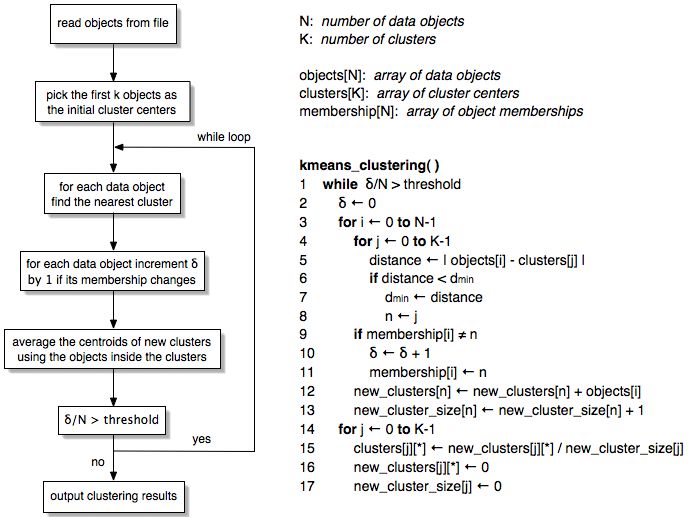
Wei-keng Liao is a Research Professor in the Department of Electrical Engineering and Computer Science at Northwestern University's McCormick School of Engineering. His research spans high-performance computing with a focus on parallel and distributed systems. Dr. Liao's research interests include parallel and distributed file I/O and storage system design, data mining algorithm design and their parallelization, data management for large-scale scientific applications, and computational model design for large-scale applications on parallel and distributed environments. He is a key contributor to the Parallel netCDF project, which provides parallel I/O capabilities for scientific applications. His recent work shows strong trends in high-performance computing infrastructure, particularly in optimizing I/O systems for scientific applications, parallel data clustering algorithms, and machine learning acceleration in distributed environments. His publications span computational science, parallel computing, and data-intensive applications across various scientific domains including materials science, astrophysics, and healthcare. Best Paper Award at IEEE International Conference on Cluster Computing (2016) for Parallel DTFE Surface Density Field Reconstruction Dr. Liao has supervised numerous research projects funded by DOE, NSF, NASA, and Argonne National Laboratory, with recent work focusing on data libraries for exascale science, machine learning-driven resilience for extreme-scale systems, and scalable data clustering for scientific computing. He leads research on the Parallel K-means Data Clustering software package and is a principal developer of Parallel netCDF. His work connects multiple research groups through the Center for Ultra-scale Computing and Information Security (CUCIS) at Northwestern University, where he collaborates with scientists across disciplines to develop scalable computing solutions for complex scientific problems.
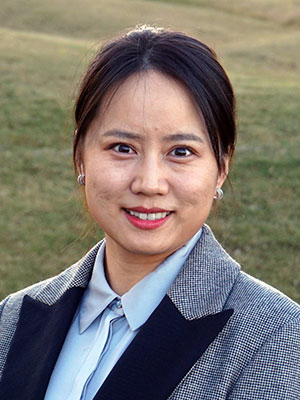
Min Chen is a Professor in the Department of Chemistry at the University of Massachusetts Amherst, with affiliations in the Molecular & Cellular Biology Program and the Institute for Applied Life Sciences (Center for Bioactive Delivery and Models to Medicine). Her research focuses on developing cutting-edge nanopore technologies for single-molecule analysis of proteins and nucleic acids. Education: Postdoctoral Fellow, University of Oxford, UK (2005–2008) Ph.D., University of Frankfurt, Germany (2004) MSc(Eng), Tianjin University, China (1999) BSc(Eng), Tianjin University, China (1996) Her research interests lie at the intersection of biophysics, molecular biology, and nanotechnology. The Chen lab develops nanopore tweezers to monitor protein structural dynamics in real time, engineers OmpG nanopores for sensitive biosensing, advances protein and peptide sequencing methods, and improves nanopore-based DNA/RNA sequencing . These technologies aim to enable point-of-care diagnostics, drug screening for cancer and infectious diseases, and fundamental understanding of membrane protein function. Her recent publications reveal a strong trend in developing label-free, single-molecule tools for studying enzyme dynamics, protein-ligand interactions, and nucleic acid-based data storage. The work leverages biological nanopores like ClyA, OmpG, and MspA, integrating biophysical measurements with molecular engineering. Applications span from kinase conformational analysis to antibody detection and protein translocation. Scientific Awards and Recognition: NIH R01 Grant (2023) as co-PI for developing asymmetric MspA nanopores for protein sequencing NIH Chemistry-Biology Interface (CBI) Fellowship awarded to her student David DeCoeur Min Chen actively mentors graduate students and has supervised several Ph.D. and Master’s theses. Her lab has received consistent grant support, including the NIH R01, indicating strong external funding. She leads a dynamic research team working on multiple fronts of nanopore technology development. The Chen Research Group operates within the Lederle Graduate Research Tower and is part of a vibrant interdisciplinary research ecosystem at UMass Amherst, collaborating with experts in computational modeling, genomics, and drug delivery.
Radu Sion is a Professor at the Department of Computer Science, Stony Brook University, specializing in Computer Science , Information Security , Cloud Computing , Data Privacy , and Cryptography . His research focuses on secure data outsourcing, trusted hardware applications, and privacy-preserving systems. Recent work includes Wink: Deniable Secure Messaging (2023) and A Study of China's Censorship Evasion (2023), both exploring plausibly deniable communication. Earlier contributions like PEARL (2021) and ConcurDB (2014) address secure storage and database integrity. His 2024 paper INVISILINE introduces invisible plausibly deniable storage solutions. His research spans Oblivious RAM , History-Independent Data Structures , Trusted Execution Environments , and Flash Memory Security . Key collaboration networks include Bogdan Carbunar, Anrin Chakraborti, and Chen Chen.
Yanying Lu serves as Joint Assistant Professor in Clemson University's College of Engineering, Computing and Applied Sciences (CECAS), holding appointments in both the Department of Automotive Engineering and Department of Materials Science and Engineering since January 2025. Her research laboratory operates at the university's Greenville campus facility (4 Research Drive). Education: Ph.D. in Chemistry, Nankai University (2018) Postdoctoral Scholar, University of South Carolina & Lawrence Berkeley National Laboratory (2018-2022) Dr. Lu's research program centers on advancing materials engineering for energy storage applications, with particular expertise in ceramic engineering, composite materials development, and battery manufacturing processes. Her group investigates novel electrode architectures, solid electrolytes, and manufacturing techniques to enhance battery performance, safety, and scalability across multiple chemistries including lithium-ion, sodium-ion, and zinc-ion systems. Current focus areas include extreme fast-charging cathodes, dendrite-suppressing anodes, and flexible battery designs for wearable applications. Analysis of her publication record reveals consistent contributions to next-generation battery technologies, with recent emphasis on single-crystal cathode materials, solid-state systems, and industrial manufacturing processes. Her work bridges fundamental materials science with practical engineering challenges in battery production, showing strong industry relevance through multiple patent filings alongside academic publications. Scientific Awards: No awards documented in available materials. Advising & Grants: Information regarding current advisees or grant funding is not specified in provided materials. As a new faculty member leading an active research group, she is expected to mentor graduate students and pursue external research funding in energy storage technologies. Research Group: Dr. Lu directs a materials engineering laboratory focused on battery technology development, situated at Clemson's automotive research hub in Greenville, SC. The group emphasizes translational research with direct applications to electric vehicle batteries and grid-scale energy storage systems.
Dr. Purushotham V. Bangalore serves as the James R. Cudworth Professor in the Department of Computer Science at the University of Alabama's College of Engineering and holds the position of Associate Director for the Center for Understandable, Performant Exascale Communication Systems (CUP-ECS), a Predictive Science Academic Alliance Program (PSAAP) Focused Investigatory Center. His academic credentials include: B.E. in Computer Science and Engineering from Bangalore University (1991) M.S. in Computer Science from Mississippi State University (1995) Ph.D. in Computational Engineering from Mississippi State University (2003) Dr. Bangalore's research centers on High-Performance Computing (HPC) with emphasis on designing abstraction layers for heterogeneous architectures, predictive performance modeling, and portability. His work extends to fault-tolerant message-passing middleware, exascale storage security, and reliability frameworks. Additional expertise spans data analytics, object-oriented numerical libraries, grid computing environments, and adaptive systems development through three decades of HPC and cloud computing innovation. Analysis of his 2021-2025 publications reveals dominant themes in HPC security architecture, containerization for scientific workloads, and MPI communication advancements. Key application areas include hydrological modeling (NextGen framework), GPU-accelerated communication protocols, and data provenance systems for exascale platforms, reflecting interdisciplinary approaches to computational challenges. Dr. Bangalore has secured approximately $20 million in research funding as PI/Co-PI from NSF, NIH, DoE, and industry partners, resulting in over 90 peer-reviewed publications. His academic service includes editorial roles for IEEE Transactions on Parallel and Distributed Systems, MPI Forum contributions to the MPI-4.0 standard, and organization of DoD-sponsored HPC training workshops. He leads research initiatives through CUP-ECS while maintaining active participation in the MPI Forum. His team develops frameworks for exascale communication systems with focus on security posture analysis, performance portability, and fault tolerance in next-generation computing environments.
Prof. Dr.-Ing. Rainer Keller serves as Vice Dean of the School of Computer Science and Information Technology at Esslingen University of Applied Sciences. He concurrently holds Laboratory Management roles for both the Operating Systems Laboratory and Information Technology Laboratory, coordinates the Applied Computer Science (Master) program, and serves on the Environmental Committee for his school. His academic journey includes a Doctorate in Engineering (with distinction), Research Associate and Group Leader positions at HLRS, University of Stuttgart (leading the 9-member "Applications, Models and Tools" group), PostDoc tenure at Oak Ridge National Laboratory (ORNL), and prior appointments at Stuttgart University of Applied Sciences. Keller's research centers on operating systems, distributed systems, and HPC with specialized expertise in Linux-based parallel programming tools and file I/O optimization. His work bridges theoretical system models with practical performance tuning, particularly in high-performance computing environments where syscall tracing and storage optimization are critical. Recent publications reveal consistent focus on system-level performance analysis, evolving from foundational file I/O profiling (2020) to advanced syscall tracing mechanisms (2022) and forward-looking access optimization frameworks (2025). These works demonstrate applied research in Linux ecosystems with direct relevance to HPC infrastructure. As Program Coordinator for the Applied Computer Science (Master) program and laboratory manager for two key facilities, he oversees academic development and hands-on technical training. His consultation hours (Tuesdays 1-2 PM by appointment) support student engagement in systems research. He actively contributes to national HPC infrastructure as a Member of the State User Committee (LNA) bwHPC, influencing regional high-performance computing strategies while maintaining his laboratory management responsibilities at Esslingen.