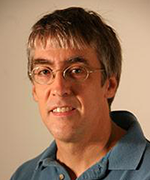
Bruce Jacob is a Professor in the Cyber Science Department within the School of Engineering, Computing, and Weapons at the United States Naval Academy, where he joined in Fall 2022. Prior to USNA, he served as a professor of Electrical & Computer Engineering at the University of Maryland for 25 years, establishing himself as a leading expert in memory systems and computer architecture. Dr. Jacob received his A.B. in Mathematics from Harvard in 1988 and his Ph.D. in Computer Science & Engineering from The University of Michigan in 1997. Before graduate school, he worked in Boston start-ups as a software engineer at Boston Technology and later as chief engineer and system architect at Priority Call Management, which was successfully acquired in the late 1990s. His research focuses on memory systems, computer architecture, and memory devices, with significant contributions to memory system design across industry and government sectors. Jacob has designed computer-system architectures and memory-system architectures for major organizations including Micron (Hybrid Memory Cube DRAM architecture), Cray (Black Widow memory system), Northrop Grumman (experimental ultra-low-power datacenter), and the European Commission (1024-core Teraflux chip). His work spans resistive memory systems, non-volatile memory, memory simulation, and hardware security. His publication record demonstrates consistent leadership in memory systems research, with recent work focusing on ReRAM development, trusted execution environments for in-storage computing, and advanced memory simulation techniques. His research shows a clear trajectory toward monolithic memory integration, 3D stacking, and addressing the semantic gap between software and memory systems. Fellow of the IEEE Patent in memory-systems design Three patents in electric guitar circuit design Featured in Washington Post, Los Angeles Times, Chronicle of Higher Education, and NPR for guitar-related innovations Jacob has written two textbooks on computer memory systems and numerous articles spanning memory systems, computer design, embedded systems, operating system design, and even ventured into astrophysics and algorithmic composition. His DRAMsim memory simulator has become an industry standard tool. His practical industry experience complements his academic work, having consulted for major technology companies on memory system design challenges.