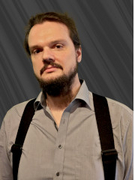
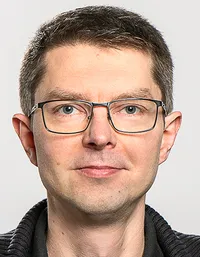
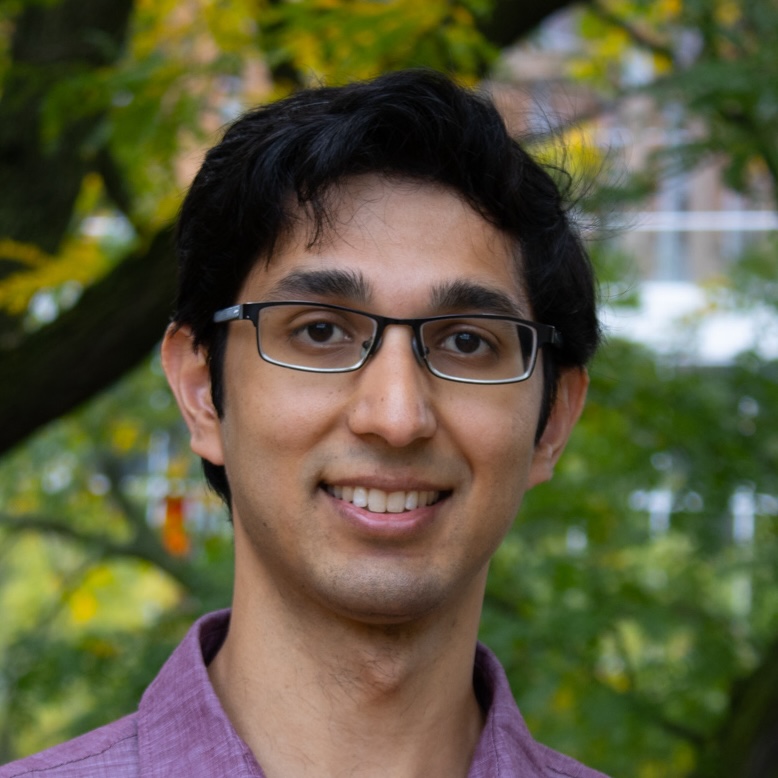
Prof. Bryan Ford leads the Decentralized/Distributed Systems (DEDIS) lab at EPFL. He focuses on secure decentralized systems, including blockchain technology, privacy, and systems security. He earned his Ph.D. from MIT and held faculty positions at Yale University and EPFL. His work spans distributed consensus protocols, peer-to-peer networking, and privacy-preserving systems. Key projects include QuePaxa (timeout-free consensus), UIA (global connectivity for mobile devices), and MedCo (secure healthcare data sharing). He advises numerous PhD students and contributes to open-source projects like Bitcoin collective signing and privacy networks like Riffle. Education: Ph.D., MIT; Postdoctoral work at Yale Research interests include blockchain scalability, consensus algorithms, and cryptographic privacy. His lab develops systems like TRIP for coercion-resistant voting and F3B to mitigate blockchain front-running. His work on NAT traversal and peer-to-peer protocols (e.g., STUN/ICE) remains foundational in network architecture. He emphasizes practical, auditable security solutions such as CertiKOS and atomic cross-chain transactions (Atom). Notable contributions: CoSi (collective signing), OmniLedger (sharded blockchain), and privacy-preserving protocols like PURBs (Protected Unsealable Recursive Boxes). His lab collaborates with Swiss Post to audit e-voting systems and designs democratic cryptocurrencies like PoPCoin.
Prof. Dr. Peter Gomber is Chair of e-Finance at the Faculty of Economics and Business, Goethe University of Frankfurt, Germany. He serves as Co-Chairman and member of the Board of the 'efl – the Data Science Institute', an industry-academic partnership between Frankfurt and Darmstadt Universities and leading industry partners. Additionally, he is a member of the Exchange Council of the Frankfurt Stock Exchange, Supervisory Board of Clearstream Banking AG, and Research Fellow at the Leibniz Institute for Financial Research SAFE in Frankfurt. Prof. Gomber received his Ph.D. at the Institute of Information Systems at the University of Giessen in 1999 after graduating in Business Administration. Before joining Goethe University in 2004, he worked for five years as Director, Head of Market Development Cash Markets and Xetra Research at Deutsche Börse AG, where he developed new market models and products for cash market trading on Xetra. His research focuses on market microstructure theory, digital finance and fintech, regulatory impact on financial markets, and electronic trading systems. With over 150 publications in leading international journals, his work has significantly influenced the field, particularly his highly cited papers on the Fintech Revolution. His recent research examines market fragmentation, circuit breakers, research unbundling under MiFID II, and the application of AI in financial markets. Prof. Gomber's extensive publication record shows a clear evolution from traditional market microstructure and electronic trading systems toward digital finance, fintech innovations, and regulatory impact analysis. His work bridges technical aspects of financial markets with regulatory considerations, demonstrating how technological innovations interact with market structure and regulation. His scientific recognition includes: IBM Shared University Research Grant (2007) Reuters Innovation Award (2000) Best Paper Award of the Journal of the Association for Information Systems (2020) Best Information Systems Publications Award (2020) Top 1 and Top 3 most cited articles in Fintech research (2025 bibliometric analysis) Prof. Gomber has successfully supervised numerous PhD students, including Tino Cestonaro who won the Best PhD Paper Award 2025. He has acquired significant research funds from both public institutions and the private sector. Notably, a market model invention by Prof. Gomber was granted a patent by the United States Patent and Trademark Office, with two additional market model inventions filed for patent in Europe and the US. He leads an active research team at the Chair of e-Finance, including researchers like Benjamin Clapham, Micha Bender, and Tino Cestonaro. The team collaborates closely with the efl – the Data Science Institute and the Leibniz Institute for Financial Research SAFE, bridging academic research with practical applications in financial markets.
Dr.-Ing. Tobias Fiebig is a Senior Researcher at the Max Planck Institute for Informatics (Internet Architecture department) since April 2022. He previously served as a permanent Assistant Professor at TU Delft's Faculty of Technology, Policy and Management from 2017-2022. His work combines network measurement with human factors to improve security practices, focusing on email protocols, DNS infrastructure, and academic cloud migration. PhD in Computer Science from TU Berlin (2017) MSc in System and Network Engineering from University of Amsterdam (2013) BSc in Cognitive Science from University of Osnabrück (2012) His research spans Internet security (DNS, IPv6, email), academic freedom in cloud contexts, and human-centered security challenges. Recent work analyzes MTA-STS deployment, DNS sampling biases, and university cloud migration privacy implications. He has presented at top conferences including USENIX Security , IEEE Symposium on Security and Privacy , and ACM CCS . Teaching roles include lecturing Data Networks (2023-24) and On the Practice of System and Network Engineering (2024), with prior module management in cyber security analytics and sustainable system operations.
Yangruibo Ding is an incoming Assistant Professor in the Department of Computer Science at the University of California, Los Angeles (UCLA), and currently serves as a Postdoctoral Scientist at AWS Agentic AI. He has held significant research positions at Google DeepMind, Amazon AWS AI Labs, and IBM Research, establishing himself as a leading researcher in software engineering with a focus on large language models for code. His research focuses on developing large language models (LLMs) and agentic systems for software engineering. He specializes in training LLMs with advanced symbolic reasoning capabilities for debugging, testing, program analysis, and verification. His work aims to build efficient, collaborative agentic systems for complex software development and maintenance tasks, with particular emphasis on code generation, vulnerability detection, and execution-aware pre-training techniques. Dr. Ding's publication record reveals a strong trajectory toward enhancing code intelligence through comprehensive semantics reasoning and self-refinement approaches. His research spans multiple dimensions of software engineering including code completion, vulnerability detection, model evaluation, and cross-file context understanding, with applications across various programming languages and development environments. Dr. Ding has received numerous prestigious awards recognizing his contributions to the field: IBM Ph.D. Fellowship Award (2022-2024) ACM SIGSOFT Distinguished Paper Award (2023) IEEE TSE Best Paper Award Runner-up (2022) Ph.D. Service Award, Columbia CS (2025) NSF Student Travel Award for ESEC/FSE'23 (2023) ACM SIGSOFT CAPS Travel Grant (2023) NSF Travel Award for ICSE'22 (2022) As he establishes his research group at UCLA, Dr. Ding is actively seeking students with strong coding skills and experience in large language models, program analysis, verification, or security. He serves on program committees for major conferences including ICSE (2026), ASE (2024, 2025), and ESEC/FSE Artifacts Track (2023), and regularly reviews for top-tier conferences and journals in AI and software engineering. His research is conducted through collaborations with leading industry teams including AWS Agentic AI, Google DeepMind's Learning4Code team, and IBM Research's AI for Code team, creating a robust network of industry-academia partnerships that drive innovation in software engineering research.
Cristian Cadar is a Professor in the Department of Computing at Imperial College London, leading the Software Reliability Group . His research focuses on improving software reliability and security through practical techniques in software engineering, computer systems, and program analysis. Education: Ph.D. in Computer Science, Stanford University M.Eng. in Computer Science, MIT B.S. in Computer Science and Mathematics, MIT His research interests center on software engineering and software security , particularly symbolic execution , dynamic symbolic execution (DSE) , and multi-version execution . Current work explores techniques for scalability, constraint solving, and runtime security in software systems. Key trends in his recent articles include optimizing symbolic execution for testing, addressing path explosion in constraint-based test generation, and advancing multi-version execution for dynamic software updates. His publications also cover program analysis , automated testing , and formal methods for software reliability. Awarded prestigious honors such as the Humboldt Research Award (2024) , ERC Consolidator Grant (2018) , and IEEE New Directions Award (2022) . Other accolades include the BCS Roger Needham Award (2019) and SIGOPS Hall of Fame (2018) . Cadar supervises PhD and postdoctoral researchers in software reliability and security. His group has secured grants from the ERC and EPSRC , including a Consolidator Grant (2018) and Early-Career Fellowship (2013) . He actively contributes to conference organizing committees and editorial boards. The Software Reliability Group at Imperial College, led by Cadar, specializes in techniques like KLEE and EXE for automated testing. Their work has been adopted by industry partners such as Fujitsu, IBM, and Microsoft, particularly in runtime security tools like WIT .
Jishen Zhao is an Assistant Professor in the Department of Computer Science and Engineering at the University of California, San Diego (Jacobs School of Engineering). His research focuses on computer architecture, non-volatile memory systems, and deep learning acceleration. Dr. Zhao has published extensively in top venues including ISCA, MICRO, ASPLOS, and IEEE Transactions. He collaborates with researchers at UCSD and beyond to advance systems for emerging applications in AI and autonomous vehicles. Dr. Zhao's primary research areas include persistent memory systems, hardware/software co-design for deep learning, and safety-critical computing. He develops techniques for crash consistency, memory disaggregation, and efficient neural network deployment. His work on autonomous vehicles addresses scenario generation and perception-aware system design. Recent projects explore LLM applications for software engineering and hardware verification. Analysis of Dr. Zhao's 2024-2025 publications reveals a strong shift toward AI-integrated systems research. He applies large language models to tasks like RTL verification and software issue localization while continuing to innovate in memory systems for serverless computing. There is growing emphasis on safety-critical systems for autonomous vehicles and energy-efficient neural network training using novel hardware architectures. Information about Dr. Zhao's scientific awards, advising activities, grants, and laboratory facilities was not available in the provided documentation.
Andrew Pavlo is a Professor in the Computer Science Department at Carnegie Mellon University's School of Computer Science. His research focuses on database management systems, particularly in the areas of transaction processing, in-memory databases, and self-driving database systems. He leads a productive research group that has published extensively in top database venues including VLDB, SIGMOD, and CIDR. Pavlo's research interests span database management systems, transaction processing, in-memory databases, non-volatile memory databases, and self-driving database systems. His work often bridges theoretical database concepts with practical system implementation, focusing on performance optimization, query processing, and system architecture. Recent work has explored machine learning applications for database tuning, novel storage techniques, and innovative approaches to transaction processing. An analysis of his recent publications reveals a strong focus on self-driving database systems, with significant work on the Database Gym framework for training machine learning models to optimize database performance. His research also examines columnar storage formats, transaction scheduling, and novel approaches to user-defined function optimization. The work demonstrates a consistent trajectory toward making database systems more autonomous and efficient through a combination of systems techniques and machine learning. Pavlo has been instrumental in mentoring numerous PhD students who have become active contributors to the database research community. His research has been supported by significant grants that have enabled the development of innovative database technologies and frameworks. His research group operates within CMU's vibrant database ecosystem, collaborating with other researchers on projects related to database systems, storage engines, and query processing frameworks. The group maintains close connections with industry partners to ensure practical relevance of their research contributions.
Prof. Dr. Viktor Leis is a Professor in the Department of Computer Science at the Technical University of Munich (TUM), leading the Chair for Decentralized Information Systems and Data Management. His research focuses on cost-efficient data systems, particularly in cloud environments, with expertise in core database topics like query processing, transaction management, and storage optimization. He earned his PhD from TUM in 2016 and previously held professorships at Friedrich Schiller University Jena and Friedrich-Alexander-Universität Erlangen-Nürnberg before returning to TUM in 2022. His work has been recognized with prestigious awards, including the ACM SIGMOD Dissertation Award, VLDB Early Career Research Contribution Award, and an ERC Starting Grant. Research Interests: Cloud computing, database systems, query optimization, storage engines, transaction processing, and NVMe-optimized systems. Key Projects: Developed the LeanStore storage engine and contributed to the Hyper database system. His recent publications emphasize cloud-native architectures, high-performance storage solutions, and hybrid transactional/analytical processing. He actively teaches courses on distributed systems, cloud databases, and blockchain technologies.
Daniel J. Abadi is a prominent researcher in database systems at Yale University. With over two decades of impactful research, he has made significant contributions to the fields of distributed databases, transaction processing, and column-oriented database systems. His work bridges theoretical foundations with practical implementations that have influenced both academia and industry. Dr. Abadi's research primarily focuses on database system architecture, with particular emphasis on: Distributed and geo-replicated database systems High-performance transaction processing Column-oriented and analytical database systems Stream processing and real-time analytics Cloud and serverless database technologies Integration of machine learning with database systems His recent work shows a continued focus on addressing scalability challenges in modern database systems, with particular attention to multi-region transaction processing, automated data management, and the integration of machine learning techniques. The trend in his publications indicates a strong emphasis on practical, deployable systems that solve real-world problems faced by industry. Dr. Abadi has been instrumental in several major research initiatives and reports that have shaped the direction of database research, including the Seattle Report and the Cambridge Report on Database Research. Throughout his career, Dr. Abadi has mentored numerous students and collaborated extensively with leading researchers in the field. His work has received significant recognition through widespread citations and adoption of his ideas in both academic and industrial database systems.
Tej Chajed is an Assistant Professor in the Department of Computer Science at the University of Wisconsin-Madison, where he conducts research in formal verification of systems software. His work focuses on building and proving the correctness of critical systems, particularly file systems and concurrent software. Dr. Chajed earned his PhD from MIT in the PDOS group, followed by a one-year postdoc at VMware Research before joining UW-Madison. His academic journey reflects a strong commitment to bridging theoretical formal methods with practical systems implementation. Chajed's research centers on formal verification techniques for systems software, with particular emphasis on concurrent and crash-safe systems . His work aims to eliminate bugs in critical software through mathematical proofs of correctness. Key contributions include DaisyNFS (a verified concurrent file system), the Perennial framework for reasoning about crash safety, and Goose for connecting proofs to Go code. His research spans the intersection of programming languages, operating systems, and formal methods, developing practical tools that bring verification to real-world systems. His recent publications demonstrate a consistent trajectory toward more practical and scalable verification techniques for increasingly complex systems. The research shows progression from foundational verification frameworks to applied work on specific systems like file systems, journaling, and distributed protocols. A notable trend is the focus on making verification more accessible and practical for systems developers, bridging the gap between theoretical formal methods and real-world software engineering. Dr. Chajed serves on numerous program committees including OSDI 2025 PC, PLDI 2024 PC, SySDW 2023 PC, ECOOP 2023 ERC, CPP 2023 PC, POPL 2023 PC, PLDI 2022 PC, POPL 2022 AEC, EuroDW 2021 PC, POPL 2021 AEC, PLDI 2020 AEC, POPL 2020 AEC, and SOSP 2019 AEC, reflecting his standing in the systems and programming languages research community. In teaching, Chajed has developed and instructed courses on systems verification, operating systems, and protocol verification. He previously helped create MIT's 6.826 (Principles of Computer Systems) during his PhD. His passion for technical communication was cultivated during his time as a Communication Fellow in the EECS Communication Lab at MIT, where he continues to offer guidance to students on writing and presentation skills. His research group at UW-Madison focuses on advancing the state of the art in systems verification, with current projects centered around practical verification frameworks for concurrent and crash-safe systems.
Prof. Dr. Jörg Schwenk is a Professor and Chair of Network and Data Security at Ruhr-University Bochum's Faculty of Computer Science. He has held this position since 2003 and serves as Deputy Managing Director of the university's Computer Center. From 2007 to 2010, he was Managing Director of the Horst Görtz Institute for IT Security. His office is located at Universitätsstr. 150, 44801 Bochum (Room MC 4/110), with contact via email at joerg.schwenk@rub.de. His research focuses extensively on practical aspects of information security, particularly in: Cryptographic protocol analysis (TLS, SSH, Noise Protocol) Web and browser security vulnerabilities (XS-Leaks, DOM security) Document security flaws in PDF, OOXML, and OpenDocument formats Email encryption weaknesses and authentication mechanisms Network security implementations and powerline communications Recent publications demonstrate a strong emphasis on discovering and mitigating critical vulnerabilities in widely used protocols and file formats. His work frequently involves developing automated analysis tools (e.g., TLS-Anvil, XSinator) and reveals systemic security issues in standards implementations. Research outputs consistently target top-tier security venues (USENIX Security, CCS, NDSS) with findings that directly impact real-world systems. Schwenk leads a research group at the Horst Görtz Institute focusing on network and data security. The group maintains an active publication record in applied cryptography and systems security, frequently collaborating with industry partners to address emergent threats. His team's work on TLS vulnerabilities (ALPACA, Raccoon attacks) and document security (PDF/OOXML signature flaws) has significantly influenced protocol designs and standardization efforts.
Prof. Dr. Thomas Ludwig is the Director of the German Climate Computing Center (DKRZ) and a Professor at the Universität Hamburg. He holds a doctoral degree and habilitation from the Technische Universität München, with expertise in High-Performance Computing (HPC), energy efficiency, and data storage systems. His research focuses on optimizing parallel systems, storage technologies, and computational efficiency for climate science applications. He leads projects like AIMES and PeCoH, advancing HPC storage and energy-aware computing. Education: Doctoral degree and habilitation from TU München (1988–2001). Chair in Parallel Computing at Universität Heidelberg (2001–2009). Research Interests: HPC, data reduction techniques, energy-efficient systems, parallel I/O optimization, and climate modeling infrastructure. Recent Research Trends: His work emphasizes storage system efficiency, machine learning in HPC, and convergence between HPC and Big Data. Key contributions include frameworks for portability (Vecpar), automated performance tools, and energy-aware storage solutions. Awards: Some publications received recognition, e.g., a Best Paper award in 2014 for work on energy efficiency. However, no personal awards are explicitly listed. Advising & Grants: Supervised numerous theses in HPC, I/O optimization, and energy efficiency. Leads major projects funded by national and international initiatives. Labs/Teams: Heads the DKRZ team providing supercomputing and data management for climate research, collaborating with global institutions like the University of Hamburg and European research networks.
Rainer Böhme is a Professor at the University of Münster, Germany. His research focuses on cyber security, cryptography, steganography, digital forensics, and blockchain technology. He has made significant contributions to understanding cyber risk quantification, central bank digital currencies (CBDCs), and the socio-technical challenges in cryptocurrency systems. Key areas of research include steganalysis (analysis of hidden data in digital media), forensic techniques for neural network inference pipelines, and the economic implications of cyber insurance. He actively contributes to conferences like the Financial Cryptography Workshops (FC) and the Workshop on Information Hiding and Multimedia Security (IH). Böhme's work bridges theory and practice, addressing real-world issues such as privacy in CBDCs, adversarial attacks on AI systems, and the role of law enforcement in cryptocurrency markets. His recent studies explore the security implications of image orientation in JPEG files and the detection of privileged parties in blockchain transactions. He has collaborated with institutions like the University of Vienna and ETH Zurich, and his research has been published in top-tier venues such as IEEE Transactions on Information Forensics and Security and the ACM Conference on Computer and Communications Security (CCS).
Felix Naumann is a Professor at the Hasso Plattner Institute in Potsdam, Germany, specializing in data management and database systems. His research focuses on data quality, data profiling, entity resolution, functional dependencies, and database optimization. He has authored over 300 publications in top-tier conferences and journals, including VLDB, SIGMOD, and ICDE. His work bridges theoretical foundations with practical systems, such as TASHEEH for data cleaning and PRISMA for privacy-preserving schema matching. He serves as an editor for the ACM Journal of Data and Information Quality and has led initiatives on hybrid conference formats and inclusive computing. Key contributions include: Data Quality: Pioneered studies on data quality's impact on machine learning and developed tools like AutoTSAD for anomaly detection. Data Dependency Discovery: Advanced functional and inclusion dependency mining algorithms, including Hitting Set Enumeration methods. Schema Matching & Integration: Created systems like BrewER and Frost for entity resolution and schema alignment. Educational Impact: Led massive open courses in data engineering with over 10,000 participants. His work emphasizes practical applications in cultural heritage data (ReCLAIM), Wikipedia table analysis, and cross-platform data systems (RHEEMix). He collaborates extensively with industry and academia, addressing challenges in dynamic datasets and data governance.
Hans-Joachim Hof is a Professor and Vice President for Teaching and Students at Technische Hochschule Ingolstadt (THI), where he has been employed since 2016. He serves as Head of Bachelor Cybersecurity (since 2022), Project Manager for THIsuccessAI (since 2021), and Head of the Research Group 'Security in Mobility' at the CARISSMA Institute of Electric, Connected and Secure Mobility. Additionally, he chairs the Scientific Board of the Center of Entrepreneurship and serves on the Supervisory Board of AININ. Professor, Head of INSecurity - Ingolstadt Applied IT Security Research Group (since WS 2016) Professor of Secure Software Systems, Head of MuSe - Munich IT Security Research Group at HAW Munich (2011-2016) Research Scientist at University of Karlsruhe (2008-2011) Research Assistant at Institute for Telematics, University of Karlsruhe (TH) (2003-2007) Professor Hof holds a doctorate in engineering and completed studies in computer science with a specialization in telematics and reliability architectures of systems, with a minor in law. His research spans automotive security, network security, and IT security, with recent focus on security in the Internet of Things, development processes for Secure Automotive Software, Automotive Blockchains, and Future Automotive Security Architectures. His work bridges theoretical security frameworks with practical automotive applications, particularly in electric vehicle security and battery management systems. Hof's recent publications reveal a strong trend toward automotive cybersecurity, with particular emphasis on electric vehicle infrastructure security, battery management systems, and vehicle security operations centers. His research increasingly addresses the security challenges of connected and autonomous vehicles, with growing attention to trust management systems and the security implications of AI in automotive contexts. The interdisciplinary nature of his work connects computer security with automotive engineering, energy systems, and digital forensics. Professor Hof has received numerous prestigious awards for his research contributions: Multiple Best Paper Awards at SECURWARE (2015, 2016, 2017) Best Paper Awards at CENTRIC (2010, 2012) Best Speaker Award at ESE Congress 2015 IARIA Fellow recognition Best Paper Award at ICIW 2010 As Editor-in-Chief of the International Journal on Advances in Security and Chairman of the German Chapter of the ACM, Hof plays a significant role in shaping security research discourse. His leadership extends to the German Informatics Society where he serves on the Executive Board. His research group INSicherheit (http://insi.science) actively collaborates with industry partners on real-world security challenges. Professor Hof leads the INSecurity research group at THI, which focuses on applied IT security with particular expertise in automotive contexts. The group maintains strong industry connections and operates within the CARISSMA research institute, which specializes in electric, connected, and secure mobility. Their work includes practical security testing, development of security architectures, and analysis of emerging threats in automotive systems, with notable contributions to EV charging security, battery management systems, and vehicle forensics.