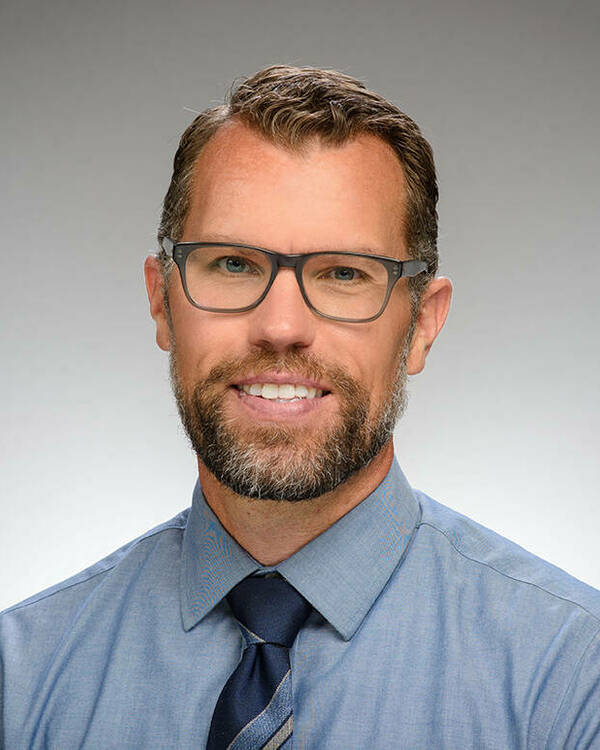
Dr. Daniel Machiela is an Associate Professor of Theology at the University of Notre Dame and serves as Director of the Doctoral Program. He holds a Ph.D. from Notre Dame and previously taught at McMaster University for 14 years. His research focuses on ancient Judaism, early biblical interpretation, and the Dead Sea Scrolls, particularly their Aramaic texts. He has authored and edited numerous works on the Genesis Apocryphon, Hebrew language evolution, and Jewish apocalyptic literature. Machiela’s recent projects include a comprehensive handbook on Aramaic Dead Sea Scrolls manuscripts and studies on the sociolinguistic context of Second Temple Judaism. His work bridges textual analysis with historical and cultural insights into ancient Jewish thought. Education: Ph.D. in Theology from the University of Notre Dame His research interests span Aramaic and Hebrew languages, the Septuagint, and New Testament contexts within Judaism. Key publications include A Handbook of the Aramaic Scrolls (2022) and studies on the Genesis Apocryphon’s relationship with Jubilees. Machiela’s articles analyze topics like Hebrew revival under Hasmoneans and literary connections between Dead Sea Scrolls texts. His publications reflect a deep engagement with the Dead Sea Scrolls’ significance in understanding Second Temple Judaism, emphasizing their coherence and socio-historical settings.
Professor Geoffrey Khan serves as the Regius Professor of Hebrew at the University of Cambridge, affiliated with the Faculty of Asian and Middle Eastern Studies. He has held this prestigious position since 2012, following his academic progression from Lecturer in Hebrew and Aramaic (1993), to Reader in Semitic Philology (1999-2002), and Professor of Semitic Philology (2002-2012). His scholarly journey began with B.A. and Ph.D. studies in Semitic Languages at the School of Oriental and African Studies, University of London. Professor Khan's academic foundation includes a B.A. in Semitic Languages (1980) and a Ph.D. (1984) for his thesis "Extraposition and Pronominal Agreement in Semitic languages." His career at Cambridge commenced in 1983 with the Taylor-Schechter Genizah Research Unit, where he has remained a central figure in Semitic scholarship. Professor Khan's research spans three major domains within Semitic linguistics. His work on Hebrew encompasses comprehensive studies of Biblical Hebrew syntax, the Tiberian Masoretic tradition, and medieval Hebrew grammatical thought, particularly Karaite contributions. In Aramaic studies, he has conducted extensive documentation of endangered North-Eastern Neo-Aramaic dialects through fieldwork across northern Iraq, southeastern Turkey, and western Iran. His Arabic research focuses on editing medieval documentary corpora, including materials from the Cairo Genizah and early Islamic regions. He serves as editor-in-chief of the comprehensive Encyclopedia of Hebrew Language and Linguistics, containing approximately 1,000 articles on Hebrew language traditions. Professor Khan's publication trajectory reveals consistent scholarly productivity across multiple Semitic language traditions. His recent works demonstrate particular focus on the Tiberian pronunciation tradition of Biblical Hebrew (2020), Neo-Aramaic dialect documentation (2021-2024), and medieval Arabic documents from Nubia (2024). His scholarship bridges traditional philological approaches with contemporary linguistic theory, addressing both historical and contemporary aspects of Semitic languages. Professor Khan's scholarly distinction is reflected in numerous prestigious honors: Election as Fellow of the British Academy (1998) Election as Honorary Fellow of the Academy of the Hebrew Language (2011) Election as Fellow of Academia Europea (2014) Election as Honorary Member of the American Oriental Society (2015) Extraordinary Professor (Honorary) by University of Stellenbosch (2016) Lidzbarski Gold Medal for Semitic philology (2004) Honorary doctorates from Hebrew University of Jerusalem (2017) and University of Uppsala (2018) Professor Khan actively supervises graduate research, currently guiding Lina Brüssel's work on "The Medieval Karaite Transcriptions of Hebrew into Arabic Script." His leadership extends to multiple major research initiatives including the "Documentation of North-Eastern Neo-Aramaic Dialects" project, "Arabic Documents from Fatimid Nubia," and the preparation of the "Oxford Grammar of Biblical Hebrew" for Oxford University Press. His scholarly contributions have been supported by various funding bodies enabling extensive fieldwork and publication projects across multiple continents.
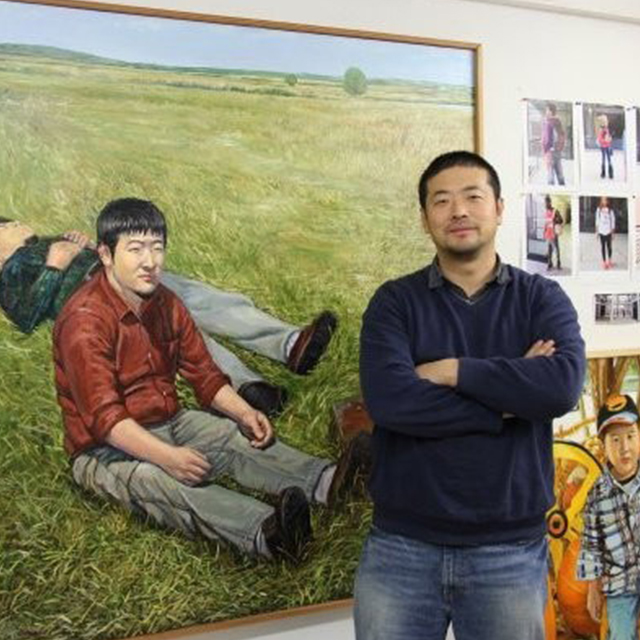
Nan Liu is a Professor at Florida A&M University (FAMU) since 2020, with prior academic ranks including Associate Professor (2014-2020), Assistant Professor (2010-2014), and Visiting Assistant Professor (2007-2010). He holds a Ph.D. and MFA from Florida State University , MA in Art Education from University of Arkansas at Little Rock and Capital Normal University , and BFA in Chinese Painting from Nan Kai University . Research Interests focus on cross-cultural art education, Chinese brush painting adaptation in the US, and figurative/landscape art pedagogy. His work bridges Eastern traditional techniques with Western contemporary practices, emphasizing natural expression and cultural synthesis. Exhibitions include 21 solo shows and 128 group exhibitions across the US and China, with awards from Sumi-e Society of America, St. Augustine Art Association, and Gadsden Arts Center. Scientific Awards include: Best of Show Calligraphy, Sumi-e Society (2023) Teacher of the Year, FAMU (2021-2022) Founder’s Award for Painting, Sumi-e Society (2022) Multiple regional competition awards Publications encompass translated textbooks and original research on US-China art education comparison. Grants include FAMU Faculty Research Awards and travel grants for academic presentations.
Enrique Tellez-Espiga is an Associate Professor in the Department of Languages and Linguistics. He teaches a comprehensive range of Spanish courses, including beginning and intermediate levels (e.g., Spanish Conversation - SPA 301) and specialized upper-division courses such as Spanish Narrative and Film in Democratic Spain (SPA 370) and History on the Big Screen: Spanish History and Culture in Film (SPA 470). Additionally, he serves as an academic advisor for students pursuing minors in Spanish. Education: BA in English - Universidad de Salamanca MA in Spanish Literature - Florida Atlantic University PhD in Romance Studies (Spanish) - University of Miami Research Focus: Dr. Tellez-Espiga's scholarship examines the interplay between urban environments, cultural memory, and narrative forms in contemporary Spain. His interdisciplinary approach bridges literary analysis, film criticism, and spatial theory, with emphasis on: Representations of Madrid as a symbolic space reflecting historical trauma Cinematic and literary engagements with Spain's democratic transition Socio-political dimensions of urban renewal and gentrification Memory construction through metafiction and archival reinterpretations Publications Overview: His research output (2012-2022) demonstrates consistent focus on Spanish historical memory and urban transformation. Dominant themes include cinematic reconstructions of Madrid, ethical examinations of state violence, and innovative narrative strategies in addressing Civil War legacies. Methodologically, his work combines cultural studies frameworks with close analysis of texts by key figures like Almodóvar, Grandes, and Martín Patino. Student Advising: Actively mentors undergraduate students pursuing Spanish minors, providing academic guidance and curriculum planning support.
Stéphanie Caillies is a Professor of Cognitive Psychology at the University of Reims Champagne-Ardenne and serves as Deputy Director of the C2S Laboratory (Cognition, Santé, Socialisation EA 6291). Her research focuses on social cognition, language processing, and theory of mind from developmental, neuropsychological, and psychopathological perspectives. Research Interests: Pragmatic language comprehension and figurative language processing Neural correlates of social cognition in clinical populations (schizophrenia, bipolar disorder) Developmental trajectories of theory of mind in neurotypical and at-risk children Neurocognitive mechanisms of irony and metaphor understanding Parent-child interactions in premature infants Her recent publications demonstrate strong emphasis on neuroimaging approaches (fMRI, ERP) to study social cognition, with recurring themes in clinical populations and developmental disorders. Research frequently bridges psycholinguistics, clinical psychology, and cognitive neuroscience. Current Research Projects: POSTURE (2023-2027): Psychologie et réalité virtuelle - ANR-funded project on dynamic posture recognition EDIRE (2022-2025): Horizon Europe project on educational development PHRC CALIN: Hospital clinical research on sensory-tonic stimulation for premature infants Teaching Activities: Regularly teaches courses in Statistics, Language Development, Academic Learning, and Social Cognition Disorders. Organized multiple scientific conferences including the 59th Congress of the French Society of Psychology. Doctoral Supervision: Currently supervising theses on executive functions in premature children and parent-child interactions. Previously supervised dissertations on pragmatic language in reading comprehension and neurofunctional correlates of theory of mind in schizophrenia.
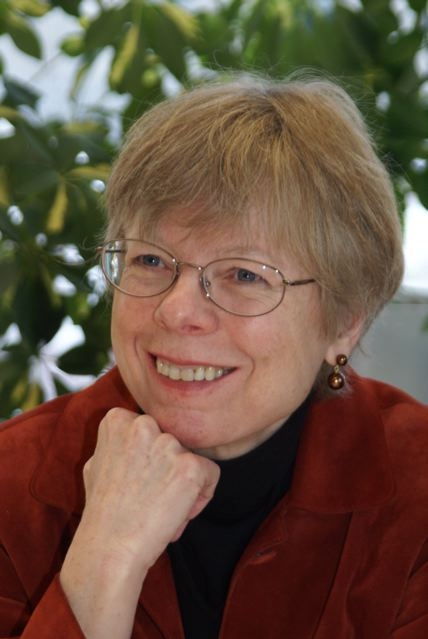
Dedre Gentner is the Alice Gabrielle Twight Professor of Psychology and Education at Northwestern University , where she also serves as Director of the Cognitive Science Program and Co P.I. of the Spatial Intelligence and Learning Center . She holds joint appointments in the School of Education and Social Policy and the Department of Psychology. Ph.D. in Psychology, University of California, San Diego (1974) B.A. in Physics, University of California, Berkeley (1967) Research Interests focus on analogical processing , relational cognition , and language acquisition . Her work explores how structural alignment underpins analogical and metaphorical reasoning, with applications to education , child development , and cognitive modeling . Key themes include: Structure-mapping theory for analogical reasoning Role of relational language in concept formation Causal systems categorization in novices vs. experts Analogy in scientific discovery Impact of analogy on spatial/geoscience education Scientific Awards include the David E. Rumelhart Prize (2016) , Alexander von Humboldt Research Award (2012) , and Journal of Cognition and Development's Editor's Choice Award (2010) . She is a Fellow of the American Academy of Arts and Sciences , APA , and Cognitive Science Society . Advising & Grants : Gentner has advised numerous projects and secured grants from institutions like the Office of Naval Research (ONR) and National Science Foundation (NSF) . Her lab collaborates on topics such as analogical learning in children’s museums and computational models of analogy . Labs & Teams : Leads the Cognition and Language Lab and co-leads the Spatial Intelligence and Learning Center , focusing on interdisciplinary research bridging psychology, education, and computational modeling.
Dr. Dorota Gaskins is a Lecturer in Applied Linguistics at King’s College London’s School of Education, Communication & Society since 2023. Previously, she held a Leverhulme Early Career Fellowship (2020–2023) focusing on metaphor acquisition in young children. With 18 years of teaching experience in TESOL and 14 years as a language examiner, her expertise bridges research and pedagogy. Her research focuses on bilingual first language acquisition (ages 1–10), metaphor development, child-directed speech effects, and methodologies for studying young language learners. She actively contributes to the Cognition, Learning, and Communities Lab and the Language, Discourse & Communication Research Centre. Dr. Gaskins teaches BA and MA courses in linguistics and supervises students in areas like bilingual acquisition, usage-based linguistics, and figurative language. Her recent work explores metaphor production in bilingual children and cross-linguistic code-switching patterns, emphasizing practical implications for multilingual education.
Renáta Pavlová, PhD is a Lecturer for Slovak language at the Institute of Slavic Linguistics and Cultural Studies, Faculty of Humanities, University of Regensburg since September 2020. Previously, she served as a Scientific Assistant at Constantine the Philosopher University in Nitra (2017-2020) and as a Slovak Language Lecturer at the Slavic Institute, University of Cologne (2016-2013). Her academic journey includes completing her PhD at Constantine the Philosopher University in Nitra in 2011 with a dissertation on 'Slovak as a Foreign Language.' Dr. Pavlová's educational background includes: Studies in Slovak Language and Literature – German Language and Literature at Constantine the Philosopher University, Nitra (1998-2003) PhD in Slovak as a Foreign Language from Constantine the Philosopher University, Nitra (2011) Dr. Pavlová's research focuses on three interconnected areas: Slovak as a foreign language with emphasis on linguodidactic aspects, machine translation between German and Slovak, and the development of reading comprehension in foreign language learning. Her work in linguodidactics examines effective teaching methodologies for Slovak language acquisition, while her machine translation research analyzes error patterns and quality assessment. The reading comprehension strand investigates intervention programs for developing literacy skills in both native and foreign language contexts, with applications across primary and secondary education levels. Her recent publications demonstrate a consistent focus on the intersection of language learning, technology, and literacy development. The trend shows increasing attention to machine translation quality assessment, particularly examining morphosyntactic and lexical errors in German-Slovak translation. Her work also reveals a strong commitment to practical applications, with numerous publications on language testing, certification (particularly ECL exams), and intervention programs for reading comprehension. The collaborative nature of her research is evident through multiple co-authored works with colleagues across various institutions. Dr. Pavlová has been involved in several significant research projects including VEGA projects on reading comprehension development (2019, 2017), APVV projects on machine translation error classification (2018), and KEGA projects on language preparation (2019). She also contributed to international initiatives like EUROPODIANS (2009) for developing online Slovak courses and EURONOUNCE (2009) analyzing Slovak pronunciation by German speakers. As an educator, Dr. Pavlová teaches various Slovak language courses at University of Regensburg, including Slovak I, Slovak III (general and translation-specific), Slovak Conversation, and specialized seminars on Machine Translation. She actively participates in cultural outreach, having recently attended events with the Slovak Ambassador and the President of the Slovak Republic, demonstrating her role in promoting Slovak language and culture internationally.
Carina Rasse is a post-doctoral researcher at the Institute for English and American Studies, University of Klagenfurt, Austria. She holds a PhD in Cognitive Linguistics and is actively engaged in research on metaphor, poetic language, and embodied cognition in literary understanding. Her academic profile highlights her role in both research and teaching within the Faculty of Humanities. Her research focuses on the cognitive mechanisms underlying metaphor comprehension, particularly in poetry and literary texts. She investigates how readers process figurative language, engage in embodied simulation, and derive meaning from metaphors in fictional narratives. Her work bridges cognitive science, linguistics, and literary studies, contributing to interdisciplinary understandings of language and thought. The recent publications reflect a strong trend in cognitive poetics, exploring metaphor in poetry, song lyrics, and novels. Her studies often employ psycholinguistic methods to examine implicit and explicit awareness of conceptual metaphors. She has also contributed review articles and conference presentations that critically engage with narrative absorption, environmental justice in literature, and the role of metaphor in aesthetic appreciation. Carina Rasse has collaborated with prominent scholars such as Francesca Citron and Raymond W. Gibbs. Her academic journey includes an MA thesis on media convergence and a dissertation on poetic metaphors, supervised by Prof. Alexander Onysko and Prof. Ray Gibbs. While no formal awards are listed, her consistent publication record and international conference participation indicate active scholarly engagement. She does not appear to have a formal lab or research team mentioned in the text, but her work is situated within the broader cognitive linguistics and literary semantics communities. She is affiliated with research networks such as RaAM (Researching and Applying Metaphor) and presents at major international conferences.
Dr Lottie Hoare is a Lecturer in Education and Early Childhood Studies at Middlesex University and a Senior Teaching Associate at the University of Cambridge. Her research focuses on arts education, pedagogical strategies, and the historical and contemporary influences on educational policy. She explores themes such as heritage language schools, the role of media (BBC broadcasts and film) in shaping educational discourse, and biographies of influential educators. Her work bridges historical analysis with contemporary educational practices. Teaching responsibilities include modules like Creativity and the Arts in Education at Middlesex University, alongside leading Historical and Contemporary Issues in Education and Curriculum Studies for Primary Education. At Cambridge, she teaches MEd students and undergraduates. Dr Hoare holds leadership roles, including Executive Committee membership of The Society for Educational Studies (since 2022) and Book Reviews Editor for the British Journal of Educational Studies. From 2025, she will co-edit the History of Education journal. Her research outputs span academic articles, book chapters, and edited volumes, often centering on underrepresented figures in educational history. Her career spans over three decades, including 20 years in primary schools and nurseries before pursuing her AHRC-funded PhD (2013–2016) at the University of Cambridge. This interdisciplinary background informs her approach to linking historical insights with modern educational challenges. Key research trends in her articles include analyzing media’s role in education, biographical studies of educators, and the intersection of arts with well-being and community-building. Her work highlights marginalized voices, such as Beryl Gilroy and Muriel Pyrah, enriching narratives around equity and innovation in education.
Narguess Farzad is a Senior Lecturer in Persian Studies (Education) at the School of Languages, Cultures and Linguistics, SOAS University of London. She holds additional roles as Departmental Director of Recruitment, Admissions and Marketing, and Associate Member of the Centre for Media and Film Studies. Her primary academic focus is Persian language and literature, with specialties in modern and classical Persian poetry, translation studies, and pedagogical approaches to teaching Persian as a foreign language. Farzad's research interests include the grammar of modern Persian, translation challenges of Persian poetry into English, and the poetry of the Persian-speaking world. She leads the Persian Language Online project, an initiative promoting digital accessibility to Persian language education. Her qualifications include a BA from London, with a focus on languages and literature. Her publications span scholarly essays on Rumi's mystical poetry, Hafiz's translation challenges, and the cultural impact of Persian literature. She frequently contributes to BBC cultural programs and academic journals, emphasizing the enduring relevance of classical Persian works in global contexts.
Ayça Dinçer serves as a Lecturer at Çukurova University's School of Foreign Languages since 2010, holding a PhD in English Language Education from the same institution. Her academic foundation includes doctoral (2008-2014) and postgraduate (2005-2008) studies in Foreign Language Education at Çukurova University, and an undergraduate degree in English Linguistics from Hacettepe University (1994-1999). Her educational background encompasses: Doctorate (2008-2014): Çukurova University, Foreign Language Education, English Language Education Postgraduate (2005-2008): Çukurova University, Foreign Language Education, English Language Education Undergraduate (1994-1999): Hacettepe University, Faculty of Literature, English Linguistics Dinçer's research centers on English Language Teaching methodology, with emphasis on discourse analysis, figurative language, and self-regulated learning strategies. She investigates collocations in EFL materials, metonymy in coursebooks, gender representation, and teacher-student dynamics in writing instruction. Her work bridges theoretical linguistics with classroom applications, particularly in Turkish higher education contexts. Analysis of her 2014-2022 publications reveals persistent focus on linguistic phenomena in pedagogical materials and learner outcomes. Key trends include collocation patterns in student writing, metonymic structures in textbooks, and self-regulation frameworks for writing instruction. These studies collectively advance evidence-based ELT practices through empirical classroom research. No scientific awards were documented in the source material. She executed two significant research projects: 'Promotion of Self-Regulation in Writing Instruction' (2015-2016) and 'Collocational Analysis of EFL Coursebooks' (2018-2020). Dinçer actively promotes institutional collaboration through the Language-for-All Conference series, serving as editor for multiple proceedings and organizing four international conferences (2022-2025) focused on language education innovation.
Kirsti Klette is Professor at the Department of Teacher Education and School Research within the Faculty of Education at the University of Oslo. She serves as Centre Director at the Nordic Centre of Excellence Quality in Nordic Teaching (QUINT), launched in autumn 2018. Her academic career spans over two decades, beginning as Associate Professor at Lillehammer University College in 1994, then at the University of Oslo Faculty of Education in 1998, and becoming full Professor in 2002/2004. She held a Visiting Fulbright Professorship at Stanford University (2007-2008) and has directed numerous national research programs including UTDANNING 2020 (2009-2014). Professor Klette's research focuses on classroom teaching and learning through video methodology, instructional quality, and teacher education. Her work examines the relationship between teaching practices and student outcomes across Nordic educational contexts. She leads major projects including Linking Instruction and Student Achievement (LISA), Linking Instruction and Student Experiences (LISE), and the Synthesizing Research on Teaching Quality (SYNTEQ). Her methodological expertise in video research has established her as a leading figure in educational research methodology. Analysis of her recent publications (2022-2024) reveals consistent focus on classroom observation systems, teacher education coherence, and Nordic educational practices. Her work spans multiple subject areas including mathematics, social studies, and language arts, with particular attention to how instructional quality can be measured and improved. She frequently collaborates with international researchers, contributing to global understanding of teaching quality across different educational systems. Professor Klette has made significant contributions to educational policy and practice, particularly in teacher education reform and classroom observation methodology. Her research bridges educational theory and classroom practice, with implications for teacher preparation, professional development, and educational assessment systems.
Dr. Marina Wimmer is an Associate Professor at Edinburgh Napier University's School of Applied Sciences , where she leads the Centre for Mind and Creativity Research (CEDAR) and serves as Psychology Research Lead. An international expert in cognitive psychology, her work examines visual ambiguities, false memories, mental imagery, and environmental cognition. PhD in Cognitive Development from Stirling University Former research positions at Stirling, Lancaster, and Warwick Universities Lectureship at Plymouth University (2011) before joining Edinburgh Napier Her research focuses on perceptual bistability (visual & auditory), false memory mechanisms , mental representation , and cognitive development . Recent projects explore STEM creativity , digital twins' cognitive impact , and fake news correction . She integrates cognitive science with film education, examining self-concept development through interdisciplinary frameworks. Marina has secured over £100,000 as Principal Investigator (ESRC, British Academy, Experimental Psychology Society) and contributed to a £4,000,000 EU-funded CogNovo consortium. She serves as Associate Editor, British Journal of Developmental Psychology Member, ESRC & Carnegie Peer Review Colleges Experimental Psychology Society Fellow A passionate science communicator, she engages over 1,500 students through STEM outreach (ESRC Festival, Big Bang STEM). Her supervisees include doctoral candidates in cognition-environment interactions and false memory correction.
Claudia Friedrich is a Professor of Developmental Psychology at the University of Tübingen, Faculty of Mathematics and Natural Sciences, Department of Psychology, where she has held her position since April 2013. Her research focuses on the cognitive processes underlying language development in children, with particular emphasis on speech processing, word recognition, and the acquisition of linguistic structures. Her educational background includes a doctorate in Psychology from the University of Leipzig (2003) and undergraduate studies in Psychology at the Technical University of Berlin (1993-1999). Professor Friedrich's research examines how children process speech sounds, word stress patterns, and develop the ability to understand language in context. Her work investigates cognitive and neural mechanisms involved in language acquisition across different age groups, with special attention to how first and second language learners process linguistic information. Through eye-tracking, ERP, and behavioral experiments, her research explores how children develop the ability to take perspectives during communication, process prosodic features of speech, and build lexical representations. She has made significant contributions to understanding how literacy acquisition shapes speech processing and how cross-modal influences affect language development. Her recent publications reveal a consistent focus on developmental trajectories in language processing, with increasing attention to cross-linguistic comparisons and multimodal aspects of language acquisition. The research demonstrates sophisticated methodological approaches combining behavioral, eye-tracking, and neurophysiological measures to investigate language processing from infancy through childhood. Professor Friedrich leads several major research projects including Project A6 "The Development of Common Ground in First and Second Language Acquisition" (2025-2029), a DFG-funded project on "Stress processing at the word level in children with different language backgrounds" (2024-2027), and previously led Project B1 on modal and amodal cognition (2020-2023). Her research has been consistently supported by prestigious funding bodies including the European Research Council (ERC) and the German Research Foundation (DFG). She heads the Developmental Psychology workspace at the University of Tübingen, where her research group investigates cognitive prerequisites for perspective-taking in language comprehension and the influence of perspective taking during language processing through memory experiments and eye movement studies.