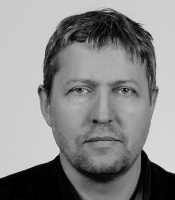
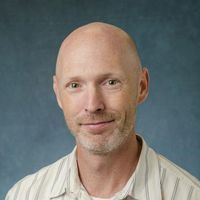
Rachel Brule is an Assistant Professor of Global Development Policy at Boston University’s Pardee School of Global Studies and Core Faculty at the Global Development Policy Center’s Human Capital Initiative. She specializes in comparative politics, international development, and gender studies with a focus on South Asia. Her research examines how political representation impacts social and economic inequality across democratic and hybrid regimes. Brule’s forthcoming book, Women’s Representation and Resistance , explores how women’s political empowerment drives progress in land inheritance rights in India. Brule holds a Ph.D. in Political Science from Stanford University, an M.Sc. from Oxford University, an M.Sc. from the London School of Economics, and a B.A. from Mount Holyoke College. She has conducted fieldwork in India, Africa, and the Middle East, combining randomized controlled trials and survey experiments to study gender quotas, political engagement, and climate resilience. Her work has been recognized with the Pi Sigma Alpha Award (2017), Kellogg Notre Dame Award (2017), Marshall Scholarship, and Truman Scholarship. Her research portfolio includes analyzing climate shocks’ impact on gendered political dynamics in Bangladesh, the effectiveness of multi-dimensional quotas in improving social equality, and the intersectionality of cultural norms and economic disparities in India’s matrilineal tribes. Brule collaborates with institutions like MIT’s Poverty Action Lab and the World Bank, focusing on evidence-based interventions to enhance economic rights and environmental welfare in developing nations.
Wendy Shaw is an Honorary Associate Professor in the School of Biological, Earth & Environmental Sciences at the University of New South Wales (UNSW). Her research focuses on postcolonial urban geographies, Indigenous geographies, and the intersections of environmental science with social issues. Notable roles include Editor of Geoforum (2015–2018) and Vice President of the NSW Geographical Society (2014–2017). She has conducted extensive fieldwork in Papua New Guinea and Australia, addressing topics like disaster risk management, urban gentrification, and anthropogenic environmental challenges. Her work spans interdisciplinary projects such as 'Narcissism and environmentalism' and 'Rip Currents: Combining social and scientific research methods'. Major collaborations include projects with Taronga Zoo, Surf Life Saving Australia, and the Australian Centre for International Agricultural Research (ACIAR). Shaw has secured over $4 million in research funding for projects ranging from coffee sustainability in PNG to coastal hazard mitigation. Key awards include the Distinguished International Visiting Fellowship at Durham University (2010). Her research often bridges social and physical sciences, with recent emphasis on human-animal bonds, tsunami hazard communication, and the Anthropocene. She has advised multiple projects on Indigenous homelessness and disaster resilience, reflecting her commitment to socially engaged scholarship. Labs/Teams: Collaborates with interdisciplinary teams at UNSW’s School of Biological, Earth & Environmental Sciences, including partnerships with institutions in PNG, New Zealand, and the UK. Active in policy-oriented research through AHURI and ACIAR-funded initiatives.
Dr. Natalia Zawiejska is a researcher at the Institute of Religious Studies, Jagiellonian University, specializing in social anthropology and sociology of religion. She holds a Master's and PhD in Religious Studies, and a postgraduate degree in curatorial studies in contemporary art. Her work focuses on religion in contemporary Africa, Lusophone countries, and African diasporas in Europe, with an emphasis on postcolonial perspectives, material religion, and urbanity. She leads multiple research projects, including the RUM Project on religion and urbanity in Poland. She has conducted fieldwork in Angola, Cape Verde, Portugal, the UK, and Poland. Her research integrates critical religion studies, engaged scholarship, and interdisciplinary methodologies. Education: MA and PhD in Religious Studies (Jagiellonian University), Postgraduate in Curatorial Studies (Jagiellonian University) Key Research Projects: RUM Project (Religion and Urbanity in Poland) Angolan Bom Deus Church in Brazil/Cape Verde National Science Centre-funded grants (OPUS 19, ETIUDA, PRELUDIUM 7) Her publications explore Pentecostalism, postcolonial religious dynamics, and the interplay between religion, art, and urban spaces. She teaches courses on Pentecostalism, religion in African social contexts, and qualitative research methods.
Richard Jankowsky is a Professor in the Department of Music at Tufts University, part of the School of Arts and Sciences. He previously served as a faculty member at the School of Oriental and African Studies (SOAS), University of London. His research focuses on the intersection of music, ritual, and power in North Africa, particularly exploring music’s role in healing, preserving marginalized histories, and fostering transcendent experiences. He holds a BA in Anthropology and Music from Tufts University (1995) and a PhD in Ethnomusicology from the University of Chicago (2004). His work includes seminal publications like Ambient Sufism (2021), which received the Alan Merriam Book Prize, and Stambeli (2010), recognized with multiple honors. He has been a two-time National Endowment for the Humanities Fellow and has received grants from the American Institute for Maghreb Studies and the Fulbright Program. His research integrates fieldwork-based methods, examining cyclicity, density, and transformation in trance rituals. Professional activities include organizing events like the Noor Ensemble Mawlid Concerts and serving on academic committees such as the Analytical Approaches to World Music Conference Program Committee. He teaches courses like Music, Trance, & Consciousness and Soundworlds of North Africa , reflecting his interdisciplinary approach to music studies. His awards also include the L. Carl Brown Book Prize Honorable Mention and a Finalist placement in the American Academy of Religion Book Prize on Religion and the Arts. He has contributed to encyclopedic volumes and peer-reviewed journals, advancing global understanding of North African and Middle Eastern musical traditions.
Emily Elfner is Associate Professor in the Department of Languages, Literatures and Linguistics at York University, specializing in phonological interfaces. Education includes: PhD, University of Massachusetts Amherst MA, University of Calgary BA, University of Calgary Research investigates prosodic structures in endangered languages, particularly Kwak'wala phonology and Irish syntax-prosody interactions. SSHRC-funded fieldwork documents Kwak'wala intonation patterns. Publications demonstrate consistent focus on prosodic systems across diverse languages including Breton, Irish, Inuktitut, and Tlingit. Recent works examine word-order constraints, morphological-prosodic mappings, and recursive phonological structures.
Juha Latvala is a Staff Scientist at the Department of Civil Engineering, Faculty of Built Environment, Tampere University. His research focuses on railway infrastructure, particularly railway track drainage systems, sub-ballast layer behavior, and the effects of water content on track stability. He holds a Doctoral degree from Tampere University (2024) and has collaborated extensively with institutions like Väylävirasto on railway engineering challenges. Education: Doctoral Thesis in Civil Engineering (2024) Research Interests: Latvala’s work emphasizes understanding and mitigating issues related to railway track drainage, seasonal frost impacts on track structures, cyclic loading resistance of materials, and moisture content analysis. His studies often involve field measurements, laboratory testing, and case studies to improve infrastructure durability and safety. Publications Overview: His recent articles highlight advancements in drainage solutions, sub-ballast material behavior under varying conditions, and the design of monitoring systems for heavy railway traffic. Key themes include optimizing track performance through moisture management and enhancing infrastructure resilience in cold regions. Grants & Collaborations: Collaborations with Väylävirasto and Tampere University have supported projects on railway traffic monitoring stations and drainage improvements. His research integrates geotechnical engineering principles with practical infrastructure solutions.
Anabel Paulos holds the position of Professor within the Faculty of Social Sciences. Her current roles include doctoral studies alongside her academic appointment. She specializes in regions including Latin America, Eastern Europe, and Southern Europe, with fieldwork conducted in Peru (PhD), Argentina (MA), and Serbia (BA). Her research interests focus on womens movements , Activism and political movements , and the World March of Women . She also explores Social Networks , Feminist Theory , Spatiality and Temporality , and Gender Relationships . Her work intersects with topics like Climate Change Activism , Food Sovereignty , and Transnational movements . Anabel has volunteered with an Italian NGO in Bosnia and Herzegovina and maintains expertise on Italy and Eastern Europe. No specific grants, labs, or advising details are documented in the provided text.
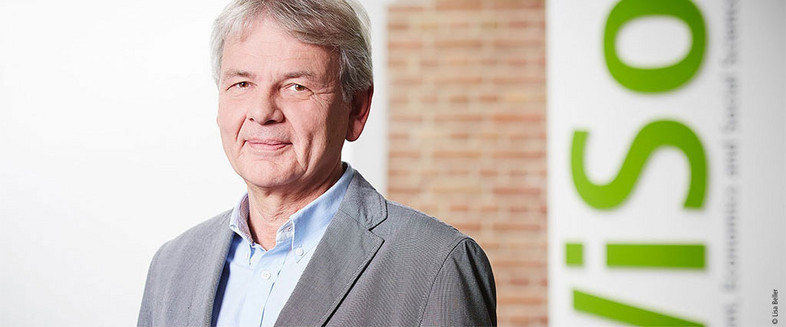
Prof. Dr. Michael Wagner is a Full Professor of Sociology at the University of Cologne , affiliated with the Institute for Sociology and Social Psychology (WiSo-Faculty). Since 2018, he serves as Managing Editor of the Cologne Journal of Sociology and Social Psychology , and has held leadership roles including Managing Director of his Institute (2012, 2007-2010). His work focuses on Social Demography , Residential Mobility , and Life Course and Aging Research , with particular attention to family dynamics, fertility intentions, and quality of life among the elderly. Ph.D. in 1987 (Free University of Berlin, thesis: Spatial Mobility in the Life Course) Habilitation in 1997 (Free University of Berlin, thesis: Marital Stability, Social Structure and Social Change in East and West Germany) Michael Wagner's research spans multiple sub-fields including marital stability analysis , fertility trends in Germany , non-response bias in elderly surveys , and partnership transitions . His publications address critical intersections between spatial mobility, family structures, and aging populations, often employing comparative and longitudinal methodologies. Key findings include analyses of divorce risks across Europe , location-specific capital in post-separation moves , and health behavior disparities by marital status . He has conducted fieldwork in Netherlands Interdisciplinary Demographic Institute (2012), Institut National d'Études Démographiques (1986), and Max Planck Institute for Human Development (1984-1997). Current methodological interests include mitigating publication bias in social sciences. Contact: mwagner@wiso.uni-koeln.de | www.iss-wiso.uni-koeln.de
Helen Roberts is a Professor in the Department of Geography and Earth Sciences at Aberystwyth University , where she has been a key figure since joining as a post-doctoral researcher in 1998 and becoming a Lecturer in 2005. She currently serves as Co-Director of the Aberystwyth Luminescence Research Laboratory (ALRL) and holds leadership roles in international bodies such as INQUA’s Stratigraphy and Geochronology Commission. PhD, University of Liverpool Her research focuses on luminescence dating of Quaternary sediments , with applications in understanding geomorphic change, coastal dynamics, paleoclimate, and human evolution . She has led major projects such as EQUATE and CREDit , funded by Horizon Europe and NERC, and has been involved in international drilling initiatives in Ethiopia and Italy. Her work integrates fieldwork, laboratory innovation, and data modeling to reconstruct environmental change over hundreds of thousands of years. Analysis of her recent publications reveals a strong emphasis on refining luminescence techniques (e.g., pIRIR, TL in calcite), applying them to critical paleoenvironmental archives (lake sediments, loess, glacial deposits), and linking climate variability to human evolution. Her interdisciplinary approach spans geochronology, sedimentology, and paleoanthropology. Fellow of the Learned Society of Wales (2023) Professor Roberts has supervised PhD students, including Svenja Riedesel, and secured significant research grants from NERC, UK Space Agency, and the Welsh Government. She actively contributes to scientific discourse through media engagement and public outreach. Her work supports UN Sustainable Development Goals related to climate action and life on land. She leads and participates in numerous international collaborations and professional committees, reflecting her standing in the Quaternary science community. She is involved in several research groups and laboratories, most notably the Aberystwyth Luminescence Research Laboratory , where she co-directs methodological development and application of luminescence dating techniques. Her team collaborates globally on projects involving terrestrial archives, paleoclimate modeling, and human evolution.
Miriam Belmaker is an Associate Professor in the Department of Anthropology & Sociology at The University of Tulsa, part of the Kendall College of Arts & Sciences. She also holds an associate curator position at the Steinhardt Museum of Natural History in Tel Aviv, Israel, reflecting her international academic engagement. Her academic journey includes a B.A. in prehistoric archaeology and ecology from Haifa University, followed by an M.Sc. and Ph.D. in Evolution and Ecology from the Hebrew University of Jerusalem. She completed a postdoctoral fellowship at Harvard University and a visiting position at the College of William & Mary before joining TU in 2012. Dr. Belmaker's research centers on paleoecology, zooarchaeology, and human evolution, particularly how environmental and climatic changes over the past 2 million years influenced hominin biological and cultural evolution. She uses fossil faunal remains to reconstruct ancient environments and interpret hominin behavior. Her fieldwork spans Israel, Jordan, the Caucasus, and Central and East Asia, with a focus on early Pleistocene sites. She is co-director of renewed excavations at the 'Ubeidiya site in Israel. Her recent publications reveal a strong trend in paleoenvironmental reconstruction using zooarchaeological and isotopic methods, with a focus on early human dispersals, climate variability, and faunal responses to ecological change. Her work integrates field data with modeling and comparative collections to address broad questions in human evolution. National Science Foundation Leakey Foundation Wenner-Gren Foundation Irene Levy Sala CARE Foundation Dr. Belmaker has successfully secured funding from prestigious organizations to support her research and fieldwork. She advises graduate students and leads the Belmaker Paleoecology and Zooarchaeology Lab at TU, where she also founded and directs the university’s comparative vertebrate collection—a key resource for training and research. She is actively involved in academic mentoring and continues to expand her research program through international collaborations, ongoing excavations, and interdisciplinary studies linking paleoecology with human evolutionary theory.
Prof. Dr. hab. Zbigniew Treppa is a distinguished Professor at the Faculty of Social Sciences, University of Gdańsk , within the Department of Image Anthropology . His work bridges visual semiotics , religious iconography , and photographic theory , with a focus on acheiropoietos images (divine images not made by human hands). Education: Theology at Catholic University of Lublin, PhD from Poznań Academy of Fine Arts, Habilitation from Polish National Film, Television and Theatre School His research investigates the semiotics of photographic images , particularly analyzing sacred artifacts like the Turin Shroud , Manoppello Image , and Tilma of Guadalupe . Recent works explore the ecumenical potential of visual representation and theological interpretations of light in photography. Key trends in his publications include visual theology ( 8 entries ), acheiropoietos image analysis ( 6 entries ), and media-cultural intersections ( 4 entries ). His 2015 article in 'Więź' examines visual oppression vs. theological suffering , while 2016's 'Acta Humaniora' work debates iconographic functions in ecumenism . Scientific Awards: University of Gdańsk Rektor's Award for 'Całun turyński – fotografia Niewidzialnego?' First Prize & Honorable Mention in 'Vidical' International Photography Competition Treppa has received research grants for studies on the Manoppello Image (2008-2010) and conducted fieldwork in Italy, Mexico, and Poland. He serves on the National Centre for Culture expert panel in Warsaw and actively participates in international conferences on acheiropoietos images and visual theology . His artistic practice includes 25+ solo exhibitions of staged photography since 1982, notably 'Opera Infinita – Opera Aperta' (2012) and 'Corporale' (2013). Collaborative works appear in collective exhibitions across Poland and Italy, including the International Workshop on Acheiropoietos Images in Frascati (2010) and Toruń (2011).
Timothy Kuhn is a Professor of Communication at the University of Colorado Boulder in the College of Media, Communication and Information. He has been actively teaching courses including Communication Theory, Organizational Communication, and Political Communication. Outside the university, he serves as an Associate Editor at the interdisciplinary journal Human Relations , co-coordinator of the "Organization as Communication" Standing Working Group at the European Group of Organizational Studies (EGOS), and vice-chair of the organizational communication division of the International Communication Association. His educational background includes: Ph.D. from Arizona State University (2000) M.A. from University of Minnesota Twin Cities (1996) B.S. from University of Minnesota Twin Cities (1991) Professor Kuhn's research focuses on how communication constitutes organizational life, examining how knowledge, authority, identities, and conceptions of value emerge in sociomaterial and power-laden communication practices. His work centers on four specific research themes: (1) individual and organizational processes of "knowing" and learning; (2) identity negotiation and meaningfulness in work; (3) ethical and unethical action in organizational settings; and (4) collaborative decision-making among diverse stakeholders. His theoretical approach emphasizes communicative forms of explanation where symbolic and material elements intertwine in constructing and disrupting meanings. His recent publications demonstrate a strong focus on the communicative constitution of organizations, with increasing attention to posthumanist perspectives, materiality, and the role of communication in shaping organizational authority and knowledge processes. His work bridges communication studies, organization theory, and critical management studies, often challenging traditional understandings of organizations as fixed entities. Professor Kuhn has received numerous prestigious awards including: ICA Fellow (2020) from the International Communication Association Organizational Communication Division/Edited Book Award (2019) from the National Communication Association Organizational Communication Division/Article Award (2013) from the National Communication Association Group Communication Division/Dennis Gouran Research Award (2006) from the National Communication Association Organizational Communication Division/Article Award (2004) from the National Communication Association Group Communication Division/Dennis Gouran Research Award (2001) from the National Communication Association Professor Kuhn has made significant contributions to organizational communication through his editorial work, serving as Associate Editor for Human Relations and contributing to various book projects. His research has been widely cited and has influenced both academic and practical approaches to understanding organizational communication. He maintains active international collaborations, with research connections across North America, Europe, Australia, and Asia. His current work continues to explore the intersection of communication, materiality, and organization, with recent publications addressing ventriloquial authority in management education, organizational memory, and the communicative constitution of organizationality. He is particularly interested in how communication practices shape knowledge, authority, and ethical frameworks within contemporary capitalist organizations.
David Wästerfors is a Professor of Sociology at Lund University’s Department of Sociology. He holds dual roles as a Senior Lecturer and Professor, contributing to both teaching and research. His affiliations include the University’s research portal and collaborations with international institutions. Wästerfors specializes in qualitative methods, criminology, social psychology, and cultural sociology, with a focus on empirical research in total institutions, youth culture, and disability studies. Education: Graduated from Lund University and UCLA, studying 'Self and Society' and 'Aesthetic Anthropology' under notable scholars like Jack Katz and Maureen Mahon. Research Interests: Wästerfors bridges micro-sociological studies (e.g., ethnography, narrative analysis) with meso/macro-level phenomena like criminology and disability studies. His work emphasizes 'theoretically surprising' research, blending empirical observation with innovative theoretical frameworks. Key themes include corruption narratives, online crime discussions, youth-police interactions, and accessibility barriers for persons with disabilities. Current Projects: Includes studies on Nordic returnees from Ukraine, citizen-driven crime investigations, and the sociology of embarrassment in ethnographic practice. He leads funded projects like 'Pecuniary Sensitivity in Foster Care Narratives' and 'Citizens as Crime Investigators.' Grants & Supervision: Supervised 11 PhD students and reviewed over 25 doctoral defenses. Active in peer review for journals like Qualitative Research and Journal of Contemporary Ethnography . Labs/Teams: Collaborates with researchers like Veronika Burcar Alm (online crime studies) and Kristofer Hansson (disability and gaming). His work often involves interdisciplinary teams, e.g., the 'Seductive Meetings' project on bureaucratic culture.
Dr Georgia Cole is a Senior Lecturer at the School of Social and Political Sciences, University of Edinburgh, specialising in refugee and migration studies. Her research explores alternatives to formal asylum pathways, plural geographies of refuge, and displacement dynamics in the Horn of Africa and Gulf States. She leads the Foundations for All project, a blended learning initiative for refugees in Uganda, and collaborates with the Mixed Migration Centre and Refugee Law Project. Cole previously held research fellowships at Cambridge and Oxford, where she completed her DPhil in International Development. Education: DPhil in International Development (University of Oxford). Her recent work focuses on refugee education technology, longitudinal migration analysis, and policy alignment in displacement contexts. Cole’s publications address semiotics in refugee politics, UNHCR funding dynamics, and systemic ambivalence in authoritarian regimes. She teaches courses on qualitative research methods, social work, and refugee studies, currently convening the BSc in Social Work Dissertation Course. Scientific Awards: Chancellor's Fellow Joyce Pearce Junior Research Fellow Book Review Editor for Journal of Refugee Studies She contributes to media outlets like The Guardian and The Conversation , and her research projects include collaborations with the Refugee Law Project, American University of Beirut, and Danish Refugee Council. Cole is accepting PhD students and engages in editorial and consultancy work.
Lizzi Milligan is a Professor at the Department of Education , University of Bath, specializing in Centre for Development Studies . Her research spans social, epistemic, and environmental justice in education across low-income countries, with fieldwork in Uganda, Rwanda, Nepal, and Peru . Director of Research, Department of Education (2024) Co-lead of Reimagining Education for Better Futures research group Research utilizes mixed-methods approaches , including participatory and creative methodologies, to analyze: Policy-Practice disjunctures in education Linguistic injustices in English Medium Instruction Ethics in cross-cultural research Recent projects funded by: GCRF ESRC grant (2024): Environmental, epistemic, and transitional justice in secondary schooling ESRC New Investigator Award (2023): Girls' educational outcomes in Rwandan EMI UKRI ODA funds (2022): Justice-focused education initiatives Key publications examine: Linguistic barriers in Cameroon and Rwanda Epistemic exclusion in Ugandan environmental education Educational violence in English Medium secondary schools Scientific awards and recognitions: GCRF ESRC Research Grant (2024) ESRC New Investigator Award (2023) Certificate of Accreditation from Uganda's National Curriculum Development Centre (2024) She actively supervises doctoral students in: Basic education in low-income countries Language justice in pedagogy Sustainable futures through education Collaborations include: The British Council (2025) Economic and Social Research Council (2024) UK Research & Innovation (2022)