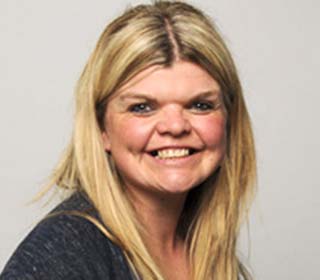
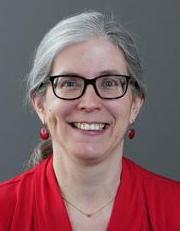
Melissa Coyle is a Senior Lecturer at the School of Sport, Exercise and Rehabilitation, Marjon University. She specializes in sport and exercise psychology, focusing on applications in sport science, coaching, physical education, outdoor education, and health and well-being. Her qualifications include HCPC registration as a sport and exercise psychologist, BASES chartered scientist, and BASES-accredited sport scientist (Psychology), alongside a PGCert, MSc, and BSc. Her research explores psychological factors in high-stakes environments, including military training, cancer patient exercise programs, and aging populations. Notable studies include a qualitative evaluation of an 8-week exercise referral program for cancer patients and an investigation into psychological factors in Royal Artillery Army Commando training. She has also examined motivations and barriers to indoor bowls participation among over-65s and mental health transitions in university students. Dr. Coyle has been awarded grants for studies like 'Psychological factors in Army Commando training' and 'Exercise adherence for cancer recovery.' Her publications span journals like Psychology of Sport and Exercise and conferences such as the Association of Applied Sport Psychology. She actively contributes to professional bodies like HCPC and BASES. Her teaching emphasizes practical applications of psychology in sports and health, complemented by research-driven insights. Beyond academia, she is an avid golfer and hill walker.
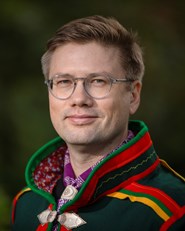
Petter Stoor is an Assistant Professor at Umeå University's Department of Epidemiology and Global Health, specializing in Sámi health research. He holds a PhD from the Arctic University of Norway (UiT) and is Coordinator of Lávvuo, a research group focused on Sámi health education. His work emphasizes Indigenous health equity, suicide prevention, and addressing systemic discrimination. He teaches courses on Sámi and Indigenous health at Umeå University, including Sweden's first dedicated program in this field. PhD: “Suicide among Sámi – Cultural meanings of suicide and interventions for suicide prevention in Nordic parts of Sápmi” (2020, UiT) Current roles: Researcher, educator, and advisor to Sámi parliaments and NGOs Research interests include mental health disparities, cultural determinants of health, and ethical research practices with Indigenous communities. Awards include recognition for studies on sexual violence against Sámi women (2024) and broader Sámi health contributions (2024). He leads projects such as the SámiHET study on health inequities and collaborates internationally via the Lancet Commissions on Suicide and Arctic Health. Teaching focuses on integrating Indigenous perspectives into medical and public health curricula. He supervises master’s and doctoral students, emphasizing participatory methods and community-driven research.
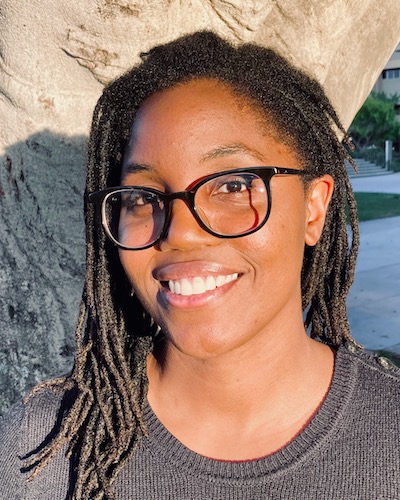
Jamella Gow is the Rasuli Lewis Assistant Professor of Sociology at Bowdoin College, where she teaches courses on race and ethnicity, Black culture and activism, migration, policing, borders, and globalization. She is affiliated with the Department of Sociology and actively contributes to interdisciplinary scholarship at the intersection of Black Studies and migration studies. Her research centers on how race, Blackness, and immigration intersect for Black Caribbean migrants in the United States, particularly Haitians, Jamaicans, and Afro-Cubans in South Florida. She investigates the dynamics of racial and ethnic identity, inclusion/exclusion, diasporic politics, and the criminalization of Black migrants under U.S. immigration policy. Her work critically engages anti-Blackness, differential Blackness, and transnational solidarity. Her recent publications include a co-edited volume titled Modern Migrations, Black Interrogations: Revisioning Migrants and Mobilities through the Critique of Anti-Blackness (Temple University Press, 2024), and journal articles in Sociology of Race and Ethnicity , Ethnic and Racial Studies , and Diaspora: A Journal of Transnational Studies . Her publications reflect a consistent focus on racialization, diaspora, and the socio-political marginalization of Black migrants. She frequently presents her research at major academic conferences such as the American Sociological Association and the Society for the Study of Social Problems. Jamella Gow has not been mentioned as receiving specific scientific awards in the provided text. However, her scholarly impact is evident through her publications and invited presentations. She advises and mentors students in sociology and related fields, though no named advisees are listed. Her research is collaborative, involving partnerships with scholars across institutions and community-based projects, such as her work with the Carrefour-Feuilles community in Haiti. She has also contributed to public scholarship through newsletters and book reviews. Her work is grounded in critical sociological theory and qualitative methods, and she is currently developing a book manuscript titled Black Migrants from Black Nations: Race, Blackness, and Immigrant Exclusion , which promises to make a significant contribution to the understanding of how racial, ethnic, and national statuses shape the lived experiences of Black immigrants.
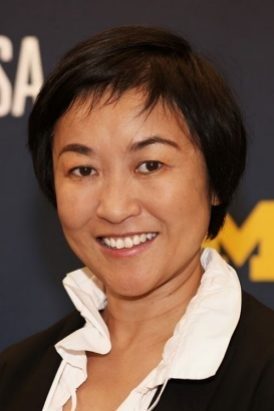
Fiona Lee is the Arthur F. Thurnau Professor of Psychology at the University of Michigan, with affiliations in Organizational Studies and the Advisory Committee. She holds a Ph.D. from Harvard University. Her research focuses on three core areas: Identity Integration (how individuals navigate multiple identities), Power Dynamics (effects of power on behavior), and Cultural Differences (impact of cultural contexts on organizations and individuals). She teaches courses on Organizational Psychology and Research Methods in Personality/Social Contexts. Lee’s work bridges social psychology and organizational behavior, emphasizing multicultural experiences and adaptation. Her recent studies explore refugee well-being, racial discrimination coping strategies, and the role of family in resettlement processes. Notably, she investigates how cultural identity integration influences creativity, decision-making, and social tolerance. Her publications span cross-cultural communication, biculturalism, and institutional barriers faced by minorities. Lee’s research often combines qualitative and quantitative methods to address real-world challenges in workplace dynamics and global mobility.
Alison J. Mackey is Professor and Chair of the Department of Linguistics at Georgetown University, College of Arts and Sciences. She is a leading scholar in second language acquisition (SLA), with a focus on interaction, feedback, research methodology, and language learning across the lifespan. Her research interests include second language acquisition , task-based language teaching , research methodology , interaction and corrective feedback , and language learning in children and adults . She has published extensively in top-tier journals and book series, shaping methodological standards in the field. Her recent publications reflect a strong trend in methodological rigor , interactionist approaches , and practical applications of SLA research. Themes include data elicitation , stimulated recall , task design , and pragmatic development , spanning both theoretical and classroom-based inquiry. Mildenberg Prize (2012) for The Handbook of Second Language Acquisition American Association for Applied Linguistics Distinguished Scholarship and Service Award International Association of Task-based Language Learning and Teaching Distinguished Achievement Award CHOICE Outstanding Academic Title (2012) Alison Mackey has advised numerous scholars through co-authorship and editorial leadership. She is Editor-in-Chief of Cambridge University Press Annual Review of Applied Linguistics and Editor of the Routledge Second Language Research series, guiding the publication of cutting-edge research. While specific grants are not listed, her editorial work and high citation count (>35,000) reflect significant research impact and funding support. She leads and contributes to major research initiatives such as the IRIS Repository , promoting open-access research instruments in SLA. Her work fosters collaboration across institutions and supports methodological transparency and replication in the field.
Elaine M. Huang is an Associate Professor of Human-Computer Interaction at the Department of Informatics, University of Zurich, where she has served since 2010. She also leads the People and Computing Lab, focusing on the dynamic interplay between human practices and technological advancements. Her academic background includes: PhD in Computer Science, Georgia Institute of Technology (2006) Dr. Huang's research centers on human-computer interaction, examining the bidirectional relationship between technology and human practices. She is particularly known for her work on gender equality in technology, challenging assumptions about innate gender differences and investigating how AI systems may perpetuate biases. Her research also spans sustainable interaction design, mental health technologies, and chronic disease management, always emphasizing empirical data over intuition. Analysis of her recent publications (2023-2025) reveals a strong trajectory toward socially impactful HCI, with significant focus on health technologies (diabetes management, mental health), cultural sensitivity in design, and the ethical challenges of AI. Her methodology often involves field studies to understand real-world technology use, countering the industry's reliance on intuition. As head of the People and Computing Lab, Dr. Huang oversees a research group dedicated to designing and evaluating technologies that address complex human needs. The lab's work frequently involves co-design with diverse user communities to ensure relevance and inclusivity in technological solutions.
David Bawden is a Professor in the Department of Library and Information Science (CityLIS) at City, University of London. With a publication record spanning over two decades, he has established himself as a leading scholar in information science, particularly known for his work on the philosophical foundations of information, knowledge organization, and information behavior. His research frequently intersects with Luciano Floridi's Philosophy of Information, which he has applied to library and information science theory and practice. Bawden's research interests focus on the theoretical underpinnings of information science, including information behavior, information literacy, knowledge organization, and the philosophical dimensions of information. His work often explores the conceptual frameworks that shape how we understand information in both physical and digital environments. He has made significant contributions to understanding information privacy through a philosophical lens and has examined temporal aspects of information in contemporary society. His recent publications demonstrate a continued focus on theoretical developments in information science, with particular attention to the implications of Floridi's work for library and information practice. Bawden's scholarship shows a consistent trajectory from examining historical aspects of information to contemporary challenges in the digital age, maintaining a strong theoretical orientation throughout. As a frequent collaborator with Lyn Robinson (also at City, University of London), Bawden has co-authored numerous papers exploring transitions between concepts of information across different domains, information overload, and the philosophical foundations of information science. His work has appeared in leading journals including the Journal of Documentation, Journal of the Association for Information Science and Technology, and Information Research. Bawden has been actively involved in the CityLIS program, contributing to innovative approaches to information science education including the development of curricula addressing data librarianship and the 'onlife' nature of contemporary information experience. His scholarship reflects a deep commitment to advancing the theoretical foundations of the field while maintaining relevance to practical information challenges.
Helmut Leder is a Professor at the University of Vienna, specifically within the Faculty of Psychology's Department of Cognition, Emotion, and Methods in Psychology. He serves as Head of the Vienna Cognitive Science Hub, integrating interdisciplinary approaches to study aesthetic experiences and cognitive processes. His academic profile includes teaching courses in General Psychology, Cognitive Psychology, and Neurosciences, alongside supervising master's and doctoral thesis seminars focused on perception and neuroaesthetics. Key Research Areas : Empirical Aesthetics, Cognitive Psychology, Visual Perception, Cross-Cultural Psychology, Urban Art Impact, Mental Imagery Studies Methodological Focus : Eye-tracking, Machine Learning Analysis, Cross-Cultural Comparisons, Field Experiments, Neuroimaging Recent Contributions : Investigated urban art's role in stress reduction, developed network models of aesthetic experiences, explored non-visual color navigation for the blind, and applied machine learning to art evaluation. His work bridges psychology with cultural studies, examining how aesthetic experiences shape well-being and cognitive processes. Current projects emphasize the neural and behavioral distinctions between real and imagined art encounters, while challenging traditional gender-based perception models.
Christine Mahoney is a Professor of Public Policy and Politics and Chief Innovation Officer at the Frank Batten School of Leadership and Public Policy at the University of Virginia. She also serves as Director of the Tadler Program in Impact Investing in Appalachia, the UVA Environmental Institute-funded Climate Collaborative on Appalachian Renewable Energy & Resilience, and the EPA-funded Community Change project for economic development in Appalachia. Previously, she was an Assistant Professor at the Maxwell School of Syracuse University and Director of the Center for European Studies and the Maxwell EU Center. Dr. Mahoney earned her Ph.D. in Political Science from Pennsylvania State University in 2006, with fields of study in American politics, Comparative politics, and Research Methods & Statistical Analysis. She also completed her M.A. (2003) and B.A. (2001) in Political Science and International Politics, respectively, at Pennsylvania State University. Professor Mahoney specializes in social justice advocacy, activism, and direct action through social entrepreneurship. Her research focuses on how advocates shape public policy, with particular attention to lobbying strategies in powerful political systems like the United States and the European Union. She has conducted extensive fieldwork in seven conflict zones across Asia, Africa, Eastern Europe, and Latin America, studying the rights of forcibly displaced people and proposing innovative solutions through social entrepreneurship. Her work bridges political science with practical applications in impact investing and refugee integration, creating tangible pathways for social change through entrepreneurial approaches. Professor Mahoney's scholarly output reveals an evolution from comparative studies of advocacy systems to practical applications of social entrepreneurship for forcibly displaced populations. Her early work established foundational knowledge about lobbying in transatlantic political systems, while her more recent research has shifted toward actionable solutions for global displacement crises and sustainable community development. This trajectory demonstrates her commitment to translating academic insights into real-world impact, particularly through the lens of social entrepreneurship and impact investing. Fulbright Fellow Visiting Scholar at Oxford National Science Foundation grant recipient Emerging Scholar award from the American Political Science Association UVA's Public Impact-Focused Research Award Through Social Entrepreneurship at UVA (SE@UVA), which she founded and led for a decade (2011-2021), Professor Mahoney has mentored over 80 student social enterprise teams and supported more than 100 social entrepreneurs with over 38,400 hours of pro-bono consulting. She has secured $37.7 million in funding for programs addressing social and environmental challenges, including the Tadler Program in Appalachia that has made significant strides in advancing rural policy and economic development. Her work demonstrates a consistent commitment to connecting academic research with practical applications that address pressing social problems. Professor Mahoney leads several significant initiatives including the Refugee Investment Network, where she serves as fellow and advisor, and multiple UVA-based programs focused on social entrepreneurship, impact investing, and community development. Her interdisciplinary approach brings together policy experts, social entrepreneurs, impact investors, and community stakeholders to develop innovative solutions to complex social problems, particularly in the areas of refugee integration and rural economic development in Appalachia.
Dr. Zara Ersozlu is a Senior Lecturer in Mathematics Education within the School of Education at the University of Newcastle, Australia. With a distinguished international career spanning multiple continents, she has held academic positions at prestigious institutions including North Carolina State University (USA), Gazi and Gaziosmanpasa Universities (Turkey), National Taiwan Normal University (Taiwan), The University of Western Australia, Murdoch University, and Deakin University. Her academic journey includes tenured positions as an Associate Professor and leadership roles as Department Head and Chair in teacher education disciplines. Currently, she teaches undergraduate and postgraduate courses in mathematics education, including Effective Pedagogies in Primary Mathematics, K-6 Mathematics, K-6 Numeracy, and Digitally Supported Learning. Dr. Ersozlu earned her Doctor of Philosophy from Firat University in Turkey and her Master of Art from Sakarya University. Her extensive academic preparation is complemented by five years of practical teaching experience in public schools prior to entering academia. This blend of theoretical knowledge and practical classroom experience informs her approach to teacher education and educational research. At the broadest level, Dr. Ersozlu's research investigates solutions to real-life problems impacting people's well-being, success, and capacity to achieve. Her scholarly work spans primary and secondary mathematics education, the psychology of mathematics (including metacognition, self-regulation, and anxiety), cross-cultural educational studies, teacher education, virtual simulated learning environments, and educational assessment. She has increasingly focused on the transformative potential of AI and machine learning in education, exploring how these technologies alter teaching, learning, and research processes. Her methodological expertise encompasses both quantitative and qualitative approaches, allowing her to effectively analyze both small and large educational datasets. Analysis of Dr. Ersozlu's recent publications reveals a strong emphasis on mathematics anxiety, teacher education, and the integration of technology in learning environments. Her work demonstrates a consistent focus on practical applications of educational research to address real-world challenges in mathematics education. The interdisciplinary nature of her research connects educational psychology, technology integration, and cross-cultural perspectives, with particular attention to how these elements intersect in teacher preparation and student learning outcomes. 2023 ATEA Research Recognition Award from the Australian Teacher Education Association 2021 Fellow of the Higher Education Academy (Advance HE, UK) 2010 Fellowship Program for Postdoctoral Researchers from the Council of Higher Education of Turkey Dr. Ersozlu is deeply committed to mentoring the next generation of scholars, currently supervising four PhD students and having successfully guided ten students to completion. Her grant portfolio includes significant funding for projects such as Best Practice Guidelines for RPL in Initial Teacher Education Programs ($60,000), Exploring the Reciprocal Relationship Between Mathematics Anxiety and Mathematical Resilience ($2,599), and multiple conference travel awards. She serves as an Associate Editor for several prominent journals including the International Electronic Journal of Mathematics Education and as Editor for Interdisciplinary STEM Education. Her editorial work reflects her standing as a respected voice in mathematics education research. Dr. Ersozlu's academic leadership extends to her role in developing innovative teaching approaches that integrate virtual simulation technology and learning analytics. Her work with TeachLivE™, a mixed-reality classroom simulation platform, demonstrates her commitment to creating authentic learning experiences for teacher education students. Through these initiatives, she bridges the gap between educational theory and classroom practice, preparing future educators to effectively implement evidence-based teaching strategies in diverse learning environments.
Gary King is the Albert J. Weatherhead III University Professor at Harvard University and Director of the Institute for Quantitative Social Science. He is based in the Department of Government within Harvard's Faculty of Arts and Sciences. One of only 22 University Professors at Harvard, this represents the institution's most distinguished faculty position. King received his B.A. from SUNY New Paltz in 1980 and his Ph.D. from the University of Wisconsin-Madison in 1984. His academic journey has led him to become one of the most influential scholars in political methodology and quantitative social science. Professor King's research spans numerous areas of methodological innovation in the social sciences. His work focuses on developing and applying empirical methods across various domains. Key research interests include: Ecological Inference - developing methods to infer individual behavior from group-level data Automated Text Analysis - creating techniques for extracting knowledge from massive text collections Causal Inference - methods for detecting and reducing model dependence in causal effect estimation Missing Data and Measurement Error - statistical approaches to handle incomplete or imperfect data Survey Research - developing methods for more accurate cross-cultural survey comparisons Unifying Statistical Analysis - integrating diverse methodological approaches into coherent frameworks King's recent publications demonstrate a continued focus on methodological innovation with practical applications. His work spans political science, public health, and data science, with particular emphasis on privacy-preserving data analysis, maternal health metrics, survey methodology, and media effects. A notable trend is the increasing interdisciplinary nature of his research, bridging political methodology with public health, computer science, and demography. His work on census data privacy, maternal mortality disparities, and media influence represents cutting-edge applications of social science methodology to critical societal issues. His scientific achievements have been recognized with numerous prestigious awards: Fellow of the National Academy of Sciences (2010) Fellow of the American Statistical Association (2009) Fellow of the American Academy of Arts and Sciences (1998) Guggenheim Foundation Fellow (1994-1995) Career Achievement Award (2010) Warren Miller Prize (2008) Multiple awards for research software and methodology King has mentored numerous students and postdocs, many of whom now hold faculty positions at leading universities. His research has been supported by major funding agencies including the National Science Foundation, Centers for Disease Control and Prevention, World Health Organization, and National Institute of Aging. He has collaborated with over seventy scholars on research publications and served on numerous editorial boards and professional organization councils. His work on the Mexican universal health insurance program represents one of the largest randomized health policy experiments to date, demonstrating his commitment to rigorous evaluation of real-world policy interventions. As Director of the Institute for Quantitative Social Science, King leads a vibrant research community focused on methodological innovation. His work has practical applications in diverse areas including legislative redistricting (used by the U.S. Supreme Court), health policy evaluation (including the largest randomized health policy experiment to date in Mexico), Chinese censorship analysis (revealing government fabrication of 450 million social media comments annually), and automated text analysis (through Crimson Hexagon, a company he co-founded).
Susan Holmes is Professor at the School of Media, Language and Communication Studies at the University of East Anglia (UEA), where she joined as Reader in Television in 2007 and was appointed to Professor in 2018. She is an active member of several research groups including Media Equality, Film, Television and Media, Gender and Its Intersections Steering Committee, and HealthUEA. Her work spans television studies, celebrity culture, and feminist approaches to eating disorders. Professor Holmes received her academic training at the University of Sussex (BA in English and Media Studies), followed by an MA in Film from the University of Southampton, and completed her PhD on British film and television in the 1950s at the same institution. Prior to joining UEA, she taught Media and Cultural Studies at the Southampton Institute (now Southampton Solent University) and television and film at the University of Kent. Her research focuses on several interconnected areas that challenge traditional disciplinary boundaries. In television studies, she has made significant contributions to understanding British television history, particularly through her books 'British TV and Film in the 1950s' and 'Entertaining TV: the BBC and Popular Programme Culture in the 1950s,' where she challenges canonical ideas about early BBC television. Her work on reality TV examines historical development, generic labeling, and celebrity. Since 2014, she has conducted important empirical research on feminist approaches to eating disorders, analyzing media representations and working directly with people with lived experience. A key focus of this research examines how feminist approaches are neglected in contemporary eating disorder treatment, with implications for both clinical practice and cultural understanding. She co-founded the influential Celebrity Studies journal in 2010 and edited it for the first eight years of its publication. Analysis of Professor Holmes' recent publications reveals a clear trajectory where her expertise in media and television studies converges with her feminist scholarship on eating disorders. Her most recent work (2023-2025) increasingly focuses on cross-cultural applications of feminist approaches to eating disorders (including work in China), the use of innovative methodologies like Photovoice, and examinations of therapeutic alliance in treatment settings. Simultaneously, she continues to analyze contemporary media representations, particularly focusing on motherhood, true crime television, and reality TV through feminist lenses. This dual focus demonstrates how media representations shape cultural understandings of both celebrity and health conditions. Professor Holmes' significant contributions to academia have been recognized with several prestigious awards: Senior Fellowship from Advance HE (2024) UEA engagement award (2017) ALPSP award nomination for Celebrity Studies as best new journal (2011) She currently runs the Feminist Media Studies research cluster at UEA and is actively supervising postgraduate research in areas including popular television, television/film history, British TV history, stardom/celebrity, and feminist approaches to eating disorders. Her current major research project is the 'ALLIANCE study' (2024-2026), funded by the National Institute for Health and Care Research, which aims to develop practice and policy recommendations to support effective therapeutic alliance in inpatient treatment for eating disorders. This builds on her earlier British Academy-funded research on 'Entertaining Television: British TV, the BBC and Popular Programme Culture in the 1950s' (2007-2008). Professor Holmes plays a significant role in the academic community through her editorial work, serving on the boards of journals including Archives of Psychology, Big Data & Society, and Critical Studies in Television, and previously as co-founder and editor of Celebrity Studies. She has also been active in media engagement, contributing expert commentary on topics ranging from Netflix's portrayal of eating disorders to Celebrity Big Brother.
Vicki L. Plano Clark is a Professor in the Research Methods area of the School of Education at the University of Cincinnati, where she advises students in the Quantitative and Mixed Methods Research Methodologies (QMRM) concentration of the Educational Studies doctoral program and the Applied Research Methods (ARM) track of the Educational Studies master's program. She joined the University of Cincinnati in 2012 after serving as the director of the Office of Qualitative and Mixed Methods Research at the University of Nebraska-Lincoln. Dr. Plano Clark earned her Ph.D. in Quantitative and Qualitative Methods in Education from the University of Nebraska-Lincoln (2005), M.S. in Physics from Michigan State University (1993), and B.A. in Physics from Kalamazoo College (1990). Her academic journey transitioned from physics education to research methodology, bringing a unique interdisciplinary perspective to her work. As a leading methodologist specializing in mixed methods research, Dr. Plano Clark's scholarship focuses on delineating useful designs for conducting mixed methods research, examining procedural issues associated with these designs, and exploring the contexts for the adoption and use of mixed methods. Her research spans diverse application areas including cancer pain management, STEM graduate student identity development, teacher professional development, and the well-being of rural low-income families. Her work demonstrates how mixed methods approaches can effectively address complex research questions across multiple disciplines. Dr. Plano Clark has made significant contributions to the field through her editorial leadership and publications. She was the founding Managing Editor for the Journal of Mixed Methods Research and currently serves as an Associate Editor. In 2011, she co-led the development of Best Practices for Mixed Methods in the Health Sciences for NIH's Office of Behavioral and Social Sciences Research. In 2012, she became a founding co-editor of the Mixed Methods Research Series with Sage Publications. She has authored numerous influential books including 'Designing and Conducting Mixed Methods Research' (now in its 3rd edition) and 'Mixed Methods Research: A Guide to the Field.' Founding Managing Editor for the Journal of Mixed Methods Research Co-developer of NIH's Best Practices for Mixed Methods in the Health Sciences (2011) Founding co-editor of the Mixed Methods Research Series with Sage Publications (2012) Chair of the Mixed Methods Research Special Interest Group of AERA As an active researcher, Dr. Plano Clark has secured multiple grants including a Department of Education grant evaluating Ohio Network of Education Transformation (ONET) Schools (as Principal Investigator) and a UC University Research Council grant on reducing mass incarceration by improving public defense (as Collaborator). Her recent publications continue to advance methodological understanding in mixed methods research, with a focus on integration techniques, terminology challenges, and applications across health sciences and education. Dr. Plano Clark maintains an active role in the research community through invited presentations and workshops worldwide, helping to train the next generation of researchers in mixed methods approaches and contributing to the ongoing development of methodological standards and practices.
Eileen Klein is an Associate Professor of Social Work and Convener of the BSW Program at Ramapo College of New Jersey's School of Social Science and Human Services. Her work focuses on LGBTQ mental health treatment , community support systems , and policy reform for marginalized populations. Klein has presented extensively at international conferences on topics like cultural competency in social work education and LGBTQ health disparities . Ph.D., M.S., and M.S.W. from New York University and SUNY Buffalo Key research areas: LGBTQ Mental Health, Community Health Disparities, Forensic Social Work Published 15+ works (2013-2021) on topics ranging from polypharmacy to support programs for LGBTQ clients Active in professional development: Delivered presentations at conferences across the U.S. and Italy on topics including integrated treatment and supervision of student interns
Marta Veljkovic is a Lecturer and permanent academic member affiliated with Sorbonne University, specializing in sociology with a focus on social inequalities, intragenerational mobility, class and wage trajectories, and gender disparities. She earned her Doctorate in Sociology from Sciences Po, Paris, and the National Institute of Demographic Studies (Ined) between 2018 and 2022, following a Master of Research in Sociology from Sciences Po (2016–2018) and a Bachelor of Sociology from the University of Belgrade (2012–2016). Her academic work is deeply rooted in quantitative methods and large-scale empirical analysis of career dynamics in France. Her research interests include: Social inequalities and stratification Intragenerational mobility and career trajectories Class and wage mobility Gender inequalities in professional advancement The subjective experience of social mobility Quantitative methodologies in sociological research The trends in her recent publications reveal a consistent focus on analyzing long-term shifts in career mobility in France, particularly how class barriers persist despite increased fluidity in job transitions. Using data from the Formation-Qualification Professionnelle survey and EGP class schema, she investigates both absolute and relative mobility, demonstrating that while career paths have become more complex, structural class boundaries remain resilient. Her work bridges academic sociology and public discourse through contributions to outlets like Pour l’Éco and the Observatory of Inequalities. She holds active responsibilities in the academic community, including: Co-organizer of the Gemass scientific seminar Member of the editorial board of the Sociological Year Marta Veljkovic teaches a wide range of courses at undergraduate and graduate levels, including Theory and Concepts (L1), Sociological Tradition – Contemporary French Sociology (L2), Statistics and Computer Science (L3), and advanced methods such as Quantitative Methods I, Sociology of Inequalities, and Advanced Methodology at the M1 level. She has presented her research at numerous international conferences, including the ISA RC28 Spring Meeting, ECSR, and LIVES colloquia. Although no specific students or scientific awards are listed, her extensive publication record and institutional engagement underscore her growing influence in the field of sociological inequality research. She is involved in collaborative research with scholars such as Nicolas Duvoux, Richard Nennstiel, and Ettore Recchi, and her work is supported by access to major French social science data infrastructures like ELIPSS and Insee surveys. She does not appear to lead a lab, but her participation in Gemass—a joint research unit between CNRS, Sorbonne University, and Sciences Po—positions her within a vibrant interdisciplinary network focused on social mechanisms, networks, and inequalities.