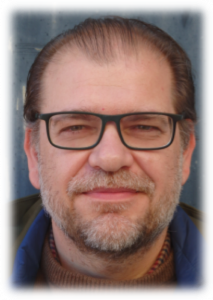
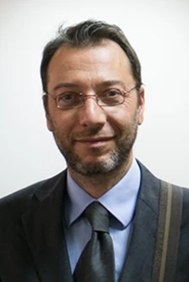
Athanasios Rontogiannis is an Associate Professor at the School of Electrical and Computer Engineering of the National Technical University of Athens (NTUA). He holds a PhD in Signal Processing from the National University of Athens (1997) and has held roles including Research Director at the National Observatory of Athens (2017–2021). His research focuses on signal processing, machine learning, and hyperspectral image analysis. Education: MEng (Electrical Engineering, NTUA, 1991), M.A.Sc. (University of Victoria, Canada, 1993), PhD (Signal Processing, National University of Athens, 1997). Research interests include adaptive algorithms, sparse representations, and tensor models. He has served on editorial boards of IEEE Transactions on Signal Processing and EURASIP journals, receiving an honorary distinction in 2020. He is a Senior Member of IEEE and affiliated with EURASIP and the Technical Chamber of Greece. Key contributions span hyperspectral unmixing, Bayesian algorithms, and space data exploitation. His work integrates machine learning for applications in space science and signal processing.
Michael Mühlebach is a Lecturer at the Department of Information Technology and Electrical Engineering at ETH Zurich, affiliated with the Max Planck Institute for Intelligent Systems in Tübingen, Germany. He received Bachelor (2010) and Master (2013) degrees from ETH Zurich, awarded the Outstanding D-MAVT Bachelor Award and Willi-Studer Prize for top performance. His research specializes in multibody dynamics , control of nonlinear systems , and model predictive control , with applications in robotics and aerospace systems. Publications demonstrate consistent focus on theoretical control frameworks validated through experimental platforms like ducted fans and reaction-wheel systems. Awards: Outstanding D-MAVT Bachelor Award Willi-Studer Prize (Best Master in Robotics, Systems, and Control)
Ioannis Andreadis is a Professor in the Department of Electrical and Computer Engineering at the School of Engineering, Democritus University of Thrace. He has been a faculty member since 1993, following his appointment as a Visiting Professor at the School of Technological Applications of TEI Kavala (1991-1992). His academic journey began with a Diploma in Electrical Engineering from Democritus University of Thrace (1983), followed by an M.Sc. in Electrical Engineering & Electronics (1985) and a Ph.D. in Instrumentation & Analytical Science (1989), both from the University of Manchester. Professor Andreadis's research spans the Design and Implementation of Electronic Systems with particular emphasis on Intelligent Systems and Machine Vision . His work has resulted in over 230 publications in international journals, book chapters, and conference proceedings. He has made significant contributions to image processing, particularly in mathematical morphology, color image processing, and real-time implementation of image processing algorithms. His research has practical applications in seismic signal processing, crowd management systems, and 3D reconstruction technologies. The analysis of his recent publications reveals a strong focus on advanced image processing techniques, with increasing integration of deep learning approaches. His work spans both theoretical foundations (such as entropy estimation and moment calculations) and practical applications (including image stabilization, multi-focus image fusion, and crowd management systems). The interdisciplinary nature of his research connects electrical engineering, computer vision, and signal processing with applications in safety engineering, structural analysis, and robotics. Among his notable achievements are the IET Image Processing Premium Award (2009) , Best Paper Award at PSVIT 2007 , and Best Paper Award at EUREKA 2009 . He was elected Fellow of the Institute of Engineering & Technology (IET) in 2006 and Fellow of the Institute of Measurement & Control (InstMC) in 2021. He has also served as Subject Editor of the IET Electronics Letters and as Guest Editor for special issues of Pattern Recognition journal. Professor Andreadis has supervised 14 PhD theses , 21 Master's theses , and 88 Diploma works , demonstrating his commitment to academic mentoring. His research has been supported by significant grants including the EDUnet project (€280,000), wireless network implementation (€37,000), laboratory infrastructure development (€120,000), school information systems support (€478,000), the RESCUER project (€350,000 as Deputy P.I.), and the EDUSAFE project (Marie Curie Actions). He leads the Electronics Laboratory at Democritus University of Thrace, which has undergone significant infrastructure development through multiple funding sources. His work on the RESCUER project demonstrates collaboration with European partners on emergency risk management systems, while his EDUSAFE involvement shows commitment to advanced AR/VR safety systems development. His research group applies computational intelligence techniques to diverse challenges from seismic analysis to pedestrian evacuation modeling.
National and Kapodistrian University of AthensGreece
Ruzica Piskac is a Professor of Computer Science at Yale University, where she leads the Rigorous Software Engineering (ROSE) group. She has made significant contributions to the fields of software verification, security, automated reasoning, and code synthesis, focusing on improving software reliability and trustworthiness through formal techniques. Dr. Piskac received her PhD from the Swiss Federal Institute of Technology (EPFL) in 2011, where her dissertation won the Patrick Denantes Prize. Prior to joining Yale, she led an independent research group at the Max Planck Institute for Software Systems in Germany (2012-2013). Her research spans several key areas: symbolic execution for Haskell (G2), privacy-preserving formal methods (PPFM), functional reactive synthesis, verification of configuration files, and analysis of software updates. Her work consistently bridges theoretical formal methods with practical applications in real-world systems. Dr. Piskac's recent publications demonstrate a strong trend toward applying formal verification techniques to emerging challenges including large language models, quantum computing security, legal accountability of automated systems, and cyber-physical systems. Her research increasingly intersects with AI, cryptography, and legal domains while maintaining strong foundations in formal methods. Her scientific achievements have been recognized with numerous prestigious awards: Multiple Amazon Research Awards Yale University's Ackerman Award for Teaching and Mentoring Facebook Communications and Networking Award Microsoft Research Award for the Software Engineering Innovation Foundation (SEIF) Patrick Denantes Prize for her PhD dissertation Dr. Piskac has graduated five PhD students, four of whom have gone on to become assistant professors of computer science. She has served as Program Chair of the 37th International Conference on Computer Aided Verification and is on the Steering Committee of the Formal Methods in Computer-Aided Design conference. She leads the Rigorous Software Engineering (ROSE) group at Yale, which focuses on several key projects including: Symbolic Execution Engine for Haskell (G2) Privacy Preserving Formal Methods (PPFM) Functional Reactive Synthesis Verifications for Configuration Files Analysis of Software Updates and Configuration Files
Dr. Eleftherios Doitsidis is an Associate Professor at the School of Production Engineering & Management of the Technical University of Crete (TUC) and a member of the Intelligent Systems & Robotics Laboratory. Previously, he served as faculty at the Department of Electronic Engineering at Hellenic Mediterranean University. His expertise spans multirobot systems, autonomous vehicle control, and computational intelligence. He holds a robust record of EU and national research project involvement. Research Interests: Specializes in multirobot team coordination, autonomous navigation systems for UAVs/AUVs, control systems design, and computational intelligence applications. Recent work focuses on energy-efficient path-planning for swarms, educational robotics frameworks like HYDRA, and digital twin integration in autonomous systems. Publications Trends: His 150+ publications address cutting-edge topics including: Autonomous vehicle control architectures Modular robotics for STEM education Optimization algorithms for multirobot systems Energy efficiency in manufacturing systems Advising & Projects: Lead researcher on numerous funded projects involving UAV/AUV missions, swarm robotics, and educational technology. Active in collaborative research with institutions like the University of South Florida. Labs & Groups: Leads the Intelligent Systems & Robotics Lab at TUC, developing advanced robotic platforms and educational tools. Maintains an open-access research portal at doitsidis.tuc.gr .
Lefteris Doitsidis is an Associate Professor at the School of Production Engineering and Management, Technical University of Crete. He holds a PhD in Production and Management Engineering from the same institution (2008), with prior academic positions at the Department of Electronics, Hellenic Mediterranean University. His professional journey includes visiting scholar roles at the University of South Florida, USA. Research focuses on robotic systems, including autonomous navigation of UAVs/AUVs, multirobot teams, computational intelligence, and educational robotics. He leads the Intelligent Systems and Robotics Laboratory, developing tools like HYDRA for STEM education and frameworks for industry 4.0 applications such as bin-picking and precision agriculture. His work integrates control systems optimization, energy efficiency in manufacturing, and digital twin technologies. Over 65 publications span journals, conferences, and books, emphasizing practical implementations like ROS-based autonomous vehicle testbeds and energy management systems for electric vehicles. Key contributions include UAV path planning algorithms, swarm robotics coordination, and sensor fusion techniques. Current research trends emphasize sustainability in manufacturing, educational robotics platforms, and autonomous systems validation through advanced algorithms like Deep Deterministic Policy Gradient.
National and Kapodistrian University of AthensGreece
Alexandri Christina is a Lecturer at the Faculty of German Language and Literature at the National and Kapodistrian University of Athens. Her research focuses on computational linguistics and natural language processing, with applications in sentiment analysis, machine translation, and human-computer interaction systems. Her work examines how implicit meaning and unspoken context in spoken interactions can be computationally modeled, particularly in political, journalistic, and technical domains. Recent projects explore the integration of generative AI with traditional linguistic approaches to enhance human-machine communication across specialized fields including medical, engineering, and maintenance contexts. Research trends show consistent focus on multilingual processing challenges, with innovations in knowledge graph construction for bias detection and cross-domain adaptation techniques. Publications demonstrate strong interdisciplinary connections between linguistics, computer science, and social sciences.
Nikos Tsourveloudis is a Professor of Manufacturing Technology at the School of Production Engineering and Management, Technical University of Crete. He leads the Intelligent Systems & Robotics Laboratory and the Machine Tools Laboratory. His research focuses on autonomous robotics, field robotics, and computational intelligence, with over 100 publications in these areas. He has been honored with awards such as the 3rd EURON/EUROR Robotic Technology Transfer Award (2009) and multiple ADAC Safety Awards (2010, 2011, 2016, 2017). His work integrates robotics, manufacturing systems, and energy efficiency, with applications in electric vehicles and UAV missions. Academic roles include editorial positions in journals and leadership in professional organizations like the Hellenic Association of Industrial Engineers. Education: Diploma in Production and Management Engineering (1990), Technical University of Crete PhD in Production and Management Engineering (1995), Technical University of Crete Research Interests: Autonomous navigation of field robots, computational intelligence, production systems modeling/control, and energy-efficient robotics. His labs develop cutting-edge solutions like the TUCer low-consumption vehicle prototype and advanced path-planning algorithms for UAV swarms. Awards: 3rd EURON/EUROR Robotic Technology Transfer Award (2009) 1st ADAC Safety Award (2010, 2011, 2016, 2017) Advising & Grants: His research has been funded by public/private partnerships. Notable projects include energy management systems for hybrid vehicles and swarm-based UAV missions. Collaborations bridge academia and industry, driving innovations in manufacturing and autonomous systems. Labs & Teams: Leads two major research groups: the Intelligent Systems & Robotics Lab and the Machine Tools Lab, focusing on robotics, control systems, and sustainable manufacturing technologies.
Konstantinos Blekas is a Professor at the Department of Computer Engineering and Informatics, University of Ioannina, Greece. He is affiliated with the Polytechnic School and teaches advanced courses such as 'Machine Learning' (MYE002) and 'Probability and Statistics' (MYY304). His research focuses on Machine Learning, Intelligent Agents, Computer Vision, and Bioinformatics, with particular expertise in Reinforcement Learning, Deep Learning, and their applications in autonomous systems, traffic management, and aerospace engineering. Education: Ph.D. in Electrical and Computer Engineering, National Technical University of Athens (1997) Diploma in Electrical Engineering, National Technical University of Athens (1993) Research Interests: Dr. Blekas explores cutting-edge topics in machine learning, including generative adversarial networks (GANs), multi-agent systems, and reinforcement learning for autonomous navigation. His work spans domains such as unmanned surface vehicles, air traffic management, and medical informatics. Notable contributions include advanced frameworks for flight trajectory modeling, urban traffic optimization, and brain functional network analysis. Awards and Recognition: While specific awards are not explicitly listed, his extensive publications and contributions to AI and robotics reflect significant academic impact. Advising and Grants: He supervises research in machine learning applications, though specific student names or grant details are not provided in the texts. His courses emphasize practical implementation, with resources available on e-learning platforms like e-course.uoi.gr. Labs and Teams: Engaged in collaborative projects involving robotics and AI, though no specific lab names are mentioned. His work integrates interdisciplinary approaches across computer science, engineering, and biomedical fields.
National and Kapodistrian University of AthensGreece
Tsiami Antigoni is a Collaborating Researcher affiliated with the Intelligent Robotics and Automation Laboratory at the National Technical University of Athens (NTUA). Her work focuses on advancing robotics, automation, and intelligent systems through interdisciplinary research. She contributes to the field of Computer Science, particularly within the Department of Computer Science at NTUA. Research interests include developing advanced control systems, AI-driven robotics, and automation technologies. Her involvement with the Intelligent Robotics and Automation Laboratory highlights her commitment to innovative solutions in these domains. No specific awards, grants, or advised students are listed in the provided information. Her current role emphasizes collaborative research without explicit mention of part-time status. Labs/Teams: Collaborates with the Intelligent Robotics and Automation Laboratory at NTUA.
Angelos Amanatiadis is Assistant Professor of Robotics at the Department of Production and Management Engineering, Democritus University of Thrace (DUTH), Greece. He received his Diploma and Ph.D. (Hons.) from the Department of Electrical and Computer Engineering at DUTH in 2004 and 2009, respectively. His research focuses on autonomous robotic systems , computer vision , machine learning , and real-time embedded systems . His publications (35+ journal papers, 50+ conference papers) cover topics like autonomous vehicle localization, 3D object detection, educational robotics, and image processing. He has received the Stavros Niarchos Award for Promising Young Scientists and IKY Postdoc Scholarship . He contributes to the field as Associate Editor of the International Journal of Advanced Robotic Systems and HardwareX Journal, and as a program committee member for 10+ international conferences. His recent work includes leading the development of Greece’s first Hellenic Autonomous Vehicle (HAV) using deep learning and AI. He teaches courses on Control Systems, Big Data Analytics, Robotics, and Computational Intelligence. His research has been featured in media outlets like BBC, Bloomberg, IEEE Spectrum, and Popular Science.
Panagiotis Filntisis is a PostDoctoral researcher at the National Technical University of Athens , supervised by Prof. Petros Maragos. His work focuses on computer vision and audio processing for affective computing , particularly in areas like body emotion recognition, visual emotion translation, and 3D facial expression reconstruction. Key research projects include: TeachBot : Exploring educational robotics e-Prevention : Developing emotion recognition systems BabyRobot : Investigating multi-party interaction iMuSciCA : Applying multimodal perception in music education He has published extensively on multimodal fusion techniques in child-robot interaction, with recent work appearing in IEEE Robotics and Automation Letters and ICASSP. Contact: filby@central.ntua.gr
Georgios Papadakis is a Professor at the Agricultural University of Athens , affiliated with the School of Environment and Agricultural Engineering . His work bridges agricultural systems with renewable energy technologies, focusing on sustainable solutions for water scarcity, energy efficiency, and climate adaptation. Research Interests: Renewable energy integration in agriculture, desalination technologies (particularly solar-powered reverse osmosis), bioenergy systems, and smart infrastructure for sustainable farming. His projects include the TANGO-Circular and AGROFOSSILFREE initiatives, targeting circular economy training and fossil-energy-free agriculture. Teaching: Educates students in advanced topics such as Renewable Energy Technologies , Smart Grids , and Water Resources Management , with a focus on practical applications in agricultural machinery and distributed energy systems. Technological Innovation: Pioneered computational tools for PV-RO desalination systems and explored hybrid energy systems for remote communities, including blockchain-enabled microgrids and low-temperature Organic Rankine Cycles (ORC). Recent Publications highlight trends in decarbonizing agriculture, experimental RO desalination under variable conditions, and renewable energy adoption in EU farming sectors. His work emphasizes interdisciplinary approaches combining environmental science, engineering, and policy analysis.
Dimitrios D. Piromalis is an Associate Professor at the University of West Attica , specifically within the Department of Industrial Design and Production Engineering . He leads the Research Lab of Electronic Automation, Telematics and Cyber-Physical Systems (EATCPS) , focusing on electronic embedded systems for applications in autonomous vehicles, IoT, and cyber-physical systems. With over 120 publications and extensive industry collaboration spanning 25 years, his work bridges academic research and practical engineering solutions. Education : BSc, MSc, and PhD in Electrical and Electronics Engineering. Research Focus : Electronic embedded systems, autonomous vehicles, IoT, cyber-physical systems, digital twins, 3D/4D printing, energy management, and smart agriculture. Recent publications highlight trends in TinyML for smart cities, predictive maintenance integration, hybrid energy storage for EVs, and digital twin applications across agriculture and automotive sectors. His work also extends to emergency communication systems, biomedical sensors, and blockchain-enabled energy gateways. Industry Collaboration : Field Application Engineer and Technical Consultant for multinational semiconductor companies. Teaching : Platforms for AI and Python programming, autonomous vehicles and drones.
Antigoni Tsiami is a Postdoctoral Research Associate at the National Technical University of Athens (NTUA), affiliated with the School of Electrical and Computer Engineering (ECE) and the CVSP Group. She has been a PhD student since 2013, focusing on audio and speech processing applications. Her work spans robotics, signal processing, and assistive technologies. Education: Diploma in Electrical and Computer Engineering from NTUA (2012) PhD candidate in the CVSP Group, ECE School, NTUA under Prof. Petros Maragos Research interests: Multichannel speech enhancement and acoustic source localization Audiovisual scene perception for human-robot interaction Far-field processing techniques MEMS microphone applications Multimodal perception systems for assistive robotics Home automation control via spoken commands Her research projects include BabyRobot and COGNIMUSE , exploring multimodal signal processing in cognitive robotics and human interaction scenarios. Recent publications demonstrate focus on integrating sensory data for practical robotics applications, emphasizing robustness in real-world environments. She collaborates with interdisciplinary teams including the CVSP Group and EU-funded initiatives. Advising/Grants: While no advisees are listed, her current postdoctoral role suggests ongoing research collaborations. She participates in grant-funded projects such as BabyRobot and COGNIMUSE. Labs/Teams: Active member of the CVSP Group and contributed to the IROS 2015 workshop on Cognitive Mobility Assistance Robots. Engaged with multidisciplinary teams in EU robotics initiatives.