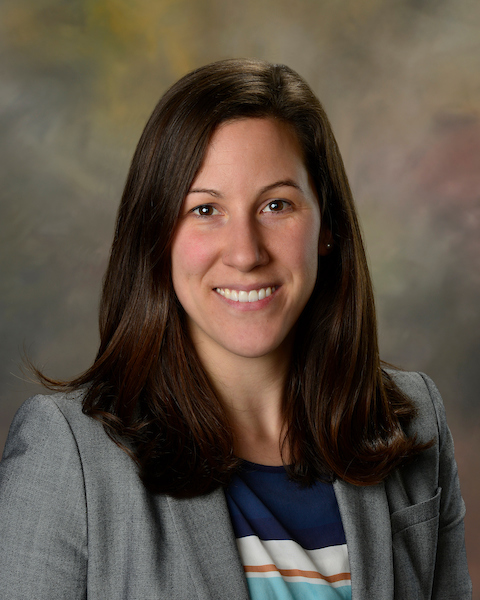
Stephanie Rogers is an Assistant Professor of Geosciences at Auburn University's College of Sciences and Mathematics, specializing in geospatial technologies and environmental applications. She leads the GeoIDEA Lab, focusing on GIScience, water quality modeling, and environmental impacts on honey bee colonies. Her research integrates emerging technologies like drones for ecological monitoring and addresses interdisciplinary challenges such as groundwater management and pollution tracking. Education: PhD in Geosciences from the University of Fribourg, Switzerland. Research Interests: Rogers' work bridges geospatial innovation with real-world problem-solving. Key areas include: GIS-driven environmental monitoring and modeling Drone-based assessment of water quality and algal blooms Groundwater contamination dynamics and public health implications Honey bee colony health through spatial analysis Advising & Grants: Currently mentors two trainees (Bethany Foust and Mallory Jordan) and collaborates on projects funded by environmental agencies. Her grants focus on geospatial data integration for ecological decision-making. Labs/Teams: GeoIDEA Lab coordinates multidisciplinary efforts in environmental geoscience, with active projects in Alabama's Black Belt region and international glacial archaeology initiatives.
Rajesh Karki is a Professor in the Department of Electrical and Computer Engineering at the University of Saskatchewan’s College of Engineering. He holds a B.E., M.Sc., and Ph.D. in related fields. His research focuses on power system reliability, renewable energy integration, and microgrid resilience, with particular emphasis on addressing challenges posed by extreme weather, cyber threats, and decarbonization targets. Dr. Karki’s work spans theoretical modeling, probabilistic analysis, and practical implementation strategies for smart grids, energy storage systems, and distributed generation. His educational background includes advanced degrees in electrical engineering, complemented by professional engineering licensure (P.Eng.). His research has explored diverse topics such as wind energy curtailment mitigation, energy storage optimization, and demand response mechanisms in developing economies like Nepal. He has authored numerous peer-reviewed publications on grid resilience, reliability economics, and cyber-physical system security. Key themes in his work include: (1) quantifying the reliability value of energy storage in active distribution systems, (2) modeling cyber-physical threats to microgrids, and (3) developing frameworks for extreme weather-resilient infrastructure. Despite the volume of his publications (over 50 articles), no specific awards or grants are explicitly listed in the provided materials. His research often intersects technical, economic, and policy dimensions of sustainable energy systems.
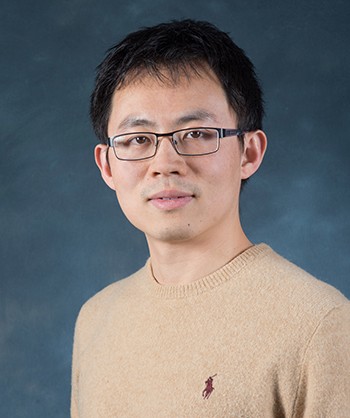
Qile Chen is an Associate Professor in the Department of Mathematics at Boston College . His research focuses on Algebraic Geometry , particularly in Logarithmic Geometry , Moduli Spaces , and Gromov-Witten Theory . He has made significant contributions to understanding A^1-connectedness , Stable Log Maps , and Virtual Cycles in geometric contexts. His publications include collaborations with leading mathematicians such as Dan Abramovich , Felix Janda , Yi Zhu , and Dawei Chen . Key topics span Logarithmic GLSM , Multi-scale Differentials , and Spin/Hyperelliptic Structures . Recent Articles : Punctured logarithmic maps (2025), Gorenstein contractions (2024), Campana rational connectedness (2024) Co-advised Student : Zijian Han (Ph.D. in progress at Boston College)
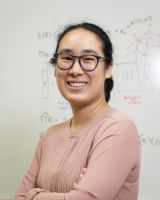
Anthony Lising Antonio is an Associate Professor at the Stanford Graduate School of Education and Associate Director of the Stanford Institute for Higher Education Research . He serves as the founding faculty director of LifeWorks , an undergraduate integrative learning program. His work focuses on postsecondary access, racial diversity in education, student development, and social stratification. PhD, University of California, Los Angeles (1998) MA, University of California, Los Angeles (1994) MS, Stanford University (1992) BS, University of California, Berkeley (1988) Dr. Antonio's research spans stratification in higher education, racial and ethnic minority student development, and the impact of diversity on institutions. Recent work explores college admissions essays, synthetic text analysis, engineering equity, and social network applications in educational research. His 2024-25 courses include Diversity and Equity Issues in Higher Education and Holistic College Student Development. His publications address critical themes like racialization in STEM, gender dynamics in undergraduate applications, intersectionality in student status, and college access program partnerships. Articles frequently employ social network analysis, critical race theory, and interdisciplinary methodologies to examine educational equity and institutional change. Principal investigator for educational RCTs Co-author on large language model demography studies Contributor to affirmative action policy debates Dr. Antonio advises doctoral students in education and sociology, with affiliations to the Center for Comparative Study in Race and Ethnicity and the Asian American Studies program. He resides in EAST House, a Stanford residential fellowship focused on equity and societal issues.
Christina Lee Yu is an Assistant Professor at Cornell University in the School of Operations Research and Information Engineering (ORIE). She holds a PhD and MS in Electrical Engineering and Computer Science from MIT (2017, 2013) and a BS in Computer Science from Caltech (2011). Her research focuses on algorithm design, high-dimensional statistics, causal inference in networks, and reinforcement learning. She is also an Amazon Scholar and has received prestigious awards, including the NSF CAREER Award and Intel Rising Stars Award. Her work is supported by grants from the NSF and Air Force Office of Scientific Research. Education: PhD in EECS, MIT (2017) MS in EECS, MIT (2013) BS in Computer Science, Caltech (2011) Research Interests: Algorithm design and analysis Inference over networks and causal inference Sequential decision making under uncertainty Online learning and reinforcement learning High-dimensional statistics Awards and Honors: NSF CAREER Award (2024) ACM SIGMETRICS Rising Stars Award (2024) Intel® Rising Stars Award (2021) JPMorgan Faculty Research Award (2021) Simons Institute Research Fellow (2020) INFORMS Dantzig Dissertation Award Honorable Mention (2018) Grants and Funding: National Science Foundation (NSF) CAREER Grant Air Force Office of Scientific Research Grant Advising: PhD Students: Sean Sinclair, Tyler Sam, Xumei Xi Collaborators: Mayleen Cortez, Matthew Eichhorn Labs and Collaborations: Member of ORIE, Statistics, CAM, and CS graduate fields at Cornell Amazon Visiting Academic in Fulfillment Optimization (2025)
Christopher Walters is a Professor at the Kenneth C. Griffin Department of Economics, University of Chicago, and previously served as an Assistant Professor at UC Berkeley (2013-2025). He is a Research Associate at the National Bureau of Economic Research, Research Fellow at IZA, and Faculty Affiliate at MIT's School Effectiveness and Inequality Initiative (SEII). PhD in Economics, MIT (2013) B.A. in Economics and Philosophy, University of Virginia (2008) Walters specializes in Labor Economics and the Economics of Education , focusing on school choice, early childhood interventions, and program evaluation. His work combines applied econometric methods with discrete choice modeling to analyze educational investments and labor market outcomes. Walters' recent publications examine class size effects, teacher quality impacts, and school finance policies, reflecting his interest in improving educational equity through rigorous empirical analysis. Research Fellow at IZA He collaborates with institutions like J-PAL North America and MIT Blueprint Labs, contributing to evidence-based policy design in education and labor economics.
David Simmons-Duffin is a Professor of Theoretical Physics at the California Institute of Technology (Caltech), where he has held positions since 2016. He is part of the Division of Physics, Mathematics and Astronomy, contributing to the Physics Department. His career progression includes roles as Visiting Associate (2016–17), Assistant Professor (2017–20), and Associate Professor (2020–21) before becoming full Professor in 2021. Education: A.B. and A.M. from Harvard University (2006), CASM from the University of Cambridge (2007), and Ph.D. from Harvard University (2012). His research focuses on conformal field theory (CFT), bootstrap methods, quantum field theory, and AdS/CFT correspondence. Key areas include precision computations in strongly coupled systems, critical phenomena, and applications to holography and quantum gravity. Research highlights include advancing the conformal bootstrap program, analyzing CFT data in 3D Ising models, and exploring connections between CFTs and gravitational theories. His work often bridges theoretical frameworks with numerical methods, yielding insights into operator product expansions (OPE), spectral gaps, and causality constraints. Affiliations include the Institute for Quantum Information and Matter (IQIM) and other Caltech research centers. His contributions have shaped modern approaches to understanding universality in critical systems and the geometric aspects of quantum field theories. Notable collaborations involve high-precision calculations, bootstrap island techniques, and studies of thermal QFT and light-ray operators. His work emphasizes interdisciplinary methods, combining analytic tools with computational advancements to tackle complex theoretical problems.
Joseph P. Romano is a distinguished Professor of Statistics and Economics at Stanford University, where he has been on the faculty since 1986. He holds joint appointments in both the Department of Statistics and the Department of Economics, reflecting his interdisciplinary research that bridges statistical theory with economic applications. Romano has established himself as a leading scholar in mathematical statistics with significant contributions to econometrics, climate science, and multiple testing methodologies. Ph.D. in Statistics, University of California, Berkeley (1986) M.S. in Statistics, University of California, Berkeley (1983) A.B. in Statistics, Princeton University (1982), Summa Cum Laude Romano's research focuses on the theoretical foundations and practical applications of statistical methods, particularly in nonparametric statistics, bootstrap and resampling techniques, and multiple testing procedures. His work addresses the challenges of analyzing massive datasets with complex structures, such as those found in biotechnology, clinical trials, and econometrics. He has developed universal statistical tools applicable across diverse fields including climate science, genetics, finance, and education. His recent work emphasizes methods for multiple testing and multivariate inference driven by the availability of massive datasets, where he tackles issues like unknown dependence structures, heterogeneity, and high dimensionality. Analysis of Romano's recent publications reveals a consistent focus on developing robust statistical methodologies for complex data structures. His work spans theoretical advances in U-statistics with growing dimensions, practical applications in seroprevalence studies, and innovative approaches to ranking inference across various domains. The interdisciplinary nature of his research is evident in publications spanning economics journals, statistics journals, and even behavioral science preprints, demonstrating the broad applicability of his methodological contributions. 2021 LGBTQ+ Scientist of the Year, Out to Innovate Fellow, International Association of Applied Econometrics (2020) Fellow, Institute of Mathematical Statistics Presidential Young Investigator Award, National Science Foundation The Canadian Journal of Statistics Award Romano has mentored dozens of doctoral students throughout his career at Stanford, serving as dissertation advisor, co-advisor, and committee member for numerous PhD candidates in Statistics. His research has been consistently supported by National Science Foundation grants, including recent funding for computer-intensive inference with applications to social sciences (2020-2023) and randomization inference for contemporary statistical problems (2013-2016). He has served in various administrative roles at Stanford including Associate Chairman and Chair of Committee on Faculty Affairs. Beyond his academic pursuits, Romano is actively involved in the 500 Queer Scientists visibility campaign and maintains a balanced life with passions in music (having performed at Carnegie Hall), competitive tennis (ranked nationally in his age group), cooking, and architecture.
Carl Henrik Ek is a Professor of Statistical Learning at the Department of Computer Science and Technology (Computer Laboratory) at the University of Cambridge. He is also a fellow and Director of Studies at Pembroke College, and holds visiting positions at Karolinska Institute in Stockholm and the Royal Institute of Technology. He serves as co-Director for the UKRI AI Centre for Doctoral Training in Decision Making for Complex Systems, a collaboration between Cambridge and Manchester universities, and is involved with the Accelerate Program in the Computer Laboratory. Dr. Ek's educational background includes a MEng degree in Vehicle Engineering from the Royal Institute of Technology in Stockholm, followed by a PhD from Oxford Brookes University. During his PhD, he spent time at the University of Manchester and the University of Sheffield. His PhD supervisors were Professor Neil Lawrence and Professor Phil Torr, and his postdoctoral research was conducted at UC Berkeley with Professor Trevor Darrell and Professor Raquel Urtasun. Professor Ek's research focuses on statistical learning, particularly on developing data-efficient and interpretable machine learning methods. His work spans modeling and inference in machine learning, with special emphasis on Bayesian non-parametric methods and Gaussian processes. He explores how to specify assumptions that allow learning from small amounts of data, bridging theoretical foundations with practical applications in various domains. His recent publications demonstrate a strong trend toward applying machine learning to healthcare, drug discovery, and engineering design. There's significant work on Gaussian processes, reinforcement learning, and generative models, with applications ranging from medical diagnostics to structural engineering. His research shows an increasing interdisciplinary focus, connecting machine learning with fields like cardiology, pharmacology, and computational geometry. Professor Ek has received numerous teaching awards throughout his career: Pilkington Price for Teaching Excellence (2024) Teacher of the year in Computer Science at University of Bristol (2016) Docent in Machine Learning at Royal Institute of Technology (2016) Teacher of the year at Royal Institute of Technology, Sweden (2015) Teacher of the year from Student chapter in Industrial Economics at Royal Institute of Technology (2015) Teacher of the year in Computer Science at Royal Institute of Technology (2012) Professor Ek teaches Advanced Data Science, Advanced topics in machine learning, and Machine Learning and the Physical World. He has supervised PhD students throughout his career but is not currently accepting new PhD students for 2025/26 or 2026/27. His research is supported by various grants, including his role as co-Director of the UKRI AI Centre for Doctoral Training. He is an active member of the ml@cl research group at Cambridge and has previously been involved with research groups at University of Bristol and Royal Institute of Technology. His work connects with several interdisciplinary initiatives, particularly in healthcare AI and engineering applications of machine learning.
Professor Peter Godfrey-Smith holds a half-time position in the School of History and Philosophy of Science at the University of Sydney, alongside his role at the CUNY Graduate Center. He earned his undergraduate degree from the University of Sydney and a PhD in Philosophy from UC San Diego. His research spans the philosophy of biology, animal cognition, and consciousness evolution, with notable books like Other Minds and Metazoa . Key awards include the Royal Society of NSW Medal (2017) and the Lakatos Award (2010) for his work Darwinian Populations and Natural Selection . His fieldwork on octopuses has garnered international attention, exploring their intelligence and implications for understanding consciousness. Peter has taught at Stanford, Harvard, and ANU, balancing academic roles with public engagement through media appearances and podcasts. Education: B.A. University of Sydney; PhD in Philosophy, UC San Diego. Research Interests: Evolution of consciousness, animal minds, cephalopod behavior, philosophy of biology, and interdisciplinary studies on cognitive evolution. Awards: Royal Society of NSW Medal (2017), Lakatos Award (2010), multiple fellowships and recognitions in philosophy and biology. Grants and Advising: While no specific grants are listed, his extensive publications reflect sustained research funding. Advises students in history and philosophy of science, though current names are not provided. Labs/Teams: Engages in fieldwork on octopuses, collaborating with marine biologists and philosophers globally. Active in interdisciplinary research groups studying animal cognition.
June Huh is a Mathematics Professor at Princeton University's Department of Mathematics. His research focuses on the interplay between algebraic geometry, combinatorics, and matroid theory, with notable contributions to Hodge theory, tropical geometry, and log-concavity phenomena. He is actively involved in collaborative projects such as the FRG initiative on matroids, graphs, and algebraic geometry. Key research interests include matroid polytopes, Chow rings, Lagrangian geometry, and combinatorial applications of Hodge-Riemann relations. His work bridges discrete and continuous mathematics, with implications for enumerative geometry and geometric combinatorics. Recent publications explore topics like volume polynomials, Bergman fans, and singular Hodge theory in combinatorial geometries. He has received funding for interdisciplinary research through grants like the FRG Collaborative Research program. His contributions highlight innovative methods in geometric and algebraic combinatorics.
A.T. Charlie Johnson serves as the Rebecca W. Bushnell Professor of Physics and Astronomy at the University of Pennsylvania's School of Arts & Sciences, where he has been a standing faculty member since 1994. His research program focuses on nanoscale systems and has established him as a leading figure in condensed matter physics, earning recognition from major scientific societies. His educational foundation includes: Ph.D. in Physics from Harvard University (1990) B.S. in Physics from Stanford University (1984) Professor Johnson's research centers on the development and application of atomic-layer nanomaterials, particularly graphene and transition metal dichalcogenides , for fundamental studies of transport phenomena and practical biosensor applications. His group employs advanced nanofabrication techniques at Penn's Singh Center for Nanotechnology to create devices that leverage biological molecules for chemical recognition in disease diagnosis, security screening, and environmental monitoring. This work bridges condensed matter physics with biomedical engineering , yielding innovative solutions for real-world detection challenges. Analysis of his 2023-2025 publications reveals three dominant research thrusts: (1) scalable graphene-based biosensor development for medical diagnostics, (2) exploration of quantum phenomena like Klein tunneling in novel nanoelectromechanical systems, and (3) interdisciplinary applications spanning oncology, planetary science, and fetal medicine. His work consistently emphasizes materials synthesis , device integration , and practical translation of nanoscale phenomena. His scientific contributions have been recognized with prestigious honors: Defense Science Study Group Fellow (2018-2019) Fellow of the American Association for the Advancement of Science (2017) Fellow of the American Physical Society (2011) Lindback Foundation Award for Distinguished Teaching (2003) David and Lucille Packard Foundation Fellowship (1994-1999) As an educator, Professor Johnson has mentored numerous graduate students and postdoctoral researchers, with notable alumni like Michael Biercuk (founder of Q-CTRL). His research has been supported through significant leadership roles including Director of the Nano/Bio Interface Center (2014-2017) and Packard Fellowship funding, enabling sustained innovation in nanotechnology. His group actively collaborates across disciplines to advance both fundamental understanding and practical applications of nanomaterials. Based at the Singh Center for Nanotechnology, Johnson leads a dynamic research team utilizing state-of-the-art facilities for nanofabrication and characterization. His laboratory maintains strong campus collaborations through secondary appointments in Electrical and Systems Engineering and Materials Science and Engineering, fostering an interdisciplinary environment for developing next-generation nanoscale devices.
Hakan Sandal-Wilson is an Assistant Professor of Gender, Peace and Security at the Department of Gender Studies, London School of Economics and Political Science. His research critically examines intersections of gender, sexuality, ethnicity, religion, and conflict in the Middle East, particularly focusing on Kurdish queer/LGBTIQ+ politics and diasporic movements. He is also invested in creative-critical interdisciplinary research methods, co-editing a volume on politically engaged methodologies. Previously, he served at the University of Cambridge as a Teaching Associate and Affiliated Lecturer, and as Campaigns Officer for Amnesty UK’s LGBTI Network. Education : - PhD, University of Cambridge Centre for Gender Studies - MA in Cultural Studies, Istanbul Bilgi University Research Interests : - Queer Studies in Conflict Zones - Kurdish Social Movements - Diasporic Feminist and Queer Activism - Ethnography and Creative Writing Methodologies Publications Trends : His work bridges theoretical inquiries with activism, emphasizing marginalized queer voices in conflict-affected regions. Recent projects include monographs on Kurdish queer politics and co-edited collections on creative-critical interventions for social justice. Awards & Grants : No awards explicitly mentioned, but his work has been translated into multiple languages and featured in outlets such as openDemocracy and Jadaliyya. Advising & Mentorship : No listed advisees, but directs LSE’s MSc Gender and MSc Gender (Research) programmes, teaching courses like GI402 (Gender, Knowledge & Research Practice) and GI413 (Gender, Race & Militarisation). Labs & Collaborations : Co-convened 'Creaction' interdisciplinary workshops at UCL, fostering global creative-critical social justice research.
Oleg Kozlovski is an Associate Professor at the University of Warwick. His research focuses on dynamical systems, ergodic theory, mathematical physics, and financial mathematics. He has held an EPSRC Advanced Fellowship (2001–2006) for research in Complex Dynamics and Fast Dynamo Theory. His work combines pure mathematical analysis with applications to economics and physics. Teaching responsibilities include MA132 Foundations. His research explores hyperbolicity, rigidity phenomena, and bifurcation theory in dynamical systems. Notable contributions include studies on unimodal maps' density in C^k topologies and rigidity of real polynomials. Grants include £1.9M EPSRC funding for foundational dynamical systems research. His work bridges pure mathematics with applied fields like economic modeling and nonlinear dynamics.
Mohd Fikree Hassan is a Lecturer at the School of Information Technology, Monash University Malaysia, joining in June 2023. He holds a Ph.D. and Master's from the University of Malaya, and a B.Eng. in Electronics Engineering from Multimedia University. With over 14 years of academic experience, he is actively engaged in research, teaching, and supervision. B.Eng. in Electronics Engineering (Telecommunications), Multimedia University, 2004 M.Eng. in Engineering (Telecommunications), University of Malaya, 2015 Ph.D. in Signal and Systems, University of Malaya, 2018 His research focuses on image and signal processing , particularly in image enhancement, restoration, computer vision, and human color vision . His work contributes to improving image visibility, removing color casts, and developing algorithms for noisy or degraded images. He applies mathematical and computational techniques to solve real-world imaging challenges. The recent publication trends (2021–2025) show a strong focus on image restoration using variational methods (e.g., total variation, ℓ0 regularization), color enhancement in HSI space, and video analysis for sports applications. His work bridges theoretical optimization and practical computer vision systems. He actively contributes to the academic community through peer review for journals such as Neurocomputing , Journal of Imaging , and International Journal of Computational Intelligence Systems , as well as for IEEE conferences. Mohd Fikree is currently accepting PhD students and serves as an external examiner for academic programs. His consistent research output and editorial service reflect a growing impact in the field of image processing and computer vision. While no formal lab or team is mentioned in the text, his collaborations with researchers like R. Paramesran, T. Adam, and G. Krishnasamy suggest active research partnerships in signal and image processing.