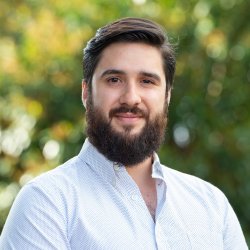
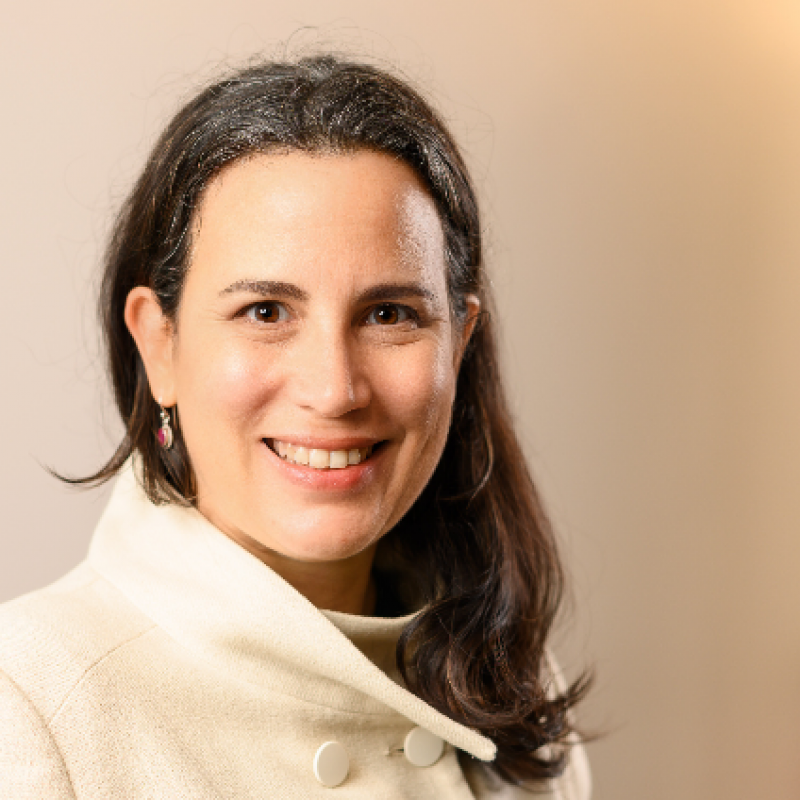
Oscar Mendez Maldonado is a Lecturer in Robotics and Artificial Intelligence at the University of Surrey's School of Computer Science and Electronic Engineering, affiliated with the Robotics Department and CVSSP Centre. He holds a PhD (2018) and BEng (2013) from the University of Surrey. His research focuses on Machine Learning, Computer Vision, and Robotics, with emphasis on autonomous systems, localisation, and SLAM applications. Key projects include the Autonomous Valet Parking (AVP) system for indoor navigation and the SMILE project for sign language assessment using AI. He has supervised students like James Ross (Autonomous Vehicles), Xihan Bian (Reinforcement Learning), and Nimet Kaygusuz (Visual Odometry). Notable achievements include the Sullivan Thesis Prize (2018) and impactful publications in IEEE conferences (e.g., ICRA, CVPR, IROS). Research spans topics like 3D hand pose estimation via diffusion models, graph-based visual odometry fusion, and Raman spectroscopy for localisation. He contributes to open-source tools (e.g., RaSpectLoc GitHub) and collaborates with industry partners like Parkopedia. His work bridges theoretical advances with real-world applications in autonomous systems and healthcare.
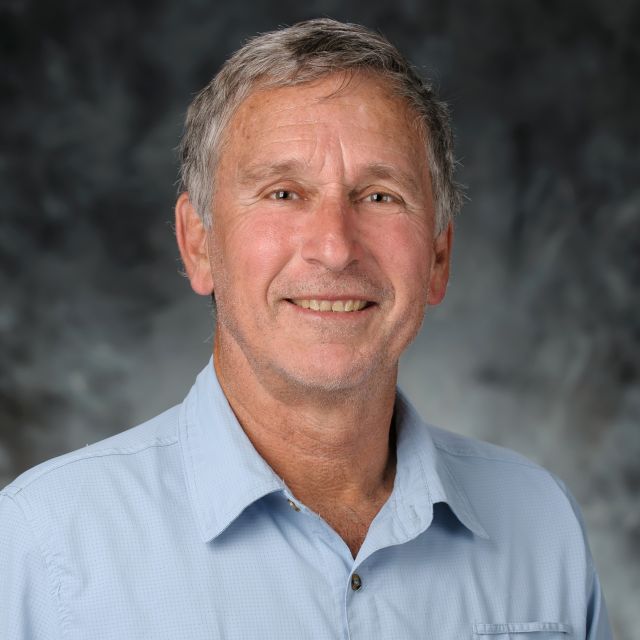
Philbert Tsai is an Associate Teaching Professor in the Department of Physics at the University of California, San Diego (UCSD). He has held roles as QBio Lab Coordinator/Project Scientist (2015–Present) and Associate Project Scientist (2011–2015), overseeing advanced laboratory setups and bio-imaging research projects. His work focuses on neurovascular systems, microscopy techniques, and cortical blood flow dynamics. Education: Ph.D., Physics, UC San Diego, 2004 Research Interests: Quantitative analysis of cortical microvascular networks Development of ultra-high-resolution imaging systems (e.g., STED, two-photon microscopy) Neurovascular coupling mechanisms and their impact on brain oxygen supply Biomedical engineering applications in neuroscience research Lab & Projects: QBio Lab: Advanced instrumentation including confocal microscopes, 3D printers, and wet-lab equipment Developed vectorized models of mouse brain vasculature and ultra-wide-field multiphoton imaging systems Grants & Awards: No specific awards listed in provided text Collaborations: Worked extensively with colleagues like Dr. David Kleinfeld and Dr. Berislav Zlokovic on neurovascular projects.
Phillip Gans is a Professor in the Department of Earth Science at the University of California, Santa Barbara. His research focuses on structural geology, tectonics, and volcanology, with an emphasis on deformational processes in continental lithosphere and extensional tectonics. He holds a B.S. in Engineering and Geology from Cornell University (1978), an M.S. in Economic Geology from Stanford University (1982), and a Ph.D. in Geology from Stanford (1987). His work integrates field-based studies with radiometric dating, geochemical analyses, and numerical modeling. Notable projects include investigations into the Cenozoic evolution of the Basin and Range province, gneiss domes in Arctic Alaska and northeast Russia, and the structural evolution of the Tibetan plateau. Recent studies expand into the Mexican Basin and Range province and gneiss domes in Tibet. His publications span tectonic evolution, metamorphic core complexes, and volcanic systems, with recent articles addressing topics such as Gold Butte normal fault block tectonics (2025) and magmatic belts in southern California (2024). He advises current graduate student Ryan Eden and has mentored past student Evan Monroe. His research is supported through grants and collaborations involving fieldwork, geochronology, and structural analysis.
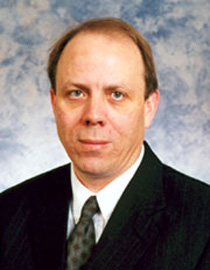
Philip Hemmer is a Professor in the Department of Electrical and Computer Engineering at Texas A&M University, affiliated with the College of Engineering. He holds a Ph.D. in Physics from MIT (1984) and a B.S. from the University of Dayton (1976). His research focuses on quantum optics, nanodiamond-based quantum sensing, and advanced optical materials for applications in quantum computing, biosensing, and thermal imaging. Key areas include solid-state quantum systems, upconversion nanoparticles, and fiber-optic sensor technologies. Dr. Hemmer's work spans interdisciplinary fields such as quantum communication, luminescent thermometry, and nanotechnology. His lab develops novel materials like GeV color centers in diamonds for high-precision sensing and explores applications in medical diagnostics, environmental monitoring, and fundamental physics. Awards include the National Science Foundation Fellowship and multiple AFOSR Star Team Awards. Education: Ph.D., Physics, Massachusetts Institute of Technology, 1984 B.S., University of Dayton, 1976 Awards: National Science Foundation Fellowship Summa Cum Laude, University of Dayton Air Force Research Laboratory Chief Scientist's Award AFOSR Star Team Award (three-time recipient) His recent publications emphasize quantum-enhanced biosensing, nanodiamond engineering, and fiber-optic quantum sensors. Research trends highlight innovations in thermal imaging using diamond defects, multiplexed sensing platforms, and scalable quantum technologies.
Rob Silversmith is a Warwick Zeeman Lecturer in the Warwick Mathematics Institute at the University of Warwick, with a focus on algebraic geometry and combinatorics. Starting Fall 2025, he will transition to an Assistant Professor role at Emory University. His academic journey includes a Ph.D. from the University of Michigan (2017), advised by Yongbin Ruan, and postdoctoral positions at Northeastern University and the Simons Center for Geometry and Physics. His research interests span algebraic geometry—particularly moduli spaces of curves, tropical geometry, and combinatorial structures—as well as connections to string theory, geometric rigidity, and dynamics. Key contributions include work on Gromov-Witten invariants, cross-ratio degrees, and the T-graph of Hilbert schemes. His recent publications (2021–2025) explore topics such as moduli spaces, tropical geometry, and combinatorial algebraic geometry, reflecting a blend of geometric and computational methods. Notable collaborations include work with R. Cavalieri, T. Kelly, and R. Ramadas on projects like Genus-zero r-spin theory and Equations at infinity for critical-orbit-relation families of rational maps . Rob has advised no listed graduate students but has contributed to interdisciplinary projects involving computer-aided conjecture-making. His scholarly activities include organizing seminars and maintaining an active presence in geometric research communities. He is affiliated with the Warwick Mathematics Institute and holds a position in the Zeeman Building. His work frequently intersects with combinatorial and computational approaches to algebraic geometry, emphasizing explicit polynomial constructions and data-driven conjectures.
Prof Duncan Robertson is a Professorial Research Fellow at the School of Physics and Astronomy, University of St Andrews, Scotland. He holds a B.Sc. (Hons.) and Ph.D. in Physics from the same institution. His career has focused on millimeter-wave radar technologies with applications in environmental sensing, security systems, and battlefield systems. He leads the Millimetre Wave Group, specializing in radar imaging, radiometry, electron spin resonance instrumentation, and antenna design. Education: B.Sc. (Hons.) in Physics and Electronics, University of St Andrews (1991) Ph.D. in Millimetre Wave Physics, University of St Andrews (1991) Research Interests: Prof Robertson’s work spans millimeter-wave radar systems, including drone detection, glacier monitoring, sea clutter analysis, and holographic metasurfaces. His group develops technologies for security screening, environmental monitoring, and material characterization. Grants & Projects: Environmental Monitoring: Short Range Interferometric Synthetic Aperture Radar (InSAR) MuWMAS: Snowflake Scattering and Microstructure Analysis Drone Detection Radar Commercialization Labs/Teams: Leads the Millimetre Wave Group, collaborating on radar phenomenology and advanced sensor systems. Active in international radar conferences and experimental field trials.
Priyamvada Natarajan is the Joseph S. and Sophia S. Fruton Professor of Astronomy and Professor of Physics at Yale University, serving as Chair of the Astronomy Department and Chair of the Women Faculty Forum. Her research focuses on cosmology, gravitational lensing, and black hole physics. She explores topics like dark matter distribution, supermassive black hole formation, and the interplay between galaxy evolution and AGN feedback. Natarajan has pioneered methods for mapping dark matter in galaxy clusters using gravitational lensing and has contributed to understanding cosmic structure formation through large-scale simulations. Education: Ph.D. in Astrophysics from Cambridge University (1998). Research interests include the nature of dark energy, galaxy formation, and the history and philosophy of science. She leads projects like DAVOS (Dwarf AGN variability studies) and QUOTAS, a platform for discovering supermassive black holes. Her recent work includes detecting overmassive black holes at high redshifts, analyzing gravitational-wave signals with NANOGrav, and utilizing JWST data to probe the cosmic dawn. Notable honors include the 2022 Liberty Science Center ‘Genius Award’. Natarajan’s collaborations span multi-messenger astronomy, leveraging gravitational lenses as cosmic telescopes. She advocates for gender equity in academia and has advised numerous observational and theoretical studies, though specific student names are not listed. Key projects involve the BUFFALO survey for cluster lens modeling and the ngEHT (next-generation Event Horizon Telescope) to study black hole environments. Her lab integrates cosmological simulations, observational data, and theoretical frameworks to address fundamental questions in astrophysics.
Assoc Prof Frederique Elise Oggier is an Associate Professor in the School of Physical and Mathematical Sciences, Division of Mathematical Sciences at Nanyang Technological University (NTU). She holds a PhD from the Swiss Federal Institute of Technology (EPFL) and has held visiting positions at Caltech and the Research Center for Information Security (Tokyo). Her research focuses on algebraic coding theory, lattice-based cryptography, and applications of number theory to secure and reliable communication systems. Education: Bachelor’s and Master’s in Mathematics from the University of Geneva PhD in Mathematics from EPFL Research Interests: Her work bridges abstract algebra with practical coding challenges, emphasizing lattice codes for wiretap channels, distributed storage systems, and security protocols. Specialized in algebraic structures like cyclic division algebras and modular lattices, her contributions advance both theoretical foundations and real-world implementations of secure communication systems. Publications: Her recent work addresses cutting-edge topics such as MDS codes, non-GRS code constructions, and lattice-based security in noisy channels. These contributions highlight her expertise in coding theory and its interdisciplinary applications. Grants/Advising: While specific grants are not detailed, her prolific publication record reflects sustained research activity. She advises on projects related to distributed storage and secure coding, though student names are not listed in the provided texts. Labs/Teams: Affiliated with NTU’s mathematical sciences division, she collaborates with global researchers on projects such as lattice coding for 5G/6G systems and cryptographic protocols leveraging algebraic number theory.
Theo Kindynis is a Senior Lecturer in Criminology at the Department of Sociology and Criminology, City St George's, University of London, where he joined in March 2024. Previously, he taught at Goldsmiths, University of London, and the University of Roehampton. His academic affiliations reflect a strong commitment to critical, ethnographic, and spatially informed criminological inquiry. PhD in Criminology, University of Greenwich, United Kingdom MPhil in Criminological Research, University of Cambridge, United Kingdom BA Hons in Sociology, University of Kent, United Kingdom Fellowship of the Higher Education Academy, Higher Education Academy, United Kingdom Theo Kindynis’s research centers on the intersections of urban space, lawbreaking, and social control. He is a leading expert on deviant subcultures, particularly graffiti writing and urban exploration, having conducted long-term ethnographic fieldwork in London. His work bridges empirical investigation with theoretical innovation, most notably through co-pioneering the concept of "ghost criminology" —a framework that examines the haunting aftereffects of crime, violence, and punishment. His methodological contributions include publishing legal, ethical, and practical guidance for criminological ethnographers researching criminalized groups, especially in digital and high-surveillance environments. His recent publications reveal a sustained engagement with spatial criminology, subcultural practices, and the ethics of ethnographic research. Themes across his work include the policing of urban aesthetics, the affective engineering of consumer spaces, the spectral presence of past violence, and the information security challenges faced by researchers in sensitive fields. His scholarly output combines theoretical rigor with grounded empirical insight, frequently published in top journals such as The British Journal of Criminology and Crime, Media, Culture . Theo Kindynis has contributed to public discourse as an expert commentator on graffiti and urban exploration, appearing in media outlets including the BBC Evening News and The Guardian. His work on information security for ethnographers addresses a critical gap in methodological literature, drawing from journalism, activism, and digital rights advocacy. Co-authored the foundational book Ghost Criminology: The Afterlife of Crime and Punishment (NYU Press, 2022) Pioneered methodological guidance on protecting ethnographic data from state and non-state threats Developed innovative approaches to anonymization and data protection in high-risk research Advocates for ethical rigor in researching criminalized populations As a supervisor, Theo welcomes doctoral proposals on urban space, deviant subcultures, and ethnographic methods. He is actively involved in shaping the future of criminological theory and methodology, particularly in relation to digital surveillance, researcher safety, and the cultural afterlives of crime. Theo Kindynis is affiliated with research teams exploring the intersections of space, crime, and memory. His ongoing projects continue to develop the framework of ghost criminology, while expanding into issues of algorithmic surveillance, border control, and the digital footprints of academic research. His work is increasingly relevant in an era of automated state profiling and data-driven social control.
Prof. Johannes Zeiher is a Professor at Ludwig Maximilian University (LMU) and leads the independent research group Quantum Matter Interfaces . His work focuses on studying quantum systems of laser-cooled atoms coupled to optical resonators, aiming to advance quantum error correction and quantum many-body physics. He secured €3.3 million from Germany's BMBF for the SNAQC project on scalable neutral atom quantum computing. Research interests include quantum interfaces between atoms and photons, Rydberg arrays in optical tweezers, and hybrid architectures for quantum technologies. His group explores non-destructive measurements, feedback mechanisms, and entanglement generation in quantum systems. Key experimental tools include high-resolution microscopy and resonator-coupled systems. Prof. Zeiher's lab is located at the Max Planck Institute of Quantum Optics, collaborating on cutting-edge quantum technologies. He holds dual affiliations with LMU and the MPQ, advancing both theoretical and experimental frontiers in quantum computing and quantum simulation. His work bridges atomic physics, quantum optics, and condensed matter systems to realize practical quantum devices.
Univ.-Prof. Dr. Dr. hc NJ Shah is a prominent academic and researcher in medical imaging physics. He serves as the Institute Director of the Institute of Neuroscience and Medicine – Medical Imaging Physics (INM-4) at Forschungszentrum Jülich and holds a Professorship in the Department of Neurology at RWTH Aachen University. He also co-directs the Jülich-Aachen Research Alliance (JARA-Brain). His research focuses on advanced MRI techniques, multimodal neuroimaging, and applications in neuro-oncology and mental health. Shah has held roles such as Distinguished Professor at Monash Institute of Medical Engineering (2015–2017) and has been recognized with awards including the Veski Award and Honorary Doctorate from the Georgian Technical University. Education: PhD (1987, University of Manchester), Diploma in Advanced Studies in Science (1984, Manchester), BSc (1983, University of Sheffield). Research interests include MRI physics, ultra-high-field imaging (7T/9.4T), brain tumor imaging, and neuroimaging data science. His work bridges clinical and experimental MRI, with contributions to quantitative water content mapping and multimodal integration of MRI-PET-EEG. His publications highlight advancements in neuroimaging methodologies and their applications in understanding neurological and psychiatric conditions. Awards and honors include Fellowships from the Royal Society of Chemistry, Royal Society of Medicine, and Institute of Physics. Shah leads the MR Physics team at INM-4 and collaborates internationally, including roles at Maastricht University and the University of New Brunswick. His work emphasizes translating imaging innovations into clinical practice for precision medicine.
Stavros Vougioukas is a Professor and Vice Chair in the Department of Biological and Agricultural Engineering at the University of California, Davis, within the College of Engineering. He is actively involved in research and graduate mentorship, focusing on agricultural robotics and automation for specialty crops. His work integrates engineering solutions to improve efficiency and sustainability in farming systems. His research interests include agricultural robotics , automation of harvesting processes , sensors and control systems , precision agriculture , and wireless sensor networks for orchard environments . He develops technologies for robotic and robot-aided harvesting, particularly in strawberries and orchard crops, emphasizing optimal management of inputs and yield monitoring. The recent publications reflect a strong trend in robotics integration , real-time sensing , and data-driven decision-making in agriculture. His work spans mechanical design, signal processing, path planning, and structural durability, indicating a multidisciplinary approach to solving agricultural challenges through engineering innovation. Scientific Awards and Recognition: $1.6M grant (2021) to develop innovative fruit-picking machines CITRIS Seed Award (2023) for engineering solutions in agriculture Professor Vougioukas mentors graduate students and leads funded research projects focused on automation and robotics in agriculture. He has secured significant grants, including a $1.6M award for fruit-picking robotics, demonstrating strong research leadership. His collaborations span institutions and disciplines, particularly in agricultural machinery design and sensor network deployment. He leads research efforts in agricultural automation, particularly through projects involving robot-aided harvesting , orchard navigation systems , and wearable worker tracking devices . His lab contributes to the development of intelligent systems for sustainable farming, integrating mechanical, electronic, and computational components.
Eric Kirby is an Adjunct Research Professor in the Department of Earth, Marine, and Environmental Sciences at the University of North Carolina at Chapel Hill, within the College of Arts and Sciences. He is actively engaged in tectonics and geomorphology research, leading the Tectonics and Geomorphology Lab. Education: Ph.D., Massachusetts Institute of Technology (2001) M.S., University of New Mexico (1994) B.A., Hamilton College (1992) Dr. Kirby's research centers on the interplay between tectonics, climate, and erosion in shaping mountainous landscapes. His work spans active mountain belts globally, with a focus on the Tibetan Plateau, convergent margins, and active fault systems. He investigates landscape responses to rock uplift, mantle flow, and hydrological processes, integrating field observations with geochronology and geophysical data. His recent publications reveal a strong trend in Quaternary tectonics, paleoseismology, fluvial geomorphology, and climate-tectonics coupling. Key themes include fault slip rate quantification, paleolake evolution, river terrace formation, and transient landscape responses to base-level changes, primarily in high-elevation and tectonically active regions. Scientific Awards: No awards listed in the provided text. Dr. Kirby actively mentors graduate students and collaborates on funded research projects involving landscape evolution, critical zone dynamics, and tectonic geomorphology. His work is supported by publications in top-tier journals and collaborations with leading institutions. He advises several students, including W.M. Rittase, Q. Su, N. West, and X. Shi, who appear as first authors on joint publications. He leads the Tectonics and Geomorphology Lab , which conducts research on active tectonics, surface processes, and landscape evolution using field mapping, remote sensing, and numerical modeling techniques.
Adrian Clingher is an Associate Professor in the Department of Mathematics and Statistics at the University of Missouri-St. Louis (UMSL), within the College of Arts and Sciences. His research spans algebraic geometry, mathematical physics, and data science, with particular focus on K3 surfaces, modular forms, and string dualities. PhD in Mathematics, Columbia University (2002) Research interests include: Algebraic Geometry of special surfaces and fibrations Mathematical aspects of string theory dualities Data science and machine learning applications Moduli spaces and lattice polarizations Connections between algebraic geometry and number theory Recent work (2021-2025) examines K3 surfaces with specific automorphism groups, Néron–Severi lattice structures, and isogenies of abelian varieties. Publications often involve collaborations with A. Malmendier, C. Doran, and T. Shaska, exploring geometric structures relevant to theoretical physics. As Graduate Director for UMSL's Master's Program in Mathematics, Clingher oversees both Traditional Mathematics and Data Science emphases. Teaching includes courses like Discrete Structures and Statistical Learning & Modeling (Spring 2025). Contact: clinghera@umsl.edu | Office: ESH 350 | Phone: (314) 516-6338
John Grieco is a Research Professor in the Department of Biological Sciences and a joint faculty member at the Eck Institute for Global Health at the University of Notre Dame. He serves as Associate Director of the Eck Institute and co-director of the Belize Vector and Ecology Center (BVEC), where he leads a multidisciplinary research program focused on the ecology, behavior, and control of vectors of diseases such as malaria, dengue, Chagas, and Japanese encephalitis. University: University of Notre Dame School: College of Science Department: Department of Biological Sciences Position: Research Professor Joint Appointment: Eck Institute for Global Health Leadership Role: Associate Director, Eck Institute for Global Health; Co-Director, BVEC Dr. Grieco completed his Ph.D. at the Uniformed Services University, an M.S. at Texas A&M University, and earned his B.S. from the University of Notre Dame. His research spans vector behavior, spatial repellency, insecticide resistance, and disease risk modeling using GIS and remote sensing. He has led and collaborated on field studies in Belize, Thailand, Nepal, Peru, Mexico, and South Korea, and maintains partnerships with industry leaders such as BASF, SC Johnson, and Olfactor Laboratories. His recent publications highlight innovations in spatial repellent deployment, mosquito trap efficacy, and novel vector control strategies. The research consistently emphasizes translational outcomes for public health, particularly in low-resource settings. His work is supported by major initiatives including the Spatial Repellents Program, IMPACTS, AEGIS, and BRICC, often in collaboration with WHO, PAHO, and the Mayo Clinic. Dr. Grieco actively mentors undergraduate and Master of Science in Global Health students, supervising numerous capstone projects on vector-borne disease interventions. His lab, the Achee/Grieco Lab, is known for its field-based, interdisciplinary approach and commitment to training the next generation of global health scientists. Medical Entomology Vector Ecology and Behavior Vector Control Strategies Spatial Repellents and Irritants Infectious Disease Dynamics Disease Risk Mapping (GIS/Remote Sensing) Arbovirus and Malaria Transmission Scientific awards and honors are not explicitly mentioned in the provided texts. Dr. Grieco advises numerous students at both undergraduate and graduate levels, particularly through the Master of Science in Global Health program. His lab supports student research on topics including insecticide resistance, community perceptions of vector control, disease surveillance, and behavioral effects of repellents. He also leads the High-Throughput Screening System (HITSS) for evaluating vector behavioral responses. The Achee/Grieco Lab operates the Belize Vector and Ecology Center (BVEC), which conducts extensive field research, community outreach, and surveillance in Belize. BVEC collaborates with the Ministry of Health, University of Belize, and international partners. The lab also participates in global networks such as the Worldwide Insecticide Resistance Network (WIN) and the Remote Emerging Disease Intelligence NETwork (REDI-NET).