Hristina Delibasic Markovic is an Assistant Professor at the Institute of Physics , part of the Faculty of Science and Mathematics at the University of Kragujevac. She earned her doctorate in 2023 and specializes in Atomic, Molecular, and Optical Physics with additional expertise in analog/digital electronics and teaching methodology. Her research focuses on Ultrafast laser-matter interactions Coulomb effects in ionization dynamics Plasma formation in biological materials Quantum trajectory analysis in elliptical polarization She has published extensively on theoretical and computational aspects of laser-induced ionization processes. Key laboratory affiliations include the Laboratory for Atomic and Nuclear Physics and Laboratory for Physics Methodology and Teaching Aids . Her work has been presented in international collaborations and Erasmus+ exchange programs.
Prof. Dr. Frank Meyer zu Heringdorf is a Principal Investigator at the Collaborative Research Centre 1242 (University of Duisburg-Essen) and holds the Professor rank. His work focuses on ultrafast electron dynamics , spin-state switching , and X-ray spectroscopy in condensed matter systems. Affiliation: University of Duisburg-Essen, Germany Research Focus: Electron correlations, magnetic materials, and nanoscale physics Research Interests: Meyer zu Heringdorf explores collective electronic excitations , non-equilibrium energy transfer , and photoinduced magnetism using advanced techniques like femtosecond laser spectroscopy and soft X-ray absorption . His group investigates spin crossover complexes , magnetocaloric materials , and electron-phonon interactions in heterostructures. Article Trends: Recent publications highlight table-top X-ray sources , renormalized charge transfer in oxides, graphene-mediated magnetic anisotropy , and attosecond pulse synthesis . These works span ultrafast dynamics , nonlinear absorption , and quantum material design . Labs & Collaborations: He leads Project B06 in CRC 1242, collaborating with researchers across European XFEL , nickel and iron compounds , and multiferroic systems .
Quirin Thomas Simon Vogel is a Senior Lecturer at the University of Klagenfurt , located within the Department of Statistics . Before joining Klagenfurt, he held post-doctoral positions at the Technical University of Munich and New York University Shanghai , and served as Interim Professor at Ludwig-Maximilians University of Munich . His research lies at the intersection of probability theory and statistical mechanics . Specifically, he investigates random walks , random algorithms , and loop-based models arising from physical systems. Key themes include: Loop percolation and interacting Bose gases Large deviations and critical phenomena Randomised algorithms for communication networks Mathematical models of cancer dynamics and immune response Across his 2020-2025 publications, Vogel consistently applies probabilistic techniques to high-dimensional statistical-physics models, neural-network theory, and wireless-protocol design, evidencing a broad yet cohesive research portfolio. Contact details: Email: quirin.vogel@aau.at Office: N.0.01, Main Building, North Wing West, Level 0 Phone: +43 463 2700 3156
Ana Cristina Luz Broega is an active Assistant Professor at the University of Minho's School of Engineering, Azurém Campus, where she directs the Master's in Fashion Communication Design program and teaches courses spanning Fashion Design Project, Advanced Apparel Design, and Ethical Fashion. Her academic career at the institution began in 1997 as an Intern Assistant, progressing through Assistant Professor positions since 2008, with significant leadership roles including membership on the Master's in Design and Marketing Steering Committee. PhD in Textile Engineering - Textile Physics (2008), University of Minho School of Engineering Master's in Design and Marketing (2001), University of Minho School of Engineering Bachelor's in Textile Engineering (1994), University of Beira Interior Broega's research centers on sustainable fashion systems with particular emphasis on psychological comfort dimensions in clothing, circular economy implementation, and creative process innovation. Her work bridges textile engineering with human-centered design, examining how emotional, social, and cultural factors influence garment acceptance and usage patterns. Current investigations explore aging populations' clothing needs, gender-neutral fashion frameworks, and waste valorization through surface design. Analysis of her recent publications reveals a strong trajectory toward systemic sustainability solutions, with increasing focus on circular business models, emotional durability, and cross-sensory design methodologies. Her work consistently connects material science with consumer behavior, demonstrating how technical textile properties intersect with psychological comfort perception to drive sustainable adoption. Curricular Merit for Research in Textile Field (2005) Award for Best Final Average in Bachelor's Engineering (1994), Order of Engineers Portugal Broega actively mentors doctoral and master's students across fashion design, sustainability, and communication fields while leading European Commission-funded projects including Fashion Alive (2022-2034) and TEXSTRA (2017-2020). Her research grants focus on sustainable education frameworks, textile innovation, and cross-border design collaboration. As principal organizer of the International Congress on Fashion and Design (CIMODE) since 2012, she facilitates global knowledge exchange among designers, researchers, and industry professionals. Her work integrates closely with the Textile Science and Technology Center (2C2T), leveraging university-industry partnerships to advance sustainable textile applications while directing the Fashion Communication Design program that connects academic research with market innovation through collaborative platforms like A Malha.
Fiona Jane White serves as a Fixed-term Researcher at the Faculty of Agricultural, Environmental and Food Sciences, Free University of Bozen-Bolzano, Italy. Her academic work focuses on ecological assessment and sustainable management within mountain environments. Her primary research domains include: Plant biodiversity conservation in alpine ecosystems Environmental impact assessment methodologies Grassland and alpine vegetation dynamics Statistical applications in agricultural and environmental science Dr. White's research integrates field ecology with quantitative analysis to address challenges in sustainable agricultural production systems and mountain environment preservation. Her work demonstrates strong alignment with interdisciplinary approaches to environmental management.
Professor Yuka Tabe of the Department of Physics, Faculty of Science and Engineering at Waseda University, is a leading researcher in Biophysics and Soft Matter Physics . Her work focuses on Liquid Crystals , Langmuir Monolayers , and Thermomechanical Coupling in chiral systems. Key affiliations: Waseda University (2012–present) Professional memberships: The Physical Society of Japan The Japanese Liquid Crystal Society Her research interests span: Cholesteric liquid crystal dynamics under thermal gradients Induced smectic phase formation in binary mixtures Photo-polymerization in 2D systems Defect manipulation in liquid crystal colloids Molecular diffusion in ordered soft materials Nanoscale patterning via micelle templating Recent publications (2016–2021) demonstrate: Heat-driven rotation of cholesteric droplets (Lehmann effect) Stabilization of double-twisted structures via elastic energy competition Photochemical control of topological defects in LC emulsions Gas permeation studies in smectic films Charge-transfer-induced smectic phase ordering Molecular dynamics simulations of 2D diffusion
Linh Nguyen is a Lecturer in Biomaterials and Tissue Engineering at University College London (UCL), Faculty of Engineering, Royal Free Campus. She has held this position since May 1, 2019, with her appointment extending to January 1, 2100. Prior to her current role, she served as a Postdoctoral Research Assistant at the University of Oxford in Engineering Science from January 2016 to March 2019, and as a Postdoctoral Researcher at Soonchunhyang University in Regenerative Medicine from March 2012 to October 2015. Linh Nguyen completed her Master of Science from Yeungnam University in 2008. Her academic journey demonstrates progression from fundamental materials research to applied tissue engineering solutions. Dr. Nguyen's research focuses on the development and application of advanced biomaterials for tissue regeneration and medical applications. Her work encompasses: Design and characterization of novel hydrogels and composite biomaterials for drug delivery and tissue engineering Development of 3D-printed scaffolds for bone and skin tissue regeneration Investigation of bioactive glasses and their applications in bone regeneration Exploration of natural polymers like chitosan and fibrin for biomedical applications Integration of nanomaterials such as graphene and titanium dioxide in biomaterial formulations Translation of laboratory findings to clinical applications through rigorous in vitro and in vivo testing Analysis of Dr. Nguyen's publication record reveals a strong focus on translational biomaterials research with emphasis on bone and skin tissue engineering. Her work demonstrates expertise in 3D printing technologies, hydrogel formulations, and composite biomaterials. Many of her recent publications involve collaborations with international researchers, indicating an active global research network. The research shows progression from fundamental material characterization to more complex in vivo testing and clinical applications, with particular attention to angiogenesis, osteogenesis, and drug delivery mechanisms. Dr. Nguyen has established herself as an active contributor to the biomaterials field with numerous publications in reputable journals. Her work demonstrates technical expertise across multiple biomaterial platforms and a commitment to addressing clinically relevant challenges in tissue regeneration. Her research aligns with Sustainable Development Goal 3 (Good Health and Well-Being), reflecting the clinical relevance of her work in developing biomaterials for medical applications.
Stăvilă Alina serves as a Lecturer at the Faculty of Psychology and Social Work, European Studies University of Moldova. Concurrently, she works as a Clinical Psychologist for Green Cross Switzerland in Moldova, providing counseling services to children, adolescents, and adults. She also holds leadership roles as Coordinator of the SOCMED Program at Green Cross and President of NGO Adsisto, driving social initiatives and community engagement through volunteer projects. Her academic credentials include: PhD candidate in Social Psychology at International Free University of Moldova (2016–present) Master’s degree in Clinical Psychology and Psychological Counseling from International Free University of Moldova (2012–2014) Master’s degree in Penal Law from European Studies University of Moldova (2008–2010) Bachelor’s studies in International Relations at State University of Moldova (2008–2010) Specialized training in psychoanalytic therapy through Moldovan Society of Psychiatrists and Narcologists Her professional focus integrates clinical practice with social intervention , specializing in psychoanalytic approaches derived from Winnicott and Klein for child/adolescent development. She applies theoretical frameworks to trauma counseling, family dynamics, and mental health across diverse populations, emphasizing community-based psychological support. Her work bridges academic instruction with field implementation through NGO partnerships. No scientific awards or major recognitions are documented in available sources. Regarding student supervision, no specific advising details are publicly available. Her dual roles in academia and clinical practice suggest potential opportunities for applied research in community psychology, though current grants or funded projects aren’t specified. Prospective students should contact her directly for supervision capacity and research alignment. There is no indication of a dedicated research laboratory or team structure in the provided materials.
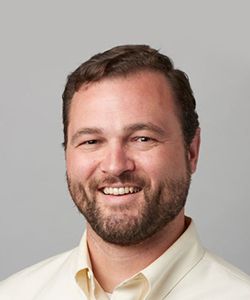
Charles Kankelborg is an Associate Professor in the Department of Physics at Montana State University's College of Letters & Science. He earned his Ph.D. from Stanford University in 1996 and joined the MSU faculty in 2001 after working as a postdoc on the TRACE satellite program. His primary research focuses on solar physics, particularly the solar corona, transition region, and chromosphere. His educational background includes a B.S. from University of Puget Sound (1989) and a Ph.D. from Stanford University (1996). His work has established him as a significant contributor to the field of solar physics and space instrumentation. Dr. Kankelborg's research interests span solar corona dynamics, transition region physics, coronal heating mechanisms, force-free magnetic fields, ultraviolet optics, and space instrumentation development. He has made substantial contributions to the field through his work on the MOSES (Multi-Order Solar EUV Spectrograph) rocket payload, fluxon modeling of magnetic fields, 3D tomography of the solar corona using STEREO data, and techniques for coregistering images with optical distortion. His work bridges theoretical physics, computational methods, and practical instrumentation. His recent publications (2020-2023) demonstrate a consistent focus on solar physics instrumentation and analysis techniques, particularly in EUV spectroscopy, tomographic reconstruction methods, and solar magnetic field modeling. His work often involves collaboration with NASA and other research institutions on space-based solar observation projects. Fellow of the American Scientific Affiliation (2024) Outstanding Graduate Level Instructor (George Tuthill Award) (2022) RHG Exceptional Achievement for Science from NASA (2016) Outstanding Undergraduate Level Instructor (2015) Outstanding Faculty Colleague Award from MSU Physics (2012) Dr. Kankelborg has successfully secured multiple research grants including ESIS-II from NASA, IRIS-MSU extended mission (2023-2027) from Lockheed Martin Corporation, and various MUSE Phase C/D projects. His teaching portfolio includes Physics 261 (Laboratory Electronics I), Physics 567 (Mathematical Physics II), and specialized seminars in heliophysics. He has been instrumental in involving undergraduate students in research through projects like the MOSES rocket mission, as documented in the film 'Rocket Scientists.'
Dr. Palade Petru is a Scientific Researcher II at the National Institute of Materials Physics in Romania, specializing in hydrogen storage materials, magnetic nanomaterials, and advanced characterization techniques. His work bridges fundamental physics with practical energy applications through extensive collaboration with European research networks. Education: PhD in Physics (Condensed Matter Physics), 2002 Master Degree in Physics (Physics of Semiconductors), 1995 Bachelor Degree in Physics (Technological Physics), 1994 Postdoc at University of Padova, Italy (2003-2006) His research focuses on developing hydrogen storage solutions using mechanochemical methods and wet chemistry synthesis of magnetic nanoparticles. He pioneers the application of Mössbauer spectroscopy for local electronic structure analysis, particularly through conversion electron techniques. His computational work employs WIEN2k for band structure calculations of solids and molecules. Current projects target rare-earth-free permanent magnets and nanoconfined complex hydrides for vehicular hydrogen storage. Analysis of his publication trends reveals consistent leadership in magnetic nanomaterial characterization, with recent emphasis on biomedical applications (hyperthermia, drug delivery) and sustainable energy solutions. His work shows strong interdisciplinary integration of materials synthesis, advanced characterization, and computational modeling. Awards: Dragomir Hurmuzescu Prize from the Romanian Academy (2008) for hydrogen storage research He has secured significant research funding through national projects including PCCA PNCDI-2 (rare-earth-free magnets), PARTNERSHIP PNCDI-2 (STOHICO hydrogen storage project), and IDEAS PNCDI-2 (electronic mechanisms in intermetallics). His laboratory develops patented technologies for hydrogen-storing materials and iron nitride magnetic composites. The Laboratory of Magnetism and Superconductivity maintains specialized capabilities in Mössbauer spectroscopy across multiple isotopes, Sievert method hydrogen storage measurements, and Rietveld refinement of XRD data using Maud software.
Theodora Tiemersma-Wegman is a chemistry researcher at the University of Groningen, specializing in organic synthesis, asymmetric catalysis, and sustainable materials development. Her work spans over 15 years with significant contributions to multiple high-impact research projects, frequently collaborating with the Nobel laureate Ben Feringa's research group. Her research focuses on developing novel synthetic methodologies with emphasis on stereoselectivity and sustainability. Key areas include asymmetric catalysis using transition metals (copper, manganese, rhodium), supramolecular chemistry systems, and bio-based materials development. Her fingerprint analysis reveals strong expertise in Amino Acid Chemistry, Propene Chemistry, Manganese Chemistry, Cis-Dihydroxylation, Allylic Alkylation, Hydrogen Peroxide applications, and Grignard Reagent chemistry. Analysis of her publication record shows a clear evolution from fundamental organic synthesis methods toward more sustainable chemistry approaches. Her early work focused on asymmetric catalysis for amino acid synthesis and dihydroxylation reactions, while more recent publications demonstrate a shift toward bio-based materials and supramolecular systems with applications in sustainable technologies. This trajectory aligns with growing emphasis on green chemistry principles and UN Sustainable Development Goals related to responsible consumption and production. Her research has been recognized through citations across multiple publications, with her 2008 paper on manganese-catalyzed dihydroxylation accumulating 77 citations, indicating significant impact in the field of asymmetric oxidation chemistry.
Steve Coxon is a Professor of Education and Executive Director of the Center for Access and Achievement (CA²) at Maryville University's School of Education. CA² partners with schools and nonprofits to prepare pre-collegiate students for college and future careers through innovative STEM education initiatives, including robotics programs, AI integration projects, and statewide teacher certification. Dr. Coxon earned his PhD in educational policy, planning, and leadership in gifted education administration from the College of William and Mary. His graduate studies include an MA in secondary curriculum and instruction and a BA in English (with biology minor and computer science concentration), both from Virginia Tech. His research centers on spatial ability in gifted identification, particularly for underrepresented students, and the integration of robotics to enhance STEM learning and reverse the creativity crisis. He pioneered using LEGO robotics to develop spatial reasoning and has demonstrated how kindergarteners solve complex engineering problems beyond high-IQ peers, challenging traditional gifted assessment. Publications reveal consistent focus on bridging gifted education with hands-on STEM: spatial ability measurement, creativity in robotics, and equitable curriculum design. His work shows increasing emphasis on AI integration and policy impact since 2014, with recent projects targeting systemic changes in gifted identification. Notable awards include: Joyce VanTassel-Baska Award for Excellence in Gifted Education (2010) Laura Joyner Award from the Mensa Foundation (2020) Dr. Coxon has secured major grants including National Science Foundation funding for AI-STEM integration with Tufts University, LEGO Foundation partnerships for play-to-learn curricula, and state policy initiatives that led to Missouri's gifted education mandate. His FutureSTL program trains teachers while providing coding camps and STEM explorations for K-12 students. The Center for Access and Achievement (CA²) serves as his operational hub, managing partnerships with schools, nonprofits, and industry to deliver free STEM resources and professional development through platforms like maryville.edu/ca2 and First Bank Academy.