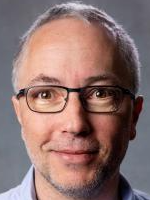
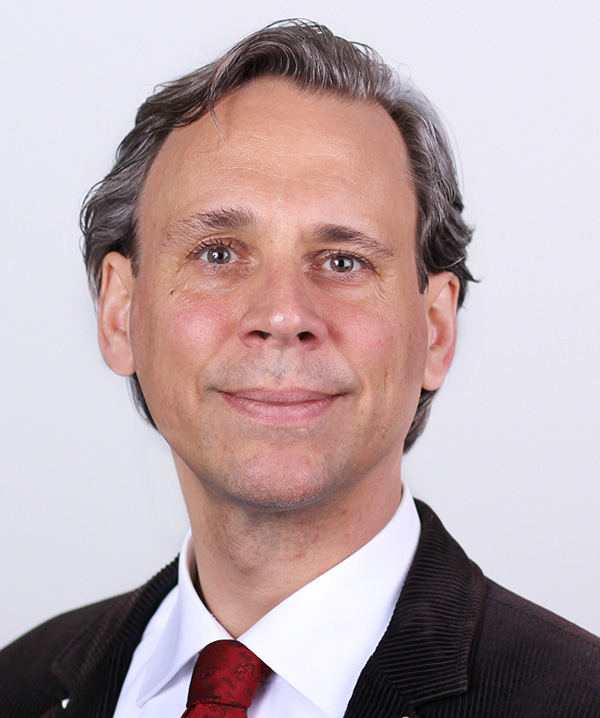
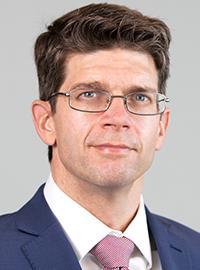
Simon Birrer is an Assistant Professor in Physics and Astronomy at Stony Brook University, specializing in cosmology and gravitational lensing. He holds a PhD from ETH Zurich (2016) and previously served as Kavli Fellow at Stanford University. Birrer leads research probing dark matter and dark energy using gravitational lensing phenomena. His group develops computational tools for analyzing strong gravitational lensing data to study cosmic expansion and dark matter distribution. Research areas include time-delay cosmography, Hubble constant measurements, and machine learning applications in astrophysics. Recent publications focus on multi-messenger gravitational lensing (2025), LSST survey applications (2025), and AI-powered lens modeling pipelines (2025). His work consistently addresses fundamental cosmological tensions like the Hubble constant discrepancy. Awards: Kavli Postdoctoral Fellowship (2019-2022) Kugelpyramide Lifetime Achievement Award Experimental Innovation Award (ETH Zurich) Research Group: Leads the SBU Strong Lensing group with 9+ graduate students and postdocs. The group participates in major collaborations including LSST Strong Lensing Science Collaboration (co-chair), LSST Dark Energy Science Collaboration, and TDCOSMO.
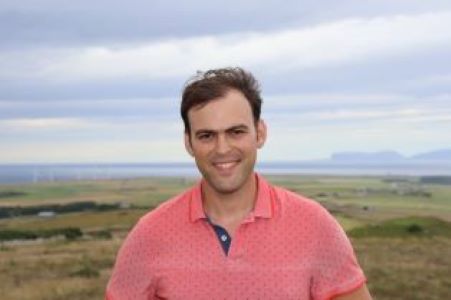
Yang P. Liu is an Assistant Professor at Carnegie Mellon University 's Department of Computer Science . He received his PhD from Stanford University under the supervision of Aaron Sidford and previously studied at MIT . Fields of Interest : Graph Algorithms, Optimization, High-Dimensional Geometry, Additive Combinatorics, Theoretical Computer Science. His research focuses on algorithmic design and analysis for graph problems, optimization, and combinatorics, with applications in machine learning and complexity theory. Recent work includes advancements in parallel repetition games , combinatorial lines , and dynamic graph algorithms . In 2024, his research spanned FOCS , STOC , and RANDOM conferences, addressing problems in k-CSPs , min-cost flow , and hypergraph sparsification . Earlier contributions (2023) included deterministic flow algorithms and spectral hypergraph techniques. Scientific Awards : NDSEG Fellowship (2018-2021), Google PhD Fellowship (2022-2023), FOCS Best Paper (2022), STOC Best Student Paper (2022), FOCS Best Student Paper (2021). He teaches CS 15-759 , a graduate course on convex optimization theory and applications, covering gradient descent, interior point methods, and algorithmic sparsification techniques.
David Goldhaber-Gordon is a Professor in the Department of Physics at Stanford University, specializing in nanoscale electron behavior and quantum effects. His research spans nanofabrication, materials growth, low-temperature measurements, and scanning probe techniques, focusing on materials like graphene, carbon nanotubes, and topological insulators. Harvard AB in Physics (1994) Harvard AM in History of Science (1994) MIT PhD in Physics (1999) His work explores electron organization and flow in nanoscale systems, emphasizing quantum effects and interactions. Research areas include twisted bilayer graphene, helical trilayer platforms, and topological insulator applications for quantum devices and energy technologies. Recent publications focus on strain effects in twisted graphene, moiré superlattice engineering, and quantum anomalous Hall integration. Themes include topological phases, correlated insulators, and metrology advancements. Co-founder and Director, Center for Probing the Nanoscale (NSF Center) Junior Fellow, Harvard Society of Fellows He teaches advanced physics labs, independent research, and dissertation courses at Stanford. His group collaborates with materials scientists, engineers, and chemists to develop novel electronic applications.
Professor Shaun Gregory is the Director of the Centre for Biomedical Technologies at Queensland University of Technology (QUT), where he also serves as Co-Director of the Artificial Heart Frontiers Program, Founder and Director of the Heart Hackathon student team competition, and Director of the CardioRespiratory Engineering and Technology Laboratory. He holds appointments in the Faculty of Engineering, School of Mechanical, Medical & Process Engineering. His educational background includes Bachelor, Masters (research), and PhD degrees, all awarded by QUT. He also holds both NHMRC and Heart Foundation fellowships, demonstrating his significant contributions to cardiovascular research. Professor Gregory's research applies a translational approach to cardiovascular engineering with a particular focus on devices used to support or replace the heart. His work brings together multidisciplinary teams of engineering, biomedical science, design, and medicine to develop novel technical solutions for clinically relevant problems. His research has changed clinical practice on numerous occasions and assisted with the regulatory approval of medical devices. His areas of interest include mechanical circulatory support, artificial heart development, cardiovascular device engineering, and hemodynamics. His publication portfolio demonstrates a strong focus on extracorporeal membrane oxygenation (ECMO), ventricular assist devices, and cardiovascular device testing. His recent work has explored computational fluid dynamics in blood flow analysis, novel cannula design for circulatory support, and the hemodynamic effects of various cardiovascular devices. His research often bridges engineering principles with clinical applications, resulting in practical innovations in cardiac support technologies. NHMRC Fellowship Heart Foundation Fellowship President-Elect of the International Society for Mechanical Circulatory Support Professor Gregory has successfully secured more than $65 million in research funding and has published over 100 research articles in his field. He is actively involved in mentoring the next generation of researchers, currently accepting Honours, Masters, and PhD students. His CardioRespiratory Engineering and Technology Laboratory serves as a hub for interdisciplinary research that brings together engineering, biomedical science, and clinical expertise to address critical challenges in cardiovascular medicine.
Leonardo Chamorro is a Professor in the Department of Mechanical Science and Engineering at the University of Illinois at Urbana-Champaign (UIUC), with affiliations in Earth Science and Environmental Change, Aerospace Engineering, and Civil and Environmental Engineering. His research focuses on fluid dynamics, renewable energy systems, and turbulence modeling. He holds a Ph.D. in Civil Engineering from the University of Minnesota (2010) and has held academic positions at UIUC since 2013, advancing to Full Professor in 2024. Chamorro's work spans experimental and theoretical investigations of wind and hydrokinetic energy, geophysical flows, and particle dynamics. His research group, the Renewable Energy & Turbulent Environment Group (RE-TE-G), explores topics like tidal flow multifractality, vortex dynamics, and bio-inspired robotics. Key achievements include Nature and Lab on a Chip cover articles, and contributions to turbulence modeling for tidal energy systems. He has received awards such as the Best Paper Award in Energies (2018) and recognition for pandemic-related research (2021). His editorial roles include associate editorships at journals like Journal of Renewable and Sustainable Energy and Frontiers in Energy Research . Chamorro has supervised numerous graduate students and postdocs, contributing to over 150 peer-reviewed publications since 2009.
Pierre Raphaël is the Herchel Smith Professor of Pure Mathematics at the Department of Pure Mathematics and Mathematical Statistics (DPMMS) at the University of Cambridge, where he joined in 2019. His academic career spans prestigious institutions including École Polytechnique, University of Cergy-Pontoise, Princeton University, and various research positions in France before his appointment at Cambridge. Professor Raphaël's research lies at the border between physics and pure mathematics, focusing on understanding energy concentration mechanisms and singularity formation during the propagation of non-linear waves. His work is deeply connected to fundamental nonlinear structures occurring in electromagnetism, astrophysics and turbulent fluid flows. He has made significant contributions to the mathematical analysis of nonlinear partial differential equations, particularly in understanding blow-up phenomena and singularity formation. His publications reveal a consistent research trajectory focused on nonlinear wave phenomena, with particular emphasis on energy concentration mechanisms and singularity formation across various mathematical models. His work spans multiple areas including nonlinear Schrödinger equations, heat equations, Korteweg-de Vries equations, and harmonic heat flows, demonstrating his expertise in analyzing critical and supercritical regimes where singularities may form. Grand Prix Alexandre Joannides 2014 from the French Academy of Sciences Royal Society Wolfson Fellowship 2019 Invited Speaker at International Congress of Mathematicians 2014 ERC Advance Grant recipient Professor Raphaël has secured significant research funding including European Research Council grants, demonstrating his leadership in the field. His research group at Cambridge focuses on singularity formation for nonlinear PDEs, as evidenced by the conference he organized at St Catharine's College in September 2024. His work bridges pure mathematics with physical applications, particularly in understanding extreme regimes of nonlinear wave propagation.
Yvain Bruned is a Professor of Mathematics at Université de Lorraine, Nancy, France, where he leads research in singular stochastic partial differential equations and related fields. He serves as Principal Investigator for the ERC Starting Grant LoRDeT (2023-2028), which focuses on advancing the theory of decorated trees and Hopf algebraic structures for solving singular SPDEs and dispersive PDEs at low regularity. Previously, he was a Lecturer at the University of Edinburgh (2019-2022) and completed postdoctoral work at Imperial College London and University of Warwick under Martin Hairer. His educational background includes: PhD in Mathematics (2012-2015), UPMC (Paris 6), on "Singular KPZ type equations" under Lorenzo Zambotti Master 2 in Probability and Statistics, ENS Cachan / Rennes 1, with honors Master 1 in Mathematics, ENS Cachan, with honors Bachelor in Mathematics and Computer Science, University of Rennes 1, with honors Student at ENS Cachan Brittany extension (2009-2013) Classes Préparatoires in Mathematics and Physics (2007-2009) Bruned's research centers on singular stochastic partial differential equations, with particular focus on Regularity Structures, renormalization theory, and their connections to Hopf algebras. His work bridges theoretical mathematics with applications in quantum field theory, wave turbulence, and numerical analysis. He has developed novel approaches using decorated trees to handle renormalization procedures for singular SPDEs and has extended these methods to dispersive PDEs with random initial data. His research program aims to establish existence and uniqueness results for quasilinear and dispersive SPDEs while developing algebraic tools through deformations of Hopf algebras. His extensive publication record demonstrates consistent contributions to the field of singular SPDEs, with a clear trajectory from foundational work on Regularity Structures to more recent applications in dispersive PDEs and numerical methods. The publications reveal a strong collaborative network with leading researchers in stochastic analysis, mathematical physics, and algebra. His work shows increasing sophistication in handling renormalization procedures through algebraic structures, with recent papers exploring connections between different mathematical frameworks. His major scientific recognition includes: ERC Starting Grant LoRDeT (2023-2028) Bruned actively supervises a large group of researchers, currently advising 4 PhD students and 2 postdoctoral researchers at Université de Lorraine, with several former PhD students having completed their degrees at the University of Edinburgh. His ERC grant has enabled him to organize multiple international workshops in Nancy, fostering collaboration between researchers in singular SPDEs, algebraic structures, and numerical analysis. The grant also supports the development of software platforms for decorated trees and their Hopf algebraic structures. As Principal Investigator of the ERC LoRDeT project, Bruned leads a vibrant research team based at the Elie Cartan Institute of Lorraine, which includes postdocs, PhD students, and visiting researchers. The team regularly organizes specialized workshops on topics including operads, symmetries for quantum field theory, and normal forms for singular dynamics, creating a dynamic research environment that bridges multiple mathematical disciplines.
Christiane Barz is a Professor of Mathematics at the University of Zurich's Institute for Business Administration since 2016. Previously, she held academic roles at the UCLA Anderson School of Management, the Chicago Booth School of Business, and the Technical University (TU) Berlin. Her research focuses on stochastic dynamic systems, Markov decision processes, and their applications in revenue management. She emphasizes making mathematical tools accessible and practical for real-world problem-solving, particularly in optimizing decision-making under uncertainty. Education includes a degree in industrial engineering and a doctorate from the University of Karlsruhe (TH), Germany. Her career path includes postdoctoral research at the University of Chicago's Booth School of Business and roles as an Assistant Professor at UCLA. She combines academic excellence with balancing family life, advocating for gender equity in STEM fields. Her research explores risk-sensitive decision-making frameworks, dynamic pricing models for transportation and healthcare, and optimizing resource allocation in complex systems. Recent work includes applications in FlixBus, air cargo networks, and improving patient admission scheduling in hospitals. Barz's teaching philosophy prioritizes demystifying mathematics for students, encouraging critical engagement rather than fear of complexity. She collaborates with industry partners to apply operations research methods to real-world challenges, emphasizing both theoretical rigor and practical relevance.
Yang P. Liu is an Assistant Professor in the Computer Science Department at Carnegie Mellon University's School of Computer Science. Previously, he was a Postdoctoral Member at the Institute for Advanced Study and earned his PhD from Stanford University under the supervision of Aaron Sidford. He completed his undergraduate studies at MIT, graduating in May 2018. His educational background includes: PhD in Computer Science, Stanford University (Advisor: Aaron Sidford) Bachelor's degree, Massachusetts Institute of Technology (graduated May 2018) Dr. Liu's research spans the intersection of mathematics and computer science, with particular focus on graph algorithms , optimization , high-dimensional geometry , and additive combinatorics . His work often develops novel algorithmic techniques that bridge theoretical insights with practical applications. He has made significant contributions to areas such as convex optimization, linear programming, and combinatorial problems. His teaching includes courses like "A Principled Approach to Optimization" (CS 15-759), which covers rigorous treatments of convex optimization topics including gradient descent, interior point methods, linear regression, linear programming, and sparsification. His extensive publication record in top-tier conferences (FOCS, STOC, SODA) demonstrates a consistent focus on developing almost-linear time algorithms for fundamental graph problems, optimization techniques, and combinatorial theorems. Recent work shows increasing emphasis on combinatorial lines, corners theorem, and k-CSP approximability, while maintaining strong connections to optimization theory and graph algorithms. Dr. Liu has received notable recognition for his work: National Defense Science and Engineering Graduate (NDSEG) Fellowship (2018-2021) Google PhD Fellowship (2022-2023) Best Paper award at FOCS 2022 for "Maximum Flow and Minimum-Cost Flow in Almost Linear Time" Best Student Paper at STOC 2021 for "Discrepancy Minimization via a Self-Balancing Walk" His research has been supported by prestigious fellowships including the NDSEG Fellowship and Google PhD Fellowship. His work on graph algorithms, optimization, and combinatorics involves collaborations with researchers across theoretical computer science and mathematics. His publications often involve co-authors from multiple institutions, suggesting active research collaborations across the field. Dr. Liu maintains an active research program with a focus on developing efficient algorithms for fundamental computational problems. His recent work continues to push the boundaries of what's computationally feasible in graph algorithms, optimization, and combinatorial mathematics, with particular emphasis on achieving almost-linear time complexity for challenging problems.
Professor Barak Weiss is a distinguished faculty member in the School of Mathematical Sciences at Tel Aviv University's Faculty of Exact Sciences. His research focuses on the intersection of dynamical systems, number theory, and geometry, particularly in the areas of homogeneous dynamics, ergodic theory, and Diophantine approximation. Professor Weiss has made significant contributions to the understanding of translation surfaces, lattice orbits, and the dynamics of flows on homogeneous spaces. His work often bridges pure mathematics with applications in number theory and geometry, revealing profound connections between seemingly disparate fields. His research on horocycle dynamics, measure rigidity for fractal carpets, and the classification of cut-and-project sets has advanced our understanding of geometric structures and their dynamical properties. His recent publications (2023-2025) demonstrate a strong focus on equidistribution phenomena, statistical properties of dynamical systems, and the application of homogeneous dynamics to problems in geometric number theory. A notable trend in his work is the interplay between geometric structures and their arithmetic properties, particularly in the context of Diophantine approximation. Professor Weiss actively organizes the "Homogeneous Dynamics and Applications" seminar at Tel Aviv University, which has been running continuously since at least 2014 with detailed schedules available through 2025. This seminar serves as a hub for cutting-edge research discussions, featuring both local and international speakers working on dynamical systems and related areas. He teaches advanced courses in analysis and supervises graduate students, with recent teaching assignments including Real Analysis for summer semester 2025. His office is located in Schreiber building, room 329, and his regular office hours are Tuesdays from 15:00-16:00.
Dr. Kristan Jensen is an Associate Professor of Physics and Astronomy at the University of Victoria specializing in theoretical high-energy physics and holographic duality. His research develops connections between quantum gravity, quantum field theory, and condensed matter systems through the AdS/CFT correspondence framework. Current research explores novel quantum phases in low-dimensional systems, emergent spacetime geometries, and non-perturbative approaches to quantum gravity. Jensen co-organizes the Pacific Northwest Particle Theory Seminar, fostering regional collaboration among theoretical physicists. Research innovations include: Holographic descriptions of boundary/defect systems Carrollian field theories and critical phenomena Non-Lorentzian gravitational duals Fractional quantum Hall states from duality Publications demonstrate consistent contributions to: Quantum information in gravity Anomaly constraints in field theory Non-equilibrium dynamics Conformal bootstrap techniques Collaborative networks span institutions including MIT, UBC, and TRIUMF, with recent work examining wormhole geometries, entanglement structure in holography, and matrix model descriptions of de Sitter space.
Ian C. Bourg is an Associate Professor at Princeton University with dual appointments in the Department of Civil and Environmental Engineering and High Meadows Environmental Institute . He directs undergraduate studies in CEE and leads the Interfacial Water Group , focusing on atomistic-level simulations and macroscopic modeling of environmental systems. His concurrent affiliations include the Princeton Institute for the Science and Technology of Materials and Chemical and Biological Engineering department. Education Ph.D. in Civil and Environmental Engineering, University of California-Berkeley (2004) MSc in Chemical Engineering, INSA Toulouse (1999) B.Eng. in Chemical Engineering, INSA Toulouse (1999) Research Interests span clay mineral surface geochemistry, geologic CO 2 sequestration, kinetic isotope effects, water behavior at interfaces, and coupling geochemistry with geomechanics in porous media. His work integrates molecular simulations with experimental validation to study environmental phenomena like contaminant transport, soil carbon storage, and water dynamics in clays. Publications from 2023-2025 reveal expertise in molecular dynamics of clay-water systems, organic contaminant partitioning, cement hydration, and isotope fractionation. Key themes include Environmental Nanoscience , Geochemical Modeling , and Soft Matter Physics applications to environmental systems. Scientific Recognition NSF CAREER Awardee (2018) Advising includes mentoring 12 current and former PhD/postdoc researchers, with notable alumni at institutions like Cornell, University of Poitiers, and Oak Ridge National Laboratory. His group has produced 20+ undergraduate advisees now in academia and industry. Laboratory develops multiscale simulation tools like HybridBiotInterFoam and HybridPorousInterFoam, with active collaborations in nuclear waste management, soil remediation, and sustainable construction materials.
Prof. Dr. Sebastian Schlücker is a full professor in the Department of Physical Chemistry at the University of Duisburg-Essen , where he leads the Molecular Biophotonics and Nanodiagnostics research group within the Faculty of Chemistry. He is actively engaged in research, teaching, and academic leadership, with a strong focus on advanced spectroscopic techniques for biomedical and analytical applications. His research interests lie at the intersection of nanophotonics, plasmonics, and bioanalytical chemistry . Key areas include surface-enhanced Raman spectroscopy (SERS) , single-particle spectroscopy , laser diagnostics , and the design of functionalized metal colloids for biosensing and tumor diagnostics. He emphasizes a theory-guided approach combining simulation and experiment to tailor nanoparticle properties. His recent publications (2023–2025) reflect a strong trend toward quantitative, label-free molecular diagnostics , point-of-care testing , and in situ monitoring of catalytic and biological processes . The work spans fundamental plasmonics to clinical applications, particularly in cancer detection and immunoassays using SERS nanotags. International Raman Innovation Prize He mentors students and researchers, supervises theses, and collaborates widely across disciplines. His group develops advanced instrumentation, including portable SERS readers , fs-laser laboratories , and automated nanoparticle synthesis systems (e.g., BONAPARTE robot). He teaches master’s courses such as NanoBioPhotonics and Optical Spectroscopy , and is involved in STEM outreach.
Luigi Ambrosio is a Full Professor at the Scuola Normale Superiore di Pisa (SNS), specializing in geometric measure theory, optimal transport, and partial differential equations. His research focuses on the interplay between geometric analysis, functional analysis, and calculus of variations, with applications to metric measure spaces and stochastic processes. He has organized numerous conferences and schools on optimal transport and geometric analysis, including the 2025 'XXXV Convegno Nazionale di Calcolo delle Variazioni.' Key research interests include the theory of currents, regularity of flows, and the application of optimal transport to problems in probability and geometry. Notable contributions include foundational work on metric Sobolev spaces, RCD spaces, and the analysis of geometric flows. Ambrosio frequently collaborates with leading institutions and has supervised numerous seminars on topics ranging from gradient flows to non-smooth geometric structures. His publications span over 150 papers, addressing topics such as the regularity of vector fields, entropy flows in Carnot groups, and the stability of action functionals. Recent works (2021–2025) explore superposition principles for currents, sharp PDE estimates for random matching, and embedding theorems for metric spaces. Ambrosio is also active in academic leadership, contributing to editorial boards and international research networks.
William S. Oates is the Cummins, Inc. Professor of Engineering in the Department of Mechanical Engineering at Florida A&M / Florida State University. He holds affiliations with the Mechatronics and Energy Center and the Florida Energy Systems Consortium (FESC). His research focuses on solid mechanics of multifunctional materials, quantum-informed continuum modeling, and applications in robotics, aerospace, and energy systems. He has advised over 20 graduate students and holds awards including ASME Fellow (2018) and NSF CAREER Award (2011). Education: Ph.D. from Georgia Institute of Technology. Research spans smart materials, fractal media mechanics, and quantum computing for material modeling. Key projects include high-temperature sapphire pressure sensors, photomechanical polymers, and Bayesian uncertainty quantification in materials science. Notable awards include DARPA Young Faculty Award (2009) and FSU Guardian of the Flame Teaching Award (2010). His lab collaborates with the National High Magnetic Field Lab and Challenger Learning Center for K-12 outreach. Current research includes quantum algorithm implementation for engineering applications and fractal-based viscoelastic models.