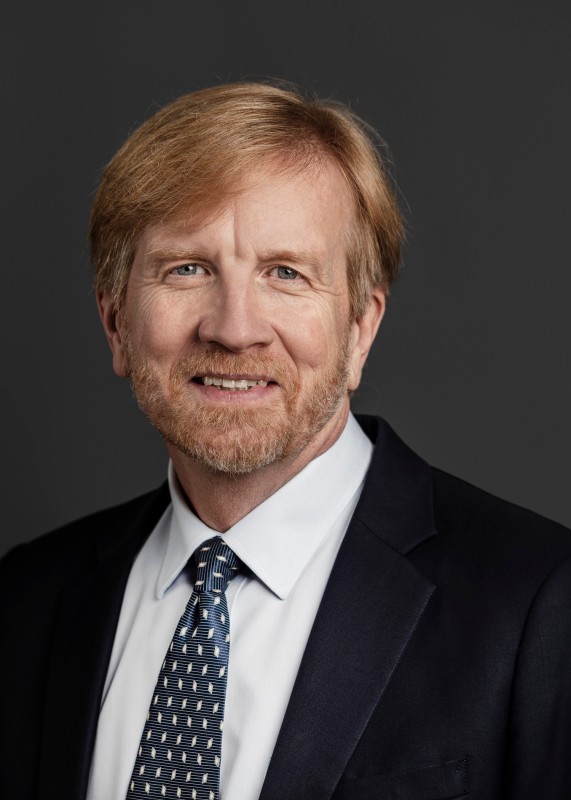
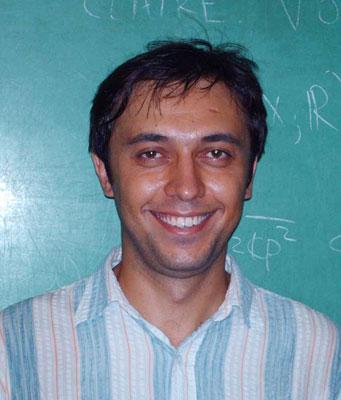
Bradley Nelson is a Full Professor of Robotics and Intelligent Systems at ETH Zürich since 2002, leading the Institute for Robotics and Intelligent Systems. He holds a Ph.D. in Robotics from Carnegie Mellon University (1995), with prior roles as Assistant Professor at the University of Illinois at Chicago (1995-1998) and Associate Professor at the University of Minnesota (1998-2002). His research focuses on microrobotics and nanorobotics for biomedical applications, including targeted drug delivery and medical robotics. He leads the Microrobotics Lab (MSRL) and chairs international workshops/conferences. Awards include IEEE and ASME Fellowships, and Best Paper accolades at major robotics venues. Research interests emphasize magnetic microrobot navigation, smart materials, and clinical translation of robotic systems. His work bridges engineering and medicine, addressing challenges like cerebral vasculature navigation for drug delivery. He has developed electromagnetically controllable catheters and telesurgery frameworks. Leadership roles include Head of the ETH Department of Mechanical and Process Engineering and Chairman of the ETH Electron Microscopy Center (EMEZ). Notable contributions include magnetically guided microcatheters, variable-stiffness catheters, and clinical-ready navigation systems. Ongoing projects explore magnetoelectric effects and biodegradable micromotors for environmental and biomedical uses. His lab collaborates with industry and academic partners globally to advance robotic solutions for healthcare challenges.
Y. N. Singh is a Professor in the Department of Electrical Engineering at Indian Institute of Technology Kanpur . He holds a PhD and M.Tech from IIT Delhi and a B.Tech from REC Hamirpur . Education PhD, IIT Delhi (1997) M.Tech, IIT Delhi (1992) B.Tech, REC Hamirpur (1991) His research focuses on telecom networks , optical networks , complex networks , and wireless sensor networks , with significant contributions to network protection protocols, rumor propagation modeling, and optical memory design. His work on p-cycles has advanced telecom network survivability techniques. Selected publications include key papers in IEEE/OSA Journal of Lightwave Technology and Acta Physica Polonica B . He has received the AICTE Young Teacher Award (2002) and the Dr. M.N. Saha Memorial Award (2006). Contact details Office: EE/ACES, IIT Kanpur, UP, India-208016 Phone: 0512-[679/392/259]-7944 (O) Lab: 0512-[679/392/259]-7841, 7070 Fax: 0512-259-0063
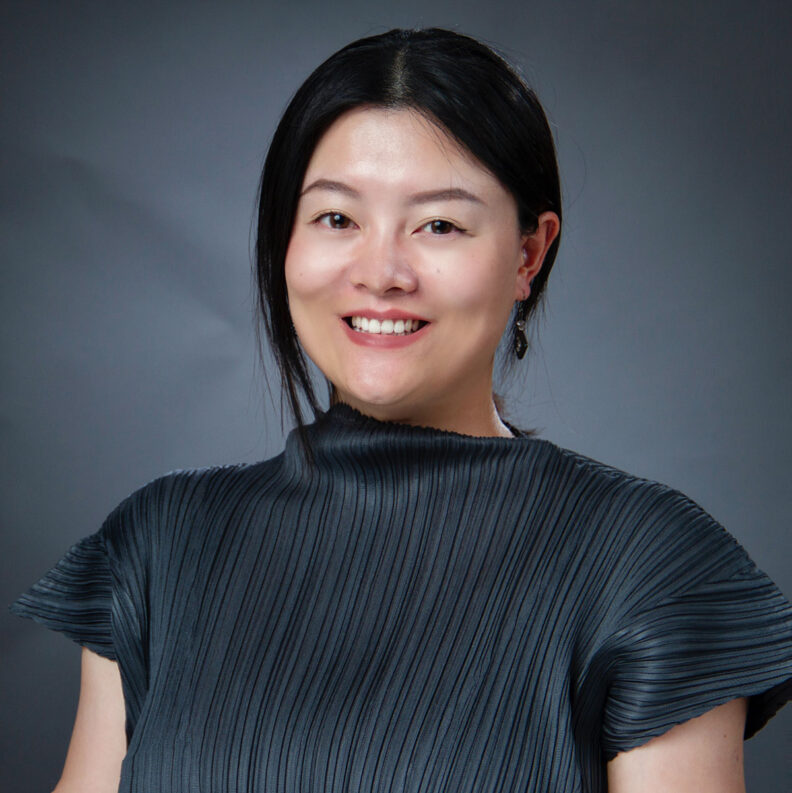
Yini Chen is an Assistant Professor in the Department of Apparel, Merchandising, Design and Textiles at Washington State University (WSU), part of the College of Agricultural, Human, and Natural Resource Sciences (CAHNRS). Their work focuses on retail innovation, consumer behavior, and sustainable practices in the fashion industry. Education: PhD in Individual Interdisciplinary Doctoral Program, WSU MS in Apparel, Merchandising, Design, and Textiles (AMDT), WSU MA in Organizational Leadership, Gonzaga University BS in Business Administration (B.B.A.), International Business, University of Technology Sydney, Australia AS in Business Administration and Management, Shanghai University, China Research Interests: Chen’s research explores omnichannel retail strategies, lifestyle retailing in emerging markets, consumer responses to sustainability initiatives, and the impact of technology (e.g., AR, social media) on shopping behavior. Key themes include: Omni-channel integration and consumer decision-making Environmental stimuli in luxury retail environments Sustainability in apparel recycling and material innovation Millennial consumer behavior in fashion consumption Publications: Chen’s recent work highlights trends in sustainable materials (e.g., regenerated cellulose fibers), post-pandemic retail shifts, and omnichannel strategies. Over 15 peer-reviewed articles and book chapters since 2017 reflect a focus on empirical studies of consumer behavior and retail innovation. Awards & Honors: 2nd Place, 2022 GPSA Research Expo Poster Competition CAHNRS 2021 Graduate Student Leadership Award 2022 GPSA Excellence Awards Graduate Student Instructor Awardee WSU 2020 President’s Award for Leadership Grants & Advising: PI on a $2,000 CAHNRS-funded 2023 study exploring metaverse shopping experiences. Teaches courses in retailing, sustainability, and leadership, emphasizing practical applications of research findings. Labs/Teams: Engaged in cross-disciplinary collaborations within CAHNRS and WSU’s School of Food Science to address retail and supply chain challenges in the apparel industry.
Dr. Youngchan Kim is a Lecturer in Quantum Biology at the University of Surrey , serving as Director of the Quantum Biology Doctoral Training Centre (QB-DTC). He is affiliated with multiple departments including the School of Biosciences, Advanced Technology Institute, and Quantum Sciences Group. PhD in Physics (2011), Korea Advanced Institute of Science and Technology MSc in Physics (2008), KAIST BSc in Physics (2006), Chung-Ang University Graduate Certificate in Learning and Teaching (2022), Advance HE His research focuses on quantum phenomena in biological systems at physiological temperatures, particularly using femtosecond optical spectroscopy and genetically engineered fluorescent proteins to explore evolutionary adaptations and develop quantum-bio-inspired technologies like room-temperature single-photon sources. The 15 most recent publications span quantum biology, biophotonics, and optical spectroscopy, with particular emphasis on quantum coherence in biological systems , terahertz birefringence , fluorescent protein dynamics , and biomedical imaging innovations . These works demonstrate his interdisciplinary approach bridging physics, biology, and medical applications. As QB-DTC Director, he leads transdisciplinary initiatives fostering collaboration between quantum physics and biosciences. His technical expertise includes time-correlated single-photon counting , common-path interferometry , and ultrafast fluorescence depolarization techniques.
Victor Liu is a Research Professor and Lecturer in the Department of Computer Science and Engineering at the University of Michigan, affiliated with the College of Engineering. His work bridges complex systems analysis, software-defined networking (SDN), and telecommunications. Ph.D. in Computer Science from the University of Pittsburgh M.E. in Computer Science from Tsinghua University B.E. in Computer Science from Xi'an Jiaotong University Dr. Liu specializes in network survivability and optimization , with a focus on: Intent-Based Networking Self-Operating Networks Packet-Optical Integration Cross-Layer Network Resilience His publications from the last decade reveal a consistent focus on network reliability , spare capacity allocation , and SDN applications . Key themes include: Protection algorithms for dual-failure scenarios Optimization of packet-optical integrated networks Routing strategies for fiber-cut recovery SDN-driven network automation Telecom infrastructure resilience Failure recovery in multi-layer systems
Reza Fotouhi is a Professor in the Department of Mechanical Engineering at the University of Saskatchewan, specializing in Robotics (Dynamics and Control), Structural Dynamics and Vibrations, Computational Mechanics, and Biomechanics. He leads research in agricultural robotics, finite element modeling, and teleoperated systems. Education: BSc, MSc (Iran) MSc, PhD (University of Saskatchewan) His research focuses on human-robot interaction, vibration control for flexible manipulators, composite material applications, and teleultrasound systems. He has developed mobile platforms for crop phenotyping and optimized control strategies for robotic arms. Recent Article Trends: His work spans telerobotic medical systems, agricultural automation, advanced control algorithms (e.g., Particle Swarm Optimization), and structural analysis of composite materials. Key subfields include musculoskeletal imaging, path planning, and dynamic modeling of flexible systems. Research Groups: Applied Mechanics and Machine Design Control Systems, Robotics and Fluid Power Engineering for Agriculture
Professor Francois Ladouceur is a distinguished academic at the University of New South Wales (UNSW), where he serves in the Faculty of Engineering, specifically within the School of Electrical Engineering and Telecommunications. With a career spanning over three decades, Professor Ladouceur has established himself as a leading expert in photonics, optical engineering, and neural interfaces. His educational background includes: Ph.D. in Optical Communication from The Australian National University (1992) Masters in Solid State Physics from École Polytechnique, Montréal, Canada (1987) B. Eng. in Engineering Physics from École Polytechnique, Montréal, Canada (1985) Professor Ladouceur's research spans several cutting-edge areas in photonics and optical engineering. His work focuses on integrated optics, silica and diamond-based photonics, optical sensing networks, and photonics-based brain/machine interfaces. He has made significant contributions to both fundamental waveguide theory and applied integrated optics, introducing innovative approaches to waveguide path design that have improved the size and ease of design of integrated optics devices. His recent work has particularly emphasized the development of liquid crystal-based optical electrodes for neural interfacing and brain/machine interfaces. Analysis of his recent publications reveals a strong trend toward biomedical applications of photonics, particularly in neural interfaces and optrode technology. His research has evolved from fundamental optical engineering to practical applications in healthcare, with a focus on developing novel optical sensing technologies for electrophysiological measurements. The interdisciplinary nature of his work combines optical engineering, materials science, and biomedical engineering to create innovative solutions for neural interfacing. Professor Ladouceur has secured significant research funding through multiple prestigious grants: ARC Discovery (DP200102825): "A Multi-Optrode Array for Closed-Loop Bionics" ($495k) NHMRC Ideas Grant (APP2002282): "Re-engineering the Future of Electrophysiological Measurements" ($732k) ARC Discovery 2016 (DP160104625): "Design of an optrode for next generation brain-machine interfaces" ($457.6k) CRC Project 2016: "High performance optical telemetry system for ocean monitoring" ($1,014,320) US Office of Naval Research: "Multi-Optrode Array for Neural Interfacing" (US$360,000) Professor Ladouceur has extensive experience in translating research into practical applications, having founded Bandwidth Foundry Pty Ltd after raising approximately $20 million from private and public sources. His work bridges the gap between academic research and commercial applications, with a particular focus on developing novel hybrid opto-electronics devices from initial design through to commercial realization. He collaborates extensively with researchers across disciplines, particularly with Professor Nigel Lovell and other colleagues in biomedical engineering. His laboratory focuses on developing optical technologies for neural interfaces, with current projects including multi-optrode arrays for brain-machine interfaces, optical telemetry systems for various sensing applications, and diamond-based photonic structures. The research group maintains strong connections with industry partners and defense organizations, applying photonics solutions to real-world problems in healthcare, mining safety, and ocean monitoring.
Professor John G Rarity serves as Professor of Optical Communication Systems within the School of Electrical, Electronic and Mechanical Engineering at the University of Bristol, where he leads research at QET Labs and the Bristol Quantum Information Institute. His work spans quantum communication, photonics, and quantum information systems with significant contributions to quantum cryptography and sensing. Research focuses on quantum communication networks , quantum cryptography , and quantum sensing applications . His fingerprint reveals dominant expertise in Quantum Dot Physics (100%), Photonics Physics (94%), Photonic Crystal Material Science (60%), and Quantum Cryptography (48%). Current work emphasizes entanglement distribution, counterfactual communication protocols, and quantum-enhanced sensing for environmental monitoring. Recent publications (2025) demonstrate leadership in multi-node quantum networks, deterministic teleportation, and methane sensing via quantum techniques. His 438 research outputs show consistent focus on practical quantum systems integration, particularly in overcoming classical-quantum channel coexistence challenges in fiber networks. Principal Investigator for 75 projects including active EPSRC grants EP/N00762X/1, EP/R022054/1, and EP/R023018/1 Supervised 36 research students Developed quantum communication systems for CubeSat deployment Pioneered quantum sensing applications for greenhouse gas detection Rarity actively collaborates across international quantum research networks, with recent work involving hollow-core fiber quantum channels, NV-center quantum sensors, and photonic integrated circuits for scalable quantum systems. His lab maintains strong industry partnerships with BT Research and optical communications firms.
Anna Vilanova is a Full Professor in Visual Analytics at the Department of Mathematics and Computer Science, Eindhoven University of Technology (TU/e), and is associated with the Electrical Engineering department's Signal Processing Systems. Previously, she served as Associate Professor at TU Delft (2013-2019) and Assistant Professor at TU/e (2002-2013). Her research focuses on Visual Analytics for high-dimensional data , explainable AI , and biomedical applications including Diffusion Weighted Imaging, 4D Flow, and Pangenomics. Education: Doctorate in Computer Graphics & Visualization (2001) Master in Computer Science (1997), Universitat Politècnica de Catalunya Research Highlights: Vilanova leads work on Visual Analytics systems for biomedical data, with recent publications in Diffusion MRI modeling , Tractography visualization , Explainable AI frameworks , and Pangenomic variant analysis . Her work bridges dimensionality reduction , uncertainty visualization , and medical imaging applications. Scientific Contributions: NWO-Veni grant (2005): "Visualization of global tensor information for diffusion tensor imaging" NWO-Aspasia grant (2013) Best Poster Award EuroVis (2025) Best Demo/Poster Awards (2022) Leadership & Service: Vilanova serves on the IEEE VIS Steering Committee , was EUROGRAPHICS President (2019-2022), and contributes to conferences like IEEE Visualization and EG-EuroVis . She co-founded the EAISI Health research initiative at TU/e.
Mahir Can is a Professor of Mathematics at Tulane University, affiliated with the School of Science & Engineering. His research focuses on Algebraic Combinatorics and Geometry, with particular emphasis on algebraic structures, monoid theory, and geometric representation theory. He holds a Ph.D. in Mathematics from the University of Pennsylvania (2006) and a B.S. in Mathematics from Middle East Technical University (2001). His work explores intersections between combinatorics, algebraic geometry, and coding theory, including studies on Schubert varieties, toric varieties, and error-correcting codes derived from algebraic structures. Recent research highlights include investigations into irreducible numerical monoids, spherical varieties, and the geometry of flag manifolds. Publications span topics such as metric space constructions via directed graphs, applications of homogeneous fiber bundles, and generalized conjectures in combinatorial monoid theory. No scientific awards or grants are explicitly listed in the provided text. Dr. Can’s advising record and lab affiliations are not detailed here, though his academic profile reflects active engagement in advanced mathematical research and education.
Dr. Shabnam Sadeghi Esfahlani is an Associate Professor in Robotics at the School of Engineering and the Built Environment, Anglia Ruskin University , where she serves as Deputy Leader of the BORI research group and leads the Automation & Robotics MSc program. Her interdisciplinary expertise spans mechatronics, artificial intelligence, virtual reality, and serious games , with a focus on applications for rehabilitation, medical training, and autonomous systems . As a Chartered Engineer and Senior Fellow of the Higher Education Academy , she has secured significant funding from Innovate UK, Horizon 2020, and GCRF , with grants exceeding £3 million. Education PhD in Mechanical Engineering, Anglia Ruskin University BSc (First Class) in Statistics & Mathematical Science, Shahid Beheshty University Her research integrates AI with robotics for societal impact, exemplified by the open-source SROBO ground robot and projects like Rehabgame and the Assistive Feeding Robot . She has published over 45 peer-reviewed articles and contributes to academic communities as a journal guest editor and conference organizer . Key collaborations include IET, IMechE, and the Nuffield Foundation as a mentor for young students. Scientific Awards & Recognitions: Chartered Engineer (CEng), Engineering Council UK Senior Fellow (SFHEA), Higher Education Academy Student-Voted 'Made a Difference Award' (2018) Post-Graduate Certificate in Higher Education
Dr. Xiong Yi is an Assistant Professor at the School of System Design and Intelligent Manufacturing (SDIM) at Southern University of Science and Technology (SUSTech) in Shenzhen, China. He leads the Computational Design and Fabrication (CoDeFab) research group, focusing on the integration of computational design methods with advanced manufacturing technologies, particularly in the field of additive manufacturing. Dr. Xiong has established himself as a leading researcher in computational design for additive manufacturing, with a strong international research background spanning Europe and Asia. Dr. Xiong's educational journey includes: Doctor of Science (DSc) in Engineering Design and Production from Aalto University, Finland (2012-2016) Master of Science (MSc) in Machine Automation from Tampere University of Technology, Finland (2010-2012) Bachelor of Engineering (BEng) in Mechanical Engineering from Hubei University of Technology, China (2006-2010) Dr. Xiong's research primarily focuses on computational design and fabrication methodologies, with particular emphasis on design for additive manufacturing (DfAM), intelligent manufacturing systems, and smart materials. His work bridges the gap between theoretical design principles and practical manufacturing constraints, developing novel approaches for the production of complex engineered products. He has pioneered research in continuous fiber-reinforced composite additive manufacturing, developing innovative process planning and optimization techniques that enable the production of high-performance structural components. His research in electrothermally controlled origami and 4D printing of smart materials represents cutting-edge work at the intersection of materials science, mechanical engineering, and computational design. Dr. Xiong's recent publications reveal a strong focus on continuous fiber-reinforced composites, with significant contributions to 4D printing, metamaterials, and intelligent process planning. His work integrates computational design with manufacturing constraints, creating novel approaches for topology optimization, toolpath planning, and structural design that consider both performance requirements and manufacturability limitations. The research demonstrates increasing sophistication in materials science applications, particularly in programmable materials and multi-functional structures. Dr. Xiong has received multiple prestigious awards for his research contributions, including: Best Presentation Award at the 24th Chinese Conference on Mechanisms and Machine Science (IFToMM CCMMS2024) Best Presentation Award at the International Conference on Frontiers of Additive Manufacturing Research (RAAM 2024) Best Paper Award at the International Conference on Design for 3D Printing (ICD3DP 2023) PhD Scholarship from Aalto University (2016) Research Travel Grant from the International Association for Vehicle System Dynamics (IAVSD) (2013) National Scholarship from the Ministry of Education (2008) As a dedicated educator and mentor, Dr. Xiong serves as a PhD supervisor at SUSTech and has successfully guided students who have gone on to pursue advanced studies and careers at prestigious institutions including Hong Kong Polytechnic University, Beihang University, DJI Innovations, and Singapore's A*STAR research institute. His research is supported by multiple competitive grants, including key projects from the National Key R&D Program of China, the National Natural Science Foundation of China, and provincial and municipal funding agencies. Dr. Xiong also serves on the editorial board of the Journal of Engineering Design and as a guest editor for Composites Communications, contributing to the advancement of his field through scholarly service. Dr. Xiong leads the CoDeFab research group, which maintains a strong collaborative culture focused on 'design leading manufacturing, manufacturing driving design, and digital-intelligent integration.' The group has developed several advanced manufacturing platforms, including multi-axis continuous fiber-reinforced composite additive manufacturing systems, smart composite additive manufacturing platforms, and multifunctional soft matter open manufacturing platforms. With a focus on practical applications and innovation, the CoDeFab group actively collaborates with industry partners and has established a joint laboratory to bridge academic research with industrial implementation.
Jason R. Green is a Professor in the Department of Chemistry at the University of Massachusetts Boston. With a PhD from Purdue University (2007) and postdoctoral experience at the Universities of Chicago, Cambridge, and Northwestern University, his research bridges theoretical chemistry, physics, and data science to explore nonequilibrium systems. His work focuses on transforming chemical energy into dynamically functional materials through interdisciplinary approaches. Education: B.S., Case Western Reserve University (cum laude, 2002) Ph.D., Purdue University (2007) with NASA Graduate Fellowship NSF Postdoctoral Fellow at University of Chicago and University of Cambridge Research Interests: Theoretical chemical physics Nonequilibrium statistical mechanics Data science applications in chemical systems His recent publications analyze electrochemical material dynamics (ACS Nano 2024), chemically driven self-assembly (Chemical Science 2024), and thermodynamic speed limits across disciplines (Nature Physics 2020, Physical Review X 2022). He has received prestigious fellowships including NASA's Graduate Student Researchers Program and NSF Postdoctoral Fellowship. The Green Research Group at UMB applies theory, computation, and data science to understand energy transformation in synthetic and biological materials.
Thomas Gries is a Professor at RWTH Aachen University 's Department of Textile Technology . He serves as the Director of the university's textile machinery department, leading research in composite materials, sustainable textiles, and advanced manufacturing technologies. Current Role: University Professor & Director, Chair of Textile Machinery Research Focus: Textile engineering, carbon fiber composites, sustainable manufacturing, digital twins His work spans experimental studies on fiber-reinforced composites, AI-driven process optimization, and lunar regolith-based fiber production for space applications. Collaborations include public research projects with industrial partners and events like the WIRKTag 2025 on AI in work design. Recent publications analyze: Mechanical behavior of natural/synthetic fiber composites Recycled thermoplastic composite thermoforming 3D-woven CFRP structural optimization Moon-based fiber production from lunar materials Environmental impact assessment tools for textiles
Leonardo Orazi is a Full Professor at the University of Modena and Reggio Emilia's Department of Engineering Sciences and Methods. He specializes in advanced manufacturing technologies, particularly laser processing, polymer engineering, and biomedical surface functionalization. His teaching roles include courses on Smart Manufacturing, Injection Molding, and Additive Manufacturing in Digital Automation and Mechatronic Engineering programs. Research focuses on laser-induced periodic surface structures (LIPSS), material characterization, and micro/nanostructuring for biomedical and industrial applications. Develops innovative manufacturing processes for antibacterial surfaces, microfluidic devices, and enhanced material properties. Research Interests: Laser texturing, polymer processing, surface engineering, additive manufacturing, and simulation-driven design. Labs/Teams: Active in laser-matter interaction research and collaborative projects on biomaterial functionalization. His work bridges computational modeling (e.g., Moldflow simulations) with experimental validation. Publications: Over 40 peer-reviewed articles since 2010, emphasizing laser-based manufacturing advancements, polymer molding optimization, and biomedical material surface treatments. Recent work includes antibiofouling polymer functionalization via ultrafast lasers and fiber orientation modeling in composites.