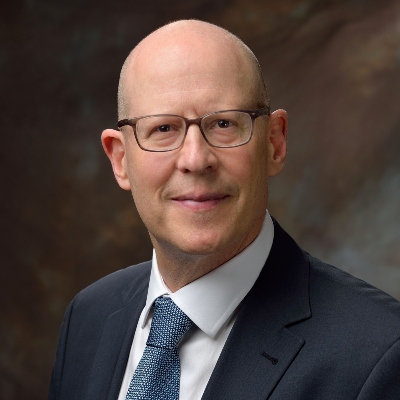
Paolo Samorì is a full-time Professor at the Université de Strasbourg , where he serves as Director of the Nanochemistry Laboratory and Emeritus Director of the Institut de Science et d'Ingénierie Supramoléculaires (ISIS) . He is affiliated with multiple prestigious academies, including the German National Academy of Science and Engineering (ACATECH) , Royal Society of Chemistry (FRSC) , and European Academy of Sciences (EURASC) . Education: Laurea (MSc) in Industrial Chemistry (University of Bologna, 1995), PhD in Chemistry (Humboldt University Berlin, 2000, summa cum laude). His research focuses on Nanochemistry , 2D materials , and supramolecular systems at interfaces , with applications in organic electronics , optoelectronics , and sensing . He pioneered methods for scanning probe microscopies and photoresponsive nanodevices , including graphene-based systems and diarylethene molecular switches. His scientific awards include the ERC Advanced Grant (2019) , Blaise Pascal Medal (2018) , and Catalán-Sabatier Prize (2017) , among 20+ honors. He has trained over 130 students and researchers , including 34 professors now active globally.
Prof. Dr. Ercan Yüksel is a full Professor in the Department of Civil Engineering at Istanbul Technical University (ITU), College of Engineering. He has been a faculty member at ITU since 1990, progressing from Assistant Professor to Professor in 2017. His research focuses on earthquake engineering, structural dynamics, and numerical modeling, with applications in seismic design, energy dissipation, and structural health monitoring. PhD, Civil Engineering, Istanbul Technical University MS, Structural Engineering (with thesis), Istanbul Technical University BS, Civil Engineering, Istanbul Technical University His research interests are centered on earthquake engineering , particularly seismic input energy analysis , energy dissipation systems , reinforced and precast concrete structures , and seismic isolation . He actively investigates the dynamic behavior of structures under earthquake loads and develops innovative solutions for improving structural resilience. His work integrates advanced numerical modeling with experimental validation. Recent publications (2023–2025) highlight a strong focus on energy-based seismic design, performance of mechanical couplers, damping systems for high-voltage insulators, and fatigue behavior of railway tracks. These works are closely tied to real-world seismic events like the 2023 Kahramanmaraş earthquake, demonstrating applied and impactful research. His scientific recognition includes: Notable Work Award, Turkish Academy of Sciences (TÜBA), 2012 Golden Beam Award, Turkish Prefabricated Association, 2011 Prof. Yüksel is an active Principal Investigator on multiple research projects funded by ITU’s BAP program, covering topics such as smart sleepers for railway monitoring, novel seismic input energy spectra, and earthquake isolation for racking systems. He has supervised numerous theses and is involved in professional organizations including UNESCO-IPRED and the Turkish Earthquake Foundation. He leads research on structural health monitoring of ballasted railway lines using smart sleeper technology and is developing earthquake isolation systems for industrial storage racks. His lab integrates experimental testing with numerical simulation to validate new structural components under cyclic and biaxial loading.
Abdon Pena-Francesch is an Assistant Professor in the Department of Materials Science and Engineering at the University of Michigan. He is also affiliated with the Macromolecular Science and Engineering Program, Chemical Engineering, and the Michigan Robotics Institute. His interdisciplinary research integrates biomaterials science, polymer chemistry, soft matter physics, and nanotechnology to develop programmable soft materials for applications in healthcare, robotics, and environmental science. Education: Ph.D. in Engineering Science and Mechanics, The Pennsylvania State University, 2017 M.Sc. in Chemical Engineering, Institut Químic de Sarrià (Barcelona, Spain), 2013 B.Sc. in Mechanical Engineering, Institut Químic de Sarrià (Barcelona, Spain), 2011 Research Interests: His work focuses on bioinspired materials , soft robotics , self-healing polymers , and biodegradable microrobots . By engineering molecular and nanoscale structures, his lab designs materials with programmable properties for soft robotic systems and biomedical devices. The group emphasizes both fundamental science and translational applications, including tissue repair, actuation, and environmental sensing. Awards and Honors: Humboldt Research Fellowship for Postdoctoral Researchers (2018–2020) Alumni Association Dissertation Award, Penn State University (2017) Rustum and Della Roy Innovation in Materials Research Award (2016) Materials Research Society Graduate Student Award (2016) First Prize, Penn State ESM Graduate Research Symposium (2015) AGAUR MOBINT Fellowship, Government of Catalunya (2012) Labs and Affiliations: He leads the Bioinspired Materials Lab , an interdisciplinary group within the University of Michigan’s Materials Science & Engineering Department. The lab collaborates with the Macromolecular Science & Engineering Program, Chemical Engineering, and the Michigan Robotics Institute.
Kamal H. Khayat serves as the Jones Professor of Civil Engineering at Missouri University of Science and Technology and directs the Center for Infrastructure Engineering Studies (CIES), focusing on advancing concrete technology for sustainable infrastructure development. His research spans high-performance concrete (HPC), ultra-high-performance concrete (UHPC), self-consolidating concrete (SCC), and concrete rheology, with specialized expertise in 3D printing applications, fiber reinforcement systems, and shrinkage mitigation techniques. He investigates innovative materials like superabsorbent polymers and alternative binders to enhance durability and sustainability in concrete infrastructure. Analysis of his recent publications reveals dominant trends in digital fabrication of concrete, particularly 3D printing optimization and rheological modeling for structural build-up. His work increasingly integrates machine learning for material property prediction while emphasizing eco-friendly formulations using recycled aggregates and carbon-mineralization techniques. As Director of CIES, Khayat leads multidisciplinary research initiatives in infrastructure materials engineering, overseeing projects related to concrete rehabilitation, sustainable construction methods, and advanced material characterization techniques for civil infrastructure systems.
Andreas Näsbom is a researcher at the Institute of Structural Engineering (IBK) , ETH Zürich, Switzerland. His work focuses on structural concrete, hybrid steel/CFRP reinforcement systems, and bond behavior in concrete elements. He specializes in experimental campaigns, distributed fiber optical sensing, and load redistribution analysis in hyperstatic systems. Research Interests: Structural Engineering, Reinforced Concrete durability, Composite Material interactions, and Plasticity Theory limitations in brittle reinforcement systems. His recent study investigates two-span concrete slab strips with hybrid steel/CFRP reinforcement, emphasizing bond stress quantification and cyclic loading effects. Scientific Contributions: This paper represents his current experimental work on hybrid reinforcement behavior, utilizing advanced measurement techniques like Distributed Fiber Optical Sensing (DFOS) to analyze bond-slip relationships and stress redistribution patterns.
Taylor Ware is an Associate Professor in Biomedical Engineering and Materials Science & Engineering at Texas A&M University's College of Engineering, holding the Cain Faculty Fellowship. Her research focuses on designing structured biomaterials and medical devices using stimuli-responsive polymers for clinical applications. Education: Ph.D. in Materials Science and Engineering, The University of Texas at Dallas, 2013 Research Interests: Dr. Ware pioneers the development of liquid crystal elastomers as artificial muscles and implantable electronics substrates, engineered living materials for infection treatment, and directed self-assembly of hydrogels. Her lab specializes in polymer formulation, thermomechanical testing, and microfabrication. Key research thrusts include: Smart elastomers, hydrogels, and composites for dynamic medical devices Programming liquid crystalline polymers for shape-morphing applications Engineered living materials that respond to biomolecular cues in urinary tract environments Publication Trends: Recent work (2023-2025) demonstrates convergence of materials science, microbiology, and medical device engineering. Her group advances liquid crystal elastomers for soft robotics and implantable electronics, develops engineered living materials for UTI treatment using microbial competition, and creates novel hemostats and urethral support devices. Publications emphasize translational applications in urology, wound healing, and neural interfaces. Scientific Awards: Invited Participant, NAE Japan-USA Frontiers of Engineering Bilateral (2023) Senior Member, National Academy of Inventors (2022) NSF CAREER Award (2018) Air Force Young Investigator Award (2017) NSF Graduate Research Fellowship (2011) Fellow of AIMBE (American Institute for Medical and Biological Engineering) Advising and Grants: Dr. Ware leads the Ware Lab with significant funding including an NIH R01 grant (with UT Dallas and Case Western collaborators) and the NSF CAREER award. Her lab mentors postdoctoral fellows like Mustafa (winner of a prestigious postdoctoral fellowship) and graduate students. Current projects are supported by the NSF Engineering Research Center HAND, focusing on advanced materials for healthcare applications. Laboratory and Teams: The Ware Lab collaborates globally and is featured in Texas Monthly, Houston Chronicle, and National Geographic for breakthroughs in engineered living materials. As part of the NSF HAND ERC, the lab develops dynamic materials for stress urinary incontinence treatment and collaborates with medical institutions on UTI therapies using engineered E. coli strains.
Dr. Parth Chansoria is a Lecturer at the Department of Health Sciences and Technology at ETH Zürich, where he leads biofabrication research within the Tissue Engineering and Biofabrication (TEB) group. His work focuses on structured light technology for regenerative medicine applications, including in vivo bioprinting and microgravity-based tissue engineering. He holds Ambizione and Spark grants from the Swiss National Science Foundation and has pioneered innovations in light-guided biofabrication, collagen-based resins, and anisotropic tissue design. Research domains include: Filamented light biofabrication for aligned tissues Minimally invasive light-based in vivo bioprinting Musculoskeletal tissue engineering in microgravity Isotonic collagen-based photocrosslinkable resins He has secured over 6 patents and received prestigious awards including the ISBF Early Career Investigator Award (2022), Marie Curie Actions Fellowship (2021), and SME 30 Under 30 recognition (2021). His interdisciplinary research bridges bioengineering, materials science, and clinical applications. Key collaborations include projects at UNC Chapel Hill (USA) and NC State (USA), where he developed biomimetic patches for dynamic organ pathologies and ultrasound-assisted cell patterning. His lab explores novel bioinks, hybrid fabrication techniques, and translational applications in regenerative medicine.
Dr. Ali Amin is a Senior Lecturer and ARC Industry Fellow at the School of Civil Engineering, The University of Sydney. He holds academic roles at ETH Zurich and The University of Toronto, and has consulting experience at Pells Sullivan Meynink. He earned a Bachelor of Engineering (Honours Class I) and PhD in Civil Engineering from UNSW Sydney, with awards including the 2017 Concrete Institute of Australia National Bursary Award and the 2016 UNSW Vice-Chancellor’s Teaching Excellence Award. His research focuses on structural analysis and design of high-performance and fiber-reinforced concrete structures, including contributions to Australian standards like AS5100.5-2017 and AS3600-2018. He teaches courses such as CIVL5269 (Advanced Concrete Structures) and CIVL3235 (Structural Analysis). Key research areas include fiber-reinforced concrete (FRC/SFRC) behavior, shear strength analysis, time-dependent deformation, and fluid-structure interaction in tall buildings. Collaborations include Professor Walter Kaufmann (ETH Zurich) and Professor Fausto Minelli (University of Brescia). Grants: ARC Industry Fellowship (2024), UNSW Goldstar Award (2018). Awards: 2017 Concrete Institute of Australia National Bursary Award, 2016 Teaching Excellence Award. His publications span over 50 peer-reviewed articles in journals like Journal of Structural Engineering , ACI Structural Journal , and conferences such as BEFIB and FraMCoS. Current research includes AI-based quality control in steel fabrication and performance evaluation of specialty cement in waste systems.
Dr. Nicholas Brake is an Associate Professor at Lamar University's Department of Civil and Environmental Engineering, focusing on reclaimed materials, wireless power transfer applications in concrete, and fatigue fracture modeling for pavements. His research spans recycled concrete aggregate, coal ash utilization, and electromagnetic cementitious composites. Education: Ph.D., M.S., B.S. in Civil Engineering from Michigan State University Awards: Anita Riddle Fellowship (2018), Lamar Merit Award (2018), Presidential Faculty Fellowship (2015), and multiple scholarships during his studies. His research emphasizes three key areas: 1) Material reclamation using recycled concrete aggregate, coal combustion residuals, and EAF slag. 2) Electromagnetic transport properties for wireless vehicle charging applications. 3) Fatigue damage modeling in concrete pavements. Through 3D printing integration and design-build-test pedagogy, he enhances student learning outcomes. Recent publications focus on international engineering education (2020), magnetic concrete composites (2019), and advanced testing methodologies for civil infrastructure (2018). His teaching innovation includes developing nine Lamar University courses with active learning strategies that improved student design confidence (p Scientific Awards: Anita Riddle Excellence in Teaching Fellowship (2018) Presidential Faculty Fellowship for Teaching Innovation (2015) Outstanding Teaching Assistant Award at Michigan State (2011) Dr. Brake mentors undergraduate and graduate researchers, including doctoral candidates Mahdi Feizbahr and Hossein Hariri Asli (2023-2024). His lab (LUMS) houses advanced testing systems like Instron 5965/8803, MTS Insight 100SL, and thermal analyzers for material characterization.
Jacob Mackenzie is an Associate Professor at the University of Southampton's Faculty of Engineering and Physical Sciences , affiliated with the Optoelectronics Research Centre (ORC) and Zepler Institute. His work spans advanced laser physics and photonics, focusing on efficient solid-state systems via planar waveguide geometries and cryogenic cooling for power scaling. Research interests: Waveguide amplifiers, cryogenically cooled lasers, ultra-fast compact lasers Key applications: Materials processing, space-borne LIDAR, silicon photonics Research Themes include innovative gain media engineering, thermal management, and spectroscopic optimization. His group explores non-standard laser transitions to expand accessible wavelengths and power regimes in continuous-wave (CW) and pulsed configurations. Publications highlight advancements in resonant waveguide gratings, thermal performance metrics, high-repetition rate systems, and optical coating durability. These align with his leadership in high-power laser design and novel manufacturing techniques. Scientific Awards Royal Academy of Engineering Postdoctoral Fellow (2004) Senior Member of the Optical Society (OSA) PhD Supervision includes Isaac Brock, Georgia Mourkioti, and Sahar Alidousti. He also mentors postgraduate students through technical workshops and co-teaches Photonics II (ELEC3217) for undergraduates. External Roles encompass invited speaking (2020), journal reviewing (2021-2022), and chairing conferences like the 10TH EPS-QEOD EUROPHOTON CONFERENCE (2022).
William A. Goddard, III is the Charles and Mary Ferkel Professor of Chemistry, Materials Science, and Applied Physics at the California Institute of Technology. With a career spanning over five decades, he has held positions from Noyes Research Fellow (1964–66) to his current professorship since 2001. His educational background includes a B.S. from UCLA (1960) and a Ph.D. from Caltech (1965). Quantum chemistry and first-principles simulations Multiscale modeling (QM→MD→mesoscale) Catalysis and protein structure prediction Nanotechnology and bionanotechnology Energy storage (batteries, supercapacitors) Recent publications emphasize applications in metal-organic frameworks , electrocatalysis , and space manufacturing , reflecting his interdisciplinary approach. His work on G-protein coupled receptors and Li-S batteries demonstrates methodological innovation through quantum mechanics and machine learning . Horizon Prize , Royal Society of Chemistry Over 1548 total publications (1967–2022) As Director of Caltech's Material and Process Simulation Center , he leads development of software like ReaxFF for reactive dynamics. He teaches Ch 120 ab (Nature of the Chemical Bond) and Ch 121 ab (Atomic-Level Simulations), emphasizing hands-on computational applications for experimentalists and theorists.
Scott L. Diamond is the Arthur E. Humphrey Professor of Chemical and Biomolecular Engineering and Bioengineering at the University of Pennsylvania's School of Engineering and Applied Sciences. He serves as Director of the Penn Center for Molecular Discovery, Director of the Penn Biotechnology Masters Program (one of the largest in the country with over 130 students), and Associate Director of the Institute for Medicine and Engineering (IME). His laboratory is located in the Roy and Diana Vagelos Laboratories at 3340 Smith Walk, 1020 Vagelos Research Laboratories, Philadelphia, PA. Diamond's research spans multiple interconnected fields in blood biology and biotechnology. His work focuses on mechanobiology, thrombolysis, coagulation, bioadhesion, gene therapy, drug/device development, proteomics, drug discovery, systems biology, and microfluidics. His laboratory has developed numerous specialized microfluidic devices for studying blood clotting under various flow conditions, including 8-channel devices for high-throughput clotting assays, side-view devices for clot structure analysis, stenosis devices for high shear clotting assays, and impingement-post devices for studying von Willebrand factor fibers. Diamond's research group has pioneered approaches to model and predict blood function using systems biology principles. His team has developed computational models that integrate reaction-transport phenomena with platelet signaling networks to predict thrombus formation under flow. These models have enabled the development of 'virtual blood' computer simulations that can predict the effectiveness of anticoagulation drugs for individual patients, contributing significantly to personalized medicine approaches in hemostasis and thrombosis. His extensive publication record demonstrates a consistent focus on understanding the fundamental mechanisms of blood clot formation and dissolution. Recent work has emphasized microfluidic approaches for point-of-care diagnostics, patient-specific modeling of platelet function, and the development of novel therapeutic strategies for thrombotic disorders. His research bridges engineering principles with clinical hematology to address significant challenges in cardiovascular medicine. NSF National Young Investigator Award NIH FIRST Award American Heart Association Established Investigator Award AIChE Allan P. Colburn Award George Heilmeier Excellence in Research Award Elected Fellow of the Biomedical Engineering Society (BMES) Diamond has secured significant research funding, including a $2.8 million NIH grant for 'Blood Systems Biology' and a $9.5 million NIH grant for the Penn Center for Molecular Discovery. His laboratory has developed numerous microfluidic devices for blood analysis and has collaborated extensively with clinicians and industry partners. Diamond has served on advisory committees for NSF, NIH, AHA, and NASA, and has consulted extensively for industry and government. With over 180 publications and patents, his work has significantly advanced the understanding of blood clotting mechanisms and the development of diagnostic and therapeutic approaches for thrombotic disorders.
Alvin NG Theng Haw is an Adjunct Associate Professor at the Division of Information Technology and Operations Management, College of Business (Nanyang Business School), Nanyang Technological University (NTU). He combines over 20 years of global leadership experience in Sales and Product Management with academic roles, including serving as a Senior Career Fellow and executive coach for NTU’s Global Executive MBA and Full-Time MBA programmes. His work focuses on integrating Digital Transformation, Internet of Things (IoT), and Artificial Intelligence for Business into strategic frameworks. Research Interests : Alvin specializes in leveraging Digital Transformation and Advanced Technologies (IoT, AI) to drive business innovation. His publications in materials science demonstrate interdisciplinary applications of these technologies to fields like Soft Robotics, Self-Healing Materials, and Wearable Electronics. His expertise extends to Smart Cities, Sustainability Technology, and Industry 4.0, where he applies business strategies to technological challenges. Contributions : As a founding member of the World Economic Forum’s Digital ASEAN Skills Task Force, he advocates for digital literacy and skills development. His industry experience includes roles in networking, software, cloud platforms, and biorenewable materials, reflecting a bridge between business and engineering.
Julian Jauk is a Researcher at the Institute for Architecture and Media, TU Graz. His work focuses on innovative material systems, digital fabrication, and sustainable architectural design. He explores the integration of clay composites, mycelium-based materials, and knitted structures with advanced manufacturing techniques like 3D printing. Key research themes include lightweight ceramic structures, biocomposite materials, and computational design methodologies. His research emphasizes material-driven innovation, structural optimization, and environmental sustainability. Notable projects include MyCera (clay-mycelium composites) and ClayKnit (3D-printed clay-knitted hybrids). He also investigates mixed reality tools for architectural sketching and kinetic architectural prototypes. Publications from 2021–2024 highlight trends in bio-based materials, additive manufacturing, and material-property analysis. His work bridges traditional craftsmanship with cutting-edge digital fabrication, aiming to redefine sustainable building practices.
Muhammad Muddasar is a Researcher at the University of Limerick's School of Engineering, affiliated with the Bernal Institute. His primary research focuses on developing sustainable materials derived from lignin for energy harvesting and storage applications. Under the supervision of Professor Maurice Collins, he investigates advanced materials such as hydrogels, ionic conducting membranes, and carbon nanomaterials to enhance renewable energy systems. His work emphasizes reducing environmental impact through innovative synthesis techniques and lifecycle analysis. Key research areas include thermoelectric materials, bioenergy production, microbial electrolysis cells, and lignin valorization. Collaborations span topics like low-grade thermal energy recovery, supercapacitor optimization, and carbon fiber production improvements. Despite no explicit awards listed, his contributions include over 17 peer-reviewed publications between 2021-2025, showcasing impactful work in Materials Today Sustainability, Advanced Functional Materials, and ACS Applied Polymer Materials. His articles highlight trends in lignin-derived materials for energy applications, sustainable manufacturing, and nanomaterial-driven bioenergy systems. Active in international networks, his research bridges material science and renewable energy engineering, addressing global sustainability challenges.