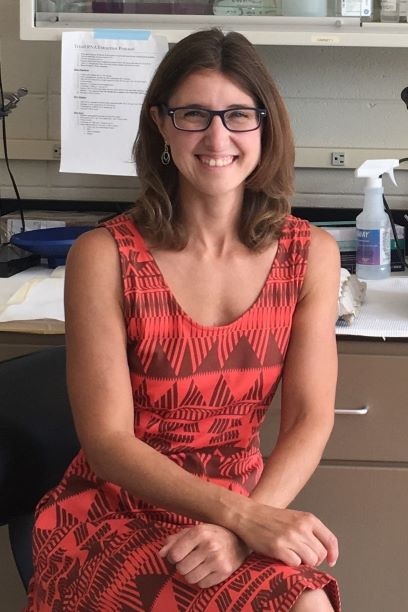
Jodie K. Votava-Smith, MD, is a Clinical Associate Professor in the Department of Clinical Pediatrics at the University of Southern California , with clinical and research affiliations to Children's Hospital Los Angeles (CHLA) . Her work focuses on the neurodevelopmental and hemodynamic consequences of congenital heart disease in neonates and infants. Research Themes : Her publications highlight interdisciplinary research at the intersection of Pediatric Cardiology Neurovascular Interaction Fetal Brain Development Placental Hemodynamics Developmental Outcomes in Congenital Heart Disease Sociodemographic Influences on Cardiac Anomalies Scientific Contributions : Through over 20 peer-reviewed articles since 2005, she has advanced understanding of cerebral autoregulation , brain dysmaturation , and neurovascular coupling in cardiac infants, employing advanced imaging modalities like MRI and near-infrared spectroscopy.
Angela Jornada Ben is a Visiting Fellow and Postdoctoral Researcher at the Department of Health Sciences, Vrije Universiteit Amsterdam (VU Amsterdam), and a Research Fellow at the Amsterdam Institute for Global Health & Development (AIGHD). She holds dual PhDs in Epidemiology and Health Economics, focusing on cost-effectiveness analyses and health technology assessment. Her research addresses public health challenges such as diabetic retinopathy screening strategies, long-term outcomes of Long COVID in Kenya, and statistical methods for real-world data in economic evaluations. Education: MD from Universidade de Passo Fundo (2005), Master’s in Epidemiology (2011), and dual PhDs from UFRGS (2017) and VU Amsterdam (2023). Certifications: Specializations in Medical Education (2015) and Health Technology Assessment (2015). Her work emphasizes global health equity, healthcare cost-effectiveness, and translational research. Recent projects include evaluating Pilates for low back pain management in Brazil and analyzing the economic burden of Long COVID. Awards: Not explicitly listed beyond academic degrees, but her research contributions align with UN SDG 3 (Good Health and Well-being). She collaborates with institutions globally and serves as a researcher at SHE Consulting (Brussels). Her expertise spans epidemiology, health economics, and clinical decision support through telemedicine programs.
Dr. Mohammed Alshawsh is a Senior Research Fellow in the Department of Paediatrics at Monash University. He holds adjunct roles as an Honorary Fellow with the Epi-Genomic Newborn Screening (EpiGNs) program and GenV initiative at Murdoch Children's Research Institute (MCRI), and as Adjunct Professor at University of Malaya's Pharmacology Department. Specializing in systematic reviews and meta-analysis methodologies, he supports evidence synthesis efforts in the Complex Autism and Neurodevelopmental Research Group (CAN). Over 14 PhD and 6 Master’s students have completed under his supervision, with ongoing guidance for 1 PhD and Honours candidates. His work spans neurodevelopmental disorders, newborn screening, and public health, contributing to UN Sustainable Development Goal 3 (Good Health and Well-being). Education: Doctor of Philosophy (PhD) from University of Malaya (2013). Research focuses on intellectual disability, autism spectrum disorders, and epidemiological studies. Notable projects include epigenomic newborn screening protocols and diagnostic yield analyses for developmental regression. His 100+ peer-reviewed publications (h-index 25) emphasize interdisciplinary approaches in pharmacology, toxicology, and molecular mechanisms. Key collaborations involve institutions across Malaysia, Indonesia, and Australia. Active in methodological training, he has conducted 20+ workshops on rigorous evidence synthesis techniques.
Dr. Robert De Matteo is an Adjunct Research Fellow in the Department of Anatomy and Developmental Biology at Monash University, Faculty of Medicine, Nursing, and Health Sciences. He leads research in the Respiratory Development and Programming Group, focusing on improving outcomes for preterm infants through studies on fetal programming, lung development, and neuroprotection. His roles include Honours Convenor and executive committee member of the Fetal and Neonatal Workshop of Australia and New Zealand (FNWANZ). He holds a PhD from the Howard Florey Institute (1997) and has extensive expertise in fetal physiology, renal and cardiovascular actions of adrenal steroids, and developmental origins of health and disease. Research interests span preterm birth complications, fetal environment influences (e.g., maternal asthma, inflammation), and long-term organ development. Key projects include investigating caffeine effects on preterm brains, creatine supplementation for preterm outcomes, and maternal asthma impacts on fetal lung development. His work aligns with UN SDGs for health and well-being. Publications emphasize preterm cardiovascular and renal outcomes, neuroprotection strategies, and developmental programming effects. Collaborations span institutions in Australia and internationally. Grants include NHMRC and Cerebral Palsy Alliance-funded studies on brain injury and lung development. Labs/Teams: Respiratory Development and Programming Group at Monash University. Future work continues exploring fetal programming mechanisms and translational therapies for preterm infants.
University of Arkansas for Medical SciencesUnited States
Spyridoula Maraka, MD, MS is an Assistant Professor in the Department of Endocrinology and Metabolism at the University of Arkansas for Medical Sciences (UAMS) College of Medicine. She also serves as a Staff Endocrinologist at the Central Arkansas Veterans Healthcare System (CAVHS) and Program Director of the Endocrinology Fellowship. Her research focuses on optimizing thyroid hormone therapy, particularly in pregnancy, and evaluating clinical outcomes of endocrine disorders such as subclinical hypothyroidism and thyroid nodules. Education: Dr. Maraka holds an MD and MS, though specific academic institutions are not detailed in the provided text. Her work emphasizes evidence-based practice, with a focus on systematic reviews and meta-analyses in endocrinology and maternal-fetal medicine. Research Interests: Dr. Maraka’s studies address thyroid dysfunction during pregnancy, levothyroxine overuse, and patient experiences with alternative therapies like desiccated thyroid extract. She investigates practice variations in managing endocrine conditions and explores innovations such as telemedicine delivery via drones. Her work also examines the intersection of endocrine disorders with mental health, including PTSD, and rare diseases like Erdheim-Chester Disease and MEN1 syndrome. Advising & Grants: While no formal advisees are listed, her role as Fellowship Program Director suggests mentorship of trainees. Grants and funding sources are not explicitly mentioned in the provided data. Labs & Teams: Collaborations likely occur through UAMS Endocrinology Division and CAVHS, though specific lab affiliations are not detailed.
Liz Eggins is a Research Fellow at the School of Social Science, The University of Queensland , specializing in criminology and evidence-based policing. Her work focuses on systematic reviews of police techniques, domestic violence interventions, child protection, and substance misuse in parenting. PhD in Applied Psychology (2010), Griffith University Key affiliations: SocioHealthLab, UQ Bioarchaeology and Osteology Network (BONE), Australian Institute of Criminology Research Interests Liz’s research spans evidence-based policing strategies, including restorative justice, mental health co-response models, and alcohol-related harm reduction. She contributes to systematic reviews on police legitimacy, drug law enforcement, and child welfare interventions. Grants & Collaborations Collaborates with The University of Queensland , New Zealand Police , and Australian Institute of Criminology on policing databases and crime prevention programs.
Professor Hayden James McRobbie is a health behavior change expert specializing in tobacco dependence and obesity management. He holds a Professorship at the University of New South Wales' National Drug and Alcohol Research Centre and serves as a Consultant in Lifestyle Medicine at New Zealand's Lakes District Health Board. A Fellow of the Australasian Society for Lifestyle Medicine, he focuses on randomized controlled trials (RCTs), cohort studies, and surveys, particularly in electronic cigarette efficacy, digital cessation strategies, and weight management interventions. Education: MB, ChB from the University of Otago (1996), PhD in Medical Psychology from the University of London (2008). Key roles include Clinical Champion in Child Obesity for New Zealand's Ministry of Health (2019–2022) and editorial board memberships at Addiction and Nicotine & Tobacco Research . His research emphasizes equity in smoking cessation, addressing low-socioeconomic populations and mental health comorbidities. Research Contributions: Over 198 journal articles and 15+ major grants, including trials evaluating e-cigarettes, cytisine, and varenicline. Notable studies include the Pregnancy Trial of E-cigarettes and Patches (PREP) and a randomized trial comparing tailored text messaging versus Quitline for smoking cessation. Awards: Jarvik-Russell Early Career Award (SRNT, 2019) for exceptional contributions to nicotine/tobacco research. His work bridges clinical practice and public health policy, with a focus on innovative cessation tools and vulnerable populations.
Kelly Ormond is a Lecturer at the Department of Health Sciences and Technology, ETH Zurich, and an Adjunct Professor at Stanford University's Department of Genetics. She is a certified genetic counselor with over 25 years of clinical and academic experience in genetic counseling, bioethics, and translational medicine. Her primary affiliation is with the Health Ethics and Policy Lab at ETH Zurich, where she focuses on ethical challenges in genetics, personalized medicine, and emerging technologies like gene editing. Education: MS in Genetic Counseling (Northwestern University, 1994), Post-Graduate Certificate in Clinical Medical Ethics (University of Chicago, 2001) Professional Roles: Registered Genetic Counselor (US and Europe), Member of ESHG Policy and Ethics Committee, President of Transnational Alliance for Genetic Counseling (TAGC) Her research emphasizes ethical issues in prenatal testing, gene editing, and the intersection of genetics with disability rights. Current grants include studies on prenatal testing ethics in Switzerland and gene editing governance. She has held leadership roles in US genetic organizations (ASHG, NSGC) and contributed to global policy frameworks for genetic technologies. Teaching and Training: Former Director of Genetic Counseling Programs at Northwestern University (1999–2007) and Stanford (2007–2020), where she taught ethics, genetics, and research methodologies. Key Professional Contributions: Authored over 100 peer-reviewed articles, developed ethical guidelines for genetic testing disclosure, and advocated for global genetic counseling standards. Active in public-private partnerships to address health data governance challenges in Switzerland and beyond.
Lynda Harris, PhD, is an Associate Professor in Obstetrics and Gynaecology at the University of Nebraska Medical Center (UNMC), USA. Previously, she held roles including Senior Lecturer in Pharmaceutics at the University of Manchester (2018–2022), Research Director at the Division of Pharmacy and Optometry, and Scientific Co-Director of Tommy’s Maternal and Fetal Health Research Centre (2018–2022). Her research focuses on placental drug delivery and nanomedicine, addressing pregnancy complications like pre-eclampsia and fetal growth restriction. She has pioneered methods for affinity-based drug targeting using peptides, developing placenta-specific nanocarriers and therapeutics. Education: BSc (1st Class Hons) Pathobiology and PhD from the University of Reading (1999, 2003). Research interests include placental homing peptides, targeted drug delivery systems, and mechanisms regulating trophoblast function. Awards include the BBSRC David Phillips Fellowship (2010) and the Gábor Than Award (2010). Teaching roles include undergraduate MPharm program leadership and postgraduate supervision. She serves on editorial boards of Placenta and Molecular Medicine Reports , and mentors BBSRC Future Leader Fellows. Her work aligns with UN Sustainable Development Goals, particularly maternal and child health.
Nicholas Ashton is a Senior Lecturer in Physiology at the University of Manchester’s Division of Cardiovascular Sciences, affiliated with the Cardiovascular, Metabolic and Nutritional Sciences research domain. He holds dual appointments within the Faculty of Biology, Medicine and Health. His research focuses on kidney function across health and disease, emphasizing developmental programming and regenerative therapies. Education: BSc Zoology, University of Sheffield (1983) PhD in renal physiology from The University of Manchester (1987) Research Interests: Developmental Programming: Investigates how maternal diet and stress during pregnancy permanently alter fetal kidney development, leading to hypertension and metabolic disorders in adulthood. Current focus includes effects of intermittent fasting during Ramadan. Regenerative Medicine: Collaborates to develop cell-based therapies for kidney transplants using regenerative cells to improve organ viability. Key Contributions: Published over 50 peer-reviewed articles on renal physiology and hypertension mechanisms Funded by BHF, Wellcome Trust, and BBSRC Supervised 11 PhD students (3 current) Professional Roles: Academic Editor for PLOS ONE Former Editorial Board member for Journal of Hypertension and Journal of Developmental Origins of Health and Disease External referee for Kidney Research UK
Kristen Navara is a Professor and Graduate Coordinator in the Department of Poultry Science at the University of Georgia (UGA), within the College of Agricultural and Environmental Sciences (CAES). She holds a Ph.D. in Biological Sciences from Auburn University, a postdoctoral fellowship at The Ohio State University, and a B.S. in Biology from The Pennsylvania State University. Her research focuses on maternal effects in birds and mammals, particularly how females manipulate offspring sex ratios and phenotypes through hormonal and epigenetic mechanisms. Key projects include studying the molecular basis of sex ratio control in poultry, the role of yolk hormones in programming offspring traits, and human sex ratio biases linked to environmental factors like gestational weight gain and tropical latitudes. Navara's lab combines endocrinology, immunology, and molecular biology techniques, with facilities including the Poultry Research Complex and field sites like bluebird nest box networks. Prospective students are encouraged to engage in collaborative research, with opportunities for undergraduate stipends via UGA programs. Her work bridges fundamental biology and applied poultry science, aiming to develop sex selection tools for the industry while advancing understanding of maternal-fetal interactions. Though no explicit awards are listed, her extensive publication record reflects recognition in integrative biology and reproductive science.
Eric T. Harvill is a Professor and UGA Athletic Association Professor of Medical Microbiology in the Department of Infectious Diseases at the University of Georgia College of Veterinary Medicine. Previously, he served as a Distinguished Professor of Microbiology and Infectious Disease at Penn State before transitioning to UGA in 2016. His career spans over two decades of research in bacterial pathogenesis and host immune responses. Dr. Harvill completed his Ph.D. in Immunology at UCLA in 1996 followed by postdoctoral studies in Microbial Pathogenesis. He has served on numerous national and international review panels and editorial boards for agencies including the National Academies, NIH, USDA, and DOD. His research focuses on bacterial pathogens and host immunity, specifically how pathogens manipulate the immune response, interact with resident bacteria (microbiota), and how these interactions affect vaccine efficacy. His work primarily centers on Bordetella pertussis and related pathogens, examining mechanisms of immune evasion and bacterial adaptation to vaccines. Analysis of his 15 most recent publications reveals a strong focus on pertussis pathogenesis, vaccine development, and host-pathogen interactions. His research spans immunology, microbiology, and vaccinology with particular emphasis on neonatal immunity, bacterial evolution under vaccine pressure, and microbiota-pathogen interactions. Recent work shows increasing attention to how pertussis bacteria adapt to acellular vaccines and the implications for public health. Dr. Harvill has published over 100 peer-reviewed articles throughout his career, demonstrating sustained research productivity with consistent publication output through 2025. His work appears in high-impact journals across immunology, microbiology, and infectious diseases fields. He is dedicated to training outstanding students in the context of studies examining how bacteria invoke and manipulate the mammalian immune system. His research program integrates molecular microbiology, immunology, and evolutionary biology to address fundamental questions about host-pathogen interactions and vaccine development.
Massachusetts Institute of TechnologyUnited States
Namrata Kala is an Associate Professor in Applied Economics at the MIT Sloan School of Management, specializing in environmental and development economics. Her research focuses on how firms and households adapt to environmental changes, returns to environmental technologies, and worker training. She holds a PhD in Environmental Economics from Yale and has held postdoctoral roles at Harvard and MIT's Abdul Latif Jameel Poverty Action Lab. Education: PhD in Environmental Economics, Yale University MA in International and Development Economics, Yale University BA (Honors) in Economics, Delhi University Research Interests: Kala's work bridges environmental policy and economic development. She has studied climate change impacts on agriculture in Africa and India, managerial autonomy in firms, and the effects of energy-efficient technologies on productivity. Her recent projects include analyzing crop residue burning and the role of payments for ecosystem services. Key Themes in Publications: Her articles explore climate adaptation strategies, labor productivity, and policy design. Notable studies include the impact of managerial decisions on worker well-being and the economic consequences of environmental regulations. Professional Background: Prior to MIT, she was a Prize Fellow in Economics, History, and Politics at Harvard. Her interdisciplinary approach integrates historical and contemporary economic challenges, with India and Africa as primary research regions.
Bernie Devlin is a Professor of Psychiatry and Clinical and Translational Science at the University of Pittsburgh School of Medicine. He holds a Ph.D. in Botany from Penn State University (1986) and a B.S. in Biology from Indiana University of Pennsylvania (1976). His research focuses on statistical methods for genetic analysis and their application to neurodevelopmental disorders like autism and schizophrenia. He has been a faculty member at the University of Pittsburgh since 1997, previously holding roles at Yale University and Carnegie Mellon University. Dr. Devlin’s work bridges computational genetics and clinical psychiatry, emphasizing methodological innovation in large-scale genomic studies. His lab collaborates with Kathryn Roeder’s group at Carnegie Mellon University, focusing on transcriptomics, rare variant analysis, and neurobiological mechanisms. Key contributions include identifying risk loci for OCD, schizophrenia, and Alzheimer’s disease, with over 30 years of experience in psychiatric genetics. His awards include AAAS Fellowship (2009), NIMH MERIT Award (2013), and recognition from the FBI for DNA analysis contributions (1988–1998). He directs the Program in Computational Genetics at the Western Psychiatric Institute and Clinic, leading a team including Lambertus Klei and Haeun Moon. His research also addresses health equity in polygenic risk scoring and cross-population genomic analysis. Dr. Devlin’s lab integrates statistical genetics and neurobiology, with active projects on autism’s allelic architecture, OCD transcriptomics, and neurodegenerative disease mechanisms. Current efforts emphasize refining methods for analyzing rare variants and improving diagnostic workflows using genomic data.
Ellen Cooper is a Professor of Pediatrics at Boston University Chobanian & Avedisian School of Medicine, specializing in Pediatric Infectious Diseases at Boston Medical Center. She is the founder and director of the Pediatric HIV Program, which includes the Adolescent HIV Initiative, and leads the Transition Program for adolescents moving to adult HIV care. MD from University of Cincinnati College of Medicine MA from Johns Hopkins University BS from Wellesley College Dr. Cooper's research focuses on Pediatric HIV treatment and care, with special emphasis on perinatal transmission of HIV. Her expertise has led her to work extensively in high burden and low resource countries including Uganda, Cameroon, South Africa, Zambia, and Ethiopia. She was an original member of the HIV Consensus Committee that established guidelines for diagnosing and treating HIV-infected infants in the US. Her work has evolved to include global health initiatives, particularly through her active participation in the NIH-sponsored IMPAACT Network, where she continues to influence HIV care standards worldwide. Analysis of Dr. Cooper's recent publications reveals a strong focus on improving HIV care for children and adolescents through innovative approaches. Her research spans clinical trials of new antiretroviral therapies, implementation of HIV guidelines, digital health interventions for youth with HIV, and addressing challenges in resource-limited settings. Notably, her work has expanded to include pandemic response, with publications on COVID-19 in mother-infant dyads and immunomodulatory treatments for severe disease. The consistent theme across her 146 publications is improving outcomes for vulnerable pediatric populations affected by infectious diseases. Dr. Cooper has served as Principal Investigator on numerous significant research projects, including multiple studies funded by Gilead Sciences, NIH/NIAID, CDC, and other major organizations. Her grant portfolio demonstrates leadership in clinical trials for HIV medications in pediatric populations, respiratory syncytial virus prevention, and innovative approaches to HIV care delivery. Her work with the Ryan White Title IV program highlights her commitment to improving healthcare access for women, infants, children, youth, and affected family members with HIV/AIDS. As founder and director of the Pediatric HIV Program at Boston Medical Center, Dr. Cooper has built a comprehensive care model that addresses the full spectrum of pediatric HIV care from infancy through transition to adult services. Her program serves as a model for integrated HIV care in urban safety-net hospital settings, with particular attention to the unique needs of adolescents and young adults living with HIV.