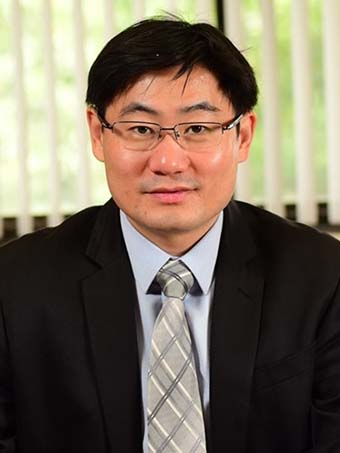
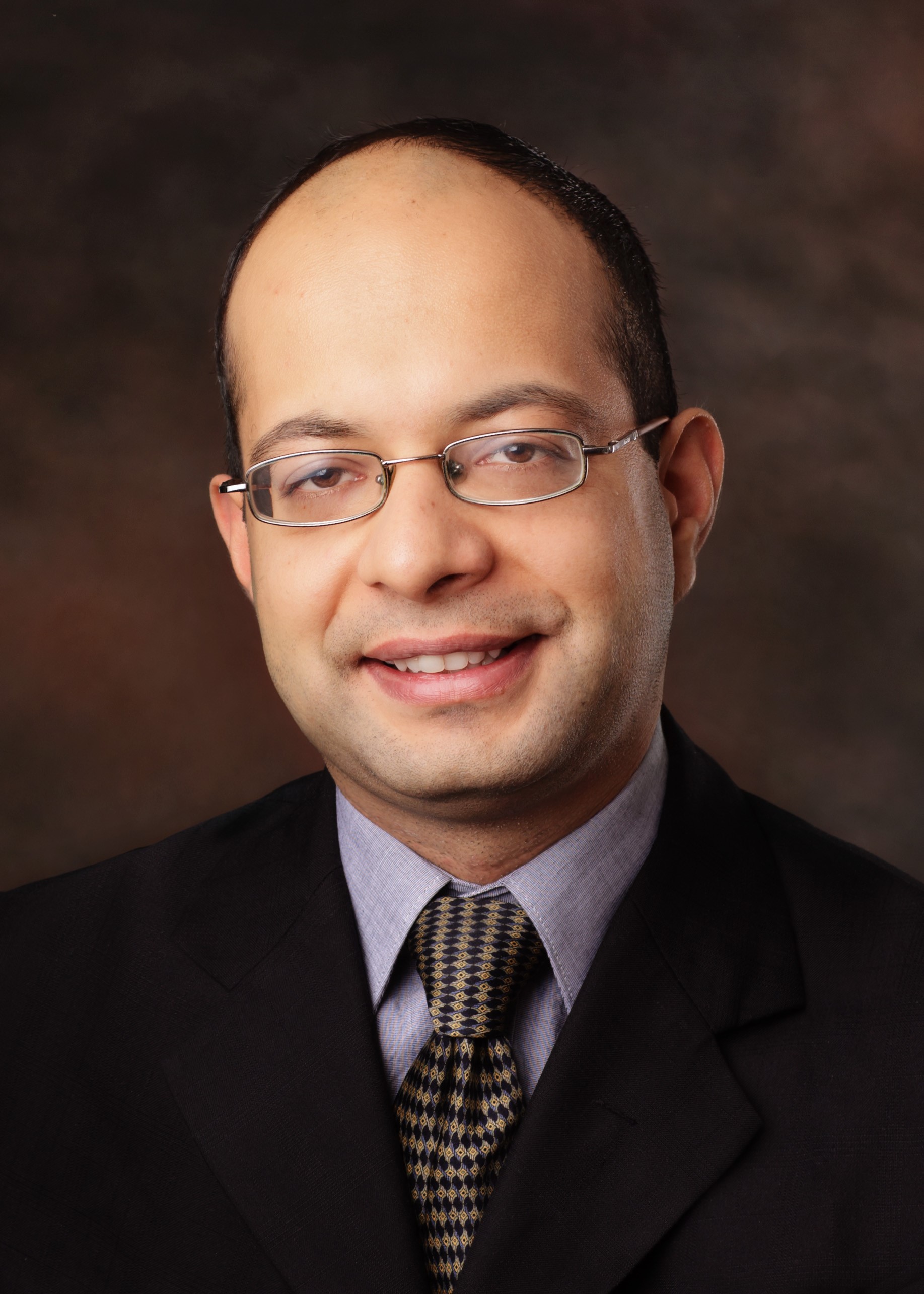
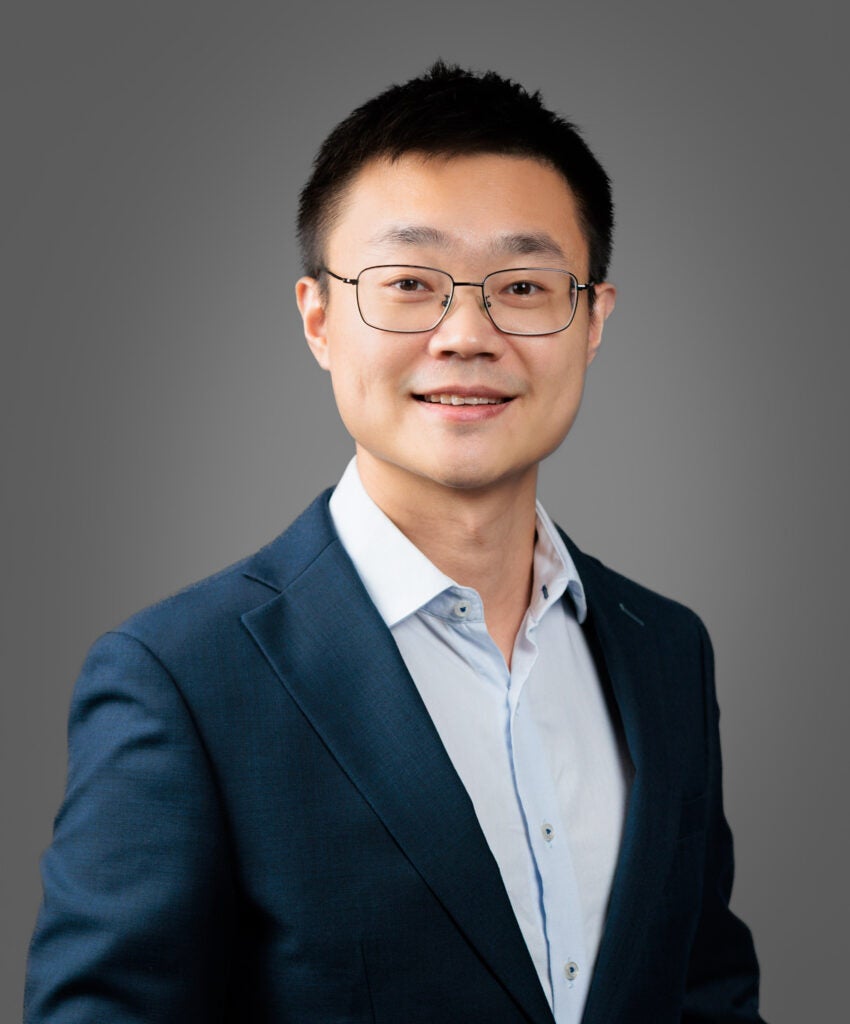
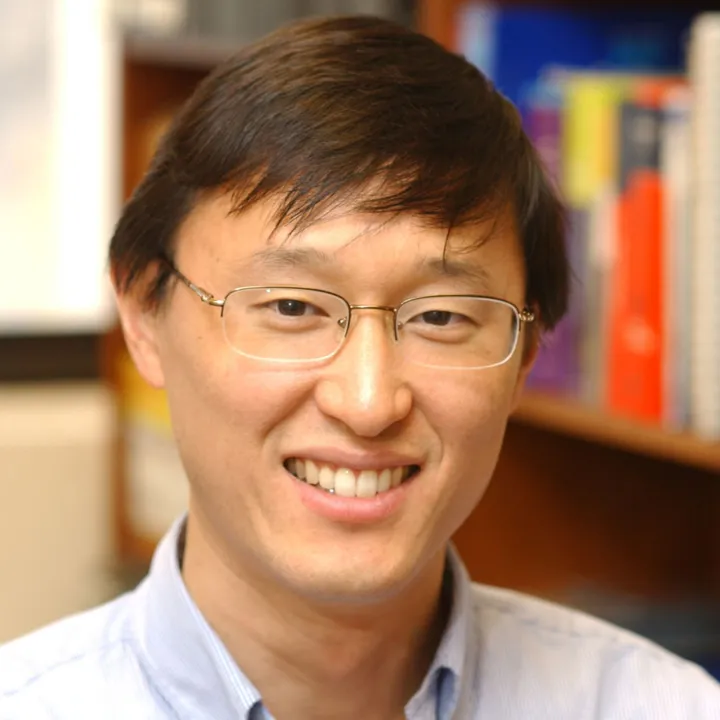
Professor CHEN Wei (National University of Singapore) holds the Provost's Chair Professorship (2023-2026) and serves as Vice-Dean (Research) with joint appointments in the Departments of Chemistry and Physics. His research focuses on molecular-scale interface engineering for 2D materials-based devices and interface-controlled nanocatalysis in energy/environmental applications. PhD in Material Science, NUS (2004) Lee Kuan Yew Research Fellow (2006-2008) Established Surface and Interface Lab (2009) Director, NUS Research Institute (Fuzhou) His work on 2D optoelectronic memory (Nat. Comm. 2018), Kagome lattice design (Nano Lett. 2020), and single-atom catalysis (Nat. Comm. 2021) has been recognized by multiple high-impact publications and the Clarivate Highly Cited Researcher status (2017-2021). Awards include the NRF Investigatorship (2023) , Mitsui Chemicals-SNIC Industry Award (2020) , and Singapore Young Scientist Award (2012) . Grants from NUS, Singapore MOE, CREATE/CRP programs, and A*STAR support his exploration of interface engineering for neuromorphic computing and energy-efficient nanocatalysts . Current projects include monolayer blue phosphorus synthesis and solid electrolyte interphase engineering for lithium batteries.
University of California , Santa Barbara (UCSB)United States
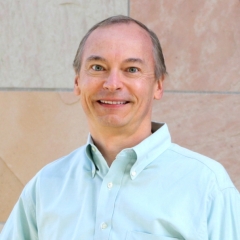
Chris G. Van de Walle is the Herbert Kroemer Distinguished Professor in the Department of Materials at the University of California, Santa Barbara's College of Engineering. As a member of the National Academy of Engineering and fellow of multiple prestigious scientific societies including the American Physical Society and Materials Research Society, he leads the Computational Materials Group which is part of UCSB's strong computational science cluster within the Materials Department. His research interests focus on novel electronic materials, particularly wide-band-gap semiconductors (III-V nitrides, II-VI compounds), transparent conductors, complex oxides, loss mechanisms in light emitters, two-dimensional conductors, quantum information science, and the physics and chemistry of hydrogen interactions with solids. His group uses first-principles computational techniques to study atomic and electronic structure of crystalline, polycrystalline and amorphous materials, interfaces, surfaces, defects, and heterojunctions. Analysis of his recent publications reveals a strong focus on semiconductor materials for quantum technologies, with particular emphasis on GaN, Ga 2 O 3 , and related compounds. His work combines computational materials science with applications in optoelectronics, quantum information, and energy technologies, demonstrating consistent innovation in understanding defects and their role in material properties. Major Awards and Recognitions: Aneesur Rahman Prize for Computational Physics (APS) Materials Theory Award (MRS) Vannevar Bush Faculty Fellowship (DoD) John Bardeen Award (TMS) Medard W. Welch Award (AVS) Highly Cited Researcher (Clarivate Analytics) Professor Van de Walle has mentored numerous successful researchers, including Dr. Fangzhou Zhao (Corbett Prize winner) and Dr. Mark Turiansky (APS Nicholas Metropolis Award recipient). His group maintains strong connections with the UCSB Quantum Foundry and the Solid State Lighting and Energy Electronics Center, demonstrating collaborative research efforts across multiple disciplines. The group actively investigates defects for quantum information science, loss mechanisms in light emitters, nitride semiconductors, halide perovskites, oxides, and hydrogen interactions with materials.
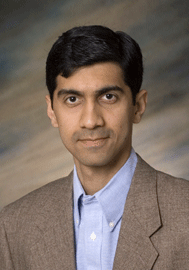
Vijay Raghunathan is a Professor in the Department of Electrical and Computer Engineering at Purdue University's College of Engineering. His work focuses on hardware and software architectures for embedded systems, wireless sensors for IoT, and wearable/implantable electronics with emphasis on low power design, energy harvesting, emerging memory technologies, and secure system design. Academic Rank: Professor Department: Electrical and Computer Engineering University: Purdue University Research Focus: Energy-efficient embedded systems, IoT, wearable devices His research explores low power design at both board-level and system-on-chip scales, micro-scale energy harvesting , and reliable/secure system design for medical devices. Recent work focuses on Processing-in-Sensor/Memory for battery-free AIoT devices, state space models for neural processing units, and security coprocessor integration in autonomous systems. Analysis of his publications reveals trends in energy-efficient neural network acceleration , approximate computing for edge inference , and compute-in-memory architectures . Key subfields include collaborative edge-cloud partitioning , sparse DNN accelerators , and security frameworks for medical devices. Vijay's work also addresses energy-accuracy tradeoffs in multimodal cognitive systems and intermittent computing using non-volatile memory technologies. His contributions span from microcontroller energy management to security protocols for implantable electronics.
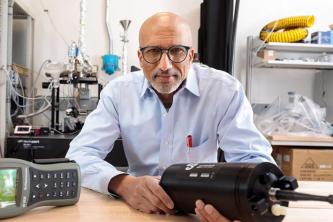
Bhaskar Reddy Sudireddy is an Associate Professor in the Department of Energy Conversion and Storage at the Technical University of Denmark (DTU). His research focuses on advanced materials for energy technologies, including solid oxide fuel cells, electrocatalysts, and ceramic processing. He contributes to UN Sustainable Development Goals related to affordable and clean energy (SDG 7) and industry innovation (SDG 9). His work emphasizes the development of high-performance electrodes, metal-supported solid oxide cells, and gas sensors. He leads projects on eco-friendly fabrication methods for energy storage systems and collaborates on piezoelectric materials sintered in humid air. His research group, Applied Ceramics and Processing, explores novel ceramic materials for applications in renewable energy and environmental monitoring. Advises five PhD students working on projects like high-temperature electrolysis cells and antiferroelectric materials. Supervises interdisciplinary research spanning electrochemistry, materials synthesis, and device fabrication. Located at DTU’s campus in Kgs. Lyngby, Denmark, with extensive international collaborations.
Supratik Guha is a Professor at the Pritzker School of Molecular Engineering and Senior Advisor to Argonne National Laboratory's Physical Sciences and Engineering directorate. His work bridges industrial R&D with academic and national lab research, focusing on quantum computing , semiconductor materials , and sensor networks for water and soil monitoring. Guha leads Argonne’s quantum information science strategy and serves as Faculty Director for the University of Chicago Center in Delhi. Education: PhD in Materials Science (USC, 1991), BTech in Engineering Physics (IIT Kharagpur, 1985) Research interests span multiple domains: Quantum technologies focusing on erbium-doped oxides for quantum memory and quantum interconnects Sensor networks for soil and water quality monitoring using cyberphysical systems Nanofabrication techniques including controlled spalling for heterogeneous material integration Advanced memory technologies exploring ferroelectric and optically addressable memory at atomic scales Scientific awards include: Election to National Academy of Engineering (2015) APS Prize for Industrial Applications of Physics (2015) Vannevar Bush Faculty Fellow (2018) Fellow of Materials Research Society and American Physical Society IBM Corporate Award (2013) Advising notable students like Manish Kumar Singh (co-founder memQ ), Cheng Ji (now at Intel), and Vamsi Nittala (now at Micron Technology). His group contributes to major DOE , NSF , and USDA funded projects including: Q-NEXT - DOE National Quantum Information Center AIFARMS - NSF/USDA AI for Agriculture Institute Thoreau Project - Geospatial sensor networks Labs and teams operate across University of Chicago and Argonne National Lab , with facilities for molecular beam epitaxy , nanofabrication , and optical/electrical characterization . The group has spawned startups like memQ (quantum networking) and K1 Semiconductors (wide-bandgap material transfer).
Sumeet Kumar Gupta is an Associate Professor in the Department of Electrical and Computer Engineering at Purdue University. His academic career spans from his current role to a prior Assistant Professorship at Pennsylvania State University (2014-2017) and an engineering position at Qualcomm Inc. (2012-2014). He holds a PhD in Electrical and Computer Engineering from Purdue University (2012), an M.S. from the same institution (2008), and a B.Tech in Electrical Engineering from IIT Delhi (2006). B.Tech, Electrical Engineering, IIT Delhi (2006) M.S., Electrical and Computer Engineering, Purdue University (2008) PhD, Electrical and Computer Engineering, Purdue University (2012) Dr. Gupta's research focuses on neuromorphic computing, low power variation-aware VLSI design in emerging nanotechnologies, device-circuit co-design, and nano-scale device modeling/simulations. His work addresses challenges in ferroelectric materials, crossbar arrays for deep neural networks, and energy-efficient AI hardware. Recent publications (2025-2024) highlight trends in: Ferroelectric HfO2/HZO thin films Compute-in-memory architectures Variability/stochasticity analysis Machine learning for device optimization Interconnect resistance/temperature effects AI hardware fault tolerance Scientific Awards & Recognitions: DARPA Young Faculty Award (2016) Early Career Professorship, Penn State (2014) 6th TSMC Outstanding Student Research Bronze Award (2012) Magoon Award (Purdue) Outstanding Teaching Assistant Award (Purdue, 2007) Intel PhD Fellowship (2009) His professional journey includes academic appointments at Purdue University (2020-present, Associate Professor) and Pennsylvania State University (2014-2017, Assistant Professor) after industry experience at Qualcomm Inc. (2012-2014). He maintains IEEE and EDS membership while publishing over 100 refereed works.
Di Zhu is a Presidential Young Professor in the Department of Materials Science and Engineering at the National University of Singapore (NUS). He holds a B.Eng. from Nanyang Technological University and M.Sc./Ph.D. from MIT, both in Electrical Engineering. His postdoctoral research at Harvard focused on lithium niobate integrated photonics and superconducting detectors. He previously worked as a research scientist and PI at A*STAR's Institute of Materials Research and Engineering (IMRE). Research Interests : Integrated quantum photonics, superconducting detectors, nonlinear optics, and nanofabrication. His group develops scalable quantum photonic devices using lithium niobate and superconducting materials, emphasizing applications in quantum computing, communication, and sensing. Awards : National Research Foundation (NRF) Fellowship Harvard Quantum Initiative (HQI) Postdoctoral Fellowship MIT Jin-Au Kong Thesis Award Advising & Recruitment : Actively recruiting postdocs, PhD students, and interns in areas like integrated photonics, quantum optics, and superconducting detectors. Positions include work on thin-film lithium niobate, quantum simulation, and microwave-optical transduction. Group website: dizhulab.org .
Beatriz Noheda is a Full Professor of Functional Nanomaterials at the University of Groningen's Faculty of Science and Engineering, where she chairs the Solid State Materials for Electronics group at the Zernike Institute for Advanced Materials. She also serves as the founding Director of the Groningen Cognitive Systems and Materials center (CogniGron). Her academic journey began with a PhD in Physics from the Autonomous University of Madrid in 1996, followed by research positions at Brookhaven National Laboratory and various European institutions before joining Groningen through the prestigious Rosalind Franklin Fellowship program in 2004. Her research interests span the physics of functional materials with particular emphasis on ferroelectric, piezoelectric, and multiferroic thin films . She investigates the relationship between structure and functionality, focusing on nano-domain control through strain engineering and the unique properties of domain walls. Her work bridges fundamental physics with two promising application areas: piezoelectric energy harvesting for low-power electronics and the development of novel materials for neuromorphic computing . This dual focus reflects her vision of enabling the next technological revolution through materials science. Noheda's publication record shows a clear evolution from fundamental structural studies of ferroelectric materials toward cutting-edge research in hafnia-based ferroelectrics and neuromorphic computing materials. Her most recent work focuses on oxygen migration in hafnium-zirconium oxide systems, metal-insulator transitions in nickelates, and the development of novel ferroelectric phases suitable for next-generation electronic devices. These publications demonstrate her leadership in advancing the field from basic understanding toward practical applications in memory devices and cognitive computing systems. Fellow of the American Physical Society (2011) - awarded for fundamental structural studies of new phases in perovskite-type ferroelectric materials and domain nanostructures IEEE Robert E. Newnham Ferroelectrics Award (2020) - for outstanding contributions to understanding giant piezoelectricity in lead zirconate titanate Member of the Netherlands Academy of Technology and Innovation (AcTI) (2022) Elected Senior member IEEE (2021) Rosalind Franklin Fellowship (2004) - enabling her successful academic career in Groningen Noheda has secured substantial research funding throughout her career, including a Rosalind Franklin Fellowship (2004-2009), VIDI-NWO Fellowship (2004-2008), TOP-NWO project on Functional Nanowalls (2007-2012), multiple Zernike Institute Dieptestrategie grants, and a significant TOP-PUNT grant (2016-2021). She has supervised numerous students and early-career researchers, contributing to the development of the next generation of materials scientists. Her leadership extends to editorial roles on prestigious journals including Science, Physical Review Applied, and npj Quantum Materials. As Director of CogniGron, Noheda leads an interdisciplinary center focused on developing materials and systems for cognitive computing. Her team combines expertise in functional oxides, nanoelectronics, and neuromorphic engineering to create novel computing paradigms inspired by the human brain. The center represents a strategic initiative at the University of Groningen to position itself at the forefront of cognitive systems research.
Catalan Institute of Nanoscience and Nanotechnology (ICN2)Spain
Prof. Gustau Catalán is an ICREA Research Professor and Group Leader of the Oxide Nanophysics Group at the Catalan Institute of Nanoscience and Nanotechnology (ICN2). He earned his PhD in Physics from Queen’s University of Belfast (2001) and held postdoctoral positions at IMEDEA (2002–2004), University of Groningen (2004–2005), and University of Cambridge (2005–2009). Since 2009, he has led pioneering research in flexoelectricity, domain wall physics, and strain-engineered oxide materials, supported by an ERC Grant. Education: PhD in Physics, Queen’s University of Belfast (2001) BSc in Physics, Universitat de Barcelona (1997) Research Interests: Gustau Catalán's work focuses on the interplay between ferroelectricity, flexoelectricity, and metal-insulator transitions in oxide materials. His research explores how these properties manifest at reduced dimensions, with applications in nanoelectronics, photovoltaics, and smart mechanical systems. Key areas include polarization dynamics, domain wall engineering, and strain-gradient effects. Recent Publications (2024–2025): The 15 most recent articles highlight advancements in flexoelectricity (e.g., water ice and halide perovskites), domain wall dynamics (e.g., tungsten trioxide), and strain-gradient-induced photovoltaic effects. These studies span materials like PbZrO3, BaTiO3, and BiFeO3, with implications for energy harvesting, memory devices, and nanoscale actuators. Scientific Awards: ERC Grant for flexoelectricity laboratory establishment Advising and Collaborations: While specific students are not listed, Catalán collaborates extensively with researchers across Europe. His group develops novel oxide-based systems and investigates their electromechanical and optoelectronic properties. Laboratory & Team: At ICN2, he established one of the world's first flexoelectricity laboratories, leading a team that explores oxide nanophysics through advanced characterization techniques like AFM, X-ray diffraction, and electrocaloric imaging.
Moussa Ngom is an Associate Professor in the Department of Physics, Applied Physics and Astronomy at Rensselaer Polytechnic Institute (RPI), affiliated with the School of Science and research centers including the Center for Ultrafast Optical Sciences (CUOS) and the Center for Materials, Devices, and Integrated Systems (CMDIS). His work focuses on wavefront shaping, quantum optics, and structured light manipulation to address challenges in biological imaging, quantum communication, and nuclear security.
Judith Driscoll is Professor of Materials Science at the University of Cambridge in the Department of Materials Science & Metallurgy. She holds the prestigious Royal Academy of Engineering Chair in Emerging Technologies and serves as a Visiting Staff Member at Los Alamos National Laboratory. As the founding Editor-in-Chief of APL Materials, she has significantly contributed to the materials science community. Dr. Driscoll's research focuses on Energy Efficient Oxide Materials for Information and Communications Technologies and energy devices. Her work spans the development of non-volatile memory, resistive switching devices, and ferroelectric materials for neuromorphic computing applications. She investigates oxide thin films for applications ranging from data storage to energy generation and conversion, with particular emphasis on creating more energy-efficient device technologies to handle the exponential growth of data-centric applications. Her recent publications demonstrate strong trends in developing novel oxide-based memory devices with improved energy efficiency, particularly for AI applications. The work shows significant progress in hafnium-zirconium oxide ferroelectrics, resistive switching mechanisms, and vertically aligned nanocomposite structures for enhanced device performance. These innovations address critical challenges in reducing the unsustainable energy demands of modern computing, particularly for artificial intelligence systems. Fellow of the Royal Academy of Engineering Fellow of the Materials Research Society Fellow of the American Physical Society Fellow of IOM3, IOP, and Women Engineers Society Fellow of the American Academy of Arts and Sciences Recipient of ERC Advanced Grant Editor-in-Chief of APL Materials Dr. Driscoll leads a vibrant research group that has secured significant funding including her Royal Academy of Engineering Research Chair, an ERC Advanced Grant, and an ECCS-EPSRC grant in collaboration with researchers from the USA. She has founded the Cambridge Centre for Neuromorphic Computing (Neucam) in 2023. Her group operates world-leading growth equipment including pulsed laser deposition with RHEED control, high temperature oxide sputtering, and spatial ALD systems. She collaborates extensively across the University of Cambridge and with international partners to solve complex materials challenges, with her group's role often being to identify optimal materials for functional goals, predict fabrication methods, and then create and characterize these materials.
Yan Liu is a full professor in the Thomas Lord Department of Computer Science at the University of Southern California (USC), serving as Director of the USC Machine Learning Center within the Viterbi School of Engineering. He holds courtesy appointments in the Ming Hsieh Department of Electrical Engineering and the Quantitative and Computational Biology Department. Before joining USC in 2010, he was a research staff member at IBM's T.J. Watson Research Center. He earned his M.S. and Ph.D. from Carnegie Mellon University. His research focuses on machine learning for time series, physics-informed AI, and interpretable models, with applications in healthcare, sustainability, and social media. Notable projects include developing AI for surgical training, analyzing misinformation on social platforms, and predicting cancer treatment outcomes. He has held leadership roles in top conferences like ICLR and ACM KDD, and serves as Associate Editor-in-Chief of TPAMI and Board Member of ICLR. Education: Ph.D., Carnegie Mellon University Affiliations: USC Machine Learning Center, Viterbi School of Engineering Service: General Chair (ICLR 2023, ACM KDD 2020), Program Chair roles across multiple conferences His lab, the Melady Group, emphasizes foundational ML advancements and interdisciplinary applications. Recent work includes physics-aware neural networks and time-series foundation models.
R. Edwin García is a Professor at the School of Materials Engineering at Purdue University, where he has been faculty since 2005. He holds appointments in the Materials Engineering department within Purdue's College of Engineering, specifically in the School of Materials Engineering located in the Neil Armstrong Hall of Engineering at Purdue's West Lafayette campus. His educational background includes: B.S. in Physics from the National University of Mexico (1996) M.S. in Materials Science and Engineering from Massachusetts Institute of Technology (2000) Ph.D. in Materials Science and Engineering with a minor in Applied Mathematics from Massachusetts Institute of Technology (2003) Professor García's research focuses on the design of materials and devices through the development of a fundamental understanding of the solid state physics of individual phases, their short and long range interactions, and associated microstructural properties and time evolution. His current research emphasizes establishing relationships between material properties and resultant performance and degradation in electrochemical systems. He integrates computational approaches ranging from kinetic Monte Carlo, phase field and level set methods, to finite elements, finite volumes, and symbolic computing. His work particularly addresses microstructure design, crystallographic texture, and grain boundary science and engineering to control the topology of underlying phases and establish practical relations between processing, microstructure, and material properties. His recent publications demonstrate a strong focus on lithium-ion battery technology, ferroelectric materials, and computational modeling of material behaviors. The research trends show increasing integration of machine learning with traditional computational methods, exploration of novel sintering techniques like flash sintering, and deeper investigation into the fundamental mechanisms of material degradation in energy storage systems. His work spans multiple length scales from atomistic to continuum modeling, reflecting a comprehensive approach to materials design and analysis. Professor García teaches several courses including MSE 230 (Structure and Properties of Materials), MSE 350 (Thermodynamics of Materials), MSE 597G (Modeling and Simulation of Materials), MSE 597I (Introduction to Computational Materials), and MSE 597N (Physical Properties of Crystals). He mentors graduate students in areas related to computational materials science, battery technology, and microstructural evolution. His research group, the Laboratory of Computational Microstructures, focuses on developing home-grown analytical theories and algorithms to resolve relevant time and length scales in materials systems. The group's work has significant implications for portable power sources, including rechargeable batteries and fuel cells, as well as for ferroelectric ceramic applications.
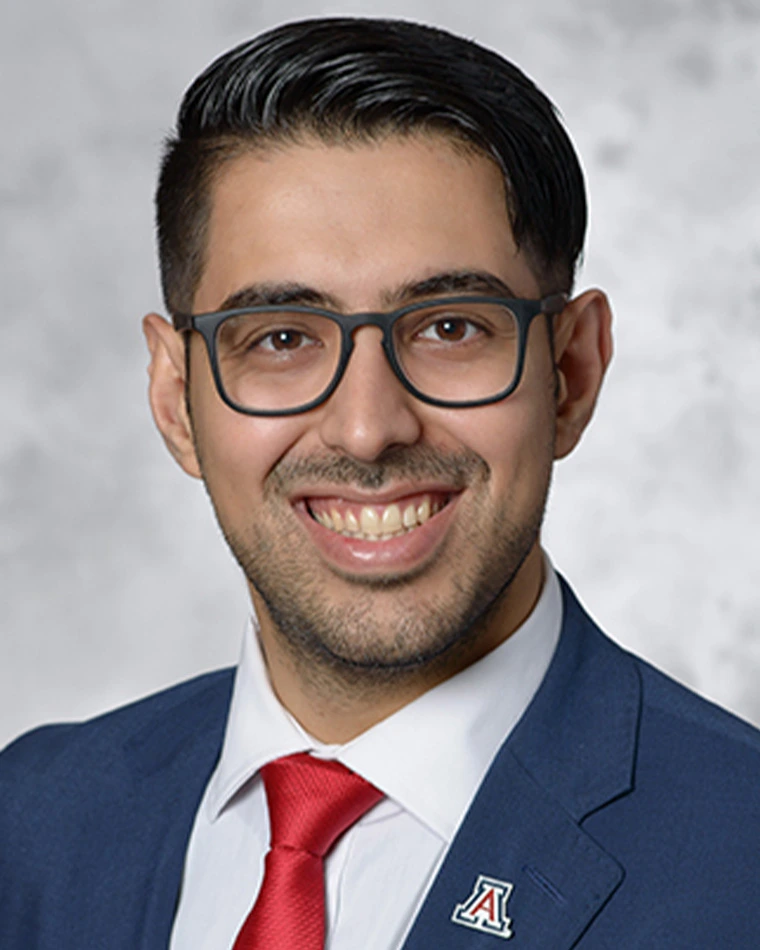
Soheil Salehi is a tenure-track Assistant Professor in the Department of Electrical and Computer Engineering at the University of Arizona, with a joint appointment in Systems and Industrial Engineering. He is the Director of the Privacy-preserving, Intelligent, and Secure Computing (PRISM) Lab, established in August 2022. Prior to this, he was an NSF-Sponsored Computing Innovation Fellow and Postdoctoral Research Fellow at the University of California, Davis. Ph.D., Electrical and Computer Engineering, University of Central Florida, 2020 M.S., Electrical and Computer Engineering, University of Central Florida, 2016 B.S., Isfahan University of Technology, Iran, 2014 Dr. Salehi's research focuses on the intersection of hardware, AI, and security. His work spans hardware and AI-enabled security in IoT , Generative AI for hardware design and security , neuromorphic and biologically-inspired AI hardware , emerging spin-based devices , reconfigurable architectures , low-power VLSI circuits , and digital twins and mixed reality for semiconductor workforce development . He also explores the application of Generative AI in personalized education . His recent publications, spanning 2023–2025, reveal a strong trend toward integrating AI and machine learning into hardware security and design. Key themes include automated secure IC design flows , AI-driven hardware obfuscation , firmware and side-channel attack analysis , security in neuromorphic and spiking neural networks , and educational frameworks using digital twins and generative models . His work appears in top venues like DAC, ICCAD, USENIX Security, IEEE TCAS-I, and ISCAS. Outstanding Reviewer Award, IEEE/ACM Design Automation Conference (DAC), 2023 Best Presentation of the Symposium Award, UC Davis Postdoctoral Research Symposium, 2021 UCF Excellence by a Graduate Teaching Assistant (University-Level), 2016 Nominated for 30-under-30 Award, UCF, 2020 Nominated for Postdoctoral Research Excellence Award, UC Davis, 2022 Dr. Salehi has secured significant research funding as PI and Co-PI, including a $300K NSF SaTC EAGER grant on Generative AI-based Personalized Cybersecurity Tutor, a $174,000 University of Arizona PIF Award, and multiple RII grants totaling over $198K. He has also received industry funding from CHEST. He actively mentors students and leads the PRISM Lab, which focuses on privacy-preserving and intelligent secure computing. His service includes roles as Technical Program Committee (TPC) Member and Session Chair at premier conferences such as DAC, ICCAD, CCS, NDSS, and GLSVLSI. The PRISM Lab, under his direction, conducts cutting-edge research in secure and intelligent hardware systems, with applications in IoT, edge computing, and workforce development. The lab emphasizes interdisciplinary collaboration and innovation in both research and education.
Charles Ahn is the John C. Malone Professor of Applied Physics & Materials Science at Yale University. His research focuses on fabricating and studying novel complex oxide materials using advanced techniques like molecular beam epitaxy and synchrotron x-ray scattering. His work addresses multifunctional oxides, nanofabrication, and nonvolatile logic switches for post-CMOS computing. Key research areas include electronic control of complex order parameters in correlated oxides and scanning probe microscopy-based nanofabrication. Education: Ph.D. in Applied Physics from Stanford University. Research interests span the physics and technology of complex oxides, with emphasis on electronic and structural control at the nanoscale. His group develops next-generation materials for computing and electronics, leveraging interdisciplinary approaches in materials science and condensed matter physics. Notable awards include Fellow of the American Physical Society, AVS Peter Mark Memorial Award, David and Lucile Packard Fellowship, and Alfred P. Sloan Fellowship. His lab (Ahn Lab) actively explores cutting-edge applications in oxide electronics and quantum phenomena. Grants and patents include innovations in magnetoelectronic devices and ferroelectric-based technologies. He collaborates widely, bridging experimental materials science with theoretical modeling to advance functional oxide systems.