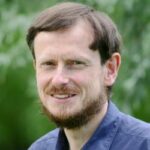
Nuh Gedik is the Donner Professor of Physics at MIT, leading the Gedik Research Group. His work focuses on quantum materials, employing advanced optical and electron spectroscopies. He joined MIT in 2008 as an Assistant Professor, earned his B.S. from Bogazici University (1998), and Ph.D. from UC Berkeley (2004) before postdoctoral work at Caltech. His awards include NSF CAREER, DOE Early Career, Sloan Fellowship, and APS Fellow recognition. Research interests include ultrafast dynamics in topological insulators, charge density waves, and light-induced phenomena. Key techniques include time-resolved ARPES, ultrafast electron diffraction, and terahertz spectroscopy. His group explores hidden orders in quantum materials and develops novel measurement tools. Recent work includes metastable magnetization control in FePS₃ and Floquet-Bloch states in graphene. Affiliated with the MIT Center for Quantum Engineering and Institute for Soldier Nanotechnologies.
Xi Ling is an Associate Professor in the Department of Chemistry and Materials Science & Engineering at Boston University. They lead the Ling Group, which focuses on the fundamental science and applications of nanomaterials, particularly 2D van der Waals materials. Their research integrates synthesis, characterization via advanced spectroscopy, and device development for energy conversion and chemical sensing. The group utilizes facilities at the Photonics Center for cutting-edge materials analysis. Education: B.A. in Chemistry (Lanzhou University, 2007); Ph.D. in Physical Chemistry (Peking University, 2012). Research emphasizes interdisciplinary approaches to synthesize novel 2D crystals, investigate their physical properties through Raman and photoluminescence spectroscopy, and engineer flexible, transparent devices. Recent publications highlight innovations in strain engineering, ferroelectricity modulation, and exciton dynamics in materials like NiPS3 and GaSe. Students gain expertise applicable to academia and industry roles in semiconductor manufacturing, materials engineering, and instrumentation. The group’s work bridges foundational science and practical applications, addressing challenges in nanoelectronics and sustainable energy technologies.
Edoardo Baldini is an Assistant Professor of Physics at the University of Texas at Austin, affiliated with the College of Natural Sciences. His research focuses on discovering and controlling emergent quantum phases in materials using ultrafast laser spectroscopy and advanced experimental techniques. Key affiliations include the Center for Complex Quantum Systems, Texas Quantum Institute, and Texas Materials Institute. Education: PhD from École Polytechnique Fédérale de Lausanne (2017), Postdoc at MIT (2017-2021). Research interests include quantum materials, ultrafast laser science, light-matter interaction, and multiferroics. His group develops techniques to study collective modes (phonons, magnons, excitons) and engineer novel functionalities via terahertz fields. Recent breakthroughs include manipulating spin waves in antiferromagnets and revealing hidden polar orders in quantum materials. Publications highlight discoveries in multiferroic oscillations, terahertz-driven magnon dynamics, and structural symmetry-breaking mechanisms in Ta₂NiSe₅. Awards include the 2025 Sloan Fellowship and NSF CAREER Award. Grants and recognitions include funding from the U.S. Department of Energy, Army Research Office, and Keck Foundation. His lab actively recruits students and postdocs in experimental condensed matter physics.
Prof. Jay A. Gupta is a Professor and Vice Chair for Graduate Studies and Postdoctoral Affairs in the Department of Physics at The Ohio State University. His research focuses on atomic-scale studies of novel materials using scanning tunneling microscopy (STM) to address challenges in energy conversion and advanced computing. Key areas include magnetic skyrmions in chiral systems, semiconductor defects, 2D materials, and spintronics. He leads a laboratory equipped with four advanced STM systems and collaborates on NSF NeXUS, an ultrafast science facility. Education: B.S. Chemistry/Physics (UIUC), Ph.D. Physics (UCSB) Lab Locations: Physics Research Building (labs 0101/0105/0178) Key Projects: Spin-polarized STM of MnGe, defect-mediated surface chemistry in semiconductors, ultrafast laser-material interactions His group has trained over 30 graduate/undergraduate students and postdocs, many now in academia and industry. Research is supported by NSF, Department of Energy, and industrial partnerships.
Yifan Su is a postdoctoral research scientist at Columbia University in the Basov Lab, specializing in ultrafast dynamics of quantum materials. He joined Columbia in 2024 after completing his Ph.D. at MIT under Prof. Nuh Gedik. His research focuses on light-induced phenomena in quantum materials using advanced techniques such as ultrafast diffraction and time-resolved ARPES. Key interests include charge density waves, high-temperature superconductors, and magnetic materials. He previously studied at the University of Illinois Urbana-Champaign (theoretical physics) and Cornell University (experimental condensed matter physics). His work bridges momentum-resolved spectroscopy and imaging techniques to explore transient phases and phase transitions in materials. Recent projects involve studying photoinduced topological transitions and dynamical competition between electronic orders in kagome superconductors. The Basov Lab at Columbia provides a platform for integrating cutting-edge optical imaging with ultrafast methods to advance understanding of quantum materials' dynamic behavior. While no awards or grants are explicitly listed, his publications indicate contributions to topological materials, Floquet engineering, and ultrafast dynamics in layered systems. His educational background reflects a strong theoretical foundation combined with experimental expertise in quantum materials.
María José Calderón is a Research Professor at the Institute of Materials Science of Madrid (ICMM-CSIC), where she has held tenure since 2011 and was promoted to Senior Scientist in 2023. Her research focuses on electronic correlations in novel superconductors (e.g., twisted bilayer graphene), quantum computing nanostructures, and oxide heterostructures. She previously conducted postdoctoral research at the Cavendish Laboratory (University of Cambridge) and the University of Maryland. Education: PhD in Physics (not explicitly stated, inferred from career timeline). Her work bridges condensed matter physics and quantum technologies, with emphasis on superconductivity, topological phases, and quantum device design. Recent studies include optical conductivity in magic-angle graphene systems and spin manipulation in silicon quantum dots. She directs the Master’s Degree in Quantum Technologies (CSIC-UIMP) and has served in leadership roles for Spain’s physics community (Condensed Matter Physics Division-GEFES) and international boards (EPS-CMD). She also contributed to editorial roles at Physical Review B and coordinates CSIC’s MATERIA Global Area. Research interests span correlated electron systems, interface physics, and quantum computing hardware. Her articles explore topics like twisted bilayer graphene’s electronic properties and superconducting proximity effects in hybrid devices. Grants & Management: Led funding panel (Agencia Estatal de Investigación, 2018–2021); managed interdisciplinary quantum tech programs. She oversees ICMM-CSIC’s experimental/theoretical collaborations in quantum materials and has pioneered studies on donor-based qubits in silicon. Her work integrates computational modeling with advanced characterization techniques.
Ilias Perakis is Professor and Chair of Physics at the University of Alabama at Birmingham (UAB), where he leads transformative research in quantum materials and ultrafast phenomena. An OSA Fellow and NSF CAREER awardee, he holds a Ph.D. from the University of Illinois and has held postdoctoral positions at Rutgers University and Bell Laboratories. His research focuses on theoretical condensed matter physics , using quantum many-body theory to model laser-driven superconductors, magnetic systems, and topological materials. Key interests include: Ultrafast optical manipulation of quantum states Terahertz coherence control Multi-dimensional spectroscopy for material design Perakis has restructured UAB's physics curriculum into five career-focused tracks and co-launched Project RAISE to broaden STEMM participation through digital education. His department received the 2023 APS Award for Improving Undergraduate Physics Education for innovative student training. Honors include the NSF CAREER Award and recognition by the Optical Society of America. His research group actively collaborates with national labs on grand-challenge problems in quantum information science.
Maciej Dendzik is a Researcher at KTH Royal Institute of Technology, affiliated with the Department of Light and Materials Physics within the School of Engineering Sciences. His research focuses on advanced experimental techniques in condensed matter physics, including angle-resolved photoemission spectroscopy (ARPES), ultrafast dynamics, and the study of topological materials, 2D systems, and quantum phenomena. He has contributed to understanding electron-phonon interactions in superconductors, the emergence of Weyl fermions in magnetic materials, and energy transfer mechanisms in nanostructured systems. His work integrates cutting-edge spectroscopic methods with computational tools, such as machine learning for band mapping, to explore electronic structures and dynamics in novel materials. Key areas of investigation include charge density waves in kagome superconductors, ultrafast carrier dynamics in topological insulators like bismuthene, and the development of advanced light sources for time-resolved studies. While no specific awards or grants are explicitly listed, his extensive publication record reflects a commitment to advancing experimental methodologies and unraveling fundamental material properties at the nanoscale. He teaches the Degree Project in Engineering Physics at the undergraduate level, contributing to KTH's educational mission.
Dr. Lars Fritz is an Associate Professor in Theoretical Physics at Utrecht University's Faculty of Science, affiliated with the Theoretical Physics (ITF) department. His research focuses on condensed matter theory, statistical physics, and computational methods, with a particular emphasis on topological phases, quantum transport, and strongly correlated systems. He holds a Ph.D. and has been active in publishing influential papers on topics such as Kondo effects, Dirac/Weyl semimetals, and topological insulators. His work often explores the interplay between disorder, interactions, and topology in materials. Key research areas include hydrodynamic behavior in 2D electronic systems, quantum critical phenomena in Kondo systems, and the role of symmetry in topological materials. Notable contributions include studies on graphene's hydrodynamics, Sachdev-Ye-Kitaev models, and fractal lattices. Dr. Fritz has authored over 48 publications, including reviews in the Annual Review of Condensed Matter Physics and high-impact journals like Physical Review B and Physical Review Letters. His teaching includes advanced theoretical physics courses, and he actively contributes to research groups exploring emerging quantum materials. While no specific grants or awards are listed in the provided texts, his extensive publication record underscores his significant academic contributions.
Morten Amundsen is a Postdoctoral Fellow in the Department of Physics at the Norwegian University of Science and Technology (NTNU), actively contributing to cutting-edge research in condensed matter physics. His work bridges theoretical and experimental approaches in superconductivity and spintronics, with affiliations centered at NTNU's physics department where he maintains active research and teaching roles. His research spans: Superconducting hybrid structures and quantum transport phenomena Spin-orbit coupling effects in topological materials Geometric curvature manipulation of magnetic and superconducting states Josephson effect engineering in novel geometries Antiferromagnetic spintronics and altermagnetism Analysis of his 15 most recent publications (2020-2025) reveals a dominant focus on the interplay between superconductivity and magnetism, particularly through spin-orbit coupling mechanisms. Key trends include geometric engineering of quantum states (via curvature and fractal structures), electrical control of superconducting spin valves, and exploration of Rashba altermagnets. His work frequently employs quasiclassical theory and Keldysh formalism to model complex hybrid systems, with strong emphasis on topological aspects and non-equilibrium phenomena. Dr. Amundsen maintains extensive collaborative networks, frequently publishing with NTNU researchers including Jacob Linder, Henning Goa Hugdal, and Sol Hernæs Jacobsen. His active conference participation—such as presentations at the European School on Superconductivity and Magnetism (2024) and New Avenues in Quantum Materials (2024)—demonstrates ongoing engagement with the international research community. While specific grant details aren't provided, his high publication output in premier journals indicates sustained research funding.
Ilija Zeljkovic is a Professor of Physics and Graduate Program Director at Boston College. His research focuses on experimental condensed matter physics, particularly using scanning tunneling microscopy (STM) and molecular beam epitaxy (MBE) to study correlated electron systems, topological materials, and 2D materials. He holds a B.S. from Washington University and a Ph.D. from Harvard University. His work investigates electronic nematicity, charge density waves, and superconductivity in materials like kagome metals and iron-based systems. Key research highlights include discoveries related to electronic symmetry breaking in kagome superconductors (e.g., AV3Sb5), manipulation of Dirac band curvature in magnetic materials, and the role of strain in controlling electronic states. Zeljkovic has received prestigious awards such as the DOE Early CAREER Award (2019) and the Gordon and Betty Moore Foundation Grant (2024). His lab supports advanced STM facilities and collaborates with institutions worldwide. He advises numerous Ph.D. students, including Dr. Shrinkhala Sharma (FeTe thin films), Dr. Alexander LaFleur (UTe2 superconductors), and Dr. Hong Li (kagome crystals). Research funding comes from DOE, NSF, ARO, DARPA, and the Moore Foundation. The lab’s future work emphasizes spin-resonance capabilities in STM and exploring impurity effects in quantum materials.
Elina Zhakina is a Post Doctoral Research Scientist at the Max Planck Institute for Chemical Physics of Solids in Dresden, Germany, where she conducts research in the Spin3D group focused on three-dimensional magnetic systems. Her work centers on microstructuring and scanned probe spectroscopy of quantum materials, with emphasis on superconducting nanoarchitectures and electron irradiation effects. Her academic background includes: MSc in Physics from Moscow State University (2016) PhD from the Max Planck Institute for Chemical Physics of Solids (2016-2021) under the supervision of Prof. Andy Mackenzie Dr. Zhakina specializes in quantum materials, particularly superconductivity and transport phenomena in delafossite metals such as PdCrO2 and PdCoO2. Her experimental approach combines nanofabrication, high-energy electron irradiation, and scanned probe techniques to investigate ballistic-ohmic transitions, vortex dynamics, and Planckian scattering behavior. Her research bridges fundamental condensed matter physics with applied nanoscale device engineering, revealing how defect engineering manipulates quantum states in low-dimensional systems. Analysis of her 15 most recent publications (2019-2025) shows consistent focus on three-dimensional superconducting architectures and electron irradiation effects in quantum materials. Key trends include the development of reconfigurable superconducting nanostructures, investigation of nonlocal transport in microstructured geometries, and systematic studies of Planckian behavior in high-conductivity oxides. Her work demonstrates how controlled defect introduction via electron irradiation serves as a powerful tool for probing fundamental transport mechanisms. No scientific awards are documented in the available information. Dr. Zhakina has no listed advisees or formal mentoring roles, and grant details are not specified. Her research is conducted within the Spin3D group, which explores novel magnetic phenomena through advanced microstructuring techniques and spectroscopic methods.
A. Brinkman is a Full Professor in the Interfaces and Correlated Electron Systems group at the University of Twente , affiliated with the MESA+ Institute . Their research focuses on advanced quantum materials, particularly topological insulators , superconductivity , and spintronics , with a strong emphasis on quantum transport and nanowire devices . Research interests include probing topological fractional charge via Josephson junction arrays, current-induced spin polarization in topological systems, and phase-coherent transport in GeSn and SnTe alloys. Collaborative work spans high magnetic field applications and gate-tunable superconductivity . Recent publications highlight trends in topological materials , quantum interference , and nonreciprocal transport . Key sub-fields include Majorana bound states , Dirac semimetals , and surface state manipulation . Articles appear in journals like Physical Review B and Advanced Electronic Materials .
Darrell Schlom is the Tisch University Professor in the Department of Materials Science and Engineering at Cornell University's College of Engineering. He holds one of the most prestigious faculty appointments at Cornell, recognizing his exceptional contributions to materials science and engineering. His research focuses on the atomic-scale synthesis and characterization of complex oxide thin films using reactive molecular-beam epitaxy (MBE), with an emphasis on discovering novel materials through a 'materials-by-design' approach. His educational background includes: B.S. in Engineering and Applied Science from California Institute of Technology (1984) M.S. in Electrical Engineering from Stanford University (1989) Ph.D. in Materials Science and Engineering from Stanford University (1990) Prof. Schlom's research interests center on oxide materials for electronic applications, particularly perovskite oxides that exhibit a rich variety of electronic properties including ferroelectricity, magnetism, superconductivity, and multiferroic behavior. His group specializes in heteroepitaxial growth techniques to create high-quality oxide heterostructures with precise control over composition and structure at the atomic level. This enables the exploration of emergent phenomena at interfaces and the development of next-generation electronic and energy-efficient devices. The recent publications highlight a strong trend in advanced oxide materials, with a focus on quantum phenomena in nickelates, strain engineering of ferroelectrics, high-mobility oxide semiconductors, and novel growth techniques for β-Ga₂O₃ and other wide-bandgap semiconductors. There is a clear emphasis on interface engineering, spin-orbit coupling, and the manipulation of electronic and magnetic states through external stimuli such as strain, electric fields, and doping. His scientific achievements have been recognized with numerous prestigious awards: John Bardeen Award, The Minerals, Metals & Materials Society (TMS) 2024 John A. Thornton Memorial Award, American Vacuum Society 2021 James C. McGroddy Prize for New Materials, American Physical Society 2021 Frank Prize, International Organization for Crystal Growth (IOCG) 2019 Humboldt Research Award 2018 Inducted into National Academy of Engineering 2017 MRS Medal, Materials Research Society 2008 Fellow of the American Physical Society, Materials Research Society, and American Vacuum Society Prof. Schlom has led major research initiatives, including a DOE-funded project (DE-SC0002334) on using interfaces to create strongly coupled magnetic-ferroelectrics. He advises numerous graduate students and postdoctoral researchers, and his group collaborates widely across disciplines. He teaches core courses in electronic materials and thin-film science at both undergraduate and graduate levels. His leadership extends to directing research centers, including a $34 million semiconductor research center at Cornell focused on energy-efficient microelectronics. His lab is equipped with state-of-the-art MBE systems for oxide synthesis and collaborates closely with facilities for advanced characterization such as electron microscopy and synchrotron-based techniques. He leads a vibrant research team that includes graduate students, postdocs, and collaborators, working at the forefront of quantum materials and oxide electronics. The group maintains strong ties with national laboratories and industry partners, particularly in the semiconductor sector. Future work is expected to continue exploring novel quantum phases in oxide heterostructures, integrating these materials into functional devices, and expanding into new material systems such as topological oxides and low-dimensional quantum materials.
Prof. Chris Ford is a Professor of Quantum Electronics at the University of Cambridge, affiliated with the Cavendish Laboratory's Semiconductor Physics Group. His research focuses on quantum transport phenomena, surface acoustic wave (SAW) technologies, and strongly correlated electron systems. He holds a PhD and MA from Cambridge and has held roles including Research Fellowship at Girton College and Lecturer at the Cavendish Laboratory. His experimental work investigates SAW-driven quantum control, including single-electron manipulation, quantum dot dynamics, and spin-charge separation in low-dimensional systems. Key contributions include quantized conductance studies in oxide heterostructures, nonlinear Luttinger liquid behavior, and single-photon emission from SAW-modulated devices. Research themes span quantum information, nanoelectronics, and condensed matter physics. Notable projects address electron transport in GaAs quantum wires, Coulomb blockade phenomena, and high-yield quantum dot fabrication. His lab develops microscopic air-bridge arrays for quantum device interconnects and explores thermoelectricity in nanocrystal monolayers. Prof. Ford's work bridges theoretical and experimental physics, with applications in quantum computing, optoelectronics, and novel electronic devices. His group collaborates on interdisciplinary projects involving semiconductor nanostructures and topological surface states.