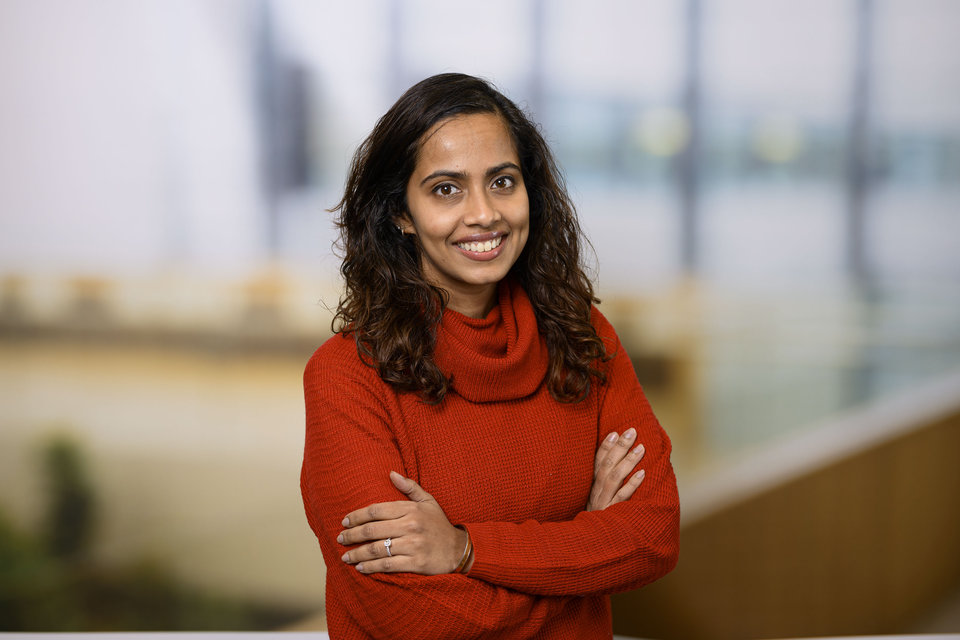
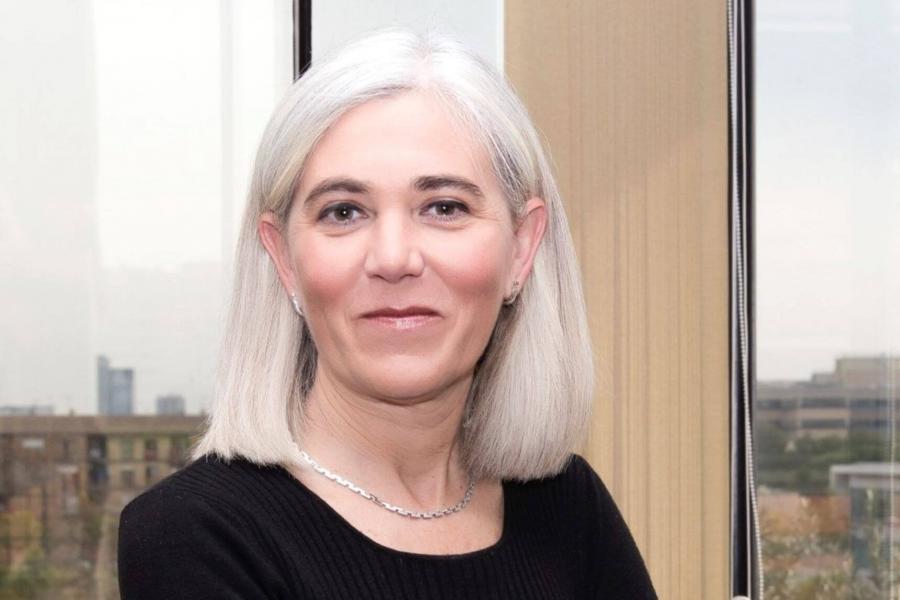
Samarpita Roy is an Assistant Professor at TU Delft's Faculty of Applied Sciences, leading the Environmental Biotechnology department's Samarpita Roy Group. Her research focuses on microbial ecology in engineered bioprocesses, integrating metagenomics and quantitative physiology to study microbial metabolisms and community interactions. Key projects include exploring phototrophic and polyphosphate-accumulating organisms in wastewater treatment for nutrient/resource recovery. She actively seeks industrial collaborations and is hiring PhD candidates in metagenomics/microbial ecology. Research emphasizes understanding microbial community dynamics under fluctuating conditions, developing sequencing/data analysis workflows, and applying findings to enhance bioprocess efficiency. Her work aims to advance circular bioeconomy solutions through innovative biotechnology approaches.
Dr. Claudia Fernandez Martin is a Senior Lecturer (Associate Professor) in Chemical Engineering at the University of Aberdeen, School of Engineering. She is actively involved in research and teaching, with a focus on carbon capture technologies and sustainable materials. She serves as Coordinator of Level 5 and Coordinator of the Environmental & Biodiversity Theme in the School of Engineering, and as Champion of the Circular Economy Theme at the Centre for Energy Transition. Dr. Fernandez Martin's educational background includes: PhD in "Microporous adsorbents from organic polymers. Application in precombustion CO 2 capture processes" (2011) from the University of Oviedo, Spain (Summa Cum Laude) MSc in Research in Technology, Diversification, Quality and Energy Saving (2009) from the University of Oviedo, Spain MEng in Environmental Sciences, 1st Class (2000-2005) from the University of Granada, Spain Her research interests focus on materials and gas separation processes for carbon capture, including the synthesis of advanced materials for CO 2 capture, characterization of adsorbents, enhancement of CO 2 recovery through novel regeneration technologies, and recycling of polymeric waste. She has developed expertise in microwave-assisted technologies for carbon capture intensification and plastic waste conversion into valuable materials. Dr. Fernandez Martin's recent publications demonstrate a strong focus on sustainable solutions for carbon capture and waste valorization. Her work spans from developing novel adsorbents from waste materials to exploring microwave-assisted processes for more energy-efficient carbon capture. She has made significant contributions to understanding transfer hydrogenation of CO 2 and the conversion of plastic waste into functional materials for environmental applications. Her scientific achievements have been recognized through several awards: Fellow of the Higher Education Academy (Advance HE) - 2020 Santander Mobility Award - 2017 ETP-PECRE Award - 2017 Santander Mobility Award - 2016 PhD Scholarship 'JAE-PreDoc' funded by the Spanish Research Council (CSIC) - 2007-2011 As an educator, Dr. Fernandez Martin teaches courses including Environmental Engineering (EA4027), Air & Water Pollution Control (EX501U), and supervises individual and group design projects at both undergraduate and postgraduate levels. She is also the General Secretary of AMPERE (Association for Microwave Power in Europe for Research and Education), highlighting her leadership in microwave research applications. She actively supervises PhD students and welcomes new PhD candidates interested in her research areas, particularly in engineering with a focus on carbon capture, sustainable materials, and waste valorization technologies.
Pedro Fardim is a Professor at the KU Leuven , affiliated with the Faculty of Engineering Sciences, Department of Chemical Engineering , and leads the Chemical and Biochemical Reactor Technology and Safety (CREaS) division. He also serves as President of EPNOE (European Polysaccharide Network of Excellence) and is a member of multiple institutes including KU Leuven Brain Institute (LBI) , Institute for Single Cell Omics (LISCO) , and Institute for Micro- and Nano-scale Integration (LIMNI) . PhD in Chemistry, State University of Campinas (UNICAMP), Brazil Habilitation in Chemical Engineering, Åbo Akademi University, Finland Pedro’s research focuses on topochemical engineering —mimicking natural bioassembly processes in trees and microorganisms to create sustainable materials and biofabrication technologies . His work spans drug delivery , regenerative medicine , biopolymer engineering , and green chemistry , with applications in pharmaceuticals , cosmetics , and energy . Recent projects include hydrogels for wearable sensors , biohybrid materials for bone tissue engineering , and lignin valorization using hydrotropic solvents. His scientific awards include Fellowships from the Royal Society of Chemistry and the International Academy of Wood Science , along with membership in the American Chemical Society . He teaches Chemical Engineering for Human Health , Biochemical Process Engineering , and Biopolymer-based Sustainable Technologies .
Professor Bing-Jie (Bruce) Ni is an Adjunct Professor at the University of Technology Sydney (UTS) within the School of Civil and Environmental Engineering and a full Professor at UNSW Sydney. He is an internationally recognised leader in environmental engineering, wastewater treatment, greenhouse-gas mitigation, microplastics fate, electrocatalysis and sustainable energy systems. Education PhD in Environmental Engineering, University of Science and Technology of China, Hefei (2005–2009) Research Interests Professor Ni’s research integrates process engineering, microbial biotechnology, materials science and mathematical modelling to develop sustainable technologies for high-efficiency pollutant removal, minimal carbon footprint and maximal energy recovery from wastewater. He is a global pioneer in: Modelling and control of nitrous oxide (N₂O) and methane (CH₄) emissions from wastewater systems, Micro- and nano-plastics ecotoxicity and mitigation in anaerobic digestion, Transforming sewage sludge into high-value liquid bio-energy (medium-chain fatty acids and long-chain alcohols), Designing cost-effective electrocatalysts from natural minerals for green hydrogen production and wastewater electrolysis. Research Output & Impact Over the last decade he has published 2 research books, 30 book chapters and >400 refereed journal papers , including 35 in Environmental Science & Technology and 85 in Water Research . His work has influenced global policy: the IPCC adopted his nitrous-oxide-emission model in 2019 to revise national greenhouse-gas inventories for the first time in 13 years. Awards & Recognition ARC Future Fellowship & ARC DECRA Fellowship Clarivate Analytics Highly Cited Researcher (Web of Science) Royal Society of Chemistry Highly Cited Researcher (2020–present) Mendeley Data Top 2 % Cited Researchers worldwide Listed among “Australia’s Most Innovative Engineers” (Engineers Australia, 2018) 50+ additional awards including Scopus Young Researcher Award, South Australian Water Awards, UQ Research Excellence Awards, and Outstanding Doctoral Dissertation Awards. Research Funding & Leadership He has secured ≈ AUD $10 million in competitive funding (six major ARC grants plus >20 government, university and industry projects). He serves as: Lead Guest Editor, Water Research Editorial Advisory Board, Environmental Science & Technology Associate Editor for Journal of Cleaner Production , Environmental Chemistry Letters , Environmental Research , Journal of Environmental Management Editorial Board member for five additional high-impact journals. Teaching & Supervision At UTS he teaches Renewable Energy Technologies , Environmental and Sanitation Engineering , Process Dynamics and Control , and Water and Wastewater Treatment . He is available to supervise Masters and PhD students in environmental biotechnology, process modelling and sustainable energy systems. Laboratory & Commercial Translation He heads active research teams at both UNSW and UTS and is the inventor of >10 granted patents , some of which are currently being commercialised to deliver real-world impacts in greenhouse-gas-neutral wastewater treatment and renewable energy production.
Dr. Cristina Rosell is a Professor and Head of the Department of Food and Human Nutritional Sciences at the Faculty of Agricultural and Food Sciences, University of Manitoba. Her research focuses on grain-based food innovation, starch properties, and sustainable bakery processes. Education: PhD and BSc in Pharmacy from Universidad Complutense de Madrid, Spain Dr. Rosell specializes in cereal science, enzymatic food modification, and gluten-free product development. Her current projects include optimizing bakery processes with computational tools, tracing rice supply chains via blockchain, and integrating bioactives into gluten-free foods. Her work bridges food chemistry, nutritional science, and industrial bakery technology. Her recent research trends emphasize gluten-free bread using legume and root starches, starch-plant compound interactions , and sustainable food processing via microwave-assisted extraction, high-pressure treatments, and fermentation. Key subfields include dough rheology, polyphenol bioactivity, and techno-functional ingredient development. Dr. Rosell’s teaching includes graduate seminars in food science (HNSC 7130). She supervises graduate students in breadmaking, starch hydrolysis, and functional food design. Her lab explores grain quality, enzymatic treatments, and bakery product optimization through interdisciplinary approaches combining chemistry, nutrition, and process engineering.
Associate Professor Gilda Carvalho is a leading researcher at the Australian Centre for Water and Environmental Biotechnology (ACWEB) and the School of Chemical Engineering at the University of Queensland. She leads the Drinking and Recycled Water research group and specializes in Environmental Bioengineering , focusing on microbial processes for water/wastewater treatment and resource recovery. Research areas: Chemicals of Emerging Concern (CEC), Biological Nutrient Removal (BNR), biofilm systems, membrane processes, and polyhydroxyalkanoate (PHA) production Key methodologies: Molecular tools linking microbial ecology to process performance Academic output: Over 90 peer-reviewed papers and >40 multinational research projects with industrial partners Educational impact: Coordinator of Postgraduate Programs in Urban Water Engineering and supervisor of >20 PhD students Her recent research explores phage-based biofilm disruption , micropollutant removal via advanced oxidation, and resource recovery from waste streams. Current funding includes projects on biofilm solutions for drinking water and sustainable wastewater reuse. She integrates multidisciplinary approaches across biotechnology, chemical engineering, and environmental science to address global water challenges.
Linda J. Harris, Ph.D., is a Distinguished Professor of Cooperative Extension in Microbial Food Safety at the University of California, Davis, within the Department of Food Science and Technology. She served as Department Chair from 2016 to 2021. Her research focuses on microbial food safety, particularly in fresh produce and tree nuts, emphasizing pathogen behavior, antimicrobial treatments, and standard microbiological methods validation. She collaborates with food producers, processors, and government agencies to address food safety challenges. Dr. Harris earned her Ph.D. in Food Science from North Carolina State University in 1991. Her work integrates laboratory studies with extension activities to ensure practical applications in food safety. Key areas include evaluating pathogen survival on produce, developing sanitation protocols, and assessing risks associated with low-moisture foods. Her research trends highlight advancements in pathogen detection (e.g., MALDI-TOF technology), contamination prevention in postharvest handling, and consumer practices affecting food safety (e.g., homemade nut-based products). Recent articles address Salmonella and Listeria survival on produce, irrigation impacts on pathogens, and validation of pathogen reduction processes. Awards: 2021 AAAS Fellow 2018 Institute of Food Technologists Fellow 2004 Elmer Marth Educator Award Her advising and grants focus on low-moisture food safety, extension education, and industry partnerships. She leads initiatives like the Scientific Integrity Consortium and collaborates on national food safety guidelines. Dr. Harris is affiliated with the Robert Mondavi Institute for Wine and Food Science at UC Davis.
Douglas A. Loy is a full Professor at the University of Arizona with joint appointments in the Department of Materials Science and Engineering and the Department of Chemistry and Biochemistry, and additional affiliations with the BIO5 Institute and the School of Mining and Mineral Resources. A fifth-generation Arizonan, he earned his BS in Chemistry from the University of Arizona (1983), MS in Chemistry from Northern Arizona University (1986), and PhD in Organic Chemistry from the University of California, Irvine (1991). Before returning to academia he spent 14 years at Sandia National Laboratories and then led the Polymer and Nanomaterials Synthesis Team at Los Alamos National Laboratory. Research Interests Sol-gel & polysilsesquioxane chemistry: fundamental studies and unconventional routes to hybrid organic-inorganic materials. Tetrazine polymer chemistry: synthesis, click modification, and application in antioxidant foams and UV-stable sunscreens. 3-D printing of glasses & ceramics: additive manufacturing of micro-optics, multi-refractive-index glass objects, and transparent devices using silica and silsesquioxane resins. Energy & biomaterials: new materials for energy storage, polymer-ceramic bone scaffolds, and smart packaging films. Across more than 70 recent publications (2012-2025), the dominant themes are advanced additive manufacturing of specialty glasses and ceramics, design of photochemically stable sunscreen systems, and development of multifunctional polymer-ceramic composites for biomedical and energy applications. The work integrates molecular-level organic synthesis with macro-scale materials processing, enabling applications ranging from holographic micro-optics to lunar in-situ resource utilization. Scientific Awards & Recognition While specific honors are not listed in the provided text, Loy is described as a “distinguished member of technical staff” at Sandia National Laboratories, indicating prior recognition for his research achievements. Funding & Collaborative Teams At the University of Arizona his group pursues federally and industrially funded projects spanning NSF, DOE, and NASA programs, particularly in advanced manufacturing and energy materials. He collaborates closely with the BIO5 Institute for biomedical applications and with the School of Mining and Mineral Resources for resource-based materials research. No explicit student lists are included in the text. Laboratory & Facilities Loy’s laboratories are located in Mines and Metallurgy 338B at the University of Arizona, equipped for sol-gel synthesis, polymer processing, and state-of-the-art 3-D printing instrumentation including multi-photon lithography systems for micro-optics fabrication.
Prof. Dr. habil. Katrin Giller leads the Department of Molecular Nutrition Science (140a) at the University of Hohenheim, Garbenstraße 30, Bio Building I, Room 151, Stuttgart. Her research focuses on livestock nutrition, with specific interests in methane mitigation, antioxidant mechanisms, and metabolic syndrome in agricultural animals. Department: Molecular Nutrition Science (140a) Contact: katrin.giller@uni-hohenheim.de Office Hours: By appointment Her work spans nutritional biochemistry , ruminal fermentation , and sustainable livestock systems , often examining interactions between dietary compounds (e.g., spirulina, polyphenols, n-3 fatty acids) and animal physiology. Recent studies investigate antioxidant gene expression , transgenerational metabolic impacts , and feed efficiency . Current advisees include B.Sc. Viola Gauly, Fernando Giugno, Jana Kornherr, Mira Kühn, Daniel Obermüller, and Helen Pötzsch. The department's website details research projects, teaching events, and publications.
Susie Dai is a Professor in the Department of Chemical and Biomedical Engineering at the University of Missouri, with a laboratory located at the Bond Life Sciences Center. Her research bridges chemistry, biology, and engineering to address critical environmental and sustainability challenges. Education: PhD in Chemistry from Duke University; Certificate in Biomedical Engineering from Duke University; Certificate in Regulatory Science from Texas A&M University; BS in Chemistry from Fudan University Dr. Dai specializes in biological and material engineering, carbon waste conversion, contaminant remediation, and synthetic biology. She is developing RAPIMER, a lignin-based fungal scaffold for PFAS removal, and pioneering electro-microbial systems to convert CO2 into bioplastics and biofuels. Her work focuses on scalable, sustainable solutions for environmental pollutants and carbon utilization. Recent research trends include creating biomimetic materials for sustainable packaging, optimizing lignocellulosic biorefineries, and designing lignin-derived photocatalysts. She leads projects funded by Tito's Handmade Vodka's philanthropic arm for PFAS remediation and collaborates with the NSF Engineering Research Center CURB at Washington University in St. Louis. At Mizzou, Dai integrates engineering and life sciences, leveraging both Mizzou Engineering and Bond Life Sciences Center's resources. Her interdisciplinary approach combines electrochemistry, microbial engineering, and social impact analysis to advance circular bioeconomy solutions.
Dr. Qing Jin is an Assistant Professor of Food Science at the School of Food and Agriculture, College of Natural Sciences, Forestry and Agriculture, University of Maine. Her research focuses on economically-viable and environmentally-friendly food system innovation, with emphasis on value-added utilization of food waste and by-products through advanced processing technologies. Education: Ph.D. (2020) from Virginia Tech She teaches courses on food engineering principles (FSN 485), food engineering lab (FSN 486), food preservation (FSN 502), and co-teaches an advanced graduate seminar (AVS 633/FSN 671). Supported by the Maine Agricultural and Forest Experiment Station, her current Hatch project (ME022423) explores sustainable food industry solutions through biorefinery approaches. Her work spans food waste valorization, biofuels, bioproducts, and techno-economic analysis. Recent publications highlight her expertise in dietary fiber modification, fermentation optimization, biochar development, and polyphenol extraction from agricultural waste streams. She actively seeks undergraduate and graduate research assistants for her lab. Contact: qing.jin@maine.edu | Office: 109 Hitchner Hall | Phone: 207-581-1687
Dr.-Ing. Steffen Klamt leads the Research Group 'Analysis and Redesign of Biological Networks' at the Max Planck Institute for Dynamics of Complex Technical Systems in Magdeburg, Germany, where he has been employed since 1998. He received his Diplom-Systemwissenschaftler degree from the University of Osnabrück in 1998 and his Dr.-Ing. from the University of Stuttgart in 2005. His research focuses on computational systems biology with emphasis on metabolic engineering, biochemical networks analysis, and bioprocess optimization. He develops computational tools like CellNetAnalyzer for network analysis and StrainDesign for metabolic engineering applications. Key research areas include constraint-based modeling, minimal cut sets analysis, and dynamic optimization of metabolic processes. His recent publications demonstrate strong focus on multi-stage bioprocess optimization, enzyme cascade engineering, and novel strain development strategies for chemical production. Common themes include ATP manipulation strategies, thermodynamic constraints in metabolism, and integration of experimental data with computational models. Scientific Awards: Ernst Dieter Gilles Lecture Award Ernst Dieter Gilles Fellowship He leads a research group developing computational methods for metabolic network analysis and maintains collaborations with experimental groups for model validation and application. The group develops open-source software tools widely used in systems biology research.
John Bagterp Jørgensen is a Professor at the Department of Applied Mathematics and Computer Science, Technical University of Denmark (DTU). His research focuses on computational methods for Model Predictive Control (MPC), numerical optimization, and dynamic optimization, with applications in industrial processes, biomedical systems, and sustainable energy. He holds leadership roles in 2-control ApS, a company developing advanced control solutions for industries such as cement production and oil recovery. Education: PhD and M.Sc. in Technical Sciences from DTU (1997–2005 and 1991–1997). Professional experience includes roles as an Assistant Professor at DTU and CTO/CEO at 2-control ApS. Research interests span MPC algorithms, numerical methods for differential equations, and system identification. His work bridges academia and industry, addressing challenges in energy efficiency, vaccine manufacturing, diabetes treatment, and cement production processes. His recent articles emphasize industrial applications of control systems, including cement rotary kiln dynamics, vaccine production optimization, and dual-hormone artificial pancreas development. He has received the Nordic Energy Research Award (1994) and contributed to UN Sustainable Development Goals related to affordable energy and industrial innovation. Advising and grants: Supervises multiple PhD projects on topics like electrification of industrial processes and sustainable SCP production. Collaborates with global institutions on energy and biomedical research. Labs/teams: Leads teams in DTU’s Scientific Computing and Center for Energy Resources Engineering, with active partnerships in industry and academia.
Dr. Bob Beitle Jr. is a Professor of Chemical Engineering and Senior Associate Vice Chancellor for Research and Innovation at the University of Arkansas. He joined the department in 1993, earned tenure in 1998, and was promoted to Full Professor in 2006. His research spans biochemical engineering , bioseparation , fermentation , and adaptive technology for the disabled , with significant work on protein purification, catalytic nanoparticles, and sustainable bioprocesses. Education: BS, MS, PhD in Chemical Engineering from the University of Pittsburgh (1987, 1991, 1993) Dr. Beitle's research combines experimental and computational approaches, focusing on peptide-directed nanoparticle synthesis and biocatalysis . His recent publications highlight advancements in MOF-based separations , CO2 capture materials , and viral detection platforms . He has secured grants like the CAREER Award and led projects in industrial partnerships and student development . Scientific contributions include multiple patents in bioseparation and software interfaces. Awards span decades: teaching honors (1988–2007) and mentorship recognition . He serves on the Cell and Molecular Biology Program Advisory Committee and the Executive Committee for the Biochemical Technology Division of ACS . Lab initiatives involve genomic data-driven affinity tail design and membrane-assisted fermentation systems .
Secil Ugur Yavuz is a Professor at the Faculty of Design and Arts, Department of Design, at Free University of Bozen-Bolzano. Her academic work spans eco-social design, research through design, and tangible human-technology interactions, with a particular focus on sustainable materials and collective making practices. She teaches courses including Design 3 for the Master in Eco-social Design and doctoral programs in Experimental Research through Design, Art and Technologies. Professor Yavuz's research explores the intersection of analog and digital through tangible human-technology interactions, with significant contributions to sustainable material systems. Her FERAL WOOL project investigates ecological and cultural dimensions of wool, while her work with biomaterials like microbial cellulose and open-source bioreactors addresses circular production systems. She employs embodied and speculative approaches to examine microplastic emissions, children's nature engagement through tools like TREESENSE, and social play with interactive toys. Her recent publications reveal a strong thematic focus on material culture, sustainability, and human-centered design across multiple scales. The research demonstrates consistent exploration of how digital and physical realms interact to create meaningful user experiences while addressing ecological challenges. Key trends include the use of embodied interaction methods, speculative design for cultural critique, and co-creative processes that bridge technological innovation with social and environmental responsibility. Yavuz leads the Design Friction Lab, which investigates the philosophical foundations of design through customizable interfaces and DIY approaches. Her work with doctoral students in Experimental Research through Design emphasizes reshaping technologies through collective making processes. The FERAL WOOL research project represents a significant current initiative exploring sustainable textile futures through both ecological and cultural lenses.