Byron Yu is a Professor in Electrical & Computer Engineering and Biomedical Engineering at Carnegie Mellon University, with affiliations to the Neuroscience Institute and Robotics Institute. He is a core faculty member of the Center for the Neural Basis of Cognition. Research focuses on computational neuroscience , neural dynamics , and brain-machine interfaces . Key contributions include dimensionality reduction techniques and neural population activity analysis. Recent publications explore topics such as neural dynamics during motor imagery, BCI optimization, and attentional processing. His work has appeared in Nature Neuroscience , Neuron , and eLife , often as cover articles. Awardees include the Gerard G. Elia Career Development Professorship and AIMBE Fellowship . His lab has mentored numerous PhD and postdoctoral researchers, many now in academic and industry leadership roles.
Jean-Claude Besse is a Lecturer in the Department of Physics at ETH Zürich, specializing in superconducting circuits and quantum optics. His research focuses on quantum computing, microwave photonics, and artificial atoms. Research Interests: Besse works on the fabrication of superconducting circuits, modular quantum computing processors, and microwave quantum optics using artificial atoms. His work includes single-photon detection, parity measurements, entanglement stabilization, and quantum networking. He has developed technologies like high-fidelity multiplexed readout and tunable ZZ gates. Key Contributions: Besse led breakthroughs in non-destructive single-photon detection, deterministic remote entanglement, and loophole-free Bell inequality violations. His research enables error-corrected quantum communication protocols and scalable microwave quantum systems. Publications Trends: Recent articles emphasize modular quantum architectures, entanglement stabilization, and microwave photon engineering. Topics include cluster state generation, defect mode mitigation, and reinforcement learning for quantum feedback systems. Labs & Teams: Affiliated with the Laboratorium für Festkörperphysik at ETH Zürich, Besse contributes to advancing superconducting quantum technologies and microwave quantum optics.
Arash Arami is an Associate Professor in the Department of Mechanical and Mechatronics Engineering at the University of Waterloo, cross-appointed in Systems Design Engineering. He directs the Neuromechanics and Assistive Robotics Laboratory and maintains affiliations with Waterloo Robohub, the Centre for Bioengineering and Biotechnology, Waterloo AI institute, and KITE institute at Toronto Rehab Institute. He earned his Doctorate in Electrical Engineering from EPFL (2014), Master of Science from University of Tehran (2009), and Bachelor of Science from University of Tabriz (2006), all in Control Engineering. His research in Assistive Robotics and Rehabilitation Engineering integrates Machine Learning with Neuromechanics to develop intelligent systems for human movement analysis. Key focus areas include exoskeleton control algorithms, wearable sensor systems, and neural control modeling for rehabilitation applications. Recent publications demonstrate interdisciplinary work spanning robotics, biomedical engineering, and materials science, with emphasis on real-time human locomotion prediction, exoskeleton-human interaction, and data-driven health monitoring solutions. Dr. Arami serves as Chair of the NSERC Scholarship Committee (2021-2023) and mentors graduate students through the Mechatronics Exchange Study program. His teaching includes core courses in control systems, robot manipulators, and biomechanical engineering. The Neuromechanics and Assistive Robotics Laboratory fosters collaborations with clinical partners at Toronto Rehab Institute, focusing on translating robotic innovations into practical rehabilitation tools through interdisciplinary teamwork.
Daniel Wolpert is a Professor of Neuroscience at Columbia University , where he is also Vice-Chair of the Department of Neuroscience and a key member of the Zuckerman Mind Brain and Behavior Institute . Additionally, he holds a part-time position as Director of Research at the Department of Engineering, University of Cambridge, and is a Fellow of the Royal Society and the Academy of Medical Sciences . Education: Medical Doctor (1989), D.Phil. in Physiology from the University of Oxford (1992) Previous Positions: Lecturer at Sobell Department of Motor Neuroscience (Institute of Neurology), Professor of Engineering at University of Cambridge (2005–2018) Wolpert is a world leader in sensorimotor control , combining computational neuroscience , Bayesian inference , and robotic/virtual reality technologies to reverse-engineer how the brain generates movements. His work emphasizes the brain's role in reducing sensorimotor uncertainty through predictive modeling and has implications for understanding disorders like autism and Parkinson’s disease. His awards include: Royal Society Ferrier Medal (2020) Minerva Foundation Golden Brain Award (2010) Royal Society Francis Crick Prize Lecture (2005) Daniel Wolpert actively contributes to public science communication, including a 2011 TED Talk on the computational role of the brain in movement, and leads the Wolpert Lab at Columbia, which investigates the neural basis of decision-making , motor learning , and reinforcement learning in both healthy and clinical populations.
Michael Muehlebach leads the independent Learning and Dynamical Systems research group at the Max Planck Institute for Intelligent Systems in Tuebingen, Germany. His interdisciplinary work bridges machine learning, dynamical systems theory, and control engineering to develop algorithms for cyber-physical systems with theoretical guarantees and practical implementations. Dr. Muehlebach received his B.Sc. and M.Sc. in Mechanical Engineering from ETH Zurich in 2010 and 2013, specializing in robotics and control systems. He completed his Ph.D. at ETH's Institute for Dynamic Systems and Control under Prof. R. D'Andrea in 2018, followed by postdoctoral research with Prof. Michael I. Jordan at UC Berkeley. His research focuses on constrained optimization, reinforcement learning, and control theory with applications in robotics. He pioneered approaches that express constraints in terms of velocities rather than positions, enabling more efficient optimization algorithms. His work spans theoretical foundations to physical implementations, including the One-Wheel Cubli balancing robot and electromagnetic navigation systems. Recent publications reveal a strong trend toward physics-informed machine learning, particularly for robotics applications requiring real-time performance and safety guarantees. Dr. Muehlebach has received numerous prestigious awards: Outstanding D-MAVT Bachelor Award Willi-Studer prize for best Master's degree ETH Medal and HILTI prize for doctoral thesis Branco Weiss Fellowship (2018) Emmy Noether Fellowship (2020) Amazon Fellowship (2024) He actively mentors doctoral researchers including Hao Ma, Melis Ilayda Bal, and Onno Eberhard, with research supported by multiple grants. His group maintains strong collaborations with Bernhard Schölkopf's Empirical Inference group at the Max Planck Institute. The Learning and Dynamical Systems group develops innovative hardware and software platforms, including Floaty (a wind-harnessing flying robot), advanced electromagnetic navigation systems, and data-efficient learning methods for robotic table tennis. Their approach combines rigorous theoretical analysis with practical validation on physical systems, emphasizing the integration of known physical structure into machine learning algorithms to improve sample efficiency and ensure generalization.
Michael Mühlebach is a Research Group Leader at the Max Planck Institute for Intelligent Systems in Tübingen, Germany, leading the independent Learning and Dynamical Systems group. His academic journey began at ETH Zurich where he earned his B.Sc. (2010) and M.Sc. (2013) in mechanical engineering, specializing in robotics, systems, and control. He completed his Ph.D. at ETH Zurich in 2018 under Prof. R. D'Andrea, followed by postdoctoral research at UC Berkeley with Prof. Michael I. Jordan. Dr. Mühlebach's research spans machine learning, dynamical systems, control theory, and optimization . His work bridges theoretical foundations with practical applications in robotics, developing methods that incorporate physical constraints and system dynamics into learning frameworks. His group focuses on online learning, physics-informed machine learning, and large-scale optimization for cyber-physical systems, with applications in electromagnetic navigation, robotic table tennis, and energy-efficient flight systems like the shape-changing robot Floaty . His publication record shows a strong focus on constrained optimization, with recent work exploring decision-dependent stochastic optimization, nonlinear feedback, and the theoretical foundations of reinforcement learning. His research integrates perspectives from control theory, dynamical systems, and optimization to develop algorithms with strong theoretical guarantees and practical performance. Outstanding D-MAVT Bachelor Award Willi-Studer prize for best Master's degree ETH Medal and HILTI prize for doctoral thesis Branco Weiss Fellow (2018) Emmy Noether Fellowship (2020) Amazon Fellowship (2024) Dr. Mühlebach actively mentors doctoral researchers and is seeking talented students for PhD and Master's projects. His research group has received funding from multiple prestigious fellowships and maintains collaborations across institutions including ETH Zurich, UC Berkeley, and various Max Planck research units. The group's work spans theoretical developments to practical implementations on robotic systems, demonstrating strong connections between mathematical theory and physical realization.
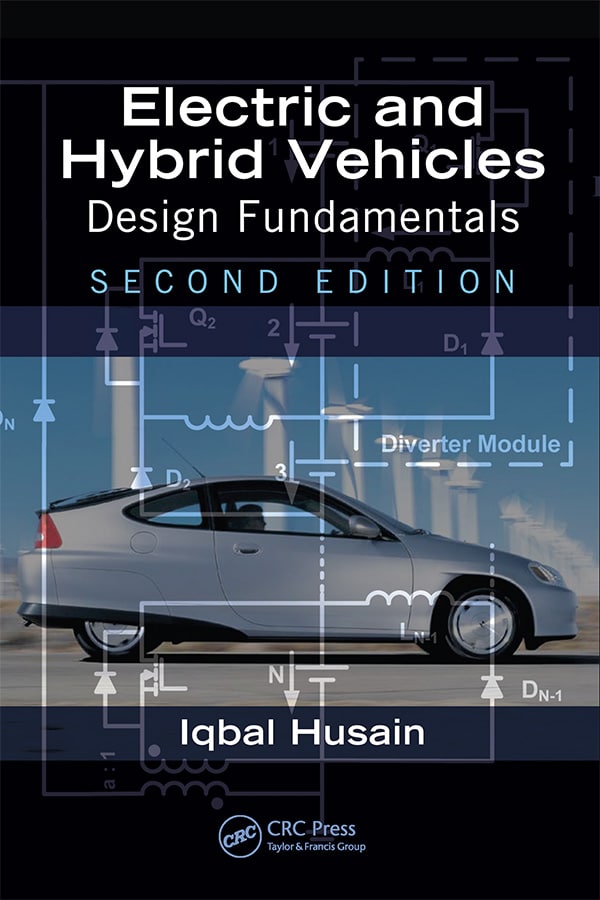
Dr. Iqbal Husain is the Director of the FREEDM Center and an ABB Distinguished Professor in the Department of Electrical and Computer Engineering at North Carolina State University. Previously, he served at the University of Akron for 17 years before joining NC State. He holds a Ph.D. (1993), M.S. (1989), and B.S. (1987) in Electrical Engineering from Texas A&M University and Bangladesh University of Engineering and Technology, respectively. His research focuses on power electronics, electric drives, and renewable energy systems, with applications in transportation, automotive, and aerospace. Notable contributions include advancements in electric machine design, inverter controls, and grid synchronization. He authored the textbook *Electric and Hybrid Vehicles: Design Fundamentals*, now in its third edition. Dr. Husain’s awards include the NSF CAREER Award (1997), SAE Vincent Bendix Award (2006), and IEEE Fellow (2009). His recent work includes developing AI-enabled tools for power grid cybersecurity and medium-voltage solid-state transformers for EV fast charging. He leads interdisciplinary projects at the FREEDM Systems Center, addressing challenges in clean energy and smart grid technologies.
Jacob P. Covey is an Assistant Professor in the Department of Physics at the University of Illinois at Urbana-Champaign (UIUC). He holds a Ph.D. in Physics from the University of Colorado Boulder (2017) and B.S. in Engineering Physics from the University of Wisconsin-Madison (2011). His research focuses on quantum optics, atomic physics, and quantum information science, particularly in quantum control of ultracold atoms and molecules, superradiance phenomena, and quantum networking. He leads the Covey Lab, which explores topics such as neutral atom quantum processors, Rydberg atom interactions, and precision measurement with optical clocks. Academic Positions: Assistant Professor at UIUC (2020–present); Richard Chace Tolman Postdoctoral Scholar at Caltech (2017–2020). Research highlights include pioneering work on Dicke superradiance in ordered atomic arrays and telecom-band quantum networking with Yb-171 atom arrays. He teaches undergraduate courses in mechanics, electromagnetism, thermodynamics, quantum physics, and quantum information. Scientific Awards: NSF CAREER Award (2024), Young Investigator Awards from AFOSR (2023) and ONR (2022), Springer Thesis Award (2018), and multiple fellowships including the Richard Chace Tolman Postdoctoral Fellowship (2017). His work bridges experimental and theoretical advances in quantum technologies, with contributions to quantum state control, precision metrology, and many-body quantum systems.
Reza Ghabcheloo is a Professor at Tampere University, affiliated with the Faculty of Engineering and Natural Sciences and the Department of Automation Technology and Mechanical Engineering. He leads the Robotics major and the international Automation Engineering program. His research focuses on autonomous mobile machines, robotics, control systems, and safety engineering, with specific interests in construction robotics, sensor fusion, and hydraulic systems. He co-leads the Autonomous Mobile Machines Group and is associated with the Robotics and Intelligent Machines Lab and the Innovative Hydraulics and Automation Lab. His research emphasizes developing autonomous systems for off-road machinery, safe control strategies, and energy-efficient automation. He has published extensively on topics such as reinforcement learning for crane control, radar-based perception, and safety architectures for autonomous systems. His work bridges robotics, control theory, and industrial automation, addressing challenges in heavy-duty machinery and real-world robotic applications. Research Group: Autonomous Mobile Machines Group Labs: Robotics and Intelligent Machines Lab, Innovative Hydraulics and Automation Lab Key Projects: Safety of automated off-road machinery, machine learning for autonomous loading, and trajectory optimization
Professor Alasdair McDonald holds the Chair in Renewable Energy Technology at the School of Engineering, University of Edinburgh . His work focuses on the integrated electrical-magnetic-mechanical modeling and design of large electrical machines for offshore renewable energy systems , particularly wind turbine powertrains . He previously served as a Lecturer, Senior Lecturer, and Reader in Wind Turbine Technology at the University of Strathclyde. Education: PhD in Structural Analysis of Low-Speed, High-Torque Generators (University of Edinburgh, 2008) MEng (Hons) in Integrated Electrical & Mechanical Engineering (University of Durham, 2004) Research Interests: Design of permanent magnet electrical machines for wind and marine energy Lightweight generator structures and advanced manufacturing methodologies Condition monitoring using SCADA and vibration data Cost of energy optimization for offshore renewables Projects: STREAM 1: Innovations in Forth/Tay Offshore Wind Clusters (EPSRC, 2025-2029) Wind2DC: Medium Voltage DC Power Take-Off Systems (EPSRC, 2023-2026) PV054: Modular Generators for Floating VAWTs (EPSRC & SeaTwirl AB, 2023) Media Contributions: Quoted in research media about floating hydrogen production systems (2025)
Anne-Marie Oswald is an Associate Professor in the Department of Neurobiology within the Biological Sciences Division at the University of Chicago. Her research profile indicates active engagement in neuroscience research with a particular focus on cortical circuits, neural coding, and sensory processing systems. She maintains an active research program with publications spanning from 2011 to the present. Dr. Oswald's research interests span multiple areas of neuroscience, with particular emphasis on cortical circuit function, neural coding mechanisms, and sensory processing. Her work investigates how inhibitory interneurons shape cortical dynamics, how neural assemblies form during learning, and how sensory information is processed across different brain regions. Notably, she has also contributed to discussions on diversity in science through her publication "Curating more diverse scientific conferences" in Nature Reviews Neuroscience (2020). Her research employs a combination of electrophysiological, computational, and behavioral approaches to understand neural circuit function. Analysis of her publication record reveals a strong focus on cortical circuit mechanisms, particularly in the olfactory system. Her work demonstrates expertise in understanding how different interneuron subtypes (particularly parvalbumin and somatostatin-positive cells) regulate cortical dynamics, assembly formation, and sensory processing. Over time, her research has evolved from examining basic circuit mechanisms to investigating how these circuits support complex cognitive functions like odor discrimination and associative learning. The consistent presence of computational and systems neuroscience approaches throughout her publication history indicates a rigorous quantitative approach to understanding neural function. Dr. Oswald appears to be actively mentoring students and postdoctoral researchers, as evidenced by her consistent publication record with multiple collaborators. While specific grant information isn't provided in the available data, her sustained publication output suggests successful funding of her research program. Her work bridges cellular and systems neuroscience, contributing to our understanding of how microcircuit properties shape sensory processing and behavior.
Dr. John G. Hayes is a Senior Lecturer at University College Cork (UCC) in the Department of Electrical & Electronic Engineering . He holds a Ph.D. from UCC (1998), an M.S.E.E. from the University of Minnesota (1989), an M.B.A. from California Lutheran University (1993), and a B.E. from UCC (1986). His academic career began at UCC in 2000, and he directs the Power Electronics Research Laboratory (PERL) , focusing on industrial collaborations with companies like Analog Devices and General Motors. Research Interests : Power electronics, magnetic components, electric vehicles, renewable energy systems, smart grids, and energy storage. Notable Work : Joint author of Electric Powertrain: Energy Systems, Power Electronics and Drives for Electric, Hybrid and Fuel Cell Vehicles (Wiley, 2018) and its Chinese edition (2021). Scientific Awards : 2011 IEEE William M. Portnoy Award for Best Paper/Presentation at IEEE ECCE. Advising : Supervised 10+ Ph.D. students across powertrain modeling, magnetic materials, and converter control. Current advisee: Conor Healy (Doctoral Degree). Labs : Leads PERL, which develops high-power converters for automotive and renewable energy applications, partnering with industry leaders like SMA Magnetics and United Technologies.
Heikki Handroos is a Full Professor of Mechanical Engineering at LUT University, leading the Laboratory of Intelligent Machines since 1993. He holds a DSc (Technology) from Tampere University of Technology and has served as Vice-Dean of the Faculty of Technology (2007-2009) and currently chairs the Collegiate Body of LUT University. His research focuses on mechatronics, robotics, control systems, and fluid power, with over 300 publications and 2,400+ citations. He has supervised 34 doctoral theses and 150+ MSc projects, managed R&D projects exceeding €20M, and co-founded four tech startups. His work spans industrial collaborations, digital twin applications, and innovative robotics for nuclear energy (e.g., DEMO reactor maintenance systems). He has held visiting professorships in the U.S., Japan, and Russia, and actively contributes to academic editorial roles and professional societies like ASME and IEEE.
Richard Born is a Professor of Neurobiology at Harvard Medical School , focusing on the circuitry of the mammalian cerebral cortex and its role in visual perception. His lab employs multi-species approaches, combining primate psychophysics and electrophysiology rodent 2-photon imaging and optogenetics hierarchical Bayesian modeling of perceptual inference to investigate cortico-cortical feedback, neural variability, and context-dependent visual processing. Research Interests span visual systems neuroscience, with emphasis on top-down modulation of sensory processing binocular rivalry and perceptual states gamma oscillations and neural synchrony input-gain control in V1/V2/V3 Bayesian brain frameworks neuroanatomical connectomics Recent work explores layer 1 dendritic interactions with somatostatin interneurons and collaborations with institutions like Boston University and the University of Rochester. Advising includes mentoring postdoctoral fellows (Ariana Sherdil, Camille Gómez-Laberge, Abhinav Grama) and students at Harvard Medical School. The lab utilizes advanced techniques including multi-electrode arrays laminar probes optogenetic perturbation DTI tractography validation for circuit analysis.
Dr. Tingkai Wang is a Senior Lecturer in the School of Computing and Digital Media at London Metropolitan University. His research focuses on mobile robots, intelligent systems, artificial intelligence, control systems, image/signal processing, and virtual reality. He teaches the Programming for Computer Science module and has led projects like the Virtual Environment and Simulation System (2000-2002) and Navigation and Control of Mobile Robots (1995-1998). His work emphasizes interdisciplinary approaches, combining expert systems, neural networks, and fuzzy logic to address challenges in autonomous systems. Notable contributions include AGV navigation algorithms, hybrid control systems, and predictive modeling. Over 30 publications span robotics, control engineering, and AI applications. He collaborates internationally and has presented at venues like the International Conference on Intelligent Systems Engineering and the IEEE Conference on Engineering in Medicine and Biology. Dr. Wang’s expertise bridges theoretical modeling and practical implementation, with applications in manufacturing automation, environmental monitoring, and industrial management systems. His current research continues exploring adaptive control mechanisms and AI-driven robotics solutions.