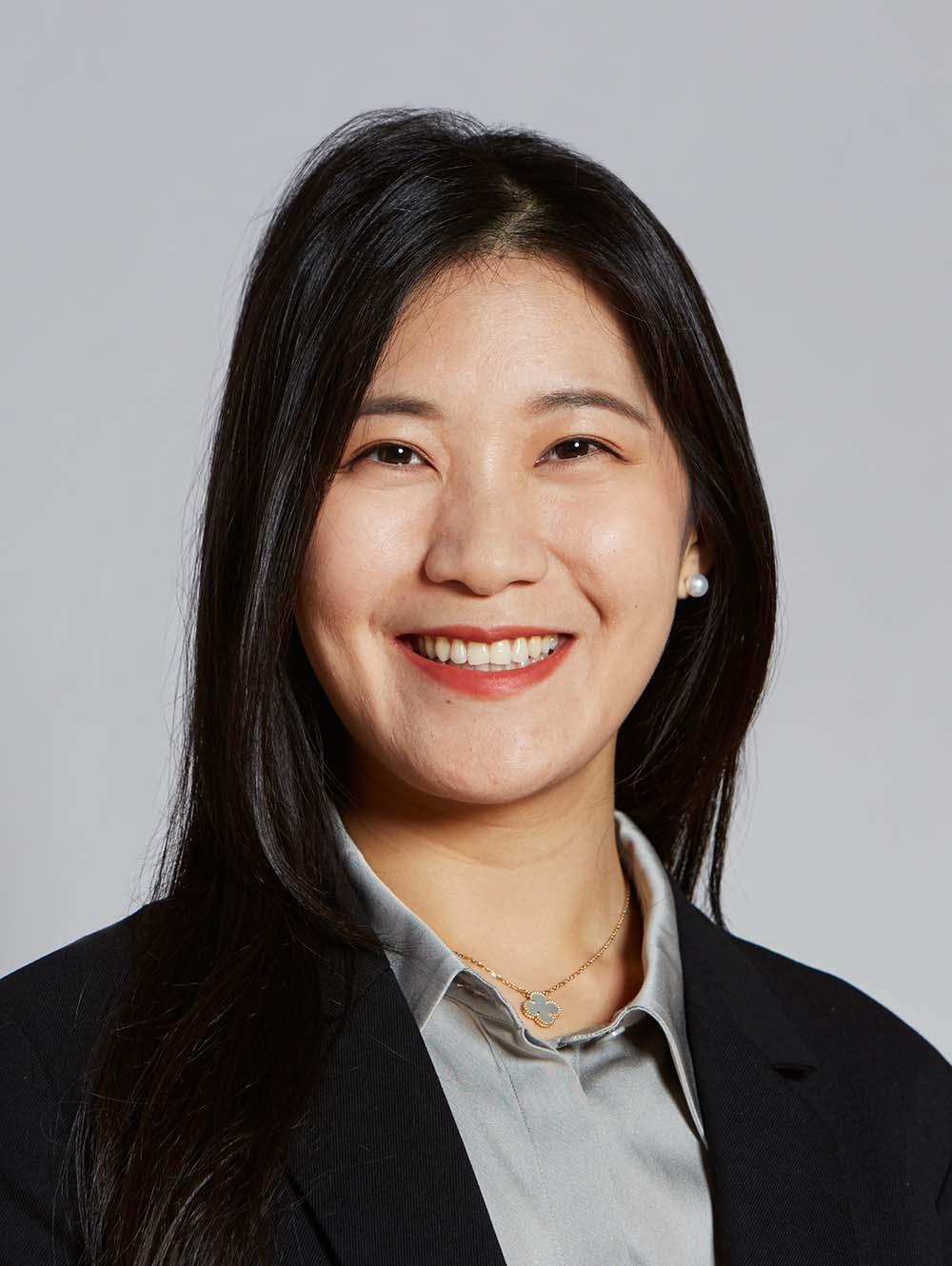
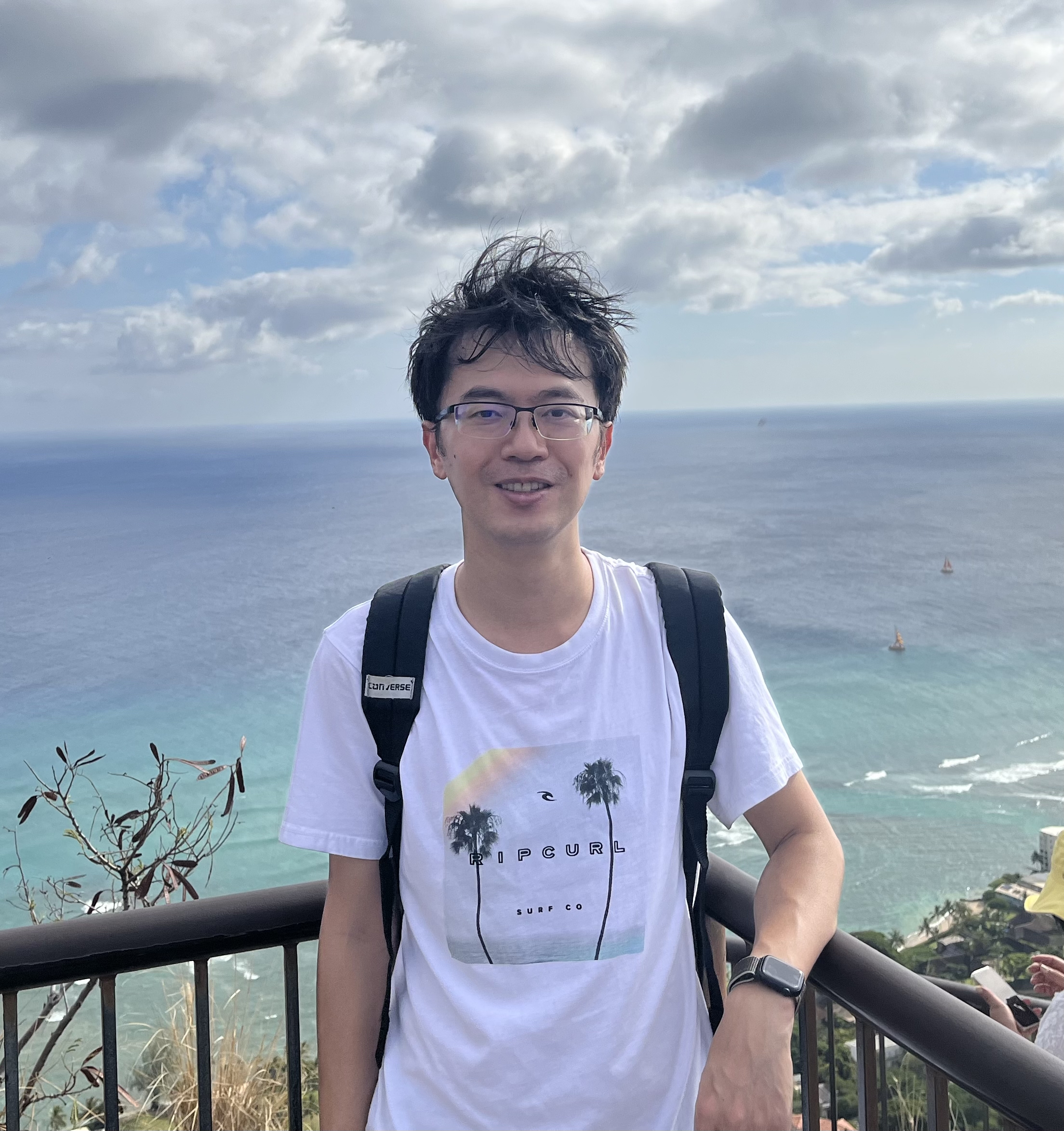
Prof. Hedan Bai is an Assistant Professor at the Department of Materials, ETH Zürich, specializing in robotics materials, bio-inspired systems, and soft robotics. Their research focuses on developing advanced materials for sensing, energy-efficient systems, and biomedical applications. Notable projects include the SmartSuit architecture for space exploration and self-healing optical sensors for soft robots. Research interests span bioelectronics, stretchable sensors, haptic interfaces, and biomimetic materials. Bai's work integrates material science with robotics to create adaptive, sustainable, and intelligent systems. Key areas include wireless implants for neuromodulation, environmental-responsive textiles, and energy-harvesting devices. Publications highlight innovations in optical waveguides, self-healing materials, and wearable technologies. Their interdisciplinary approach bridges robotics, biomedical engineering, and aerospace applications. No formal awards are listed, but contributions to next-gen materials for robotics are prominent. Advising and grants are not detailed in the text, but Bai's lab focuses on projects like SmartSuit for extravehicular activities and synthetic afferent neural networks. Collaborations likely involve aerospace and biomedical sectors.
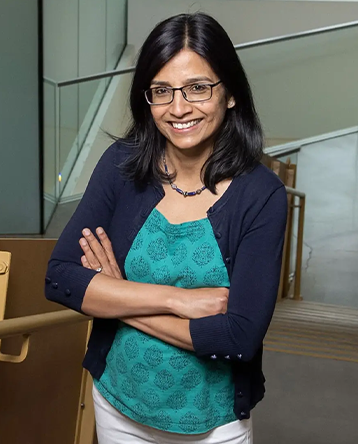
Aarti Singh is a Professor in the Machine Learning Department at Carnegie Mellon University and Director of the NSF AI Institute for Societal Decision Making. She leads research at the intersection of machine learning, statistics, and decision making, with applications to scientific and societal domains. Her work focuses on designing principled interactive algorithms for learning and decision making under uncertainty. Education: Ph.D. in Electrical Engineering, University of Wisconsin-Madison (2008) M.S. in Electrical Engineering, University of Wisconsin-Madison (2003) B.E. in Electronics and Communication Engineering, University of Delhi (2001) Research Interests: Professor Singh's research centers on developing interactive machine learning algorithms that go beyond finding input-output associations to make higher-level decisions about the most informative data and actions. Her work spans autonomous decision making, including active sampling, stochastic optimization, bandits, and reinforcement learning that are statistically optimal, computationally tractable, and robust. She also investigates human factors in decision making, designing algorithms that model and leverage human feedback while accounting for bias, memory effects, and calibration. Her research has applications in material science, cosmology, and peer review systems. Research Trends: Professor Singh's recent publications demonstrate a strong focus on reinforcement learning, particularly in developing more efficient and robust algorithms for decision making under uncertainty. Her work bridges theoretical foundations with practical applications, spanning from fundamental algorithm development to real-world implementation in scientific domains. There's a clear trajectory toward integrating human factors into decision-making algorithms, with significant contributions to peer review systems and preference learning. Scientific Awards: NSF Career Award United States Air Force Young Investigator Award A. Nico Habermann Faculty Chair Award Harold A. Peterson Best Dissertation Award Multiple paper awards Advising and Grants: Professor Singh has advised numerous PhD and master's students, many of whom have gone on to faculty positions or research roles at leading institutions. Her research is supported by prestigious grants from ONR, Simons Foundation, AFRL, ARL, and NSF. She serves as General Chair (2025) and Program Chair (2020) for the International Conference on Machine Learning (ICML) and has held leadership roles in multiple professional organizations. Research Team: Professor Singh leads a vibrant research group within the Machine Learning Department at CMU, with current PhD students working on topics including reinforcement learning, human-AI collaboration, and decision making under uncertainty. She also directs the NSF AI Institute for Societal Decision Making, which brings together researchers from multiple disciplines to develop AI systems that support human decision making in societal contexts.
Byron Yu is a Professor in Electrical & Computer Engineering and Biomedical Engineering at Carnegie Mellon University, with affiliations to the Neuroscience Institute and Robotics Institute. He is a core faculty member of the Center for the Neural Basis of Cognition. Research focuses on computational neuroscience , neural dynamics , and brain-machine interfaces . Key contributions include dimensionality reduction techniques and neural population activity analysis. Recent publications explore topics such as neural dynamics during motor imagery, BCI optimization, and attentional processing. His work has appeared in Nature Neuroscience , Neuron , and eLife , often as cover articles. Awardees include the Gerard G. Elia Career Development Professorship and AIMBE Fellowship . His lab has mentored numerous PhD and postdoctoral researchers, many now in academic and industry leadership roles.
Katie Byl is an Associate Professor in the Departments of Electrical and Computer Engineering and Mechanical Engineering at the University of California, Santa Barbara (UCSB). Her research focuses on robot dynamics and control, particularly in locomotion and manipulation, with applications in rough terrain legged locomotion, supervised autonomy, and flapping-wing flight. She holds B.S., M.S., and Ph.D. degrees in Mechanical Engineering from MIT. Affiliations: Center for Control, Dynamical Systems and Computation (CCDC) Mechanical Engineering Department Research Interests: Byl’s work emphasizes modeling and control of underactuated systems, stochasticity in real-world environments, and the development of robust control principles for dynamic systems. Her applied projects include exoskeletons, autonomous robots like RoboSimian (part of the DARPA Robotics Challenge), and flapping-wing microrobotics. Scientific Awards: NSF Early Career Development Award Hellman Faculty Fellowship Alfred P. Sloan Foundation Fellowship in Neuroscience Regents’ Junior Faculty Fellowship Teaching & Advising: Byl teaches courses in control systems (e.g., ECE 147B, ECE 179D) and robotics. She advises students in UCSB’s Robotics Lab, emphasizing a mix of control theory, mechanical design, and algorithm development. Undergraduate researchers are also recruited annually for summer projects. Labs & Teams: Her Robotics Lab focuses on hardware implementation of control ideas, maintaining a high robot-to-student ratio. Collaborations include the Army’s Institute for Collaborative Biotechnologies and the DARPA Robotics Challenge with JPL.
Gilbert Fridgen is Full Professor in Digital Financial Services and holder of the PayPal-FNR PEARL Chair at the University of Luxembourg's Interdisciplinary Centre for Security, Reliability and Trust (SnT). He leads the FINATRAX research group focusing on blockchain, digital identity, and sustainable digital solutions. His research explores decentralized technologies in finance, energy systems, and public administration. Current projects investigate blockchain applications in industrial demand response, NFT markets, EU digital identity wallets, and DeFi institutional adoption. Prof. Fridgen examines the intersection of technology with regulatory frameworks and user behavior in energy and financial systems. He collaborates extensively with industry partners including PayPal and Spuerkeess. Prof. Fridgen actively contributes to EU digital policy discussions, particularly regarding the European Digital Identity Wallet framework and decentralized finance governance.
Alexander T. Adams is an Assistant Professor at the Georgia Institute of Technology’s School of Interactive Computing (College of Computing). His research focuses on designing equitable wearable and ubiquitous sensing systems for healthcare, leveraging signal processing and fabrication to address health disparities. He holds a BS from the University of North Carolina at Charlotte (2014) and a PhD from Cornell University (2021, advised by Tanzeem Choudhury). Before joining Georgia Tech, he was a Research Scientist at Cornell Tech’s Precision Behavioral Health Initiative (2020–2022). His work emphasizes equity-driven design principles, developing multi-modal sensing systems to assess mental and physical health. Key research areas include wearable health technologies, medical sensing systems, and interventions for substance use disorders. Recent projects involve smartphone-based diagnostic tools (e.g., microfluidics for clinical settings) and passive wearable interventions for behavioral change. Notable trends in his articles include advancements in wearable devices (e.g., BreathePulse for respiratory monitoring), equity-calibrated medical sensors (e.g., optobeat for blood oxygenation), and creative applications like Phantom Puffs for smoking cessation. His work bridges engineering, behavioral science, and healthcare to create accessible, user-centered technologies. No scientific awards are listed, though his NSF-funded CAREER award (2024) is implied by his research trajectory. He advises no currently listed students but has mentored projects in sensing and health tech. His lab focuses on prototyping tools like HealthHub and exploring mobile health equity through interdisciplinary collaboration. Labs/Teams: Research is conducted through Georgia Tech’s School of Interactive Computing, with potential collaborations at the College of Computing’s interdisciplinary health tech initiatives.
Dai Zhongxiang is an Assistant Professor and Presidential Young Fellow at the School of Data Science, The Chinese University of Hong Kong, Shenzhen (CUHKSZ), where he joined in August 2024. Previously, he was a Postdoctoral Associate at MIT's Laboratory for Information and Decision Systems (January-June 2024) and a Postdoctoral Fellow at the National University of Singapore's Department of Computer Science (April 2021-December 2023). He completed his Ph.D. in Artificial Intelligence at NUS under the supervision of Bryan Kian Hsiang Low and Patrick Jaillet. Dr. Dai's research focuses on the intersection of theoretical and practical AI, with particular emphasis on large language models (LLMs) and optimization techniques. His work spans both theoretical foundations of multi-armed bandits and Bayesian optimization, as well as practical applications in LLM inference, including prompt optimization, in-context learning, personalization of LLMs, LLM-based agents, and scaling up test-time computation of LLMs. His research approach often bridges theoretical principles with real-world applications, particularly in AI4Science problems. His recent publications demonstrate a clear trend toward advancing LLM capabilities through optimization techniques, with increasing focus on practical deployment challenges. The research spans both theoretical contributions to optimization theory and applied work on enhancing LLM performance in real-world scenarios. His work on dueling bandits, neural bandits, and zeroth-order optimization has been consistently published in top-tier venues including NeurIPS, ICML, ICLR, and ACL. Presidential Young Fellow, CUHKSZ (2024) Dean's Graduate Research Excellence Award, NUS (2021) Research Achievement Award × 2, NUS (2019 & 2020) Singapore-MIT Alliance Graduate Fellowship (2017) Dr. Dai actively mentors multiple Ph.D. students and research assistants, with several of his students' papers accepted to top conferences. His research has received significant attention, with invitations to serve as Area Chair for NeurIPS 2025 and ICLR 2025, reflecting his growing influence in the machine learning community. His work bridges theoretical machine learning with practical applications in large-scale AI systems.
Richard E. Mayer is a Distinguished Professor of Psychology at the University of California, Santa Barbara, affiliated with the College of Letters & Science. His work bridges cognition, instruction, and technology to advance understanding of how people learn and how to design effective educational interventions. Research focuses on multimedia learning , computer-supported learning environments , and computer games for learning Current projects examine immersive virtual reality, generative learning strategies, and social cues in online instruction Recipient of top honors: Thorndike Award, Scribner Award, and APA’s Distinguished Contribution Award Principal Investigator on grants from the Office of Naval Research , Institute of Education Sciences , and National Science Foundation He leads the Mayer Lab for Research on Learning and Instruction, which emphasizes learning for transfer —ensuring learners apply knowledge in new contexts. His research has established 12 instructional design principles for online learning environments.
Dr. Hojjat Soofi is a Lecturer in Bioethics at Sydney Health Ethics within the University of Sydney's School of Public Health (Faculty of Medicine and Health). A pharmacist by training, he holds a PhD and MRes in Bioethics from Macquarie University and an Erasmus Mundus Master of Bioethics from a consortium of European universities. His research deploys philosophical ethics and empirical methods to address ethical challenges in dementia care and aged care settings. Research Focus: Soofi's work centers on ethical frameworks for vulnerable populations, specializing in: Dignity preservation in dementia care Autonomy and consent mechanisms Vulnerability in long-term care settings Non-clinical medication ethics Research ethics for cognitively impaired individuals His scholarship critically engages with concepts from philosophers like Nussbaum, Kitwood, and Beauchamp & Childress. Awards & Grants: Recognized with the 2022 Ramy Razavian Dean’s Award for research excellence and supported by a 2023 FMH Start-up Scheme grant for early career researchers. Teaching: Coordinates core bioethics units including Clinical Ethics (BETH5204) and Medicines Policy, Economics and Ethics (BETH5209). Student feedback highlights his exceptional course organization and ability to stimulate critical reasoning. Professional Engagement: Active member of the Australasian Association of Bioethics and Health Law (AABHL) and the Sydney Bioethics Program team.
Michael McAlpine is a Professor in the Mechanical Engineering department at the University of Minnesota . He also holds affiliations with the Biomedical Engineering and Electrical and Computer Engineering departments. His research focuses on 3D printing functional materials & devices , Nanoscale inks , Biomedical devices , Bioelectronics , and Flexible Microsystems . Research Interests : 3D Printing, Biomedical Engineering, Nanotechnology, Flexible Electronics, Microfluidics Labs : ME 361/363 Contact : mcalpine@umn.edu , (612) 626-3303, ME 117 Recent Research Trends include 3D Printed Biomedical Devices , Flexible Electronics , and Bioprinting Applications . His work spans from Spinal Organoid Formation to Programmable Drug Release Capsules . Scientific Award : Circulation Research 2020 Best Manuscript Award
Michael Baldea is an Associate Professor in the Department of Chemical Engineering at the University of Texas at Austin . He holds a Ph.D. in Chemical Engineering from the University of Minnesota (2006), with prior degrees from 'Babeş-Bolyai' University in Romania (M.Sc. 2001, Diploma 2000). His research group develops theoretical and computational methods for Process and Energy Systems Engineering , focusing on integrated decision-making, performance optimization, and process intensification with industrial validation. Education: Ph.D., Chemical Engineering, University of Minnesota (2006) M.Sc., Interface Process Engineering, 'Babeş-Bolyai' University (2001) Diploma, Chemical Engineering, 'Babeş-Bolyai' University (2000) Research Thrusts: Integrated decision-making in chemical/energy supply chains Process performance monitoring and optimization Process integration and intensification Key applications include grid-responsive chemical plants, intensified distillation/column designs, and renewable energy integration for building systems. Scientific Awards: Frank A. Liddell, Jr. Fellowship NSF CAREER Award (2015-2020) Moncrief Grand Challenges Faculty Award (2014) AIChE Outstanding Young Researcher Award (2017) Implementation : His group has translated research into commercial tools through partnerships with industrial test beds and is working to integrate methods into commercial simulators. They explore predictive approaches for building energy management and strategic capital investment analysis in next-generation energy systems.
Enamul Hoque Prince is an Associate Professor and Director of the School of Information Technology at York University. He leads the Intelligent Visualization Lab, funded by the Canada Foundation for Innovation (CFI) and Ontario Research Funds (ORF). He holds a PhD in Computer Science from the University of British Columbia and completed postdoctoral work at Stanford University. His research integrates information visualization, human-computer interaction (HCI), and natural language processing (NLP) to address information overload challenges. Dr. Prince's educational background includes a PhD from UBC, an MSc from Memorial University of Newfoundland, and a BSc from Chittagong University of Engineering & Technology. He has conducted research at institutions like Tableau Software and the Qatar Computing Research Institute and serves on committees for top conferences like ACL and IEEE Vis. His work is supported by grants from NSERC, CFI, and others. Research interests focus on NLP-driven visual analytics, user-adaptive visualization, and accessible interfaces. Notable projects include Evizeon (natural language interfaces for visual analytics), ConVisIT (topic modeling for online conversations), and CIDER (concept-based image search). Publications highlight trends in multimodal systems, chart comprehension, and accessibility. Key awards include the NSERC Discovery Grant (2019) and a Best Paper Honorable Mention at DIS 2021. He supervises graduate and undergraduate students in areas like visualization, NLP, and HCI. Labs and collaborations emphasize interdisciplinary approaches, with the Intelligent Visualization Lab advancing tools for data exploration and user-centered design. Teaching includes courses on design principles and information visualization.
Jeannette Bohg is an Assistant Professor of Computer Science at Stanford University, directing the Interactive Perception and Robot Learning Lab. Previously, she was a group leader at the Autonomous Motion Department (AMD) of the MPI for Intelligent Systems (2012-2017). She holds a PhD from KTH Royal Institute of Technology (Stockholm) and degrees from Chalmers University and TU Dresden. Her research focuses on perception, learning, and real-time multi-modal methods for autonomous robotic manipulation and grasping, aiming to bridge principles of human sensorimotor coordination with robotic implementation. Education: PhD in Robotics (KTH), MSc in Art & Technology (Chalmers), Diploma in Computer Science (TU Dresden) Research interests include developing goal-directed, real-time robotic systems capable of meaningful feedback for execution and learning. Key areas are dexterous manipulation, imitation learning, and cross-embodiment policy transfer. Notable contributions include the TidyBot platform and work on force-aware surgical robotics. Awards include the 2019 IEEE ICRA Best Paper Award, 2019 IEEE RA Early Career Award, and 2020 RSS Early Career Award. Her lab explores intersections of robotics, ML, and computer vision. Advising: Actively mentoring students/postdocs in manipulation, perception, and learning. Grants and collaborations span NSF, Stanford AI Lab, and industry partnerships. Future work emphasizes robust real-world deployment and human-robot collaboration. Labs/Teams: Leads the Interactive Perception and Robot Learning Lab, contributing to Stanford’s AI ecosystem. Previously managed the MPI AMD group, fostering interdisciplinary research in autonomous systems.
Emma Brunskill is an Associate Professor of Computer Science at Stanford University, with a courtesy appointment in Education. She holds a PhD in Computer Science from MIT (2009). Her research focuses on reinforcement learning, educational technology, and healthcare applications, aiming to develop AI systems that support human learning and decision-making. Notable projects include AI tutoring systems, policy evaluation methods, and behavior change interventions using large language models. Her work bridges theory and practice, addressing challenges in off-policy evaluation, fairness-aware decision making, and scalable educational tools. Brunskill has contributed to foundational research in reinforcement learning algorithms and their applications in real-world scenarios such as healthcare, education, and human-AI collaboration. She also leads initiatives to improve equity and efficiency in educational technologies through data-driven approaches. Brunskill's research has been supported by grants such as the NSF RI: Small grant for data-efficient reinforcement learning. She actively explores the ethical implications of AI systems, particularly in healthcare and education settings. Her recent work emphasizes leveraging large language models (LLMs) for personalized feedback and simulated training environments, as seen in studies like GPTCoach and LLM-based counselor upskilling.
Kevin M. Lynch is a Professor of Mechanical Engineering at Northwestern University's McCormick School of Engineering, where he also serves as Director of the Center for Robotics and Biosystems. His research spans multiple domains of robotics, with particular expertise in dynamics, motion planning, and feedback control of mechanical systems. Dr. Lynch received his Ph.D. in Robotics from Carnegie Mellon University in 1996, with a thesis on "Nonprehensile Robotic Manipulation: Controllability and Planning" under advisor Prof. Matthew T. Mason. He earned his B.S.E. with honors in Electrical Engineering from Princeton University in 1989. His research interests focus on robotics, particularly dynamics, motion planning, and feedback control of mechanical systems. He investigates mechanics, planning, and control of robotic manipulation (juggling, throwing, pushing, rolling, vibration, etc.) and locomotion. His work also explores self-organizing systems, particularly decentralized control of mobile sensor networks and swarm robotics, underactuated dynamic systems, and physical human-robot interaction with industrial applications. Recent research has expanded into bio-inspired active electrosense, underwater robotics, control and optimization for robot swarms, swarm shape control, and functional electric stimulation. Dr. Lynch's recent publications demonstrate a strong trend toward rehabilitation robotics and human-robot interaction, particularly in lower-limb exoskeletons for gait training and rehabilitation. His work bridges fundamental robotics research with practical applications in healthcare, showing increasing integration of swarm robotics principles with human-centered design. The publications also reveal continued strong contributions to fundamental robotics theory, particularly in swarm formation control and manipulation dynamics. George Saridis Leadership Award in Robotics and Automation (2022) Harashima Award for Innovative Technologies (2017) IEEE Fellow (2010) Charles Deering McCormick Professor of Teaching Excellence (2007-10) Society of Automotive Engineers Ralph R. Teetor Educational Award (2007) Early Career Award in Robotics and Automation (2001) McCormick School of Engineering and Applied Science Teacher Of The Year Award (1998-1999) NSF Career Award (1998) As Director of the Center for Robotics and Biosystems, Dr. Lynch oversees significant research grants and initiatives in robotics. He has made substantial contributions to robotics education through his "Modern Robotics" book and associated Coursera specialization, which has reached thousands of students worldwide. His professional service includes serving as Editor-in-Chief of IEEE Transactions on Robotics, where he oversaw a 90% increase in submissions during his tenure. Dr. Lynch leads research groups focusing on swarm robotics and rehabilitation robotics, with particular emphasis on the Center for Robotics and Biosystems at Northwestern University. His teams integrate expertise from mechanical engineering, electrical engineering, computer science, and rehabilitation medicine to develop innovative robotic systems for both industrial applications and healthcare solutions.