Henrik Sandberg is a Professor at the Division of Decision and Control Systems , KTH Royal Institute of Technology , Stockholm, Sweden. He holds the title of Deputy Head of Division and is affiliated with the School of Electrical Engineering and Computer Science . Education: MSc in Engineering Physics (1999) PhD in Automatic Control (2004) from Lund University Postdoctoral position at Caltech (pre-2007) Research Interests: Focus on cyber-physical systems security , power systems , model reduction , and fundamental limitations of control systems . Key sub-areas include attack detection , networked control , privacy-preserving estimation , and resilient control architectures . Publications: Over 150 papers across IEEE Transactions and Automatica , covering topics like stealthy attacks , distributed control , LQG optimization , and thermodynamic costs in filtering . Recent work includes LWE-based encrypted control and Bayesian deception mechanisms . Scientific Awards: Best Student Paper Award Finalist at IEEE CASE 2014; Best Student-Paper Award at IEEE CDC 2004. Grants & Projects: Leads the DYNACON project (WASP Cybersec cluster) and collaborates on CERCES (critical infrastructure resilience). Serves as examiner for multiple advanced courses in cybersecurity and control systems. Contact: Email: hsan@kth.se Phone: +46 (0)8 790 7294 Room: A:607, Malvinas Väg 10, Stockholm
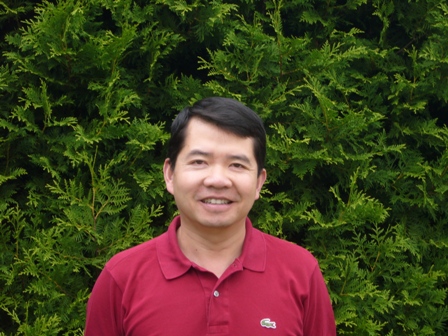
Xiaoming Hu is a Professor at the Division of Numerical Analysis, Optimization and Systems Theory within the Department of Mathematics at KTH Royal Institute of Technology (Kungliga Tekniska Högskolan) in Stockholm, Sweden. Born in Chengdu, China, he received his B.S. degree from University of Science and Technology of China in 1983, followed by M.S. and Ph.D. degrees from Arizona State University in 1986 and 1989 respectively. After serving as a research assistant at the Institute of Automation, Chinese Academy of Sciences (1983-1984), he was a Gustafsson Postdoctoral Fellow at KTH (1989-1990) before becoming a faculty member. His educational background includes: B.S. in Engineering, University of Science and Technology of China, 1983 M.S. in Engineering, Arizona State University, 1986 Ph.D. in Engineering, Arizona State University, 1989 Xiaoming Hu's research primarily focuses on multi-agent systems, nonlinear feedback stabilization, nonlinear observer design, and sensing and active perception. His work bridges theoretical control theory with practical applications in robotics and autonomous systems. He has made significant contributions to geometric control theory, mathematical systems theory, and nonlinear systems analysis and control. His research often involves developing theoretical frameworks for distributed control, formation control, and cooperative behavior in multi-robot systems. Professor Hu's publication record shows a consistent research trajectory with numerous high-impact publications in top-tier journals like Automatica, IEEE Transactions on Automatic Control, and Systems & Control Letters. His research has evolved from fundamental control theory to more applied problems in robotics and multi-agent systems, while maintaining strong mathematical foundations. Recent work shows increasing focus on safety-critical control, inverse problems in estimation, and networked systems. His scientific contributions include: Development of theoretical frameworks for multi-agent coordination and formation control Advances in nonlinear observer design for robotic systems Contributions to geometric control theory and systems theory Research on distributed estimation and control algorithms Applications of control theory to robotics and autonomous systems Professor Hu teaches several advanced courses including Mathematical Systems Theory, Geometric Control Theory, and Nonlinear Systems: Analysis and Control. He has supervised numerous degree projects at both undergraduate and graduate levels in mathematics, optimization, systems theory, and scientific computing. His teaching reflects his research expertise, providing students with both theoretical foundations and practical applications of control theory.
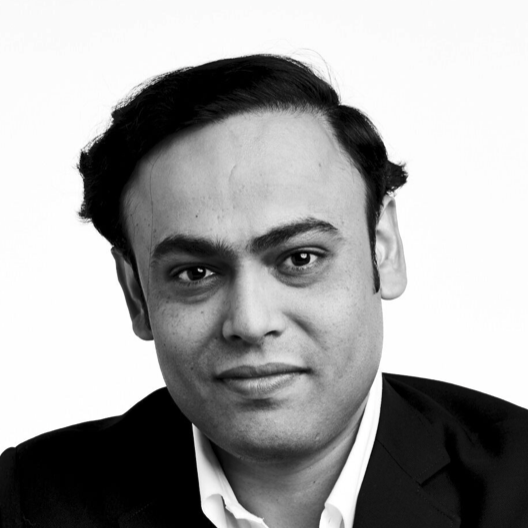
Saurabh Amin is a Professor in the Department of Civil and Environmental Engineering at the Massachusetts Institute of Technology (MIT), where he also serves as the Edmund K. Turner Professor and Undergraduate Officer. He is a Principal Investigator at the Laboratory of Information and Decision Systems and holds affiliations with the Operations Research Center and the Center for Computational Science and Engineering. His educational background includes: B.Tech. 2002, Indian Institute of Technology (IIT) Roorkee M.S. 2004, University of Texas (UT) Austin Ph.D. 2011, University of California (UC) Berkeley Saurabh Amin's research focuses on the design and control of infrastructure systems using game theory and optimization in networks. His work spans three main areas: resilient network control, information systems and incentive design, and optimal resource allocation in large-scale infrastructure systems. By concentrating on critical infrastructure domains including highway transportation, electric power distribution, and urban water networks, his research develops innovative theory and tools to enhance system performance against both stochastic and adversarial disruptions. His approach involves modeling cyber-physical interactions in infrastructures to assess vulnerabilities, developing detection and response tools for failures at various scales, and designing economic incentive schemes that improve aggregate public good while accounting for dependencies and private information among strategic entities. Amin's work bridges mathematical systems theory with practical civil engineering applications, creating a rigorous theoretical foundation for infrastructure resilience that addresses diverse failure mechanisms from natural disasters to deliberate malicious actions. His recent publications demonstrate a strong focus on decarbonization of energy systems, resilient infrastructure planning under climate uncertainty, optimization methods for complex networked systems, and game-theoretic approaches to sustainable infrastructure management. His work increasingly integrates artificial intelligence and machine learning techniques with traditional control theory to address contemporary challenges in infrastructure resilience and sustainability. The research shows a clear trajectory toward addressing climate change impacts on infrastructure systems while maintaining economic efficiency and operational reliability. Professor Amin has received numerous prestigious awards and honors: Common Ground Excellence in Teaching Award, 2025 HSCC Test-of-Time Award, 2024 MIT CEE, Distinguished Service and Leadership Award, 2023 Samuel M. Seegal Prize (SoE) – inspiring students in pursuing and achieving excellence, 2022 Earll M. Murman for Excellence in Undergraduate Advising, 2022 C3.ai Digital Transformation Institute Research Award, 2020 MIT, Ole Madsen Mentoring Award, 2020 MIT, Energy Initiative Research Award, 2020 National Academy of Engineering, China-America Frontiers of Engineering Symposium speaker, 2019 MIT, Robert N. Noyce Career Development Professor, 2015-2018 Google Faculty Research Award, 2015 National Science Foundation CAREER Award, 2015 Siebel Energy Institute Research Award, 2015 MIT, Solomon Buchsbaum AT&T Research Fund Award, 2012 Professor Amin has been actively involved in significant research projects including the C3.ai DTI project on Causal Reasoning for Real-Time Attack Identification in Cyber-Physical Systems and another on Learning in Routing Games for Sustainable Electromobility. He serves as the chief scientist on multi-institutional NSF grants, including the $9 million Foundations of Resilient Cyber-Physical Systems (CPS) project. His teaching portfolio includes courses such as 1.008 Engineering for a Sustainable World, 1.104 Sensing and Intelligent Systems, 1.020 Engineering Sustainability: Analysis and Design, and 1.208 Resilient Networks. As Undergraduate Officer, he plays a key role in shaping the educational experience for civil and environmental engineering students at MIT. Professor Amin leads the Resilient Infrastructure Networks Lab at MIT, where his team develops theoretical foundations and practical tools for infrastructure resilience. The lab focuses on the intersection of control theory, game theory, and optimization applied to cyber-physical infrastructure systems. Current research directions include pandemic-resilient urban mobility and hurricane-resilient smart grid operations, reflecting the lab's commitment to addressing pressing societal challenges through rigorous systems engineering approaches.
Olof Bälter is a Professor in Computer Science at KTH Royal Institute of Technology, affiliated with the Division of Media Technology and Interaction Design within the School of Electrical Engineering and Computer Science. He is the founder of the Technology-Enhanced Learning research group and holds a focus on learning engineering and human-computer interaction. His research interests center on technology-enhanced learning , question-based learning , learning analytics , AI in education , and inclusive pedagogy . A consistent theme in his work is improving efficiency in education and daily life through digital tools. He developed the Pure Question-Based Learning (Pure QBL) methodology, a digital Socratic approach that enhances student engagement and learning outcomes. His work extends to wellness in education through initiatives like walking seminars, and he investigates digital interventions for mental health, such as online Cognitive Behavioral Therapy (CBT) courses. His recent publications highlight trends in AI-generated educational content , learning efficiency , digital pedagogy , and inclusive course design , with applications in computer science education, language instruction, and global development. His research often employs experimental and data-driven methods, including randomized controlled trials and learning analytics. Teacher of the Year at the Surveying program KTH's Pedagogical Prize Higher Education Hero STINT Excellence in Teaching Scholarship (2008 and 2013) Olof Bälter has supervised numerous courses in programming, computer science, media technology, and learning engineering. He has collaborated with institutions such as Stanford University, Williams College, Region Stockholm, Stockholm University, and organizations like Promobilia and Begripsam. His projects aim to scale effective learning methods globally and make education more accessible and efficient. He leads research on the effectiveness of Pure QBL for students with ADHD and is involved in developing digital tools for health literacy and professional development in Ethiopia and Rwanda. His work bridges theory and practice, aiming to transform educational delivery through innovation and evidence-based design.
Majed Elwardy is a Lecturer at the Department of Computer Science , Blekinge Institute of Technology , focusing on Computer Science , Virtual Reality , and Quality Assessment . He works at the Human-Centered Intelligent Realities Laboratory in Karlskrona, Sweden. Email: majed.elwardy@bth.se Phone: 0455-385801 His research investigates 360° video quality assessment in immersive environments using head-mounted displays (HMDs) , analyzing user behavior , quality perception , and subjective testing methodologies . He explores differences in standing vs. seated viewing and consistency of user feedback over time. Majed contributes to the HINTS project (Human-Centered Intelligent Realities) and has published datasets like RQA360 to advance immersive media research. His work includes studies on simulator sickness , VR experience levels , and scene exploration patterns in 360° video evaluation.
Libo Chen is an Assistant Professor at Uppsala University's Department of Electrical Engineering; Solid State Electronics. His work focuses on neuromorphic tactile systems, bioinspired e-skin, and self-powered transducers. Research Interests : Neuromorphic engineering for tactile feedback Stretchable and self-healing electronics Energy harvesting for bioinspired systems Triboelectric transducers and sensors Surface chemistry of mesoporous materials Publication Trends : Over the past five years, Chen has published in interdisciplinary areas spanning Materials Science , Neuroengineering , and Chemical Physics , with a focus on tactile systems, self-healing materials, and hybrid energy applications. Labs & Teams : He is affiliated with Uppsala University's Ångström Laboratory, a hub for advanced materials and electronics research.
Mikael Johansson is a Professor at Kungliga Tekniska Högskolan (KTH), specializing in Control Technology . He teaches and coordinates courses such as Distributed Optimization (FEL3311) and various advanced-level degree projects in computer science, electrical engineering, and systems engineering. His research spans Control Systems , Machine Learning , and Optimization , with a focus on asynchronous algorithms, federated learning, and applications in energy systems and construction. His work includes 15 recent publications on topics like neural networks, distributed optimization, and battery technology. Notable areas of contribution are in asynchronous learning, federated learning with privacy constraints, and quasi-Newton methods for optimization. His research bridges theoretical advancements with practical applications in urban design, healthcare, and autonomous systems.
Zenun Kastrati is an Associate Professor at the Department of Informatics, Linnaeus University. His research focuses on Artificial Intelligence, Natural Language Processing, Machine Learning, Semantic Web, Sentiment Analysis, and Learning Technologies. He contributes to the Data-driven Business Innovation (DBI) and Interaction Design Research Groups, leading projects like Forest 4.0, RAPID, and IGNITE. His recent work involves Explainable AI, medical imaging, and multilingual NLP. Ph.D. in Computer Science (NTNU, 2018) Master's in Computer Science (EU TEMPUS Programme) Previous Lecturer/Researcher at University of Prishtina His research spans AI applications in medical diagnostics , NLP , sentiment analysis , and semantic technologies . Key projects include Forest 4.0 (environment monitoring) and RAPID (online education in Pakistan). Publications highlight his expertise in deep learning , transformer models , and context-aware systems . Recent publications demonstrate trends in Explainable AI (XAI) for healthcare, medical imaging techniques, and multilingual NLP frameworks. Other work explores social media analytics , student feedback analysis , and pedagogical document classification . Zenun's teaching includes Fundamentals of Programming , Object-Oriented Programming , Web Applications , Data Analytics , and Adaptive Web courses at BSc and MSc levels.
Christian Smith is an Associate Professor and Lecturer at the Department of Robotics, Perception and Learning at Kungliga Tekniska Högskolan (KTH Royal Institute of Technology). His research focuses on robotics and applications in human-centered environments like home environments, small workshops, and healthcare facilities, including the development of new robotic systems for research. Teaching Roles: Course Coordinator/Teacher/Examiner for courses such as Introduction to Robotics (DD2410), Research Project in Robotics (DD2411), and Java Programming for Python Programmers (DD1380) Research Themes: Human-Robot Interaction, Behavior Trees, Exoskeletons, Intent Recognition, and Multimodal Perception Awards: No specific scientific awards mentioned in the provided text His KTH profile highlights work on adaptive robotics systems and formalized control strategies. The research portfolio spans from theoretical studies on behavior tree programming to applied work in assistive technologies and teleoperation systems.
Leila Methnani is a doctoral student at the Department of Computing Science at Umeå University . Her research focuses on ethical and sociotechnical challenges in artificial intelligence, particularly in areas such as AI alignment , trustworthy AI , and human-AI collaboration . She has published extensively on topics including Explainable AI (XAI) , MLOps , and hybrid human-AI systems . Her recent work explores: Trustworthy AI in variable autonomy robotic systems Explainable and counterfactual-based AI interfaces for industrial operators Operationalizing AI ethics through socio-technical assessments Real-time reactive planning with social norms in multi-agent systems She has co-authored publications in journals such as Ethics and Information Technology , ACM Computing Surveys , and Frontiers in Artificial Intelligence . She is reachable via email at leila.methnani@umu.se .
Jimmy Jaldemark is a Professor at the Department of Education, Mid Sweden University, Sundsvall, Sweden. He serves as Research Leader of HEEL (Higher Education and E-Learning) and Head of Subject for the Discipline of Education. His roles include membership in the Faculty Board of Humanities and representation in the university-wide Education Council. He co-founded GRADE, a national graduate school in digital education, and leads the EARLI Centre for Excellence in AI in Learning and Instruction (AILI). His research focuses on AI, digitalization, lifelong learning, and networked learning. He co-edited *Networked Professional Learning* (2019) and guest-edited special issues in the *British Journal of Educational Technology*. He is an editor for that journal and serves on editorial boards for *Educational Research Review*, *Postdigital Science and Education*, and others. He supervises doctoral students and teaches in Behavioral Science and Education programs. Current projects include HEaD (Higher Education and Digitization) and BLAD (Need-based Learning through Adapted Participation). He collaborates internationally, notably in the AILI network exploring AI's educational impacts. His work spans educational development, organizational learning, and policy frameworks for lifelong learning in the digital era.
Mikael Wiberg is full Professor of Informatics at Umeå University, Sweden, where he leads research groups in Design Informatics and Digital Interaction & Design. He is co Editor-in-Chief of ACM Interactions and has held chaired and guest professorships at Uppsala, Södertörn and Chalmers universities. His work sits at the intersection of human-computer interaction, materiality, architecture and emerging technologies. Education: PhD in Informatics, Umeå University, 2001 Docent (Associate Professor) in Informatics, Umeå University, 2004 Research interests revolve around interactivity, mobility, materiality and architecture . Wiberg coined the notion of “materiality of interaction” to study how digital resources merge with physical materials, spaces and artefacts. Recent strands include more-than-human design, human-building interaction, autonomous systems UX, and social justice in HCI, all interrogating how interactive technologies shape—and are shaped by—human and non-human actors. Across more than two decades he has published in top venues such as ACM TOCHI, Design Issues, Int. Journal of Design, Human-Computer Interaction journal and the magazine ACM Interactions . His 2018 MIT Press monograph The Materiality of Interaction consolidates his theoretical stance and has become a touchstone for architectural and material HCI discourse. Editorial & scientific awards: Co Editor-in-Chief, ACM Interactions (2019-) Member, Royal Skyttean Society (Kungliga Skytteanska Samfundet) Board member, Professors’ Association, Umeå University He currently leads interdisciplinary projects on digital heritage archives, autonomous vehicle experiences for children with intellectual disabilities, and sustainable interaction infrastructures. Although the provided text does not enumerate specific grants or doctoral students, his continuous project leadership and editorial roles evidence sustained funding and supervisory activity. Wiberg directs the Design Informatics research environment and is a core member of Umeå’s Internet of Things group, fostering collaboration between informatics, architecture, design and social sciences. His overarching agenda asks how interactive technologies can support just, sustainable and aesthetically rich futures at architectural and urban scale.
Bobby Lee Townsend Sturm JR is an Associate Professor at KTH Royal Institute of Technology, leading the MUSAiC project (ERC-2019-COG). He holds a PhD in Electrical and Computer Engineering from UC Santa Barbara (2009), followed by postdoctoral research at LAM, Paris 6, and academic roles at Aalborg University and Queen Mary University of London. His research focuses on AI ethics in music, generative AI for music, and folk music preservation. Current roles at KTH include teaching and supervising in Machine Learning, Music Informatics, and AI Ethics. He has pioneered AI music generation challenges (e.g., 2020 Double Jigs Challenge) and investigates societal impacts of AI on traditional music cultures. His work bridges technical innovation with cultural and ethical considerations, addressing issues like data colonialism, algorithmic bias, and human-AI collaboration in creative contexts. Education: PhD (UCSB, 2009), Postdoc (Paris 6), Academic appointments at Aalborg University (2010–2014) and Queen Mary University (2014–2018) Key Projects: MUSAiC (ERC), Virtual Session System for Irish Music, Traditional Music Dataset Analysis Teaching: Courses in Machine Learning, Music Acoustics, and ICT Innovation Publications span peer-reviewed journals and conferences, emphasizing ethical AI, music generation, and interdisciplinary research in MIR (Music Information Retrieval). He actively collaborates with musicians, anthropologists, and technologists to ensure culturally informed AI development.
Jonas Stålhand is a Professor at Linköping University, affiliated with the Department of Management and Engineering (IEI) and the Division of Solid Mechanics (SOLMEK). His research focuses on biomechanics, smart textiles, haptic technologies, and cardiovascular mechanics. He leads interdisciplinary projects such as a study on pain relief using smart textile garments, combining neuroscience, materials science, and biomechanics. His work spans arterial wall mechanics, wearable haptic systems, and biomaterial characterization. Recent projects include parameter identification in arteries and the development of electroactive yarn actuators for wearable applications. Collaborations involve multidisciplinary teams across engineering, medicine, and textile science. Research interests emphasize translating biomechanical insights into clinical and industrial applications. Notable contributions include studies on aortic stress analysis, acetabular cup stability, and electroactive polymer-based actuators. His publications address both fundamental and applied aspects of soft tissue mechanics and medical engineering. No scientific awards are explicitly listed, but his work has been highlighted in university news for its innovative potential in healthcare and technology.
Elin Nyman is the Head of the Department of Biomedical Engineering (IMT) and an Associate Professor at Linköping University. She leads the department, fostering an environment of trust and collaboration. Her research focuses on systems biology and e-health, integrating mathematical models with experimental data to advance drug development and clinical tools. She supervises students in both the Faculty of Science and Engineering and the Faculty of Medicine and Health Sciences, examining courses like TMBI28 and 8BKG45. Her research interests include systems biology, particularly in drug development and AI applications in healthcare. Key projects involve robust metabolic measurements, AI-driven diagnostic tools (M4-health), and knowledge-driven drug development with AstraZeneca. Recent publications highlight liver steatosis dynamics, IL-10 feedback mechanisms, and insulin resistance modeling. Her work bridges interdisciplinary collaboration, such as a course combining medical and engineering students to develop digital health solutions. She contributed to a SEK 13 million grant for AI-based crime-solving using detailed analyses and AI. Current affiliations include the Division of Biomedical Engineering (MT) and IMT department.