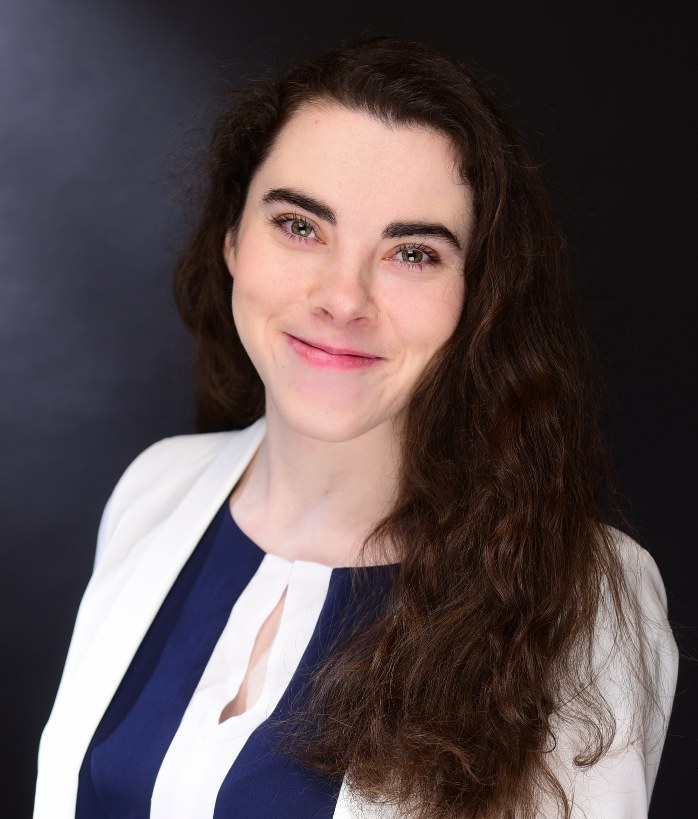
Regina Stodden is a Research Fellow at the Department of Computational Linguistics, Heinrich Heine University Düsseldorf, since January 2019. She is affiliated with the NRW Research College for Online Participation (second funding phase) and works under the supervision of Prof. Dr. Marc Ziegele. Education: B.A. in Educational Science, Text Technology, and Computational Linguistics from Bielefeld University M.A. in Information Science and Language Technology from HHU Düsseldorf Her research focuses on automatic text processing , particularly text simplification for online discussions. This includes: Enabling participation for people with limited German proficiency Reducing manual workload in text analysis Exploring accessibility in Open Data portals She has contributed to tools like TS-ANNO for corpus annotation and EASSE-DE for simplification evaluation, with recent work extending to CEFR-based language proficiency assessment . Her research intersects Natural Language Processing , Machine Learning , and Usability Studies , often addressing accessibility challenges in digital participation. Scientific awards: No explicit awards mentioned. Advising and grants: Participates in the NRW Research College for Online Participation funding program and collaborates under Prof. Dr. Laura Kallmeyer's supervision. Her work involves grants related to text simplification for online participation processes.
Frank LaForge is a Researcher at the National Renewable Energy Laboratory (NREL), specializing in the scale-up of biomass conversion processes for renewable biofuels and chemicals. His work focuses on feed preprocessing, pretreatment, enzymatic hydrolysis, separations, and fermentation. Bachelor of Science in Molecular, Cellular, and Developmental Biology from the University of Colorado Boulder His research intersects with biotechnology, chemical engineering, and renewable energy, particularly emphasizing lignocellulosic biomass conversion and process optimization. Recent work (2025) explores the rheological properties of enzymatically hydrolyzed corn stover pretreated via deacetylation and mechanical refining. No scientific awards or student advisement details are explicitly listed in the available profile information.
Dr. Qiushi Chen is a Professor of Civil Engineering at Clemson University's College of Engineering, where he leads the Computational Geomechanics Lab. His research spans multiple interdisciplinary fields including computational mechanics, geotechnical engineering, and materials science with applications in biomass processing, extraterrestrial exploration, and earthquake engineering. Dr. Chen received his B.S. in Civil Engineering from Shanghai Jiaotong University (2006), followed by an M.S. (2009) and Ph.D. (2011) in Theoretical and Applied Mechanics with a focus on Geomechanics from Northwestern University. His academic journey has positioned him at the intersection of computational science and practical engineering applications. His primary research interests include computational geomechanics, discrete and finite element methods, extraterrestrial regolith characterization, biomass feedstock preprocessing, and liquefaction hazard assessment. Dr. Chen's work integrates advanced computational techniques with experimental validation to address complex engineering challenges across multiple scales - from particle-level interactions to regional hazard mapping. His research group develops sophisticated numerical models that bridge the gap between theoretical mechanics and practical engineering solutions. Analysis of Dr. Chen's recent publications reveals a strong focus on computational methods for granular materials, with particular emphasis on discrete element modeling (DEM) applications. His work spans terrestrial applications in biomass processing and earthquake engineering to extraterrestrial applications involving lunar and Martian regolith. The integration of machine learning techniques with traditional computational mechanics represents an emerging trend in his research, enabling more efficient and accurate modeling of complex material behaviors. Dr. Chen actively contributes to the professional community as an Associate Member of the American Society of Civil Engineers, Member of the Engineering Mechanics Institute, Member of the Geo-Institute, Member of the Soil Properties and Modeling Committee (ASCE), and Vice-Chair of the Computational Geotechnics Committee (ASCE). In addition to his research, Dr. Chen teaches courses including Introduction to Geotechnical Engineering, Inelastic Materials Modeling, and Computational Mechanics of Granular and Porous Materials. He mentors graduate students interested in computational geomechanics, which sits at the interface of geotechnical engineering, applied mechanics, computational science, and material science. The Computational Geomechanics Lab, directed by Dr. Chen, maintains active research programs in multiple areas including biomass feedstock modeling, extraterrestrial regolith characterization, multiscale liquefaction hazard mapping, and multiphysics problems in porous geomaterials. The lab's work is supported by various funding sources including the U.S. Department of Energy, NSF, NASA, and other federal agencies.
Olivier Kashongwe is a researcher at the Leibniz Institute of Agricultural Engineering and Bioeconomy in Potsdam, Germany, affiliated with the Sensor Technology and Modeling department. He also holds a position at the Faculty of Agriculture at Egerton University in Kenya. Research Focus: Integration of digitalization and machine learning in sustainable animal production, particularly mastitis risk assessment in dairy farming and climate-smart agriculture implementation in Sub-Saharan Africa. Projects: Contributed to initiatives like MEDICow (German-Irish collaboration on mastitis prediction) and INNOVAFRIKA (sustainable innovations in African crop-livestock systems). Scientific Contributions: Authored/co-authored multiple publications in 2025 (Preventive Veterinary Medicine), 2024 (AgriEngineering, Journal of Advanced Veterinary and Animal Research), 2023 (Regional Environmental Change), 2022 (Sustainability, Tropical Animal Health and Production), and 2021 (Antimicrobial Resistance, Foods). His work spans machine learning applications for dairy health monitoring, rangeland management, climate-smart agricultural policies, and feed treatment technologies.
Franz Berthiller is an Associate Professor at the University of Natural Resources and Life Sciences, Vienna (BOKU), affiliated with the Department of Agricultural Sciences and the Institute of Bioanalytics and Agro-Metabolomics in Tulln an der Donau. His research specializes in mycotoxin analysis, mass spectrometry, and metabolomics, with a focus on developing advanced detection methods and understanding toxin metabolism in food/feed systems. He leads significant projects like the EU-funded BIOTOXDoc (2023–2027) and FWF-supported studies on modified fumonisins. Research interests include: Development of LC-MS/MS methods for mycotoxin quantification Metabolic pathways of trichothecenes and fumonisins Plant-fungal interactions affecting toxin production Biomarker discovery for contaminant exposure Multi-omics approaches in food safety Berthiller's recent publications emphasize metabolomics method optimization, environmental impacts on mycotoxin biosynthesis, and enzymatic modification of toxins. His work integrates analytical chemistry, molecular biology, and agricultural science to address food safety challenges. He directs a research group at the Institute of Bioanalytics and Agro-Metabolomics, collaborating internationally on projects related to mycotoxin management. No awards or supervised students are documented.
Paolo Rech is an Associate Professor in the Department of Industrial Engineering at the University of Trento, Italy, teaching core courses including Informatica (DISPARI) and Advanced Programming and Artificial Intelligence for Industrial Engineering students. His research spans hardware-software reliability under radiation exposure with emphasis on real-world applications. His primary research domains feature: Reliability Engineering : Pioneering fault-tolerance methodologies for radiation-prone environments Radiation Effects : Quantifying neutron/gamma impacts on GPUs, TPUs, and quantum devices Computer Architecture : Designing hardened RISC-V systems and post-CMOS accelerators AI Reliability : Developing fault-aware neural networks for safety-critical deployment Quantum Vulnerability : Characterizing error mechanisms in quantum circuits Analysis of his 15 most recent publications reveals a dominant focus on radiation-hardened computing systems, with 83% of works addressing neutron-induced faults in GPUs/TPUs and quantum devices. His methodology consistently integrates neutron beam experiments, fault injection frameworks, and architectural hardening techniques across space, medical, and autonomous systems applications. Scientific Awards: None documented in available sources. His teaching directly feeds into research supervision, with course content on C++ programming, object-oriented design, and quantum computing foundations forming the basis for student projects in fault-tolerant system development. Current grants likely support neutron irradiation testing and quantum reliability initiatives given publication patterns, though specific funding details aren't publicly itemized. He operates within University of Trento's engineering research ecosystem, collaborating with teams specializing in radiation testing and quantum computing through projects like ARCHYTAS and Trikarenos, though no dedicated lab name is specified in source materials.