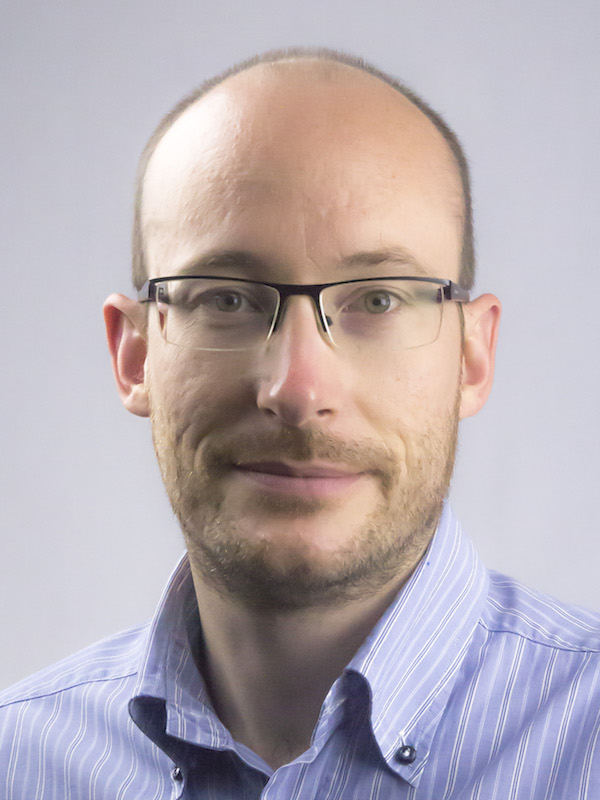
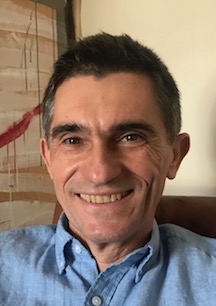
Jamie Callan is a Professor at Carnegie Mellon University's Language Technologies Institute (School of Computer Science), where he leads research in Information Retrieval and Neural Search Architectures . He teaches advanced courses on search engine design and mentors students in multiple programs. Research Focus: Federated retrieval, knowledge graph integration in search, ClueWeb dataset development, and neural approaches to document ranking Leadership: Past SIGIR Treasurer/Chair, Co-founding Editor of Foundations and Trends in IR, former TOIS Editor-in-Chief His recent work explores: Neural Retrieval: Latent vocabulary for sparse systems, hypothetical documents for dense vector retrieval Dataset Innovation: Maintenance and distribution of ClueWeb09, ClueWeb12, and ClueWeb22 datasets Search Efficiency: Selective search architectures with 90% reduced computational costs Scientific Recognition: International ACM SIGIR Conference Leadership Co-founding Editor-in-Chief, Foundations and Trends in IR Former Editor-in-Chief of ACM TOIS Dr. Callan's Lemur Project has produced Indri/Galago search engines and supported TREC evaluations through dataset contributions.
Shafaq Khan is an Assistant Professor in the School of Computer Science at the University of Windsor. She holds a PhD in Computer Science from the University of Salford (2017). Her research spans machine learning, deep learning, data analytics, and database systems with applications in healthcare informatics, agricultural technology, educational systems, and blockchain. Recent work focuses on AI-driven healthcare transformation, privacy-preserving data methods, federated learning for disease prediction, and computer vision applications in agriculture. Additional interests include educational technology for addressing disparities, blockchain implementations in government services, and open-source search engine development. Her work demonstrates consistent integration of cutting-edge computing techniques with practical domain applications.
Dr. Yangjun Chen is a Full Professor in the Department of Applied Computer Science at the University of Winnipeg, Canada. He holds a Ph.D. from the University of Kaiserslautern, Germany (1995). His research focuses on database systems, graph algorithms, computational complexity, and theoretical computer science. Key areas include Federated Databases, Deductive Databases, DNA Databases, and the P vs NP problem. Education: Ph.D. in Computer Science, University of Kaiserslautern, Germany (1995). Research interests span graph query processing, algorithm design, big data optimization, and NP-completeness. Recent work includes polynomial-time solutions for 2-MAXSAT and advancements in string matching algorithms for DNA databases. Publications highlight contributions to graph indexing, efficient reachability queries, and algorithmic efficiency in databases. His work often bridges theoretical foundations with practical database applications. Awards: Excellent Merit Award (2022-2023, 2021-2022) - University of Winnipeg Best Article, ACTA Scientific Computer Sciences (2022) Multiple Best Paper Awards at conferences like DBKDA 2016 and CyberC Summit Teaching includes Advanced Databases, Distributed Database Systems, and Algorithms courses at both undergraduate and graduate levels. Active in supervising research in database systems and theoretical computer science. Laboratory and team focus on database innovation, including projects on graph databases and efficient query processing techniques.
Prof. Joaquin GARCIA ALFARO is a Professor at Telecom SudParis, affiliated with the SCN department. His research focuses on cybersecurity, network security, quantum computing applications, and resilience engineering in cyber-physical systems. He has contributed to advancements in intrusion detection systems, blockchain integration in cellular networks, and privacy-preserving frameworks for IoT and healthcare. University: Telecom SudParis Key Research Areas: Cybersecurity, Quantum Computing, IoT Security, Resilience Engineering Labs: SAMOVAR laboratory His work emphasizes practical solutions for real-world challenges, including secure data provenance, digital twin implementations, and energy-efficient edge computing. Recent research explores quantum-resistant protocols and collaborative drone systems.
Danh Le Phuoc is a Principal Computer Scientist at Technical University of Berlin, leading research at the PICOM.AI lab where his team develops autonomous information systems for robotics, autonomous vehicles, and IoT systems through pervasive intelligence in complex networks. With over 70 publications and significant academic impact (6811 citations, H-index 31), he has established himself as a notable researcher in semantic technologies. His educational background isn't explicitly detailed in the provided text, but his research expertise spans multiple domains requiring advanced technical knowledge. Le Phuoc's research focuses on bridging theoretical concepts with practical system implementation, particularly in RDF Stream Processing, Semantic Web technologies, and IoT middleware. His work emphasizes building real-world systems that process linked streams and data in real-time, enabling applications in intelligent transportation systems and connected vehicles. His research trajectory shows consistent innovation from foundational work on semantic mashups (2009) through to advanced stream processing frameworks (2017). His publications reveal strong trends toward processing real-time semantic data streams, with increasing focus on scalability, performance optimization, and integration of IoT systems with knowledge graphs. The progression shows movement from basic semantic web pipes to complex, elastic cloud-based stream processing systems. 22 Awards, Honours, Fellowships and Grants 10+ awards for innovative Semantic Web applications Multiple honors for IoT applications As an obsessive builder, Le Phuoc has developed numerous influential systems including The Graph of Things, CQELS (Continuous Query Evaluation over Linked Streams), Semantic Web Pipes, and Linked Sensor/Stream Middleware. His current focus is on ASAP (Autonomous Semantic Stream Processing), a platform for connected vehicles and intelligent transportation systems. His lab appears to maintain active GitHub repositories for several of these systems, suggesting ongoing development and community engagement.
Dr. YANG Guomin is an Associate Professor of Computer Science at Singapore Management University's School of Computing and Information Systems, where he coordinates the BSc Cybersecurity Track. His research focuses on privacy-preserving cryptography, authentication systems, and secure IoT frameworks. Research spans cryptographic protocols for cloud security, blockchain applications, and federated learning with emphases on efficiency and practical implementation. Recent publications demonstrate innovations in threshold authentication, redactable blockchains, and privacy-aware communication protocols. Advisees include LI Huilin and WANG Jiaheng, with research projects examining hardware-enhanced encryption, biometric authentication policies, and space network security. Work consistently addresses tension between security guarantees and computational efficiency in distributed systems.
Stefan Decker is a full University Professor (Universitätsprofessor) at RWTH Aachen University, Germany, where he heads the Chair of Information Systems and Databases (Informatik 5) within the Faculty of Mathematics, Computer Science and Natural Sciences. He is actively involved in teaching, research, and the supervision of numerous ongoing and completed doctoral, master’s, and bachelor theses. Education & Academic Background Doctorate (Dr. rer. pol.) – field of Information Systems or related (exact institution/year not stated in text). Appointed as University Professor and Chair of Information Systems and Databases at RWTH Aachen University. Research Interests Prof. Decker’s work lies at the intersection of databases, knowledge graphs, semantic web technologies, data science, and cybersecurity . He investigates architectures and algorithms for large-scale, privacy-preserving, decentralized data analytics , develops ontology-driven information systems , and explores the use of large language models (LLMs) for educational technology, anomaly detection, and incident-response playbooks. Additional focal areas include smart energy systems, mixed-reality learning environments, FAIR data principles, and federated machine learning . Scientific Contributions & Trends His recent publications (2022-2025) demonstrate a clear trend toward explainable AI, LLM-enhanced systems, secure data spaces, and semantic interoperability . Key contributions include novel anomaly-detection frameworks for encrypted power-grid communications, knowledge-graph-driven chatbots for higher-education support, and methodological advances in decentralized analytics and FAIR data sharing. These works are disseminated in top-tier venues such as AAAI, IEEE ISGT Europe, ESWC, IDEAL, and various Springer LNCS and IEEE Transactions. Supervision & Grants Doctoral Theses Advised: A. T. Neumann – “Chatbots as professional companions in large-scale community information systems” (2024) S. M. Welten – “Methods for practical data sharing and decentralized analytics” (2025) Master’s Theses Co-Advised: A. R. Küsters – “Object-centric process constraints using variable bindings” (2025) Additionally supervising more than 30 ongoing bachelor, master, and doctoral projects covering topics such as LLM-driven cybersecurity playbooks, knowledge-graph construction for German law, privacy-preserving analytics in smart grids, and mixed-reality learning agents. Principal investigator or senior researcher in large collaborative projects including NFDI4DS, WestAI, champI4.0ns and several EU/national initiatives on sovereign data spaces and AI services. Labs & Teams Prof. Decker leads the Information Systems & Databases (DBIS) Research Group . The group operates well-equipped laboratories for knowledge-graph engineering, mixed-reality applications, privacy-enhancing technologies, and secure distributed analytics . Current team size exceeds 30 researchers including PhD candidates, postdocs, and scientific programmers, supported by national and EU funding streams.
Anastasios Zafeiropoulos serves as Assistant Professor at Harokopio University of Athens, specializing in Spatial Data Management and Analysis within the Postgraduate Studies Program for “Applied Geography and Spatial Management” (Direction C: Geoinformatics). His academic role encompasses teaching “Spatial Databases” and advancing research at the intersection of geospatial technologies and distributed computing systems. His research program focuses on Spatial Databases, Internet of Things (IoT), Cloud/Edge Computing, and 6G Network Orchestration, with significant extensions into Knowledge Graph applications for Sustainable Development Goals (SDGs) and socio-emotional learning in education. Key innovations include the EduCardia methodology for student competency assessment and frameworks for climate vulnerability analysis using knowledge graphs. Analysis of his 2024-2025 publications reveals three dominant thrusts: (1) AI-driven orchestration of 6G services across the computing continuum using reinforcement learning; (2) Knowledge Graph applications for SDG interlinkage analysis and materials science; (3) EU-funded IoT/Edge Computing project ecosystems. His work consistently bridges theoretical networking concepts with practical sustainability and educational applications. Dr. Zafeiropoulos actively contributes to EU-funded initiatives in IoT and Edge Computing standardization, particularly through AIOTI WG Standardisation. His project portfolio includes NEPHELE multi-cloud ecosystem development and O-RAN slice admission control research, demonstrating strong industry-academia collaboration in next-generation networking. He leads the development of innovative tools including Palindrome.js for distributed system visualization and the EmoSocio open-access emotional intelligence model, reflecting his commitment to translating research into practical educational and environmental solutions.
Amin Mesmoudi serves as Associate Professor in Data Engineering at the University of Poitiers' IUT (Institut Universitaire de Technologie), with dual laboratory affiliations at LIAS-ENSIP (Poitiers campus) and LIAS-ISAE-ENSMA (Chasseneuil campus). His research bridges theoretical database systems with practical large-scale data engineering challenges, particularly in semantic web technologies and machine learning applications. The laboratory maintains physical presences at both ENSIP's Bâtiment B25 in Poitiers and ISAE-ENSMA's Téléport 2 facility in Chasseneuil, facilitating cross-institutional collaboration. Mesmoudi's research program centers on scalable data management systems, with three interconnected pillars: (1) RDF and graph-based query optimization techniques for billion-triple datasets, (2) machine learning integration for spatial query performance and anomaly detection, and (3) explainability frameworks for complex black-box models. His work demonstrates consistent evolution from foundational database systems (2011-2016) toward contemporary AI-driven data engineering, particularly evident in his 2023-2025 publications on temporal dependency preservation and co-selection explainability. The Data Engineering team within LIAS laboratory provides the primary research context for these investigations. Publication analysis reveals strong methodological continuity in addressing scalability bottlenecks across database paradigms. Early work focused on SQL-on-MapReduce benchmarking for astronomy databases (2015-2016), transitioning to specialized RDF processing frameworks (2019-2021), and culminating in current hybrid approaches combining temporal modeling with machine learning (2023-2025). Key technical themes include fragmentation strategies for distributed data, optimizer feedback mechanisms, and graph-based query acceleration - all targeting real-world performance constraints in big data environments. As a core member of LIAS laboratory's Data Engineering team, Mesmoudi contributes to France's national research infrastructure in computer science and automation systems. The laboratory's dual-university structure enables unique cross-pollination between University of Poitiers' academic programs and ISAE-ENSMA's engineering specialization, with Mesmoudi's work exemplifying this synergy through applications spanning astronomy databases to wireless sensor networks.
Dinesh Manocha is a Distinguished University Professor of Computer Science at the University of Maryland, with joint appointments in the Department of Electrical and Computer Engineering and the University of Maryland Institute for Advanced Computer Studies (UMIACS). He is also affiliated with the Maryland Robotics Center and the Institute for Systems Research. His educational background includes a Ph.D. in Computer Science from the University of California at Berkeley (1992) and a B. Tech in Computer Science and Engineering from the Indian Institute of Technology, Delhi, India (1987). Professor Manocha's research spans multiple domains with significant emphasis on: Computer Graphics and Visualization Robotics and Motion Planning Virtual and Augmented Reality Systems Geometric Computing Algorithms AI Applications for Autonomous Systems High Performance Computing His extensive publication record shows consistent innovation in multi-agent navigation, collision avoidance algorithms, and applications in virtual environments. Recent work focuses on trajectory prediction for autonomous vehicles and physics-based simulation for immersive experiences, with algorithms integrated into industry-standard systems like ROS (Robot Operating System). Among his numerous honors, Professor Manocha is recognized as: ACM, IEEE, AAAS, and AAAI Fellow Member of the IEEE VGTC Virtual Reality Academy Recipient of the Pierre Bézier Award from the Solid Modeling Association University of Maryland Distinguished University Professor Multiple best paper awards across premier conferences He has supervised 54 PhD students throughout his career and currently advises numerous graduate researchers. His research has attracted significant funding from NSF, Google, Amazon, Facebook, and industry partners. Notably, he co-founded Impulsonic, a company developing physics-based audio simulation technologies acquired by Valve Corporation in 2016. Professor Manocha leads the GAMMA research group, which continues to advance geometric algorithms with applications across multiple disciplines.
Dr. Latifur Khan is a Professor in the Department of Computer Science at the University of Texas at Dallas' Erik Jonsson School of Engineering and Computer Science. He directs the Database and Data Mining Laboratory and conducts research in data mining, cybersecurity, and semantic web technologies. Research domains include: Large language models for threat detection Fairness in machine learning Vulnerability analysis in software systems Graph-based information retrieval Recent publications focus on AI security applications in transportation systems, political conflict analysis using NLP, and federated learning for IoT security. His work consistently bridges theoretical algorithms with practical cybersecurity implementations. Research grants include funding from NSF, NASA, Raytheon, Nokia, and SUN Microsystems. Teaching includes courses in Plant Breeding (PBG 450/550) and Breeding Clonal Crops (PBG 551).
Guido Zuccon is a Professorial Research Fellow at the School of Electrical Engineering and Computer Science , The University of Queensland (UQ), where he leads the Information Engineering Lab (ielab) . He serves as the AI Director for the Queensland Digital Health Centre (QDHeC) and is an Affiliate Professor at the UQ Centre for Health Services Research . He was previously a Lecturer and Senior Lecturer at Queensland University of Technology and a Postdoctoral Fellow at CSIRO. His research spans Information Retrieval , Health Search , Formal Models of Search , and Health Data Science , with a strong focus on consumer health search, cohort identification, clinical decision support, and systematic review automation. He has pioneered work on search interaction, semantic models, and the evaluation of retrieval systems in health contexts. His recent publications highlight a strong trend toward leveraging large language models (LLMs) for zero-shot retrieval, federated search, dense retrieval, and query formulation. His work integrates advanced neural methods with practical applications in healthcare, including systematic review automation and clinical AI. He frequently publishes at top venues such as SIGIR, ECIR, and WSDM, often in collaboration with key researchers like Bevan Koopman, Shengyao Zhuang, and Harry Scells. ARC DECRA Fellow (2018–2020) Best Paper Awards at AIRS 2017, CLEF 2016, ALTA 2015, ECIR 2012 Best Reviewer Award at ECIR 2014 Principal Investigator on ARC Discovery Projects and MRFF grants Guido Zuccon actively supervises a large cohort of PhD students, primarily in areas related to neural information retrieval, health search, and systematic review automation. He has led significant research projects funded by the ARC, Google, Microsoft, GRDC, and CSIRO. He is a key organizer of international evaluation labs such as the CLEF eHealth Consumer Health Search task and the TREC 2019 Decision Track. He leads the ielab , a vibrant research group focused on information retrieval and data science, and contributes to major open-source initiatives like Big Brother , a tool for logging user interactions in web studies.
Patrick Jaillet is the Dugald C. Jackson Professor in the Department of Electrical Engineering and Computer Science at MIT's School of Engineering. He holds joint appointments with the Laboratory for Information and Decision Systems (LIDS), the Operations Research Center (ORC), the Operations Research and Statistics Group at MIT Sloan, and the Department of Civil and Environmental Engineering. Previously, he served as Head of Civil and Environmental Engineering at MIT (2002-2009) and Chair of the Department of Management Science and Information Systems at UT Austin (1997-2002). Dr. Jaillet's research focuses on online optimization and learning, sequential decision-making under uncertainty, and security and resilience in complex networks. His work spans theoretical foundations in optimization and machine learning with applications in transportation, online market analytics, and network security. He has developed mathematical frameworks for problems involving uncertainty, dynamic resource allocation, and strategic behavior in complex systems. His recent publications reveal strong trends in bridging theoretical optimization with practical machine learning applications. Key themes include Bayesian optimization for black-box functions, online learning with limited information, mechanism design for resource allocation, and network security applications. His work increasingly integrates large language models with traditional optimization techniques, reflecting the evolving landscape of AI-driven decision-making systems. Fulbright Scholar (1990) Fellow of the Institute for Operations Research and Management Science (INFORMS) Best Applications Paper Award at ICAPS 2019 Long-standing Associate Editor for top journals including Operations Research and Transportation Science Dr. Jaillet has advised over 40 doctoral students who now hold prominent positions in academia and industry, including faculty positions at MIT, Georgia Tech, and ETH Zurich, and research scientist roles at Amazon, Microsoft Research, and Google. His research has been consistently funded by major agencies including NSF, ONR, AFOSR, and international partners like Singapore NRF, with current projects focusing on learning algorithms for autonomous security and fundamental tradeoffs in optimization. He leads a vibrant research group spanning MIT's EECS department and ORC, with current funding supporting work on neural bandits, federated optimization, and network security applications. His research group operates at the intersection of theory and practice, with strong connections to industry through collaborations with IBM, Microsoft, Google, and various transportation and technology companies. The group maintains active partnerships with international institutions, particularly through SMART in Singapore, reflecting Dr. Jaillet's global research impact.
Hans Uszkoreit is a German AI researcher and Honorary Professor at Technische Universität Berlin, specializing in language and knowledge technologies. He serves as Scientific Director at the German Research Center for Artificial Intelligence (DFKI) Berlin and co-founder of the Artificial Intelligence Technology Center (AITC) in Beijing. He is also Chief AI Advisor at Lenovo Corporation. His roles include leading initiatives like the Berlin Big Data Center and the German Smart Data Forum, funded by German federal ministries. Uszkoreit’s research focuses on natural language processing, machine translation, and knowledge-based systems, with contributions to projects such as the Multilingual Europe Technology Alliance and spin-off companies like Sematell and Acrolinx. He has supervised over 40 PhD theses, emphasizing computational linguistics and computer science. His work bridges academic research and industry applications, fostering innovation in AI and language technologies.
Qiang Zhu is a Professor in the Department of Computer and Information Science at the University of Michigan-Dearborn, holding the William E. Stirton Professorship (2017–2024). He founded the Data Science/Management Research Laboratory and is affiliated with the Michigan Institute for Data Science (MIDAS). His research spans data science, data management, and machine learning. Ph.D., University of Waterloo M.S., McMaster University M.Eng., Southeast University B.S., Southeast University Research focuses on advanced data indexing, query optimization, and AI-driven data management, with applications in genomics, network systems, and education. His work integrates machine learning with database systems for scalable solutions. Recent publications include topics in federated learning fairness, digital twin middleware, project-based CS education, and genome data indexing. Scientific contributions recognized through awards like the Wilkes Award (2008), ACM Distinguished Scientist (2013), and Springer Nature Editor of Distinction (2025). 2013–2018: Department Chair NSF, IBM, and Ford grants Over 250 conference committee roles He directs the Data Science/Management Research Lab, focusing on collaborative projects in genome analytics and smart computing infrastructures.