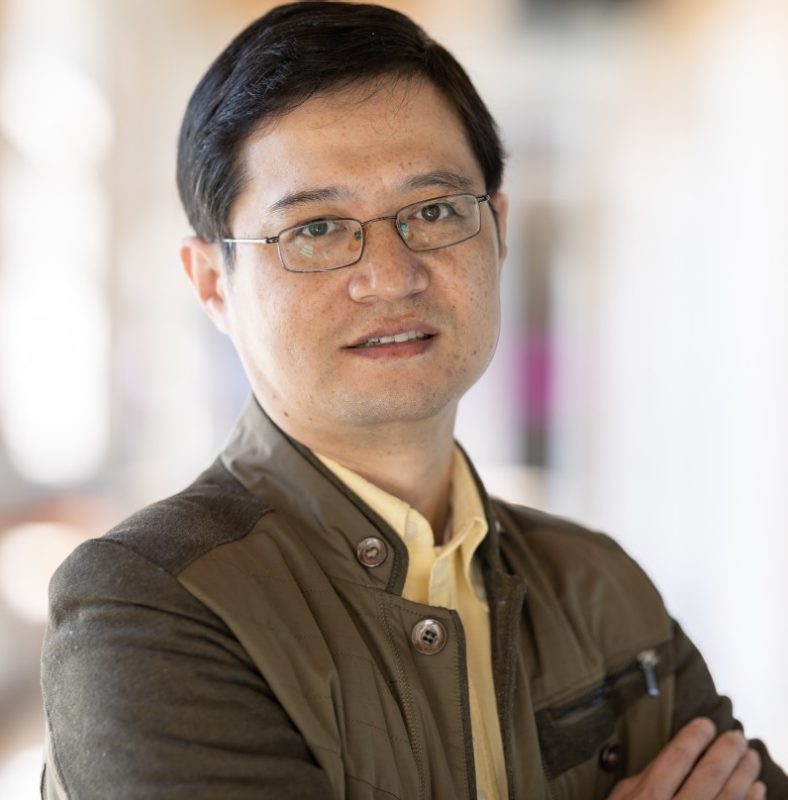
Jonathan Voersaa Wenshøj is an academic researcher at the Department of Computer Science, University of Copenhagen. He contributes to the Machine Learning section's activities spanning theoretical foundations and applications in diverse domains like information retrieval, medical data analysis, remote sensing, sustainability, and biological modeling. The section participates in the SCIENCE AI Centre and collaborates with initiatives like TreeSense for global tree resource analysis. His research intersects machine learning with quantum computing, medical informatics, and sustainability. Recent publications highlight applications in environmental monitoring, healthcare diagnostics, and energy-efficient AI systems. The department provides advanced compute resources including a powerful cluster for intensive machine learning tasks. This researcher's work appears in diverse machine learning domains, with recent publications addressing quantum-inspired architectures, explainable AI in medical imaging, and sustainable computing practices. The section actively hosts events including seminars, conferences, and PhD defences related to machine learning advancements.
Sophia Natasha Wilson is a Research Fellow in the Department of Computer Science (DIKU) at the University of Copenhagen, specializing in machine learning applications across interdisciplinary domains. She is affiliated with the SCIENCE AI Centre and holds a cross-departmental position at the Niels Bohr Institute . Her research bridges theoretical machine learning with practical implementations in healthcare, quantum computing, and environmental sustainability. University of Copenhagen Department of Computer Science (DIKU) Niels Bohr Institute SCIENCE AI Centre Her research focuses include: Quantum-enhanced machine learning algorithms Explainable AI for healthcare applications Environmental sustainability in computing Emotion-aware language models Quantum computing hardware optimization Public health risk modeling Her recent publications demonstrate cross-disciplinary work in quantum machine learning (hybrid optical processors, qubit stabilization), health informatics (hypothyroidism analysis, nursing values evaluation), and ethical AI (sustainable AI, fairness in recommender systems). Technical work also appears in non-Euclidean generative models and real-time adaptive systems . Current projects include quantum dot array simulation (QDarts platform) and federated learning for personalized medicine . She contributes to the TreeSense center for remote sensing of global tree resources and works on climate-aware AI frameworks.
Emil Björnson is a Professor of Wireless Communications and Head of the Communication Systems Department at KTH Royal Institute of Technology since 2024. He received his Master of Science in Engineering Mathematics from Lund University (2007) and PhD in Telecommunications from KTH (2011). After postdoctoral work at SUPELEC, France (2012-2014), he held faculty positions at Linköping University (2014-2021) before returning to KTH in 2020. Research Focus: MIMO communications, reconfigurable intelligent surfaces, radio resource allocation, machine learning for communications, and energy efficiency Editorial Roles: Editor for multiple IEEE transactions and magazines His research has significantly advanced wireless communication technologies, particularly in Massive MIMO and cell-free systems. He has authored four textbooks, including Massive MIMO Networks (2017) and Introduction to Multiple Antenna Communications and Reconfigurable Surfaces (2024). Scientific awards include: IEEE Fellow Clarivate Highly Cited Researcher Wallenberg Academy Fellow Digital Futures Fellow Multiple IEEE and EURASIP awards (2014-2024)
Professor Ai-Chun Pang is affiliated with the National Taiwan University , serving in both the Department of Computer Science and Information Engineering and the Graduate Institute of Networking and Multimedia . He held leadership roles including Associate Dean (2018-2022) and Director (2013-2016) within the College of Electrical Engineering and Computer Science. His research spans Fog/Edge Computing , Wireless Networking , Mobile Computing , and AIoT Systems , with recent advancements in federated learning security, energy-efficient network design, and 5G/6G optimization. Collaborative work includes applications in vehicular networks, industrial control systems, and non-terrestrial connectivity. Key publication themes: Edge Intelligence and Privacy (2024) Federated Learning for Heterogeneous Devices (2023-2024) 5G Backhaul Optimization (2017-2021) Wireless Energy Transfer (2022) Awarded IEEE Fellow 2021 for contributions to mobile edge networks, he has received multiple IEEE Vehicular Technology Society awards, the CES 2019 Innovation Award , and teaching accolades including National Taiwan University Distinguished Teaching Award (2010) . His lab has produced 16 PhD students now in academia and industry. As Editor-in-Chief of IEEE Wireless Communications Letters and active in conference organization, he shapes global research directions. Current projects focus on GenAI for Networking and Non-Terrestrial Networks , with recent 2024 admissions for new students.
Dr. Jie Gao is an Assistant Professor at the School of Information Technology , Carleton University, with cross-appointments at Dalhousie University (Adjunct Faculty, 2024) and Carleton University (2025). He holds a Ph.D. in Electrical and Computer Engineering from the University of Alberta (2014) and has held postdoctoral and research associate positions at Ryerson University (2017-2019), University of Waterloo (2019-2020), and Marquette University (2020-2022). His research focuses on machine learning for communications/networking , 6G wireless networks , cloud/multi-access edge computing , IoT/industrial IoT solutions , and network virtualization/digital twins . Research Leadership: Co-investigator on projects related to AI-assisted network slicing, digital twin-driven resource allocation, and integrated satellite-terrestrial networks Led work on energy-efficient UAV-assisted edge computing (IEEE Best Land Transportation Paper Award 2024) Professional Roles: Senior Member, IEEE Lead Associate Editor, IEEE Access Vehicular Technology Society Section (2020-present) Associate Editor, Springer Peer-to-Peer Networking and Applications (2020-present) IEEE Vehicular Technology Society Young Professional Ambassador (2024) Notable Contributions: Authored/co-authored books on Intelligent Computing and Communication for the Internet of Vehicles (Springer, 2023) and Connectivity and Edge Computing in IoT (Springer, 2021) Holds patents on medium access control methods (US Patents 2022, 2024) Received multiple IEEE service awards (2018-2024)
Nicole L. Beebe is a Professor at the Alvarez College of Business, The University of Texas at San Antonio , specializing in cybersecurity, cyber analytics, and digital forensics. With over two decades of experience spanning academia, government, and industry, she has contributed extensively to research on insider threats, IoT security, and threat hunting. Ph.D. in Business Administration (Information Technology), UTSA MS in Criminal Justice, Georgia State University BS in Electrical Engineering, Michigan Technological University Her research explores cybersecurity challenges in emerging technologies, including quantum computing, IoT, and large language models. She has pioneered studies on cyberbullying dynamics, forensic automation, and AI-driven threat detection. Recent publications focus on adversarial image obfuscation , VR for security operations , IoT forensic methodologies , and deepfake detection frameworks , reflecting interdisciplinary work at the intersection of security, AI, and digital evidence. 2022 Best Paper Award, Journal of Network & Computer Applications Senior Member, IEEE and ACM Senior Fellow, Information Systems Security Association As an Associate Editor for Computers & Security , she shapes the field through peer review. Her $14M+ in funding from NSF, DHS, and DoD underscores her impact on advancing cybersecurity research and education.
Lingjia Liu is a Professor and Bradley Senior Faculty Fellow at Virginia Tech's Bradley Department of Electrical and Computer Engineering. Her research focuses on enabling technologies for 5G/6G networks, including massive MIMO systems, dynamic spectrum access, and AI-driven communication networks. She holds a Ph.D. from Texas A&M University (2008). Research Interests : 5G/6G Network Architectures (3D MIMO, cloud-RAN, ultra-low latency) AI in Communications (Reservoir Computing, federated learning) IoT & Cyber-Physical Systems (energy harvesting, privacy protection) Non-Terrestrial Networks (satellite-based connectivity) Recent work emphasizes generative AI for network simulation, explainable AI in communication systems, and secure dynamic spectrum sharing. Her research spans theoretical foundations (e.g., OTFS modulation analysis) and practical implementations (e.g., FPGA-based reservoir computing). Awards : Bradley Senior Faculty Fellow (Virginia Tech). Her contributions bridge communication theory and AI, addressing 6G challenges through innovative algorithmic and architectural solutions. Current projects explore agentic protocol learning, federated multi-agent RL for spectrum access, and resilient ML under adversarial conditions.
Pasi Lautala is a Professor in the Department of Civil, Environmental, and Geospatial Engineering at Michigan Technological University (Michigan Tech) and currently serves as the Associate Dean for Research. He holds a BS from Tampere University of Technology (Finland) and MS/PhD from Michigan Tech. His research focuses on rail and highway transportation engineering, with emphasis on grade crossing safety, multimodal logistics, sustainability, railway capacity analysis, and engineering education development. Since 2007, Lautala has directed the Rail Transportation Program (RTP) within the Michigan Tech Transportation Institute (MTTI), expanding rail research collaborations across disciplines. He leads over $10M in external research funding, including projects on trespasser safety, freight logistics, and lifecycle analysis. Lautala is a key figure in rail education revitalization, serving as Rail Group Chair at the Transportation Research Board (TRB) and advising the Michigan Commission for Supply Chain Logistics. His teaching spans courses like Transportation Engineering, Railroad Design, and Logistics Management. Lautala has advised numerous undergraduate and graduate projects, emphasizing industry partnerships. Recent contributions include developing in-vehicle auditory alerts for rail crossings and AI-driven safety systems like RAIILS. Key collaborations include the Federal Railroad Administration (FRA) on grade crossing safety ($641K+ projects), U.S. DOT on rail modal analysis, and Battelle on connected vehicle systems. He mentors the Tracks to the Future youth program and co-leads international rail education initiatives.
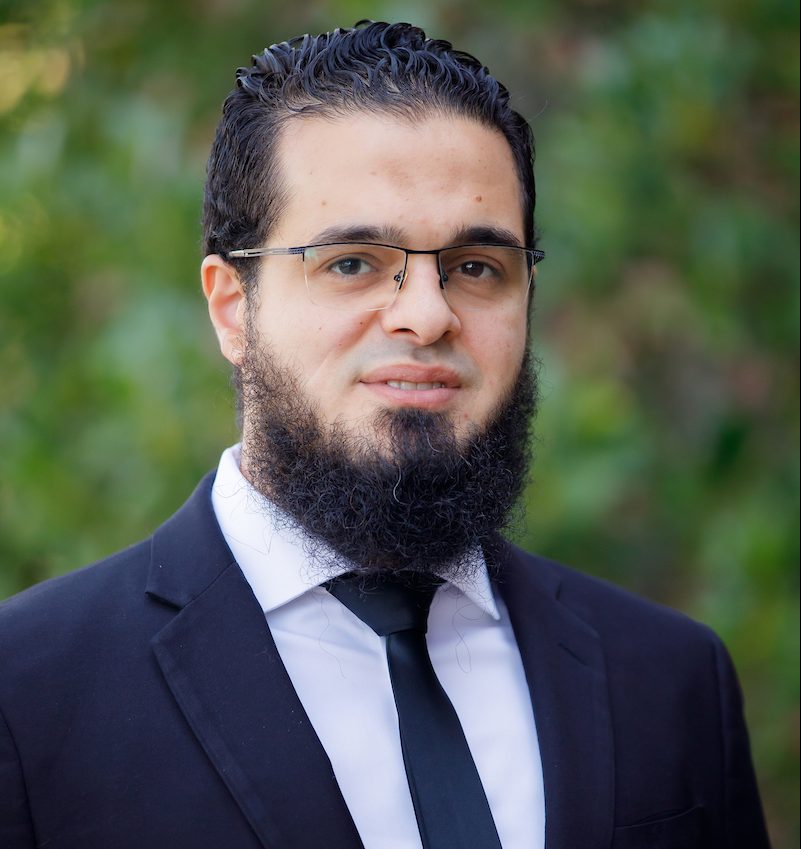
Dr. Ahmad Alsharif is an Assistant Professor in the Department of Computer Science at the University of Alabama's College of Engineering. His research expertise spans applied cryptography, IoT security, cyber-physical systems security, and blockchain applications. He received his B.S. and M.S. in Electrical Engineering from Benha University, Egypt, and Ph.D. in Electrical and Computer Engineering from Tennessee Tech University. Research focuses on security challenges in critical infrastructure systems including smart grids, IoT networks, and UAV systems. Current projects investigate privacy-preserving machine learning techniques, adversarial attack resilience, secure data marketplaces, and attack detection mechanisms for distributed energy systems. His work combines cryptographic protocols with machine learning for trustworthy systems. Awards include the NSF Research Initiation Initiative Grant (NSF CRII) and Young Innovator Award from Egyptian Industrial Modernization Center.
Professor Minh N. Do is the Thomas and Margaret Huang Endowed Professor in Signal Processing & Data Science at the University of Illinois at Urbana-Champaign (UIUC), with primary appointment in the Department of Electrical and Computer Engineering. He holds multiple affiliate appointments across campus including with the Coordinated Science Laboratory, Beckman Institute for Advanced Science and Technology, Department of Bioengineering, Department of Computer Science, Institute for Genomic Biology, College of Medicine, and School of Computing and Data Science. Additionally, he serves as Director of the joint VinUni-Illinois Smart Health Center and holds an Honorary Vice-Provost position at VinUniversity. Professor Do received his B.Eng. in Computer Engineering (First Class Honors) from the University of Canberra, Australia in 1997, followed by his Dr.Sci. in Communication Systems from the Swiss Federal Institute of Technology Lausanne (EPFL) in 2001. His educational journey was marked by exceptional achievement, earning the University Medal from the University of Canberra and a Silver Medal from the 32nd International Mathematical Olympiad. Professor Do's research focuses on developing new multidimensional signal processing tools with applications across several domains. His primary research interests include smart health, data science, computational imaging, and signal processing. His work spans biomedical imaging, machine learning, computer vision, and robotics, with particular emphasis on geometric image representations, integrating image formation and processing, and image processing from multiple sensors. His research bridges theoretical investigations with practical applications, creating impactful solutions in healthcare, diagnostics, and AI systems. His recent publications demonstrate a consistent trajectory toward multimodal AI systems, robust learning frameworks, and healthcare applications. Professor Do's work increasingly integrates signal processing with deep learning approaches to address challenges in medical imaging, cross-modal transfer, and real-world deployment of AI systems. His research shows strong emphasis on practical applications with societal impact, particularly in healthcare diagnostics and smart health technologies. Professor Do's scientific achievements have been recognized with numerous prestigious awards: Member of the National Academy of Artificial Intelligence (2025) Fellow of Asia-Pacific Artificial Intelligence Association (2023) Thomas and Margaret Huang Endowed Professor, UIUC (2020-present) Fellow of IEEE (2014) Young Author Best Paper Award, IEEE Signal Processing Society (2008) CAREER award from the National Science Foundation (2003) Best Doctoral Thesis Award from EPFL (2001) As an educator, Professor Do has taught numerous courses spanning digital signal processing, probability, data science, and image processing. His teaching excellence has been recognized with multiple "Teachers Ranked as Excellent" awards at UIUC. He also maintains active industry connections through tech-transfer efforts, having co-founded Personify and served as Chief Scientist of Misfit. His leadership extends to administrative roles, having served as Vice-Provost for VinUniversity during 2020-2021. Professor Do leads research initiatives at the intersection of signal processing and healthcare applications, with particular focus on the Smart Health Center collaboration between UIUC and VinUniversity. His lab develops innovative solutions for medical diagnostics, point-of-care testing, and neurological assessment using advanced signal processing and AI techniques.
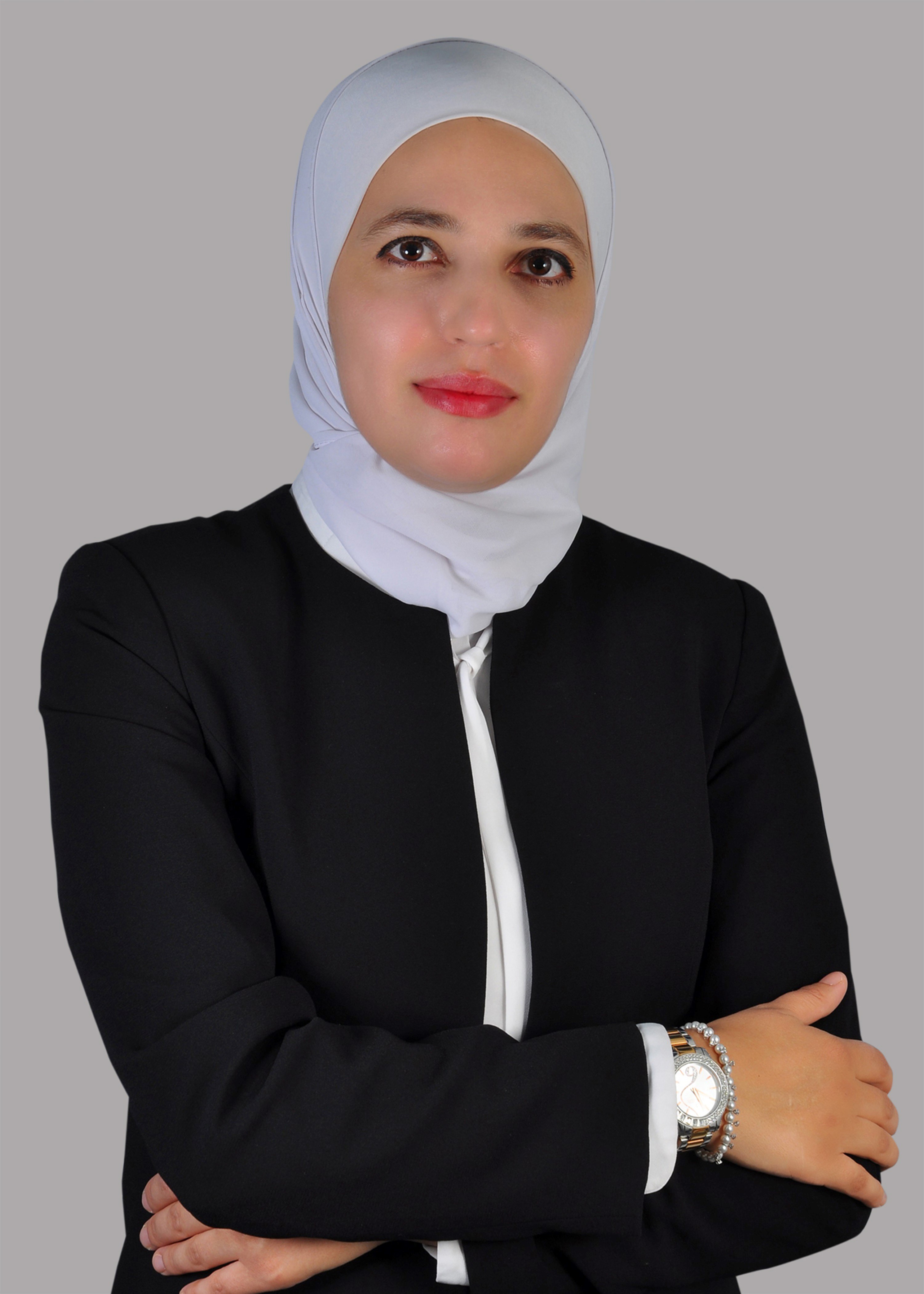
Safa Otoum is an Assistant Professor at the College of Technological Innovation (CTI), Zayed University, UAE, and holds an adjunct role at the School of Computer Science and Electrical Engineering. She is a licensed Professional Engineer (P.Eng.) in Ontario and a member of IEEE and ACM. Her expertise spans network security, blockchain, AI, and IoT, with a focus on intrusion detection and prevention systems. Education: She earned a M.A.Sc. (2015) and Ph.D. (2019) in Computer Engineering from the University of Ottawa, Canada, followed by postdoctoral research there. She has held roles as a data scientist at Cheetah Networks and as a researcher in reputable institutions. Research Interests: Her work emphasizes AI-driven security solutions, blockchain applications in IoT, federated learning, and sustainable smart city infrastructure. She explores machine/deep learning for cybersecurity and has pioneered architectures for secure vehicular networks and healthcare systems. Publications: Over 15 peer-reviewed articles in top journals/conferences like IEEE Transactions on Network, ACM TOIT, and GLOBECOM. Notable contributions include highly cited blockchain surveys and award-winning intrusion detection frameworks. Awards: Recipient of prestigious scholarships (NSERC, Canada Graduate Scholarship) and grants (RIF, TII). Honored with a Best Paper Award for intrusion detection research in critical infrastructure. Service Roles: She serves as Area Editor for Springer's Cluster Computing, chairs international workshops on securing healthcare systems, and organizes conferences on network security and intelligent transportation. She also guest-edits special issues on AI-driven healthcare in journals like Electronics.
Bettina Kemme is a Professor in the School of Computer Science at McGill University, Montreal, Canada. She leads the Distributed Information Systems Lab (DISL) and specializes in large-scale data management, distributed systems, and cloud computing. Her academic roles include teaching COMP 512 (Distributed Systems) and COMP 421 (Database Systems). Education: Diplom (M.Sc. equivalent) in Computer Science, Friedrich-Alexander University, Erlangen, Germany (1996) PhD in Computer Science, Swiss Federal Institute of Technology (ETH), Zurich, Switzerland (2000) Research Interests: Distributed systems, cloud-native data management, in-database analytics (AIDA project), monitoring-as-a-service frameworks, and scalable pub/sub systems for online games. Current projects focus on integrating machine learning with databases, cloud performance monitoring using SDN, and sustainable data systems for data science. Lab & Collaborations: Leads the Distributed Information Systems Lab (DISL) with active projects in distributed databases, cloud computing, and game systems. Collaborates on EU-Canada initiatives like the SustainSys program for sustainable data infrastructure. Advising: Supervises PhD and M.Sc. students in topics like monitoring frameworks (Mona ElSaadawy), in-database ML (Winnie He), and distributed systems (Maximilian Schiedermeier). Alumni include over 50 researchers from PhD candidates to undergraduate researchers.
Lorenzo Sani is a PhD student in the Department of Computer Science and Technology at the University of Cambridge, supervised by Prof. Nicholas D. Lane and part of the CaMLSys research group. His work focuses on federated learning, edge computing, and privacy-preserving machine learning algorithms for large-scale distributed systems. Education: He holds a Bachelor's Degree in Physics from the University of Bologna (2019) and a Master's Degree in Applied Physics from the same institution (2021), with a thesis on unsupervised clustering of MDS data using federated learning. During his studies, he contributed to the GenoMed4All project and collaborated with the CaMLSys group on the Flower Framework. Research Interests: Sani's research emphasizes optimizing federated learning efficiency, privacy in distributed machine learning, and the application of federated techniques to large language models. His work addresses challenges in communication efficiency, client collaboration, and ethical data usage in decentralized systems. Teaching: He serves as a Teaching Assistant for the Principles of Machine Learning Systems (L46) and Federated Learning: Theory and Practice (L361) courses, and supervises students at Jesus College for Algorithm and Artificial Intelligence modules. Publications: His recent work includes innovations in federated optimization (DES-LOC, SparsyFed), LLM unlearning (LUNAR), and global federated training systems (Photon, Worldwide federated training). The 2020 Flower Framework paper established a foundational research tool for federated learning experimentation.
Dr. Suranga Seneviratne is a Senior Lecturer in Security at the School of Computer Science, University of Sydney. He holds a PhD from the University of New South Wales (2015) and a Bachelor's degree from the University of Moratuwa, Sri Lanka (2005). Before academia, he worked in telecommunications for six years. His research focuses on cybersecurity, particularly privacy and security in mobile systems, AI applications in security, and behavioral biometrics. He has developed tools like an app security rating system and intrusion-free authentication methods. Key awards include the ACM Mobicom 2015 Gold Prize, NASSCOM Technical Innovation Award, and IESL NSW Engineering Excellence Award (all 2015). Current research students include Pasindu Marasinghe (Multi-Objective Optimization in Flat Glass Cutting Production), Braylon SHU (Efficient Parameter Tuning for Large Language Models), and Gaurav VERMA (Threats and Defenses in IoT Wireless Protocols). Grants include funding from the Australian Research Council, NSW Network for Cyber Security, and Google Research. His work spans collaborations with the NSW Smart Sensing Network and the University of Technology Sydney. Labs/Teams: Collaborates with the Centre for Distributed and High-Performance Computing and the NSW Smart Sensing Network (NSSN).
Dr. Khandaker Mamun Ahmed is an Assistant Professor at The Beacom College of Computer & Cyber Sciences, Dakota State University. He teaches undergraduate and graduate courses in artificial intelligence, algorithms, and data structures. He holds a Ph.D. in Computer Science from Florida International University (2024), an M.Sc. from the same institution (2023), and a B.Sc. in Software Engineering from the University of Dhaka (2016). His research focuses on computer vision, federated learning, cybersecurity, explainable AI, vision-language models, and optimization algorithms. He has contributed to peer-reviewed publications and conference presentations, with notable work in federated learning for IoT, anomaly detection in videos, and AI applications in healthcare and agriculture. Recent articles highlight advancements in federated learning frameworks, AI-driven healthcare systems, and real-time object detection using neural networks. His work also addresses cybersecurity challenges in DevOps pipelines and generative AI for educational datasets. Recipient of the 'Best graduate student in research award' (2022), Dr. Ahmed advises on AI ethics and mentors students through academic-industry collaborations. His research bridges theoretical computer science with practical applications in agriculture, healthcare, and infrastructure monitoring.