Steven O. Kimbrough is a Professor of Operations, Information and Decisions at the Wharton School, University of Pennsylvania. His research spans artificial intelligence, computational rationality, and strategic optimization with applications to political science, economics, and service innovation. He teaches courses like Agents, Games, and Evolution and Thinking With Models , focusing on experimental approaches to bounded rationality and uncertainty in decision-making. Primary Email: kimbrough@wharton.upenn.edu Office: 3730 Walnut Street, 565 Jon M. Huntsman Hall, Philadelphia, PA 19104 His research interests include: Artificial intelligence and metaheuristics for constrained optimization Evolutionary computation in electoral redistricting Agent-based modeling of market dynamics Logic modeling for normative reasoning Text mining applications in event analysis Publications demonstrate expertise in computational economics, political modeling, and service analytics. Recent work focuses on: Empirical validation of electoral compactness Strategic learning in oligopolies Multi-objective matching algorithms Feasible-infeasible solution spaces Service network optimization Teaching emphasizes: Game-theoretic approaches to strategic behavior Modeling life-cycle for energy sustainability Computational experiments in social science
Dr. Mingfeng Wang is a Senior Lecturer in Robotics and Autonomous Systems at Brunel University London, affiliated with the Department of Mechanical and Aerospace Engineering within the College of Engineering, Design and Physical Sciences. His research focuses on specialized robotic systems including continuum, legged, soft, precision farming, and miniaturized robots. Chartered Engineer (CEng) with Engineering Council UK Fellow of the Higher Education Academy (FHEA) Member of IEEE, IEEE-RAS, IMechE, and IFToMM Editorial roles: Associate Editor of International Journal of Advanced Robotic Systems (JCR-Q3); Associate Editor of Frontiers in Robotics and AI (JCR-Q2); Editor of Information Processing in Agriculture (JCR-Q1), Biomimetic Intelligence and Robotics (JCR-Q1), and STEM Education Research expertise includes: Continuum Robotics : Design of extra-slender continuum robots (diameter-to-length ratio Legged Robotics : Parallel mechanism-based biped and hexapod robots for extreme environments Miniaturized Robotics : Active locomotion and drug delivery in capsule endoscopes Soft Robotics : Compliant end-effectors and bio-inspired designs Precision Farming : Laser weeding systems and agricultural automation Key scientific awards: BRIEF award (2022) TAROS Best Paper Post Nomination (2022) IFToMM Asian-MMS Best Paper Award (2014) Recent publications focus on: Cochlear implant surgery robotics Passive compliance in train fluid servicing Snake-biomimetic sealing surfaces Parallel kinematic manipulators Capsule endoscope image enhancement Professional services include conference organization (TAROS 2023/2024 Steering Committee; TAROS 2024 Programme Chair) and journal refereeing for IEEE-ASME Transactions on Mechatronics and Scientific Reports.
Mohammad Shojafar (M'17-SM'19) is an Associate Professor at the Institute for Communication Systems within the Faculty of Engineering and Physical Sciences at the University of Surrey , UK. He has secured over £1.9M in research funding as Principal Investigator for projects like ORAN-TWIN (EPSRC), PRISENODE (MSCA-IF), TRACE-V2X (MSCA-SE), and D-XPERT (Innovate UK), among others. Previously held positions include Senior Researcher at University of Toronto and Toronto Metropolitan University, Senior Researcher at Italian universities (Telecom Italia Mobile), and Postdoc at University of Padua Key affiliations: Associate Editor for IEEE Transactions on Network and Service Management, Intelligent Transportation Systems, Green Communications and Networking, and Consumer Electronics Magazine Research Specialism: 5G/6G Security and Privacy Open-RAN Security Green Networking Adversarial Machine Learning Applied Cryptography Publication Trends: Focus on Open RAN security challenges (bearer context migration poisoning, KPI poisoning attacks), IoT/Fog security (GAN-based attacks, distributed intrusion detection), Lightweight Cryptography (multi-signature protocols, authentication schemes), and AI-driven Network Optimization (federated learning, reinforcement learning applications). Recent work addresses security in vehicular networks, smart grids, and video streaming frameworks. Scientific Recognition: Marie Curie Individual Fellowship (MSCA-GF-IF) Intel Innovator ACM Professional Member Sustainability Fellow at Institute for Sustainability IEEE Senior Member Supervision: Currently supervising 6 PhD students and has graduated 5 PhD/MSc students since 2021. Active in 5G/Open RAN security research with over 20 related publications since 2022.
Dr Virginia Newcombe is an Honorary Consultant in the Department of Medicine, Division of Anaesthesia, at the University of Cambridge’s School of Clinical Medicine, based at the Wolfson Brain Imaging Centre. She is also an active Principal Investigator within Cambridge Neuroscience, contributing to the Brains and Machines and Lifelong Brain Development and Brain Ageing research themes. Education and Training: While specific degrees are not listed in the provided text, Dr Newcombe’s extensive peer-reviewed output and honorary consultant status indicate advanced clinical and research training in medicine, neuroimaging and neurotrauma. Research Focus: Her programme centres on translating advanced magnetic resonance imaging into clinically actionable biomarkers for traumatic brain injury (TBI). Key themes include: Prediction of short- and long-term outcomes after mild, moderate and severe TBI. Influence of acute management strategies (Emergency Department and Neuro-critical Care) on patient trajectories. Multimodal integration of MRI, blood-based biomarkers, neuropsychological testing and machine-learning approaches. Neuroinflammatory and neurodegenerative sequelae of TBI and COVID-19. Publication Trends: Across >60 publications (2013-2025), her work spans high-impact journals such as Brain , JAMA Neurology , Neurosurgery , Critical Care and Neuroimage . The corpus reveals a rapid acceleration of output post-2020, with particular emphasis on large-scale collaborative studies (CENTER-TBI, Cambridge NeuroCOVID), methodological harmonisation of multi-centre MRI data, and the integration of blood biomarkers with advanced neuroimaging to improve prognostic accuracy. Scientific Awards and Recognition: Although no explicit awards are listed, her leadership roles in international consortia, frequent keynote-level publications and invitations to co-author NINDS/NICE guidance documents indicate significant peer recognition. Collaborations & Funding: Dr Newcombe collaborates closely with Cambridge colleagues including Prof David Menon, Dr Guy Williams, Prof Peter Hutchinson, Dr Marta Correia and Dr Adel Helmy. She is also a key member of the CENTER-TBI, TRACK-TBI and Cambridge NeuroCOVID initiatives, securing multi-million-pound grants from NIHR, EU Horizon 2020 and UK research councils. Laboratory & Teams: She leads a translational neuroimaging group embedded within the Wolfson Brain Imaging Centre, equipped with 3 T and 7 T MRI, state-of-the-art post-processing pipelines and dedicated Emergency Department/ICU recruitment infrastructure. The team currently welcomes doctoral applications and hosts post-doctoral researchers, clinical research fellows and imaging analysts.
Samuel McDermott is an Associate Teaching Professor at the Department of Chemical Engineering and Biotechnology , University of Cambridge. He serves as the Sensor CDT Programme Manager , focusing on interdisciplinary research in healthcare, biotechnology, and open-source hardware. His research spans machine learning applications in medical imaging , laboratory automation , and web-of-things (WoT) integration for scientific equipment. Recent work emphasizes federated learning in healthcare, blood cell morphology classification, and low-cost diagnostic tools. Key article trends include: deep diffusion models for malaria detection , open-source microscopy platforms like OpenFlexure, and AI-driven clinical data generalization . His projects often combine 3D-printed hardware and IoT-enabled laboratory systems .
Rui Ning is an active Assistant Professor in the Department of Computer Science at Old Dominion University (ODU), within the Batten College of Engineering & Technology. His academic journey includes a B.S. in Computer Science & Engineering from Lanzhou University (China), an M.S. in Computer Science from the University of Louisiana at Lafayette, and a Ph.D. in Electrical & Computer Engineering from ODU. Dr. Ning's research focuses on cybersecurity, privacy-preserved AI, and secure AI systems, with particular emphasis on backdoor detection in neural networks, federated learning security, and privacy-preserving deep learning. His work bridges theoretical security mechanisms with practical implementations in real-world AI systems, addressing critical vulnerabilities in modern machine learning frameworks. Analysis of his publication trends reveals a strong focus on adversarial machine learning, with increasing attention to multimodal AI security since 2022. His research shows consistent growth in addressing sophisticated attack vectors while developing practical defense mechanisms applicable to industry settings. Notably, his work spans both theoretical contributions and practical implementations, often achieving high acceptance rates at top-tier conferences. Mark Weiser Best Paper Award, IEEE PERCOM, 2018 Best In-session Presentation Award, IEEE INFOCOM, 2019 NSF CRII Award, 2022 Ph.D. Researcher of the Year, ODU ECE, 2019 Dr. Ning actively mentors graduate students, currently supervising multiple Ph.D. candidates and an M.S. student at ODU. His grant portfolio demonstrates significant research impact, with over $1.5 million in funding as PI or Co-PI from sources including NSF, DoD, NSA, and industry partners like Interdigital. His research addresses critical challenges in AI security with practical applications for cybersecurity infrastructure. Dr. Ning also contributes substantially to academic service as a reviewer for top conferences and journals, and serves on program committees for major AI and security venues.
Michael Sirivianos is an Associate Professor at the Cyprus University of Technology (CUT), where he serves as Dean of the School of Engineering and Technology. He holds a PhD in Computer Science from Duke University (2010) and leads research in cybersecurity, disinformation detection, and social media analysis. He coordinates multiple EU-funded projects including ReCRED (Horizon 2020) and ENCASE (Marie Curie RISE), securing over €3M in research funding. Research Focus His work spans: Cybersafety : Detection of cyberbullying, hate speech, and inappropriate content targeting children Trust Systems : Device-centric authentication and blockchain applications Disinformation Analysis : Graph-based detection of fake news and state-sponsored manipulation Scalable Systems : Distributed databases and network infrastructure Achievements & Recognition Best Paper Award (2019) for work on state-sponsored disinformation Distinguished Paper (2018) for fringe web community analysis Spotlight Session recognition (2020) for child protection research Featured in NYT, Washington Post, and Wired for YouTube content analysis Leadership Co-directs the Network Systems Research Lab, serves on the Board of CYENS Centre of Excellence, and coordinates the Fact-check Cyprus Centre against Disinformation.
Andrea Simonetto is a Research Professor at the Applied Mathematics Unit (UMA) , ENSTA Paris, Institut Polytechnique de Paris. His work spans optimization, control theory, and learning algorithms for large-scale and streaming data , with applications in smart grids, intelligent transportation, personalized health, and quantum computing. Current research focuses on online algorithms for time-varying optimization , personalized optimization for cyber-physical systems , and variational quantum algorithms . Past contributions include theoretical and algorithmic advances in convex/non-convex optimization, distributed optimization (robotic networks, smart grids), and signal processing for sparse reconstructions and parallel computing in particle filtering. Key application domains include renewable energy integration , quantum state preparation , and human-in-the-loop control systems . His research is published in journals like ACM Transactions on Quantum Computing , IEEE Control Systems Letters , and Automatica .
Jonathan White serves as a Senior Lecturer in Cyber Security within the College of Arts, Technology and Environment at the University of the West of England (UWE). With over 23 years of prior industry experience in telecommunications critical infrastructure systems, he joined UWE in January 2020 after transitioning from roles as software developer, product specialist, and management leader in real-time embedded systems. His educational background includes an M.Sc. in Cyber Security (with Distinction) and B.Sc. in Computing for Real-time Systems, both from UWE, where he is currently pursuing a PhD focused on Federated Learning security tradeoffs. White's research centers on Federated Learning applications for IoT security, container security analysis, and machine learning-driven threat detection in home networks. Analysis of his publication record reveals a strong focus on practical security implementations, particularly in containerized environments (Docker security analysis, cyber ranges) and Federated Learning security frameworks. His work consistently bridges theoretical machine learning concepts with tangible security applications for IoT and edge devices, emphasizing privacy-performance tradeoffs in distributed systems. Scientific Recognition: Fellow of the Higher Education Academy (FHEA) White actively contributes to cyber security education through innovative teaching methods including the 'Cyber Funfair' immersive learning platform and Scalextric-based physical system hacking demonstrations. His industry background in telecommunications critical infrastructure informs his practical approach to security education and research, particularly regarding real-time system vulnerabilities and high-availability network security requirements. His technical expertise spans C and Python programming, network security protocols, and specialized knowledge in securing containerized environments and IoT ecosystems. Current research includes longitudinal analysis of container image vulnerabilities and development of modular cyber range infrastructure for security training.
Oliver Giesecke is a Research Fellow at the Hoover Institution, Stanford University, specializing in asset pricing, public finance, and municipal debt markets. His work examines state and local government finances, pension obligations, and fiscal policy. Research Interests Public pension sustainability Capital structure of government debt Economic impact of AI adoption Fiscal adjustment mechanisms Market-based valuation of public liabilities Key Publication Trends : Analysis of pandemic-era fiscal aid, pension funding dynamics, municipal finance dashboards, and AI integration in economics. His work combines empirical data with machine learning and structural modeling. Scientific Awards NASDAQ OMX Award for Best Paper on Asset Pricing Finalist, European Central Bank Young Economist Competition 2021 Honorable Mention, UEA North America Meeting 2021 Education : PhD in Finance and Economics (Columbia University), MA in Economics (Graduate Institute, Geneva), BA (Frankfurt University). Previously worked at Germany’s Federal Agency for Financial Market Stabilization and as a quantitative finance consultant. Tools : Developer of the Stanford Municipal Finance Dashboard, a national media-covered platform providing real-time credit spreads and fiscal fundamentals for U.S. state/local governments.
Antonios Deligiannakis is a Professor at the School of Electronic and Computer Engineering of the Technical University of Crete, specializing in database systems and distributed data processing. His academic career includes a postdoctoral position at the National and Kapodistrian University of Athens (2006-2007) and a visiting researcher role at AT&T Labs-Research (2003). His educational background includes: PhD in Computer Science, University of Maryland, USA (2005) Master's Degree in Computer Science, University of Maryland, USA (2001) Diploma in Electrical and Computer Engineering, National Technical University of Athens (1999) Professor Deligiannakis's research spans Databases , Stream Processing , and Sensor Networks , with pioneering work in Approximate Query Evaluation for massive datasets and Complex Event Processing in distributed environments. His contributions enable efficient analytics in resource-constrained settings through techniques like synopses-based engines and windowed outlier detection. His 15 most recent publications (2020-2025) reveal a dominant focus on distributed streaming analytics, with recurring themes of cross-platform integration, federated learning, and extreme-scale interactive systems. Key innovations include the INFORE framework for interactive analytics, DAG* for IoT workflow optimization, and communication-efficient federated learning techniques—demonstrating consistent translation of theoretical advances into production-ready platforms. Scientific Awards: No specific awards were listed in the provided material. Information about advisees and research grants was not provided in available documentation, though his leadership in the Distributed Information Systems and Applications laboratory suggests active mentorship and project direction. He directs research in the Distributed Information Systems and Applications laboratory, developing systems for real-time analytics across domains including maritime surveillance, financial technology, and IoT platforms, with emphasis on scalability and fault tolerance in geo-distributed environments.
Márk Jelasity is a Full Professor in the Department of Algorithms and AI at the University of Szeged, Hungary, where he has been working since 2016. Previously, he served as a research advisor (equivalent to full professor) and senior research scientist at the Research Group on Artificial Intelligence (RGAI) of the Hungarian Academy of Sciences. His career includes numerous international research positions at institutions in Sweden, Norway, France, Italy, and the Netherlands. Professor Jelasity's research spans distributed systems, peer-to-peer computing, gossip protocols, and decentralized machine learning. His work bridges theoretical foundations with practical applications, particularly in the areas of self-organizing systems and privacy-preserving computation. His research has significant implications for smart grid technologies, secure distributed systems, and robust machine learning. His publication record shows a clear evolution from foundational work in gossip protocols and peer-to-peer systems toward cutting-edge research in decentralized machine learning, adversarial robustness, and privacy-preserving AI. Recent publications demonstrate his leadership in comparing gossip learning with federated learning approaches and exploring novel techniques for enhancing robustness in neural networks. Bolyai Plaquette (2015) 10 years best paper award at ACM/IFIP/USENIX Middleware Conference (2014) Best paper award at IEEE International Conference on Peer-to-Peer Computing (2014) Best paper award at IEEE International Conference on Self-Adaptive and Self-Organizing Systems (2013) Scientific Award of the Faculty of Science and Informatics, University of Szeged (2013) Fulbright Scholarship to visit Cornell University (2013) Multiple Bolyai Scholarships (2007-2014) Professor Jelasity has been actively involved in the academic community as an organizer of major conferences including DAIS'16 (TPC co-chair), SASO 2010 (General Co-Chair), and SASO 2007 (TPC co-chair). His leadership in the field is evidenced by his extensive publication record in top venues and his role in editing special issues and conference proceedings.
Pedro Miguel Sanchez Sanchez is a researcher affiliated with the University of Murcia , specializing in Machine Learning , Cybersecurity , and IoT . He earned his doctorate in 2024 with the thesis Identical IoT device identification via hardware performance fingerprinting and Machine Learning , supervised by Dr. Alberto Huertas Celdrán and Dr. Gregorio Martínez Pérez. Research Interests Pedro's work focuses on applying Machine Learning and Federated Learning to solve critical challenges in Cybersecurity and IoT environments. His research includes: Developing decentralized federated learning frameworks (e.g., Flighter, ProFe) for secure and efficient model training. Designing malware detection systems using system call data and large language models . Enhancing IoT device authentication via hardware fingerprinting techniques. Exploring moving target defense strategies to counter zero-day attacks on IoT networks. Building knowledge graphs for cyber defense applications. Recent Publications Pedro's 2025–2024 publications demonstrate a strong focus on decentralized federated learning , malware mitigation , and hardware-based security . Key trends include: Advancements in zero-shot learning for multilingual tasks on edge devices. Security frameworks (e.g., Cyberforce, Sentinel) for military reconnaissance and industrial IoT . Behavioral analysis techniques for ransomware detection and continuous authentication . Robustness studies on federated learning architectures under adversarial conditions. Creation of benchmarks like LwHBench for hardware performance evaluation. Collaborations He has collaborated with researchers in the Intelligent Systems and Telematics group, contributing to projects in 5G security , crowdsensing platforms , and trusted execution environments .
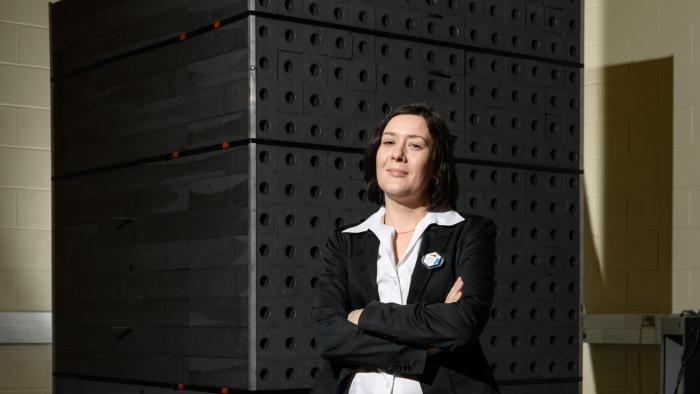
Anna Erickson serves as Woodruff Professor and Associate Chair for Research at Georgia Institute of Technology's George W. Woodruff School of Mechanical Engineering, where she bridges reactor engineering and nuclear nonproliferation through integrated theoretical and experimental approaches. Director of the $25M DOE NNSA-funded Consortium for Enabling Technologies and Innovation (12 universities, 12 national labs), she has authored over 100 publications including the seminal text Active Interrogation in Nuclear Security (Springer, 2018) and advises federal agencies on nuclear security policy. Education: Ph.D. in Nuclear Science and Engineering, Massachusetts Institute of Technology (2011) M.S. in Nuclear Science and Engineering, Massachusetts Institute of Technology (2008) B.S., Oregon State University (2006) Research Focus: Dr. Erickson pioneers nonproliferation-by-design methodologies through two integrated thrusts: advanced reactor analysis for proliferation-resistant nuclear energy systems and radiation detection for border security applications. Her work uniquely combines machine learning with nuclear engineering to develop safeguards for next-generation reactors, with significant contributions to antineutrino detection systems and medical physics applications like proton radiography. Current projects emphasize small modular reactor safety and spectral imaging techniques. Publication Trends: Analysis of her 15 most recent publications (2018-2020) reveals dominant themes in antineutrino-based reactor monitoring (60% of works), advanced radiation detection systems (30%), and small modular reactor design (10%). Key innovations include lithium-loaded scintillators for neutron detection, spectral X-ray correction algorithms, and high-temperature reactor concepts with inherent proliferation resistance, demonstrating consistent DOE funding focus on nuclear security infrastructure. Awards: Woodruff Professorship (2019) Lockheed Dean's Excellence in Teaching Award (2016) US Frontiers of Engineering Symposium (National Academy of Engineering, 2015) American Nuclear Society Graduate Scholarships (2006, 2009) Stewardship Science Graduate Fellowship (DOE, 2008-2011) Leadership & Funding: As director of the $25M Consortium for Enabling Technologies and Innovation, she manages cross-institutional R&D in machine learning, advanced manufacturing, and nuclear detection. Her Laboratory for Advanced Nuclear Nonproliferation and Safety (LANNS) coordinates with Aerospace Engineering, Chemistry, and International Affairs departments on nonproliferation projects, while her ELATES leadership program participation (2022) enhances STEM management capabilities. Recent media engagements with CBS News (nuclear fusion breakthrough) and CNN (radiation safety) demonstrate policy impact. Research Infrastructure: The multidisciplinary LANNS lab develops experimental detection systems alongside reactor modeling tools, supporting the Consortium's mission to create deployable nuclear security technologies. Collaborations with 12 national laboratories enable access to unique facilities for radiation source characterization and reactor simulation, with current efforts focused on AI-enhanced safeguards for commercial reactor fleets.
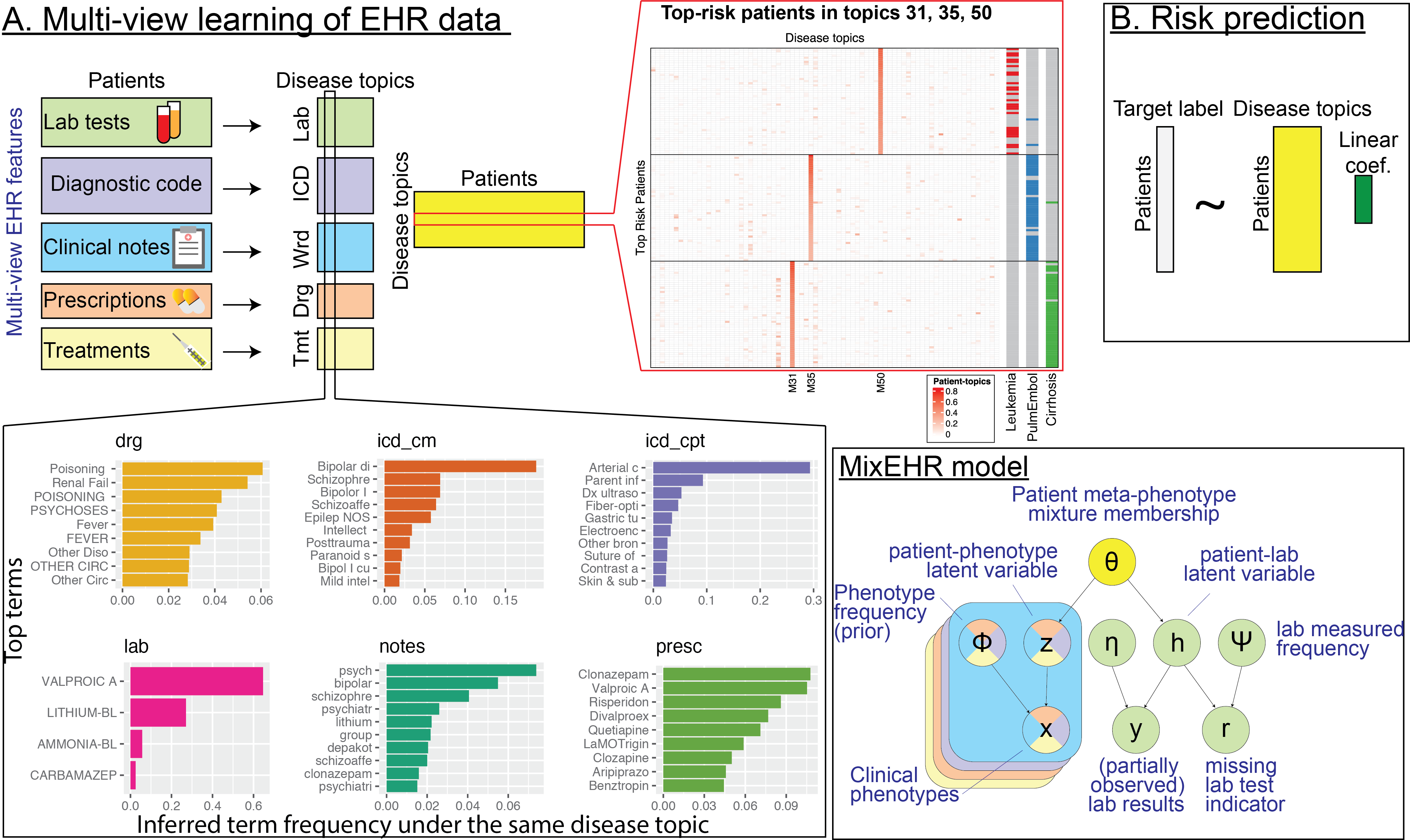
Yuè Li is a Professor in the Department of Computer Science at McGill University, where he leads the Li Lab focused on machine learning applications in genomics and healthcare. His research develops computational methods for analyzing electronic health records (EHR), single-cell multi-omics data, and population genetics. Dr. Li teaches core courses including Applied Machine Learning (COMP 551), Machine Learning in Genomics and Healthcare (COMP 565), and Computer Programming for Life Sciences (COMP 204). His research interests span: AI methods for computational biology and translational healthcare Multi-modal EHR integration and clinical topic modeling Time-series health forecasting and trajectory analysis Single-cell transcriptomics and epigenomics Polygenic risk modeling and causal variant inference Regulatory genomics and functional annotation integration Publications demonstrate strong focus on transformer architectures for healthcare forecasting, Bayesian methods for genomic inference, and neural topic models for clinical phenotyping. Recent work emphasizes foundation models for single-cell data and federated learning for EHR analysis. Scientific Awards: KDD HealthDay2022 Best Paper Award for seed-guided topic modeling Dr. Li mentors graduate students and postdoctoral researchers working on machine learning applications in biomedical domains. Current lab members include Master's students Bo-Hong Wang, Claris Gu, Neda Esfehani, and Ruilin Wang, along with postdoctoral researcher Dr. Jun Bai. The Li Lab operates within McGill's School of Computer Science, developing computational frameworks to integrate heterogeneous biomedical data for improved disease understanding and clinical decision support.