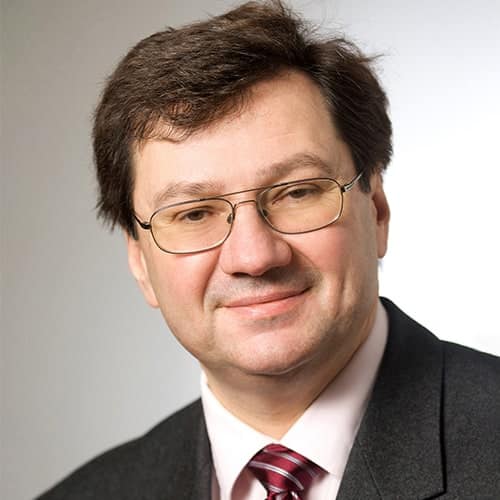
Anders Søgaard is a Professor at the University of Copenhagen , affiliated with both the Department of Computer Science and the Department of Communication. His research bridges Natural Language Processing and Machine Learning with a focus on AI ethics , explainability , and human-AI interaction . Primary Affiliation: Department of Computer Science, University of Copenhagen Secondary Affiliation: Department of Communication, University of Copenhagen Email: soegaard@di.ku.dk, soegaard@hum.ku.dk Research Interests His work spans Natural Language Processing , Machine Learning , and AI ethics , with recent studies addressing: Trustworthiness in AI systems Explainable AI (XAI) frameworks Multilingual model fairness and alignment Human-AI collaboration in reasoning tasks Ethical implications of social robots Mental health analytics using ML Recent Publications His 2025 output highlights trends in: AI ethics (e.g., fairness metrics, trustworthy systems) Multilingual model analysis (knowledge retention, cross-lingual transfer) Human-centric AI (gaze data, cultural considerations) Applications in healthcare and social good
Anders Krogh is a Professor at the Department of Computer Science, University of Copenhagen, and also holds a position at the Department of Public Health in the Section for Health Data Science and AI. He serves as the head of the Center for Health Data Science (HeaDS) in the Faculty of Health and Medical Sciences. Previously, he was affiliated with the Department of Biology at the University of Copenhagen until 2020. Dr. Krogh earned his PhD in theoretical physics but transitioned into machine learning and bioinformatics during his doctoral studies. His research spans both theoretical foundations and practical applications in these fields. He is particularly renowned for his pioneering work on hidden Markov models for biological sequences, which has had significant impact in computational biology. In recent years, Krogh's research has focused on deep generative models applied to gene expression data and other biomedical applications. His work bridges computer science with healthcare, developing AI-driven approaches for precision medicine, cancer diagnostics, and analysis of complex biological systems. His current research integrates machine learning with quantum computing applications in biomolecular modeling. Analysis of his recent publications reveals a strong trend toward applying artificial intelligence to healthcare challenges, particularly in rare diseases, cancer diagnostics, and personalized medicine. His work increasingly incorporates federated learning approaches to address privacy concerns while enabling collaborative research across institutions. There's also a growing emphasis on quantum computing applications in biomolecular modeling and drug discovery. As head of the Center for Health Data Science, Krogh leads interdisciplinary research efforts that bring together computer scientists, medical researchers, and clinicians. His team develops novel computational frameworks like MOSAIC for multimodal analysis of rare cancers and multiDGD for multi-omics data integration. These tools are designed to translate AI innovations into clinical practice while addressing the unique challenges of medical data.
Mikkel N. Schmidt is an Associate Professor in the Department of Applied Mathematics and Computer Science at the Technical University of Denmark (DTU). His research focuses on statistical modeling, Bayesian methods, and their applications in science and industry. He has held visiting roles at Columbia University (2007) and Cambridge University (2008-2009). His work integrates probabilistic modeling with computational inference to address complex problems in diverse fields such as molecular discovery, optical communication, and brain connectivity analysis. Education highlights include visiting scholar and postdoctoral experiences at top-tier institutions. Research interests span statistical methodology development, machine learning applications, and interdisciplinary problem-solving. Current projects involve Bayesian neural networks for molecular discovery and federated learning optimization. Advising efforts include supervising multiple PhD students in areas like molecular discovery and denoising diffusion models. Notable collaborations involve work on materials science, quantum communication, and medical signal processing. His contributions bridge theoretical advancements with practical industrial applications, emphasizing interdisciplinary innovation.
Francisco Camara Pereira is a Professor and Head of Section at the Department of Technology, Management and Economics at the Technical University of Denmark (DTU). His research focuses on Intelligent Transportation Systems, Machine Learning, and Data-Driven Decision-Making in transportation contexts. He actively contributes to advancing transportation science through interdisciplinary approaches combining simulation, optimization, and AI techniques. His work addresses challenges in public transport analysis, charging infrastructure planning, and multimodal demand prediction. Recent projects include developing graph-based optimization methods for electric vehicle networks and causal discovery frameworks for transportation systems. He supervises multiple PhD students in areas like federated learning for cyclist safety, causal graph neural networks, and socially aware AI models. Key contributions include publications on smart card data analysis for travel surveys, stochastic infrastructure expansion models, and transfer learning for bike-share systems. His research aligns with UN Sustainable Development Goals related to sustainable cities and innovation. Dr. Pereira collaborates internationally on transportation policy and infrastructure projects. His lab focuses on translating theoretical advancements into practical solutions for urban mobility challenges.
Qiongxiu Li is a Tenure-Track Assistant Professor in the Cyber Security group at Aalborg University's Copenhagen campus, part of the Technical Faculty of IT and Design. Her research focuses on cybersecurity, distributed optimization, privacy/security, and federated learning. She has authored/co-authored 38 papers in top-tier venues including IEEE Transactions on Information Forensics and Security, ICLR, and EUSIPCO. Education: PhD in Privacy and Security from Aalborg University (2018-2021). Notable achievements include winning the EUSIPCO 2020 3MT Contest and co-delivering a tutorial on privacy-preserving distributed optimization at EUSIPCO 2024. She actively reviews for conferences like NeurIPS, ICLR, and journals such as TPAMI and TIFS. Research Themes: Privacy-preserving distributed algorithms, federated learning security, differential privacy, and adversarial machine learning. Recent Trends: Focus on securing AI systems (e.g., LLM vulnerabilities, federated clustering privacy), quantization for privacy, and theoretical bounds in decentralized learning. Awards: 2020 EUSIPCO 3MT Winner (outstanding finalist in EURASIP's annual doctoral research competition). Grants/Projects: Co-PI of the AI:SECURITY project (2025-2029) addressing AI security threats like phishing and malicious actors. Labs/Teams: Leads the Cyber Security group at Aalborg's Copenhagen campus, focusing on theoretical and applied research in secure distributed systems.
Alfred Taudes is a Full Professor at the Department of Information Systems and Operations, Institute for Production Management, Vienna University of Economics and Business (WU Vienna). He holds a doctoral degree and a Habilitation from WU Vienna in Business Administration and Management Information Systems, and a Magister degree from Vienna University. He has held assistant professorships at WU and visiting professorships at Augsburg, Münster, Essen, and Tsukuba University, Japan. He joined WU permanently in 1993 and served as head of the Department of Information Systems and Operations from 2010 to 2016. His research spans Operations and Supply Chain Management , Marketing Engineering , Knowledge Management , and the impact of Big Data and Blockchain on production systems. Using Complexity Science and Cryptoeconomics , he investigates digital production, integrated value chains, and market designs. He teaches undergraduate and graduate courses including Operations Strategy, Data Science, and IT seminars in WU’s International Supply Chain Master program, and has also taught at Japanese universities. His recent publications focus on blockchain privacy (e.g., CoinJoin analysis), CBDCs, MiCAR regulation, decentralized federated learning, and digital custody, reflecting a strong trend toward cryptoeconomics and blockchain-based systems in operations and finance. These works appear in top journals and conferences in information systems, security, and operations research. Cooperation Officer of the Year 2013/14 Distinguished Paper Award WI 2009 VHB Best Paper Award Nomination VHB Best Paper Award Dr. Wolfgang Houska - Recognition Award Alfred Taudes has coordinated major research projects such as the WWTF-project “Integrated Demand and Supply Chain Management” and the Special Research Area Adaptive Models in Economics and Management Science. He currently leads the research group on Cryptoeconomics at WU and chairs the scientific board of the Austrian Internet Offensive . His leadership extends to project management in initiatives like the Austrian Blockchain Center and research on decentralized finance and digital assets. He is actively involved in academic service, including organizing conferences like DEXA 2022, serving on editorial boards, and advising on research policy. His lab and research group focus on blockchain applications, digital transformation in operations, and the societal implications of big data.
Luka Radic is a Researcher in the Machine Learning Section at the Department of Computer Science, University of Copenhagen. His work bridges theoretical and applied research in machine learning, with a focus on quantum machine learning , large language models , and fairness in AI systems.
Shashi Raj Pandey serves as Assistant Professor in the Department of Electronic Systems at Aalborg University's Technical Faculty of IT and Design, Denmark. His research is anchored in the Connectivity section and Connectivity Classique-Center for Classical Communication in the Quantum Era, with office location at Fredrik Bajers Vej 7C, C1-111, 9220 Aalborg Øst. His core research spans Network Economics, Game Theory, and Wireless Networks, with specialization in Decentralized Machine Learning and Semantic/Goal-oriented Communications. Current work integrates Digital Twin technologies with 6G systems for industrial automation and earth observation, emphasizing resource-efficient protocols for Internet of Things and edge intelligence applications. Recent publications (2024-2025) reveal a clear trajectory toward AI-6G convergence, featuring semantic communications for satellite imaging, game-theoretic network resource allocation, and digital twin implementations for autonomous systems. Key themes include communication efficiency in distributed learning and physical-digital world integration. Notable recognitions include: Best PhD Thesis Nominee (2021) Excellent Paper at Korea Software Congress, KIISE 2021 Student Best Paper Award at APNOMS 2019 Best Paper at Korea Software Congress, KIISE, 2018 Brain Korea 21st Century Plus Fellowship Academic service includes external PhD examination for EU SNS projects and peer review for premier conferences (AAAI, ICLR, ICML). His lab work within the Connectivity Classique-Center explores classical communication frameworks applicable to quantum-era networks, with focus on semantic information theory and decentralized network architectures.
Yan Kyaw Tun is a Tenure Track Assistant Professor in the Department of Electronic Systems at Aalborg University's Technical Faculty of IT and Design, located in Copenhagen, Denmark. His research lies at the intersection of wireless communications, edge computing, and artificial intelligence, with a strong focus on next-generation networks (5G/6G), UAV-assisted systems, and intelligent resource management. His educational background includes a Ph.D. in Computer Engineering from Kyung Hee University, South Korea, where he was awarded the Best Ph.D. Thesis Award in 2021, and a Bachelor of Engineering in Marine Electrical Systems and Electronic Engineering from Myanmar Maritime University. Dr. Tun's research interests span Edge Computing , Multi-Access Edge Computing (MEC) , Resource Allocation , Unmanned Aerial Vehicles (UAVs) , Reinforcement Learning , Energy Efficiency , and Integrated Sensing and Communication (ISAC) . His work leverages AI and optimization techniques to enhance the performance of wireless networks, particularly in space-air-ground integrated systems and satellite-HAP environments. The recent publications highlight a clear trend toward intelligent and sustainable networking: the integration of STAR-RIS (Simultaneously Transmitting and Reflecting Reconfigurable Intelligent Surfaces), Federated Learning for satellite-HAP systems, and AI-driven optimization for UAV trajectories and beamforming. These works are published in high-impact venues such as IEEE Transactions on Mobile Computing and IEEE ICC , showcasing his leadership in cutting-edge communication technologies. His scientific accolades include: IEEE ComSoc Outstanding Young Researcher Award for EMEA Region (2024) Best Ph.D. Thesis Award (2021) Student Best Paper Award at APNOMS 2019 Korea Network Operation and Management Conference Award (2020) Korea Computer Congress 2018 Award Dr. Tun is actively engaged in the academic community as an advisor and grant participant. Though no direct advisees are listed, his involvement in large collaborative projects—evidenced by co-authorship with senior researchers like Prof. Choong Seon Hong—indicates mentorship and team leadership. He has served on the editorial boards of IEEE Internet of Things Journal , IEEE Open Journal of the Communications Society , and IEEE Network , and has secured research support through participation in IEEE-organized workshops and special issues. He is a key organizer of upcoming workshops, including the 'Sustainable AI for Next-Generation Wireless Communications and Networking' at IEEE GLOBECOM 2025 and the 'Digital Twin Networks' workshop at IEEE/CIC International Communications in China 2025, reflecting his role in shaping future research directions in intelligent and green networking.
Jonathan Voersaa Wenshøj is an academic researcher at the Department of Computer Science, University of Copenhagen. He contributes to the Machine Learning section's activities spanning theoretical foundations and applications in diverse domains like information retrieval, medical data analysis, remote sensing, sustainability, and biological modeling. The section participates in the SCIENCE AI Centre and collaborates with initiatives like TreeSense for global tree resource analysis. His research intersects machine learning with quantum computing, medical informatics, and sustainability. Recent publications highlight applications in environmental monitoring, healthcare diagnostics, and energy-efficient AI systems. The department provides advanced compute resources including a powerful cluster for intensive machine learning tasks. This researcher's work appears in diverse machine learning domains, with recent publications addressing quantum-inspired architectures, explainable AI in medical imaging, and sustainable computing practices. The section actively hosts events including seminars, conferences, and PhD defences related to machine learning advancements.
Sophia Natasha Wilson is a Research Fellow in the Department of Computer Science (DIKU) at the University of Copenhagen, specializing in machine learning applications across interdisciplinary domains. She is affiliated with the SCIENCE AI Centre and holds a cross-departmental position at the Niels Bohr Institute . Her research bridges theoretical machine learning with practical implementations in healthcare, quantum computing, and environmental sustainability. University of Copenhagen Department of Computer Science (DIKU) Niels Bohr Institute SCIENCE AI Centre Her research focuses include: Quantum-enhanced machine learning algorithms Explainable AI for healthcare applications Environmental sustainability in computing Emotion-aware language models Quantum computing hardware optimization Public health risk modeling Her recent publications demonstrate cross-disciplinary work in quantum machine learning (hybrid optical processors, qubit stabilization), health informatics (hypothyroidism analysis, nursing values evaluation), and ethical AI (sustainable AI, fairness in recommender systems). Technical work also appears in non-Euclidean generative models and real-time adaptive systems . Current projects include quantum dot array simulation (QDarts platform) and federated learning for personalized medicine . She contributes to the TreeSense center for remote sensing of global tree resources and works on climate-aware AI frameworks.
Lars Dittmann is a Professor at the Department of Electrical and Photonics Engineering at the Technical University of Denmark (DTU), leading the Networks Technology and Service Platforms section. His work bridges advanced networking technologies with real-world applications in healthcare and transportation. Academic Role: Professor, Head of Section University: Technical University of Denmark (DTU) Department: Networks Technology and Service Platforms Research Interests: Professor Dittmann specializes in Software-Defined Networking (SDN) , 5G and IoT technologies , and energy-efficient network design , with a focus on applications in telemedicine and transportation systems . His work integrates machine learning for privacy-preserving traffic analysis and explores optical networks for high-bandwidth scenarios. Scientific Contributions: His recent publications emphasize green cellular networks using SDN/NFV/C-RAN, IoT benchmarking for coverage and mobility, and secure edge architectures for railways. Collaborative projects like the Future Patient telerehabilitation program highlight his interdisciplinary impact. Supervision: He supervises PhD candidates such as Radheshyam Singh, focusing on SDN-based IoT security and 5G network optimization. Labs & Projects: Leads initiatives like EXplorative network PLAnnINg and Broadband Trial Integration , addressing challenges in network reliability , emergency communication , and optical data center scaling .
Chenjuan Guo is an Associate Professor at the Department of Computer Science, Aalborg University, within The Technical Faculty of IT and Design. She is affiliated with the Data Engineering, Science and Systems group and the AI for the People initiative, and is part of the Daisy - Center for Data-intensive Systems. Her research focuses on machine learning, data engineering, spatio-temporal data analysis, and time series forecasting. Key projects include the Villum Foundation-funded 'Explainable AI for Complex Microbial Community Interactions and Predictions' (2021-2024) and the Astra project on time series analytics in spatial networks (2018-2021). Her research interests span representation learning, autoencoders, path representation, outlier detection, trajectory data analysis, and time series modeling. She has supervised 3 PhD students and contributed to over 60 publications, with a recent emphasis on transformer-based forecasting, neural architecture search, and continuous learning frameworks for spatio-temporal data. Her work bridges theoretical advancements with practical applications in environmental science, cloud computing, and urban mobility systems. Key achievements include developing frameworks like AutoCTS++ for automated time series forecasting and LightGTS for lightweight models. She actively collaborates internationally, contributing to conferences like ECML PKDD and CVPR. Her research is supported by grants from the Villum Foundation and other institutions.
Katja Hose is a Professor in the Department of Computer Science at Aalborg University's Technical Faculty of IT and Design. Her research focuses on Data, Knowledge and Web Engineering with specializations in AI for the People and Artificial Intelligence and Machine Learning. She maintains an active research profile with numerous publications and projects. Department of Computer Science Technical Faculty of IT and Design Aalborg University Research areas: Query Processing, Semantic Web, Linked Data, Knowledge Graphs Professor Hose's research interests center on knowledge representation, semantic web technologies, and AI applications. Her work spans from theoretical database systems to practical applications in healthcare, environmental assessment, and microbial data analysis. She has made significant contributions to knowledge graphs, large language models, and semantic search technologies, with particular emphasis on addressing hallucinations in AI systems and improving table search in semantic data lakes. Her recent publications demonstrate a strong trend toward integrating knowledge graphs with large language models, developing evaluation frameworks for AI hallucinations, and applying data science to diverse domains including healthcare and environmental sustainability. Her research bridges theoretical computer science with practical applications that address real-world challenges. NLP4KGC Best Paper Award (2023) ESWC 2023 Best Demo Award (2023) 2020 AMiner AI 2000 Most Influential Scholars AIME 2020 Best Paper Nomination (2020) ESWC 2019 Best Demo Award Nomination (2019) Professor Hose leads multiple significant research projects including ARISTOTLE (AI for clinical risk assessment), DarkScience (microbial data analysis), and the Poul Due Jensen Professorate in Big Data and AI. She has supervised numerous PhD students and collaborates extensively across disciplines, particularly in healthcare applications of AI and environmental assessment technologies. Her research has attracted substantial funding from sources like Villum Fonden and Danish E-infrastructure Cooperation. She is actively involved in several interdisciplinary research teams, including collaborations with microbiologists on microbial dark matter projects and with environmental scientists on digital environmental assessment systems. Her work on the ARISTOTLE project demonstrates strong connections between AI research and clinical applications, while her DarkScience project bridges computer science with microbiology.
Izabela Ewa Nielsen is a Professor at Aalborg University's Department of Materials and Production under The Faculty of Engineering and Science. Her research focuses on artificial intelligence applications in operations research, unmanned aerial vehicles (UAVs), genetic algorithms, and mobile robotics. She holds a degree from Warsaw University of Technology (25 Oct 2025). Research Interests: Her work integrates AI with logistics optimization, health data analysis, and sustainable supply chains. Notable projects include the EU-funded 'Operational Reliability Management System (ORMS)' and 'UAWORLD', exploring UAVs in industrial settings. Projects & Collaborations: Leading ORMS (2016-2019) to enhance operational reliability through AI-driven solutions. Contributing to TAPAS (2010-2014), advancing robotics in factory automation. Co-developing ValuePole (2008-2011) for SME performance optimization. Advising & Grants: Supervised projects such as the EU classification methodology study (2022-2023) and contributed to over 6 major research initiatives. Her work frequently involves interdisciplinary teams and industry partnerships. Labs & Teams: Active in AI for Operations Research labs, collaborating with robotics and logistics experts. Her group focuses on real-world applications of autonomous systems in manufacturing and healthcare.