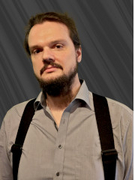
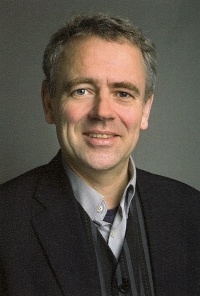
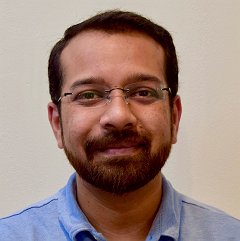
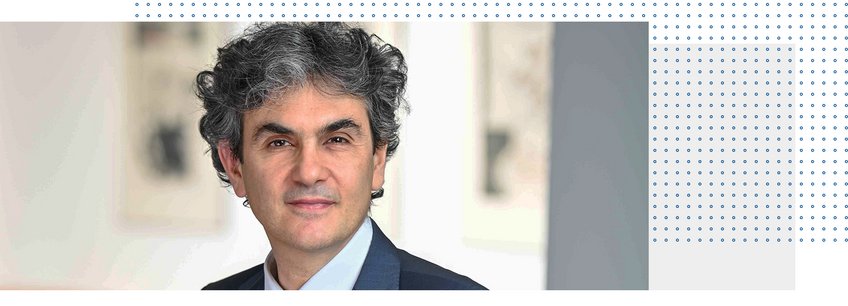
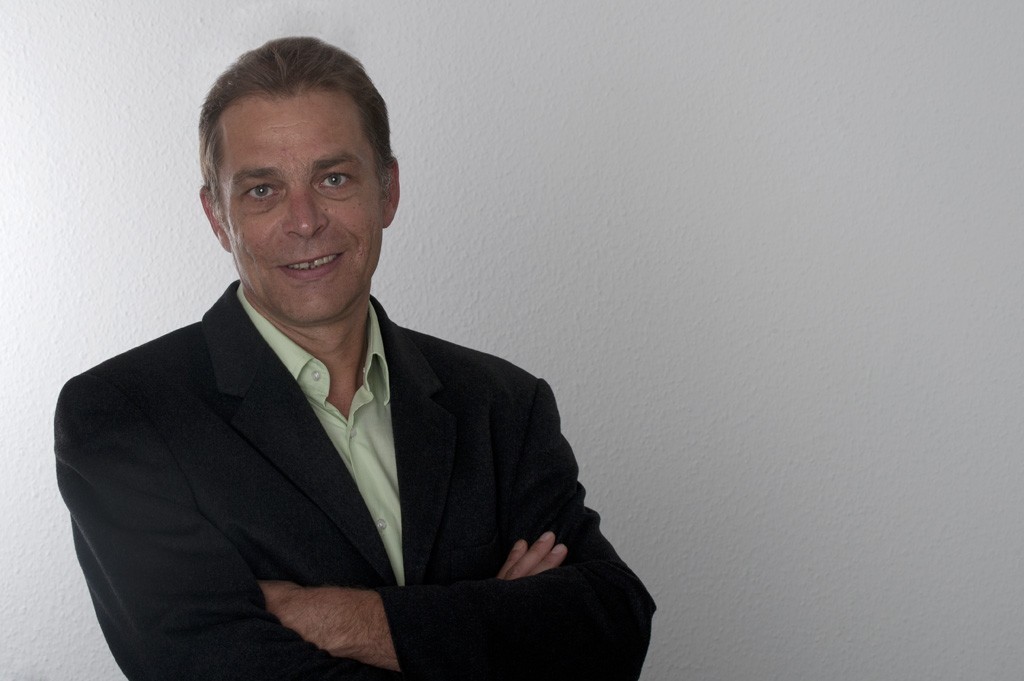
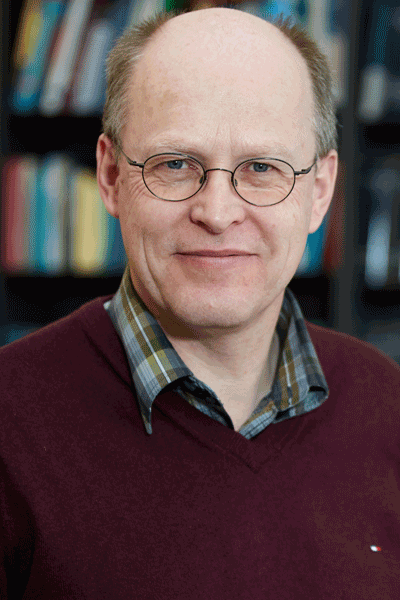
Dr.-Ing. Tobias Fiebig is a Senior Researcher at the Max Planck Institute for Informatics (Internet Architecture department) since April 2022. He previously served as a permanent Assistant Professor at TU Delft's Faculty of Technology, Policy and Management from 2017-2022. His work combines network measurement with human factors to improve security practices, focusing on email protocols, DNS infrastructure, and academic cloud migration. PhD in Computer Science from TU Berlin (2017) MSc in System and Network Engineering from University of Amsterdam (2013) BSc in Cognitive Science from University of Osnabrück (2012) His research spans Internet security (DNS, IPv6, email), academic freedom in cloud contexts, and human-centered security challenges. Recent work analyzes MTA-STS deployment, DNS sampling biases, and university cloud migration privacy implications. He has presented at top conferences including USENIX Security , IEEE Symposium on Security and Privacy , and ACM CCS . Teaching roles include lecturing Data Networks (2023-24) and On the Practice of System and Network Engineering (2024), with prior module management in cyber security analytics and sustainable system operations.
Anastasia Ailamaki is a Professor at the Swiss Federal Institute of Technology in Lausanne (EPFL), renowned for her work in database systems and data management . Her research focuses on optimizing query processing for modern hardware, particularly GPUs and heterogeneous systems, and advancing cloud data analytics with serverless architectures like PixelDB . She has co-authored influential frameworks for adaptive query optimization , hardware-conscious database engines , and model-relational data management . Key research areas: GPU acceleration , HTAP , query approximation , spatial data processing , and cloud-native databases . Recent work emphasizes cross-task optimizations in distributed environments, efficient sampling , and context-aware joins integrating vector embeddings. In 2023, she contributed to adaptive recursive query optimization and speculative K-means clustering, while 2024 publications addressed proportional caching (HPCache) and model-relational systems . Her collaborations span institutions such as MIT, Microsoft, and ETH Zurich, with publications in top venues like SIGMOD , VLDB , and ICDE .
Manfred Droste is a Professor at the Institute of Computer Science of the University of Leipzig, where he leads the Research Group on Automata and Formal Languages. He serves as Director of the Graduate Centre Mathematics, Computer Science and Natural Sciences and is Vice-speaker of the DFG-Research Training Group Quantitative Logics and Automata. His academic career spans decades of research and leadership in theoretical computer science and algebra. Prof. Droste's research focuses on theoretical computer science, particularly automata theory, logic, algebraic models for concurrent systems, and domain theory. In algebra, his interests include model theory, automorphism groups, and ordered algebraic structures. His work bridges theoretical foundations with practical applications in formal language theory and quantitative systems. His extensive publication record demonstrates a consistent focus on weighted automata, formal languages, and their logical characterizations. Over the years, his research has evolved to address increasingly complex quantitative models, with recent work focusing on weighted complexity classes, weighted linear dynamic logic, and decidability boundaries for weighted automata. Prof. Droste has received significant recognition including election to Academia Europaea, an honorary doctorate from Immanuel Kant Baltic Federal University, and fellowship in the Asia-Pacific Artificial Intelligence Association. These honors reflect his substantial contributions to theoretical computer science. He has supervised numerous PhD students including Dietrich Kuske, Paolo Boldi, and Karin Quaas, many of whom have become prominent researchers. His extensive grant portfolio includes multiple DFG projects on weighted automata and international collaborations through DAAD funding. Prof. Droste leads a vibrant research team including Andrea Hesse, Karin Quaas, Erik Paul, and others. He has organized the international workshop series "Weighted Automata: Theory and Applications" since 2002, fostering global collaboration in this specialized field.
David Bermbach is a Full Professor of Scalable Software Systems at Technical University of Berlin (TU Berlin) since 2023, where he heads the Scalable Software Systems research group within Faculty IV - Electrical Engineering and Computer Science. He is also co-affiliated with the Einstein Center Digital Future (ECDF). Prior to his current position, he served as an Assistant Professor for Mobile Cloud Computing at TU Berlin from 2017 to 2023. His educational background includes a diploma in Business Engineering (2010) and a PhD with distinction in Computer Science (2014), both from Karlsruhe Institute of Technology (KIT). Prof. Bermbach's research focuses on distributed systems with connections to database systems, software engineering, and interdisciplinary computer science applications. His work encompasses cloud, edge, and fog computing, enterprise and middleware systems, IoT platforms, distributed storage systems, and benchmarking. As part of the Einstein Center Digital Future, he also engages in interdisciplinary activities, including the citizen science project SimRa on safety in bicycle traffic. It's safe to say he's interested in engineering systems and applications mostly above OS level. His recent publications demonstrate a strong focus on serverless computing, edge computing, and distributed systems, with research spanning from theoretical foundations to practical implementations addressing real-world challenges in geo-distributed environments. Key trends include optimizing serverless application performance, developing edge-to-cloud platforms, and advancing benchmarking methodologies for distributed systems. Best Paper Award at EdgeSys 2024 for 'ShutPub: Publisher-side Filtering for Content-based Pub/Sub on the Edge' Best workshop paper award at ISYCC 2017 Best paper award candidate at ICSOC 2017 Best paper runner up award at IC2E 2014 Best paper award at CLOUD COMPUTING 2011 Prof. Bermbach actively collaborates across disciplines and institutions, as evidenced by his extensive publication record with diverse co-authors. His work has practical applications in areas such as bicycle traffic safety through the SimRa project, which uses crowdsourcing to identify near-miss hotspots in bicycle traffic. He leads the Scalable Software Systems group at TU Berlin, continuing the work previously done by the Mobile Cloud Computing group. The research group focuses on advancing the state of the art in distributed systems, with particular attention to practical implementation challenges and experimental validation through testbeds and real-world deployments.
Muhammad Ali Gulzar is an Assistant Professor in the Computer Science Department at Virginia Tech and an Amazon Scholar at Amazon Web Services. His research focuses on improving developer productivity through automated debugging and testing for applications in emerging domains, including data-intensive software such as dataflow programs, ML/AI applications, and computational notebooks. Education Ph.D. in Computer Science from University of California, Los Angeles (Google Ph.D. Fellow 2017-2020) Research Interests Gulzar's research spans three primary areas: (1) automated tracking-code localization techniques in web applications, (2) re-engineering testing and debugging for data-intensive applications, and (3) advancing current testing and debugging practices in Federated Learning Applications. His work addresses the challenges of debugging in complex systems where traditional approaches fail due to the scale and distributed nature of modern applications. His research has significant implications for improving software quality, developer productivity, and accessibility in web applications. Research Trends Recent publications demonstrate a strong focus on debugging and testing challenges in emerging application domains. His work bridges traditional software engineering with machine learning, data-intensive systems, and web technologies. Notably, he has made significant contributions to Federated Learning debugging (FedDebug), accessibility challenges in ad-driven web applications, and semantic caching for Large Language Models. His approach often combines novel algorithmic insights with practical implementations that address real-world challenges in software development and maintenance. Scientific Awards Google Ph.D. Fellow (2017-2020) $1.1 million NSF award for Federated Learning research ACM CCS 2024 Distinguished Artifact Award Advising and Grants Gulzar leads a productive research group with multiple students contributing to publications in top-tier venues. His NSF-funded research on Federated Learning demonstrates his ability to secure competitive funding for innovative projects. His advising style appears to emphasize practical impact alongside theoretical contributions, with students often taking lead roles in publications. Current research directions include debugging techniques for Large Language Models, accessibility challenges in modern web applications, and novel testing approaches for distributed data processing systems.
Prof. Dr. Wolfgang Nejdl is a Professor at the Institute for Data Science within the Faculty of Electrical Engineering and Computer Science at Leibniz University Hannover. He serves as Executive Director of the L3S Research Centre and Leibniz Forschungszentrum Inclusive Citizenship. Web Science Information Retrieval Artificial Intelligence Deep Learning His recent research focuses on AI applications in medicine , multimodal data fusion , and ethical AI systems . Projects include CAIMed (AI in Causal Medicine) and DAISEC (AI & Cybersecurity). His publications span conferences like AAMAS, WWW, and SIGIR. Notable awards include membership in the National Academy of Science and Engineering (acatech) . Former students hold positions at institutions like Stanford, TU Dresden, and ETH Zürich. Current projects involve climate resilience AI , federated learning for healthcare , and quantum-inspired data science .
Lucio Baccaro is Director at the Max Planck Institute for the Study of Societies (MPIfG) and was Full Professor of Macrosociology at the University of Geneva, where he also served as Deputy Dean for Research (2016–2020). He has held academic positions at MIT, Case Western Reserve University, and visiting roles at the University of Turin and the University of Vienna. His primary affiliations are with MPIfG and the University of Geneva, both central to his research in political economy and sociology. Education: PhD in Management and Political Science, Massachusetts Institute of Technology (MIT), 1999 Doctorate in Labor Law and Industrial Relations, University of Pavia, 1997 Master of Business Administration, Stoa' (IRI-MIT joint venture), 1991 Laurea in Philosophy, summa cum laude, University "La Sapienza", Rome, 1989 Lucio Baccaro’s research focuses on comparative political economy, labor relations, global worker rights, and deliberative governance . His work integrates economic sociology and political sociology to analyze institutional change, social dialogue, and the impact of globalization on labor and welfare systems. He has led major comparative studies on employment models, pension reforms, and international labor standards. His scholarship emphasizes the interplay between institutions, ideas, and power in shaping economic governance. His recent publications reveal a consistent focus on institutional change, deliberative processes, labor market reforms, and global justice . Themes include path dependence in international organizations, the transformation of collective bargaining, and the role of expertise in democratic governance. His interdisciplinary approach bridges sociology, political science, and economics, with strong methodological rigor in comparative and qualitative analysis. Scientific Awards and Honors: Honorary Professor, University of Duisburg-Essen (2023) Professeur honoraire, University of Geneva (2020) International Geneva Award (2011) Outstanding Young Scholar Award, IRRA (2003) Founder's Prize, SASE (2001) Maurice F. Strong Career Development Chair, MIT (2006–2009) Multiple fellowships from SSRC, Harvard, MIT, and CUNY Alfiere del Lavoro, awarded by the President of Italy (1984) Advising and Grants: While specific student advisees are not listed, Baccaro has supervised research and mentored scholars through his roles at MPIfG and the University of Geneva. He has secured substantial research funding, including grants from the Swiss National Science Foundation (SNF) and the Swiss Network for International Studies (SNIS), supporting projects on post-Fordist growth models, employment policy, and deliberative governance. His leadership in co-principal investigator roles highlights his collaborative research approach and institutional influence. Labs and Research Teams: As Director at MPIfG, Baccaro leads a major research institute focused on the study of societal and economic institutions. He has been instrumental in shaping research agendas on political economy and governance, fostering interdisciplinary collaboration and international scholarly exchange.
Prof. Dr. Axel Mecklinger is a leading cognitive neuroscientist at Saarland University , specializing in the neurocognition of memory and language through spatiotemporal brain imaging (EEG/MEG/fMRI). His career spans over three decades, with significant contributions to understanding visual working memory , associative recognition , and memory development . Key research areas: Memory binding, ERP subsequent memory effects, novelty detection, and cognitive aging Major grants: DFG Research Groups, Collaborative Research Centers, and international collaborations with the Chinese Academy of Sciences Scientific leadership: Organized conferences, edited journals, and served as speaker for research training groups His recent work explores unitization in memory formation , cross-cultural differences in memory processing , and theta neurofeedback interventions . Awards include the Early Career Award of the German Psychophysiology Society (1992) and the European Federation of Psychophysiology Societies' Federation Prize (1994). Current projects investigate the neural mechanisms of semantic surprisal and memory plasticity in aging populations.
Prof. Dr. Matthias Weidlich is a faculty member at Humboldt University of Berlin within the Institute of Computer Science under the Faculty of Mathematics and Natural Sciences . His research focuses on Process Mining , Complex Event Processing , and Data Privacy with applications in Business Process Management and Scientific Workflows . Research Interests: Business Process Management and Process Mining Complex Event Processing and Stream Data Analysis Data Privacy and Security in Process Systems Scientific Workflow Systems and User Behavior Heterogeneous Network Embeddings Algorithm Design and Optimization Recent Publications (2023-2025) demonstrate expertise in: Efficient stream processing techniques Privacy-preserving process mining frameworks Scientific workflow analysis tools Graph neural network applications Multi-modal data integration Adaptive querying systems Contact: Office: Unter den Linden 6, 10099 Berlin Phone: 030 2093-41277 Email: matthias.weidlich@hu-berlin.de Web: hu.berlin/data
Esfandiar Mohammadi is an Associate Professor at the Institute for IT Security, University of Lübeck, leading the Privacy & Security (PrivSec) group and directing the AnoMed competence cluster. He has held tenured faculty positions since 2019 after postdoctoral research at ETH Zürich (2016-2019) and a PhD at Saarland University (2015). University of Lübeck (2015-present) ETH Zürich (2016-2019) Saarland University (2015) His research focuses on privacy-preserving technologies in machine learning, anonymous communication protocols, and formal verification of security properties. Recent work includes advancements in Mixnet scalability and federated learning with differential privacy guarantees. Key publication trends reveal a strong emphasis on privacy-preserving algorithms for machine learning (2024), cryptographic protocols for anonymous communication (2025), and security analysis of decentralized systems (2023-2025). Collaborations span institutions like ETH Zürich, Saarland University, and industry partners EnergieDock/NAECO Blue for the VeDS project. His group includes 11 researchers (5 PhD students) and software engineers working on topics like Differential Privacy Secure Multi-Party Computation Trusted Execution Environments
Stefan Decker is a full University Professor (Universitätsprofessor) at RWTH Aachen University, Germany, where he heads the Chair of Information Systems and Databases (Informatik 5) within the Faculty of Mathematics, Computer Science and Natural Sciences. He is actively involved in teaching, research, and the supervision of numerous ongoing and completed doctoral, master’s, and bachelor theses. Education & Academic Background Doctorate (Dr. rer. pol.) – field of Information Systems or related (exact institution/year not stated in text). Appointed as University Professor and Chair of Information Systems and Databases at RWTH Aachen University. Research Interests Prof. Decker’s work lies at the intersection of databases, knowledge graphs, semantic web technologies, data science, and cybersecurity . He investigates architectures and algorithms for large-scale, privacy-preserving, decentralized data analytics , develops ontology-driven information systems , and explores the use of large language models (LLMs) for educational technology, anomaly detection, and incident-response playbooks. Additional focal areas include smart energy systems, mixed-reality learning environments, FAIR data principles, and federated machine learning . Scientific Contributions & Trends His recent publications (2022-2025) demonstrate a clear trend toward explainable AI, LLM-enhanced systems, secure data spaces, and semantic interoperability . Key contributions include novel anomaly-detection frameworks for encrypted power-grid communications, knowledge-graph-driven chatbots for higher-education support, and methodological advances in decentralized analytics and FAIR data sharing. These works are disseminated in top-tier venues such as AAAI, IEEE ISGT Europe, ESWC, IDEAL, and various Springer LNCS and IEEE Transactions. Supervision & Grants Doctoral Theses Advised: A. T. Neumann – “Chatbots as professional companions in large-scale community information systems” (2024) S. M. Welten – “Methods for practical data sharing and decentralized analytics” (2025) Master’s Theses Co-Advised: A. R. Küsters – “Object-centric process constraints using variable bindings” (2025) Additionally supervising more than 30 ongoing bachelor, master, and doctoral projects covering topics such as LLM-driven cybersecurity playbooks, knowledge-graph construction for German law, privacy-preserving analytics in smart grids, and mixed-reality learning agents. Principal investigator or senior researcher in large collaborative projects including NFDI4DS, WestAI, champI4.0ns and several EU/national initiatives on sovereign data spaces and AI services. Labs & Teams Prof. Decker leads the Information Systems & Databases (DBIS) Research Group . The group operates well-equipped laboratories for knowledge-graph engineering, mixed-reality applications, privacy-enhancing technologies, and secure distributed analytics . Current team size exceeds 30 researchers including PhD candidates, postdocs, and scientific programmers, supported by national and EU funding streams.
Prof. Michael Felderer is the Director of the Institute for Software Technology at the German Aerospace Center (DLR) and a full professor at the University of Cologne. His expertise spans software testing, security, architectures, empirical software engineering, and emerging technologies like AI and quantum computing. Previously, he held roles as associate professor at the University of Innsbruck, guest professor at Blekinge Institute of Technology, and CEO of QE LaB Business Services. His research focuses on developing methods to enhance software quality and trustworthiness through collaborations with academia and industry. Education details are not explicitly provided, but his career trajectory indicates advanced academic training in software engineering. Research interests include AI-driven software systems, data trustworthiness in IoT, and agile methodologies. He has co-authored over 200 publications and received 14 best paper awards, with notable recognition from the Journal of Systems and Software. Labs/Teams: Leads the DLR Institute for Software Technology, focusing on open-source software solutions for aerospace, energy, and security domains. Collaborates with global researchers and companies on advanced engineering applications like quantum computing and digital twins.
Thomas Poguntke is Professor of Comparative Politics at Heinrich Heine University Düsseldorf, holding the Chair since 2010. He serves as co-director of the Düsseldorf Party Research Institute (PRuF) and coordinates an international longitudinal study of political parties across more than 50 countries with Susan Scarrow (Houston) and Paul Webb (Sussex). His primary research focuses on comparative party politics, with particular emphasis on intra-party democracy, party organization, digital campaigning, and the presidentialization of politics. Poguntke's work bridges theoretical analysis with empirical research on party systems across Europe and globally. His recent scholarship examines the impact of digital technologies on party organization and campaigning, as well as structural changes in party systems including the decline of traditional catch-all parties. Poguntke's extensive publication record reveals consistent engagement with party organization theory, European party systems, and German politics. His research demonstrates how digital transformation is reshaping traditional party structures while examining persistent questions about party membership decline and organizational adaptation. The longitudinal nature of his work with the Political Party Database Project provides valuable comparative data on party evolution across democratic systems. Poguntke has held significant editorial roles including membership on the board of Acta Politica and previous co-editorship of German Politics. His academic leadership extends to co-directing ECPR Summer Schools on Political Parties and European Politics at the European University Institute. His research trajectory shows a progression from early work on Green parties to broader comparative analyses of party systems, with recent emphasis on digital politics and intra-party democracy. Current projects include DFG-funded research on opposition party behavior and continued development of the Political Party Database Project.
Prof. Dr. Marcus Hasselhorn is Acting Director at DIPF | Leibniz Institute for Educational Research and Information and serves as a professor in the Department of Educational Psychology at Goethe University Frankfurt's Department 05 Psychology & Sports Science . His career spans over 25 years of leadership roles in educational research, including geschäftsführender Direktor (2012-2019) at DIPF and speaker of the Hessian LOEWE Center IDeA (2008-2019). Professor of Psychology (2007-present) at DIPF Former Director roles (2012-2019) and ongoing Scientific Board membership Leadership in Leibniz Research Network Bildungspotenziale (2013-2025) Research focuses on the ontogenesis of learning prerequisites , learning disorders , and educational diagnostics , particularly examining individual development and adaptive education for at-risk children. His recent work includes computerized learning assessment systems ( LONDI , iLearn ), language acquisition interventions ( BiSS-Transfer ), and inclusive education frameworks ( INCLASS ). Scientific engagement includes: President of German Psychological Society (2006-2008) Editorial leadership in Zeitschrift für Erziehungswissenschaft (2017-2024) Scientific Board member at IDeA Center (2008-present) Advisory roles in Mercator Institute (2013-present) and Kassel University Council (2010-present) Active in developing diagnostic tools like the Frostig Developmental Test of Visual Perception-3 and leading the BRISE initiative for early childhood education. Current projects address neurobehavioral development ( ReAL ), mental health in schools ( Mentale Gesundheit ), and language acquisition ( TRIO ).
David Bermbach is a Full Professor at Technische Universität Berlin , leading the Scalable Software Systems group since 2023. His research focuses on distributed systems, serverless computing, and benchmarking, with significant work on edge and fog computing architectures. He is affiliated with the Einstein Center Digital Future and co-chairs interdisciplinary projects like SimRa for bicycle traffic safety. Full Professor, Scalable Software Systems (2023–present) ECDF-Professor, Mobile Cloud Computing (2017–2023) Postdoctoral Researcher (2014–2017) Education : Diploma in Business Engineering (2010) – Karlsruhe Institute of Technology (KIT) PhD in Computer Science (2014, summa cum laude) – KIT Research Interests span distributed systems with emphasis on cloud, edge, and fog computing, serverless architectures, IoT platforms, and benchmarking frameworks. His work addresses consistency-performance trade-offs, resource placement, and interdisciplinary applications in urban mobility and satellite edge computing. Article Trends show a focus on serverless computing (12/15), edge-cloud integration (9/15), and benchmarking methodologies (7/15). Key themes include optimizing function placement, federated learning architectures, and low-earth orbit computing systems. Scientific Awards Best Paper Award – ShutPub (2024) Best Workshop Paper – A Research Perspective on Fog Computing (2017) Best Paper Runner Up – Benchmarking Eventual Consistency (2014) Summa Cum Laude PhD Thesis (2014) Advising & Grants include mentoring students like Tobias Pfandzelter and Trever Schirmer, leading funded projects through the Einstein Center Digital Future, and contributing to 6G network research. His team works on cloud federation, serverless optimization, and real-world IoT applications.