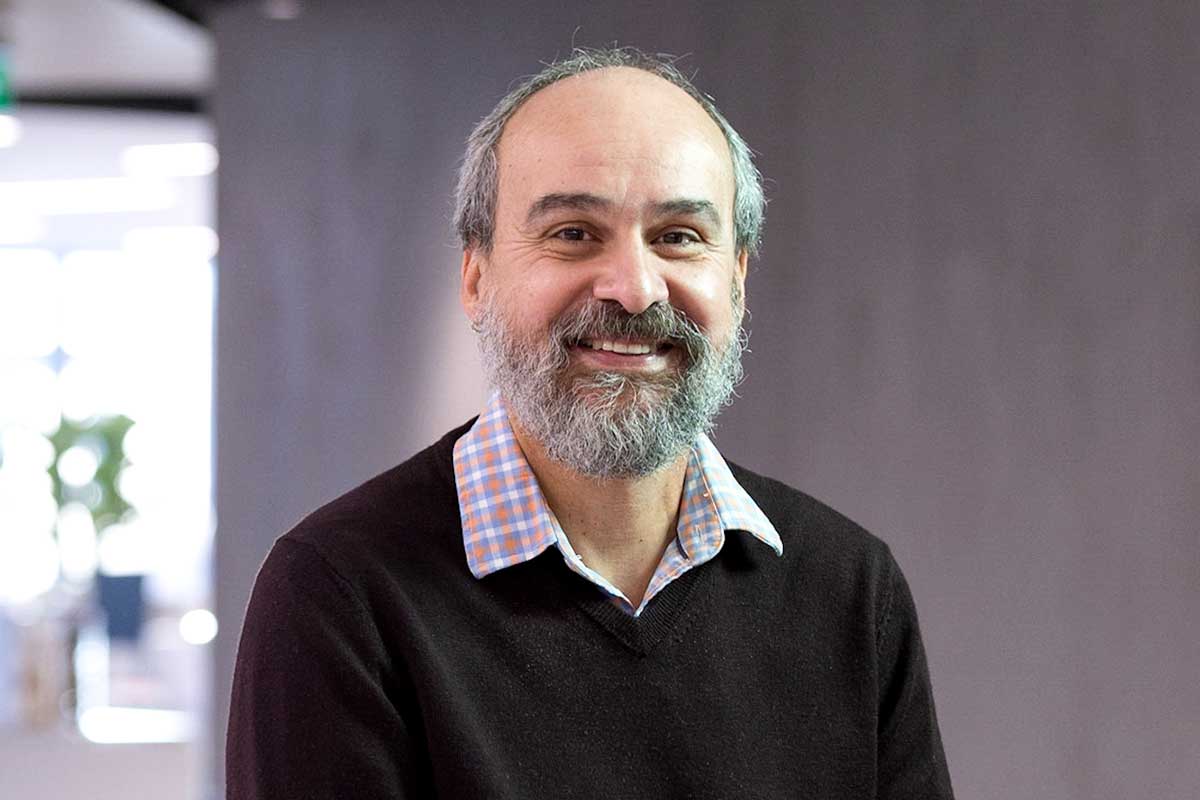
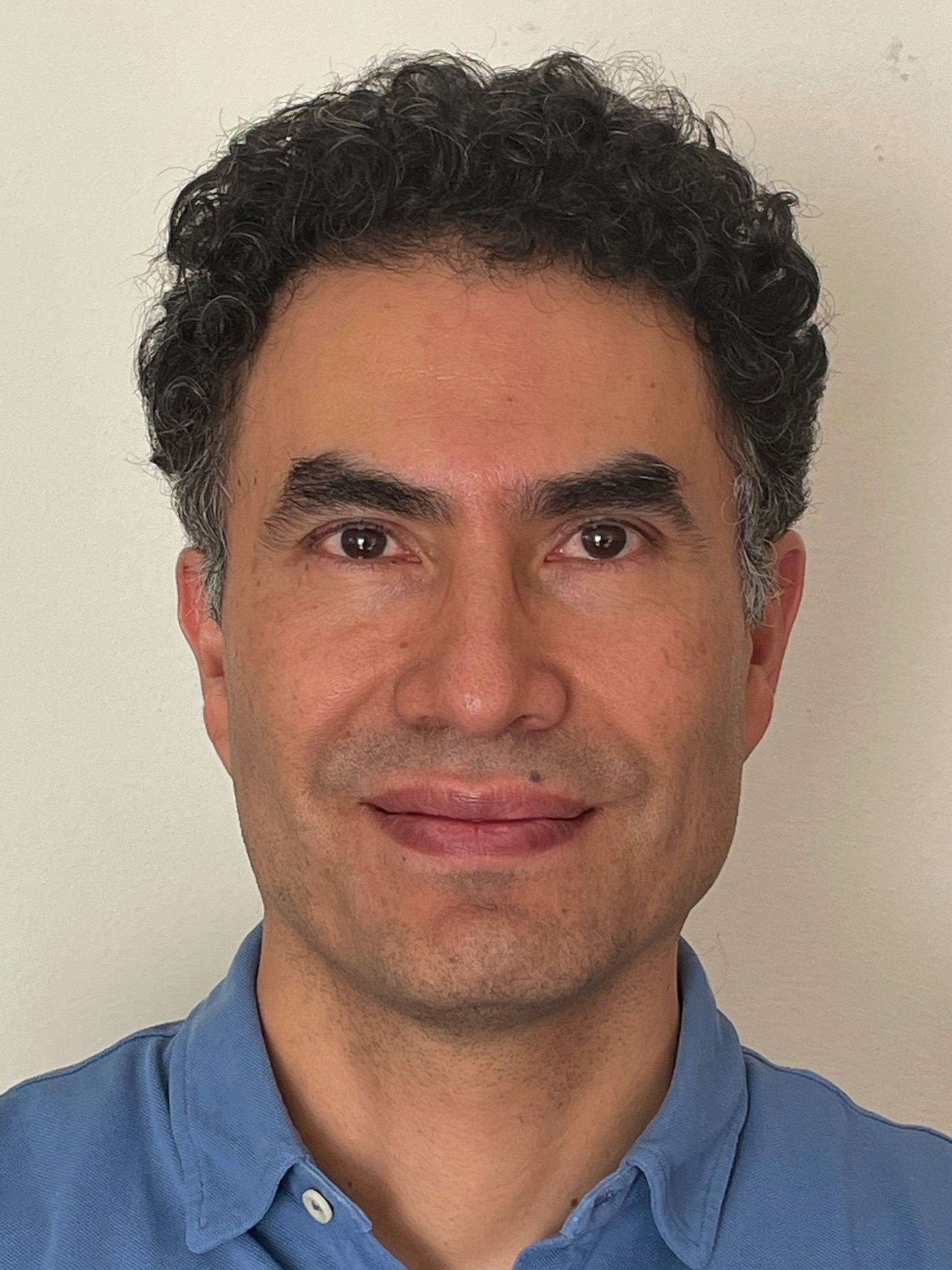
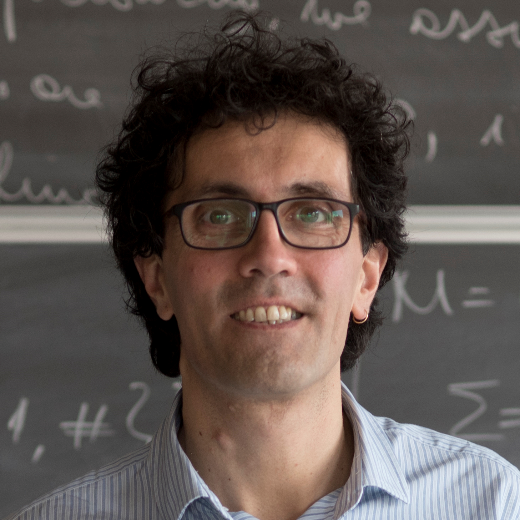
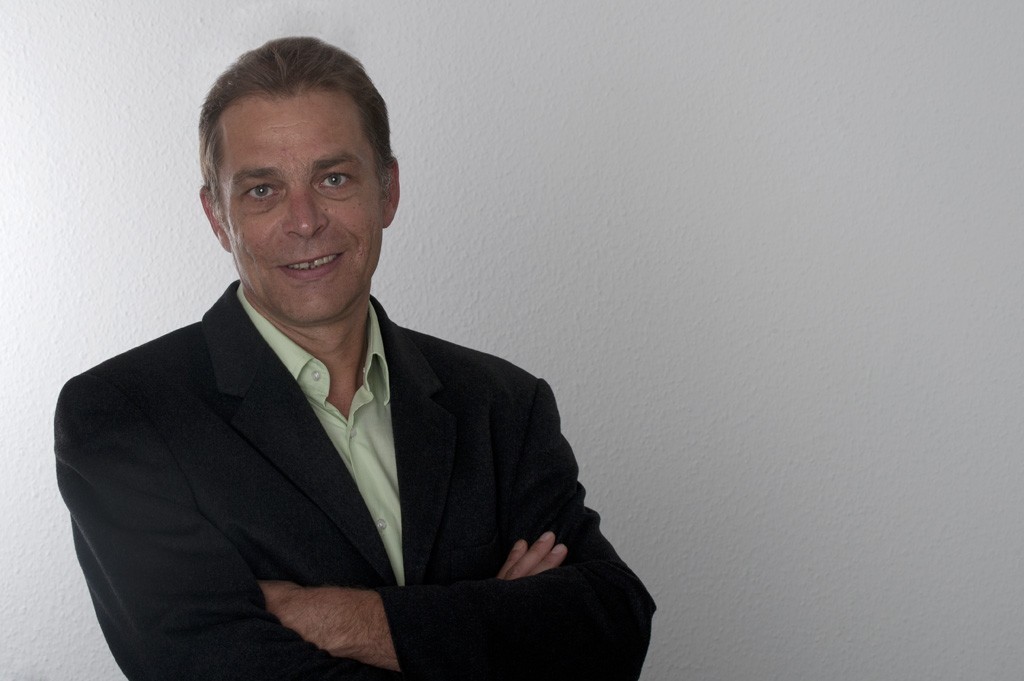
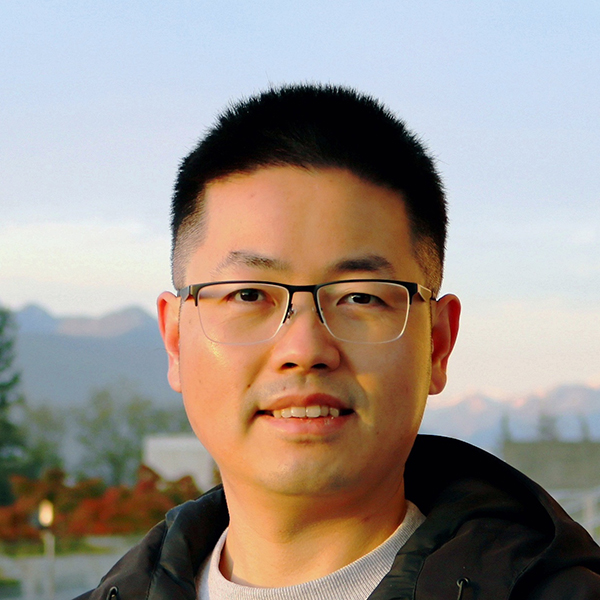
Prof. Dr. Wolfgang Nejdl is a Professor at the Institute for Data Science within the Faculty of Electrical Engineering and Computer Science at Leibniz University Hannover. He serves as Executive Director of the L3S Research Centre and Leibniz Forschungszentrum Inclusive Citizenship. Web Science Information Retrieval Artificial Intelligence Deep Learning His recent research focuses on AI applications in medicine , multimodal data fusion , and ethical AI systems . Projects include CAIMed (AI in Causal Medicine) and DAISEC (AI & Cybersecurity). His publications span conferences like AAMAS, WWW, and SIGIR. Notable awards include membership in the National Academy of Science and Engineering (acatech) . Former students hold positions at institutions like Stanford, TU Dresden, and ETH Zürich. Current projects involve climate resilience AI , federated learning for healthcare , and quantum-inspired data science .
John Z. Ayanian serves as the Alice Hamilton Distinguished University Professor of Medicine and Healthcare Policy at the University of Michigan, holding joint appointments as Professor of Internal Medicine in the Medical School, Professor of Health Management and Policy in the School of Public Health, and Professor of Public Policy in the Gerald R Ford School of Public Policy. As inaugural Director of the Institute for Healthcare Policy and Innovation (IHPI), he leads a consortium of 700 faculty members across 15 schools and maintains clinical practice as a general internist at Michigan Medicine. His academic foundation includes a Bachelor of Arts in history and political science from Duke University (1982), medical degree from Harvard Medical School (1987), and master's in public policy from Harvard Kennedy School (1987), followed by residency and fellowship at Brigham and Women’s Hospital and post-doctoral training in health services research at Harvard School of Public Health. Dr. Ayanian's research program investigates health equity, access to care, and quality of care with particular attention to social determinants including race/ethnicity, gender, socioeconomic status, and insurance coverage. His work critically examines Medicaid expansion impacts, Medicare Advantage disparities, and policy responses to health inequities, often utilizing large-scale claims databases and cross-institutional collaborations. Current projects include the federally-authorized evaluation of Michigan's Medicaid expansion program serving over 700,000 adults. Analysis of his 15 most recent publications (2025) reveals three dominant research thrusts: (1) Medicare Advantage vs Traditional Medicare comparisons across diverse clinical conditions, (2) Medicaid policy evaluation including unwinding impacts and expansion effects, and (3) innovative measurement of health equity through new indices and AI applications. His work consistently emphasizes methodological rigor in health services research while maintaining strong policy relevance. His scientific honors include: Election to the National Academy of Medicine Master status in the American College of Physicians John Eisenberg National Award for Career Achievement in Research Distinguished Investigator Award from AcademyHealth Election to Alpha Omega Alpha and Association of American Physicians Dr. Ayanian leads the federally-funded Healthy Michigan Plan evaluation team of 15 faculty members and serves as founding Editor-in-Chief of JAMA Health Forum, previously holding editorial positions at the New England Journal of Medicine. His research receives substantial federal support focused on health policy evaluation, with particular emphasis on vulnerable populations. He actively mentors students and junior faculty across multiple disciplines. As Director of IHPI, he fosters interdisciplinary collaboration across 15 schools at the University of Michigan. His leadership extends to center memberships in AI and Digital Health Innovation, Caswell Diabetes Institute, and Center for Global Health Equity, where he promotes data-driven solutions to health disparities through cross-campus partnerships and innovative research methodologies.
Lucio Baccaro is Director at the Max Planck Institute for the Study of Societies (MPIfG) and was Full Professor of Macrosociology at the University of Geneva, where he also served as Deputy Dean for Research (2016–2020). He has held academic positions at MIT, Case Western Reserve University, and visiting roles at the University of Turin and the University of Vienna. His primary affiliations are with MPIfG and the University of Geneva, both central to his research in political economy and sociology. Education: PhD in Management and Political Science, Massachusetts Institute of Technology (MIT), 1999 Doctorate in Labor Law and Industrial Relations, University of Pavia, 1997 Master of Business Administration, Stoa' (IRI-MIT joint venture), 1991 Laurea in Philosophy, summa cum laude, University "La Sapienza", Rome, 1989 Lucio Baccaro’s research focuses on comparative political economy, labor relations, global worker rights, and deliberative governance . His work integrates economic sociology and political sociology to analyze institutional change, social dialogue, and the impact of globalization on labor and welfare systems. He has led major comparative studies on employment models, pension reforms, and international labor standards. His scholarship emphasizes the interplay between institutions, ideas, and power in shaping economic governance. His recent publications reveal a consistent focus on institutional change, deliberative processes, labor market reforms, and global justice . Themes include path dependence in international organizations, the transformation of collective bargaining, and the role of expertise in democratic governance. His interdisciplinary approach bridges sociology, political science, and economics, with strong methodological rigor in comparative and qualitative analysis. Scientific Awards and Honors: Honorary Professor, University of Duisburg-Essen (2023) Professeur honoraire, University of Geneva (2020) International Geneva Award (2011) Outstanding Young Scholar Award, IRRA (2003) Founder's Prize, SASE (2001) Maurice F. Strong Career Development Chair, MIT (2006–2009) Multiple fellowships from SSRC, Harvard, MIT, and CUNY Alfiere del Lavoro, awarded by the President of Italy (1984) Advising and Grants: While specific student advisees are not listed, Baccaro has supervised research and mentored scholars through his roles at MPIfG and the University of Geneva. He has secured substantial research funding, including grants from the Swiss National Science Foundation (SNF) and the Swiss Network for International Studies (SNIS), supporting projects on post-Fordist growth models, employment policy, and deliberative governance. His leadership in co-principal investigator roles highlights his collaborative research approach and institutional influence. Labs and Research Teams: As Director at MPIfG, Baccaro leads a major research institute focused on the study of societal and economic institutions. He has been instrumental in shaping research agendas on political economy and governance, fostering interdisciplinary collaboration and international scholarly exchange.
Shoshana R. Shelton is a Professor at the RAND School of Public Policy and a Policy Researcher at the RAND Corporation. Her work centers on program evaluation, public health systems, emergency preparedness, and national health security, with significant contributions to pandemic response, violence prevention, and crisis decision-making. She has led major projects for federal agencies including the CDC, DHS, FEMA, and the U.S. Secret Service. Education: M.P.H., The Ohio State University B.A. in English, Denison University Her research focuses on strengthening public health infrastructure through performance measurement, logic modeling, and stakeholder engagement. She has developed tools such as tabletop exercises for continuity of operations in public health laboratories and led after-action reviews of the public health response to COVID-19. Her work emphasizes building resilience against biological threats, natural disasters, and targeted violence. Shelton's recent publications highlight trends in emergency alert systems, disaster resilience, criminal justice reform during pandemics, and equitable health security research investment. She advocates for evidence-based policies that balance bioterrorism preparedness with responses to natural disasters and climate-related emergencies. Scientific Awards: No awards listed in the provided text. She has advised or collaborated with numerous federal and state agencies, contributing to national health security through rigorous evaluation and policy analysis. Her grants and projects reflect sustained funding from DHS, CDC, and other federal bodies focused on improving public safety and health system readiness. She has also led initiatives on behavioral threat assessment in schools and wearable technology for law enforcement wellness. Labs and Teams: Previously led a four-year project on mass attacks and targeted violence for the U.S. Secret Service. Collaborated with the Association of Public Health Laboratories (APHL) on continuity of operations planning. Contributed to the Priority Criminal Justice Needs Initiative, fostering innovation across law enforcement, courts, and corrections.
Lynn Blewett is a Professor in the Division of Health Policy & Management at the University of Minnesota's School of Public Health. She serves as the Director of the State Health Access Data Assistance Center (SHADAC), a research and policy center funded by the Robert Wood Johnson Foundation that supports state efforts to monitor and evaluate programs to increase access and coverage. PhD in Health Services Research, Policy and Administration, School of Public Health, University of Minnesota MA in Public Affairs, Hubert H. Humphrey School of Public Affairs, University of Minnesota BA in Psychology, University of Wisconsin Dr. Blewett's research focuses on health care policy and access to care, with expertise in health disparities, Medicaid/CHIP, immigrant health, survey research, and international health systems. As an advocate for information access, she helped bring a Census Research Data Center to the University of Minnesota, which is the only RDC with a health services and policy focus. Her work bridges academic research with practical policy applications at the state level. Analysis of Dr. Blewett's publications reveals a consistent focus on health insurance coverage, access to care, and state-level health policy implementation. Her research spans methodological approaches including survey research, policy analysis, and data resource development. Recent work has increasingly addressed the impacts of the COVID-19 pandemic on healthcare access and material hardship, while maintaining her longstanding focus on underinsurance, Medicaid policy, and state health policy monitoring systems. Dr. Blewett directs SHADAC, which provides high-level access to federal surveys for state policymakers. Her work has been instrumental in developing state capacity to monitor health coverage and access. While specific awards aren't listed in the available information, her leadership of a major Robert Wood Johnson Foundation-funded center indicates significant recognition in her field. As Director of SHADAC, Dr. Blewett leads a team focused on supporting state efforts to monitor and evaluate health access and coverage programs. Her work involves collaborating with state policymakers, researchers, and advocates to translate data into actionable policy insights. The Census Research Data Center she helped establish at the University of Minnesota serves as a critical resource for health services and policy researchers requiring access to restricted federal data.
Suyash Gupta is a Tenure-Track Assistant Professor in the Department of Computer Science at the University of Oregon, where he leads the Distopia Laboratory and co-leads the Oregon Networking Research Group. His expertise lies in distributed systems, databases, blockchain technologies, fault tolerance, and federated learning. Education: Ph.D. in Computer Science, University of California, Davis (2022) M.S. in Computer Science, Purdue University (2017) M.S. (Research) in Computer Science, Indian Institute of Technology Madras Research Focus: Dr. Gupta’s research is centered on designing efficient distributed, decentralized, and blockchain systems that are resilient to arbitrary failures and can scale across wide-area networks. His work spans consensus protocols, Byzantine fault tolerance, secure transaction processing, and federated learning systems. He has contributed foundational work in permissioned blockchain architectures and fault-tolerant distributed databases. Scientific Contributions & Awards: Best Paper Award, EuroSys 2023 Distinguished Reviewer Award, SIGMOD 2025 Best Graduate Researcher Award, UC Davis Author of Fault-Tolerant Distributed Transactions on Blockchain , Morgan & Claypool Teaching & Mentorship: He currently teaches advanced courses like CS 607: Hot Topics in Systems and CS 451/551: Database Processing . He actively mentors a diverse group of PhD and MS students, including Nihal Balivada, Shistata Subedi, Neil Sharma, and others from institutions like UC Davis and BITS Pilani. Labs & Teams: Dr. Gupta leads the Distopia Laboratory at UO and co-leads the Oregon Networking Research Group , both focused on cutting-edge research in distributed systems and secure networked architectures.
Hui Wang is a Professor and Associate Chair for PhD Studies and Research in the Department of Computer Science at the Charles V. Schaefer, Jr. School of Engineering and Science, Stevens Institute of Technology. She also serves as the Director of the Data Science PhD Program and holds leadership roles in multiple institutional committees, including the Doctoral Committee, Faculty Mentoring Program, and Strategic Planning initiatives at both departmental and university levels. Research Interests: Dr. Wang's research focuses on building trustworthy machine learning systems by integrating privacy, fairness, and accountability . Her work aims to fortify ML models against privacy attacks, eliminate algorithmic biases, and ensure auditable decision-making. She explores intersections between machine learning, data mining, and cybersecurity, with applications across domains requiring ethical and secure AI deployment. Recent Research Trends: Her recent publications and funded projects reflect a strong emphasis on privacy-preserving machine learning , fairness-aware systems , and verifiable computing . Themes include securing graph embeddings, federated learning with fairness guarantees, and audit mechanisms for black-box models. Supported by NSF, Cisco, and Google, her work bridges theoretical rigor with practical system design. Scientific Awards: NSF CAREER Award, 2014 Advising and Grants: Dr. Wang actively mentors PhD students and hosts visiting scholars. She leads multiple NSF-funded projects, including Securing Network Embedding against Privacy Attacks and Privacy for All: Ensuring Fair Privacy Protection in Machine Learning . Her research is supported by substantial grants from the National Science Foundation, Cisco, and Google, reflecting her leadership in trustworthy AI. Labs and Teams: While not explicitly named, Dr. Wang leads a research group focused on trustworthy machine learning, advising students and collaborating with industry partners. She is deeply integrated into the Data Science PhD program and CS faculty leadership, shaping research and academic strategy at Stevens.
Dr. Patrick Shane Crawford serves as Assistant Professor in the Department of Civil, Construction and Environmental Engineering at the University of Alabama's College of Engineering. Affiliated with the Center for Sustainable Infrastructure and Alabama Water Institute, his research focuses on enhancing community resilience to tornadoes, floods, and hurricanes through interdisciplinary engineering approaches integrating social science and policy perspectives. His educational background includes: B.S. in Civil Engineering (2012, University of Alabama) M.S. in Civil Engineering (2014, University of Alabama) Ph.D. in Civil Engineering (2018, University of Alabama) Dr. Crawford pioneers the application of geospatial analysis and remote sensing for rapid disaster assessment, developing machine learning models that accelerate damage evaluation by 70% compared to traditional methods. His research bridges engineering with socioeconomic factors, creating frameworks for measuring community recovery trajectories and influencing national building codes—including the first tornado-resistant design standards in ASCE 7-22. Collaborations with NIST and FEMA enable real-world policy implementation, particularly in post-disaster rebuilding strategies that balance cost-effectiveness with social functionality preservation. Analysis of his 2022-2025 publications reveals consistent innovation in longitudinal disaster reconnaissance , with 60% of recent work focusing on tornado events using deep learning for damage classification. Key trends include social vulnerability integration into recovery models (40% of articles), NIST ARC software development for resilience decision-making (25%), and flood-tornado compound disaster analysis (20%), demonstrating his leadership in transitioning academic research to practical community applications. Active in federal partnerships, Dr. Crawford's 2025 feature Confident but Exposed: How Prepared Are U.S. Homeowners for Extreme Weather? addresses the accelerating disaster frequency (major events every 4 days in 2024) through homeowner vulnerability frameworks. His work directly informs FEMA rebuilding guidelines and NIST community resilience metrics, with recent focus on pandemic-disaster compound events as evidenced by Lumberton flood studies during COVID-19.
Alfred Taudes is a Full Professor at the Department of Information Systems and Operations, Institute for Production Management, Vienna University of Economics and Business (WU Vienna). He holds a doctoral degree and a Habilitation from WU Vienna in Business Administration and Management Information Systems, and a Magister degree from Vienna University. He has held assistant professorships at WU and visiting professorships at Augsburg, Münster, Essen, and Tsukuba University, Japan. He joined WU permanently in 1993 and served as head of the Department of Information Systems and Operations from 2010 to 2016. His research spans Operations and Supply Chain Management , Marketing Engineering , Knowledge Management , and the impact of Big Data and Blockchain on production systems. Using Complexity Science and Cryptoeconomics , he investigates digital production, integrated value chains, and market designs. He teaches undergraduate and graduate courses including Operations Strategy, Data Science, and IT seminars in WU’s International Supply Chain Master program, and has also taught at Japanese universities. His recent publications focus on blockchain privacy (e.g., CoinJoin analysis), CBDCs, MiCAR regulation, decentralized federated learning, and digital custody, reflecting a strong trend toward cryptoeconomics and blockchain-based systems in operations and finance. These works appear in top journals and conferences in information systems, security, and operations research. Cooperation Officer of the Year 2013/14 Distinguished Paper Award WI 2009 VHB Best Paper Award Nomination VHB Best Paper Award Dr. Wolfgang Houska - Recognition Award Alfred Taudes has coordinated major research projects such as the WWTF-project “Integrated Demand and Supply Chain Management” and the Special Research Area Adaptive Models in Economics and Management Science. He currently leads the research group on Cryptoeconomics at WU and chairs the scientific board of the Austrian Internet Offensive . His leadership extends to project management in initiatives like the Austrian Blockchain Center and research on decentralized finance and digital assets. He is actively involved in academic service, including organizing conferences like DEXA 2022, serving on editorial boards, and advising on research policy. His lab and research group focus on blockchain applications, digital transformation in operations, and the societal implications of big data.
Mario Nascimento is Professor of the Practice and inaugural Director of Pacific Northwest Research at Northeastern University’s Khoury College of Computer Sciences , based at the Vancouver campus in Canada. Previously he served as Professor (and six-year Department Chair) in the Department of Computing Science at the University of Alberta, held research roles with the Brazilian Agency for Agricultural Research, and was adjunct faculty at the Institute of Computing of the University of Campinas. He has also been a visiting professor at the National University of Singapore, Aalborg University (Denmark), LMU (Germany), and the Federal University of Ceará (Brazil). Research Interests: Mario’s core expertise lies in spatiotemporal data management , a field that intersects database systems, geographic information science, and data science. His work addresses challenges in indexing, querying, and mining large-scale spatiotemporal datasets, with applications ranging from urban mobility to environmental monitoring. Over the years his research has contributed to advancing both theoretical foundations and practical systems for handling dynamic spatial data. Editorial & Service Leadership: General Co-Chair, ACM SIGSPATIAL 2024 Program Committee Co-Chair, ACM SIGSPATIAL 2022–2023 Editor-in-Chief, ACM SIGMOD Record (2005–2007) Information Director, ACM SIGMOD (2002–2005) Editorial Board Member, VLDB Journal (2011–2017) Current Editorial Board Member, GeoInformatica Chair, SSTD Endowment Board of Directors
Marco Morales Aguirre is a Teaching Associate Professor in the Department of Computer Science at the University of Illinois Urbana-Champaign and an Associate Professor at Instituto Tecnológico Autónomo de México (ITAM). He directs research at the Parasol Laboratory and has held significant leadership roles including founding member and former president of the Mexican Federation of Robotics (FMR). His academic journey spans both US and Mexican institutions, reflecting his international impact in the robotics community. Dr. Morales received his educational foundation from prestigious institutions: a Ph.D. in Computer Science from Texas A&M University, an M.S. in Electrical Engineering, and a B.S. in Computer Engineering from Universidad Nacional Autónoma de México (UNAM). His academic path has included positions as Visiting Professor at Texas A&M University and Lecturer at UNAM and the System of Technological Universities in México. His research focuses on motion planning algorithms for robotics, with particular expertise in multi-robot systems where he's pioneered frameworks like Adaptive Robot Coordination (ARC). His work bridges theoretical algorithm development with practical applications in industrial settings, computational biology, and extended reality interfaces. He has made significant contributions to topological guidance methods that improve planning efficiency in complex environments with narrow passages. Analysis of his recent publications reveals a strong trajectory toward more complex multi-robot coordination problems, with increasing emphasis on integrating task and motion planning. His research group has developed innovative approaches that scale to larger robot teams while maintaining computational efficiency, particularly in congested environments where traditional methods struggle. Member of the National System of Researchers of Mexico (level II) Founding member and former president of the Mexican Federation of Robotics (FMR) Member of the Mexican Academy of Computing Editor of multiple Algorithmic Foundations of Robotics (WAFR) proceedings Dr. Morales actively mentors a diverse group of graduate students who frequently appear as co-authors on his publications. His Parasol Laboratory conducts research funded through various academic and industrial collaborations, including significant projects with manufacturing partners exploring collaborative assembly systems. The laboratory has developed several notable frameworks including ARC, K-ARC, and HAS-RRT that have advanced the state of the art in multi-robot motion planning.
Diego Calvanese is a Full Professor in Computer Engineering at the Faculty of Engineering of the Free University of Bozen-Bolzano, Italy. He serves as Spokesperson of the Institute of Computer Science and Artificial Intelligence and Director of the Smart Data Factory technology transfer lab at NOI Techpark. As Coordinator of the Intelligent Integration and Access to Data (In2Data) research group, part of the Research Centre for Knowledge and Data (KRDB), he leads significant research initiatives in knowledge representation and data management. Calvanese's research focuses on virtual knowledge graphs for data access and integration, ontology-based data access, description logics, semantic web technologies, graph data management, and verification of data-aware processes. His work bridges theoretical foundations with practical applications through the Ontop framework, which enables SPARQL query answering over OWL 2 QL ontologies connected to external data sources. His research has substantial practical impact, powering the South Tyrol Open Data Hub Knowledge Graph and supporting numerous European and national research projects. With more than 400 refereed publications and over 39,000 citations (h-index 80), Calvanese's recent work demonstrates continued leadership in virtual knowledge graphs, ontology-based data federation, explainable AI through knowledge representation, and integration of complex data types including 3D city models and raster data. His publications show a clear trajectory from theoretical foundations toward increasingly practical and applied research addressing real-world data integration challenges across multiple domains. ACM Fellow (2019) EurAI Fellow (2015) AAIA Fellow Program Chair of PODS 2015 and KR 2020 General Chair of ESSLLI 2016 Calvanese has secured significant research funding through numerous competitive projects including EU H2020 INFRAEOS Project (INODE), Italian PRIN Project (HOPE), FESR Project (IDEE), and EU FP7 IP Project (Optique), totaling close to 6.4M Euro. As an originator and co-founder of Ontopic, the first spin-off of the Free University of Bozen-Bolzano, he has successfully translated research into commercial applications. He serves as Associate Editor of Artificial Intelligence (AIJ) and has participated in over 200 program committee roles for international conferences. As Director of the Smart Data Factory technology transfer lab and coordinator of the In2Data research group, Calvanese bridges academic research with industry applications, focusing on practical implementations of knowledge graph technologies. His work with the KRDB Research Center has established Bozen-Bolzano as a significant hub for knowledge representation and data management research in Europe.
Prof. Dr. Axel Mecklinger is a leading cognitive neuroscientist at Saarland University , specializing in the neurocognition of memory and language through spatiotemporal brain imaging (EEG/MEG/fMRI). His career spans over three decades, with significant contributions to understanding visual working memory , associative recognition , and memory development . Key research areas: Memory binding, ERP subsequent memory effects, novelty detection, and cognitive aging Major grants: DFG Research Groups, Collaborative Research Centers, and international collaborations with the Chinese Academy of Sciences Scientific leadership: Organized conferences, edited journals, and served as speaker for research training groups His recent work explores unitization in memory formation , cross-cultural differences in memory processing , and theta neurofeedback interventions . Awards include the Early Career Award of the German Psychophysiology Society (1992) and the European Federation of Psychophysiology Societies' Federation Prize (1994). Current projects investigate the neural mechanisms of semantic surprisal and memory plasticity in aging populations.
Prof. Dr. Matthias Weidlich is a faculty member at Humboldt University of Berlin within the Institute of Computer Science under the Faculty of Mathematics and Natural Sciences . His research focuses on Process Mining , Complex Event Processing , and Data Privacy with applications in Business Process Management and Scientific Workflows . Research Interests: Business Process Management and Process Mining Complex Event Processing and Stream Data Analysis Data Privacy and Security in Process Systems Scientific Workflow Systems and User Behavior Heterogeneous Network Embeddings Algorithm Design and Optimization Recent Publications (2023-2025) demonstrate expertise in: Efficient stream processing techniques Privacy-preserving process mining frameworks Scientific workflow analysis tools Graph neural network applications Multi-modal data integration Adaptive querying systems Contact: Office: Unter den Linden 6, 10099 Berlin Phone: 030 2093-41277 Email: matthias.weidlich@hu-berlin.de Web: hu.berlin/data
Lingyang Chu is an Assistant Professor at McMaster University's Department of Computing and Software, previously serving as a postdoc fellow at Simon Fraser University under Jian Pei. He earned his Ph.D. in Computer Science from the University of Chinese Academy of Sciences. Research interests span data mining , machine learning , and statistics , with focus on trustworthy AI (privacy, interpretability, security, robustness, fairness), federated learning , and graph-based machine learning . His work includes scalable data mining on large graphs and deploying systems like personalized federated learning on Huawei Cloud's Harmony OS devices. Publications emphasize adversarial attacks, medical AI, graph robustness, and federated learning frameworks. His advising record includes 28 mentees across Ph.D., M.Sc., and internship levels. Scientific achievements include Best paper candidate at ICME'13 Best demo award at ICMR'13 Academic service roles include: Program Committee: NeurIPS, SIGKDD, CVPR, ICML, and 12+ other top-tier conferences Journal Reviewer: IEEE TKDE, ACM Transactions on KDD, and 8+ journals Editorial Board: ACM Transactions on KDD (Associate Editor) Grant Reviewer: Hong Kong RGC Labs/teams: Maintained open-source ALID algorithm (VLDB'15) for dominant cluster detection, demonstrating technical leadership in scalable graph mining