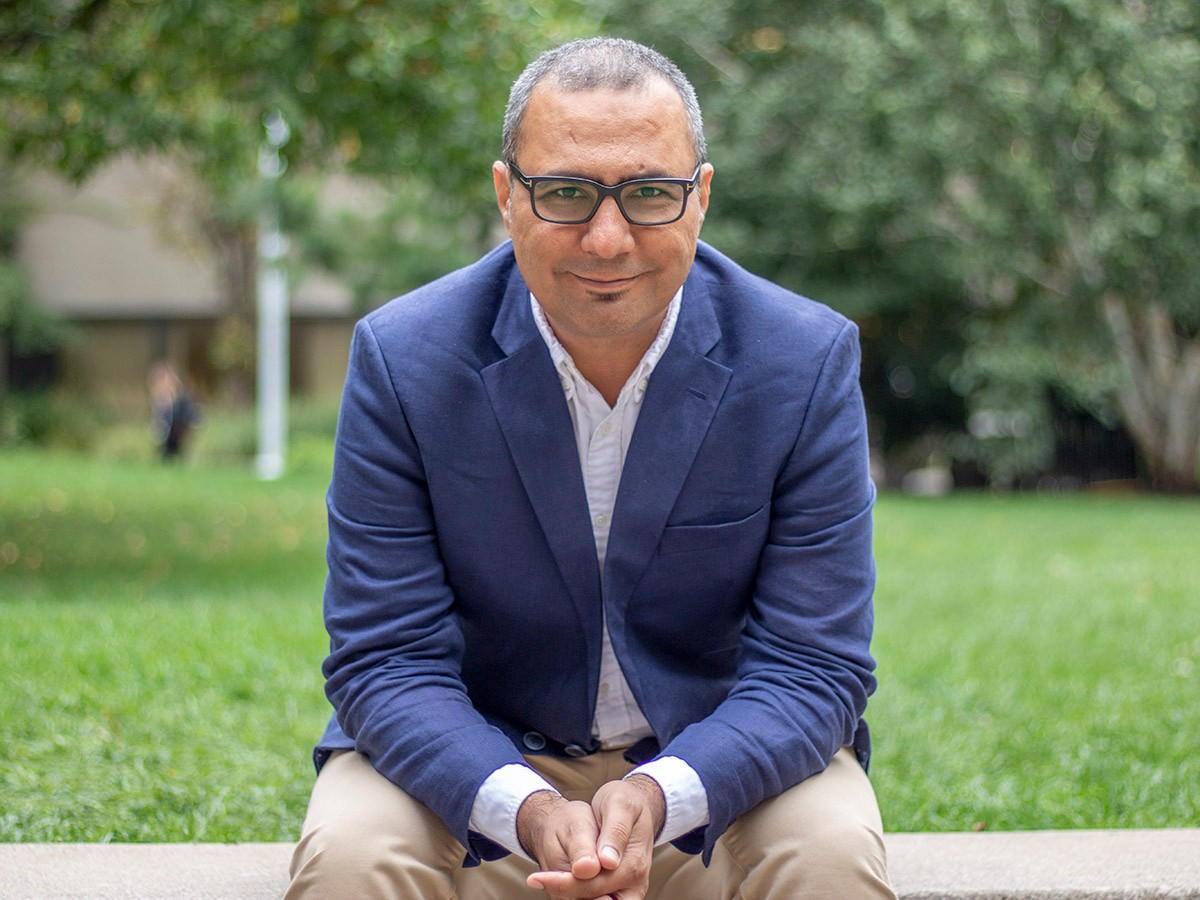
Chi Liu is a Professor of Radiology & Biomedical Imaging at Yale School of Medicine . He serves as Associate Director of Biomedical Imaging Technology at the Yale Biomedical Imaging Institute and Director for Research Faculty Affairs in the Radiology & Biomedical Imaging department. Education : PhD from Johns Hopkins University (2008) Postdoctoral Training : University of Washington (2010) Certification : American Board of Science in Nuclear Medicine (Nuclear Medicine Physics and Instrumentation) His research focuses on quantitative cardiac and oncological PET/CT and SPECT/CT imaging , emphasizing deep learning algorithms , reconstruction algorithms , data correction , and dynamic imaging . Key clinical applications include early detection of chemotherapy-induced cardiotoxicity , multimodality imaging of heart failure , and motion variability elimination in therapy response assessment . The 15 most recent publications reveal a strong emphasis on deep learning techniques for low-dose imaging , motion correction , and cross-tracer generalizability in PET/SPECT systems. These works span applications in cardiac imaging , neuroscience , oncology , and theranostics . Scientific Award : Bruce Hasegawa Young Investigator Medical Imaging Science Award (2012) Contact: chi.liu@yale.edu | ORCID 0000-0002-7007-1037
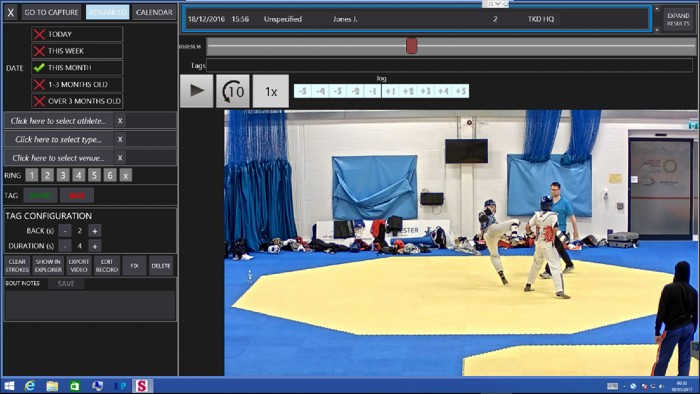
Dr. Simon Goodwill is the Head of Research in Sport and Physical Activity and Head of the Sports Engineering Research Group (SERG) at Sheffield Hallam University's Academy of Sport and Physical Activity. He holds a PhD focused on tennis ball-racket impact modeling and has collaborated with the International Tennis Federation. His expertise includes novel photogrammetry techniques, software development for athlete performance analysis, and camera calibration systems like check2d/check3d. He led projects supporting Team GB athletes in multiple Olympics, contributing to 42 medals at Rio 2016. Currently, he oversees the Advanced Wellbeing Research Centre (AWRC), applying sports performance methodologies to health research. His work integrates machine vision, data acquisition hardware, and elite athlete monitoring systems, with notable contributions to the EIS Innovation Partnership and sports tech exhibits like Le Tour Yorkshire's bike simulator. Education & Research: Simon’s PhD (modeling tennis impacts) and extensive software engineering background underpin his research. His projects span biomechanics, sports engineering, and health tech, with collaborations involving UK Sport, FIFA, and Adidas. He has developed systems used by athletes in London 2012, Rio 2016, and Glasgow 2014 Commonwealth Games. Research Themes: His work emphasizes performance analysis through photogrammetry, real-time athlete tracking, and health-related applications of sports tech. Key projects include court pace rating for the ITF, iBoxer2 boxing data tools, and the AWRC’s health innovations. Grants & Impact: The AWRC, funded by UK DoH and ESIF (£15.7M), reflects his role in translating elite athlete tech to public health. His work is cited in UK government reports on Olympic legacy and has received media attention, including BBC features on GB Boxing’s iBoxer software. Advising & Leadership: Supervised 17 PhD students on topics like machine learning in taekwondo, swimming analysis, and tennis racket dynamics. Served as External/External advisor and led 10+ Olympic cycle projects. Active in the International Sports Engineering Association as Director.
Mariana Resener is an Assistant Professor in the School of Sustainable Energy Engineering at Simon Fraser University (SFU). She holds a Ph.D. in Electrical Engineering (2016) from the Federal University of Rio Grande do Sul, Brazil, alongside M.Sc. (2011) and B.Sc. (2008) degrees in the same field. Her research focuses on optimizing power systems, particularly in distributed energy resources, energy storage, and volt/var control. She teaches courses like Power Electronics and Power Systems Analysis & Design. Her work emphasizes sustainable development in grid planning and energy infrastructure. As a Senior Member of IEEE and an Associate Editor for the Energy Systems Journal (Springer), she contributes to advancing smart grid technologies and renewable integration. Her research spans metaheuristic optimization, stochastic modeling, and grid resilience strategies for distributed systems. Recent projects include hybrid renewable energy systems for substations, EV charging station optimization, and fault analysis in unbalanced grids. She collaborates with industry on practical solutions for grid modernization and reliability enhancement.
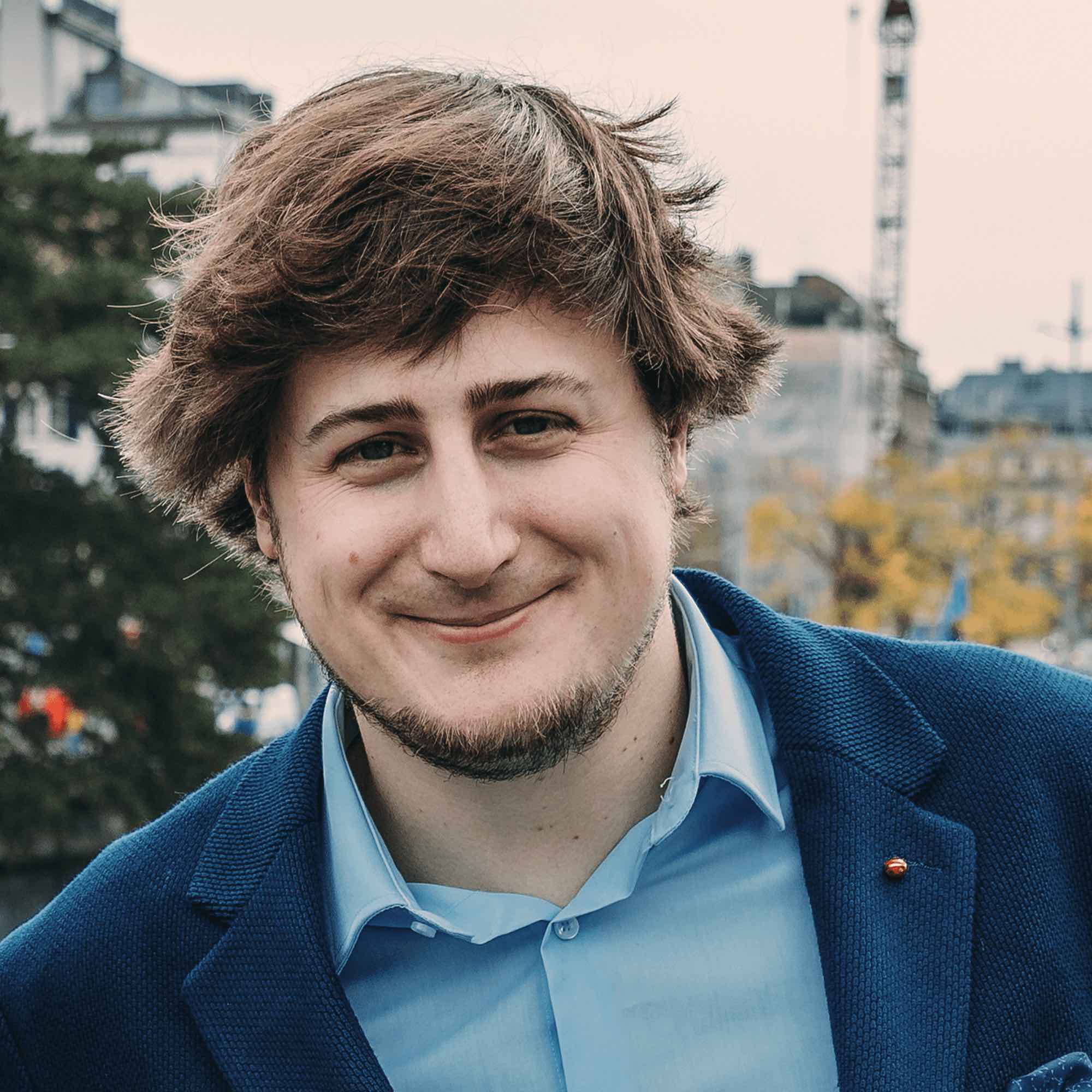
Gioele Zardini is the Rudge (1948) and Nancy Allen Assistant Professor at MIT's Department of Civil and Environmental Engineering (CEE), with affiliations to the Laboratory for Information and Decision Systems (LIDS) and the Institute for Data, Systems, and Society (IDSS). He holds a PhD from ETH Zurich and previously worked as a postdoctoral scholar at Stanford University. His research focuses on co-design of complex systems, autonomous systems, and game-theoretic modeling of transportation networks. Education: BSc and MSc in Mechanical Engineering and Robotics from ETH Zurich (2017–2019), PhD in 2023. He has held visiting roles at nuTonomy Singapore, Stanford, and MIT. Research interests include co-design methodologies, autonomous vehicle systems, compositionality in engineering, and strategic interactions in mobility networks. Recent work emphasizes scalable fleet coordination, safety-critical robotics, and user-centric transportation solutions. Notable awards include the 2024 ETH Doctoral Dissertation Award (Silver Medal), Best Paper at ITSC 2021, and federal grants for enhancing urban transit equity. He leads the Zardini Lab, fostering interdisciplinary collaboration in systems engineering and autonomy. Grants and advising: Received federal grants for transit accessibility projects. His work on Autonomy Talks has produced over 180 recorded lectures, promoting knowledge exchange in autonomous systems. Labs/Teams: Principal Investigator at LIDS, affiliate at IDSS, and founder of the Zardini Lab, focusing on systems co-design, mobility innovation, and game-theoretic frameworks.
Bilal Farooq is an Associate Professor and Program Director for the Master of Engineering in Interdisciplinary Engineering (MEIE) at Toronto Metropolitan University, holding the Canada Research Chair in Disruptive Transportation Technologies and Services within the Department of Civil Engineering. His educational background includes a PhD from the University of Toronto (2011), MASc from Lahore University of Management Sciences (2004), and BSc from the University of Engineering and Technology (2001). Dr. Farooq's research pioneers disruptive transportation solutions through cyber-physical systems, AI/machine learning applications, behavioral modeling, and optimization techniques. His work specifically targets on-demand multimodal systems, sustainable urban transportation, urban air mobility, automated vehicles, and extended reality applications, addressing critical urban mobility challenges with human-centered approaches. Analysis of his recent publications reveals a strong trend toward quantum-enhanced computational methods, privacy-preserving federated learning frameworks, and sustainability-focused decarbonization strategies across transportation domains, with increasing emphasis on human factors and real-world implementation. Notable scientific awards include: Ontario Early Researcher Award (2018) Canada Research Chair (2017) MassMotion Academic Pedestrian Modelling Project of the Year (2016) Québec Early Researcher Award (2014) Dr. Farooq actively supervises graduate students and secures significant research funding through his Canada Research Chair position and Early Researcher Awards. He directs the Laboratory of Innovations in Transportation (LiTrans), which develops interdisciplinary solutions integrating mathematics, engineering, computer science, and economics to address emerging transportation challenges. LiTrans focuses on disruptive transportation technologies, complete streets design, cyber-physical systems, pedestrian dynamics, resilience, and climate change impacts, collaborating with industry and government partners to translate research into practical urban mobility innovations for smart cities worldwide.
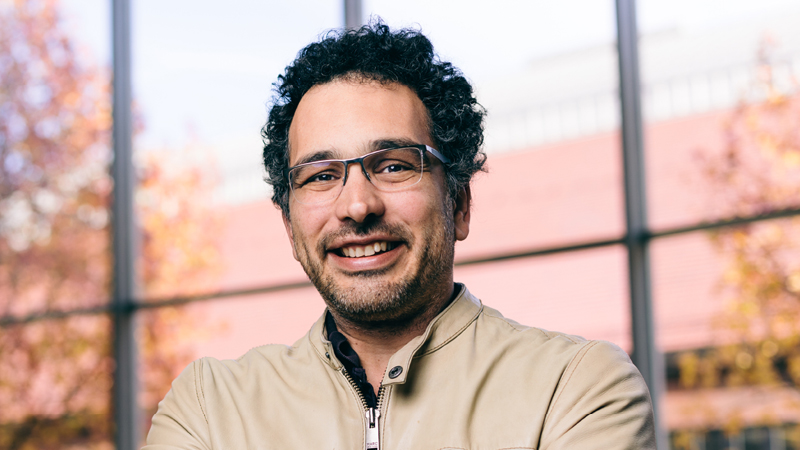
Bruno Felisberto Martins Ribeiro is an Associate Professor of Computer Science at Purdue University, joining the department in Fall 2015. His research focuses on endowing machine learning algorithms with robust invariant representations for relational and temporal data, emphasizing causal and associational tasks. Key research areas include Networking and Operating Systems, Artificial Intelligence, Machine Learning, and Natural Language Processing. He holds a Ph.D. in Computer Science from the University of Massachusetts Amherst (2010). Education: Ph.D., Computer Science, University of Massachusetts Amherst, 2010 Research Interests: Explores invariances in mathematics and machine learning to improve model robustness. Key topics include graph and tensor invariances, causal relationships, adversarial robustness, and applications in recommendation systems, robotics, and drug discovery. His lab’s work has advanced counterfactual task frameworks and causal reasoning in machine learning. Recent Contributions: Recent publications address zero-shot generalization in graph neural networks, causal discovery methods, and defenses against adversarial attacks. His work spans conferences like ICML, NeurIPS, and SIGCOMM. Awards: Best Paper Award at ACM CODASPY 2021 Best Paper Award at SIGMETRICS 2016 Best Paper Award at IEEE NetSciCom 2014 Advising & Students: Supervises current PhD students Beatrice Bevilacqua, Jincheng Zhou, and Yucheng Zhang, along with MSc student Ipsit Mantri. Notable former students include S Chandra Mouli (Meta), Yangze Zhou (Spotify), and Jianfei Gao (Vector Institute). Labs & Teams: Leads research in invariant representations and causal ML, collaborating with institutions like Stanford during his sabbatical. His work bridges theory and practice, impacting areas like network analysis and AI-driven healthcare.
Guglielmo Scovazzi is a Professor at Duke University with appointments across multiple departments including the Department of Civil and Environmental Engineering, the Thomas Lord Department of Mechanical Engineering and Materials Science, and as Professor of Mathematics. His interdisciplinary research bridges computational mechanics, scientific computing, and engineering applications. Dr. Scovazzi earned his B.S/M.S. in aerospace engineering (summa cum laude) from Politecnico di Torino (Italy), followed by an M.S. and Ph.D. in mechanical engineering from Stanford University. Prior to joining Duke, he was a Senior Member of the Technical Staff at Sandia National Laboratories' Computer Science Research Institute. His research focuses on developing advanced numerical methods for computational mechanics, particularly finite element methods for fluid and solid mechanics. Key areas include multiphase porous media flows, computational methods for materials under extreme conditions, turbulent flow computations, and instability phenomena. His work emphasizes creating accurate computational approaches that reduce design/analysis costs for complex engineering problems involving fluid-structure interactions and transient phenomena in complex geometries. Dr. Scovazzi's most significant recent contribution is the development of the Shifted Boundary Method, an innovative computational framework that enables efficient simulations on complex geometries without requiring boundary-fitted meshes. This method has found applications in geomechanics, energy systems, and resilient infrastructure design. Kavli Fellow, National Academy of Sciences & Kavli Foundation (2018) Presidential Early Career Award for Scientists and Engineers (PECASE), White House (2017) Early Career Award, U.S. Department of Energy, Advanced Scientific Computing Research Program (2014) Dr. Scovazzi teaches multiple courses in computational mechanics including Nonlinear Finite Element Analysis and Introduction to the Finite Element Method. His research has been supported by substantial federal funding, and he actively collaborates across disciplines to address challenging problems in energy, environment, and infrastructure resilience through advanced computational methods.
Ameet Talwalkar is an Associate Professor in the Machine Learning Department at Carnegie Mellon University and Chief Scientist at Datadog. He holds a PhD from the Courant Institute at NYU (2010) where he received the Janet Fabri Prize for Best Thesis. His professional achievements include co-founding Determined AI (acquired by HPE), creating MLlib in Apache Spark, co-authoring the textbook 'Foundations of Machine Learning,' and spearheading the MLSys conference. Talwalkar's research focuses on fundamental challenges in machine learning systems, including distributed ML, federated learning, neural architecture search, and human-AI interaction. His work bridges theoretical foundations with practical applications across domains like computational biology, PDE solving, and code generation. Current interests include AI for science, specialized model development, and agent-based systems. His publications demonstrate strong focus on ML systems optimization, foundation model evaluation, and interpretable AI. Recent works investigate specialized foundation models, PDE-solving frameworks, code generation tools, and human-AI interaction paradigms. The research consistently targets efficiency, scalability, and practical deployment challenges. Best Paper Award at EAAMO 2023 Best Student Paper at NYAS ML Symposium 2009 Runner-up for Best Real-world Application at Socal ML Symposium 2017 Janet Fabri Prize for Best PhD Thesis (2010) Talwalkar leads the CMU MLSys Lab focused on scalable ML systems and has served as Board President for the MLSys conference series. His educational contributions include developing courses like 'Machine Learning with Large Datasets' and creating the LEAF benchmark for federated learning and NAS-Bench-360 for neural architecture search.
Subir Biswas is a Professor in the Department of Electrical and Computer Engineering (ECE) at Michigan State University (MSU), part of the College of Engineering. His research focuses on wireless networking, low-power protocols, vehicular networks, and health monitoring systems, conducted through the NeEWS laboratory. He holds a Ph.D. from the University of Cambridge and degrees from Jadavpur University. Education: Ph.D., Computer Engineering, University of Cambridge (1994) M.S., Electrical Engineering, Jadavpur University (1989) B.S., Electrical Engineering, Jadavpur University (1987) Professional Experience: Professor, MSU ECE (2011–present) Associate Professor, MSU ECE (2003–2010) Research interests include traffic analysis firewalls, pricing calculus for social wireless networks, low-energy green networking, and ultrasound-based sensor systems . He leads the NeEWS lab, exploring embedded systems and network middleware. His work spans IoT, cybersecurity, and biomedical applications like wearable sensors for autism monitoring and hydration tracking. Publications emphasize innovative protocols (e.g., pulse position coding) and machine learning for network optimization. Collaborations include NSF-funded projects and industry partnerships (e.g., Tellium Optical Systems).
Mark P. Kritzman is a Senior Lecturer in Finance at the MIT Sloan School of Management. He concurrently serves as President & CEO of Windham Capital Management LLC and Senior Partner at State Street Associates. His roles include board memberships at the Institute for Quantitative Research in Finance, Investment Fund for Foundations, and editorial boards of journals like the Journal of Investment Management and Financial Analysts Journal. Education: MBA from New York University and Chartered Financial Analyst (CFA) designation. His research focuses on investing strategies , risk management , and predictive analytics , with recent work addressing federal spending's impact on inflation, bubble detection, and NBA draft prospect evaluation. He has authored six books, including Puzzles of Finance and The Portable Financial Analyst . Key publications from 2023–2025 explore themes like transparent predictive modeling, volatility forecasting, and algorithmic alternatives to neural networks. His work bridges academia and industry, emphasizing practical applications of quantitative methods. Awards : 2025 James R. Vertin Award, 2013 Peter L. Bernstein Award, multiple article honors. Grants/Advising : No explicit student advisees listed; professional contributions focus on institutional advisory roles. He leads Windham Capital Management and actively contributes to editorial boards, shaping discourse in finance and quantitative research.
Huazheng Wang is an Assistant Professor in the School of Electrical Engineering and Computer Science at Oregon State University. His research focuses on reinforcement learning, information retrieval, and trustworthy AI. He received his Ph.D. from the University of Virginia (2021) and B.E. from the University of Science and Technology of China (2015). He holds awards including the 2025 EECS Fabulous Teacher Recognition and SIGIR 2019 Best Paper Award. His work addresses challenges in robust reinforcement learning, adversarial attacks on bandit systems, and applications in scientific discovery. Education: Ph.D., Computer Science, University of Virginia (2021) B.E., Computer Science and Technology, University of Science and Technology of China (2015) Research interests emphasize developing efficient algorithms for reinforcement learning, multi-armed bandits, and their applications in recommendation systems, protein optimization, and security. Notable contributions include provably efficient risk-aware reinforcement learning frameworks and adversarial attack analysis on bandit systems. Recent work includes NSF-funded research on neural bandits (IIS-2403401) and publications in top venues like ICML, NeurIPS, and AAAI. His lab explores embodied LLM agents for team cooperation and federated collaborative online monitoring frameworks.
Anastasia Ailamaki is a Professor at the Swiss Federal Institute of Technology in Lausanne (EPFL), renowned for her work in database systems and data management . Her research focuses on optimizing query processing for modern hardware, particularly GPUs and heterogeneous systems, and advancing cloud data analytics with serverless architectures like PixelDB . She has co-authored influential frameworks for adaptive query optimization , hardware-conscious database engines , and model-relational data management . Key research areas: GPU acceleration , HTAP , query approximation , spatial data processing , and cloud-native databases . Recent work emphasizes cross-task optimizations in distributed environments, efficient sampling , and context-aware joins integrating vector embeddings. In 2023, she contributed to adaptive recursive query optimization and speculative K-means clustering, while 2024 publications addressed proportional caching (HPCache) and model-relational systems . Her collaborations span institutions such as MIT, Microsoft, and ETH Zurich, with publications in top venues like SIGMOD , VLDB , and ICDE .
Callie Hao is an Assistant Professor in the Department of Electrical and Computer Engineering at the Georgia Institute of Technology since 2021, holding the ON Semiconductor Junior Professorship. Her research bridges hardware efficiency and algorithmic innovation with significant industry and federal recognition. Education: Ph.D. in Electrical Engineering, Waseda University (2017) M.S. and B.S. in Computer Science and Engineering, Shanghai Jiao Tong University Research Focus: Dr. Hao pioneers software/hardware co-design for edge AI, specializing in hardware-efficient machine learning algorithms, FPGA-based reconfigurable computing, graph neural networks, and electronic design automation (EDA). Her work emphasizes neural architecture search, high-level synthesis optimization, and memory-efficient systems for embedded and IoT applications, driven by the philosophy that "1 + 1 > 2" for transformative efficiency gains. Publication Impact: Her 15 most recent publications (2023-2026) reveal a strategic shift toward machine learning-driven EDA tools, with 60% focused on high-level synthesis frameworks and 40% on graph neural network acceleration. Key trends include simulation speed breakthroughs (LightningSim), automated accelerator generation (GNNBuilder), and cryptographic hardware innovations (Cryptonite), predominantly published in top-tier venues like MICRO, ICCAD, and DAC. Awards & Recognition: NSF CAREER Award (2024) and Intel Rising Star Faculty Award (2023) Best Paper Awards at MLCAD 2024 and GLSVLSI 2021 ON Semiconductor Junior Professorship (2025) and Sutterfield Family Early Career Professorship (2022) DAC-SDC competition championships (2018-2020) Mentorship & Funding: Dr. Hao advises 8+ Ph.D. students in the Sharc Lab, with Rishov Sarkar winning the Oscar P. Cleaver Award and Qualcomm Innovation Fellowship. Her research is funded by DARPA (2021) for ultra-light video intelligence systems and supported by industry awards from Amazon and Sony. She actively serves on program committees for DAC, ICCAD, and DATE conferences. Lab Leadership: As director of the Sharc Lab (Software/Hardware Co-design lab), she cultivates interdisciplinary research at the intersection of FPGA design, machine learning, and EDA, requiring expertise in Verilog/HLS, GNNs, and compiler technologies while maintaining strict focus on real-world hardware implementation.
Golnoosh Farnadi is an Assistant Professor at McGill University's School of Computer Science and an Adjunct Professor at the University of Montréal. She serves as a Visiting Faculty Researcher at Google, a Core Academic Member at MILA (Quebec Institute for Learning Algorithms), and holds a prestigious Canada CIFAR AI Chair. Farnadi co-directs McGill's Collaborative for AI & Society (McCAIS) and founded the EQUAL Lab (EQuity & EQuality Using AI and Learning algorithms), which focuses on advancing algorithmic fairness and responsible AI. Her educational background includes a Ph.D. in Computer Science from KU Leuven and Ghent University (2017), with postdoctoral research at the University of Montreal/MILA (2018-2020) and the University of California, Santa Cruz (2017-2018). During her doctoral studies, she was a visiting scholar at UCLA, University of Washington, Tsinghua University, and Microsoft Research. Dr. Farnadi's research centers on developing mathematical tools and algorithms for fairness-aware machine learning systems. Her work addresses bias and discrimination in AI decision-making across critical domains including healthcare, criminal justice, financial services, and social media. She has pioneered approaches to ensure fairness in deep learning models, particularly in sequential decision-making under uncertainty. Her research bridges theoretical foundations with practical applications, examining how AI systems can be designed to promote equity while maintaining performance. Analysis of her recent publications reveals a strong focus on practical implementations of fairness mechanisms across diverse AI applications. Her work spans technical domains from generative models and large language models to recommender systems and healthcare optimization. A unifying theme is the development of mathematically rigorous frameworks that balance performance with fairness considerations, with increasing attention to cultural diversity in multilingual AI systems and privacy-preserving fairness approaches. Google Scholar Award (2021) Facebook Research Award (2021) Rising Stars in AI Ethics (2021) Google Award for Inclusion Research (2023) WAI Responsible AI Leader of the Year Finalist (2023) 100 Brilliant Women in AI Ethics (2023) Canada CIFAR AI Chair Dr. Farnadi advises numerous doctoral and master's students across McGill University, University of Montréal, and MILA, with research focusing on fairness, privacy, and responsible AI. Her EQUAL Lab brings together researchers from computer science, social sciences, and policy domains to address systemic challenges in AI ethics. She has secured significant research funding from Google and other major organizations to support her work on fairness-aware AI systems, with applications spanning healthcare, social media safety, and public policy. The EQUAL Lab serves as a hub for interdisciplinary research on algorithmic fairness, bringing together computer scientists, social scientists, and policy experts. The lab's work spans theoretical foundations of fairness metrics, practical implementations in real-world systems, and policy recommendations for responsible AI deployment. Current projects include developing frameworks for fair kidney exchange programs, mitigating cultural stereotypes in multilingual language models, and creating privacy-preserving approaches for detecting online harms while protecting user data.
Professor Alessandra Russo leads the Structured and Probabilistic Knowledge Engineering (SPIKE) research group at Imperial College London's Department of Computing. With expertise spanning computational logic, symbolic machine learning, and neuro-symbolic AI, she develops foundational AI techniques applied to security, network management, healthcare, and adaptive systems. Professor Russo holds a PhD in Computing from Imperial College London and an MSc in Computer Science from Ionian University. Her research pioneers logic-based learning systems for intelligent adaptive technologies, with projects including declarative networking for security management, privacy-preserving federated learning, and hybrid neuro-symbolic approaches for robust reasoning. Her current work focuses on developing interpretable AI systems through neuro-symbolic integration, creating frameworks that combine neural networks with symbolic reasoning for explainable decision-making. Recent publications explore rule learning from knowledge graphs, transformer-based world models, and formal methods for representation learning. Professor Russo teaches courses on Logic-Based Learning and AI Applications, and has received the Google PhD Fellowship for her research contributions. She mentors numerous PhD students in areas spanning theoretical foundations and practical applications of computational logic and machine learning.